The history of knives and other edged instruments is tied to the history of people in general. As humankind’s oldest tool, unraveling knife history can lead to even more surprising and enriching information to better understand the world.
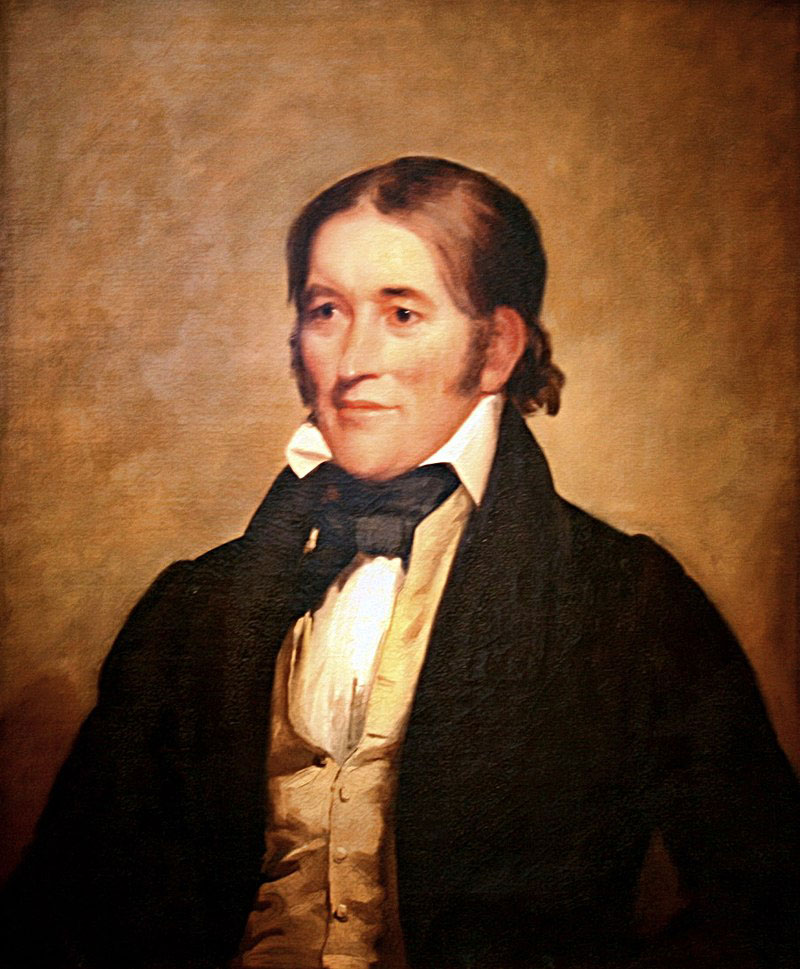
The 12th president was and is a hot knife commodity.
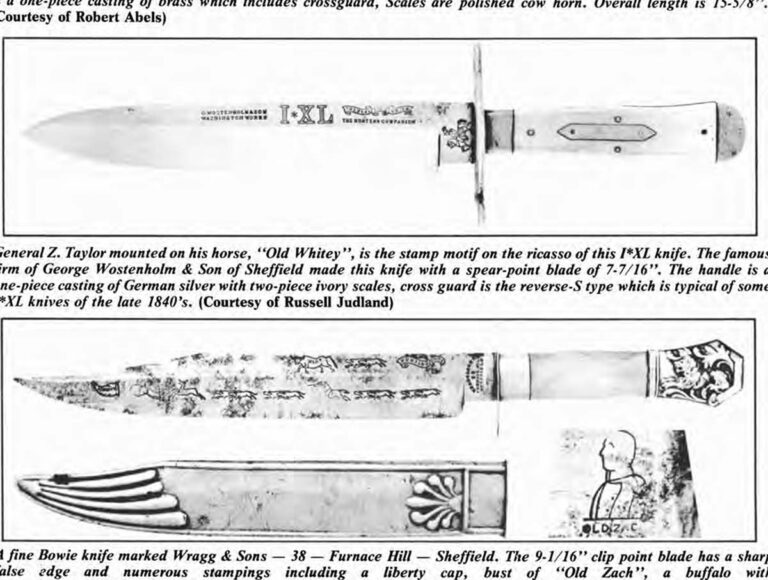
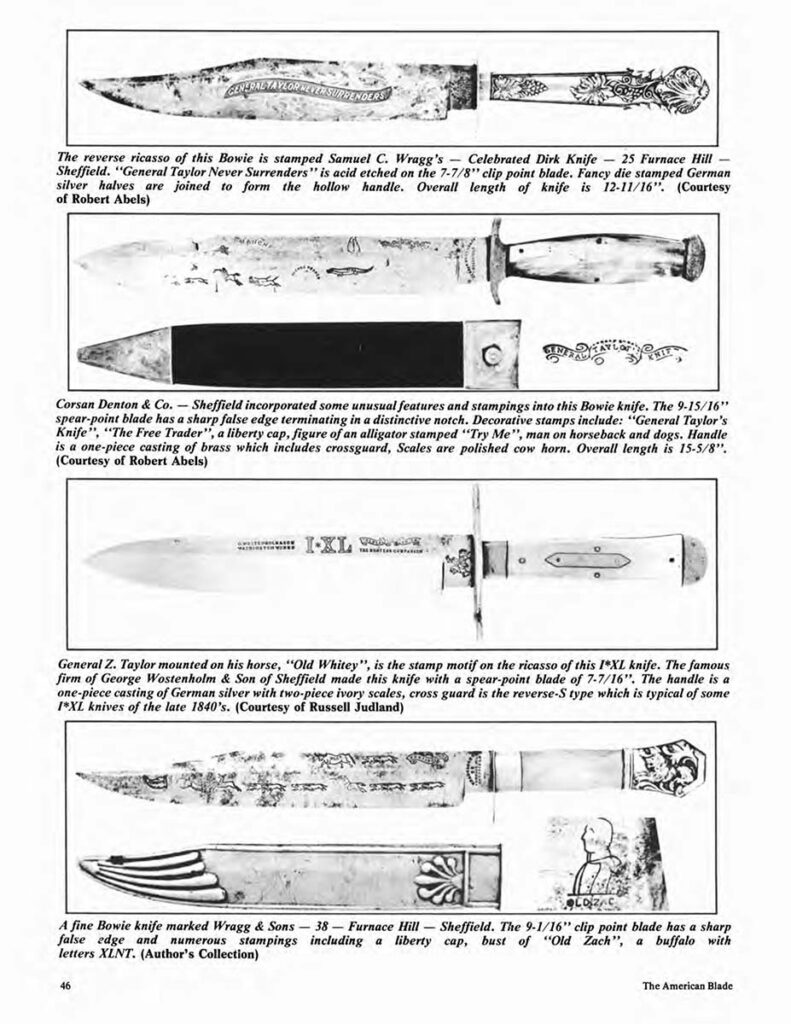
Some examples from the article of “Old Zach” bowies that included the American general and president’s name, slogans or likeness. The lower bowies have his visage, the second from bottom a stamp motif on the ricasso of Taylor on horseback, the bottom a bust of the celebrated general.
Ever in tune with what’s popular at the moment, knifemakers have never been afraid to cash in on a hot trend. William R. Williamson documented one of the more peculiar vogues of the middle 19th century when Zachary Taylor and bowie knives were all the rage.
Fresh off his triumphs in the Mexican-American War, Taylor was the 1850’s version of a rock star—Americans just couldn’t get enough of him. And while not known to carry a bowie nor affiliate with the hero of the Alamo—Jim Bowie—the general and president’s likeness began to pop up on the most American of knives.
Funny thing is, as William’s points out in his article “Old Zach and the Bowie Knife,” from the March-April issue of The American Blade®, it wasn’t the Yanks cashing in. Instead, England Sheffield’s makers had the pulse of the USA and stamped Taylor’s visages on blades and bolsters.
Unfortunately, Old Rough and Ready’s short-lived presidency didn’t inspire the same outpouring of effigies. But modern collectors did and do find these unusual and patriotic blades desirable, as Williamson points out in his article.
Revel in a short list of knife industry milestones that transformed the knife world.
Editor’s Note: BLADE Magazine is celebrating its 50th anniversary of its founding this year. To recognize this milestone, we are running a series of articles looking at the changes to the knife world the publication has been privy to over its history.
Time marches on. And in the cutlery industry, the half century from the early 1970s to the present has been filled with both revolution and evolution.
From the corner of a massive hall at a gun show, the slight mention of a new style of field tool, and the basic everyday factory blade carried in the worker’s pocket, the knife industry, both custom and factory, has blazed its own trail over the past 50 or so years, emerging from a somewhat obscure existence to the mainstream. And along the way have been those moments of discovery, awareness and excitement that have marked the trail.
For reference, a few of those moments include the following.
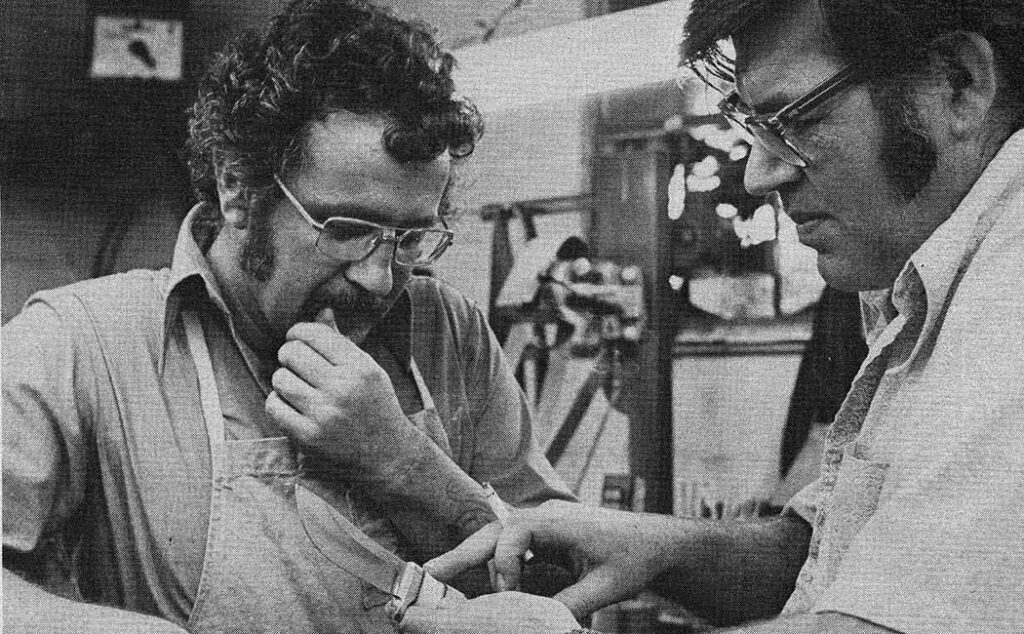
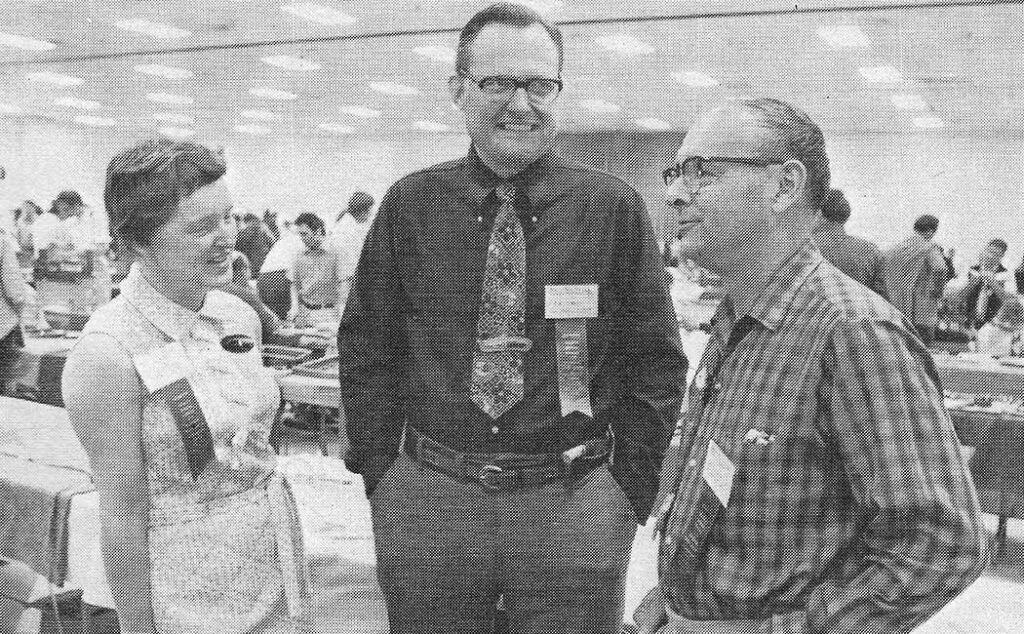
The first “meeting” of the Knifemakers’ Guild basically was the idea of A.G. Russell. What would become the Guild Show was the leading knife show for decades. A.G. (right) discusses a Harry Morseth knife with maker Lloyd Hale (left). (Sid Latham image)
1970s
Though what would become the Knifemakers’ Guild Show was first held in 1970, the show that occurred three years later is still talked about today. That was when Bill Moran reintroduced damascus steel for knife blades, kindling a revival of interest in damascus as the new “super steel” and generating a wave of collector fervor. Also in 1973, Blackie Collins founded The American Blade, a magazine for the knife industry like nothing that had been seen before. Known today as BLADE®, the publication remains a voice for the industry and a tangible contributor to the life and times of the knife enthusiast.
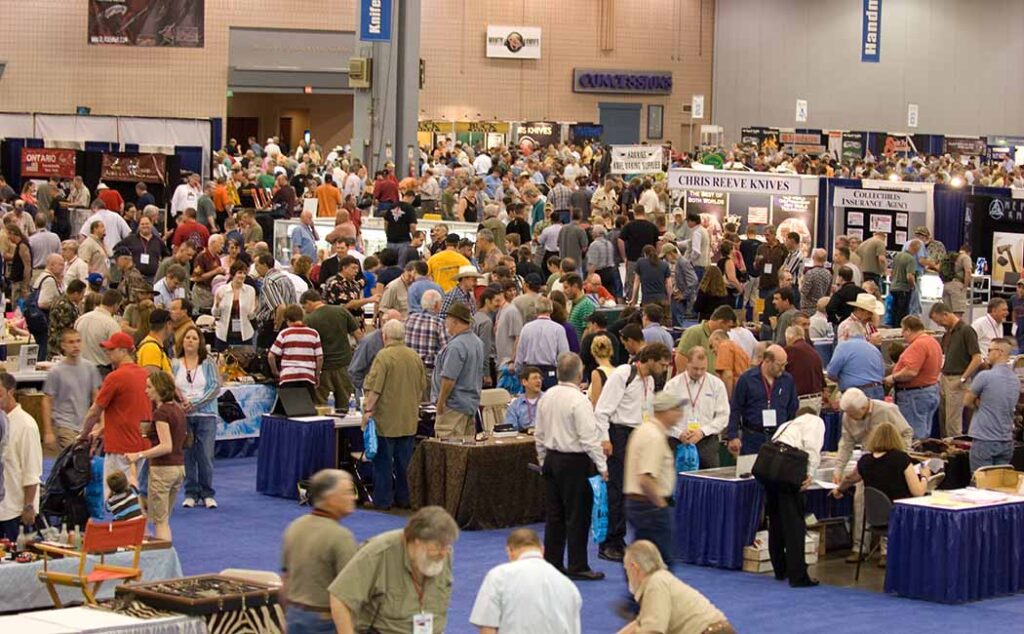
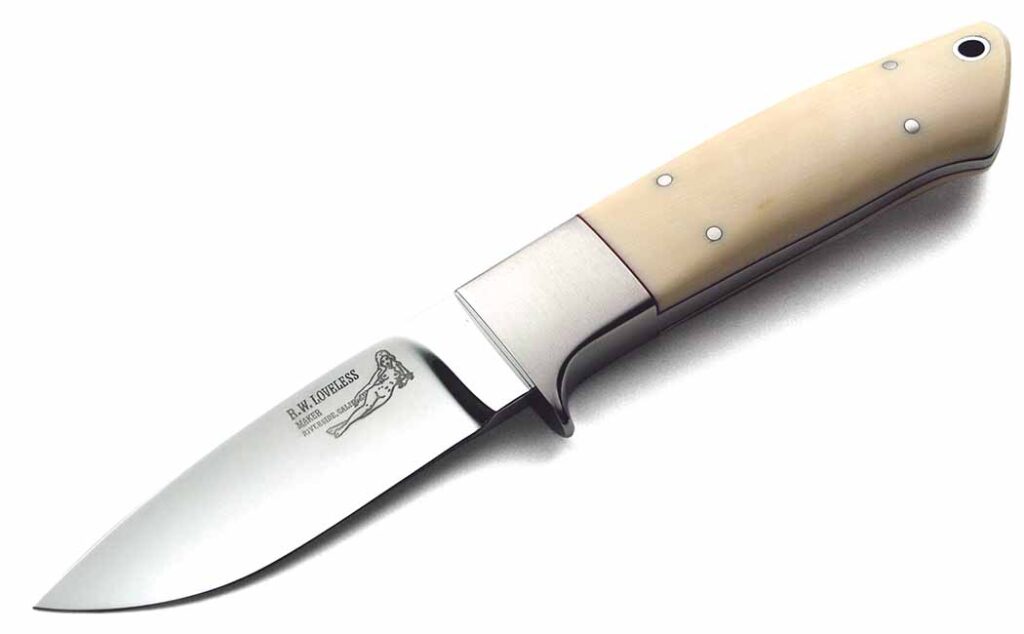
In the following decade, knife shows increased in number and attendance, including the BLADE Show, the New York Custom Knife Show, California Custom Knife Show and the Guild Show, the latter which led the pack for at least 20 years. At the same time, Guild members established industry trends, including the drop-point hunter and the popularization of super steels 154CM and ATS-34 by Bob Loveless, while A.G. Russell vigorously supported the knife industry through his advocacy, sharpeners, knives and growing catalog business.
Eric R Eggly, PointSeven Studios
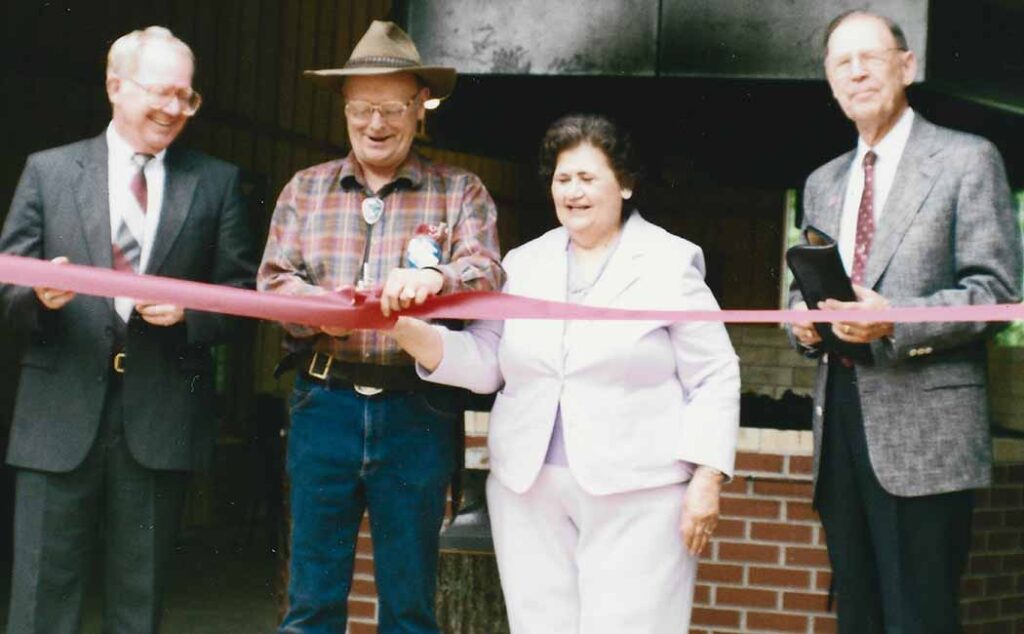
In 1976, the American Bladesmith Society was formed, and those who forged their blades and worked in damascus at long last had their own organization to promote training and excellence with hammer-ins and other events that brought people together to learn the art of bladesmithing. By 1988, the ABS opened its own school, the Bill Moran School of Bladesmithing. For the first time, bladesmiths and knifemakers could take advantage of a year-round school that offered instruction in forging, bladesmithing and more.
1980s
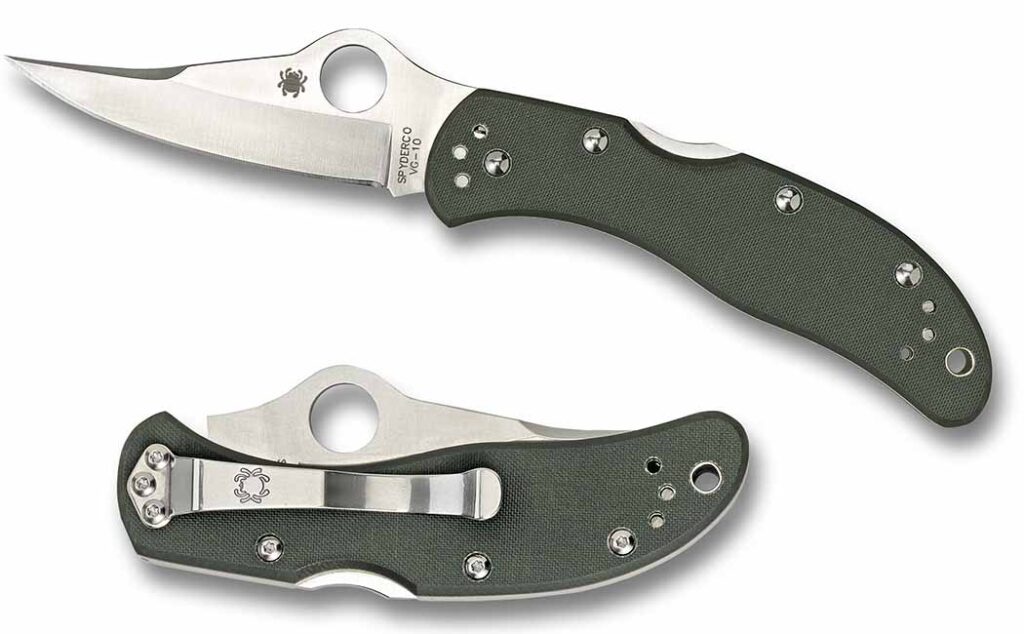
Nineteen-eighty-one saw the introduction of two watershed knife creations by Spyderco and Michael Walker. With the C01 Worker, Spyderco headman Sal Glesser introduced the first knife with both the famed hole in the blade for easier one-hand knife opening and a pocket clip for enhanced carry. Walker, meanwhile, debuted his groundbreaking linerlock folder. The innovations led to a concentration on ease of carry and deployment, focusing the industry on such elements that made the experience of knife ownership something even more special.
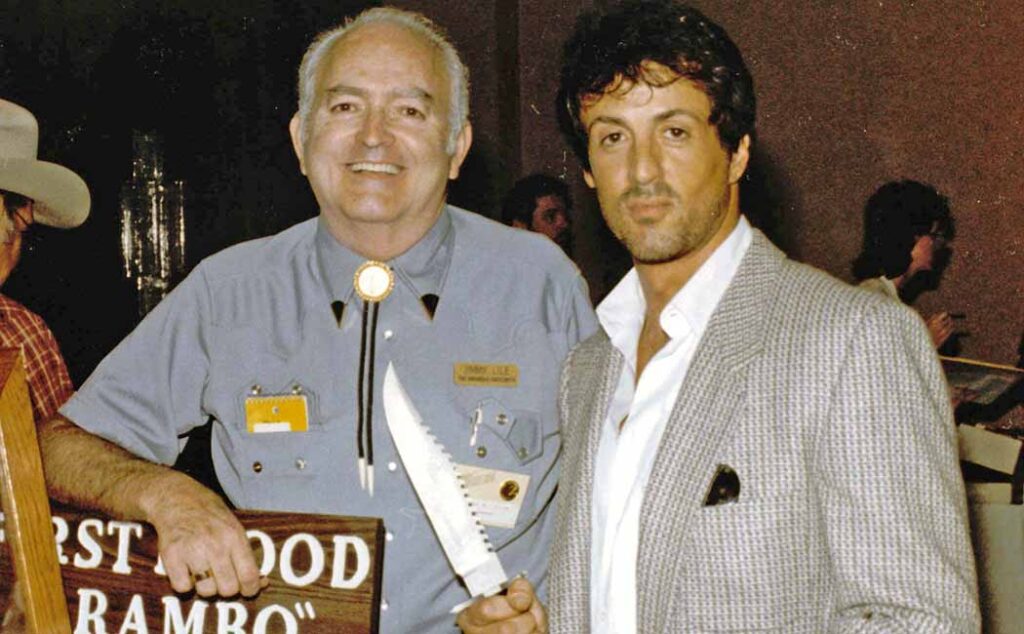
Jimmy Lile and Sylvester Stallone combined to use Lile’s survival knife in the 1982 movie First Blood, and knives were never the same again.
Hollywood took its turn in the early 1980s with the Rambo series of feature films and the knives that played starring roles. Cutlery Hall-Of-Famers Jimmy Lile and Gil Hibben became celebrities in their own right, and sure enough, other knife-and-sword-oriented films followed, including the Conan series, Commando, Predator and The Last of the Mohicans. These were just a few but the knives of custom makers profoundly influenced the marketplace. Soon enough, collaborations between custom knifemakers and factory knife companies began to flower.
1990s
By the 1990s, equipment such as CNC, laser cutters and CAD/CAM entered the knifemaking realm and brought about rapid change in the way custom and factory knives were made. The introduction of such hi-tech equipment into the maker’s shop gave rise to a debate over the very definition of handmade—a debate that continues to this day.
As early as the 1990s, the use of laser cutters—here cutting a hole in a Spyderco blade—CNC machines and other high-tech equipment began to take hold in the making of knives.
At the same time, the emergence of the internet brought the commercial knife market to the world, as custom makers, factories, dealers, collectors and others offered knives for sale on an unprecedented scale. The global reach of the internet led to a burst of information on every aspect of the knife industry, from websites, forums for the exchange of information, how-to videos, online auctions, and even a bit of the dark side—buyer beware! Know your customer and other maxims rang true.
Along with the information explosion, competition was more robust than ever, particularly with the onrush of China’s factory presence, not only in quantity but also, later, in quality. The Chinese influence has redefined notions of affordability, value, and how knives are produced and distributed, and the resulting market conditions continue to impact the buying habits of consumers worldwide.
2000s On
Of course, there are ongoing challenges. Two significant advocacy groups, the American Knife & Tool Institute (AKTI) and Knife Rights, assumed leading roles in responding to knife laws and particularly to the zeal of government regulation, which at times has threatened the livelihood and freedom of Americans to carry one of man’s oldest tools. Pro-knife legislation and the legalization of automatics in many states are evidence of the credible work that has been done, with much of the organized response from the knife industry resulting from the defeat of the 2009 effort led by U.S. Customs to reclassify one-hand knives as switchblades/automatics.
With the C01 Worker in 1981, Sal Glesser and Spyderco introduced the first knife with both the famed hole in the blade for easier one-hand knife opening and a pocket clip for enhanced carry. Released in 2014, the company’s C01GPGR Worker Sprint Run paid homage to the original C01.
Knife Innovation
The history of the modern knife industry is one of rapid change and continuing innovation. Long-time maker Tim Britton recalls the influence of Blackie Collins and Blackie’s foray into publishing. “Blackie could sell refrigerators to Eskimos,” he commented. “The American Blade magazine was one of his favorite projects, and his input and support facilitated the start of the Knifemakers’ Guild. We had one show, the Guild Show, where we could share fellowship and technology. Names like Buster [Warenski], Henry Frank, [W.W. “Bud”] Cronk, Jim Schmidt and Bob Loveless became famous at our annual shows.
“Virgil England took us to another planet and then along came the Chinese industrial monster,” he continued. “Tactical knives were their focus and they had no hesitation in copying American designs. The American Bladesmith Society developed a business model whereby rediscovered damascus steel could be taken to all new levels. There was never any question in this group about ‘what is a handmade knife’ or who is copying whose design. Knifesmiths flourished, and Forged in Fire has taken us all to a new level. Knifemaking caught on in other countries, and those makers continue to produce some of the finest work imaginable.”
The ABS opened the Bill Moran School of Bladesmithing in 1988. The principals at the school’s ribbon cutting ceremony were, from left: Carl Nelson, president of Texarkana College, Bill Moran and Mrs. Margaret Moran, and Judge James Pilkington.
Custom knifemaker Jim Sornberger well remembers the early days of the Guild and its organization. “The Guild thing was first discussed in 1970, and that was Bob Loveless and A.G. Russell,” he said. “Actually, A.G. bought tables for a bunch of the guys and set that up. He said, ‘Let’s have a show and get a block of tables,’ and so he did that. The Guild was the best organization of knifemakers in the world, and it had the biggest knife show anywhere in the world for many years.”
As for technology, Sornberger says it is simply a fact of life. Evidence of progress and efficiency are seen in makers’ shops routinely today, including CNC equipment, mills, lathes, ingenious versions of versatile grinders and more. “You can’t reverse technology,” he reasoned. “There are always new methods of doing something.”
Ron Lake had a huge hand in the evolution of custom knives, introducing his clever tab-lock interframe folder and helping popularize 416 stainless. “It was a different world back when,” he remarked. “We had a small corner at a gun show, and Blackie Collins was sitting off by himself 30 feet away from me with a slipjoint knife, and I remember Loveless cut himself with that knife! A lot of people came and went from the knife world back in those days.”
Contributions such as the dropped hunter by Bob Loveless were among the trends started by members of the Knifemakers’ Guild in the 1970s and beyond. (Exquisiteknives.com image)
As Moran brought damascus back into the spotlight in 1973 and other developments were coming along, Lake remembers the growing ranks of the virtuoso custom knifemakers, including Billy Mace Imel, Buster Warenski and others. He also recalls the sudden impact of Spyderco. “I think maybe it wasn’t so much the hole,” he said, “but the clip. That in itself was a mind-boggling event—maybe not so much at the time, but later as people started using it.”
Ron Lake, Bob Loveless, Bill Moran and A.G. Russell
The influential journalistic career of B. R. Hughes has made its own contribution to the modern knife world. Hughes was there in the beginning of the modern era. He planned the first Gun Digest Book of Knives along with Jack Lewis, and it hit the market in 1973.
“That was a meaningful year,” Hughes remembered. “Ron Lake, Bob Loveless, Bill Moran and A.G. Russell are the most influential individuals in the history of custom knifemaking, and A.G. played a bigger role than a lot of people give him credit for. He saw the need to organize and there was a meeting in Tulsa in 1970, and the first Guild Show was in 1971, and it grew unbelievably. They met in Houston and there were about 20 or so makers, and then the next year the show was in Kansas City, and there were 40 or 50, and it just kept growing.”
According to B. R., damascus was a catalyst for revival in American bladesmithing. “The inclusion of damascus saved bladesmithing,” he said, “and there were fewer than 15 bladesmiths in America in 1973. The number was going down. There was Bo Randall and then Rudy Ruana as well, but just a few younger bladesmiths.”
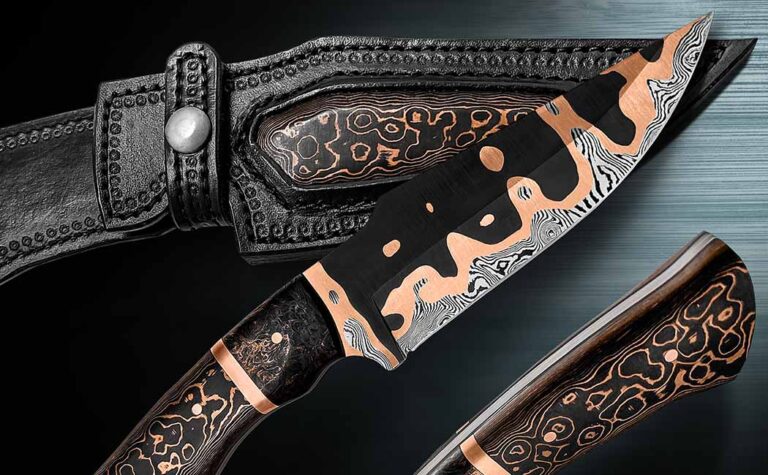
The use of a wide range of new materials in the making of knives exploded in the 1990s and continues to this day. One of the latest examples is Bill Moran reintroduced damascus for knives at the 1973 Guild Show and the rest is history. Moran (right) observes another successful Guild Show with Betty and Ted Dowell at the ’74 event in Kansas City. (Sid Latham image), employed here by Gerry Michael on the blade of his Fancy Harpoon model. (Jocelyn Frasier image edit)
Then, he says, the founding of The American Blade weighed in. “That was immense,” he offered. “I started writing about knives in the early 1960s, and there were primarily just gun magazines. I wrote for Gun Week, doing some knife articles for them, but there was no knife magazine, and the people I wrote about were people I met at gun shows. Without a knife magazine, it made it tough to write about knives.”
Hughes added, “I was fortunate to be around the first meeting of the Guild and things like that.” Indeed, B. R. saw and wrote about history as it was made.
Knife Industry Ups and Downs
These days, the world of knives continues to expand, to change, to elicit praise and criticism. Britton has watched much of this evolution. “Quality Chinese repros are available at flea markets and gun shows for $15 to $40,” he observed. “Many knifemakers are designing knives for knife companies, further blurring the differences between handmade and factory/manufactured. The internet is being used extensively for marketing—from very ornate websites to knife forums. The ‘Show Calendar’ page in BLADE is crammed full of announcements of shows from San Francisco to Paris. Several knife dealers have created a secondary market, and literally thousands of knives are available for sale 24/7.”
Concurrently, Britton is excited about what he notices these days. “We’re seeing abrasive materials, grinders, CNC equipment, new steels, and exotic types of handle materials from paua shells to hippos’ teeth,” he noted. “Creative craftsmen are exploring new horizons with acrylics and phenolics and stabilized wood burls. We see something new at every show.”
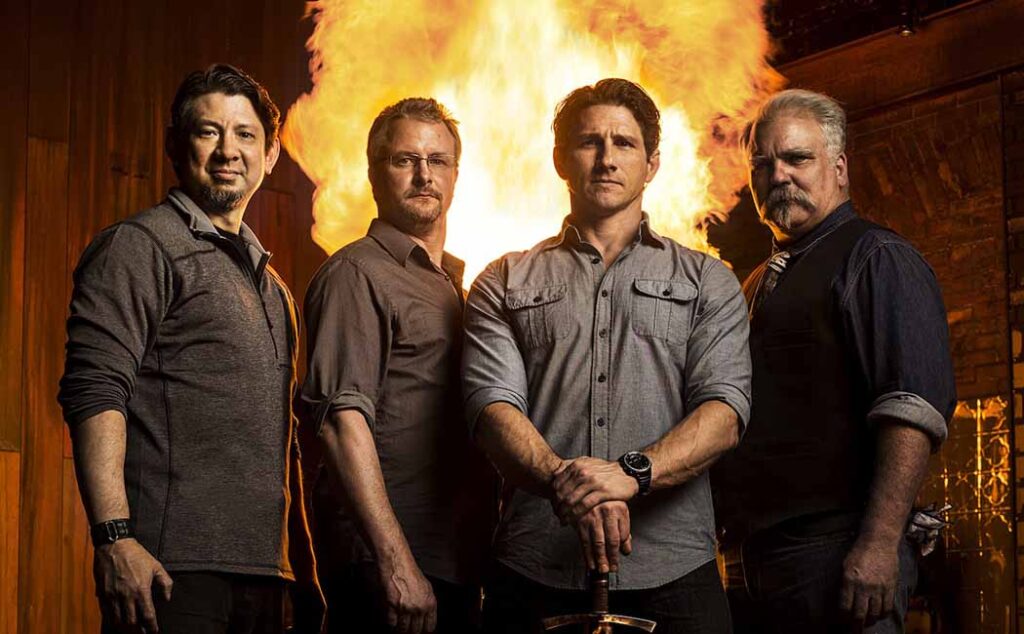
Forged in Fire debuted in 2015 and since then has exposed millions of television viewers to knifemaking and bladesmithing on a weekly basis.
That, succinctly, is a strong indication of an industry, a passion, a way of life that continues to flourish despite the strain and stress that are natural byproducts of absolutely anything and everything that is alive. A half century from now there will be more milestones, more discussions and even greater achievement.
Members of the BLADE Magazine Cutlery Hall Of Fame® mentioned in the story and sidebar are Blackie Collins, Sal Glesser, Gil Hibben, B. R. Hughes, Billy Mace Imel, Ron Lake, Jimmy Lile, Bob Loveless, Bill Moran, Bo Randall, Rudy Ruana, A.G. Russell, Jim Sornberger, Bruce Voyles, Michael Walker and Buster Warenski.
25 Knife Industry Milestones
1973 Bill Moran reintroduces damascus for knife blades at the Guild Show 1973 The American Blade debuts 1976 Bill Moran, B. R. Hughes, Don Hastings and Bill Bagwell found the American Bladesmith Society 1981 Spyderco debuts the C01 Worker, the first knife with both a blade opening hole and a pocket clip 1981 Michael Walker introduces a folder with the linerlock mechanism 1982 First Blood and Jimmy Lile’s Rambo knife appear in theaters 1983 Michael Walker first uses titanium in the construction of one of his linerlocks 1987 Buster Warenski completes the King Tut dagger reproduction 1988 The Bill Moran School of Bladesmithing opens in Old Washington, Arkansas 1992 Bruce Voyles moves the BLADE Show to the Renaissance Waverly Hotel in Atlanta, where it opens to rave reviews 1990s An explosion in Crucible Particle Metallurgy and the so-called “super steels,” and such materials as carbon fiber, mosaic damascus and more revolutionize knifemaking 1990s Computer numerically controlled equipment, laser cutters and more for knifemaking begin to appear 1990s Internet knife web pages, knife discussion forums, knife instruction videos and more start making their mark Mid-1990s Tactical folders begin to dominate the custom and factory knife industries 1997 The BLADE Show moves from the Renaissance Waverly Hotel to the adjoining Cobb Galleria Centre and completes its ascendancy as the world’s most important knife event 1990s Chinese companies begin entering the factory knife business 1998 The American Knife & Tool Institute (AKTI), the oldest surviving knife advocacy group, debuts 2001 Terrorists bring down the Twin Towers and the knife industry reacts with a slew of military inspired knives, tomahawks and more 2006 The Knife Rights advocacy group debuts 2009 The knife industry unites to defeat an attempt by U.S. Customs to declare all one-hand-opening knives switchblades/automatics 2010s Social media begins taking the internet knife business to the next level 2010s Knife Rights and AKTI work to overhaul anti-knife legislation, including overturning automatic/switchblade bans and establishing knife preemption laws at the state level 2010s European knife manufacturers such as LionSteel, Fox Cutlery, Maserin and others begin winning more than their share of BLADE Magazine Knife-Of-The-Year® Awards 2015 Forged in Fire debuts and exposes millions of television viewers to knifemaking and bladesmithing for the first time 2020 The pandemic ravages the world and also the knife world, closing knife shows everywhere—including the BLADE Show 2020s The knife industry survives the pandemic, and, thanks to internet sales, even thrives in some segments—and knife shows begin to return
“Vicious fantasies of omnipotence, idolatry… barbaric and sadistic atrocities, and monstrous violations of the accepted values spring from the cult of the weapon, and the switchblade knife is included in this. Minus switchblade knives and distorted feeling of power they beget – power that is swaggering, reckless, and itching to express itself in violence – our delinquent adolescents would be shorn of one of their most potent means of incitement to crime.” –Representative Sidney R. Yates of Illinois, 1958
The quote above is not from a Hollywood movie or dime novel. A politician in support of the 1958 Federal Switchblade Act said those words more than 50 years ago. To understand why, we need to look at history, society in the 1950’s and a popular magazine from that time period.
History of Switchblades in the United States
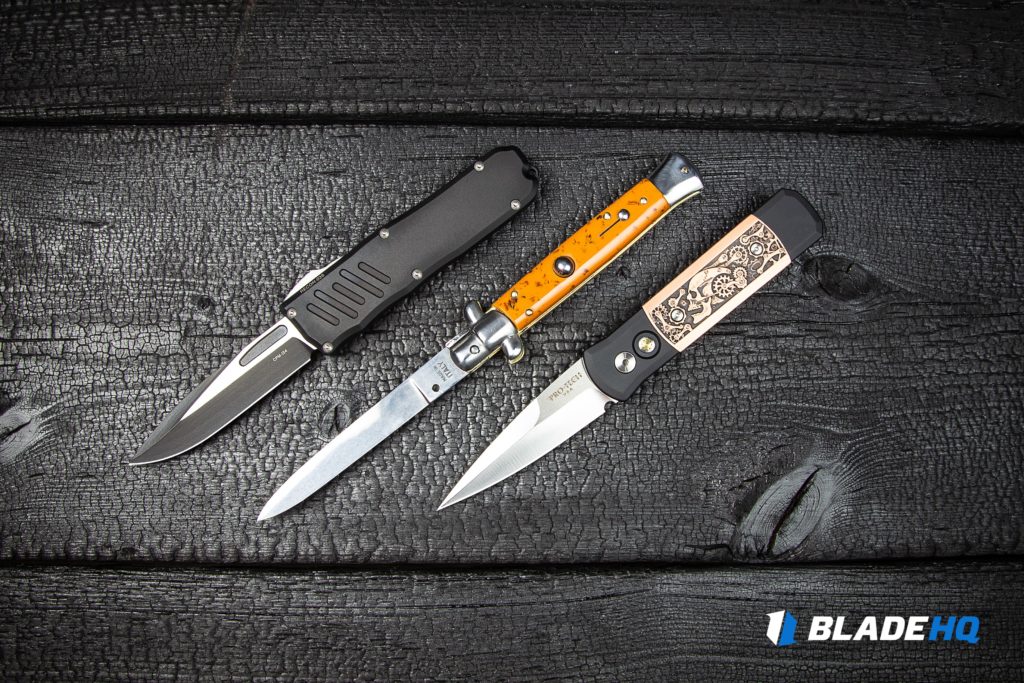
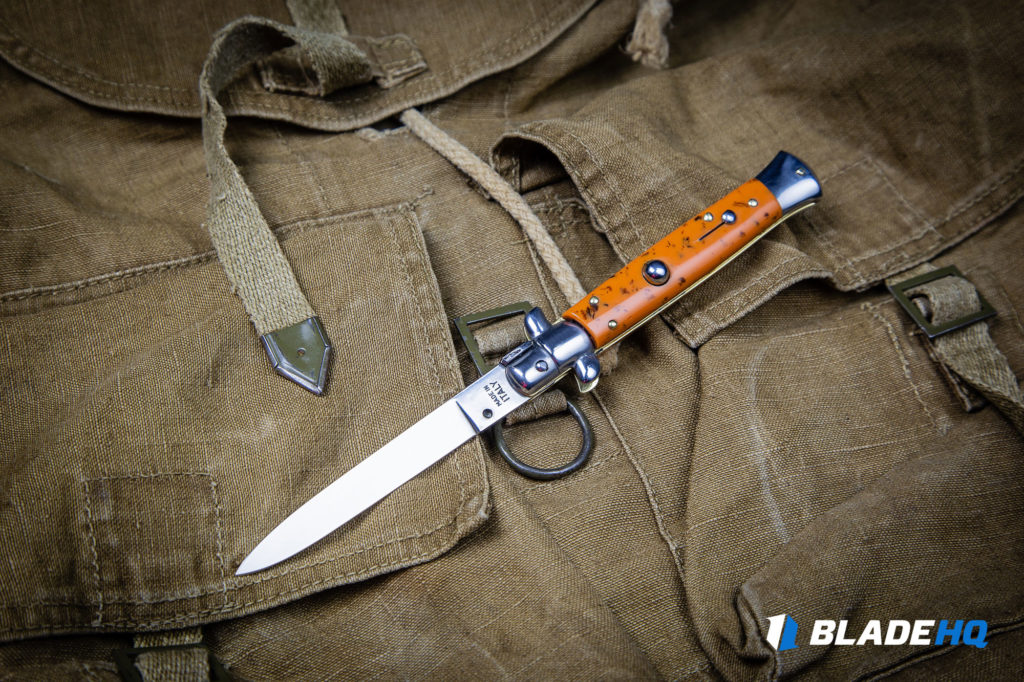
The Italian stiletto (middle) is the most iconic subset of switchblades, but the other styles on the left and right are also switchblades. They’re commonly called “automatic knives” as well. (Blade HQ image)
While the word “switchblade” might conjure up imagery of tough guys in the 1950s with leather jackets and stiletto knives, it’s just another term for “automatic knife.” Automatic knives range from the iconic Italian stiletto to the modern OTF (out the front). The defining features are always the same: the blade, biased to open and kept under tension in the handle, deploys at the press of a button or lever on the handle.
The United States led production and distribution of automatic knives for most of the early 20th century, boosted by George Schrade and the onset of mass production. Schrade set up shops all over the country as well as abroad. Schrade produced and advertised automatic knives mostly to and for ranchers, outdoorsman, hunters, and farmers as quick, one-handed utility tools. Business was good, and people liked their snappy, modern Presto pocketknives. Then World War II happened.
This SKM is an example of a modern, Italian-made switchblade knife. (Blade HQ image)
During the war, many U.S. soldiers carried and used Schrade’s automatic knife, but they found something even more attractive while deployed in Europe: the Italian stiletto.
Demand stateside grew as American GIs returned home with these exotic knives, and that led to large imports from Italy. It may have been the sabre-ground bayonet blade, the highspeed look, the undeniably foreign influence or a combination of all three, but it did not take long for the stiletto and, by association, all automatic knives to get noticed by up and coming politicians trying to make a name for themselves as peacemakers and protectors.
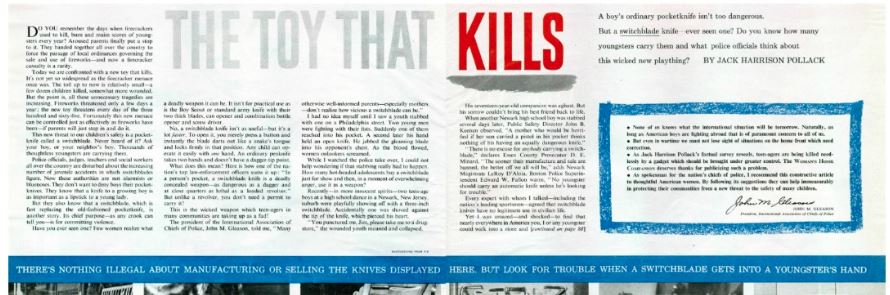
Why Switchblades are Illegal: The Toy that Kills
This is the hyperbolic article that started it all.
Fast-forward to November, 1950. Subscribers all over the U.S. received their new copy of Woman’s Home Companion. It contained one of the most lurid examples of anti-knife muckraking to ever be written, an article titled, The Toy That Kills. Jack Harrison Pollack, a freelance writer and ghostwriter for then-Senator Harry S. Truman, wrote the article. He filled it with a number of quotes and statistics without ever referencing a single citation. Even in today’s digital world, we have a hard time finding many facts to back up Pollack’s claims.
What exactly was he claiming, you ask? In short, Pollack alerted the mothers of America that the switchblade and the switchblade alone was the sole cause for juvenile delinquency, gang violence and ruined lives. In his own words, “Designed for violence, deadly as a revolver – that’s the switchblade, the ‘toy’ youngsters all over the country are taking up as a fad. Press the button on this new version of the pocketknife and the blade darts out like a snake’s tongue. Action against this killer should be taken now.” The article asserts a handful of shaky anecdotal experiences and dubious statistics.
Pollack offered five tips for the concerned mother, condensed into the following:
Make sure your kid is not carrying a switchblade.
Make sure to “de-glamorize knife-carrying” in general.
Use all your power as a mom and wife to get knives out of stores. (He even included verbiage for signs to hang up in stores.)
Help police round up “dangerous knives,” even though there were no significant bans or laws in place at the time.
Work on a state and national level for switchblade bans that are to be “strictly enforced.”
The end of Mr. Pollack’s article also marked the end for easy automatic knife use and possession in the United States.
Pop Culture Origins of Switchblade Ban
The Toy That Kills was the match that started a switchblade wildfire throughout the country. Newspapers ran embellished stories about gang violence and switchblade use. State legislatures started looking into the “issue,” and New York became the first state to ban automatic knives in 1954.
Even Hollywood jumped in on the frenzy. Movie studios released no less than six major titles in just as many years that included Rebel Without A Cause, 12 Angry Men and West Side Story. Every one of these blockbusters placed the switchblade front and center as a tool for violence and delinquency.
The 1958 Federal Switchblade Act Arrives
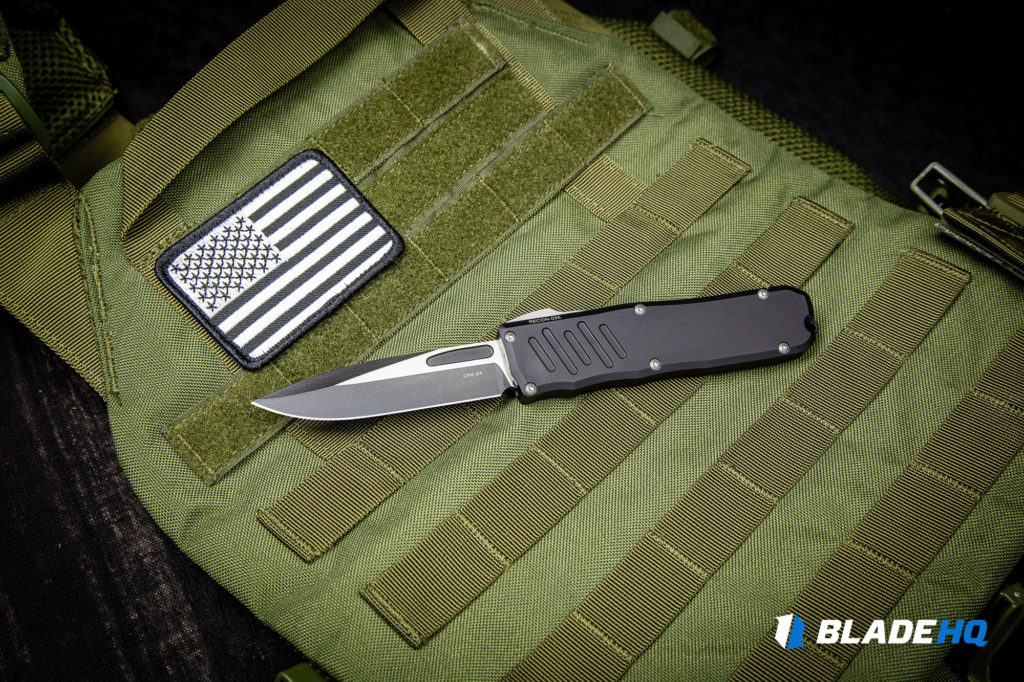
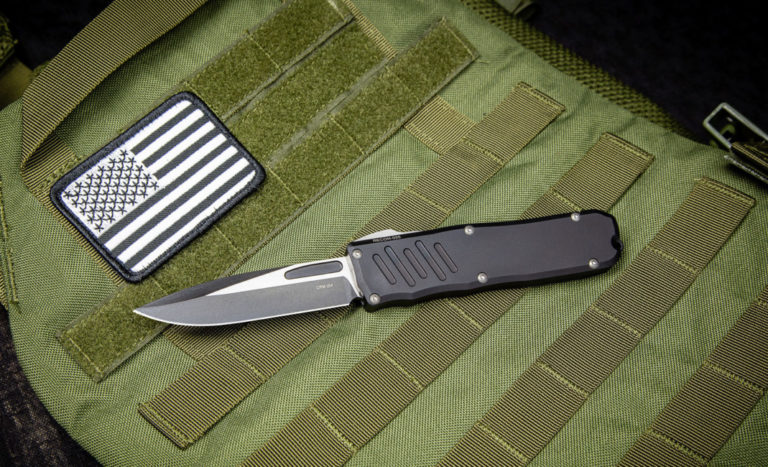
Out the front (OTF) knives are a subset of automatic knives. The blade moves vertically in and out of the handle. This is a Guardian Tactical RECON. (Blade HQ image)
It only took eight short years from the publishing of The Toy That Kills for the issue to make its way to Washington, D.C., in what would become known as the 1958 Federal Switchblade Act. Hearings fielded reports from law enforcement and concerned citizens. However, a lack of hard data pervaded the inquiries.
One well-sourced report came from the police chief of Kansas City, Missouri, which had a population of more than 400,000 people at the time. In the calendar year of 1956, this city reported around three dozen switchblade-related misdemeanors, crimes and juvenile goofing off.
Testimonies also came from the two federal entities that would ultimately oversee enforcing the Act if it passed: the Department of Commerce and the Department of Justice. From William P. Rogers, the deputy attorney general:
“The Department of Justice is unable to recommend enactment of this legislation. The Committee may wish to consider whether the problem to which this legislation is addressed is one properly within the police posers of the various States…Switchblade knives in the hands of criminals are, of course, potentially dangerous weapons. However, since they serve useful and even essential purposes in the hands of persons such as sportsmen, shipping clerks, and others engaged in lawful pursuits, the committee may deem it preferable that they be regulated at the State rather than the Federal level.”
From Secretary of Commerce Sinclair Weeks:
“The intent of these legislative proposals appears to be to improve crime prevention by control of the use of the switchblade knife as a weapon of assault. This approach gives rise to certain objections. One is that, at best, it is an indirect approach which addresses itself to only one of the many implements useable by an assailant. This casts doubt upon the resulting effectiveness in the reduction of crime in relation to its enforcement problems. To us, this ignores the needs of those who derive and augment their livelihood from the ‘outdoor’ pursuits of hunting, fishing, trapping, and of the country’s sportsmen, and many others. In our opinion there are sufficient of these that their needs must be considered.”
At the time (and in retrospect), many of the lawmakers agreed with the quotes above but said they were acting symbolically against crime. In other words, they made themselves look good to their constituents while doing little concerning the issues they claimed to care so much about. And so, on August 12, 1958, congress enacted Public Law 85-623, more commonly known as the Federal Switchblade Act.
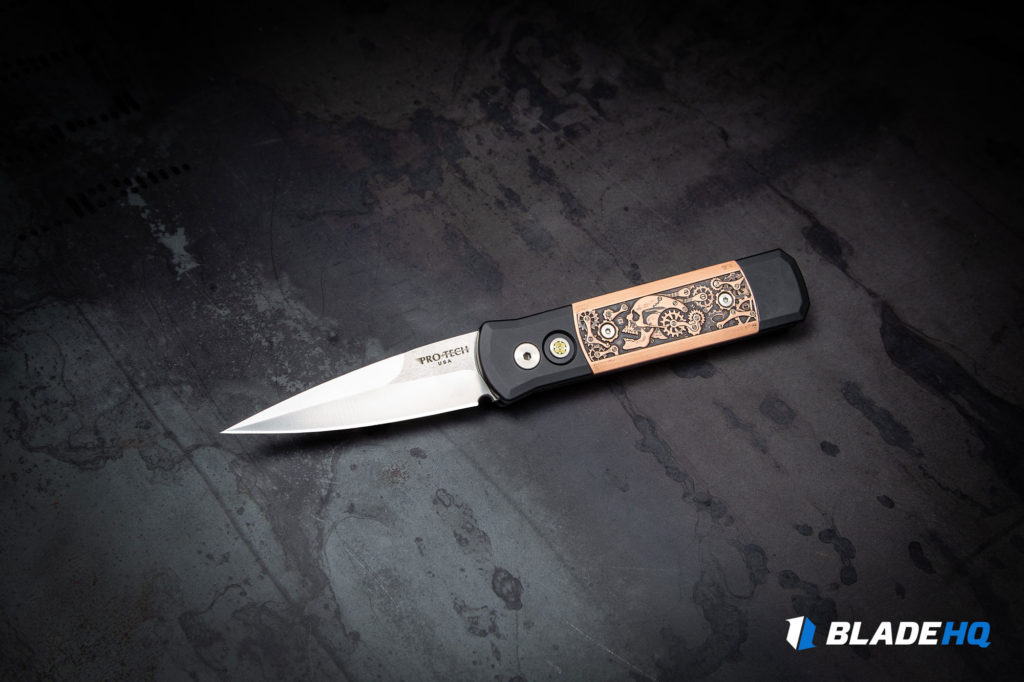
This Protech Godson represents a modern, side-opening automatic knife. (Blade HQ)
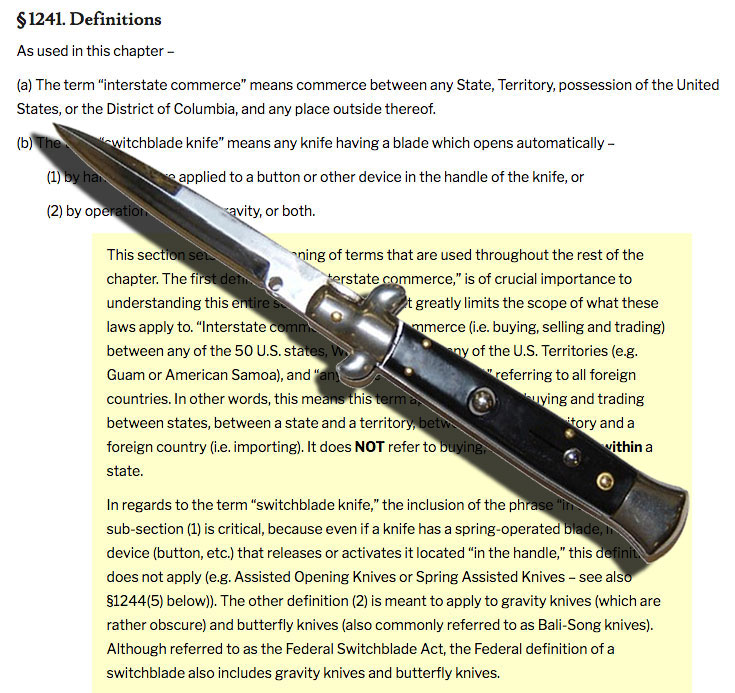
The Act itself dealt with banning certain transportation and sales of automatic knives, as well as outright banning automatic knives in certain areas and places nationally. It also defined by law what a switchblade was:
“The term ‘switchblade knife’ means any knife having a blade which opens automatically-by hand pressure applied to a button or other device in the handle of the knife, or (2) by operation of inertia, gravity, or both.”
All in all, the Federal Switchblade Act is a hard read with more than a handful of seeming contradictions. If you want to dive deeper into what exactly the Act says and how it’s parts work together, we recommend you check out Knife Rights page on the document (https://kniferights.org/resources/federal-switchblade-act/).
Just as the United States had led the way in automatic knife production at the beginning of the 20th century, it led the way for knife legislation in the mid-20th century. As soon as the Federal Switchblade Act was passed, many other countries around the world followed suit and banned switchblade knives. This led to a domino effect in many countries, where owning anything short slip joint with a blade under 2 inches is now illegal.
The Rise of Knife Advocacy Groups
Knife Rights is one organization pushing for repeal of the 1958 Federal Switchblade Act. Successes at the state level continue to build momentum for a federal repeal. (Knife Rights image)
Knife Rights and AKTI are both organizations doing a lot to amend and repeal a law that seems to have been put in place without proper foresight and consideration. With their efforts, they successfully rolled back automatic knife restrictions in 40 states and counting.
One of the biggest wins for the knife world came in 2009 when the U.S. Customs and Border Protection (CBP) tried to reverse prior ruling on assisted opening/spring-assisted knives. Essentially, the CBP tried to define any one-handed opening knife as a switchblade. The revision would have dealt primarily with the importation of these assisted knives. The real concern came from the confusing nature of the Act. If CBP got their way, it would have been easy to extend the restriction broadly on both a national and state level. Luckily, many groups, including Knife Rights and AKTI, stepped up and prevented this from happening.
For knife enthusiasts, supporting Knife Rights and AKTI are the best ways to help revise and repeal the national and state restrictions on what, at the end of the day, is just another knife. Until that day, know your local laws and stay sharp!
Despite A Rocky History Of Legality, OTF Knives Have Endured And Are Some Of The Most Popular Pocketknives On The Market Today
As its name suggests, an Out The Front (OTF) knife is a fairly straightforward affair. In short, it has an enclosed handle with a blade that deploys from the front–the bolster, hilt or what have you. In general, these fast-from-the-gate options are small, most with an average blade length of 3-3.75 inches, though there are certainly larger examples.
The knife is distinct from its “Out-The-Side” cousin, at least as a switchblade–one of its most common forms–in the variety of the way the blade is brought into action. Furthermore, the OTF knife needn’t any push-button, assisted-open system to flash cold, hard steel in the wink of an eye.
Overall, OTF knives are a fascinating, if not slightly intimidating, corner of the knife world. In this guide, we’ll look at some of the history, usage and types of OTF knives. Then we’ll show you some of the best options on the market today. Get ready to flick into action.
Legality Of The OTF Knife
In the past, these knives were favored by paratroopers and sailors. However, thanks to a media campaign in the 1950s that showed automatic knives as the tool of choice for criminals and underworld types, including popular movies like “Rebel Without A Cause”, automatic knives were banned nationwide. The Federal Switchblade Act passed into law on August 12, 1958 and effectively banned auto knives across the country.
Going into 2023, the panic over OTF knives and other switchblades has somewhat subsided. Most states now allow ownership and carry of OTF, and other types of, automatic knives. However, 11 states still have a blanket ban. Furthermore, there are some issues when it comes to what many places call ‘stabbing instruments’ and other vague terms. Where this becomes an issue is some states that allow automatic knives have laws against double-edged blades. Given many OTF knife options fall into both categories, certain models have a narrow window of legal ownership.
As always, if OTF knives or switchblades tickle your fancy, please check your local laws before picking one up. Better safe than sorry.
Types Of OTF Knives
As mentioned above, there are four types of OTF knives. Each has positives and negatives, and the prices will vary wildly. It’s important to know the differences so you purchase the option that best suits your needs.
Manual OTF Knife
The most basic and least expensive OTF knives are the manuals. They are exactly that, knives that deploy and retract through manual operation. The most common way of doing this is via a slider on the handle. The upside is that you are in total control of the speed of your blade. However, it may not have the wow factor of other knives on the list. But hey, you’ll be safe while using it.
Single-Action OTF Knife
These knives feature a powered deployment, usually with a button of some type, but require you to manually retract the blade to reset it. And it isn’t retracting like you might think. You pull a handle at the bottom to both retract the blade and recharge the spring so it’s ready to deploy again.
Double-Action OTF Knife
When you think of an OTF knife you probably think of double-action OTFs–better known as fully automatic. The blade deploys and retracts with the touch of a button or flip of a switch. Prominent companies like Microtech and Cobra-Tec make dozens of different double-action OTF knives.
Gravity Knives
The four-leaf clovers of OTF knives are definitely gravity knives. Few companies still make them. The blades deploy and retract with the help of gravity.
The Reate EXO is one of the most popular gravity knives on the market today and a great example of the style. Just take into account your local knife laws as some places have specific laws banning the ownership or carry of gravity knives.
What To Look For In A Quality OTF Knife
You can find decent, but basic, OTF knives in the $30 range, but expect to pay ten times that for a model that extends and retracts on its own with the push of a button. Though, the sky is really the limit when it comes to the features on these knives, as some can easily jump over $1000 depending on what’s included.
The rub, for the price, is that even the expensive options do not do well for anything other than basic and light use as they are not as strong as other types of knives.
The basic selling point of OTFs–aside from inherent coolness–is convenience. Read that as they can be entirely used with one hand. It’s best to think of the OTF knife as a refined gentleman’s blade: a cutting tool that you could rely on for daily life and its inconveniences.
OTF Blade Quality
The main issue surrounding blade quality on OTF knives is how light the blades have to be to function. Because the blade is entirely surrounded by the handle, the blade itself cannot be wider or longer than that existing space. As a result, most OTF knife blades are short and light.
These blades are rarely what we would call a full-profiled knife and many are under 3 inches despite a full-sized handle. These blades are not especially strong and are essentially for cutting only, though there is utility in thrusting or stabbing depending on the strength of the locking mechanism.
The small tang area is where the mechanisms are anchored, and this space is usually quite insignificant in surface area. It is entirely possible and even easy to break OTF knives if used improperly.
Practicality Of OTF Knives
If you are in the market for an OTF knife, realize that there are better designs for most daily work that are substantially stronger and can handle a much wider variety of tasks, not to mention are cheaper. OTF knives do have their niche, much like karambits, balisongs, and friction folders, but each of these designs has hard limits on what they can accomplish as opposed to a fixed blade or a suitably strong folder.
Best OTF Knives
SCHRADE VIPER OTF
Coming in at a relatively low cost (comparatively) is the Schrade Viper. The knife lacks some of the features of higher-end OTF knives, but at 1/10 the price of some of the others on this list, it is a good starting point should you want to familiarize yourself with the OTF style in general.
The knife is a bit more manual than others in that it is assisted opening but needs to be manually closed. The overall structure of the knife is not cheap. The handle is made of aluminum and includes an integrated glass breaker in the pommel. It also features a manual safety system for opening and closing the blade to ensure it only opens when you want it to.
MSRP: $75
SMITH & WESSON M&P OTF
The M&P OTF retails in the same range as the Schrade Viper and is largely a product that appeals to an entry-level crowd. Many OTF knives on this list retail for more than some of S&W’s guns–a telling sign this market is for the discerning individual. with the M&P OTF, you get a large degree of utility without some of the additional features and glamor of higher-end models.
Like the Schrade, this knife has an integrated glass breaker in the pommel and is similarly assisted opening/manual closing. If you already own an M&P pistol, you’ll notice that the handle contouring matches the slide machining cosmetically, including a safety lever that resembles the one on the pistol. MSRP: $70
HOGUE KNIVES COUNTERSTRIKE
Hogue’s new Counterstrike is a flagship design that is sure to impress, not only with its modest price point for a fully-automatic knife but also the materials it is made from.
What sets the Counterstrike apart is not just that sweet-spot price, but the high-end materials it’s made from and its excellent strength. Among these is the MagnaCut blade, which itself is a prime selling point. This steel is among the best in the industry and gives the Counterstrike excellent edge retention and adds rigidity to the already thin OTF blade profile. Additionally, the knife has a glass-breaker pommel, aluminum, and carbon fiber handle, and is made in the USA.
MSRP: $400
KERSHAW JENS ANSO KAPSULE MANUAL OTF
The Kershaw Capsule is a small manual OTF excellent for concealment. At just 3.25 inches while closed and with a 1.9-inch blade, this small knife is a great self-defense tool because of its size and unassuming appearance.
However, it’s much more than that. The spear point blade works like a box cutter. The tip is great for puncturing the and edge can handle the type of slicing work you’d expect from a commercial box cutter. It’s convenient and compact enough that it can even fit on a keychain.
MSRP: $35
MICROTECH ULTRATECH D/E
Microtech is one of the companies that popularized the modern OTF knife. In fact, most knife enthusiasts would go so far as to say that Microtech is completely responsible for this trend and has set the bar for all OTF knives going forward. The Ultratech is a solid example why the company calls the tune.A dependable OTF, the knife displays an excellent balance in terms of material, strength, and utility. It is a fully-automatic design that opens and retracts with the same switch. If you want an incredibly reliable OTF knife for your daily use, the Ultratech is arguably the knife on this list with the most pocket hours across the board and is from an established OTF brand. Like others on this list, it features a glass breaker pommel and is made in the USA.
MSRP: $310
HERETIC KNIVES ROC
Now here is something you don’t see every day. The Heretic Knives ROC is visually stunning, it is just so rare to see a curved blade on an OTF knife. The company no longer has the ROC listed on its site as of this writing, but it is available and in stock online. The ROC accomplishes its one-of-a-kind appearance by using a curved handle to match the blade, which overall seems like a no-brainer.
But it just isn’t seen these days, despite the advantages in self-defense or martial arts. While it resembles a karambit, this knife lacks a finger ring on the pommel. The ROC is a fully-automatic design that retracts and deploys on its own. If you are in the market for an eye-catching OTF design that is USA-made, you’d better get them before they are gone.
MSRP: $750
PIRANHA RATED-R
The Piranha Rated-R is one of the most discreet and well-designed knives on this list. The others we’ve looked at have release buttons/switches on the side of the grip in line with the spine of the blade, whereas the Rated-R has it conveniently mounted where the thumb rests near the end of the handle.
It is a fully-automatic knife and requires no movement of the hand to deploy and retract the blade thanks to the switch location. Unlike most of the others here, it lacks a glass breaker pommel, further adding to its discreet appearance. The knife is on the higher end of cost for OTF blades. But like any semi-custom product, it appeals to a certain customer that has specific needs for a strong, durable, and unassuming knife. The Rated-R is made in the USA.
MSRP: $490
BENCHMADE AUTOCRAT
This list wouldn’t be complete without a knife from Benchmade. The company has been producing visually attractive and highly functional blades for the most demanding end users: hunters, cops, rescue crews, anglers, and bushcrafters, among many more. The Autocrat is the most sought-after Benchmade OTF model and it has an excellent reputation for strength and sharpness.
The knife is in the same cost range as most high-end OTF knives at $500, making it an investment for most people but a steal for those who desire American-made quality. The knife is fully automatic and is available in two colors. It does not include a glass breaker pommel, making it easier to use in the hand and a bit more classy in overall appearance.
After more than 40 years at the helm, “Mr. Blade” hangs it up.
It had to happen sometime and that time is now. After over 40 years of writing for and editing BLADE® Magazine, it’s time for me to hang it up as BLADE editor.
If you had told me when BLADE Magazine Cutlery Hall-of-Fame® member Bruce Voyles hired me in 1985 that BLADE would be the focus of my work life for the following four decades, I might’ve said, “Yeah, and Donald Trump will be president one day, too.” However, working for BLADE has been a blessing to my family and me, and I am most thankful for the privilege of having done so.
Why retire now? Last July, it hit me; at 72 I need to spend more time with my beautiful wife Susan and others who I love before I start leaking oil. So, my boss, Caribou Group Media Publisher Jim Schlender, and the rest of the BLADE brain trust started planning for the future of the World’s No. 1 Knife Publication. The result: Elwood “Woody” Shelton, who has been doing a standout job as our online editor, will be my replacement as BLADE editor—and we think he will be a most accomplished one.
For the past several years Woody also has coordinated the BLADE Magazine Knife-of-the-Year® judging at the BLADE Show, as well as the factory knife judging at BLADE Show Texas and BLADE Show West. In the process and along with his online duties, he has become well-acquainted with the knife industry and those who drive it. Besides, he is captivated by knives like the rest of us.
As for me, I will continue as a consultant for BLADE and chairman of the Cutlery Hall of Fame, coordinating the nomination and selection process of new inductees and serving as emcee at the annual Hall of Fame induction ceremony during the BLADE Show, this year June 5-7 at the newly named Cobb Convention Center-Atlanta (formerly the Cobb Galleria Centre). As a result, I hope to see some of y’all there. I also hope to write on occasion for BLADE, as well as participate in other related projects.
What will I miss? Much more than I can cover here but the simple pleasure of opening each issue of BLADE I edited after it hits my mailbox will be one. Others will be all the great knives I have handled and written about and the thousands of fascinating folks I have met over the decades. Included among the latter are those knifemakers and their knives that I’ve helped shed light on by publicizing them in BLADE.
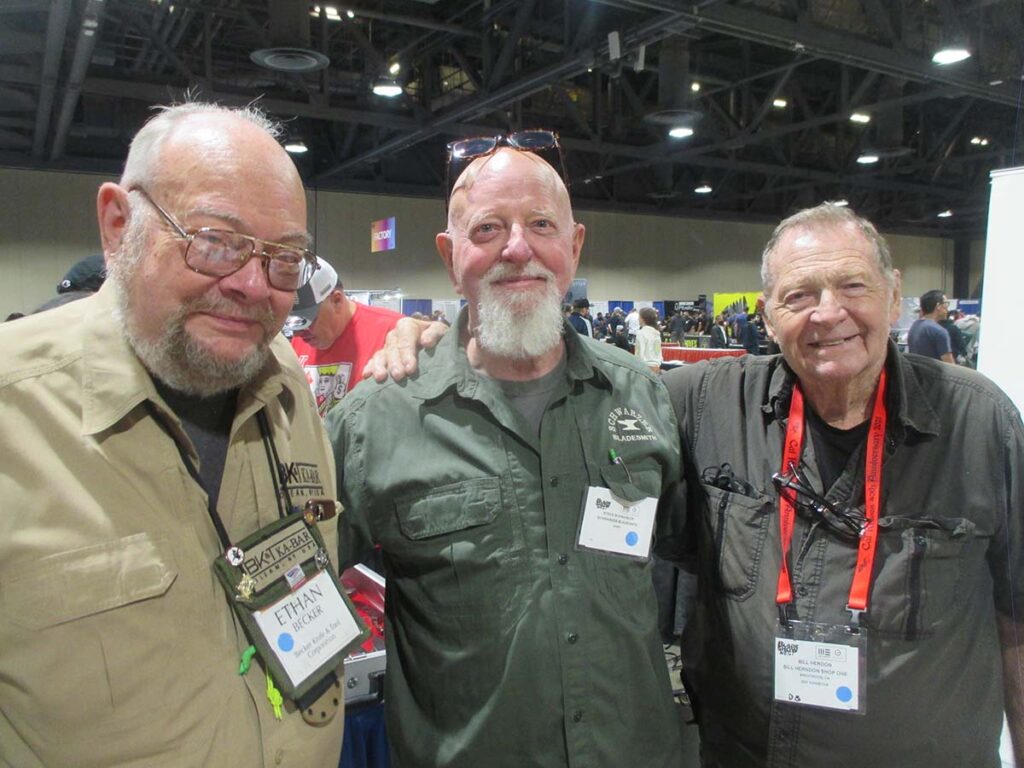
Among many knife VIPs the author has been privileged to know over the years include, from left, Ethan Becker of Becker Knife & Tool, BLADE Magazine Cutlery Hall-of-Fame® member Steve Schwarzer and custom knifemaker Bill Herndon.
The highlights for me have been many. A few include visiting the Boker manufactory in Solingen, Germany, and seeing the wonders of nearby Cologne with Ziggy Felix, wife of Boker’s Ernst Felix, as my tour guide; exploring the Alamo with Cutlery Hall of Famers B. R. Hughes and Jim Batson; spending hours interviewing Cutlery Hall of Famer Bob Loveless in his Riverside shop; and my inductions into both the ABS and BLADE Magazine Cutlery Halls of Fame.
In addition to Batson, Hughes and Loveless, four other unforgettable Hall of Famers who molded the industry by the sheer power of their work ethic and personalities and who were my privilege to know include: A.G. Russell, who influenced the collecting community and custom and factory knife industries like no other; Bill Moran, the father of modern damascus and the ABS—some resumé, eh?; Wayne Goddard and his ability to explain details about knives, how to make them, steels and more so that even I could understand them; Frank Centofante guiding the Guild so successfully while simultaneously providing a constant stream of one-liners; the list goes on. Oh, and Ed Fowler, his sheep-horn handles, lifelong search for Excalibur, his dogs and pet rattlesnakes, etc. Need I say more?
I will miss them and many more, including having the lasting honor and satisfaction of helping in providing you with the world’s best knife magazine for so many years. See you down the road and, in the immortal words of the Reverend Captain Samuel Clayton (Ward Bond) in The Searchers, “Watch that knife!”
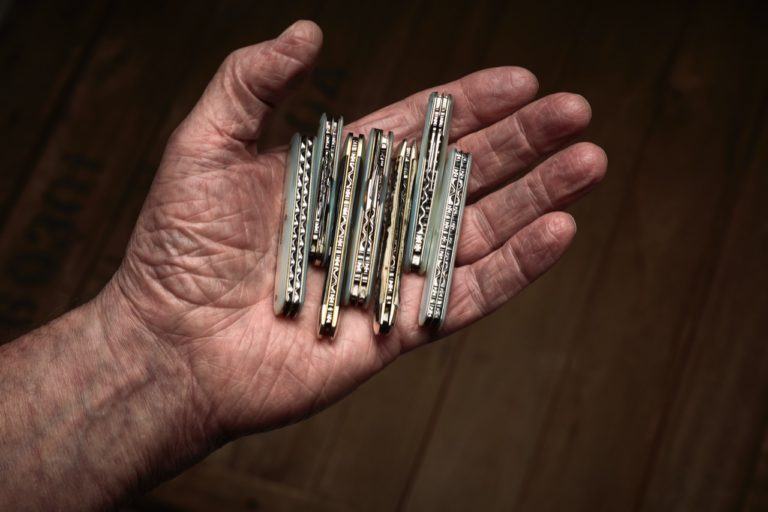
Sometime in the early 1990s, a journalist—to the chagrin of the handful of other knifemakers also still working in Sheffield, England—described Stan Shaw as “The Last Little Mester,” and the title stuck until Stan’s passing in February. Stan made many fancy pocketknives but “Little Mester” was never simply a title that denoted mastership of a craft skill.
Historically, workers in the Sheffield cutlery industry were notoriously independent. As the industry moved from craft-based to industrialization, nearly all cutlers were on piece-work and would rent space in the workshop—a yard of bench or a “trough” for grinding. Work came from other workers, and each worker did a very specific task on the knife before it was passed to the next worker. The process was efficient because of the hyper-specialization of all of the workers in the chain. There was a complicated, ever-changing network of subcontracting, renting, supplying and rivalries, but no one learned all the processes to make a knife—there was no concept of sole-authorship.
In her thesis, Sally-Ann Taylor* states that the “differing opinions regarding the status of the little mester reflected the actual diversity in his possible position and role. Some felt that the title implied that his enterprise should involve him in a certain number of commercial risks and liabilities. Sometimes he was an actual workman himself, obtaining orders from larger factors, merchant or manufacturers, and then employing a few men to help him … sometimes even these workers would employ others beneath them, but usually only members of their own family—particularly women and children.” Hence, little mesters were small-scale flexible employers, recruiting workers to supplement their own labor as required.
In 1844, a commentator on the cutlery trades stated that “there are several modes of conducting the manufacture, but the factory system is not one of them … there is no large building, under a central authority, in which a piece of steel goes in one door and comes out at another converted into knives, scissors and razors. Nearly all the items of cutlery made at Sheffield travel about the town several times before they are finished.”**
HE KNEW at 14
Stan didn’t come from a cutlery background. He was born in 1926 in a small village outside Sheffield, and, after seeing a market stall of knives, decided at 14 that that was what he wanted to do. By chance, he walked into the prestigious company, Ibberson, and spoke to the owner, Billy Ibberson.
Pointing to a showcase displaying the firm’s best pocketknives, Stan said he’d like to learn how to make such knives. As Stan recalled, “Billy then fetched up one of the cutlers, Ted Osbourne—a little bloke about 5 feet or so tall—and asked, ‘Will you have him?” He said, ‘Yes.’ And I started on the Monday at an apprentice’s wage of 10 shillings a week.”
When Stan joined the firm, the old patterns of working had long gone; “little mesters” and “factors” had morphed into the more familiar patterns of factory working, with all the workers employed by the company and paid a wage. He was one of the last apprentices to be taken on and his curiosity about the entire process of making folding pocketknives was insatiable. As he moved through Ibberson and other companies over the years, he actively approached other workers to learn their processes as well as his own. It was this breadth of training that made him unique and was vital to him in later life.
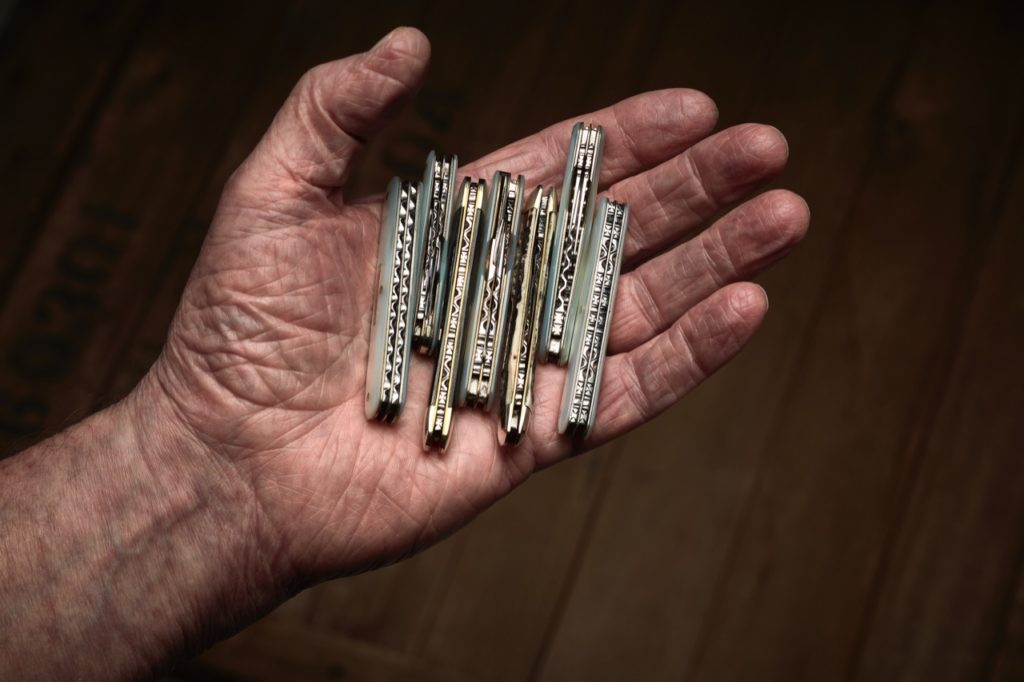
A sampling of Stan Shaw’s pocketknives with richly fileworked blade spines and backsprings. Look close and you can see the Maltese crosses for which Stan was so well known. (image by Carl Whitham, Sheffield)
THEIR PATHS CROSS
By the beginning of the 1980s, the contraction of the Sheffield cutlery industry was such that there were no more companies left to employ him, so he set-up his own workshop in Garden Street. It was there, 10 years later, that our paths crossed.
I had made a set of three folding knives for a college project and hadn’t been able to find anyone still making traditional Sheffield slip joints to ask for advice. A couple of years later, I heard Stan being interviewed on the radio and realized that I still desperately wanted to learn to make knives. I packed up my workshop in London and moved to Sheffield to persuade him, in person, to take me on as his apprentice. He welcomed me into his workshop but said that he was nearly 70 and too old for an apprentice. Instead, he offered me his bucket of old, handforged blades and springs, told me to select a handful and “go and figure it out yourself because it’s not that hard.” He would always be there to help if I got stuck.
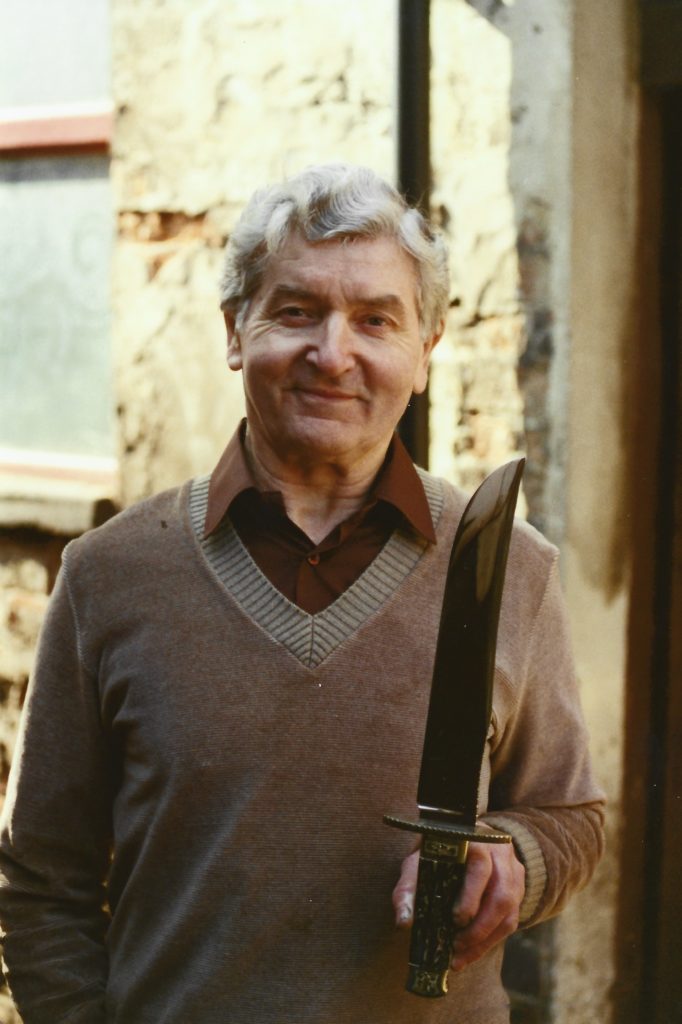
Stan Shaw as he appeared in the early 1990s. (Geoffrey Tweedale image)
A few years ago, when I was gently teasing him about still having a 10-year waiting list for his knives, he said, “I should have taken you on then, lass, you’d just about be useful to me now!” So, for all the times our paths crossed, for all the gentle encouragement and for completely changing my life’s path when I was 23 years old, thank you, Stan.
Stan was not a “little mester.” He was a master and was proud that he could make his knives from start to finish, a concept that would be completely alien to Sheffield knifemakers a hundred years ago.
Stan Shaw, whose career of making classic pocketknives spanned almost 80 years, passed in late February at the age of 94.
He started work for W.G. Ibberson in Sheffield, the old knifemaking capital of England, in 1941. Apprenticed to Fred and Ted Osborne, men Stan described as the two best cutlers in Sheffield, he eventually succeeded them in 1954 as the company’s top maker of pocketknives. Though the Sheffield knife industry was in rapid decline, he continued making knives, renting an old workshop in 1983 and becoming an independent cutler.
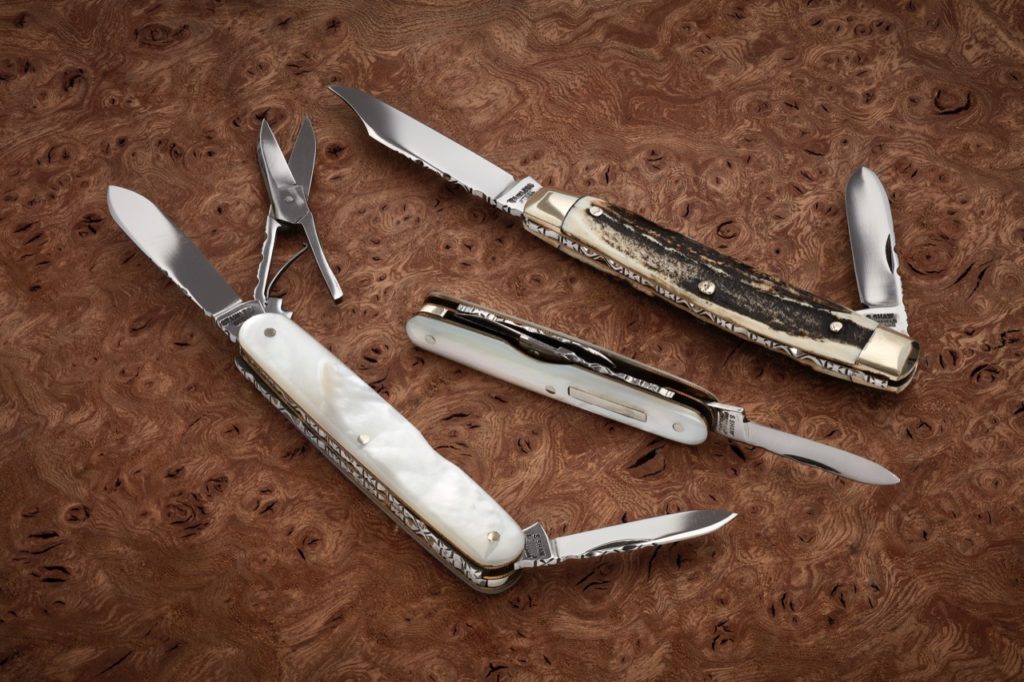
As Stan moved through Ibberson and other companies over the years, he actively approached other workers to learn their processes as well as his own. It was this breadth of training that made him unique and was vital to him in later life. (image by Carl Whitham, Sheffield)
As an independent he did it all in the making of his pocketknives, and he did it all quite well. As he said in “Stan Shaw: Little Mester of Sheffield” in the May 1994 BLADE: “I have to do everything now because there are no forgers, grinders, scissor-makers and so on left. My earlier experience with Ibberson’s has proved invaluable in that respect. All my knives are hafted, ground and assembled by me. It’s harder work but the satisfaction is greater. Scissors, files, punches, shields, shackles, handles, scales, bolsters—the list is endless—but each part is made by me on these wheels and dollies with only hacksaws, files and a few other traditional tools, such as my parser. The only job I don’t do is the occasional engraving I have done on the bolsters.”
His knives are testaments to the classic exhibition pieces, many with a host of blades and other tools and implements. In 2003 he became an honorary freeman of the Company Cutlers and in 2017 was awarded the British Empire Medal. As late as 2019, into his 90s, he continued to clock in bright and early in the mornings to make pocketknives at Kelham Island Museum. In the interim he served as a mentor to many makers, including award-winner Grace Horne, among others.—by BLADE® staff
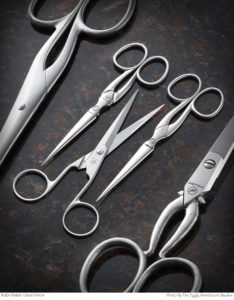
In addition to pocketknives, the author is also well known for her award-winning custom scissors made in the original knifemaking center of the United Kingdom—Sheffield, England. (Eric Eggly/PointSeven image)
The Author, Grace Horne
Editor’s note: An award-winning knifemaker from Sheffield, England, the author currently makes traditional folders. For more information contact her at Dept. BL9, The Old Public Convenience, 469 Fulwood Rd., Sheffield, United Kingdom, S10 30A [email protected], gracehorn.co.uk. Also: Steven and Kylie Cocker, Instagram @steven_cocker_sheffield; Michael May www.michaelmayknives.com; and/or Michael and Ashley Harrison plus apprentice at A Wrights & Sons www.penknives-and-scissors.co.uk.
*Tradition and Change: The Sheffield Cutlery Trades 1870-1914; Sally-Ann Taylor
**The Penny Magazine Supplement, April 1844, p.168; Thomas Allen
With 200 years under its belt, the U.S.A. was in the spirit of celebration in 1976. And the nation’s bicentennial not only brought out the best in citizens, but knifemakers as well.
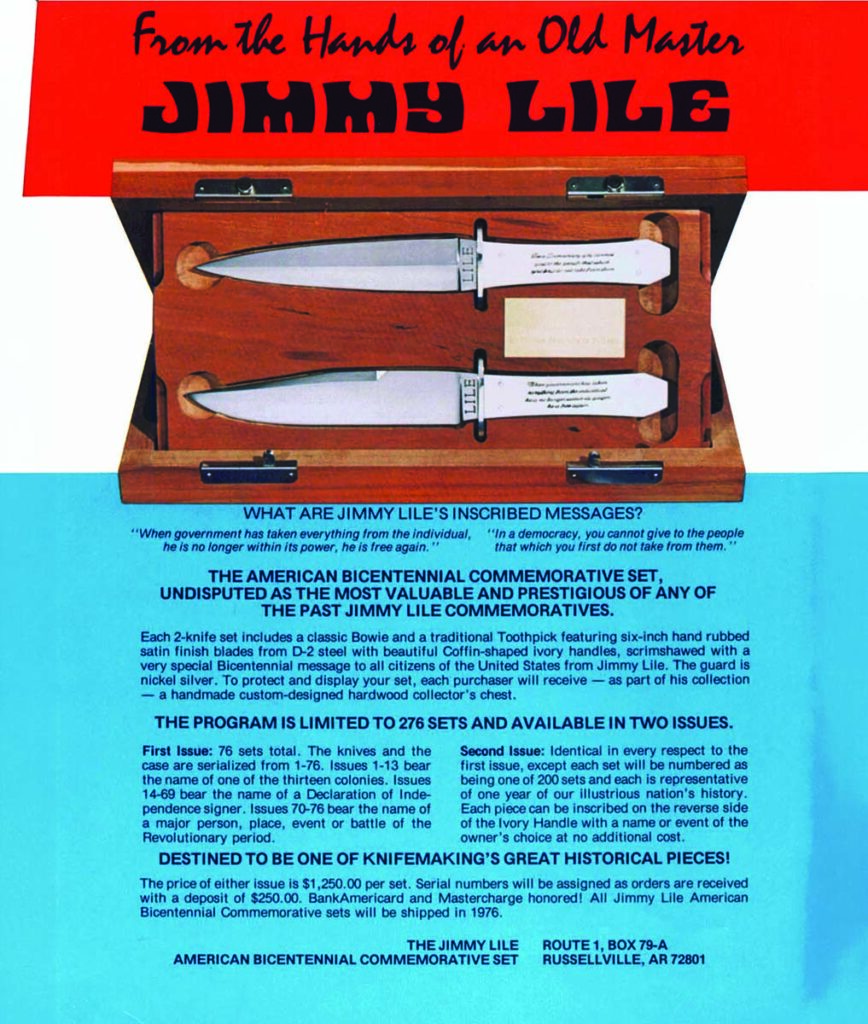
BLADE® Magazine Cutlery Hall of Fame® member Jimmy Lile was one of them, offering up a set of knives for America’s 200th birthday in the July/August issue of that year’s American Blade. Unlike other custom makers advertising flashy commemorative pieces, “The Arkansas Knifemaker” took a more stoic and serious approach to his collection.
Jimmy Lile produced 276 bicentennial sets. The first run of 76 featured historic inscriptions: colonies (1-13), Declaration signers (14-69) and Revolutionary icons or battles (70-76). The second identical run was numbered 1-200 to mark each year of American independence.
The bowie and dagger composing the set were sober in design and ornamentation, with clean lines the defining feature of the coffin-handle knives. Yet, what the pair lacked in stars and stripes celebration, they more than made up for in Lile’s deadly serious and patriotic scrimshaw on the handle scales. One might even cast the inscriptions as stark warnings.
On the bowie it reads: “When government has taken everything from the individual, he is no longer within its power, he is free again.” While the dagger is inscribed with, “In democracy, you cannot give to the people that which you first do not take from them.”
Interestingly, these do not appear direct quotes but paraphrases by Lile. The first most closely resembles a passage from Aleksandr Solzhenitsyn’s novel The First Circle. The second bears a striking resemblance to a line from an essay by French economist and philosopher Frédéric Bastiat.
No matter the words’ origins, they stand as portents as sharp as the knives they were inscribed on. And they’re as relevant 250 years after our country’s founding as they were at its bicentennial.