
Knife History

The history of knives and other edged instruments is tied to the history of people in general. As humankind’s oldest tool, unraveling knife history can lead to even more surprising and enriching information to better understand the world.

Chute Knife: Full-Spectrum Warrior

A fine example of a tool and weapon of war, the chute knife more than rose to fulfill the roles for which it was intended.

Harry Archer was a somewhat shadowy figure. At the height of the Vietnam War, he was engaged in nasty business—fighting a stealthy enemy in a steaming jungle, sometimes up close and all too personal.

Those who knew Archer acknowledged that some of his exploits were “larger than life.” They considered him an early non-movie version of author David Morrell’s fictional character of John Rambo*. Still, Archer was real, flesh and blood. And it seems altogether fitting that responding to his need for knives that “deliver” in a tight spot—survival, seconds along the fine line between life and death—he would come to know and rely on another legend.

According to John Denton, perhaps the world’s foremost authority on the knives of BLADE Magazine Cutlery Hall-Of-Fame® member Bob Loveless, Loveless and the man he came to describe as the “head of CIA operations in Vietnam” were introduced to one another by knife writer/Cutlery Hall-Of-Famer Ken Warner. It followed that Loveless made several knives for Archer’s use in the field, among them a fine sub-hilt and stag-handle example of his well-known Big Bear, along with several other  Big Bears. Loveless’s close friend and fellow maker Steve Johnson was working in Bob’s shop at the time and participated in crafting these. A fighter in a tulip wood handle is another cold beauty.
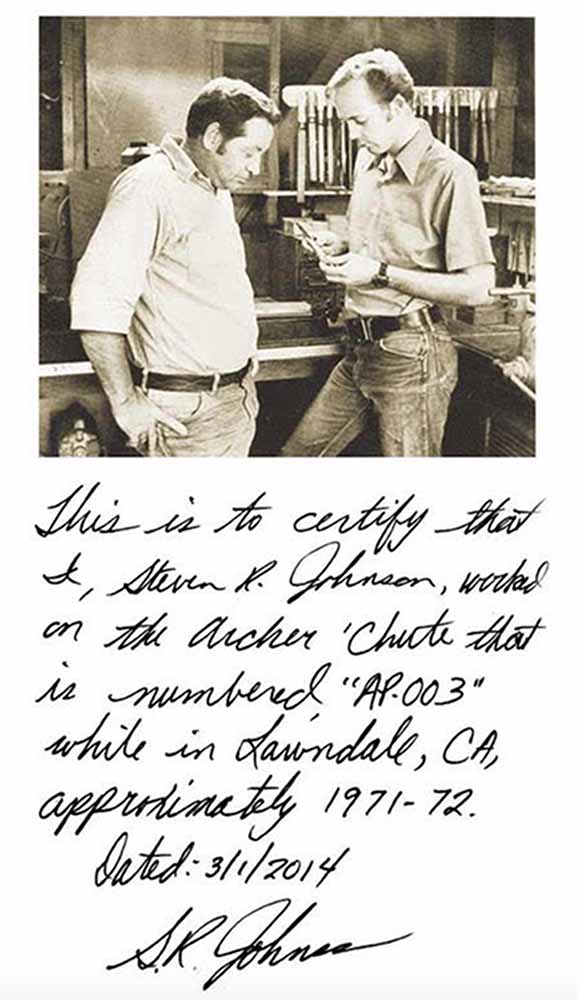
Johnson worked with Loveless from June 1971-October 1974 in the Lawndale and Riverside, California, shops. Steve had a hand in the production of the prototype chute knife in the earliest days, and 23 years later signed a photograph for John Denton attesting to his work on that piece of history. Steve’s inscription reads in part: “This is to certify that I, Steven R. Johnson, worked on the Archer ’chute that is numbered ‘AP-003’ while in Lawndale, CA, approximately 1971-72.”
Johnson worked with Loveless from June 1971-October 1974 in the Lawndale and Riverside, California, shops. Steve had a hand in the production of the prototype chute knife in the earliest days, and 23 years later signed a photograph for John Denton attesting to his work on that piece of history. Steve’s inscription reads in part: “This is to certify that I, Steven R. Johnson, worked on the Archer ’chute that is numbered ‘AP-003’ while in Lawndale, CA, approximately 1971-72.” (images courtesy of John Denton)

Then there is the well-known Harry Archer chute knife, a versatile fixed blade with good looks and the ability to travel light but cut paracord for a quick exit from a tangled parachute shroud, and with a stout spine for prying loose from the wreckage of a helicopter. The chute knife was made for the jungle. It was made for Harry Archer.

“It seems that Loveless had been left out of a book by Warner, and Loveless sent Ken some knives to review,” Denton recalled. “It just so happened that Archer was there with Warner. Harry saw the knives and bought them all.”

Johnson worked with Loveless from June 1971 to October 1974 in both the Lawndale and Riverside, California, shops. He had a hand in the production of the prototype chute knife in the earliest days and 23 years later signed a photograph for Denton attesting to his work on that piece of history. Steve’s inscription reads in part: “This is to certify that I, Steven R. Johnson, worked on the Archer ’chute that is numbered ‘AP-003’ while in Lawndale, CA, approximately 1971-72.”

Johnson explains that the chute knife is a fairly small, compact fighter and survival knife, short, light, double-edged and strong, but not made in stock thicker than 3/16 inch. Holes for thongs are placed in the rear of the handle and the guard for lashing the knife to a pole or limb to make an improvised spear. It rides into action atop a chest pack or secondary parachute for quick, easy access. Claims that Warner had a hand in the design are unconfirmed, but “the chute” simply looks the part of the warrior’s dependable asset.

“You’re able to cut both ways with the knife via the swipe of an arm or hand,” Johnson related. “Specifically, it’s for cutting parachute cord should it be tangled or caught in a tree. It’s a knife that a pilot, paratrooper or soldier should carry, and it would not be a burden but useful and available in every situation.”

HARRY ARCHER LORE
Stories of Archer’s combat prowess have been told and retold, but to raise awareness of the immediacy of a close-in fight, nothing is better than the harrowing tale that Denton remembers Loveless repeating. John points to a photo of a vintage Big Bear, identifies it as a knife that Archer took into combat, and says, “Harry and his men got into a hand-to-hand fight, and the tip of the blade was broken off inside the enemy. Harry took the knife back to Bob to fix, and Loveless said, ‘Where’s the tip?’ Harry replied, ‘It’s still in the rib cage of the Viet Cong soldier.’ So, Loveless fixed the blade.’”
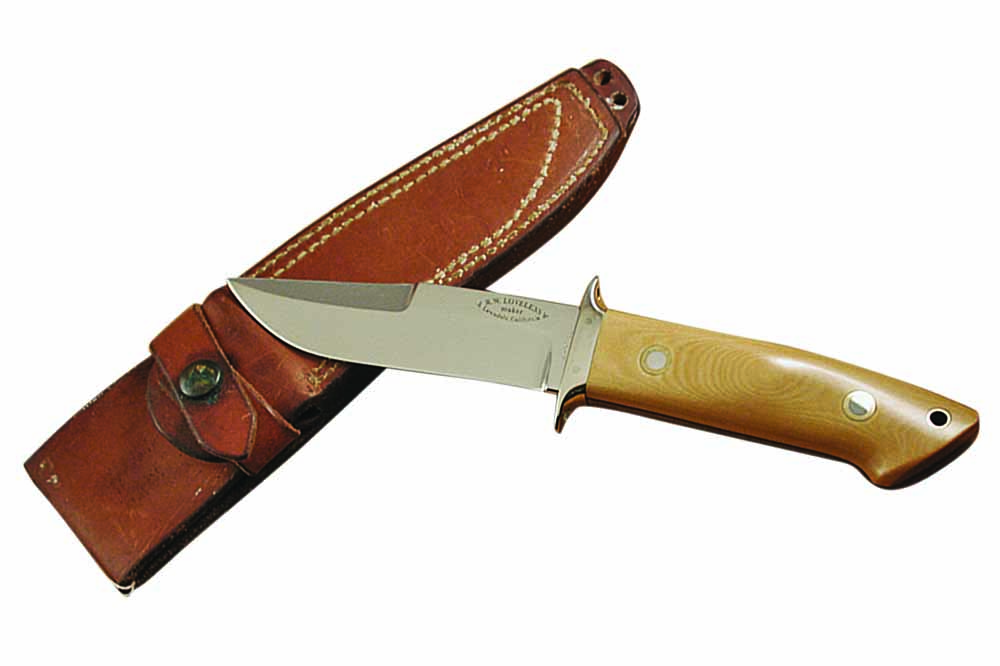
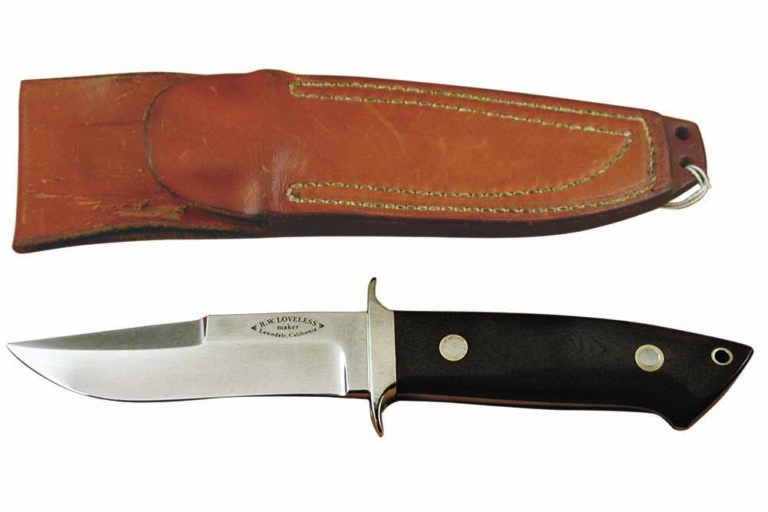
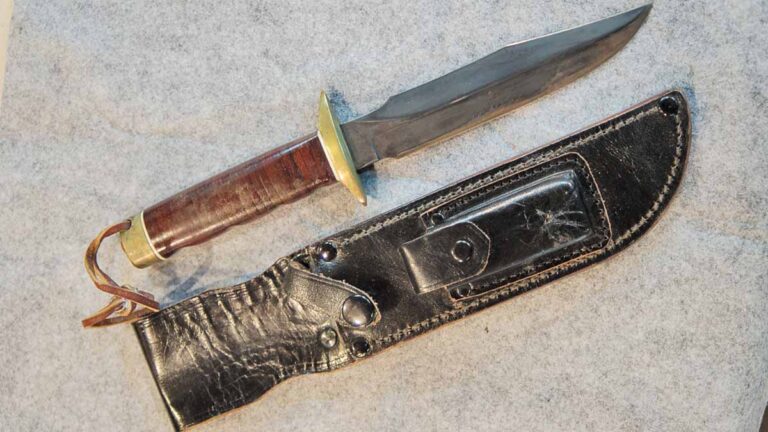
Made in Bob Loveless’s Lawndale, California, shop about 1973-74, this chute knife in ivory Micarta® is stamped BR-003. It was made for the Brass Rail, a famous gun shop in Hollywood, California, where all the celebrity types hung out to see guns and knives. Note the holes in the guard for lashing the knife to a pole to make a spear.
Made in Bob Loveless’s Lawndale, California, shop about 1973-74, this chute knife in ivory Micarta® is stamped BR-003. It was made for the Brass Rail, a famous gun shop in Hollywood, California, where all the celebrity types hung out to see guns and knives. Note the holes in the guard for lashing the knife to a pole to make a spear. (images courtesy of John Denton)

Like the Big Bear and other Loveless creations, the chute knife has its place in the lore of Harry Archer. After he collaborated to produce the prototype, Johnson continued to work with Loveless on more of the chute knives. He remembers meeting Archer in the California shops.

“Loveless really admired Archer and his adventures in the Vietnam War era, working with USAID**, the CIA and different assignments in various parts of the world,” Steve commented. “[Harry and I] discussed life in camp in Vietnam, interactions with Vietnamese soldiers and personnel with whom he was serving. That was quite interesting.”

Steve calls the chute “one great knife” and remembers conversations in Lawndale when the veteran operative praised it as light and small enough to carry so that it could always come along on a mission. Johnson also made a chute knife for Archer and continues to produce his own model today.

“We worked together on Archer’s order for a ‘Johnson’ version of a chute knife on a bench in the rear of Bob Loveless’s shop, in his garage in the back of his house in Lawndale,” Steve smiled. “Archer asked me to make my version, which we—mostly he—designed in the early 1970s. He did a drawing for me. The 154CM blade was about 4.5 inches long, the handle slim and a bit longer than normal, and it had a large thong tube, three handle screws, a stag handle, and checkering on the top and bottom of the tang just behind the guard.”
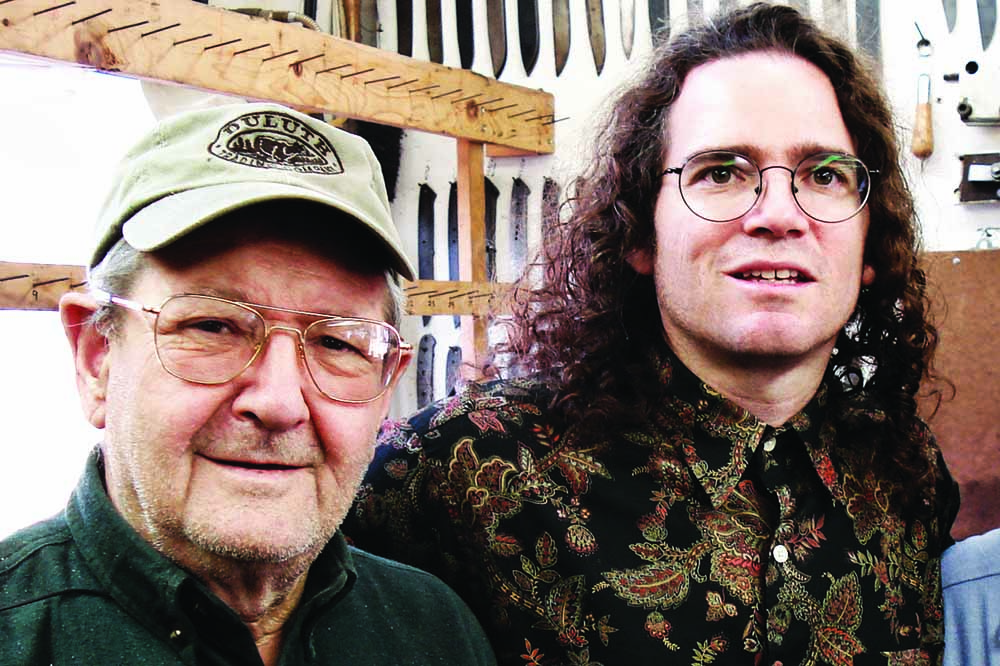
Bob Loveless (left) and John Denton (right)

For Johnson, working with Archer was a pleasure and a defining moment in his illustrious knifemaking career, which, after recovery from a serious accident, took him from Loveless’s shop to his own space in Manti, Utah, more than 40 years ago. “Harry Archer was a great guy who appreciated my work, as well as Bob’s,” Steve added, “and I made him a few knives after California. He was very easy to talk to, respected others, and he really was a man of intrigue and adventure. And Bob Loveless treated me like a son.

“I’m making a chute knife for Atlanta [Steve was interviewed prior to BLADE Show 2021] as we speak, with the blade polished so far, instead of the top grind being just the length of the clip,” Johnson concluded. “I use the pattern that Loveless gave me when I left his shop in Riverside in 1974 or 1975. This particular knife is going to have a stag handle and stainless steel fittings. I’ll make more when asked, and I still have a few on order in my books.”

Long-time maker and designer Bob Dozier was a friend of Loveless and went on to design a chute knife for Cutlery Hall-Of-Famer A.G. Russell. Though his only acquaintance with Harry Archer is through the recollections of A.G., who knew him, Bob says his version of the chute knife remains in demand for one simple reason: “It sells.”

Dozier turns out his chute knife with a 4.75-inch D2 tool steel blade and overall length of 9.75 inches. The handle is green canvas Micarta® “because Goldie [Russell] won’t let me put anything else on them. I’ve got some blades hanging right now, getting ready.”
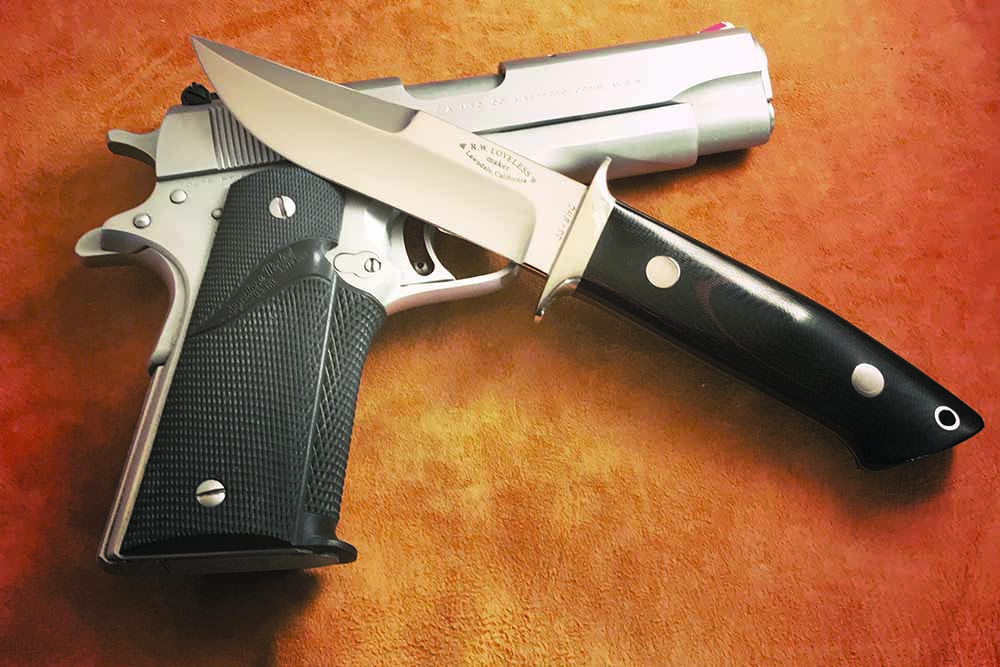
The “RR” on the guard of this Loveless chute indicates it was for the Ram Rod gun store in New Castle, Indiana. Early on Ram Rod sold knives by Loveless, Bill Moran, Ron Lake, W.W. Cronk and others. It appears here with a Smith & Wesson Model 41 modified by Loveless.

Dozier is familiar with the Loveless chute knife configuration but never had the Loveless pattern. He looked at the earlier chute knife profile and made some tweaks. “My handles are like the Loveless, but I don’t cut the butt off as square as he did. I leave more of a point on it than he did. Mine is still mostly like Bob’s, and he was one of the first to make a really good slab-handled knife. That’s one reason why most of us have copied him.” Dozier’s chute knife, designed and built for A.G. Russell Knives, has a manufacturer’s suggested retail price of $895.

SAGA of The CHUTE
The saga of the chute knife certainly has a human side. While Denton estimates that early Lawndale chute knives might fetch as much as $14,000 if found for sale today, and chute knives made in Riverside command up to $12,000 each, they are desirable on the collector market. Nonetheless, the greatest value of the chute knife lies in its lifesaving and protective capability in the hands of a dedicated professional such as Harry Archer.

Through those years of association, Loveless and Archer became friends, sharing a common bond of respect and admiration for the best in fighting and utilitarian knives.

“Loveless said that Harry would come by his shop after periods of being in the jungle for months at a time,” Denton remembered. “He used Bob’s place to unwind and try to become civilized again before heading home to Virginia. But Loveless also said, ‘Harry was like a wild animal when he came to the shop, trying to keep his head straight before he saw his family.’”
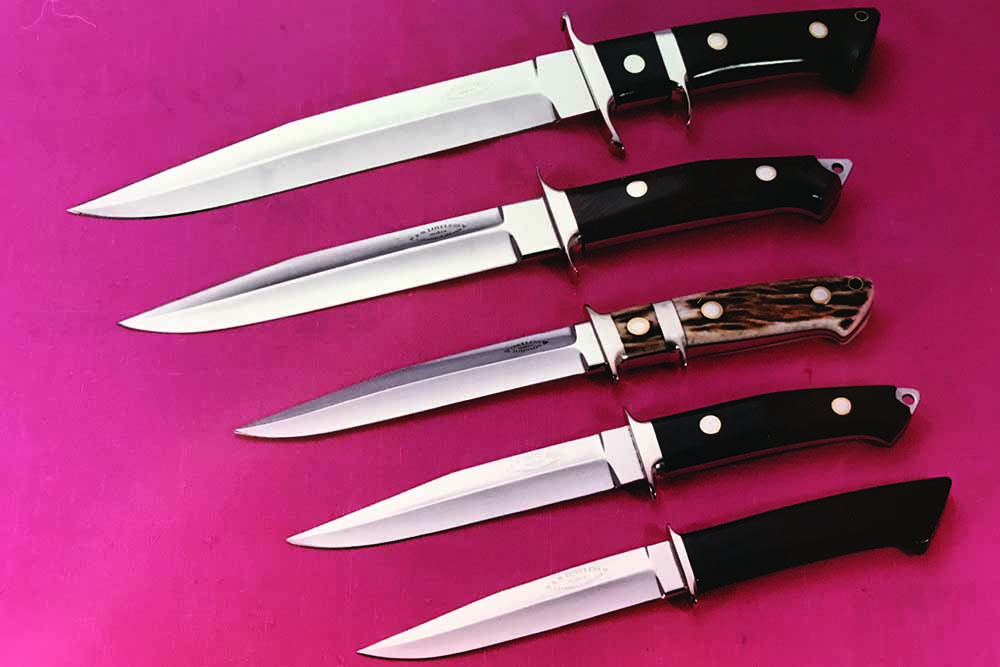
Whenever Harry Archer ordered several Big Bear fighters from Bob Loveless, Loveless said Archer told him to “send the bill to the Pentagon.” From top: the Big Bear Harry broke the tip off inside a Viet Cong soldier during the Vietnam War; tulipwood fighter with skull cracker; Loveless/Johnson sub-hilt with the initials HJA for Harry J. Archer; boot knife with skull cracker; and one Loveless called the Pig Sticker.
Whenever Harry Archer ordered several Big Bear fighters from Bob Loveless, Loveless said Archer told him to “send the bill to the Pentagon.” From top: the Big Bear Harry broke the tip off inside a Viet Cong soldier during the Vietnam War; tulipwood fighter with skull cracker; Loveless/Johnson sub-hilt with the initials HJA for Harry J. Archer; boot knife with skull cracker; and one Loveless called the Pig Sticker. (image courtesy of John Denton)

The chute knife is indeed a fine example of a tool and weapon of war rising to fulfill the roles for which it was intended. It remains a popular pattern because of its looks, quality and versatility. And for one other reason in particular: It helped men like Harry Archer survive the most desperate of situations and make it home.

*In actuality, Morrell based the Rambo character on Medal-Of-Honor recipient Audie Murphy.

**USAID is the acronym for United States Agency for International Development, with the inference here being that in this instance it functioned as a cover for the CIA.

More On Bob Loveless Knives:

  • 15 Best Bob Loveless Knives of All-Time
  • The Legacy of the Bob Loveless Dropped Hunter
  • Merritt-Loveless Knives Do Indeed Hold Merit
  • Fourth In Greatest Loveless Knife Designs Series
  • The Gerber Mark II: A Historic Fighting Knife

    The Gerber Mark II Is One Of The Most Famous Combat Knives Ever Issued To The American Military. First Introduced In 1966, It Still Endures Today.

    When it comes to military knives, few are as universally beloved as the Gerber Mark II. First issued for use by U.S. service personnel in the Vietnam War in 1966, the knife has stayed in production since with the exception of 2000-2008.

    The Mark II was successful due largely to its well-designed blade and lightweight. The blade is 6.5 inches long, and contemporary versions of it are made from 420 HC stainless steel. The handle is made from die-cast aluminum which helps keep the weight to just eight ounces. 

    What Makes The Gerber Mark II Special?

    The Mark II stands out thanks to its blade design. There are many combat knives and bayonets, such as the M7 and M9, that are modeled after the classic dagger or spear point. The Mark II also has a double-edged spear point blade but with one massive exception: the wasp waist.

    The wasp-waisted blade has a narrower section of steel, akin to how a wasp’s body narrows at its waist. On the Mark II, this narrower section comes toward the guard, and the edge on both sides has small serrations. Not the deepest you’ll find on a knife, the serrations are still there to cut.

    Very few modern combat knives have the wasp waist (other famous American models like the M7, USMC fighting utility knife, and M9 don’t have it), and it is the visual signature of the Mark II.

    Can I Buy A Gerber Mark II Today?

    Yes, you can, but it’s not so straightforward. Gerber is, of course, still in business and thriving, but go to its website and you won’t find a Mark II for sale. There are other serrated tactical knives but no Mark II.

    To purchase a Mark II today you’ll have to either go to sites like ebay or retailers such as Knifecenter, Smoky Mountain Knife Works, etc. Other makers offer knives similar to the Mark II, but if you want the real deal you’ll have to dig a little bit to purchase one yourself. 

    However, the ones of recent make that are available are reasonably priced at right around $100-$115.

    Read More

    Military Knives: Soldiers’ EDC From The Past 50 Years

    Stepping away from standard issues, combat veterans recount the off-beat military knives they used day-to-day during their service.

    Since BLADE® Magazine went to press for the first time 50 years ago, there have been wars and rumors of wars. Even in peacetime, the U.S. military has stood ready in defense of freedom around the world.

    When service men and women have deployed into harm’s way through the years, their knives of choice have been by their side, sheathed or strapped, buckled or pocketed, or carried in a duffle bag. From Vietnam to Iraq and Afghanistan, service personnel have taken their chosen tools abroad and put them to use for a variety of chores.

    Kim Breed

    • Fer de Lance from Pacific Cutlery
    • Ka-Bar-type fighting/utility fixed blade
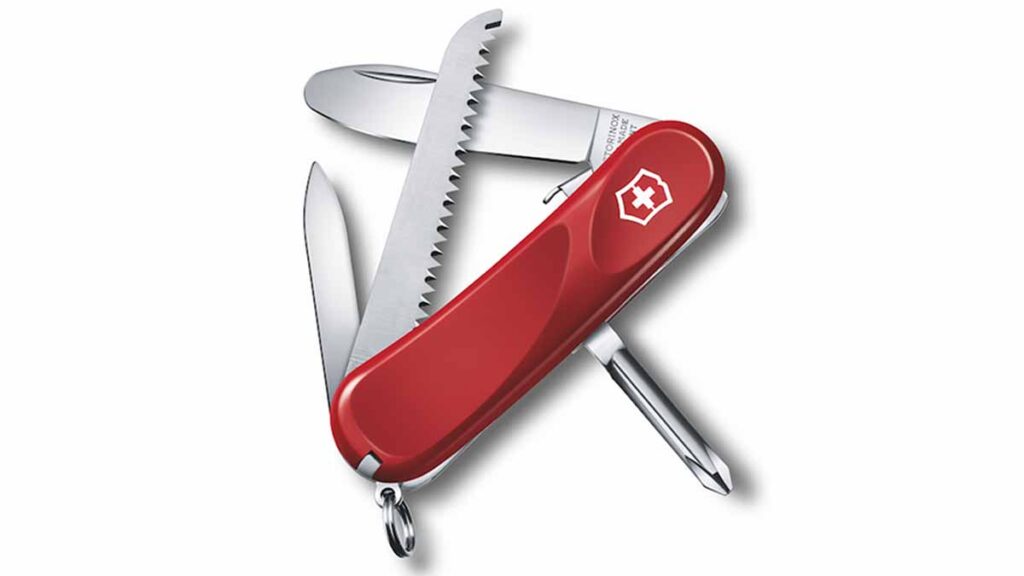
    • Swiss Army knife with tweezers
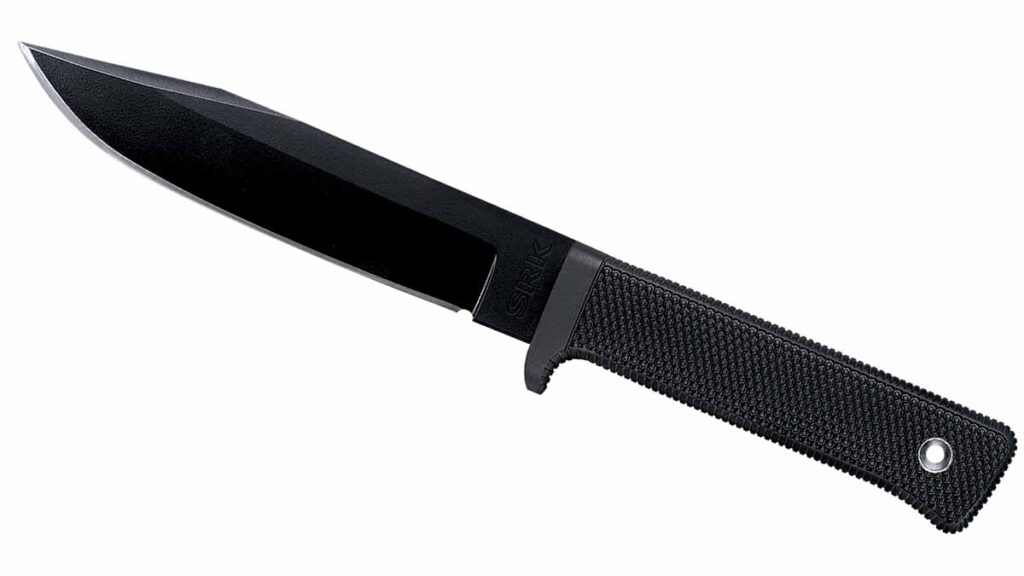
    • Cold Steel SRK
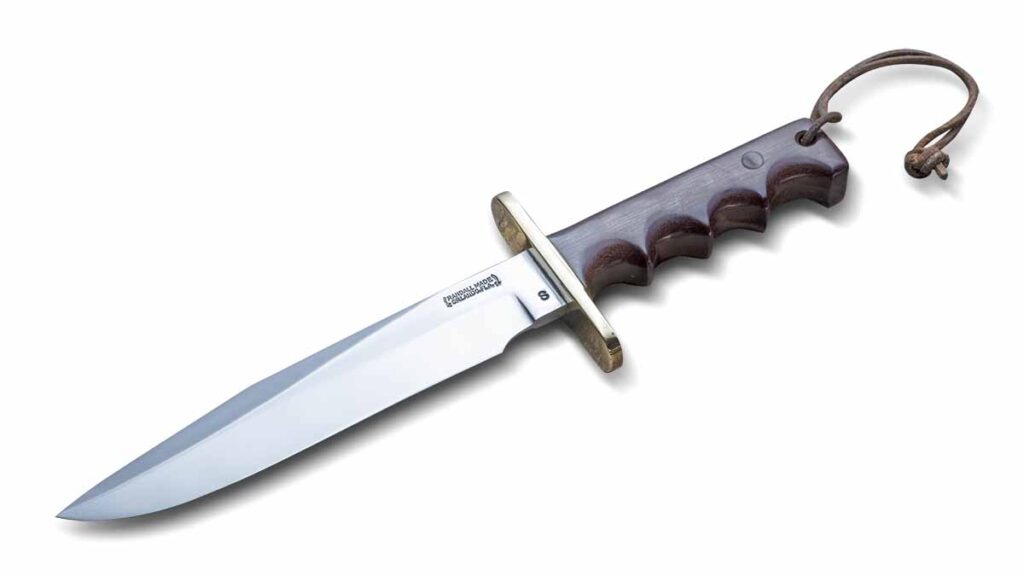
    • Randall Models 1 and 14

    BLADE field editor/knifemaker Kim Breed spent nearly two decades in the Army, serving with the 10th and then 5th Special Forces Groups. His experience in the Gulf War included a mixed bag of available knives for anything that was needed.

    Military Knives: Pacific Cutlery Fer de lance
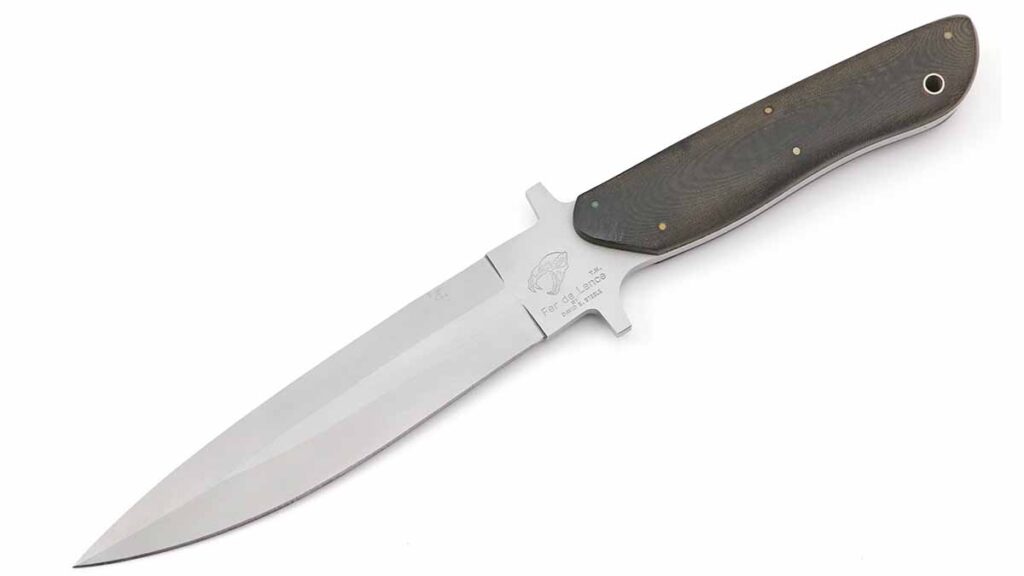
    BLADE® field editor/knifemaker Kim Breed said his experience with military knives in the Gulf War included a mixed bag, including the Fer de Lance designed by David Steele for the now-defunct Pacific Cutlery. Pacific Cutlery was owned and operated by BLADE Magazine Cutlery Hall-Of-Fame® member Les de Asis, who went on to found Benchmade Knife Co. (image of Fer de Lance courtesy of Arizona Custom Knives)

    “I carried the Fer de Lance designed by David Steel and produced by Pacific Cutlery,” he said. “It’s a double-edged fighter and I carried it almost my whole career. It’s light in the hand and has a big enough blade to do the job. Two edges meant I had one sharp for heavy duty and the other for finer stuff. Plus, the locals would freak out when I brought out a double-edged knife. It was good psychological warfare.”

    Along with the Fer de Lance strapped to his back, Breed also had a Swiss Army knife at his side and an Arkansas toothpick.

    Military Knife: Swiss Army Knife
    An unexpected military knife: Kim Breed indicated Swiss Army knives were especially handy in Somalia for removing stickers and thorns with the tweezers.

    “It wasn’t the real big Arkansas toothpick,” he remembered. “It was a smaller dagger with an aluminum handle. A lot of guys would buy the Ka-Bar because it was a good knife—but it was also cheap. When we got bored, we would throw knives, betting for a cigarette, chocolate bar or pound cake. The Ka-Bar might break but the aluminum-handle dagger wouldn’t.”

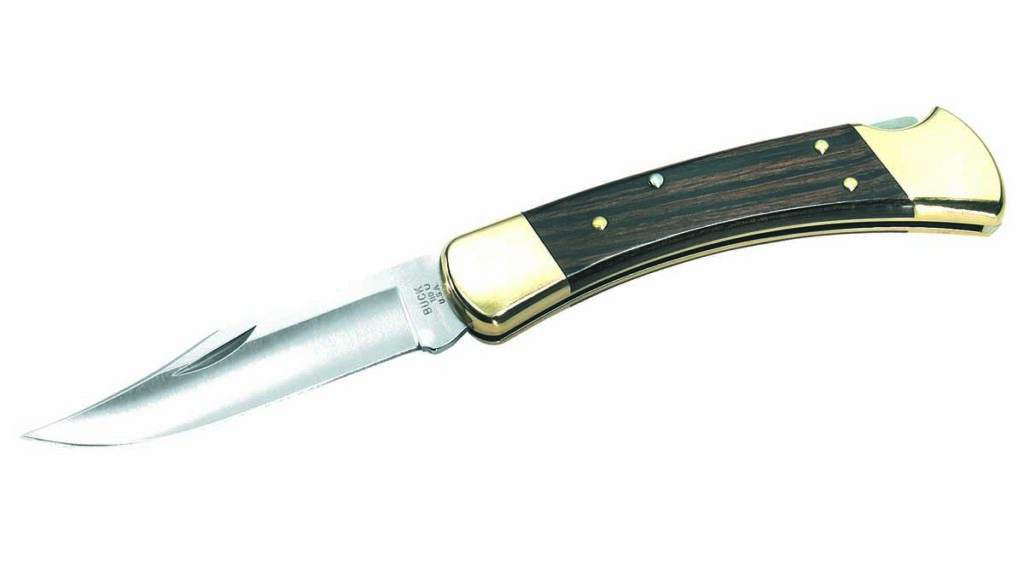
    Speaking of the Ka-Bar*, it is among the top five knives of Breed’s Gulf War assessment, along with the Cold Steel SRK, Swiss Army knife, Randall Models 1 and 14 and the Buck 110. Each earned a bit of praise from the veteran.

    Military Knife: Buck 110
    The Buck 110 folder was widely available at the local PX and had good blade steel and easy carry for assorted cutting jobs.

    The Ka-Bar has stood the test of time, and its generational tie to earlier combat deployments of family members from World War II forward may have been an influence, but for the most part, there was value, performance and availability to spare with the iconic fixed blade.

    “It was in all the PXs,” Kim added. “You could get one for $12 and it worked pretty good, but if you broke one now and then you could have two or three around.”

    Cold Steel SRK
    Kim Breed said the Cold Steel SRK was a favorite among the troops, citing its molded Kraton handle in particular for praise.

    Breed says the SRK was a favorite with its molded Kraton handle, while the Swiss Army was especially handy in Somalia for removing stickers and thorns with the tweezers. The Randalls were another legacy play. They were expensive knives but the troops’ fathers and grandfathers had carried them, so they were passed along to the sons and grandsons. The Buck 110 folder was also available at the local PX and had good blade steel and was easy to carry.

    Jack Stottlemire

    • Ka-Bar-type fighting/utility fixed blade
    • Benchmade Stryker
    • Air Force/jet pilot survival knife
    • Custom Bob Horrigan
    • Randall Models 1 and 14

    Knifemaker Jack Stottlemire served with the United States Marine Corps and the Army for a total of 27 years, with 14 combat deployments. He saw action in Operation Just Cause in Panama, Desert Shield and Desert Storm, the air war in Bosnia, Kosovo, Afghanistan and Iraq. The Marine service was first and he saw all his combat duty with the Army, retiring as a sergeant major with Special Operations. Like Breed, he stresses that knives were used for camp chores, prying, slicing and such.

    Military Knives: Randalls
    Randalls were expensive but fathers and grandfathers had carried them, so they were passed along to the sons and grandsons. Developed in the mid-1950s, the Randall Model 14 Attack gained fame as a military knife during the Vietnam War. (Dan Clinton image)

    “Using a knife in combat to stab somebody is pretty much bull,” he declared. “I don’t know anybody that used a knife for that in all my years. But if you’re in a helicopter crash and you need to cut strings or get somebody else out of the wreckage, that’s more realistic.”

    Again, the Ka-Bar makes an appearance in the top five knives from his experiences, particularly in the desert environment. Stottlemire’s top five knives of the Iraq and Afghanistan wars include a custom Bob Horrigan** piece with a green Micarta® handle and a 5.5-inch blade of 440C stainless steel. “Bob and I were in the same squadron together and he was a real hero,” Jack offered.

    Military Knives: KaBar
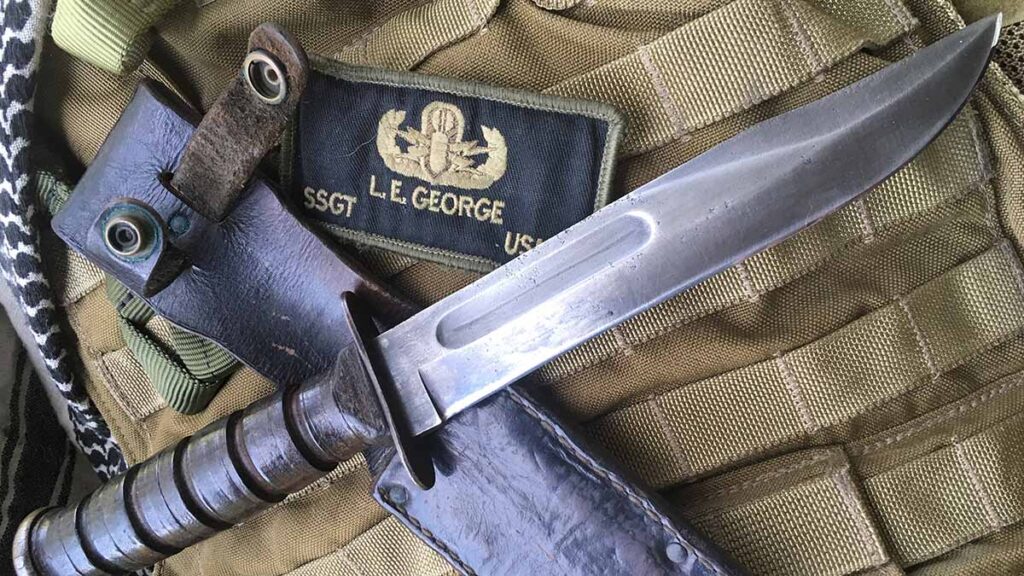
    Les George said he’s “pretty sure” his Ka-Bar saw action in the Vietnam War, the Korean War and possibly even World War II. The last time the knife was in combat operations was when George saw active duty in the Iraq War in 2005. (Les George’s knife and image)

    “The Ka-Bar is everywhere and I carried mine from the time I was in the Marines, and still have it 40 years later,” he continued. “I remember getting them for $25 or $35 and using them to pry and hammer and to open MREs [Meals Ready to Eat] and ammo boxes. That’s what we used them for 99 percent of the time.”

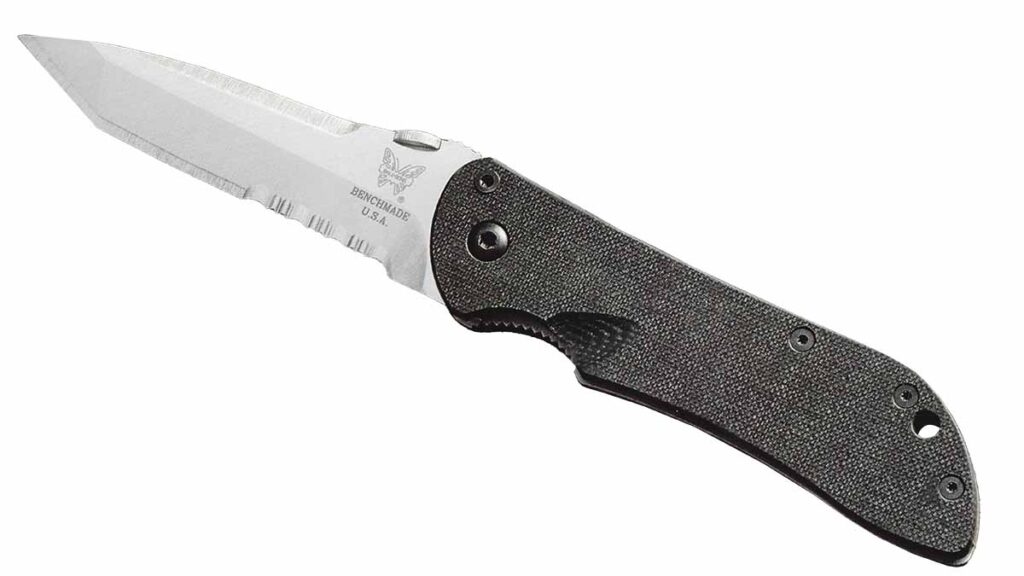
    The famed Randall had stayed around as well, again identified as a legacy knife handed down from one generation to another. As for folders, Jack’s units were issued the Benchmade Stryker. “It was common to have a lot of Benchmade autos and one-hand flippers, and there were Gerbers in the same category,” he commented. “I always carried my auto on my vest front for easy access in case I needed to cut a bandage or something like that.

    Jet Pilot Survival Knife
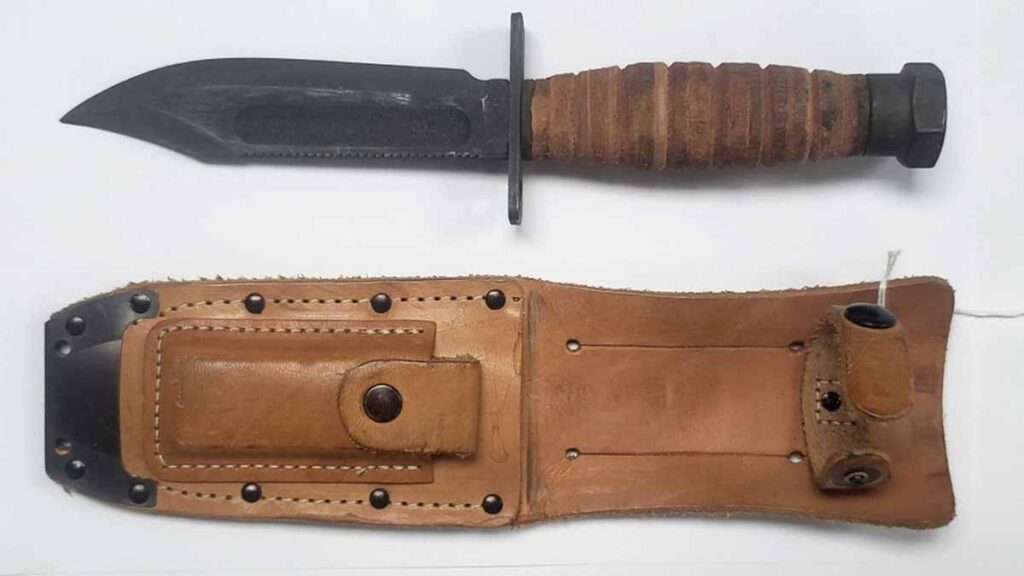
    Air Force survival knife

    “Then we also had the Air Force survival knife. It was a jump master knife that looked like a little Ka-Bar with a stacked leather handle and a short bowie blade. A lot of guys carried more than one knife. They usually had a folder stuffed in their vest or pocket and a fixed blade on their chest next to their magazine pouches. That was for easy access. It’s hard to get to your stuff unless it’s on the vest, especially when you’re in a vehicle or helicopter.”

    Les George

    • Custom EOD knife (self-made)
    • M11 EOD knives by Lan-Cay
    • Gerber multi-tools/Leatherman Wave
    • Benchmade Stryker and AFO
    • CRKT M16

    Knifemaker Les George served with the U.S. Marines in explosive ordnance disposal (EOD) and carried a knife specifically for EOD use. “I actually made my own EOD knife in Iraq,” he remarked. “It was the first in a series that would become the M12 EOD knife that is currently listed as an option for USMC EOD units to purchase and use.”

    Benchmade Stryker
    As for folder military knives, Jack Stottlemire’s units were issued the Benchmade Stryker, an Allen Elishewitz design that debuted in the late 1990s.

    Among the other knives that Les saw regularly in Iraq were the M11 EOD knives by Lan-Cay, Gerber multi-tools, Benchmade Stryker and AFO, and the Columbia River Knife & Tool M-16.

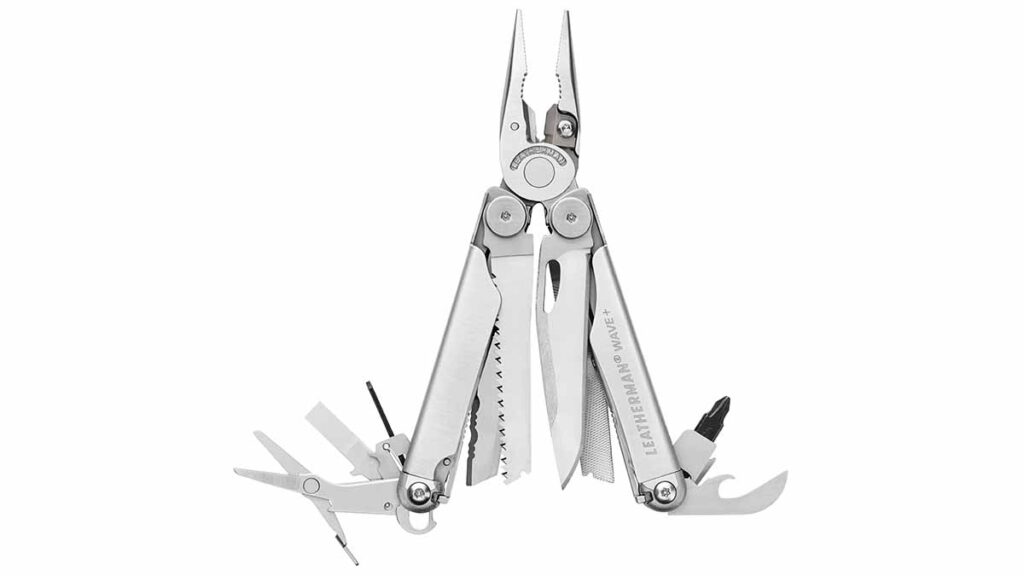
    “The CRKTs were available at the PX and the other knives were issued to the Marines by unit,” George recalled. “Obviously, the Ontario bayonet was common for that reason. I had my large fixed blade that I used to probe for and dig up IEDs [improvised explosive devices] and UXOs [unexploded ordnance]. It was a brute force tool, the very epitome of a sharpened pry bar. I had a small Benchmade fixed blade that I had bolted to my pistol holster. I used it to cut tape or prepare demolition charges, and all the cutting utility I needed was done with that knife. I also carried a Leatherman Wave multi-tool. I liked the Wave over the issued Gerber because it closed up smaller, and I could access the blade without opening the tool.”

    Military Knives Wave Plus Fanned
    Thanks to their versatility and affordability, multi-tools have been popular with the troops since Leatherman Tool Group introduced its original multi-tool in 1982. Les George carried the Leatherman Wave because it closed up smaller and he could access the blade without opening the tool. The Wave+ is a Wave descendant.

    Les chose his knives based on the situations he might find himself in during deployments. “The big and small fixed blades had their niche, while the multi-tool was available as a catchall. With the kind of war that I saw, there was not much thought of knives used outside of tools, and for me cost was not a factor. I would have spent about whatever the price to get the knives I wanted.”

    Top 5 Knives From The Vietnam War

    • Ka-Bar-type fighting/utility fixed blade
    • SOG fixed blade
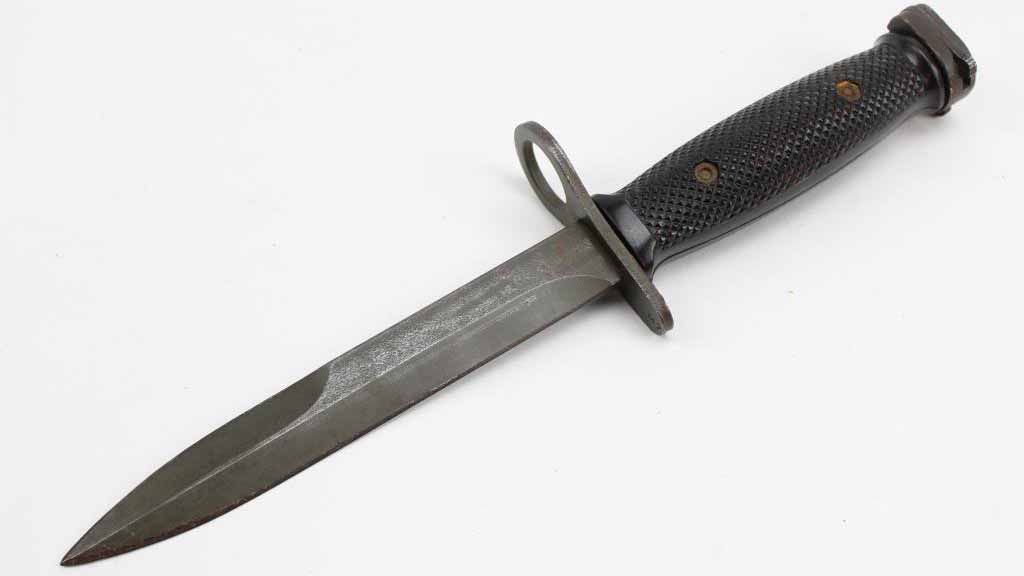
    • M7 bayonet
    • Air Force/jet pilot survival knife
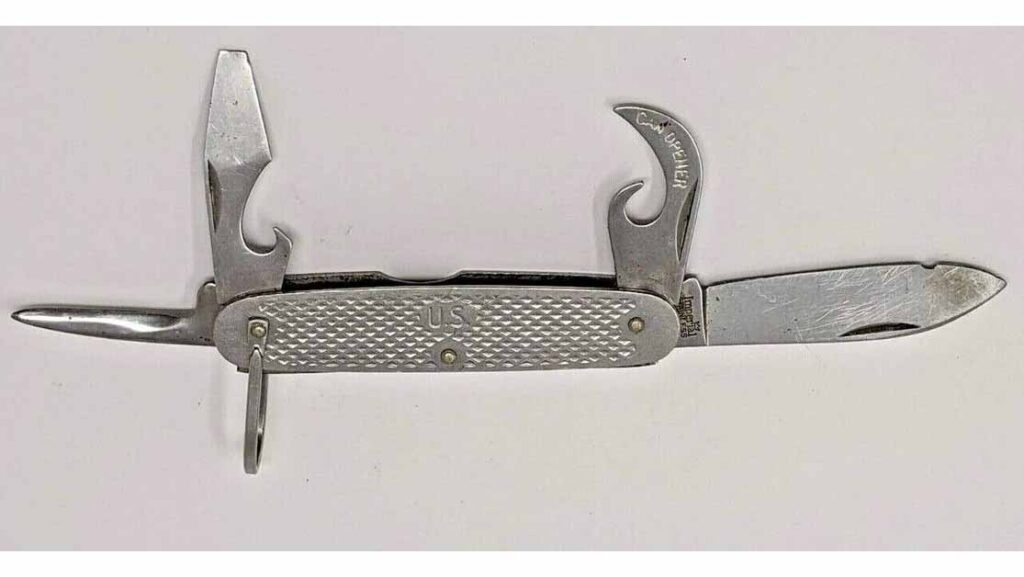
    • MIL-K

    After studying the Vietnam War era and the knives that were most often found during that period in Southeast Asia, Frank Trzaska has come up with his top five from that timeframe. His list includes—you guessed it—the Ka-Bar, which sits at the top. “The U.S. Fighting/Utility knife, the Mark 2, the Ka-Bar, call it whatever you will, but to me it is America’s fighting knife—adopted in 1942 and still serving our troops to this day,” he smiled.

    M7
    M7 Bayonet was a common ‘Nam era military knife.

    Others topping Frank’s list include the original SOG, which he calls “a very hard-to-find knife made in limited numbers for the super-secret Studies and Observation Group [SOG], Green Berets that went out into the field to locate the enemy—Recon.”

    Frank has also found the M7 bayonet, designed to fit the M16 rifle, to have been in regular use. “It was another piece in succession that was originally adapted from the M3 trench knife of World War II fame,” he noted. “The M3, M4, M5, M6 and M7 all used the same blade profile.”

    Military Knife: MIL-K
    MIL-K was a handy addition to a soldier’s kit.

    The Jet Pilot Survival knife, aka Air Force survival knife, and a small all-metal pocketknife called the MIL-K were frequently seen with troops in Vietnam, Frank noted. “The Jet Pilot Survival knife was an iconic knife of the Vietnam era, and it was shown in photographs everywhere,” he related. “Although the name was ‘Jet Pilot,’ it was seen on ground pounders just as often. The MIL-K was the perfect all-purpose pocketknife that, as an extra, is dated so you can collect all the years and at a somewhat low price.”

    Trzaska has spoken with troops all over the world, and the multi-tool has surged to the forefront among military personnel deployed these days, but he also quickly adds that the Ka-Bar is still a favorite. Given the salaries of enlisted men, he speculates that cost was always a factor in the purchase of a Vietnam-era knife.

    Final Cut

    Times change but for soldiers through the last half century/publication life of BLADE, knife uses have stayed the same in many ways. “Almost everyone in Vietnam carried two knives, a pocketknife and a fixed blade, and if you count the bayonet, it would be three,” Frank observed. “They were used mostly for opening meals, mail and boxes. A pocketknife was handy but a fixed blade on your harness was meant for fighting. Along with your bayonet, they were weapons of last resort.”

    From the more expensive models to everyday carry in the field, military personnel in Vietnam had their pick. “The Randalls were the knives everybody wanted,” Trzaska said, “but few had them. They became a status symbol of a professional. Young guys also liked big knives until they had to carry all that extra weight and never use them. Then the small knife was the king. Most knives of the era were common steel and would rust easily. Stainless steel was a big plus and found its way into knife production over time.”

    Through the years, BLADE has published many accounts of knives in the hands of military personnel deployed around the globe. Since the early 1970s, these stories have brought valuable information to readers regarding performance, personality and collectability. That trend will continue into the future.


    *As Frank Trzaska notes, no matter whether you call it the USMC fighting/utility knife, Mark 2, Ka-Bar or what have you, the fixed blade with the leather-washer handle and clip-point blade made by several different companies that first appeared in 1942 and did yeoman’s duty throughout World War II remains a U.S. military icon.

    **Robert “Bob” Horrigan, a member of U.S. Army Special Operations Command, was killed in action in Iraq on June 17, 2005. His twin brother is award-winning ABS master smith John Horrigan.

    Read More:

    Blunted Blades And Knife Bans: England Has Gone Over The Edge

    England has had an uptick in knife crime in recent years, including the horrible incident costing three young girls their lives in Southport. Certainly, crime of any kind deserves scrutiny and solutions so that society can conduct its daily affairs in a safe and secure environment. Unfortunately, it’s never the calmer heads that prevail when dark winds blow.

    Case in point, the utterly asinine suggestions emanating from the host of a BBC documentary on UK knife crime.

    From the New York Post:

    “Actor Idris Elba announced amid his forthcoming knife crime documentary that the United Kingdom must consider “innovative” prevention methods such as blunting or banning knives.”

    Let that sink in… blunting or banning knives. And he’s not talking about neutering simply what might be considered “scary” knives—tactical fixed blades, karambits and the like. No, it’s the whole megillah.

    He said in the Post article:

    “The truth is that kitchen knives are perhaps 25% of the knives used in most terrible crimes. That’s one of the stats in the film. And those kitchen knives are usually a domestic situation,” Elba warned. “So kitchen knives… of course, it’s very difficult. They’re a domestic knife.”

    This walks hand in hand with other extreme actions that have taken place in England regarding knife sales. One of the more atrocious, ID requirements and live video sales to purchase knives online. Why, the next thing you know there’ll be a proposal for licensing knives.

    Well, you don’t have to wait long for that either.

    Elba thinks this might be the panacea for his country’s woes, banning nearly everything, and licensing those scant few deemed worthies to own their family’s cherished sword or knife.

    “So let’s ban them all, and if you have one of those knives, get a license for it,” he suggested of people wanting to keep family heirloom swords. “Simple as that.””

    And if you think this sentiment is contained to one crackpot actor, well you’d be wrong.

    According to The Telegraph:

    “A ban on the sale of pointed kitchen knives has been backed by the Church of England, judges, top trauma doctors and psychiatrists, the police and victims as they argue that it would make life-threatening injuries far less likely.”

    It’s unfortunate England has endured an uptick in knife crime, yet this isn’t the license for it or certain segments of it to go off the deep end. I know it might sound crazy, but perhaps the English should address the root of the problem—the perpetrators.

    The harsh truth is this: no amount of blunted blades, banned kitchen knives, or bureaucratic licensing schemes will stop individuals hell-bent on violence. You can’t legislate evil out of existence by targeting inanimate objects. England doesn’t have a knife problem—it has a people problem. A system problem. A failure-to-act-when-it-matters problem.

    Axel Rudakubana—the perpetrator of the Southport killings—wasn’t some shadowy figure hiding in the margins; he was a neon warning sign flashing in plain sight. Reported repeatedly, known to authorities, radiating red flags—and yet, nothing substantial was done. But instead of holding systems accountable for their glaring incompetence, the knee-jerk reaction is to demonize cutlery.

    Blaming knives for violent crime is as absurd as blaming spoons for obesity. The issue isn’t the tool; it’s the hands that wield it—and the institutions that refuse to act until it’s too late. England doesn’t need another ban. It needs accountability, courage, and the will to confront the real problem: violent individuals, not the utensils in their kitchens.

    More on Knife Laws:

    The Sea of Mud Knife: James Bowie’s Knife Found? Pt. 1

    James Bowie history
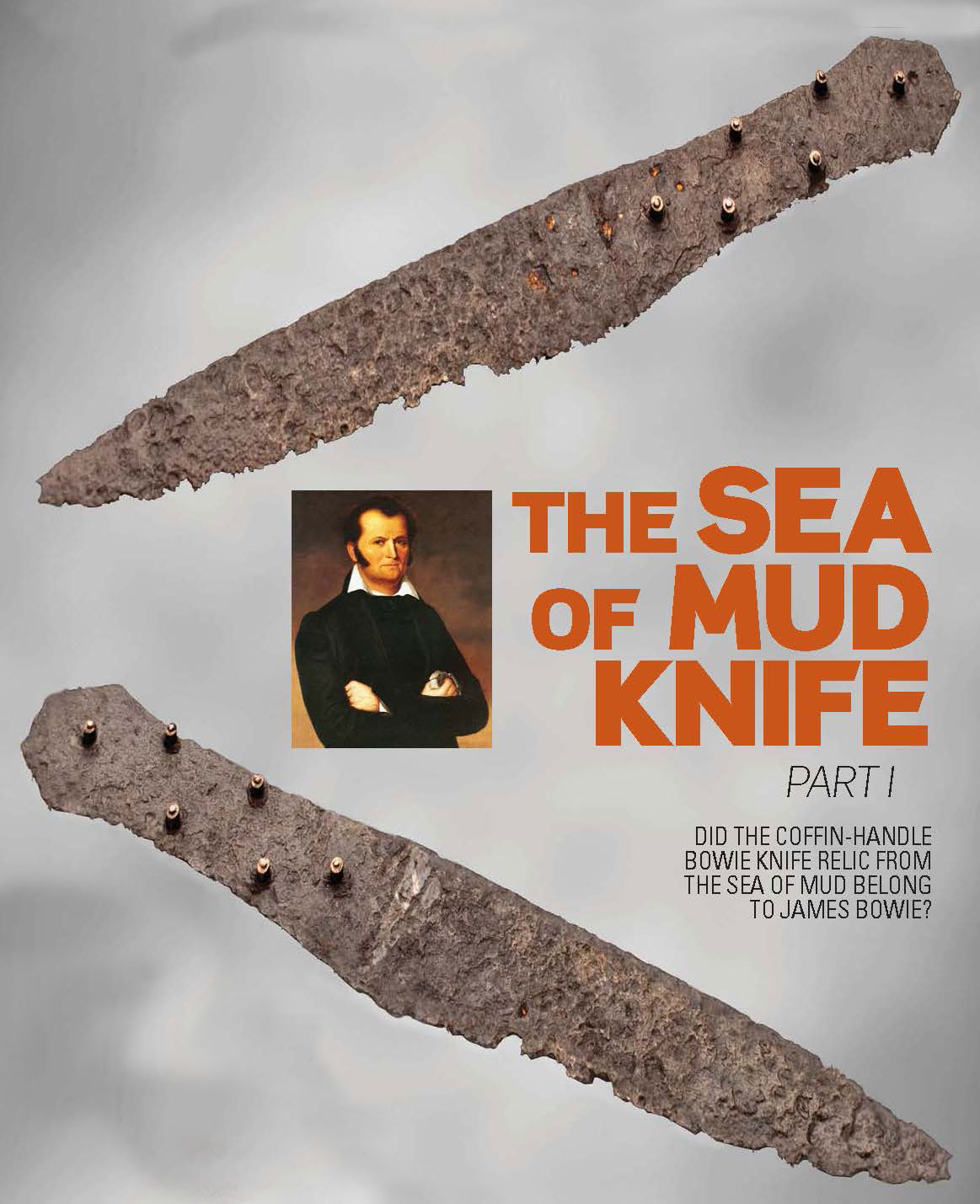
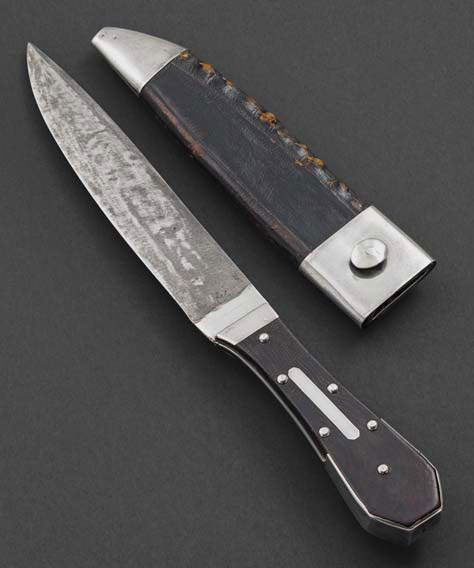
    Did the corroded coffin-handle bowie knife relic found by Dr. Gregg J. Dimmick in the Sea of Mud belong to James Bowie? Note the absence of a guard, one of the design traits of James Black. At press time the relic was in storage at Texas A&M University along with other items found in the Sea of Mud. (relic image courtesy of the Cushing Memorial Library and Archives, Texas A&M University Libraries)

    Off to See a Relic

    Jim Bowie knife Alamo history
    BLADE Magazine Cutlery Hall-Of-Fame© members B.R. Hughes (left) and the author, James L. Batson, stand in line outside the Alamo Chapel before entering it in 2012.

    On a warm and sunny Saturday morning in August 2010, my friend and fellow BLADE Magazine Cutlery Hall-Of-Fame© member, B.R. Hughes, and I left the American Bladesmith Society All-Forged Knife Expo at the Gunter Hotel in San Antonio, Texas, on foot to hike the quarter mile to the Alamo. Our mission was to see the coffin-handle bowie knife relic in the Sea of Mud exhibit at the Alamo gift shop. The relic had been unearthed years earlier by Dr. Gregg J. Dimmick, author of the highly acclaimed book, Sea of Mud.

    Made during Cutlery Hall-Of-Famer James Bowie’s lifetime, the relic may have been used in the defense of the Alamo, which fell on March 6, 1836. I had not seen the relic but ABS master smith Greg Neely had sent me a picture he had taken a few years earlier. Below the relic was a placard with the following inscription: BOWIE KNIFE.

    The relic is iron and has brass connectors in the handle. There are two small strips of decorated silver on the blade near the handle on both sides. A very small amount of the silver can still be seen. The relic had been cleaned by electrolysis. The relic is interesting due to its similarity to Bowie No. 1, the coffin-handle bowie attributed to James Black of Washington, Arkansas.

    Identification

    james black bowie knives
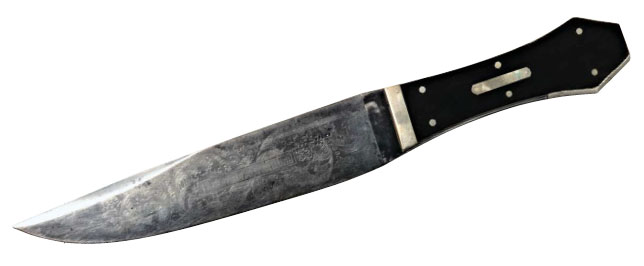
    The Carrigan coffin-handle bowie knife James L. Batson indicates was made by James Black more closely resembles the relic than either the Marks & Rees or Crown Alpha knives. The Carrigan is on display in the Historic Arkansas Museum in Little Rock, Arkansas. (Courtesy Historic Arkansas Museum, Little Rock, AR)

    History of bowie knives
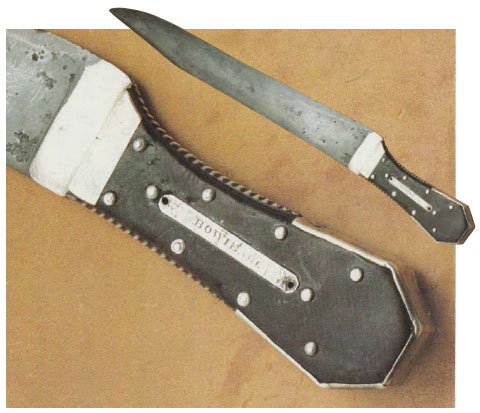
    The knife known as Bowie No. 1 does not have the same pin pattern as the relic but has many of the same characteristics of the Carrigan bowie. Bowie No. 1 has a bigger handle and much longer blade. Overall length: 18.5 inches. (image from The Antique Bowie Knife Book)

    I had learned early on that you cannot identify or verify an authentic bowie knife unless you hold it and see it—in this case, eyeball to rusty metal. From Greg’s picture I could not be sure how big the relic was. However, from the shape of the blade and coffin handle, along with the pin pattern and the studs in the handle and the silver overlays on the blade in front of the handle, I suspected that it was made by Black circa 1831-1838, in Washington, Hempstead County, Arkansas Territory.

    From my bowie knife research, I have concluded that Black originated the coffin-handle style that became one of the most popular of bowie knives. A Black knife did not have a guard. Makers in America and Sheffield, England, incorporated guards into the design.

    antique bowie knife history
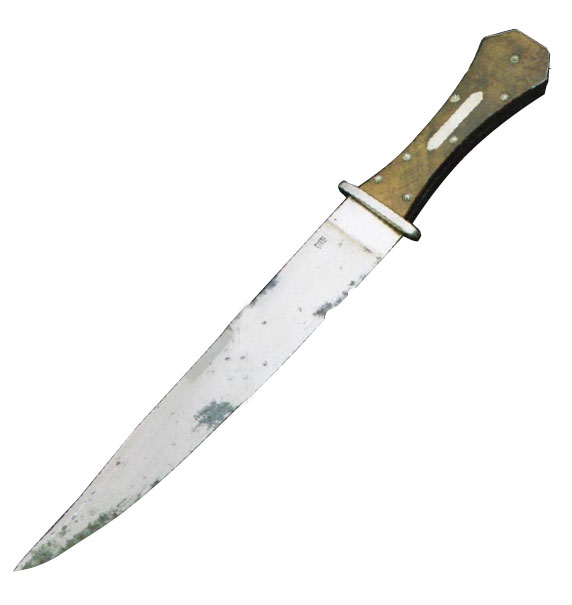
    Crown Alpha of Sheffield, England, also made coffin-handle bowies with silver overlays on the ricasso, this one for Gravely & Wreaks of New York.

    marks rees bowie knives
    Marks & Rees of Cincinnati, Ohio, made coffin-handle bowies with silver overlays on the ricasso. Marks & Rees was the first to advertise bowies for sale.

    Two of those that made coffin-handle bowies with the silver overlays on the ricasso area were Marks & Rees of Cincinnati, Ohio, and Crown Alpha of Sheffield for Gravely & Wreaks in New York. Marks & Rees was the first to advertise bowie knives for sale, and the Crown Alpha Bowie had Arkansas Toothpick elaborately etched on the blade.

    As you can see in the fourth image up, the small Carrigan knife made by Black more closely resembles the relic than the Marks & Rees (above) or the Crown Alpha knives (above Marks & Rees). Also, you can see that Bowie No. 1 (third image up) does not have the same pin pattern as the relic but has many of the same characteristics of the Carrigan. Bowie No. 1 has a bigger handle and much longer blade (13.5 inches).

    “I Could Tell He Made It”

    B.R. and I arrived at the Alamo gift shop after paying homage to the fallen by visiting the Alamo Chapel. Boy, was the Sea of Mud exhibit crowded! We had to stand in line.

    There was the relic and I could tell Black made it. I could tell from the studs that at one time had secured wood scales to the full tang. To my knowledge, Black was the only person to use this technique. The blade lengths of the relic and seven known silver-mounted Black-made, coffin-handle bowies are about 6 inches, with handle lengths of about 4 inches. The placement of the six pins looks as if Black used the same pattern to drill the holes in the tang of each knife.

    The relic had been on or in the ground for at least 160 years, but where were the top-and-bottom silver tang wraps? Where were the two silver wraps around the front of the wood scales? Where were the two silver escutcheon plates? Where was the silver pommel wrap, and where were the twelve domed silver washers that secured the scales to the tang? And where were the walnut scales?

    If the relic had been dropped by accident or lost, some of the silver mountings should have been part of the artifact, since silver is a noble metal and difficult to corrode. The wood may have deteriorated or rotted away, taking some of the attached silver mounts with it.

    Lost to Time

    bowie knife sea of mud
    The coffin-handle bowie knife relic was found on the west side of the West Bernard River below the mouth of Clarks Creek in Wharton County, not far from Hungerford, Texas. Mexican Gen. José de Urrea’s division crossed the West Bernard River from west to east on April 20, 1836, the day before the Battle of San Jacinto and a month-and-a-half after the fall of the Alamo.

    I contacted Dr. Dimmick and asked if he found any evidence of silver or wood in the soil adjacent to the artifact. He said nothing was found in the proximity of the relic but that a brass pommel cap was found at the same site, though not near the relic.

    The relic could have been lost and over time lost the silver mountings. Or, a Mexican soldier or camp follower who needed money and valued the relic only for the silver he or she could remove from it may have retrieved the relic, and the relic was not lost but discarded after the silver fittings and wooden scales were removed. Silver could not be removed from the blade. It was soldered with tin.
    A Mexican officer with some wealth may have kept the knife, especially if it had a coin-silver-mounted sheath.

    The coffin-handle bowie knife relic was found on the west side of the West Bernard River below the mouth of Clarks Creek in Wharton County, not far from Hungerford, Texas. The West Bernard River was crossed from west to east by Mexican Gen. José de Urrea’s division on April 20, 1836, the day before the Battle of San Jacinto.

    According to Dr. Dimmick, “Based on the distances recorded by the San Luis Battalion on April 19, it is believed that this site was not a campsite. The campsite of April 19 was probably near present-day Spanish Camp, Texas. If this is correct, it is theorized that the site discovered on the West Bernard is where Urrea and his division crossed the river during their advance. It is possible that these artifacts were discarded at the site as the units awaited their turn to cross. The artifacts from this site are consistent with the above theory.”

    Gen. Urrea’s division was not at the Alamo. However, then-Col. Juan Morales and his men were, and they reinforced Urrea after the fall of the Alamo. (It was about 100 men under Morales’ direction who attacked the Low Barracks where James Bowie was killed during the Alamo battle.)

    Urrea subsequently led his division along the coast from Matamoros to Goliad and Victoria. His primary opposition led by Col. James W. Fannin consisted of volunteer units from the United States.
    These troops took steamboats down the Mississippi River to New Orleans and went over land or by sea to Texas. The Matamoros Expedition led by Col. Francis Johnson and Dr. James Grant consisted of the New Orleans Greys and the Mobile Greys. None of these troops had been through Washington, Arkansas, or heard of James Black.

    So, was the coffin-handle bowie relic owned by a defender at the Alamo? And if so, how did it get from Washington, Arkansas, Territory to the Alamo, and from the Alamo to the West bank of the West Bernard River? Was this James Bowie’s knife?

    Read part 2 here.

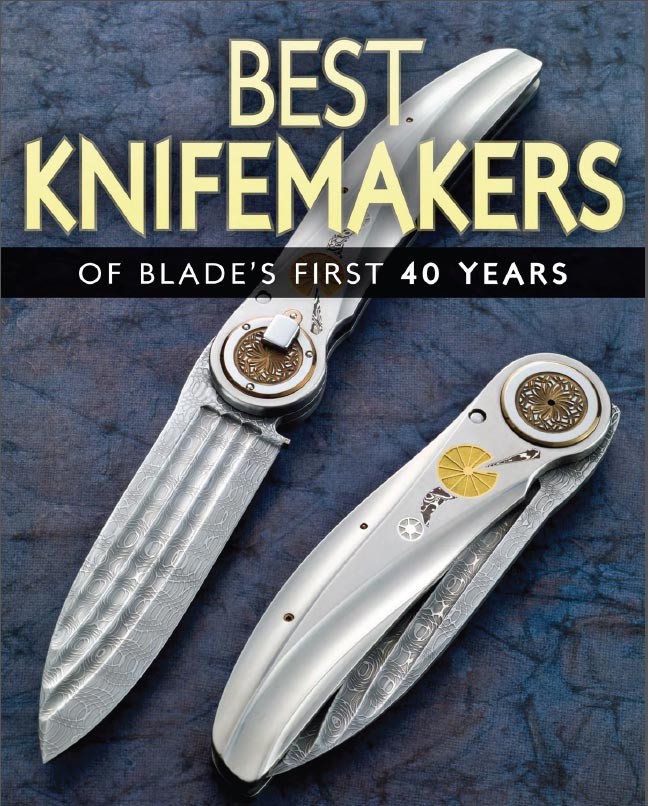
    Love Knife History? Get This BLADE Download

    list of best knifemakers

    The Cutlass: From The Sea To The Screen

    The Cutlass Is A Short Sword Used For Centuries. Today, It Is Mostly A Ceremonial Blade, But One That Continues To Inspire

    A sword can be more than just a weapon of war, the cutlass is an excellent example. For centuries, the cutlass was used by fighting forces throughout Europe as a short, one-handed stabbing and slashing weapon. 

    For many, the cutlass is best known as the sword of the pirates in the Atlantic Ocean during the 17th and 18th centuries. In a lesser-known role, it also was regularly used in agriculture throughout the Caribbean like the machete is today. In English-speaking Caribbean countries, the word “cutlass” is used to mean a machete. 

    In the modern era, the cutlass has left behind its fighting phase and is almost used exclusively as a ceremonial sword by several navies. However, its popularity endures among collectors and history buffs alike, thanks to its extensive use during the pirate era and the Age of The Sail.

    What Is A Cutlass?

    A cutlass drill on the HMS Wolverine , 1882 (Public Domain)

    The cutlass is a one-handed, single-edged sword used for close-quarters fighting that was the evolution of naval sabers into a more compact, nimble short sword. While the edge does come to a fine point, the cutlass was designed for slashing and swinging at your enemies when fighting hand-to-hand. 

    This is why the sword was a popular seafaring weapon. With a slightly-curved blade, usually between 28-32 inches, the cutlass is adept in the close confines of a ship. The straight handle and clipped guards of most cutlasses protected your hand when in battle. Additionally, the cutlass was robust enough to tackle general maritime tasks like slicing through heavy rope or thick fabric like canvas or even wood. And its size made it the perfect weapon for the type of in-your-face fighting that would happen on the high seas.

    On land, the cutlass wasn’t as dashing, mostly used to chop sugarcane and clear tracts of land in the rainforest in the New World. Though, the same qualities that made it a great fighting implement made it adept on the farm. The short, swooping blade allowed a great deal of force to transfer from the arm to the material with every swing. 

    Who Uses The Cutlass Today?

    Today, the cutlass is used almost exclusively as a ceremonial sword. While it was at its most popular centuries ago, the cutlass was still a standard issue sword until around World War 2 before it became wholly ceremonial.

    The British transitioned the sword to ceremonial duty in 1936, and the United States followed suit in 1949. Both countries incorporate the sword into military ceremonies today. The Brits issue cutlasses to naval chief petty officers. The United States also offers chief petty officers the ability to wear a cutlass with their formal dress for ceremonies and the like.

    Can I Buy A Cutlass?

    Absolutely. There are many companies making cutlasses today. While they may not be as pristine as the ones issued by the military, there are numerous companies making these types of blades. 

    Factory Cutlass Options

    Cutlasses are still made today, but, in general, they aren’t built to the same combat standard as in centuries past. The vast majority of these swords are showpieces meant to be hung on the wall and start conversations. However, if you are a true lover of the Age of Sail, these swords more than fit the bill.

    Windlass English Cutlass

    This 30.5-inch sword from Windlass is an elegant modern Cutlass, and, for a fee, can be sharpened into a real, proper sword. As is, the high-carbon steel blade is hand forged and mated to a solid brass guard. You’ll really feel like Blackbeard with it in your hand.

    The sword comes with a leather scabbard adorned with a brass tip and throat to up the visual appeal of the piece. All told, this is a high-quality replica of the cutlass that will get people talking at your next party and look great in your office or hanging on the wall.

    MSRP: $190

    Condor Naval Cutlass

    The Naval Cutlass from Condor Tool & Knife is a more modern take on the classic blade. The first thing you notice about it is the black epoxy powder finish to the blade. We’re pretty sure pirates of the 18th century didn’t have powder-coating technology, but would have loved to have had the extra corrosion resistance on the high seas.

    The blade checks in at 24 inches in length and is made from 1075 steel ground to a razor’s edge. Yes, this sword comes sharpened right out of the box for no extra fees. The smooth hardwood handle is triple riveted, and a powder-coated guard keeps your hand protected when holding the sword. A black welted leather scabbard fits snugly around the blade and keeps everything protected even if dropped.

    While it certainly doesn’t look like a sword from the movies, it’s designed to be a true, proper modern cutlass.

    MSRP: $148.49

    Kult Of Athena Pirate Sword

    Complete with a skull and crossbones etched into the scabbard’s throat, the Pirate Sword from Kult of Athena looks like it could have been taken from the set of any swashbuckling movie set.

    The 22-inch blade is made from stainless steel and comes, according to KoA, moderately sharp out of the box. That means it might need a more refined sharpening at home if you’re looking for a razor’s edge. However, the blade itself is .16 inches thick, thin enough to slice well but thick enough to hold up to some wear if used for more robust cutting tasks. But be aware, the sword is classed as “decorative”, or for display only, so keep that in mind before playing out your high seas fantasies. 

    The cast metal handle is surrounded by a bronze-plated cup guard which features a pirate ship design. The black leather scabbard has a cast tip and throat to complete the look.

    MSRP: $49

    Kingston Arms Atrim Cutlass

    The Kingston Arms Atrim Cutlass shows that not all collectible blades need to be centuries old. Made in the style of a naval cutlass, the Atrim utilizes modern materials and methods to make a truly remarkable sword.

    The 9260 spring field falchion-style blade is hand forged and comes in a satin finish. At 25.75 inches it’s a bit smaller than some other cutlasses, letting it move more fluidly in your hand and taking up a smaller display space. The full-tang construction terminated with a stainless steel guard and pommel around a brown leather handle that provides a strong grip.

    This is the most expensive sword of all the cutlasses showcased in this piece, and it’s worth every penny for the discerning, high-end collector.

    MSRP: $432.95

    Cold Steel 1917 Cutlass Sword

    When it comes to collector pieces outside of auctions, Cold Steel’s 1917 Cutlass Sword is a prime example of what’s being made today. While it is designed for display and collection, the 1055 steel blade does come with a serviceable edge out of the box. 

    In terms of size, it’s exactly what you’d expect a cutlass to be. At just under 30 inches long and 37.6 ounces, it’s a nimble sword that will feel good to hold and wield when showing off all of its intricacies. The wood handle and blued steel hand guard complete the look, and the included leather scabbard keeps the sword looking classy even when put away.

    MSRP: $289.99

    APOC Survival Cutlass

    This option is rated for proper use rather than display. That’s abundantly clear considering it comes with a MOLLE-compatible Kydex scabbard. That doesn’t come with swords meant to be hung on the wall.

    The APOC is a tactical sword that has a 21.5-inch black oxide blade made from 9260 spring steel. The black G-10 handles complete the monochromatic look and provide excellent grip in myriad conditions.

    At just under 2 pounds, this is a lightweight cutlass meant to be used as a survival tool out on the trail or in more intense outdoor situations. The blade is meant to slice, of course, and the edge comes to a fine point, making this a puncturing tool as well. Versatility is the name of the game in survival equipment, and, while a machete or shorter knife might be a better option, the APOC cutlass is built for the outdoors and to handle the elements.

    MSRP: $169.95

    Custom Cutlass Options

    There are numerous people making custom cutlasses and other swords. Whether it is for the private use and display of an individual or to be used as props in movies, at renaissance fairs, or in other forms of entertainment, there are makers and smiths crafting modern versions of the centuries-old blade.

    Even the popular YouTube Series Man At Arms: Reforged did an episode about the cutlass and showed multiple ways to craft them.

    Tony Swatton

    Swatton runs Sword & Stone in Burbank, CA and makes arms and armor for film and television. He, and his shop, were the star of the original Man at Arms series nearly a decade ago. He’s self-educated and has been making armor since he was 17.

    The first movie his work appeared in was Hook in 1991, and since then his weapons have been seen on screen in more than 300 movies including massively popular films such as Pirates of the Caribbean, Batman, and Thor. He also designed the cutlass used in Assassin’s Creed 4.

    David Lisch

    Lisch makes custom knives and swords exclusively from damascus steel. His 26 years of experience in the field are seen in the intricacy of his mosaic patterns and one-of-a-kind blade designs. He’s made landscapes and sunrise designs on his blades.

    An example of David Lisch’s damascus work.

    His knives have won awards and he teaches classes in blacksmithing and knifemaking with his wife Andrea at their school in Yelm, Washington, about an hour south of Seattle.

    Collecting Cutlasses

    The cutlass is collected by all sorts: sword lovers, pirate aficionados and history buffs. Specialty dealers help these collectors find the pieces they are looking for, and it helps keep the cutlass alive and in public consciousness.

    Additionally, cutlasses have made it to auction houses around the world, sometimes fetching as much as $10,000 before the hammer falls at auction houses like Morphy’s, Sotheby’s, and Rock Island. 

    In late 2022, the 1860 naval cutlass belonging to John H. Ferrell, a Congressional Medal of Honor recipient, went to auction at Morphy’s and sold for $14,760. The sale showed how, even today, the popularity of the cutlass continues to endure in a big way.

    Read More

    Mastersmith Lin Rhea Honored As Arkansas Living Treasure

    Master bladesmith Lin Rhea was recently recognized as an Arkansas Living Treasure by the Arkansas Arts Council.

    Knifemaker, blacksmith, teacher … Lin Rhea has many titles. Hang another one on the master craftsman—living treasure.

    That honor was bestowed upon him by the folks in his home state with Rhea recently being named the Arkansas Arts Council’s 2023 Arkansas Living Treasure. The annual award—chosen through a panel of independent judges—recognizes masters of traditional crafts and folk art in the state, of which Arkansas has a rich and wide-ranging tradition. Since the award’s inception in 2002, it has honored craftsmen (and women) from basket makers to log-cabin carpenters. Given Rhea’s propensity for traditional knifemaking and blacksmithing techniques, the Arkansas native fits right in the honor roll.

    “Lin Rhea is an outstanding addition to the Arkansas Living Treasure program,” Mike Mills, secretary of the Arkansas Department of Parks, Heritage and Tourism, said in a news release. “He has contributed so much to the rich creative culture of Arkansas.”

    Rhea is the second bladesmith to earn Arkansas Living Treasure recognition. In 2007, James R. Cook of Nashville, Ark., was recognized for his contributions to the craft.

    Rhea has been a blasdsmith for more than 20 years and earned his master bladesmith rating through the American. Bladesmithing Society. He studied the craft at the Bill Moran School of Bladesmithing, centered at Arkansas’ Old Washington State Park. And he is known as an avid and expert historian of the state’s knifemaking tradition.

    Along those lines, he presented the finer points of James Black and his creation—the Bowie Knife—at the 2023 BLADE Show Texas. The seminar not only delved into the technological advancements Black introduced to knifemaking but the ethical considerations of reproducing his work. This is a hot-button topic, given Black never signed his work.

    Despite rooting himself in the traditional aspect of knifemaking, Rhea also has a keen eye for advancing the craft. Perhaps one of his more notable endeavors to this end is his X-Rhea knife, which he set out as a personal challenge to create a knife—handle and all—from a single piece of steel. As always, he turned to two tools to complete the task—fire and steel.

    “Moreover, I wanted it to look good and be comfortable and as structurally sound as any good knife should be, without being overly heavy,” Rhea said in a 2021 BLADE Magazine article he authored on the genesis of the X-Rhea Knife.

    As for being recognized as an Arkansas Living Treasure, Rhea admits to being quite humbled.

    “I’ve gone back and looked at other videos the museum (Historic Arkansas Museum) has produced of the other Living Treasures and I know one or two of them personally, and I’ve known them for quite some time,” Rhea said, in an Arkansas Times article, “But to be associated with that group is quite an honor.”

    Rhea will be honored with a reception 4-7 p.m. June 17 at Little Rock’s Historic Arkansas Museum. This coincides with the reopening of the museum’s Knife Gallery, which displays several of Rhea’s creations.

    Read Up On Knife History:

    Advertisement

    Must Read Articles

    Read this before you make a knife

    Knifemaking 101 – Read This Before You Make a Knife

      by Wayne Goddard My experience has taught me that there's nothing like digging in and getting started. I've often said the hardest part of the...
    how to forge damascus steel

    How to Forge Damascus

    Advertisement
    Advertisement