Knife History

The history of knives and other edged instruments is tied to the history of people in general. As humankind’s oldest tool, unraveling knife history can lead to even more surprising and enriching information to better understand the world.

The Cutlass: From The Sea To The Screen

The Cutlass Is A Short Sword Used For Centuries. Today, It Is Mostly A Ceremonial Blade, But One That Continues To Inspire

A sword can be more than just a weapon of war, the cutlass is an excellent example. For centuries, the cutlass was used by fighting forces throughout Europe as a short, one-handed stabbing and slashing weapon. 

For many, the cutlass is best known as the sword of the pirates in the Atlantic Ocean during the 17th and 18th centuries. In a lesser-known role, it also was regularly used in agriculture throughout the Caribbean like the machete is today. In English-speaking Caribbean countries, the word “cutlass” is used to mean a machete. 

In the modern era, the cutlass has left behind its fighting phase and is almost used exclusively as a ceremonial sword by several navies. However, its popularity endures among collectors and history buffs alike, thanks to its extensive use during the pirate era and the Age of The Sail.

What Is A Cutlass?

A cutlass drill on the HMS Wolverine , 1882 (Public Domain)

The cutlass is a one-handed, single-edged sword used for close-quarters fighting that was the evolution of naval sabers into a more compact, nimble short sword. While the edge does come to a fine point, the cutlass was designed for slashing and swinging at your enemies when fighting hand-to-hand. 

This is why the sword was a popular seafaring weapon. With a slightly-curved blade, usually between 28-32 inches, the cutlass is adept in the close confines of a ship. The straight handle and clipped guards of most cutlasses protected your hand when in battle. Additionally, the cutlass was robust enough to tackle general maritime tasks like slicing through heavy rope or thick fabric like canvas or even wood. And its size made it the perfect weapon for the type of in-your-face fighting that would happen on the high seas.

On land, the cutlass wasn’t as dashing, mostly used to chop sugarcane and clear tracts of land in the rainforest in the New World. Though, the same qualities that made it a great fighting implement made it adept on the farm. The short, swooping blade allowed a great deal of force to transfer from the arm to the material with every swing. 

Who Uses The Cutlass Today?

Today, the cutlass is used almost exclusively as a ceremonial sword. While it was at its most popular centuries ago, the cutlass was still a standard issue sword until around World War 2 before it became wholly ceremonial.

The British transitioned the sword to ceremonial duty in 1936, and the United States followed suit in 1949. Both countries incorporate the sword into military ceremonies today. The Brits issue cutlasses to naval chief petty officers. The United States also offers chief petty officers the ability to wear a cutlass with their formal dress for ceremonies and the like.

Can I Buy A Cutlass?

Absolutely. There are many companies making cutlasses today. While they may not be as pristine as the ones issued by the military, there are numerous companies making these types of blades. 

Factory Cutlass Options

Cutlasses are still made today, but, in general, they aren’t built to the same combat standard as in centuries past. The vast majority of these swords are showpieces meant to be hung on the wall and start conversations. However, if you are a true lover of the Age of Sail, these swords more than fit the bill.

Windlass English Cutlass

This 30.5-inch sword from Windlass is an elegant modern Cutlass, and, for a fee, can be sharpened into a real, proper sword. As is, the high-carbon steel blade is hand forged and mated to a solid brass guard. You’ll really feel like Blackbeard with it in your hand.

The sword comes with a leather scabbard adorned with a brass tip and throat to up the visual appeal of the piece. All told, this is a high-quality replica of the cutlass that will get people talking at your next party and look great in your office or hanging on the wall.

MSRP: $190

Condor Naval Cutlass

The Naval Cutlass from Condor Tool & Knife is a more modern take on the classic blade. The first thing you notice about it is the black epoxy powder finish to the blade. We’re pretty sure pirates of the 18th century didn’t have powder-coating technology, but would have loved to have had the extra corrosion resistance on the high seas.

The blade checks in at 24 inches in length and is made from 1075 steel ground to a razor’s edge. Yes, this sword comes sharpened right out of the box for no extra fees. The smooth hardwood handle is triple riveted, and a powder-coated guard keeps your hand protected when holding the sword. A black welted leather scabbard fits snugly around the blade and keeps everything protected even if dropped.

While it certainly doesn’t look like a sword from the movies, it’s designed to be a true, proper modern cutlass.

MSRP: $148.49

Kult Of Athena Pirate Sword

Complete with a skull and crossbones etched into the scabbard’s throat, the Pirate Sword from Kult of Athena looks like it could have been taken from the set of any swashbuckling movie set.

The 22-inch blade is made from stainless steel and comes, according to KoA, moderately sharp out of the box. That means it might need a more refined sharpening at home if you’re looking for a razor’s edge. However, the blade itself is .16 inches thick, thin enough to slice well but thick enough to hold up to some wear if used for more robust cutting tasks. But be aware, the sword is classed as “decorative”, or for display only, so keep that in mind before playing out your high seas fantasies. 

The cast metal handle is surrounded by a bronze-plated cup guard which features a pirate ship design. The black leather scabbard has a cast tip and throat to complete the look.

MSRP: $49

Kingston Arms Atrim Cutlass

The Kingston Arms Atrim Cutlass shows that not all collectible blades need to be centuries old. Made in the style of a naval cutlass, the Atrim utilizes modern materials and methods to make a truly remarkable sword.

The 9260 spring field falchion-style blade is hand forged and comes in a satin finish. At 25.75 inches it’s a bit smaller than some other cutlasses, letting it move more fluidly in your hand and taking up a smaller display space. The full-tang construction terminated with a stainless steel guard and pommel around a brown leather handle that provides a strong grip.

This is the most expensive sword of all the cutlasses showcased in this piece, and it’s worth every penny for the discerning, high-end collector.

MSRP: $432.95

Cold Steel 1917 Cutlass Sword

When it comes to collector pieces outside of auctions, Cold Steel’s 1917 Cutlass Sword is a prime example of what’s being made today. While it is designed for display and collection, the 1055 steel blade does come with a serviceable edge out of the box. 

In terms of size, it’s exactly what you’d expect a cutlass to be. At just under 30 inches long and 37.6 ounces, it’s a nimble sword that will feel good to hold and wield when showing off all of its intricacies. The wood handle and blued steel hand guard complete the look, and the included leather scabbard keeps the sword looking classy even when put away.

MSRP: $289.99

APOC Survival Cutlass

This option is rated for proper use rather than display. That’s abundantly clear considering it comes with a MOLLE-compatible Kydex scabbard. That doesn’t come with swords meant to be hung on the wall.

The APOC is a tactical sword that has a 21.5-inch black oxide blade made from 9260 spring steel. The black G-10 handles complete the monochromatic look and provide excellent grip in myriad conditions.

At just under 2 pounds, this is a lightweight cutlass meant to be used as a survival tool out on the trail or in more intense outdoor situations. The blade is meant to slice, of course, and the edge comes to a fine point, making this a puncturing tool as well. Versatility is the name of the game in survival equipment, and, while a machete or shorter knife might be a better option, the APOC cutlass is built for the outdoors and to handle the elements.

MSRP: $169.95

Custom Cutlass Options

There are numerous people making custom cutlasses and other swords. Whether it is for the private use and display of an individual or to be used as props in movies, at renaissance fairs, or in other forms of entertainment, there are makers and smiths crafting modern versions of the centuries-old blade.

Even the popular YouTube Series Man At Arms: Reforged did an episode about the cutlass and showed multiple ways to craft them.

Tony Swatton

Swatton runs Sword & Stone in Burbank, CA and makes arms and armor for film and television. He, and his shop, were the star of the original Man at Arms series nearly a decade ago. He’s self-educated and has been making armor since he was 17.

The first movie his work appeared in was Hook in 1991, and since then his weapons have been seen on screen in more than 300 movies including massively popular films such as Pirates of the Caribbean, Batman, and Thor. He also designed the cutlass used in Assassin’s Creed 4.

David Lisch

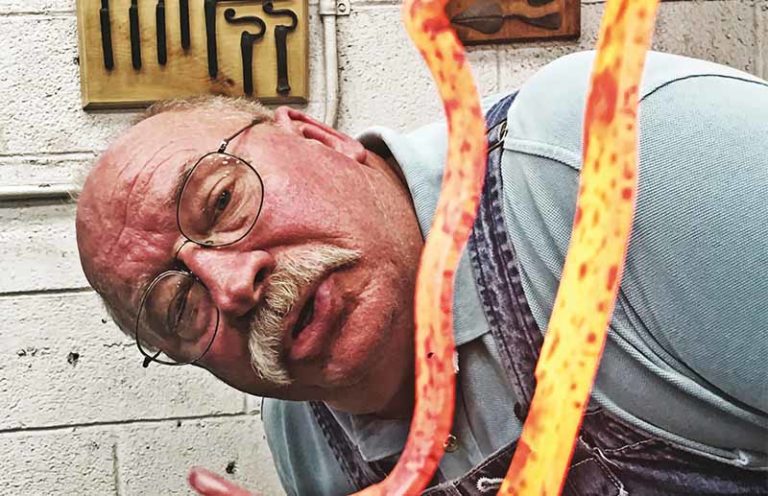
Lisch makes custom knives and swords exclusively from damascus steel. His 26 years of experience in the field are seen in the intricacy of his mosaic patterns and one-of-a-kind blade designs. He’s made landscapes and sunrise designs on his blades.

An example of David Lisch’s damascus work.

His knives have won awards and he teaches classes in blacksmithing and knifemaking with his wife Andrea at their school in Yelm, Washington, about an hour south of Seattle.

Collecting Cutlasses

The cutlass is collected by all sorts: sword lovers, pirate aficionados and history buffs. Specialty dealers help these collectors find the pieces they are looking for, and it helps keep the cutlass alive and in public consciousness.

Additionally, cutlasses have made it to auction houses around the world, sometimes fetching as much as $10,000 before the hammer falls at auction houses like Morphy’s, Sotheby’s, and Rock Island. 

In late 2022, the 1860 naval cutlass belonging to John H. Ferrell, a Congressional Medal of Honor recipient, went to auction at Morphy’s and sold for $14,760. The sale showed how, even today, the popularity of the cutlass continues to endure in a big way.

Read More

50 Years Ago In BLADE: Knives Of The OSS

The May-June 1975 American Blade covered the CIA-forerunner’s knives.

Editor’s Note: BLADE Magazine is celebrating more than 50 years of bringing the knife community sharp coverage of the knife world at large. Given a more comprehensive picture of where the industry comes from—thus, where it’s going—we’re running a series of vignettes on important articles marking milestones in the knife design, knife making and knifemakers from 50 years ago.

Adrian Van Dyk was the military knife guru for The American Blade at the dawn of the magazine’s era, and OSS knives were one of his specialties.

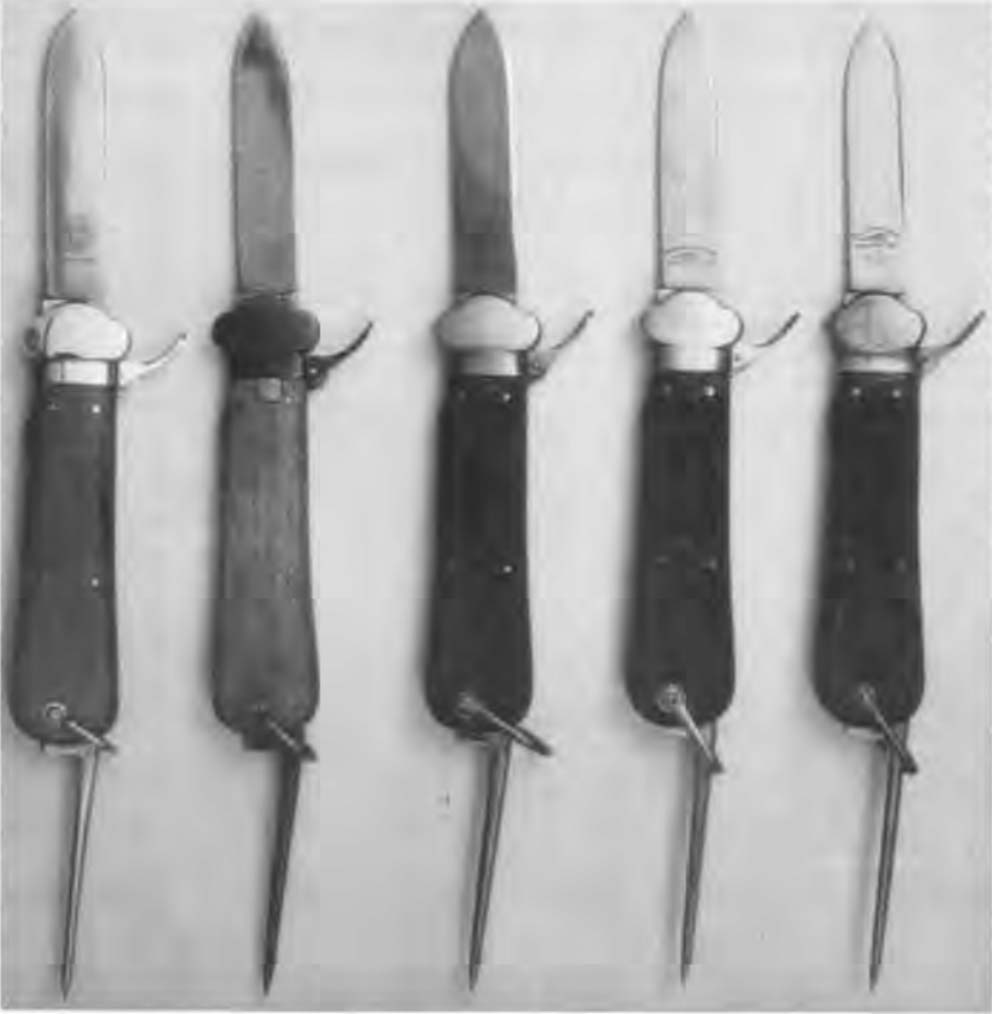
Five World War II-era OSS gravity knives, from left: a trial piece with George Ibberson blade markings; one with a variation of an Ibberson marking; unmarked issue specimen; German-issue take-down model; and a German-issue non-take-down model.

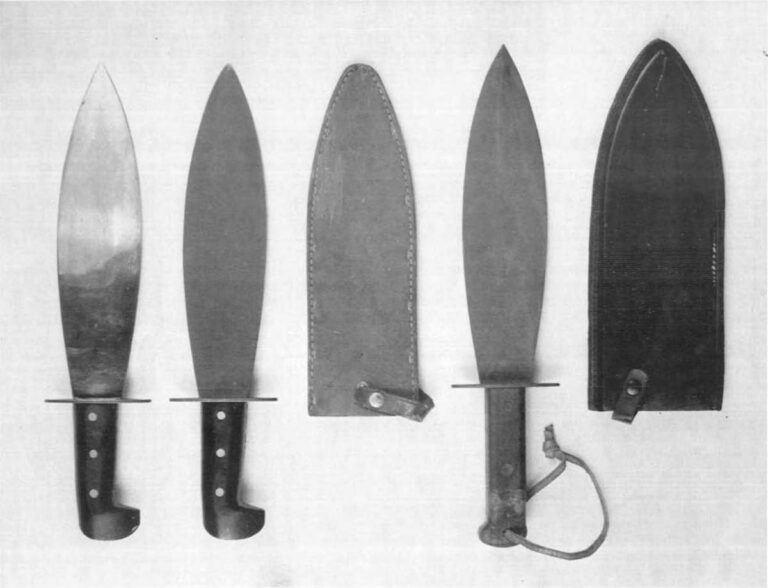
In “Knives of the OSS” in the May-June 1975 issue, he wrote a comprehensive story on a number of OSS knives, including, among others, the smatchet, stiletto, escape knife and gravity knives. The smatchet is of particular interest here because APOC/Cas Iberia offers a new iteration that it will debut at the BLADE Show (see our 2025 BLADE Show Knife Debuts post).

According to Van Dyk, the smatchet was designed for heavy chopping and brush clearing.

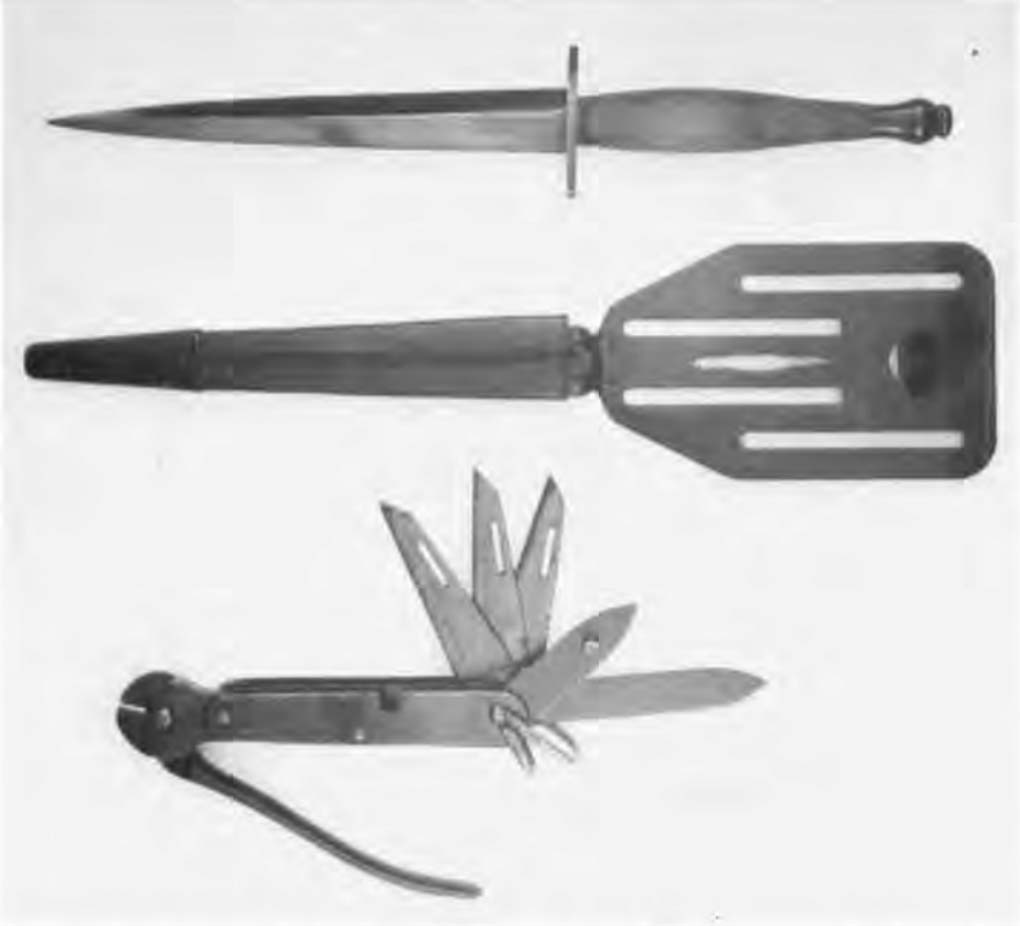
World War II OSS knives, from top: an OSS stiletto with a pancake-flapper sheath and a standard-issue OSS escape knife, completely blued and unmarked.

“The name apparently derived from its intended use since it could serve both as a machete and a hatchet,” he wrote. “The knife was probably a design derivation of the Welsh machine gunner’s sidebar,” illustrated in A Primer of Military Knives by Gordon Hughes and Barry Jenkins. “It was also designed as a fighting weapon and techniques for using it in combat are described in the book Get Tough by William Fairbairn,” one of the designers of the famed Fairbairn-Sykes commando knife.

Van Dyke added that OSS-issued versions of the smatchet were manufactured by Case and were completely unmarked. Some variations have British military proof marks and are thought to have been issued to British commandos.

Read More:

The Best Wharncliffe Options

The Wharncliffe Is An Interesting Blade Design With A Captivating History. Over The Years It’s Grown Into A Desirable EDC Blade. These Five Wharncliffes Stand Out From The Pack.

There aren’t many blade styles like the wharncliffe. The wharncliffe stands out from many other blade designs thanks to its long, straight cutting edge and spine that tapers to the point. This allows for a variety of shapes of wharncliffe blades, with some being more squared off with a sharp taper and others being more rounded with a more gentle taper.

Regardless of the taper or size of the blade, the wharncliffe has grown into a beloved blade that has evolved to meet the needs of knife lovers over the last 200 years.

Where Does The Name Wharncliffe Come From?

If you guessed that it was named for a person you’d be correct, or at least almost correct. The name for the blade dates back to the 1820s and British Colonel James Archibald Stuart-Wortley-Mackenzie, the first Lord of Wharncliffe. 

One night, while having dinner with his cousin, Archdeacon Corbett, Wharncliffe was lamenting how staid and tired the cutlery industry in Britain had become. The two then worked on a new type of knife to present to the Joseph Rodgers & Sons cutlery company in Sheffield, the epicenter of the cutlery trade in the UK.

Rodgers liked the blade so much that the company put it into production and named it the wharncliffe in the Lord’s honor.

What Is The Wharncliffe Used For?

The wharncliffe initially was used mainly as a whittling knife. The long, straight edge made it perfect for long strokes on a piece of wood. Over time, the blade has evolved with the rest of the knife industry and is now a quality all-rounder EDC. The straight edge is excellent at transferring energy from the hand into the material being cut. Not great at puncturing, it’s very good at most other cutting tasks.

5 Wharncliffes You Should Look Into Buying

Today, the wharncliffe has become a standard blade design by makers around the world. These are five that you should take a look at.

Spyderco Salt 2

Few companies have dived deeper into wharncliffes than Spyderco. The Salt 2 is a prime example of how the company has smartly developed the blade style, although there are many knives on the company’s roster that utilize it as well.

The ergonomic green FRN handle makes this knife easy to use, especially considering how it was designed to be used near water. The H-1 steel is highly corrosion resistant, which makes this knife the perfect choice to use near water. You can choose between a plain edge and a serrated edge, and the lockback keeps everything secure even when drenched. 

Spyderco is beloved because of the quality of its knives, and the Salt 2 shows many things the company can do.

MSRP: $124.25

CRKT Inara

A simple, elegant design from Richard Rogers, the CRKT Inara is a perfect example of a quality, affordable wharncliffe EDC. 

The framelock is strong. The deployment is smooth. The G-10 stands firm even in extreme conditions. This little flipper really does it all and looks good while doing it. The stonewashed 8Cr14MoV stainless blade is 2.78 inches long and the whole construction weighs just 1.8 ounces.

A small, nimble knife, the Inara showcases why the wharncliffe has become a regular EDC blade.

MSRP: $56

Emerson Knives P-Sark

If the last knife was for day-to-day use, the Emerson Knives P-Sark is for the most extreme situations. This is the standard issue knife for U.S. Navy Rescue Teams, according to Emerson Knives. It’s a thick, beefy blade designed to extract people in severe situations.

The 3.5-inch blade is made from 154CM stainless steel with a chisel grind. The G-10 handle is waterproof and perfect for the type of intense moments this knife was built for. The blade comes in both black and stonewashed varieties.

Sure, this could be used as an EDC, but this knife is designed for much more than just opening boxes and stripping wires, and is priced accordingly. If you want a strong, physical knife, then this is the one for you, but you’ll be able to find good EDC wharncliffes at more affordable prices.

MSRP: $226.95

Kershaw Leek

Kershaw has them all, and it’s no surprise that it offers a solid EDC wharncliffe. The Leek line of knives runs 16 deep, but we are concentrating on the original. 

The whole construction is stainless steel with a 3-inch blade made from 14C28N stainless steel. The Ken Onion-designed knife is a sleek, sturdy flipper held in place with a framelock. At 3 ounces it’s a bit heavier than some of the other knives on this list, which is good because it helps the piece feel better in the hand and more secure in use.

The assisted-opening flipper, the tip lock to keep it secure when closed, and the reversible pocket clip are all features on the knife that elevate it from just a good knife to a high-quality EDC.

MSRP: $79.99

Cold Steel Tuff Lite

Small. Tough. Durable. Three ways to describe the Tuff Lite from Cold Steel. This little wharncliffe is a rugged little beast. Made from Japanese AUS-8A stainless steel, the Tuff Lite’s blade is just 2.5 inches long with a relatively squared-off tip that makes it perfect for deep cutting tasks.

The handle is made from Griv-Ex which, when paired with Cold Steel’s Tri-Ad lock, provides a rock-hard construction when deployed. This is the most affordable knife on our list, but it may be the highest value thanks to how the knife was put together.

MSRP: $40.99

Read More

Two Generations Of Dennehy Knives Now At The Alamo

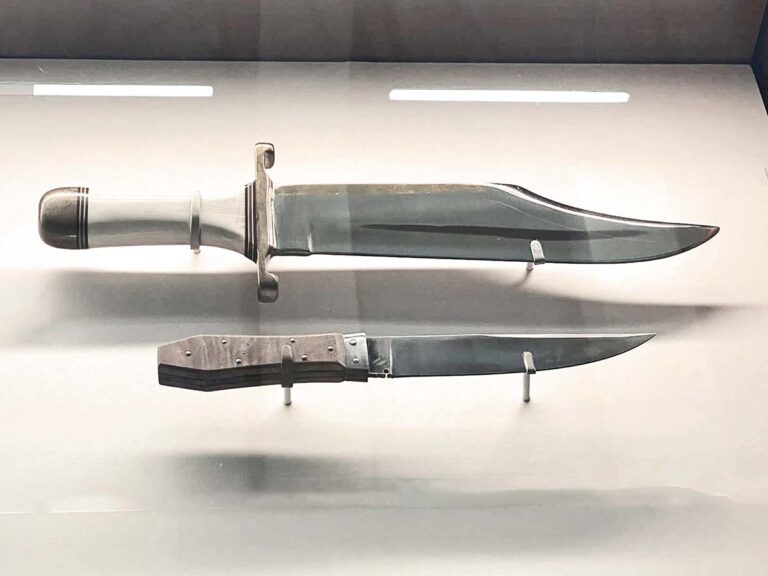
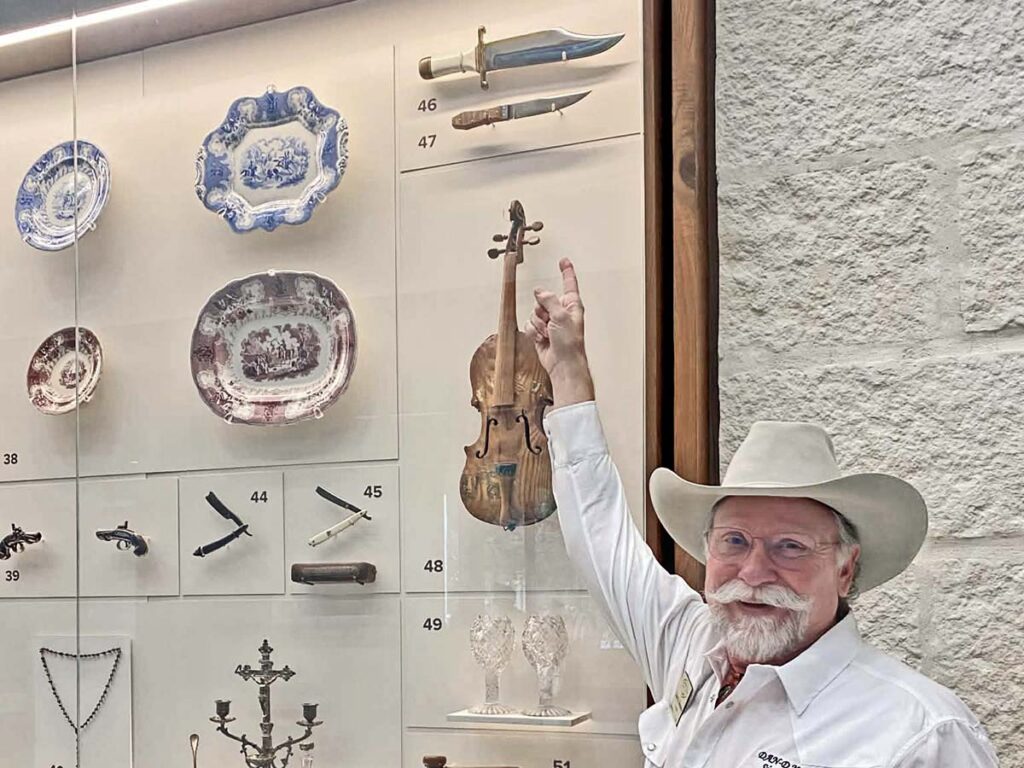
John Dennehy’s replica of his father’s Dan D Alamo Bowie, was accepted by the site on the 190th Anniversary of the historic battle.

We should always remember the Alamo, but 2026 is a particularly good year to keep the battle top of mind. It’s the 190th anniversary of the defining fight for Texas independence, and a fitting backdrop to a father-son knifemaking tale.

When Dan Dennehy donated his custom Dan D Alamo Bowie to the Daughters of the Republic of Texas in 1968, little did he know that a reproduction of the very same knife would be presented almost 60 years later to representatives of Alamo Trust just a few months before the historic anniversary of the Battle of the Alamo.

Made by Dan’s son John, the presentation reproduction is based on the original donated by Dan to the DRT in 1968. Save the engraving on the accompanying brass plaque. John did the entire repro project, which included 5/16-inch O1 tool steel like the blade material on his father’s original Dan D Alamo Bowie, and an embellished oak presentation frame.

Engraved number 5 of 10 by Pearce Richardson, the brass plaque reads: “Commemorative Dan D Alamo Bowie” over “In Honor of Those who Lost their Lives defending the Alamo in March 1836 and to the late Daniel J. Dennehy, Knifemaker, whose Alamo Bowie has proudly been on display at the Alamo since 1968.”

“It’s an honor that we can say we have knives from a father and son in our collection,” Alamo Senior Researcher and Historian Kolby Lanham said. “We are grateful to both Dan and John, two generations of knifemakers who chose to create works of art honoring James Bowie and the Alamo.”

John’s project started soon after his father’s death in 2011.

“The Alamo let me take pictures of Dan’s original knife in the spring right after his death,” he said. “I used those pictures and his knife pattern to make the reproductions. I wanted to jazz up the handle a bit since they are special editions with ivory Micarta and imitation ivory Micarta, along with some brass spacers for bling.”

From his own retelling of the story, Dan was inspired to make the donation during a visit to the Alamo, when he realized the historic site then didn’t have a single bowie knife. The namesake of the blade—Jim Bowie—was among the heroic men who fought and lost their lives at the battle.

The original Dan D Alamo Bowie is displayed inside the lobby of the Alamo Exhibit at the Ralston Family Collections Center, according to Lanham. John’s knife resides in the Alamo’s artifact vault.

There are other storied knifemakers whose works are displayed at the iconic Texas site, including a reproduction of the Joe Musso bowie by BLADE Magazine Cutlery Hall-of-Fame® member Gil Hibben.

A founding member of The Knifemakers’ Guild, Dan Dennehy was also a member of the Cutlery Hall of Fame and the International Knife Throwers Hall of Fame, and for many years conducted knife-and-tomahawk-throwing demonstrations at the BLADE Show. John makes knives and sheaths and has conducted seminars on how to make sheaths at both the BLADE Show and BLADE University.

New York-born, Dan was always a Westerner at heart, John pointed out, known as “Tex” in the Navy and wearing cowboy boots and a hat most of his adult life. He also loved and revered the history of the Alamo, finding it as sacred a location as native Texans.

“Having one of his knives on display [there] was one of his most cherished accomplishments,” John said.

Read More:

Mastersmith Lin Rhea Honored As Arkansas Living Treasure

Master bladesmith Lin Rhea was recently recognized as an Arkansas Living Treasure by the Arkansas Arts Council.

Knifemaker, blacksmith, teacher … Lin Rhea has many titles. Hang another one on the master craftsman—living treasure.

That honor was bestowed upon him by the folks in his home state with Rhea recently being named the Arkansas Arts Council’s 2023 Arkansas Living Treasure. The annual award—chosen through a panel of independent judges—recognizes masters of traditional crafts and folk art in the state, of which Arkansas has a rich and wide-ranging tradition. Since the award’s inception in 2002, it has honored craftsmen (and women) from basket makers to log-cabin carpenters. Given Rhea’s propensity for traditional knifemaking and blacksmithing techniques, the Arkansas native fits right in the honor roll.

“Lin Rhea is an outstanding addition to the Arkansas Living Treasure program,” Mike Mills, secretary of the Arkansas Department of Parks, Heritage and Tourism, said in a news release. “He has contributed so much to the rich creative culture of Arkansas.”

Rhea is the second bladesmith to earn Arkansas Living Treasure recognition. In 2007, James R. Cook of Nashville, Ark., was recognized for his contributions to the craft.

Rhea has been a blasdsmith for more than 20 years and earned his master bladesmith rating through the American. Bladesmithing Society. He studied the craft at the Bill Moran School of Bladesmithing, centered at Arkansas’ Old Washington State Park. And he is known as an avid and expert historian of the state’s knifemaking tradition.

Along those lines, he presented the finer points of James Black and his creation—the Bowie Knife—at the 2023 BLADE Show Texas. The seminar not only delved into the technological advancements Black introduced to knifemaking but the ethical considerations of reproducing his work. This is a hot-button topic, given Black never signed his work.

Despite rooting himself in the traditional aspect of knifemaking, Rhea also has a keen eye for advancing the craft. Perhaps one of his more notable endeavors to this end is his X-Rhea knife, which he set out as a personal challenge to create a knife—handle and all—from a single piece of steel. As always, he turned to two tools to complete the task—fire and steel.

“Moreover, I wanted it to look good and be comfortable and as structurally sound as any good knife should be, without being overly heavy,” Rhea said in a 2021 BLADE Magazine article he authored on the genesis of the X-Rhea Knife.

As for being recognized as an Arkansas Living Treasure, Rhea admits to being quite humbled.

“I’ve gone back and looked at other videos the museum (Historic Arkansas Museum) has produced of the other Living Treasures and I know one or two of them personally, and I’ve known them for quite some time,” Rhea said, in an Arkansas Times article, “But to be associated with that group is quite an honor.”

Rhea will be honored with a reception 4-7 p.m. June 17 at Little Rock’s Historic Arkansas Museum. This coincides with the reopening of the museum’s Knife Gallery, which displays several of Rhea’s creations.

Read Up On Knife History:

50 Years Ago In Blade: Tomahawks–War Clubs To Modern Masterpieces

0

The tomahawk, from its American Indian origins to its modern renaissance as a highly sought-after custom-forged tool and defensive weapon.

Arnold M. Chernoff offered a wide-ranging review of the American Indian tomahawk in the November-December 1975 issue of The American Blade.

As Arnold pointed out in “Tomahawk!” the hawk was a weapon and tool used to maximum effect as the former by both American Indians and American colonists, often more savagely by the early colonists than the Indians. Arnold outlined a plethora of hawk designs with roots in the American West, from stone-headed war clubs of the Crow, Sioux and Cheyenne to metal-bladed models used by the Crow, Sioux, Blackfoot, Osage and Canadian Cree.

Examples included everything from the foregoing stone-headed versions to fancier ceremonial types.

Crow Chief Plenty Coups holds a fine tack-decorated pipe tomahawk circa 1880 during a visit to Washington, D.C. (Smithsonian Institution, Bureau of American Ethnology, Washington, D.C. image)

The Indians were not limited to using the stone-headed versions exclusively early on when English settlers first landed at Jamestown in 1607. As the settlers learned to their chagrin, the Indians had metal hatchets, probably French trade goods that had filtered south. In fact, Chernoff wrote, Capt. John Smith, Jamestown’s “noted chronicler,” was credited with introducing the word tomahawk, gleaned from the Indian vocabulary.

As time passed, the hawk evolved from hammer poll to spike heads, and eventually the pipe hawk, the latter of which Chernoff stated had an English origin around 1700. Some presentation pieces were for important chiefs, including one made for Tecumseh by the British, sporting a gold-inlaid panel in the blade with his name in script.

Later in the 19th century, the pipe hawk began to lose its practical function among Indians and assumed more of a ceremonial role as a “scepter, mace or badge of authority.” In recent years, though, the tomahawk has enjoyed a renaissance in both the custom and factory knife industries, with some of the finest examples fetching top dollar among users and collectors.

More Knife History:

The Gerber Mark II: A Historic Fighting Knife

The Gerber Mark II Is One Of The Most Famous Combat Knives Ever Issued To The American Military. First Introduced In 1966, It Still Endures Today.

When it comes to military knives, few are as universally beloved as the Gerber Mark II. First issued for use by U.S. service personnel in the Vietnam War in 1966, the knife has stayed in production since with the exception of 2000-2008.

The Mark II was successful due largely to its well-designed blade and lightweight. The blade is 6.5 inches long, and contemporary versions of it are made from 420 HC stainless steel. The handle is made from die-cast aluminum which helps keep the weight to just eight ounces. 

What Makes The Gerber Mark II Special?

The Mark II stands out thanks to its blade design. There are many combat knives and bayonets, such as the M7 and M9, that are modeled after the classic dagger or spear point. The Mark II also has a double-edged spear point blade but with one massive exception: the wasp waist.

The wasp-waisted blade has a narrower section of steel, akin to how a wasp’s body narrows at its waist. On the Mark II, this narrower section comes toward the guard, and the edge on both sides has small serrations. Not the deepest you’ll find on a knife, the serrations are still there to cut.

Very few modern combat knives have the wasp waist (other famous American models like the M7, USMC fighting utility knife, and M9 don’t have it), and it is the visual signature of the Mark II.

Can I Buy A Gerber Mark II Today?

Yes, you can, but it’s not so straightforward. Gerber is, of course, still in business and thriving, but go to its website and you won’t find a Mark II for sale. There are other serrated tactical knives but no Mark II.

To purchase a Mark II today you’ll have to either go to sites like ebay or retailers such as Knifecenter, Smoky Mountain Knife Works, etc. Other makers offer knives similar to the Mark II, but if you want the real deal you’ll have to dig a little bit to purchase one yourself. 

However, the ones of recent make that are available are reasonably priced at right around $100-$115.

Read More

Advertisement

Must Read Articles

Read this before you make a knife

Knifemaking 101 – Read This Before You Make a Knife

  by Wayne Goddard My experience has taught me that there's nothing like digging in and getting started. I've often said the hardest part of the...
how to forge damascus steel

How to Forge Damascus

Advertisement
Advertisement