Knife History

The history of knives and other edged instruments is tied to the history of people in general. As humankind’s oldest tool, unraveling knife history can lead to even more surprising and enriching information to better understand the world.

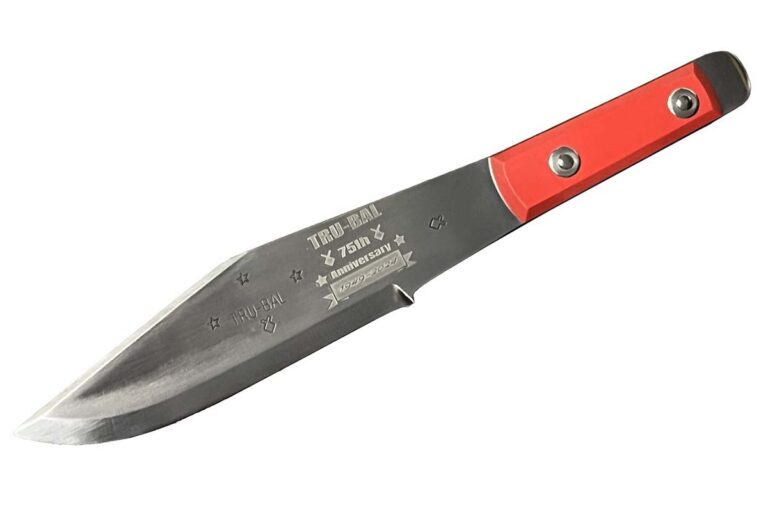
Tru Balance Knife Co.: 75 Years And Still On Target

Born as a side hustle, the legendary throwing knife company continues to hit the mark.

Small businesses that have operated continuously for 75 years are a testament to the quality of their products and the dedication of their founders and owners. Such businesses have stood the test of time and have been able to adapt to changing market conditions and consumer preferences. Knifemaking is no different.

In 1949, Harry K. McEvoy, who would soon be considered the father of modern-day knife throwing and one day be inducted into the BLADE Magazine Cutlery Hall of Fame®, was a long-time resident of Grand Rapids, Michigan. He worked for the Meyercord Co. as a traveling district salesman selling decals to wallpaper and decorating stores. In his spare time, Harry spent hours in his shop designing and crafting knives. His passion for knifemaking was fueled by his ongoing search for the perfect throwing knife.
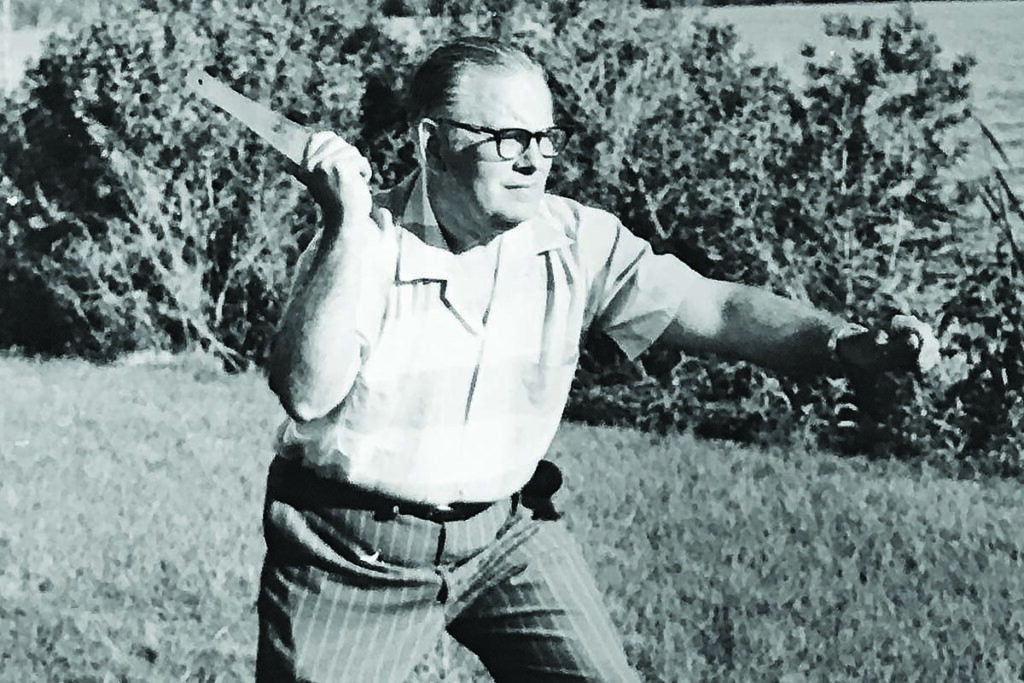
Harry McEvoy shows the form and throws one of the Tru Balance knives
BLADE Magazine Cutlery Hall-of-Fame® member Harry McEvoy shows the form and throws one of the Tru Balance knives that helped revolutionize knife throwing.

Knife throwing as a modern sport began shortly after World War II and centered around a few individuals who threw knives at stumps or targets in their backyards. The knives they used consisted of very primitive homemade throwers that were often much smaller than the ones you see today. Harry began making his own knives around this time because he was unable to find any commercial knives suitable for throwing.

While he practiced throwing knives in his backyard, neighbors would gather to watch. Intrigued by how well his throwers performed, the onlookers were compelled to discover the source of his knives. When he responded that he, in fact, had made them himself, they asked him to make knives for them and others who were interested, and thus was born the Tru Balance Knife Co.

Randall & Scagel’s Influence

Bobby Branton and Stephen McEvoy
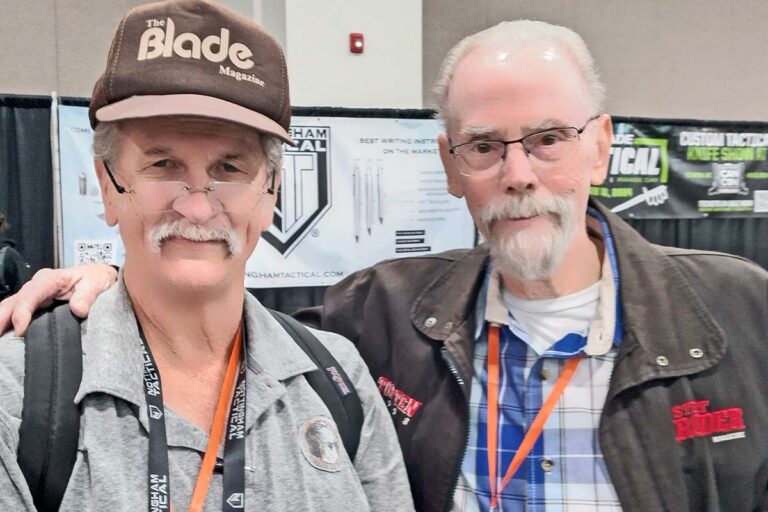
The author (left) bought Tru Balance Knife Co. from Stephen McEvoy (right) in 2017. The business continued to grow but the author had to sell in 2021 due to physical issues.

Around 1951, Harry learned of a knifemaker from Orlando, Florida, and another future Cutlery Hall-of-Famer by the name of W. D. “Bo” Randall. As a fledgling hobby knifemaker, Harry decided to write to Bo about his knives and the two became fast friends, exchanging letters regularly.

McEvoy soon found out that Bo had an interest in throwing knives and was surprised to learn that a throwing knife could even be found in Bo’s catalog. As a father with young children, money was scarce for Harry, so he convinced Bo to trade a Randall thrower for a couple of McEvoy throwers. Generous and willing to help a fellow knifemaker, Bo was happy to oblige.
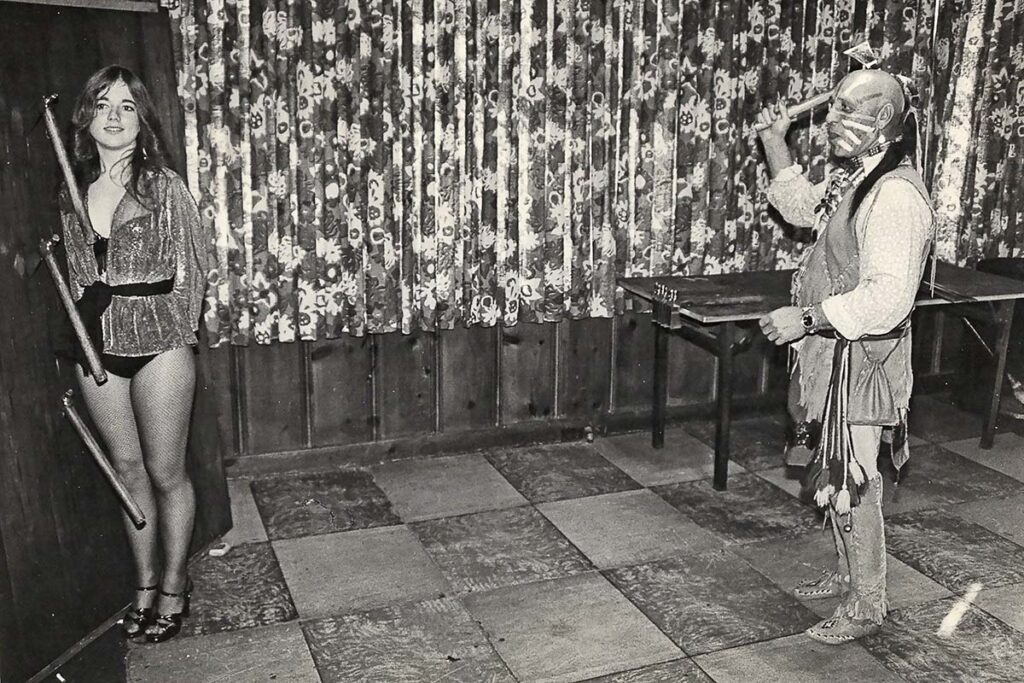
George E. “Skeeter” Vaughan
George E. “Skeeter” Vaughan made the most fantastic knife throw in recorded history, taking out a German sentry with a modified bayonet from 87 feet during World War II. Skeeter was also an outstanding tomahawk thrower, showing his skills here with the help of a “target girl.”

Around 1952, Bo asked Harry if he would visit yet another future Cutlery Hall-of-Famer, William Scagel, who lived very close to McEvoy in Fruitport, Michigan, and buy some of Scagel’s knives for his collection. McEvoy was more than happy to do his friend a favor. Harry would eventually befriend the reclusive Scagel, too, and on his visits watched him make knives and bought knives for himself and Bo. 

As their friendship grew, Harry would visit Bo at the Randall summer home in Michigan and would even travel to the Randall home in Orlando, Florida. The two became quite close and eventually, Bo decided to feature two Tru Balance Models in the Randall catalog. The Model #1 Professional Thrower and the now world-famous Bowie-Axe Throwing Knife made their catalog debut in early 1960, which resulted in a spike in sales for Harry.

Harry McEvoy grinding a knife
In his spare time, Harry McEvoy spent hours in his shop designing and crafting knives.

Bo thought so much of Harry’s work that he gifted one of Harry’s Tru Balance Bowie Axe throwers to astronaut Gordon Cooper. He also took Harry’s popular Bowie Axe design and modified it into a large machete-style knife and submitted it to NASA in the 1960s when NASA was looking for a machete for astronauts to carry on the Gemini missions. Unfortunately for Harry, NASA required a much thinner design and eventually chose another manufacturer, Case Knives, to make the machete.

AKTA 

Meanwhile, Tru Balance soon became the go-to company for anyone who wanted a high-quality professional throwing knife. Tru Balance throwing knives became highly sought after by soldiers heading to Vietnam, professional knife throwers and knife collectors around the world.

In 1971, Harry started the American Knife Throwers Alliance (AKTA) to aid and offer guidelines to individuals and groups who wished to organize competitively in their local areas. Harry became very close friends with professional knife throwers like Kenneth Pierce, aka Che Che Whitecloud, Paul LaCross and George E. “Skeeter” Vaughan, who holds the distinction of making the most fantastic knife throw in recorded history. Considering the circumstances surrounding his legendary feat of taking out a German sentry during World War II with a modified bayonet from 87 feet, he most likely will maintain his grasp on that honor for a long time to come. “The Saga of Skeeter Vaughan” is told by McEvoy in the April 1982 BLADE®.

Harry went on to author such books as Scagel: The Man and His Knives; Archery Today; Crusader in the Wilderness; Knife Throwing: A Practical Guide; Knife and Tomahawk Throwing: The Art Of The Experts; For Knives Lovers Only; and co-authored Knife Throwing a Modern Sport, with Charles Gruzanski. McEvoy also held two design patents and trademarks for his knife designs. He also authored other articles for BLADE, as well as for Knife World (today’s KNIFE), Muzzleloading Magazine, Fighting Knives Magazine and many more.

McEvoy Legacy

In 1991, McEvoy was inducted into the Cutlery Hall of Fame for his exceptional contributions to the world of knives. It was around this time McEvoy’s son Stephen had taken an interest in his father’s knives and had begun learning more about the business. Stephen eventually took over the company in 1993 following Harry’s passing from an illness.

Harry McEvoy surrounded by thrown knives
When McEvoy—here mugging during a lighter moment—practiced throwing knives in his yard, neighbors would gather to watch. The onlookers showed interest in the knives, and Tru Balance Knife Co. was born.

This writer, a friend of Harry’s and a fellow knifemaker, reached out to Stephen via telephone to offer condolences and advice. We chatted regularly and, over time, as we shared stories, we developed a friendship. Our phone conversations led to Stephen’s yearly visits to my home. During one of those visits, I asked him if I could take over the defunct American Knife Throwers Alliance (AKTA) and Stephen agreed.

Stephen would continue to run Tru Balance Knife Co. the same way his father ran it for many years. In 2015, after retiring from his job as an executive at a major insurance company, Stephen began speaking to me about slowing down and retiring from making knives. Already a full-time knifemaker with my own line of throwing knives, I envisioned bringing Tru Balance Knife Co. into the 21st century by selling Tru Balance knives on its own website and promoting the business via social media.
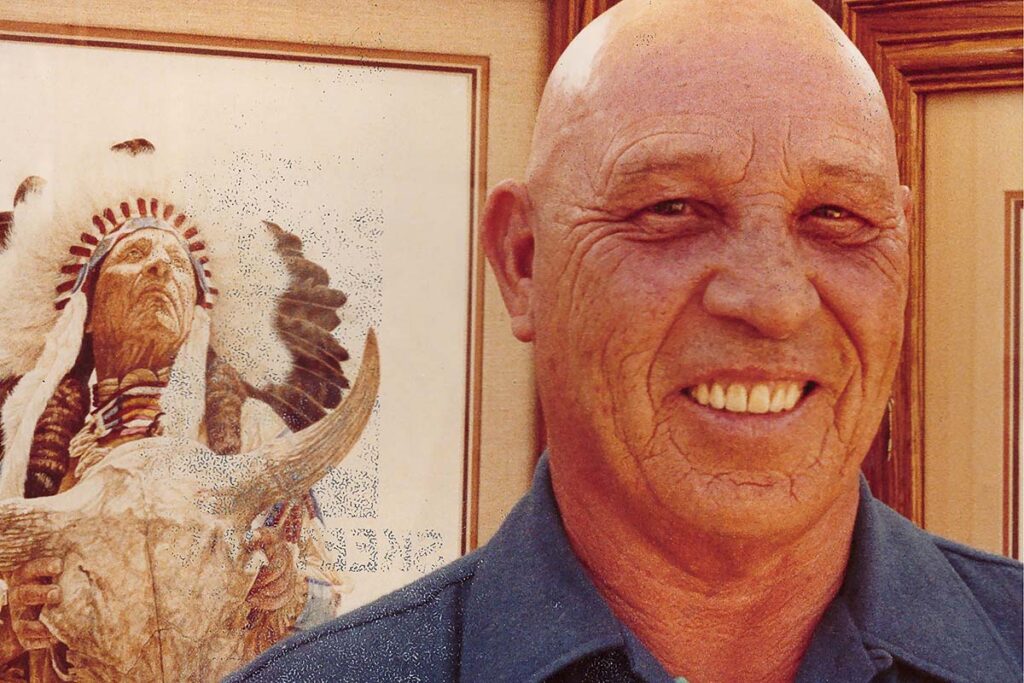
Skeeter Vaughan’s Cherokee Indian name is Grey Otter.
Skeeter Vaughan’s Cherokee Indian name is Grey Otter. He served as a chief of the Federated Indian Tribes for a number of years.

With the newfound success spearheaded by the new business plan, Stephen finally decided to fully retire from the business. A deal was brokered and I bought Tru Balance Knife Company in 2017, moving it to my hometown of Awendaw, South Carolina. The business would continue to grow but, not long thereafter, I developed some knee issues and struggled to keep up with the company’s new customer demands. Unable to find a qualified apprentice to help me fill orders, I decided to sell the business in 2021.

Tru Balance Heads Home

Though several companies made offers to buy the company, I decided I wanted to hand-pick my successor to ensure the legacy of the Tru Balance Knife Co. and that the knives would continue to be made in the USA. As the search for the right successor was underway, a mutual friend brokered a connection between me and two brothers from Michigan who had an interest in the business and the revitalization of the AKTA. The brothers made knives as a hobby and also happened to be skilled knife throwers.

Bill and James Bednarick turned out to be the perfect choice to preserve the company’s legacy and bring it back to its original home in Michigan. With their keen eye for detail, quality and passion for knife throwing, their dedication has ensured that the Tru Balance Knife Co. has lived on to see its 75th anniversary in 2024.

A Labor of Love: Lorenzi Foundation And Museum

The Lorenzi Foundation and Museum showcases one of the finest collections of rare and historical knives in the world.

One of the most extensive collections of ultra-rare modern custom and historical knives, cutting implements and many other items connected with the cutler’s art is displayed magnificently in a new museum in Milan, Italy.

A labor of love by Aldo and Edda Lorenzi, the museum is under the auspices of the aptly named Aldo and Edda Lorenzi Foundation (established July, 2020). The museum showcases the Lorenzi Collection consisting of about 2,000 pieces in all, catalogued and accompanied by specific information: era, origin, artisan (if known), function, material, construction and more.

Aldo & Edda Lorenzi
Aldo & Edda Lorenzi

It gathers cutting utensils and related items dating from the Etruscan period (approximately 900-27 B.C.) to today. It is complemented by a series of specialized publications, testimony to the incessant research that was necessary to bring the operation  of the Lorenzis’ internationally recognized G. Lorenzi retail knife store in Milan to exceptional levels, and to which Mr. and Mrs. Lorenzi devoted their efforts and creativity for many years. It is all housed in a state-of-the-art edifice containing many of the displays and other historical examples of the cutler’s art from the original G. Lorenzi shop and elsewhere.

The Foundation’s premises include a library where visitors and specialists may view the bibliographic materials. A special fit-out of the space enables visitors to relive the shop’s atmosphere. Thanks to an attentive recovery, a number of the original furnishings have been reinstalled on site. This includes an exterior window from G. Lorenzi, one of six “eyes” that communicated with window shoppers in one of Milan’s most exclusive retail store districts, and the display counters on which, over the years, over 18,000 types of sales items were placed. The space also features oak display cases in which the items were shown, as well as the copper-paneled room that featured the small entrance door opening onto the larger shop.

Historic Excellence

The collected items demonstrate, by starting from an artisanal craft as ancient and humble as that of the knife grinder, how it is possible to evolve and then achieve historic excellence. As further informational support, there are over 700 books, about 1,000 magazines and 150 prints, which for the most part depict traveling knife grinders. In fact, Aldo’s father, Giovanni Lorenzi, started his career as a professional knife grinder. Giovanni

Edda Lorenzi examines and arranges some of the many cutlery items from the Lorenzi Collection. (Lorenzi image)

founded  Coltelleria G. Lorenzi—a small shop at the time—at the address of via Montenapoleone 9, Milan, a shop later operated by his sons Aldo, the sole administrator, and Franco. (Regrettably, Franco passed away a few years ago.)

In the course of over 60 years, the Lorenzis collected and kept the pieces which best represented their profession until the closure of G. Lorenzi in 2014. Their selection of the most recent items from their collection was made possible thanks to the close, precious relationship with the artisans—many Europeans, a number of Americans and Japanese—whom Aldo and Edda visited periodically at their shops. It was in such shops that the artisans created their unique pieces, full-fledged artworks that stand the test of time and which enabled G. Lorenzi to become renowned and appreciated at the international level.

Custom Gems

Included in the collection are 150 custom knives by American makers, knives that are particularly near and dear to Mr. and Mrs. Lorenzi. Having collected such knives since the mid-1970s, the Lorenzis traveled the USA, not only visiting the makers in their shops but also attending most every major knife show, meeting just about every maker worth his or her steel along the way.

Among the Lorenzis’ honors are The Knifemakers’ Guild’s Nate Posner Award (1995); the BLADE Magazine Industry Achievement Award (2014); the American Bladesmith Society Special Achievement Award (2014); and the Gold Star Award of Recognition from the William Moran Jr. Museum and Foundation (2014). Three of the Lorenzis’ favorites among their favorite custom knives in their collection are:

  • The number one of an art piece by W.W. “Bud” Cronk, the maker some consider the father of the modern art knife. Aldo ordered a copy of the knife for one of the Lorenzis’ best customers, but Cronk passed away before he could finish it. It would’ve been a coup for the Lorenzis if they could have gotten the copy too, as Cronk never made duplicates of his work. The copy was used later as the model for the logo of the W.W. Cronk Award, a private honor Don Henderson sponsored for 25 years for the Guild Show’s best art knife
  • A Bob Loveless/Barry Wood folder Loveless gave to Aldo when the Lorenzis visited the Loveless shop in 1977. Unaware at the time that U.S. knifemakers’ shops were not retail knife stores, the Lorenzis knocked on the Loveless shop door unannounced. Loveless answered the door and, unsure at first what to make of the couple from Italy, soon hit it

    Loveless/Wood Folder
    Loveless/Wood Folder

    off with Aldo—so much so that he gave the Lorenzis the Loveless/Wood folder. Before the Lorenzis left, they asked Loveless why he had trusted them so much at first sight that he gave them a knife (at the time, Aldo and Edda had no idea what Loveless knives were worth). “He replied that we ‘had our history written on our foreheads,’ a phrase that we have never forgotten!” Edda wrote. “These are the kinds of bonds that have made us love American knives and knifemakers even more!” 

  • A Multilock folder by Ray Appleton. Edda recounted a memorable trip the Lorenzis shared with Appleton from Georgia to Chicago, including visits to an Atlanta racing museum and Kentucky’s Mammoth Cave in the process, the latter where the 6-foot-8-inch Appleton bumped his noggin on a cave overhead. Recounted Edda: “Since Aldo wanted to stop at every cutler shop he knew along the way, Ray generously offered to make the phone calls for him to warn the shops of our arrival. ‘I’m Aldo Lorenzi’s secretary, Hot Pants,’ he announced himself on the telephone, making us laugh a lot!”

These are but three of the many American custom knives and their stories among the scads of other custom and assorted knives and cutting implements in the museum. Meanwhile, a 300-to-400 page catalog of museum items is due for completion by early 2022 at the latest.

If you ever get Milan way, a visit to the Aldo and Edda Lorenzi Foundation and Museum is a bucket-list must. 


Read more about the Lorenzis

Steve Shackleford: It’s Been a Whole Buncha Fun!

After more than 40 years at the helm, “Mr. Blade” hangs it up.

It had to happen sometime and that time is now. After over 40 years of writing for and editing BLADE® Magazine, it’s time for me to hang it up as BLADE editor.

If you had told me when BLADE Magazine Cutlery Hall-of-Fame® member Bruce Voyles hired me in 1985 that BLADE would be the focus of my work life for the following four decades, I might’ve said, “Yeah, and Donald Trump will be president one day, too.” However, working for BLADE has been a blessing to my family and me, and I am most thankful for the privilege of having done so.

Why retire now? Last July, it hit me; at 72 I need to spend more time with my beautiful wife Susan and others who I love before I start leaking oil. So, my boss, Caribou Group Media Publisher Jim Schlender, and the rest of the BLADE brain trust started planning for the future of the World’s No. 1 Knife Publication. The result: Elwood “Woody” Shelton, who has been doing a standout job as our online editor, will be my replacement as BLADE editor—and we think he will be a most accomplished one.

For the past several years Woody also has coordinated the BLADE Magazine Knife-of-the-Year® judging at the BLADE Show, as well as the factory knife judging at BLADE Show Texas and BLADE Show West. In the process and along with his online duties, he has become well-acquainted with the knife industry and those who drive it. Besides, he is captivated by knives like the rest of us.

As for me, I will continue as a consultant for BLADE and chairman of the Cutlery Hall of Fame, coordinating the nomination and selection process of new inductees and serving as emcee at the annual Hall of Fame induction ceremony during the BLADE Show, this year June 5-7 at the newly named Cobb Convention Center-Atlanta (formerly the Cobb Galleria Centre). As a result, I hope to see some of y’all there. I also hope to write on occasion for BLADE, as well as participate in other related projects.

What will I miss? Much more than I can cover here but the simple pleasure of opening each issue of BLADE I edited after it hits my mailbox will be one. Others will be all the great knives I have handled and written about and the thousands of fascinating folks I have met over the decades. Included among the latter are those knifemakers and their knives that I’ve helped shed light on by publicizing them in BLADE.

  Among many knife VIPs the author has been privileged to know over the years include, from left, Ethan Becker of Becker Knife & Tool, BLADE Magazine Cutlery Hall-of-Fame® member Steve Schwarzer and custom knifemaker Bill Herndon.
Among many knife VIPs the author has been privileged to know over the years include, from left, Ethan Becker of Becker Knife & Tool, BLADE Magazine Cutlery Hall-of-Fame® member Steve Schwarzer and custom knifemaker Bill Herndon.

The highlights for me have been many. A few include visiting the Boker manufactory in Solingen, Germany, and seeing the wonders of nearby Cologne with Ziggy Felix, wife of Boker’s Ernst Felix, as my tour guide; exploring the Alamo with Cutlery Hall of Famers B. R. Hughes and Jim Batson; spending hours interviewing Cutlery Hall of Famer Bob Loveless in his Riverside shop; and my inductions into both the ABS and BLADE Magazine Cutlery Halls of Fame.

In addition to Batson, Hughes and Loveless, four other unforgettable Hall of Famers who molded the industry by the sheer power of their work ethic and personalities and who were my privilege to know include: A.G. Russell, who influenced the collecting community and custom and factory knife industries like no other; Bill Moran, the father of modern damascus and the ABS—some resumé, eh?; Wayne Goddard and his ability to explain details about knives, how to make them, steels and more so that even I could understand them; Frank Centofante guiding the Guild so successfully while simultaneously providing a constant stream of one-liners; the list goes on. Oh, and Ed Fowler, his sheep-horn handles, lifelong search for Excalibur, his dogs and pet rattlesnakes, etc. Need I say more?

I will miss them and many more, including having the lasting honor and satisfaction of helping in providing you with the world’s best knife magazine for so many years. See you down the road and, in the immortal words of the Reverend Captain Samuel Clayton (Ward Bond) in The Searchers, “Watch that knife!”

More About And By Steve Shackleford:

Fast And Furious: Our Top Picks for the Best OTF Knives On The Market

Despite A Rocky History Of Legality, OTF Knives Have Endured And Are Some Of The Most Popular Pocketknives On The Market Today

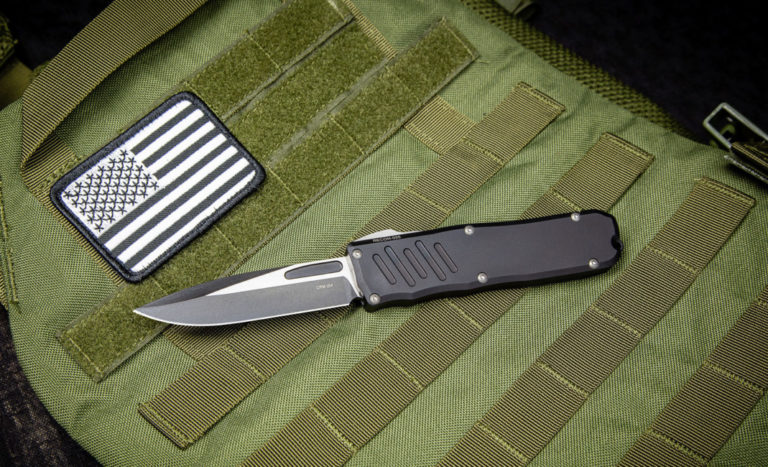
As its name suggests, an Out The Front (OTF) knife is a fairly straightforward affair.  In short, it has an enclosed handle with a blade that deploys from the front–the bolster, hilt or what have you. In general, these fast-from-the-gate options are small, most with an average blade length of 3-3.75 inches, though there are certainly larger examples. 

The knife is distinct from its “Out-The-Side” cousin, at least as a switchblade–one of its most common forms–in the variety of the way the blade is brought into action. Furthermore, the OTF knife needn’t any push-button, assisted-open system to flash cold, hard steel in the wink of an eye. 

Overall, OTF knives are a fascinating, if not slightly intimidating, corner of the knife world. In this guide, we’ll look at some of the history, usage and types of OTF knives. Then we’ll show you some of the best options on the market today. Get ready to flick into action.

Legality Of The OTF Knife 

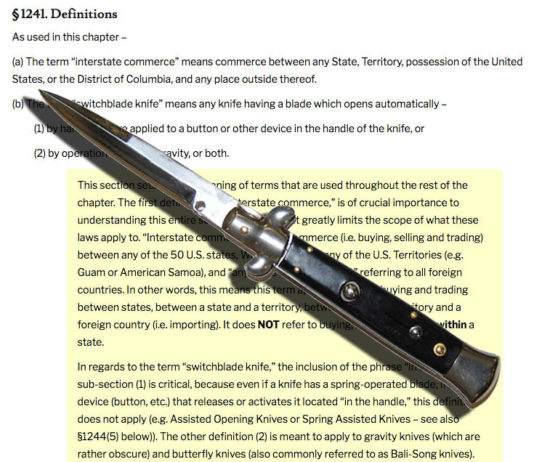
In the past, these knives were favored by paratroopers and sailors. However, thanks to a media campaign in the 1950s that showed automatic knives as the tool of choice for criminals and underworld types, including popular movies like “Rebel Without A Cause”, automatic knives were banned nationwide. The Federal Switchblade Act passed into law on August 12, 1958 and effectively banned auto knives across the country. 

Going into 2023, the panic over OTF knives and other switchblades has somewhat subsided. Most states now allow ownership and carry of OTF, and other types of, automatic knives. However, 11 states still have a blanket ban. Furthermore, there are some issues when it comes to what many places call ‘stabbing instruments’ and other vague terms. Where this becomes an issue is some states that allow automatic knives have laws against double-edged blades. Given many OTF knife options fall into both categories, certain models have a narrow window of legal ownership.

As always, if OTF knives or switchblades tickle your fancy, please check your local laws before picking one up. Better safe than sorry.

Types Of OTF Knives

As mentioned above, there are four types of OTF knives. Each has positives and negatives, and the prices will vary wildly. It’s important to know the differences so you purchase the option that best suits your needs.

Manual OTF Knife

The most basic and least expensive OTF knives are the manuals. They are exactly that, knives that deploy and retract through manual operation. The most common way of doing this is via a slider on the handle. The upside is that you are in total control of the speed of your blade. However, it may not have the wow factor of other knives on the list. But hey, you’ll be safe while using it. 

Single-Action OTF Knife

These knives feature a powered deployment, usually with a button of some type, but require you to manually retract the blade to reset it. And it isn’t retracting like you might think. You pull a handle at the bottom to both retract the blade and recharge the spring so it’s ready to deploy again. 

Double-Action OTF Knife

When you think of an OTF knife you probably think of double-action OTFs–better known as fully automatic. The blade deploys and retracts with the touch of a button or flip of a switch. Prominent companies like Microtech and Cobra-Tec make dozens of different double-action OTF knives.

Gravity Knives

The four-leaf clovers of OTF knives are definitely gravity knives. Few companies still make them. The blades deploy and retract with the help of gravity.

The Reate EXO is one of the most popular gravity knives on the market today and a great example of the style. Just take into account your local knife laws as some places have specific laws banning the ownership or carry of gravity knives.

What To Look For In A Quality OTF Knife

You can find decent, but basic, OTF knives in the $30 range, but expect to pay ten times that for a model that extends and retracts on its own with the push of a button. Though, the sky is really the limit when it comes to the features on these knives, as some can easily jump over $1000 depending on what’s included.

The rub, for the price, is that even the expensive options do not do well for anything other than basic and light use as they are not as strong as other types of knives.

The basic selling point of OTFs–aside from inherent coolness–is convenience. Read that as they can be entirely used with one hand. It’s best to think of the OTF knife as a refined gentleman’s blade: a cutting tool that you could rely on for daily life and its inconveniences. 

OTF Blade Quality

The main issue surrounding blade quality on OTF knives is how light the blades have to be to function. Because the blade is entirely surrounded by the handle, the blade itself cannot be wider or longer than that existing space. As a result, most OTF knife blades are short and light. 

These blades are rarely what we would call a full-profiled knife and many are under 3 inches despite a full-sized handle. These blades are not especially strong and are essentially for cutting only, though there is utility in thrusting or stabbing depending on the strength of the locking mechanism. 

The small tang area is where the mechanisms are anchored, and this space is usually quite insignificant in surface area. It is entirely possible and even easy to break OTF knives if used improperly. 

Practicality Of OTF Knives

If you are in the market for an OTF knife, realize that there are better designs for most daily work that are substantially stronger and can handle a much wider variety of tasks, not to mention are cheaper. OTF knives do have their niche, much like karambits, balisongs, and friction folders, but each of these designs has hard limits on what they can accomplish as opposed to a fixed blade or a suitably strong folder. 

Best OTF Knives

SCHRADE VIPER OTF

Coming in at a relatively low cost (comparatively) is the Schrade Viper. The knife lacks some of the features of higher-end OTF knives, but at 1/10 the price of some of the others on this list, it is a good starting point should you want to familiarize yourself with the OTF style in general. 

The knife is a bit more manual than others in that it is assisted opening but needs to be manually closed. The overall structure of the knife is not cheap. The handle is made of aluminum and includes an integrated glass breaker in the pommel. It also features a manual safety system for opening and closing the blade to ensure it only opens when you want it to.

MSRP: $75

SMITH & WESSON M&P OTF

The M&P OTF retails in the same range as the Schrade Viper and is largely a product that appeals to an entry-level crowd. Many OTF knives on this list retail for more than some of S&W’s guns–a telling sign this market is for the discerning individual. with the M&P OTF, you get a large degree of utility without some of the additional features and glamor of higher-end models. 

Like the Schrade, this knife has an integrated glass breaker in the pommel and is similarly assisted opening/manual closing. If you already own an M&P pistol, you’ll notice that the handle contouring matches the slide machining cosmetically, including a safety lever that resembles the one on the pistol. MSRP: $70

HOGUE KNIVES COUNTERSTRIKE 

Hogue’s new Counterstrike is a flagship design that is sure to impress, not only with its modest price point for a fully-automatic knife but also the materials it is made from. 

What sets the Counterstrike apart is not just that sweet-spot price, but the high-end materials it’s made from and its excellent strength. Among these is the MagnaCut blade, which itself is a prime selling point. This steel is among the best in the industry and gives the Counterstrike excellent edge retention and adds rigidity to the already thin OTF blade profile.  Additionally, the knife has a glass-breaker pommel, aluminum, and carbon fiber handle, and is made in the USA. 

MSRP: $400

KERSHAW JENS ANSO KAPSULE MANUAL OTF 

The Kershaw Capsule is a small manual OTF excellent for concealment. At just 3.25 inches while closed and with a 1.9-inch blade, this small knife is a great self-defense tool because of its size and unassuming appearance.

However, it’s much more than that. The spear point blade works like a box cutter. The tip is great for puncturing the and edge can handle the type of slicing work you’d expect from a commercial box cutter. It’s convenient and compact enough that it can even fit on a keychain.

MSRP: $35

MICROTECH ULTRATECH D/E 

Microtech is one of the companies that popularized the modern OTF knife. In fact, most knife enthusiasts would go so far as to say that Microtech is completely responsible for this trend and has set the bar for all OTF knives going forward. The Ultratech is a solid example why the company calls the tune.A dependable OTF,  the knife displays an excellent balance in terms of material, strength, and utility. It is a fully-automatic design that opens and retracts with the same switch. If you want an incredibly reliable OTF knife for your daily use, the Ultratech is arguably the knife on this list with the most pocket hours across the board and is from an established OTF brand. Like others on this list, it features a glass breaker pommel and is made in the USA. 

MSRP: $310

HERETIC KNIVES ROC

Now here is something you don’t see every day. The Heretic Knives ROC is visually stunning, it is just so rare to see a curved blade on an OTF knife. The company no longer has the ROC listed on its site as of this writing, but it is available and in stock online. The ROC accomplishes its one-of-a-kind appearance by using a curved handle to match the blade, which overall seems like a no-brainer.

But it just isn’t seen these days, despite the advantages in self-defense or martial arts. While it resembles a karambit, this knife lacks a finger ring on the pommel. The ROC is a fully-automatic design that retracts and deploys on its own. If you are in the market for an eye-catching OTF design that is USA-made, you’d better get them before they are gone.

MSRP: $750

PIRANHA RATED-R 

The Piranha Rated-R is one of the most discreet and well-designed knives on this list. The others we’ve looked at have release buttons/switches on the side of the grip in line with the spine of the blade, whereas the Rated-R has it conveniently mounted where the thumb rests near the end of the handle. 

It is a fully-automatic knife and requires no movement of the hand to deploy and retract the blade thanks to the switch location. Unlike most of the others here, it lacks a glass breaker pommel, further adding to its discreet appearance. The knife is on the higher end of cost for OTF blades. But like any semi-custom product, it appeals to a certain customer that has specific needs for a strong, durable, and unassuming knife. The Rated-R is made in the USA. 

MSRP: $490

BENCHMADE AUTOCRAT

This list wouldn’t be complete without a knife from Benchmade. The company has been producing visually attractive and highly functional blades for the most demanding end users: hunters, cops, rescue crews, anglers, and bushcrafters, among many more. The Autocrat is the most sought-after Benchmade OTF model and it has an excellent reputation for strength and sharpness.

The knife is in the same cost range as most high-end OTF knives at $500, making it an investment for most people but a steal for those who desire American-made quality. The knife is fully automatic and is available in two colors. It does not include a glass breaker pommel, making it easier to use in the hand and a bit more classy in overall appearance. 

MSRP: $500

Read More

Blunted Blades And Knife Bans: England Has Gone Over The Edge

England has had an uptick in knife crime in recent years, including the horrible incident costing three young girls their lives in Southport. Certainly, crime of any kind deserves scrutiny and solutions so that society can conduct its daily affairs in a safe and secure environment. Unfortunately, it’s never the calmer heads that prevail when dark winds blow.

Case in point, the utterly asinine suggestions emanating from the host of a BBC documentary on UK knife crime.

From the New York Post:

“Actor Idris Elba announced amid his forthcoming knife crime documentary that the United Kingdom must consider “innovative” prevention methods such as blunting or banning knives.”

Let that sink in… blunting or banning knives. And he’s not talking about neutering simply what might be considered “scary” knives—tactical fixed blades, karambits and the like. No, it’s the whole megillah.

He said in the Post article:

“The truth is that kitchen knives are perhaps 25% of the knives used in most terrible crimes. That’s one of the stats in the film. And those kitchen knives are usually a domestic situation,” Elba warned. “So kitchen knives… of course, it’s very difficult. They’re a domestic knife.”

This walks hand in hand with other extreme actions that have taken place in England regarding knife sales. One of the more atrocious, ID requirements and live video sales to purchase knives online. Why, the next thing you know there’ll be a proposal for licensing knives.

Well, you don’t have to wait long for that either.

Elba thinks this might be the panacea for his country’s woes, banning nearly everything, and licensing those scant few deemed worthies to own their family’s cherished sword or knife.

“So let’s ban them all, and if you have one of those knives, get a license for it,” he suggested of people wanting to keep family heirloom swords. “Simple as that.””

And if you think this sentiment is contained to one crackpot actor, well you’d be wrong.

According to The Telegraph:

“A ban on the sale of pointed kitchen knives has been backed by the Church of England, judges, top trauma doctors and psychiatrists, the police and victims as they argue that it would make life-threatening injuries far less likely.”

It’s unfortunate England has endured an uptick in knife crime, yet this isn’t the license for it or certain segments of it to go off the deep end. I know it might sound crazy, but perhaps the English should address the root of the problem—the perpetrators.

The harsh truth is this: no amount of blunted blades, banned kitchen knives, or bureaucratic licensing schemes will stop individuals hell-bent on violence. You can’t legislate evil out of existence by targeting inanimate objects. England doesn’t have a knife problem—it has a people problem. A system problem. A failure-to-act-when-it-matters problem.

Axel Rudakubana—the perpetrator of the Southport killings—wasn’t some shadowy figure hiding in the margins; he was a neon warning sign flashing in plain sight. Reported repeatedly, known to authorities, radiating red flags—and yet, nothing substantial was done. But instead of holding systems accountable for their glaring incompetence, the knee-jerk reaction is to demonize cutlery.

Blaming knives for violent crime is as absurd as blaming spoons for obesity. The issue isn’t the tool; it’s the hands that wield it—and the institutions that refuse to act until it’s too late. England doesn’t need another ban. It needs accountability, courage, and the will to confront the real problem: violent individuals, not the utensils in their kitchens.

More on Knife Laws:

Trench Knife: The WW1 Relic Still Endures

With More Than A Century Of History, The Trench Knife Soldiers On As A Historical Collectible And A Modern Outdoor Knife.

The trench knife may be the ultimate weapon for close-quarters combat. With a sharp blade designed for stabbing, and a finger guard that doubles as a knuckle duster, the blade is excellent for messy, claustrophobic situations, which you would expect as it was named for the intimate and brutal trench warfare of World War I.

By the time World War II began, trench warfare was nowhere near as common as it had been previously. In turn, the trench knife evolved.

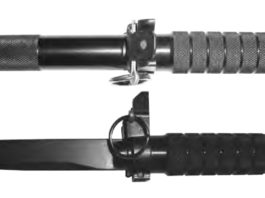
The United States issued the Mark I in 1942 and 1943 to certain special military groups like the Army Rangers and Marine Raiders. The Mark I was a newer version of WWI trench knives, including a finger guard, a stiletto blade, and a skull crusher cap built into the pommel. 

However, over the course of WWII, the trench knife gave way to the combat knife. Most notable of these, the US M3 fighting knife, which was adopted in 1943. The M3 became the framework upon which more contemporary bayonets and fighting knives like the M4 and M7 were built.

Can I Own A Trench Knife Today?

That’s a complicated question to answer. 

The trench knife is classified as a dangerous weapon in many states and countries for a variety of reasons. Some places prohibit them because they have double-sided blades while others focus on the knuckle dusters or the length of the blade as reasons to ban them.

Owning or carrying a trench knife is banned in numerous countries including the United Kingdom, Australia, Ireland, Canada, China, and Singapore, among others.

In America, the knife is outlawed in some form in 23 states, and even among the states where it’s legal to own and/or carry, 18 of those states either only allow you to keep the knife in your home or require a permit to carry it on your person. 

The only states with no permit rules for owning a trench knife are Texas, South Dakota, Indiana, South Carolina, Idaho, Hawai’i, Georgia, Arizona, and Alabama.

Modern Trench Knives

There aren’t many companies left making trench knives similar to those blades from a century ago. However, the two below are modern takes on the combat classic.

M48 Liberator Trench Knife

This is the souped-up version of the original trench knife. Everything about the Liberator is big and bold and in your face.

It starts with the 7.5-inch 2Cr13 cast stainless blade that is ground sharp on both sides. The blade has a satin finish and black oxide coating to add to its intimidating aura. The handle scales are made from a light, rugged fiberglass-reinforced nylon that provides a strong grip without adding too much weight.

And then there’s the knuckle duster tang. It both acts as a knuckle guard and an intense defense weapon. The added spikes on the handle allow you to use more force in case you are defending yourself. The knife fits into an injection-molded Vortec and nylon belt sheath that snaps shut and easily fits on your person. 

It’s bad. It’s unapologetic. It’s the ultimate modern version of the trench knife.

MSRP: $79.99

Cold Steel Chaos Double Edge

A more muted version of the trench knife, the Chaos Double Edge from Cold Steel gives a modern, tactical spin on the old classic.

The blade itself is made from SK-5 high-carbon steel and is 7.5 inches long. The full-tang construction allows for a well-weighted knife that can be used to defend or to slice through dense brush. Both sides are ground sharp and meet at a spear point so the knife can puncture as you would expect.

The handle is made from 6061 aluminum and features a pair of D ring guards, which are a newer version of the old-school knuckle duster guards that is used for the same purpose. The pommel of the knife is tapered to allow for more force when using the cap to strike.

The included sheath is made from Secure-Ex and is both Molle-Lok and Tek-Lok compatible so transporting the Double Edge will be a breeze.

MSRP: $99.99

Read More

Ed Fowler: Custom Knifemaker, Writer, Teacher Passes

Fowler had a lasting impact on handmade knives and knife writing.

The cutlery world recently lost one of its most steadfast creators and philosophers. Ed Fowler, a man who epitomized the spirit of the custom knife movement, passed away on January 17.

Ed’s journey in the industry began in 1962. Over the following six decades, he became a driving force in the evolution of functional cutlery. While he didn’t invent the use of 52100 ball-bearing steel, he was arguably its greatest champion, popularizing the material alongside his then-controversial methods of multiple quenching during heat treatment. For Ed, a knife wasn’t just a tool; it was an ongoing experiment in maximum performance.

To the readers of BLADE Magazine, Ed was a household name. For over a quarter century, he penned his monthly “Knife Talk” column, which consistently ranked at the top of reader surveys alongside BLADE Magazine Cutlery Hall of Fame® member Wayne Goddard. His writings were eventually compiled into two essential volumes: Knife Talk I: The Art & Science of Knife Making and Knife Talk II: The High Performance Blade. Whether he was conducting demos at BLADE Show or teaching at BLADE University, Ed was always eager to share his findings with anyone who sought a deeper understanding of the craft.

A former ABS master smith, Ed eventually founded the High Endurance Performance Knife Association. This organization was a reflection of his own soul—dedicated to understanding the limits of steel and ensuring every knife reached its absolute potential.

Ed’s voice was unmistakable. In his writing, a knife was never an “it”—always a “she” or “her.” He spent his life in a relentless search for what he called “Excalibur,” his version of the perfect knife. He drew deep inspiration from the legends of the past, including Hall of Famers Bill Moran, William Scagel, Rudy Ruana, and the 19th-century bowies of Henry Huber.

He was perhaps most famous for his insistence on testing. Ed had no patience for makers or companies that didn’t put their blades to the trial, and he was never shy about saying so. This commitment to truth in steel earned him a fiercely loyal following. Many of his readers didn’t just follow his column; they traveled across the country to visit him at his Willow Bow Ranch in Riverton, Wyoming, to spend time in the shop with the man who helped define the modern high-performance blade.

Remembering Others The Knife Industry Has Lost:

Advertisement

Must Read Articles

Read this before you make a knife

Knifemaking 101 – Read This Before You Make a Knife

  by Wayne Goddard My experience has taught me that there's nothing like digging in and getting started. I've often said the hardest part of the...
how to forge damascus steel

How to Forge Damascus

Advertisement
Advertisement