

In this video Brian Thie shows how to do fine stitching around inlays in a leather sheath. Brian is a Journeyman Smith in the American Bladesmith Society…
Knifemaking is the building of a knife, which includes the blade, handle and other accouterments. Blades are made by either removing metal from a steel blank via a grinder – known as stock removal – and the forging to shape of hot steel into a blade in the process known as bladesmithing. Other parts, including bolsters, guards, pommels, etc., are needed to complete the finished knife.
| Featured Knives – | – Knife Collecting – | – Tactical Knives – | – Survival Knives |



In this video Brian Thie shows how to do fine stitching around inlays in a leather sheath. Brian is a Journeyman Smith in the American Bladesmith Society…
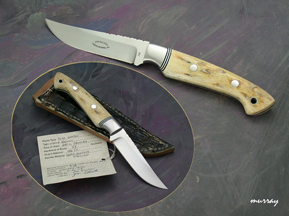
Congratulations to knifemaker Jim Elliott, who I saw featured today, April 30th, 2013, in Highlands Today, an Edition of the Tampa Tribune. Jim is featured in the publication’s “Agri Leader” section for growing hundreds of varieties of orchids, and of course, for being a spectacular knifemaker.
While Highlands Today focuses on his prize-winning orchids, they do give a shout-out to his knives, including an image of the first knife he ever made. BLADE and blademag.com salute his knifemaking, of course, with honorable mention for his apparent green thumb, the latter of which landed him several awards at the seventh annual Orchid Show in Lake Placid two weeks ago.
For the full story, click here.
To learn more about knifemaking resources, books and videos available at shopblade.com, click here.
By Pat Covert
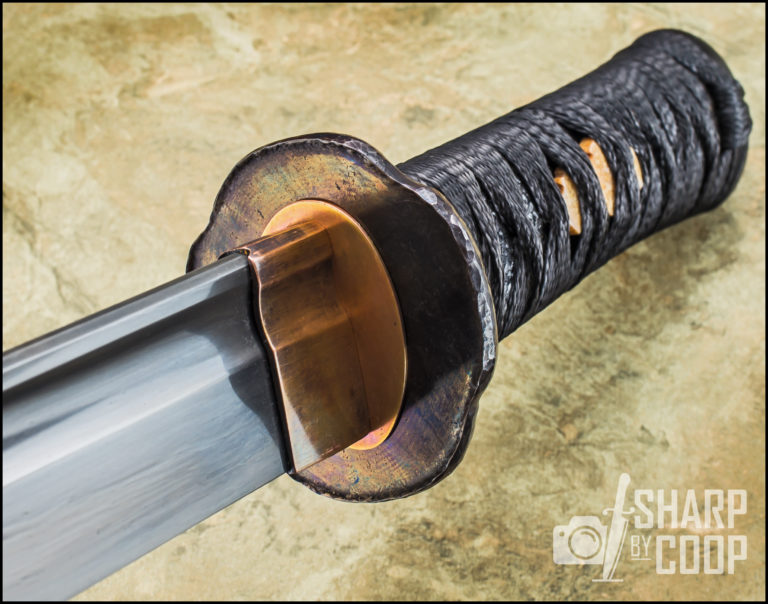
Fit and finish is bandied about so often in cutlery circles it’s almost become one word, pronounced something like fittenfinnish. A newbie collector who hangs around seasoned custom knifemakers, purveyors and collectors soon learns the “fit-and-finish thing” is a mighty nice trait for the knives in his or her stable to have.
All that being said, is fit and finish the key to a knife being all it can be, or does a knife exhibiting it simply look nicer and cost more? Or does the answer lie somewhere in between? We recruited a panel of authorities to help sort through it all, including purveyors Neil Ostroff of True North Knives, Dave Ellis of Exquisite Knives, Dan Delavan of Plaza Cutlery, and seasoned custom maker Tim Britton.
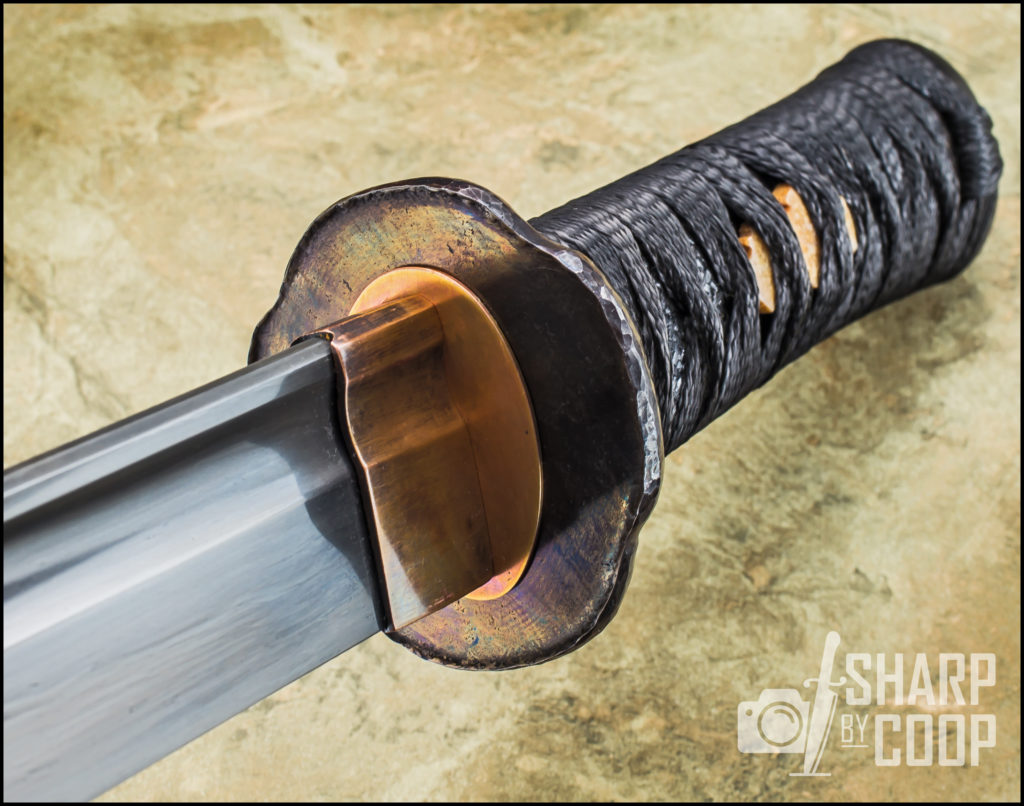
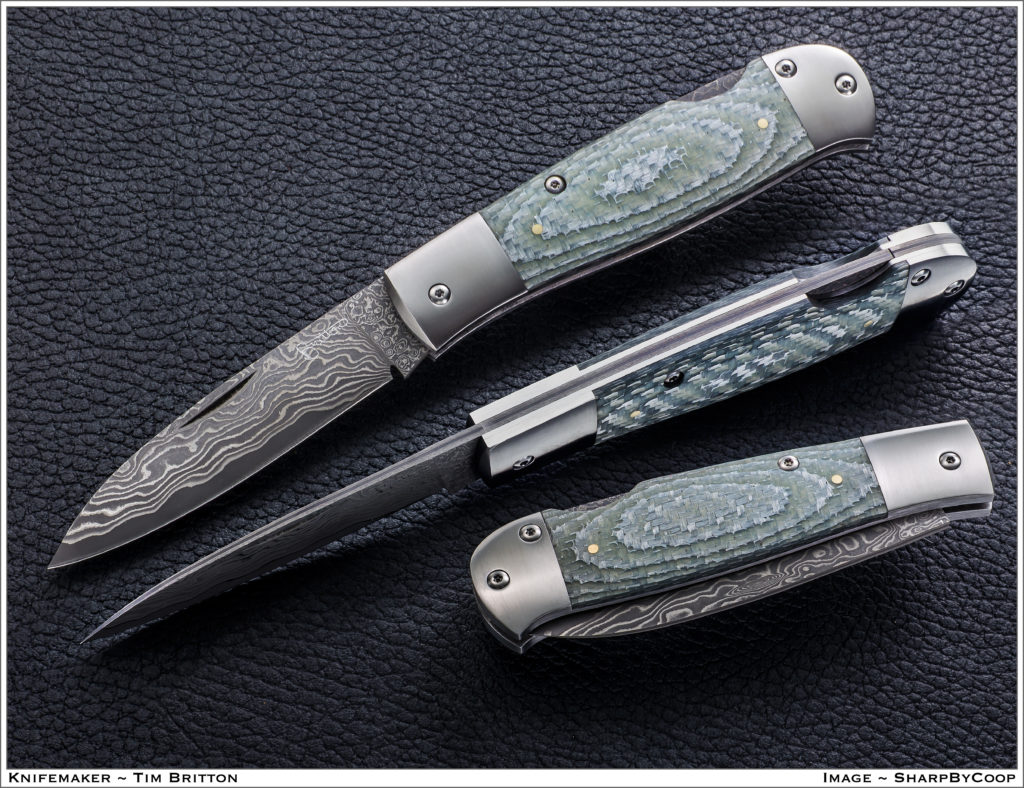
We started by asking our authorities how they define fit and finish. Britton, who makes highly finished customs, said, “There should be no adhesive or solder showing anywhere. No gaps in inappropriate places. Metal-to-metal joints should be indiscernible. And no visible scratches or grind marks, period. One thing custom knifemakers should be able to do well,” he observes “is finish metal.”
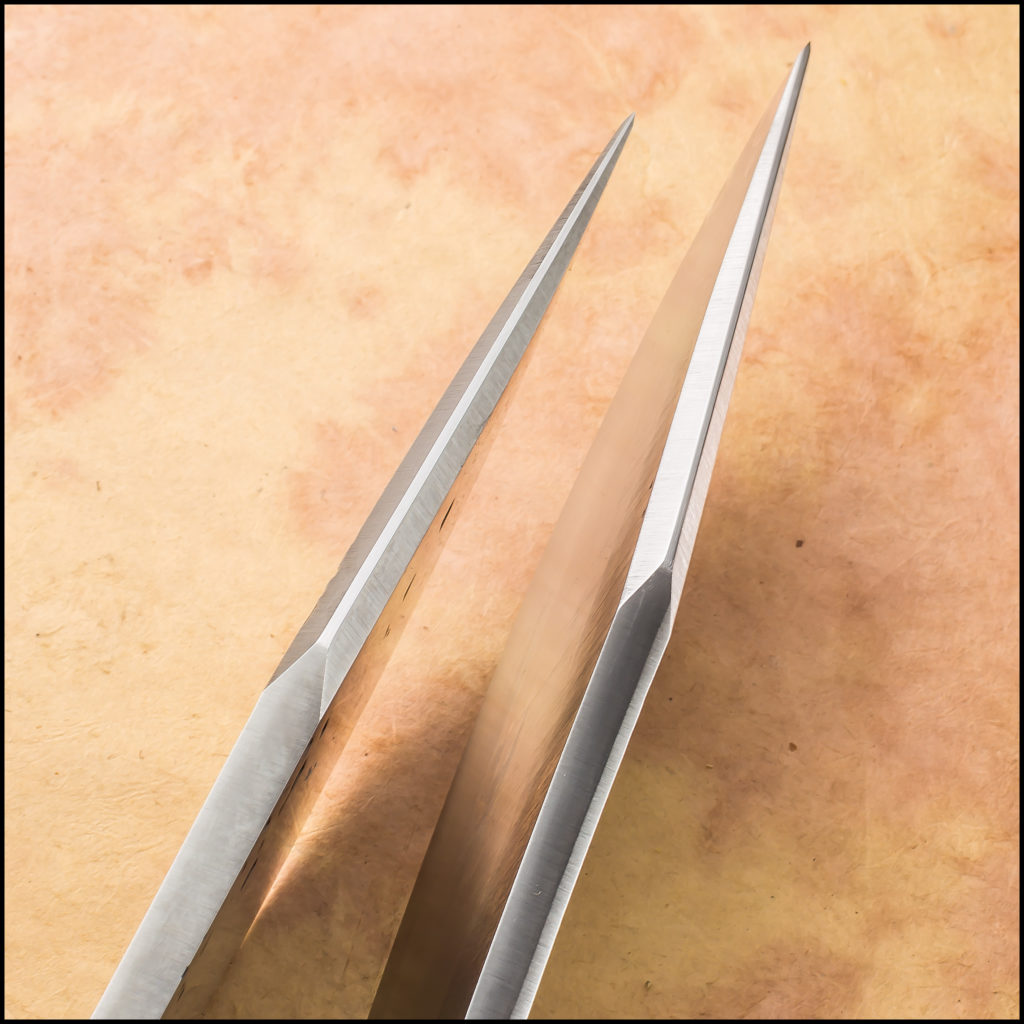
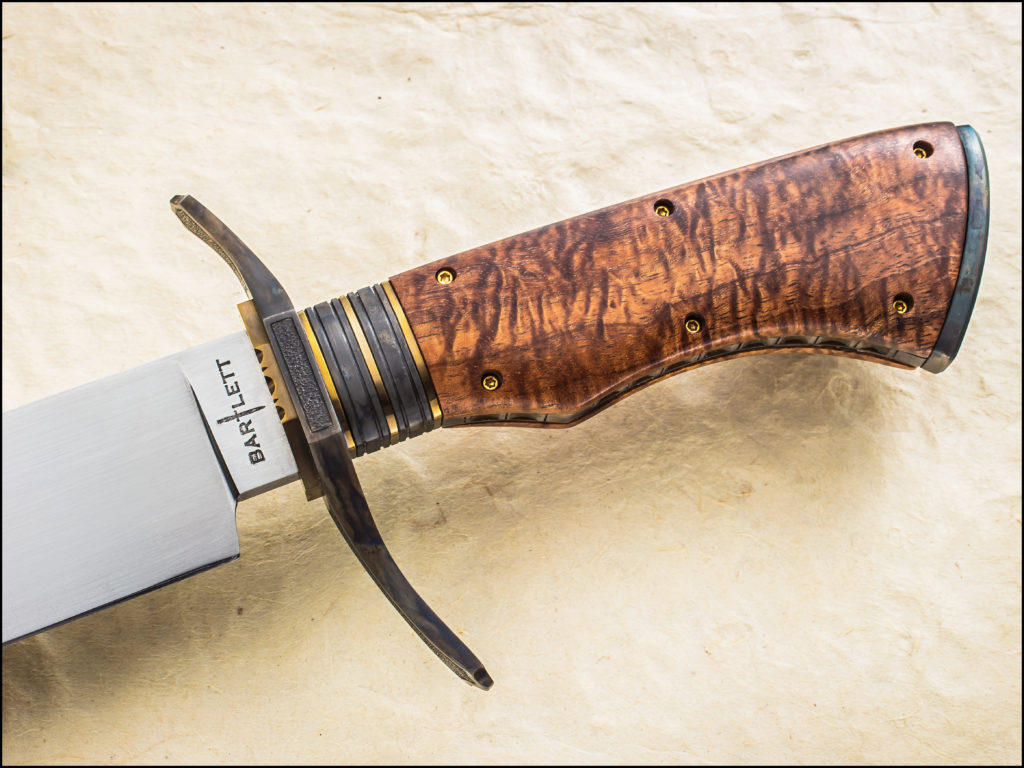
In addition to being a purveyor, Ellis also is a retired ABS master smith and knows fit and finish from the maker’s point of view as well. “I define fit and finish of a custom knife to mean is it overall appealing to the eye,” he begins, “are there any obvious gaps in guard or handle fitting, is it a design that will truly work?” Ellis stressed that good, sound design is a factor. “The first thing I look for is the overall appearance. Is the design clean? Is there an organic flow? How does it feel in the hand in different grips? Then I look at the finer details such as guard fit, blade finish, handle design and comfort,” he explains. “As an ABS master smith I also look at things like edge geometry, tapered tangs and plunge cuts. All of these should be [executed properly] in a piece with excellent fit and finish.”
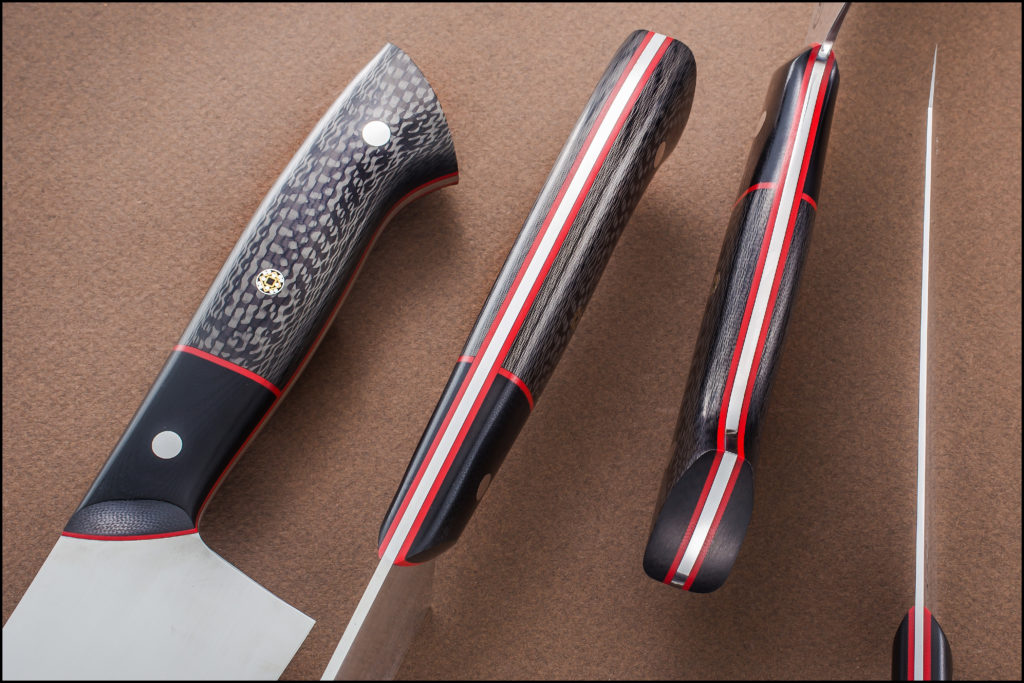
“Fit and finish is a standard required for all knives,” Ostroff says. “It used to be almost exclusively for custom knives—which are at a higher price level—but more and more the buyers are demanding the same standard for a factory or mid-tech knife which will sell for a remarkably lower price. Fit and finish is generally a well-centered blade—in the case of a folder—no blade play in either direction, flush-fitting bolsters, and a blade finish as the maker intended. By this I mean one cannot expect a stonewashed blade, or handle, not to have scratches. Recently the matter of the strength of the detent has become an issue—again, another subjective item.”
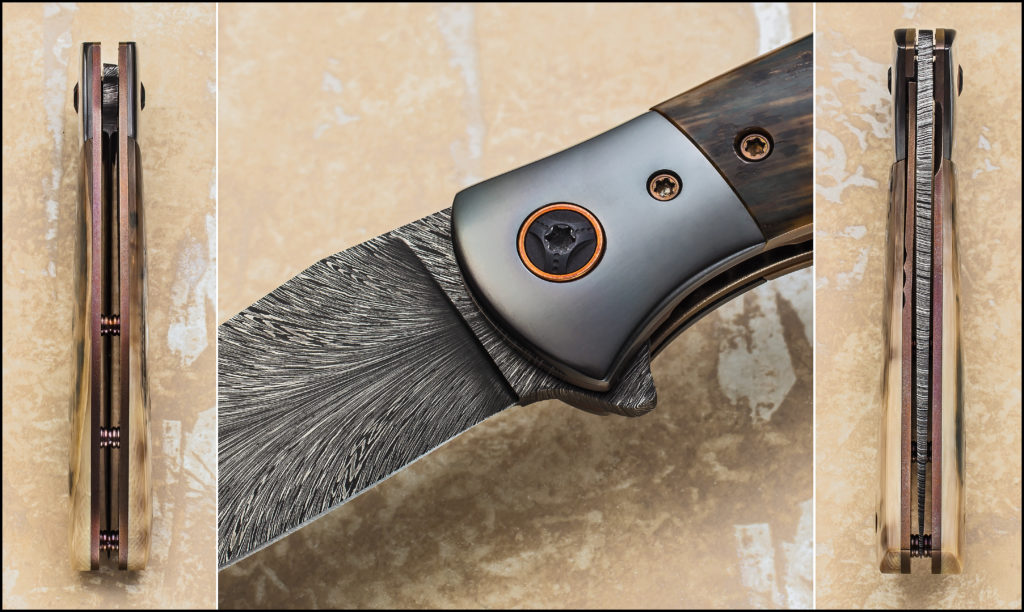
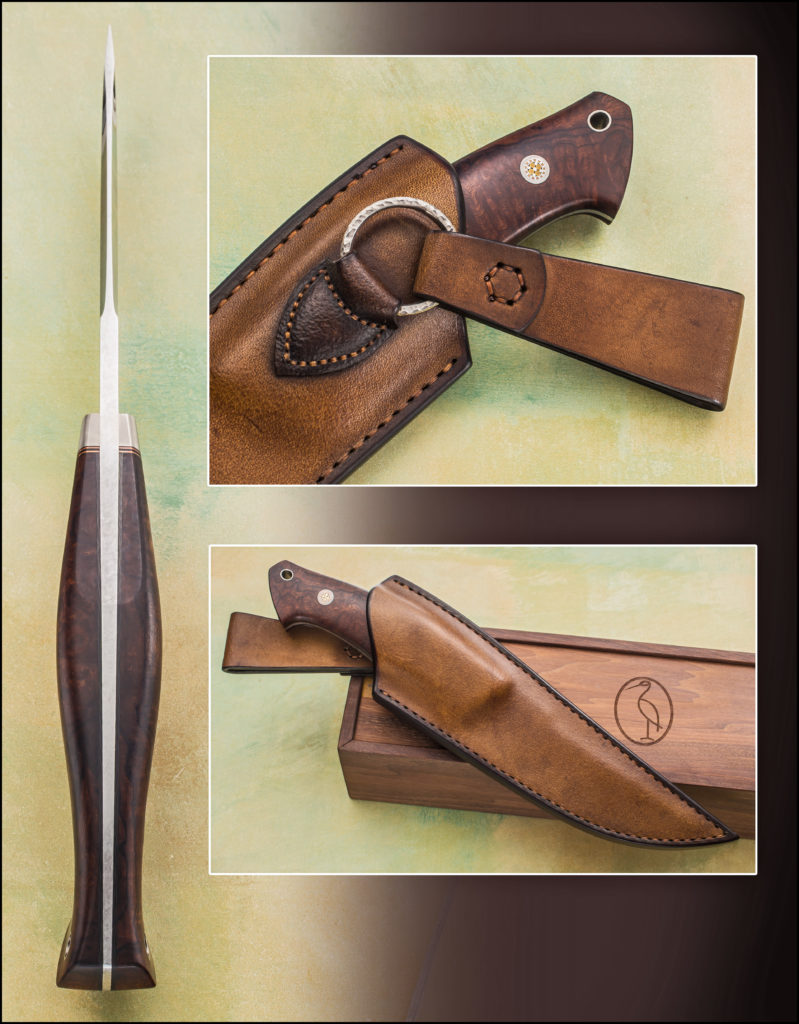
“The criteria for fit and finish depend on the expectations of the buyer,” Delavan qualifies. “Plaza Cutlery also believes design as well as craftsmanship is important. Most important is the design. It has to make sense to me. Any guards should be clean with no gaps, bevels should be the same and no 2-inch glitches. Also, handles have to be clean to the tang or guard with no gaps.”
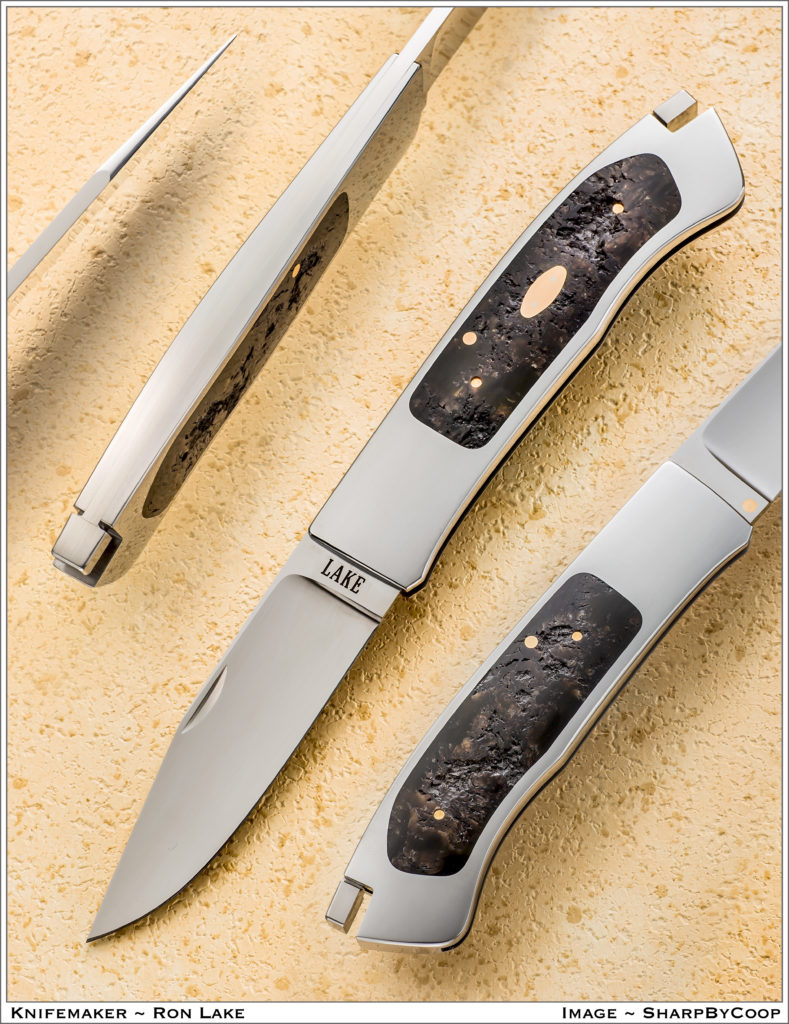
PERFORMANCE
Does fit and finish affect a knife’s performance? “Poor fit and finish will really show when a knife is put to hard use,” Ellis advises, pointing out potential problems such as hot spots from badly designed and finished handles, guards or buttcaps with sharp edges, bad edge geometry that might cause the blade to dull quicker and be difficult to remove from the sheath, and so on.
Britton’s take was interesting, to say the least.
“One of my first knives was made in 1972. It was ugly and poorly finished,” he recalls. “[BLADE Magazine Cutlery Hall-Of-Fame® member] Frank Centofante helped me sell the knife to a hunting guide from Montana. The guide later wrote to me wanting four more just like it. The knife skinned and dressed three elk before needing sharpening. Steel was Latrobe D2 and Paul Bos did the heat treat. Fit and finish had little or nothing to do with function. Quality of steel, heat treat, grind and sharpening angle were much more relevant.”
“A good finished knife just has a better feel, but a lot of people will not use it,” Delavan notes. “A knife with a lot of cosmetic issues can still be a good tool, and there are makers that don’t worry about those details. Most makers say a knife is meant to be used, not to sit in a safe.” Ostroff tends to agree. “Performance is not typically an issue [with fit and finish]. For example, a knife with an off-centered blade will still function as well as one that is centered—but the customer has the right to get what he or she wants, so we do whatever it takes to make them happy.”
F&F: OVERRATED?
Are there cases where fit and finish is overrated? In other words, are there knives that perform very well even though they may not have the polish of an expensive model but have excellent heat treat, blade geometry, comfort and a more affordable price?”
“Fit and finish is not overrated when trying to satisfy the buyer,” Ostroff opines, “but taking out the collector/safe-queen members of our community, all knives are meant to cut, and all will do so if built to industry standards.”
“I have seen a few knives that performed well with poor fit and finish,” Ellis says. “Usually if a maker takes the time to finish their piece to tight tolerances, they also have taken the time to be sure that the piece has a credible heat treat, edge geometry and an overall good feeling in the hand.” Adds Delevan, “Many of the small production companies do a good job. Fit and finish is good, not perfect, but you have an excellent tool at a more affordable price.”
WHAT do YOU WANT?
Our authorities made excellent points for and against performance being a factor in fit and finish. Though there were several substantive points about design, in this writer’s opinion it isn’t really a fit-and-finish issue. Design is, of course, very important because no matter how well a knife is made, if the design is poor so will be the performance. From an aesthetic standpoint fit and finish is everything, but, as Delavan points out, many collector-grade knives become safe queens, never seeing action in the field.
A good analogy here would be comparing a Bark River Knives fixed blade to a comparably sized one made by ESEE Knives. Both companies have a huge, extremely dedicated following. Bark River’s fare is finely finished while the ESEE knives are more roughly done, but the latter are half the price or more of the former, depending on materials. Will both knives perform well? You better believe it. Both have stellar performance records. It really depends on whether you want to pay extra for a nicely finished knife or a rough finished one. Beauty is in the eye of the beholder and both do their job in spades.
Bottom line is you have some very good options available—and choices make the world of knives go around!

So I was working behind the table at the book booth during the BLADE Show this past weekend in Atlanta, a great show, by the way, best ever. And this gentleman was interested in buying the “First 25 years of BLADE Collection: 1973-1997” DVD. He said he already owned the DVD that came after it, “BLADE 1997-2007.”
The lady he was with asked, “Why don’t you just subscribe to BLADE®?”
He replied, “I can get 25 years worth of the magazine for $42.99, why would I want to pay $21.98 for one year?”
She said, “The subscription is new magazines, not old magazines, that’s why!”
It got me thinking that neither one of them was wrong. I prefer to get my magazine when it comes out, but to each their own. And I’m just glad they enjoy the magazine well enough to have the conversation.
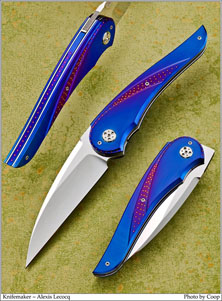
Knifemakers have a hard enough time making a living doing what they love without added expenses. So what are the benefits of paying a professional photographer to photograph their knives for them?
The reasons to have knives photographed are many. As managing editor of BLADE Magazine, I can tell you that often when knifemakers send me images of their newest models for possible publication, the self- or friend-taken digital images are low resolution, fuzzy, with busy backgrounds or too low quality for a high-gloss, color magazine. The images might look good on a website, computer screen or printed, but once reproduced on quality magazine paper, in four color, they lose their crispness and look fuzzy.
Here are some other reasons to have your knives photographed by a pro from photographer Jim Cooper of SharpByCoop.com.
The benefit of a professional image will promote you in a number of ways:
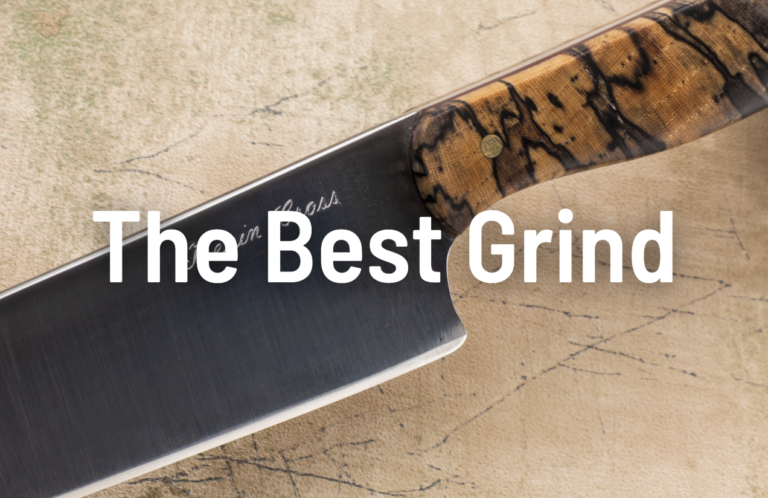
As with most things knife, one type never fits all.
BY MIKE HASKEW BLADE® FIELD EDITOR
Finding the best blade grind for the job at hand has become the subject of some debate, but most knife users agree that certain grinds are better suited for certain functions. Combinations of steel, knife design and use influence the choice of grind.
“I’m a proponent of the right grind for the right job,” related author/knifemaker Abe Elias. “In small bushcraft knives, a thin, flat grind and a saber grind are hard to beat. It makes sense that clear cuts are best flat edged. Carving chisels have rounded convex edges to go into wood and take small cuts and come out.”
An inappropriate grind may produce drag, a ragged or erratic cut, and generally poor results. “For overall working of wood and good, straight, controlled cuts, you want a knife grind to ride flat against the surface so it cuts past certain levels and growth lines, riding flat on the wood between growth lines,” Elias added. “It’s just physics. That’s all, and nobody can really argue it.”
One of the most popular grinds for bushcraft knives is the scandi grind, and Elias describes it as a perfectly flat grind with no secondary bevel, starting at the shoulder with an angle that is perfectly flat and straight to zero.
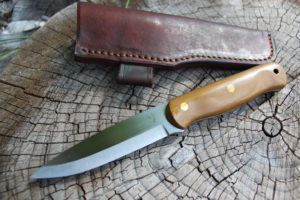
“Scandi grinds will go on any steel you want, but there are limitations to them because of the shoulder,” he noted. “It doesn’t tend to go through soft surfaces well, such as processing meat. When the knife enters a malleable surface, it creates too much drag on the blade. Like anything else, the thinner it is the easier it enters into other masses. We run into problems when custom makers make them and factories produce them without following the golden rule of proportion. The angle should be proportional to the thickness of the steel and the design of the knife itself.”
Influenced heavily by BLADE Magazine Cutlery Hall-Of-Fame® member Bill Moran, Bill Bagwell, and Don Hastings, ABS master smith Jim Crowell recognized early in his knifemaking career that the intent was to make a full convex grind from the spine of the blade to the cutting edge. He has adapted those original lessons through the years.
“I’ve found that it’s the edge that needs to be convex, not necessarily the whole cross section of the blade,” Jim noted. “Consequently, I have now, for many years, ground my blades flat from spine to cutting edge, stopping short of going to zero and then rolling the cutting edge on convexly. The trick is to get the geometry correct for the thickness the edge was ground to prior to sharpening in conjunction with the type and heat treat of the steel used.”
Crowell says he believes the convex grind is best for knives in the field, including bowies, fighters, and fillet knives. He uses the convex grind almost exclusively and indicates it allows for an uninterrupted transition from the cutting edge to the full thickness of the spine of the knife. No matter how thick or thin the spine of the knife, with convex geometry it will have the least amount of resistance when cutting through an object.
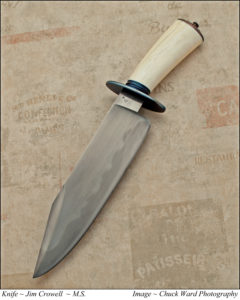
As for sharpness, Jim gives the nod to the scandi grind. However, he believes that when the cutting edge is, in fact, the grind line as well, the edge itself is more fragile in comparison to other grinds.
“Scandi grinds are great,” he said, “and useful for a lot of small chores. Then there are special-purpose applications like some sushi knives that have specialized grinds. Still, for day in and day out I like and recommend the flat, convex grind.”
Knifemakers tend to use the grinds they are comfortable with and which they believe fill the bill for the types of knives they make. The degree of difficulty associated with a particular grind lies more in the experience of the maker than in the grind itself.
“The hardest grind is the one you do not regularly do, and the easiest would be the one you do all the time,” Crowell reasoned. “When I started, I used to hollow grind stock removal blades. You could lay everything out and follow the lines—it is still hard though. When I started forging it was really hard because there were no layout lines to follow, and all the scale and hammer marks made it hard to tell what I was doing. Daggers are generally acknowledged to be more difficult. Some of the Russian and Persian stuff with a ‘T’ spine or center ridge would be tough.”
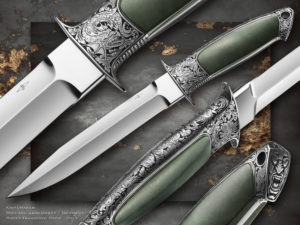
“The hardest grind is the one you do not regularly do, and the easiest would be the one you do all the time.”—Jim Crowell
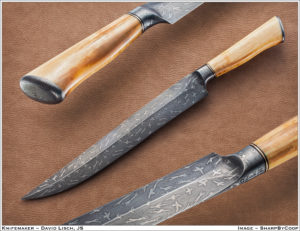
Knife manufacturers gear their grinds for prospective use as well. Hollow grinds are usually the most efficient for manufacturing because both sides of the blade are ground at the same time. Flat grinds are ground one side at a time, and precise machining and good tooling create the even grinds for which manufacturers are known. Convex grinds are usually finished by hand, and such work is the province of a skilled custom maker.
“Hollow grinds are great for slicing,” commented Jim MacNair, new product coordinator and senior designer at KAI-USA Kershaw, “and they create a nice, thin edge geometry, and the panel of the grind stays thinner as you sharpen away the blade over time. These blades will feel very sharp because the grind scoops away more material and makes the blade thinner overall.
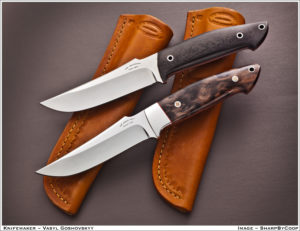
“The most obvious benefit of the flat grind is strength and toughness. The wheel is grinding a flat surface rather than a concave one like a hollow grind, and it removes less material from the blade. That added material makes the blade thicker and stronger.”
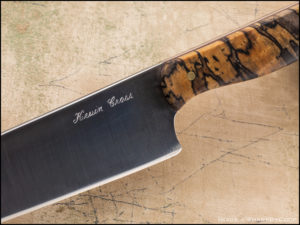
MacNair sees compound grinds emerging in the custom market, including blades that feature a combination of flat- and hollow-ground bevels. These are often done to create a “cool” look, and the maker is also providing the best of both cutting options: a thin, hollow-ground edge for slicing and a thick, flat-ground tip for toughness.
Innovation continues to find its way into new and user-friendly blade grinds, while the emphasis on the job to be done is at the center of the decision. Putting the proper edge on the blade for cutting, slicing, skinning, chopping or any other task will always be primary.
Swordsmith Wally Hostetter focuses on Japanese blades and tailors the grind of each to its anticipated function. He forges the blades and sets up the edge geometry with hand filing.
“A lot of guys do hollow or flat grinds with a machine, but what I do has to be done by hand,” Wally explained. “I hand polish to the cutting edge, and there is no micro-bevel. Some have an appleseed [convex] edge—niku is the Japanese term—and some have the edge slightly rolled in for better cutting. For cutting heavy stuff, the niku comes to a finite edge but runs farther up the blade. There are many subtleties to it.”
According to Hostetter, other Japanese grinds, such as that found on the tanto, are fine and done to a thin edge because they are not intended for hard striking against surfaces. He uses 1095 carbon steel primarily and decides on the appropriate grind based on both the use of the blade and the historical time period that is being replicated.
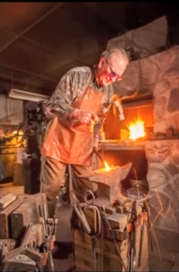
In this video from the American Bladesmith Society (ABS), master smith Jay Hendrickson gives some insight on ABS founder Bill Moran. His story offers a fascinating look at important pieces of knifemaking history.
Hendrickson is just one of the many knifemakers influenced by the legendary Bill Moran. Other than his highly-coveted originals, Moran’s work lives on through styles emulated by a number of other makers and companies, including this excellent Spyderco Bill Moran Drop Point Blade at ShopBlade.com.


