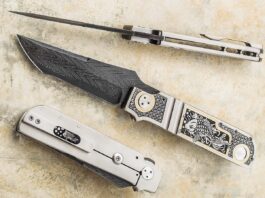
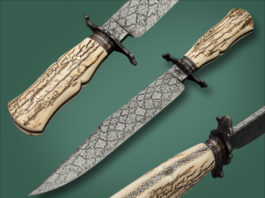
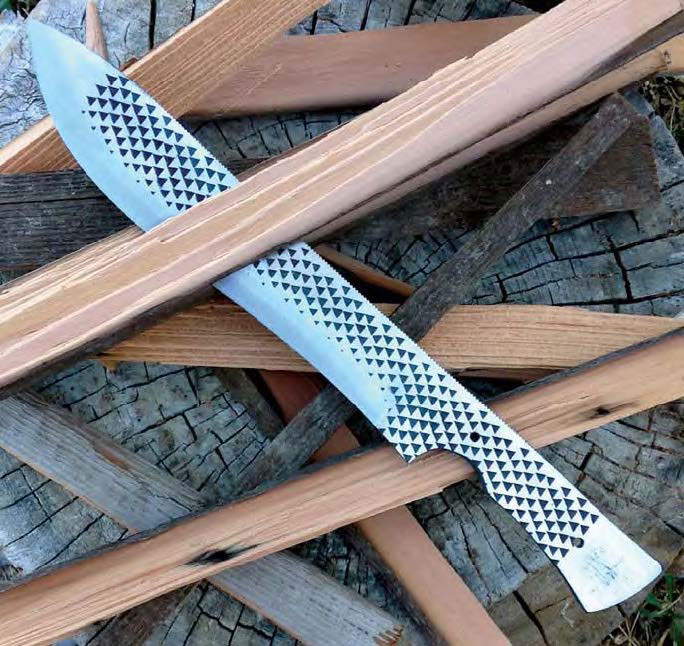
Knifemaking is the building of a knife, which includes the blade, handle and other accouterments. Blades are made by either removing metal from a steel blank via a grinder – known as stock removal – and the forging to shape of hot steel into a blade in the process known as bladesmithing. Other parts, including bolsters, guards, pommels, etc., are needed to complete the finished knife.
According to a new History™ Channel video trailer and television commercial, Season 2 of Forged In Fire premieres on February 9th at 10 p.m. EST/9 p.m. CST. All-new participants/bladesmiths are ready to forge edged tools and weapons, so tune in to History Channel and see for yourself.
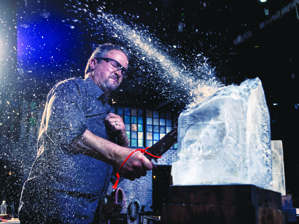
ABS master smith J. Neilson tests a blade on History Channel’s Forged In Fire. (Miller Mobley/HISTORY image)
Forged In Fire (page 84, December BLADE) pits bladesmiths against each other to see who can make the best knife in a limitedamount of time, with the winner of each episode earning a $10,000 first prize. Last year’s FIF included such well-known forgers as ABS master smiths Murray Carter, Ray Kirk and J.D. Smith, David Goldberg, Peter Martin, ABS journeyman smith Mace Vitale and others, as well as many relatively unknown bladesmiths.
The combination of having to complete knives in a set time limit along with the other contestants before television cameras and over a million viewers makes for a great pressure environment and high drama. As a result, some of the smiths struggle to perform at their best. See the December 2015 issue of BLADE to find out more.
Get a gander at what’s on the slate for NSM in 2026.
According to a recent post by Niagara Specialty Metals (NSM) on BladeForums, NSM (nsm-ny.com) had several steels and materials available either now or that were “incoming” as BLADE was going to press.
The list includes: MagnaCut; CPM154; S30V; S35VN; S45VN; S90V; 3V; 4V; CruWear (aka NSM Wear); 154CM; 20CV; M4; CPM D2; D2; 440C ESR; 416; and 6-4 titanium. The new MagnaMax (page 66) should be available in 2026.
The post stated that all particle metallurgy grades are “coming in from Erasteel and Carpenter and the quality has been excellent.” All of NSM’s air-melt steels and 6-4 titanium are domestic.
The only grades off the list at press time were 15V, 110V and Rex 121. “They were Crucible exclusives,” the post noted of the three grades not on the list, “and we’re working with the mills to bring them back once production can be re-established.”
The best in blade and handle materials decorated some of the most creative folder designs anywhere at the recent New York Custom Knife Show. Enjoy seven of them in all their glory on this and the facing page.
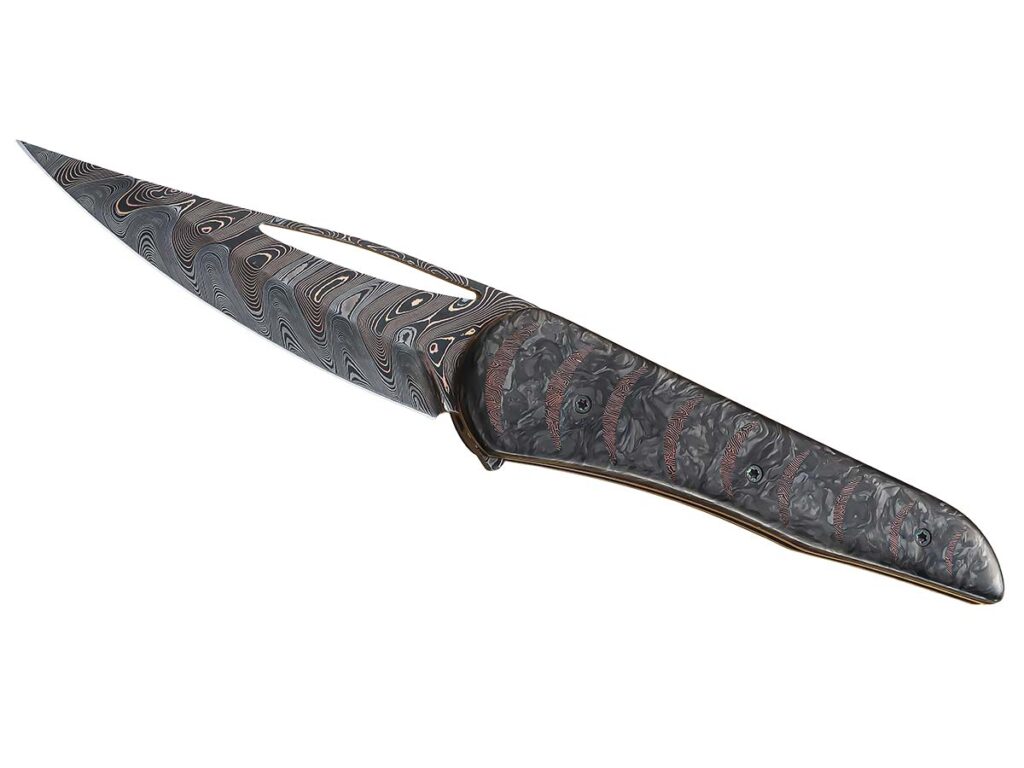
Alan Hollerbach Flipper Folder
Alan Hollerbach’s flipper folder has a 4-inch hollow-ground blade of damascus forged by Baker Forge & Tool, and scales of Fatcarbon carbon fiber and carbon fiber inlays. All hardware is titanium. Closed length: 4.5 inches.
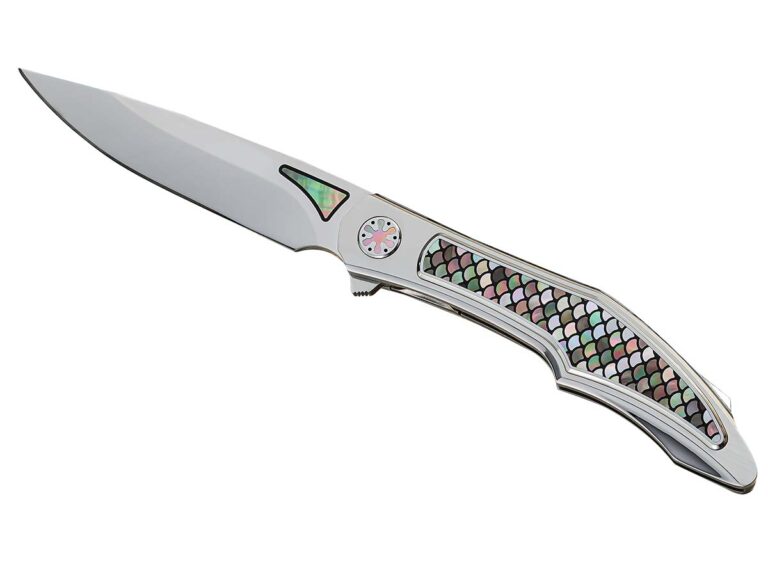
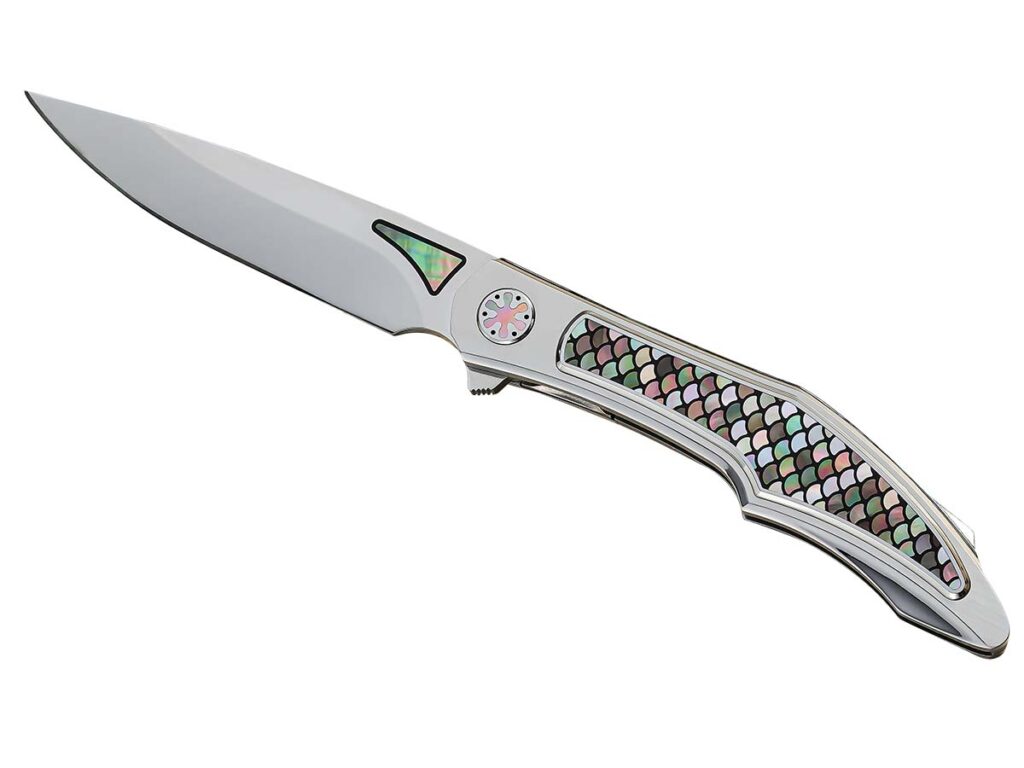
Eyal Landesman Mini Tritan Flipper
The Mini Tritan flipper folder by Eyal Landesman sports a 3.5-inch blade of mirror-polished RWL34 stainless steel. The mosaic “fish scale” inlay includes assorted “scales” of black-lip and white mother-of-pearl. Closed length: 4 inches.
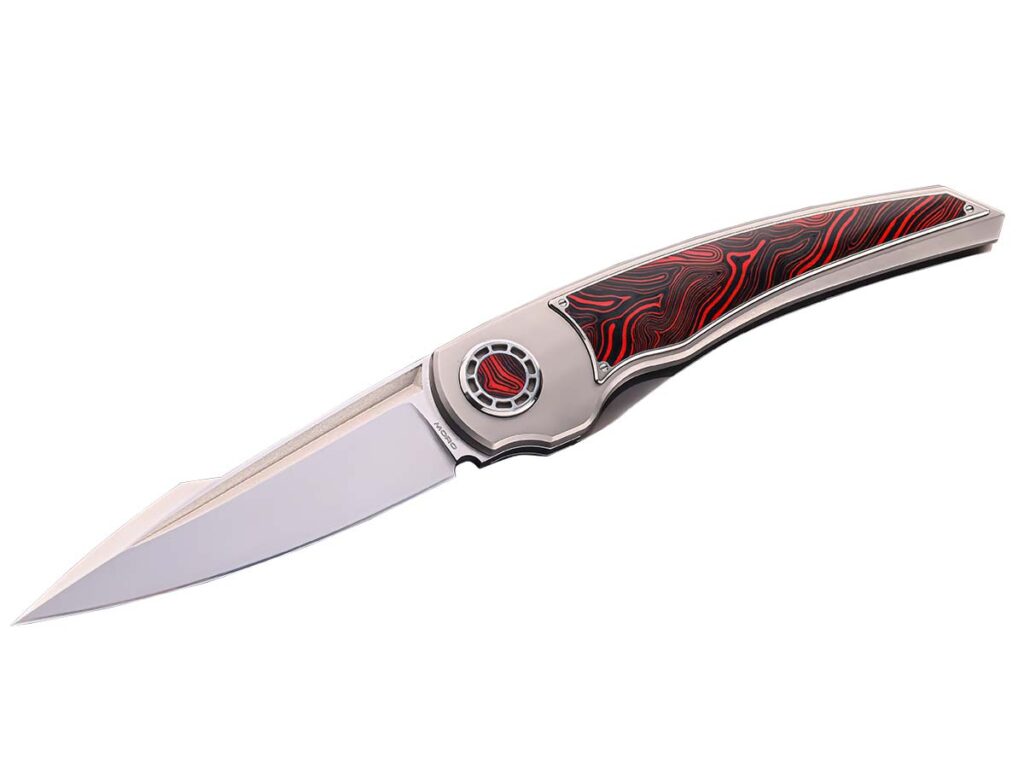
Corrado Moro Vantage Framelock Flipper Folder
The Vantage framelock flipper folder by Corrado Moro features a 3.38-inch harpoon-pattern blade of RWL34 stainless steel with a tapered fuller in the flat. The frame and pocket clip are Grade 5 titanium and the handle and pivot inlays are a G-10 composite. Closed length: 4.62 inches.
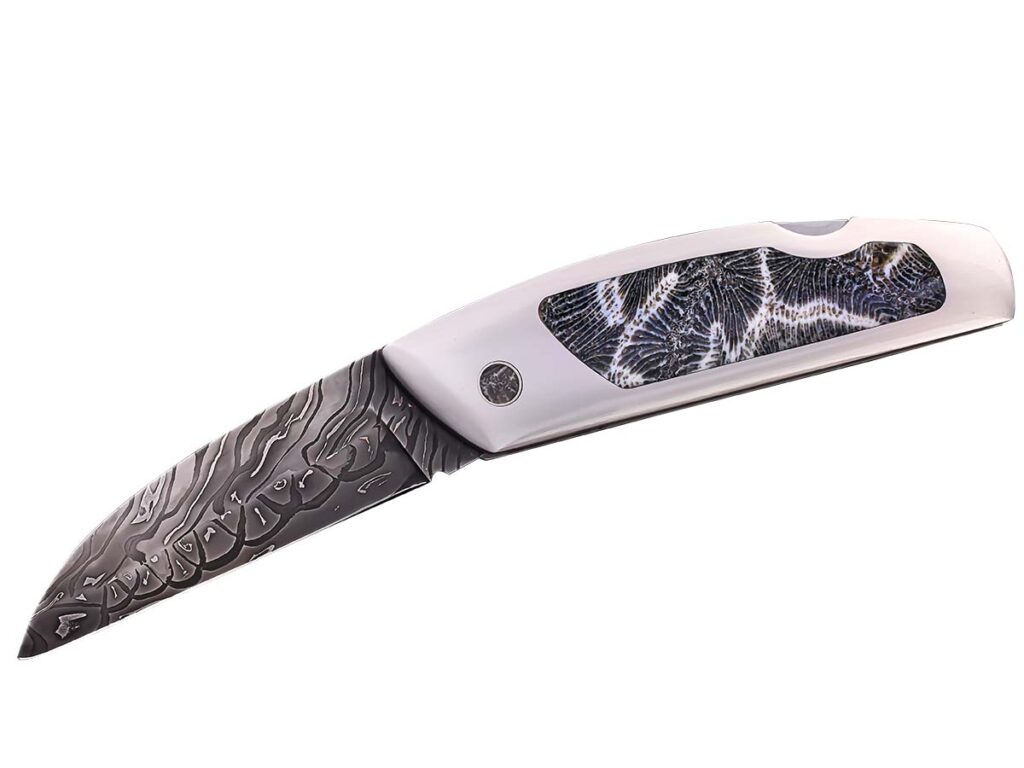
Chris Richardson Lockback Folder
Panel and pivot inlays of fossilized coral and a 3.5-inch flat-ground blade of mosaic twist damascus top off Chris Richardson’s lockback folder. Frame: 416 stainless steel. Closed length: 4.5 inches.
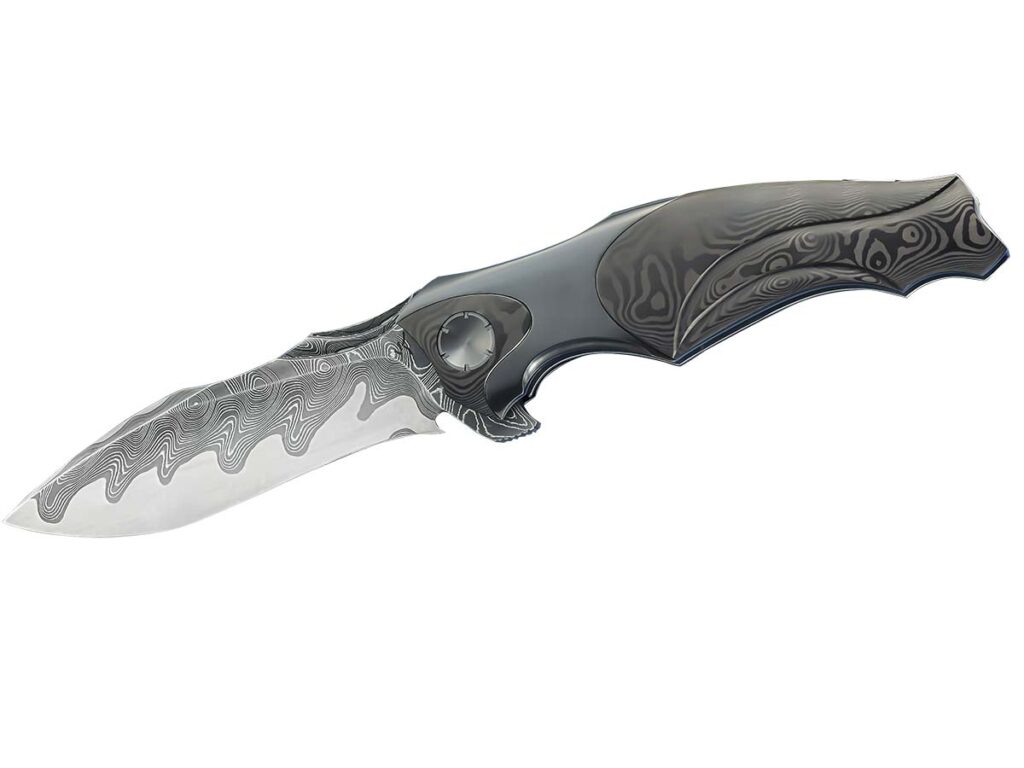
Jeremy Krammes Helix Flipper Folder
Jeremy Krammes helps celebrates his 20th year of knifemaking with his Helix flipper folder in Chad Nichols damascus blade steel, a titanium frame, carbon fiber scales and a zirconium bolster and pocket clip. The 3.5-inch recurve blade is hollow ground.
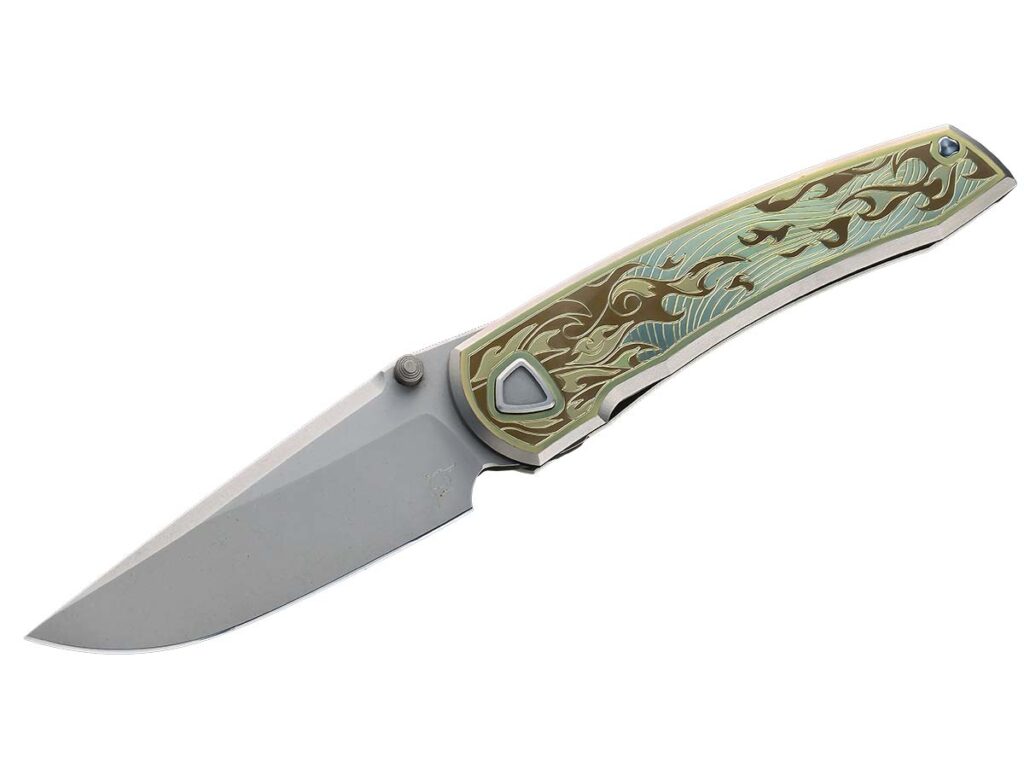
Edison Barajas Waka Folder
Edison Barajas combines new school with old on his Waka folder, using titanium for the scales engraved by Wilfred Valtakis II and a thumb stud to open the 3.25-inch blade of premium stainless steel. Closed length: 4.5 inches.
Stefano Compostella Stria XL
Stria XL by Italy’s Stefano Compostella sports a 5-inch wharncliffe blade of premium stainless steel. The linerlock flipper folder features Damasteel handle overlay and titanium liners.
Isaiah Schroeder’s Gyuto Comes In A Spectacular Damascus Pattern And Showcases The Maker’s Skill.
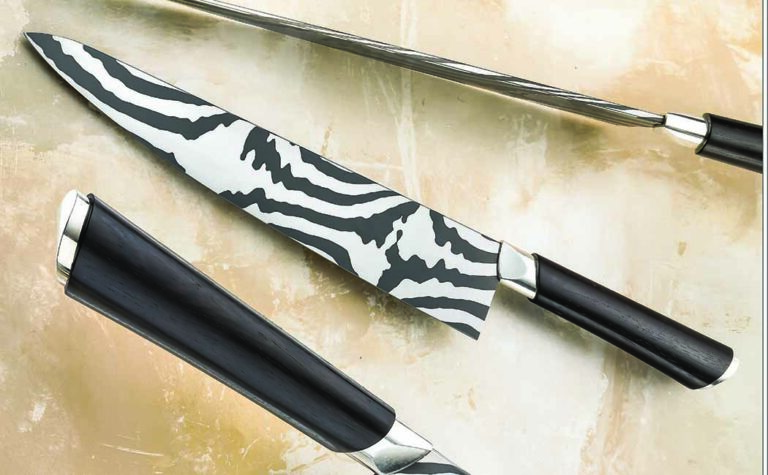
Isaiah Schroeder considers his gyuto the best knife he’s made, and the blade’s electrifying stainless damascus pattern and the ergonomic handle make it hard to argue the point.
Of the blade Isaiah said, “It’s a pretty simple pattern, one I’ve done in carbon steel quite a bit. A low-layer lazy twist is what I call it.” It consists of only 11 or so alternating layers that he twists three or four times. “That’s pretty much all it is,” he observed. “I love the way it turns out with the bold layer lines and everything. It looks kind of topographical and I always like that.” The darker steel is AEB-L stainless and the lighter parts are 154CM stainless.
He said the convex blade grind works great for food release. He is especially proud of the look and feel of his thin handle design that includes silver fittings done in the lost-wax-casting method. Combined with the 1/8-inch-thick blade, he said it’s, “Thin to win for a kitchen knife.”
A full-time knifemaker based in Madison, Wisconsin, Schroeder makes kitchen knives of all types in the Japanese style including a sujihiki, a long knife made for fine slicing of meats, fish, and precisely cutting through sinew. He also makes a petty knife as well in damascus.
Gyuto Knife Specs Pattern: Gyuto Japanese chef’s knife Blade length: 9.44 inches Blade material: Low-layer lazy twist damascus of AEB-L and 154CM stainless steels Blade grind: Convex Handle material: African blackwood Fittings: Fine silver (2 ozs. worth) Overall length: 14.44 inches Maker’s price for a similar knife: $2,000 Knife to know: Isaiah is a full-time knifemaker
There have been tons of stories on how to be a knifemaker. Most are great and deal with subjects like taxes, suppliers, marketing, sales, bookkeeping and safety. Other great articles cover the technical side of how to make the knives you wish to sell, including stories on forging, grinding, heat treating, handles, sheaths and more.
My story will outline some things I have learned over the years as a full-time knifemaker in a home-shop setting that I think will benefit you, your knives and, most importantly, your family.
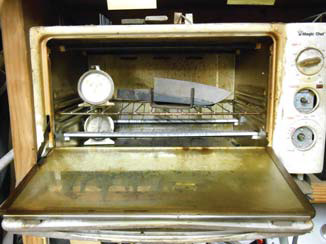
1) A Toaster Oven
Your kitchen will get messy in a hurry if you don’t take things outside. Buy a cheap toaster oven. Problem solved.
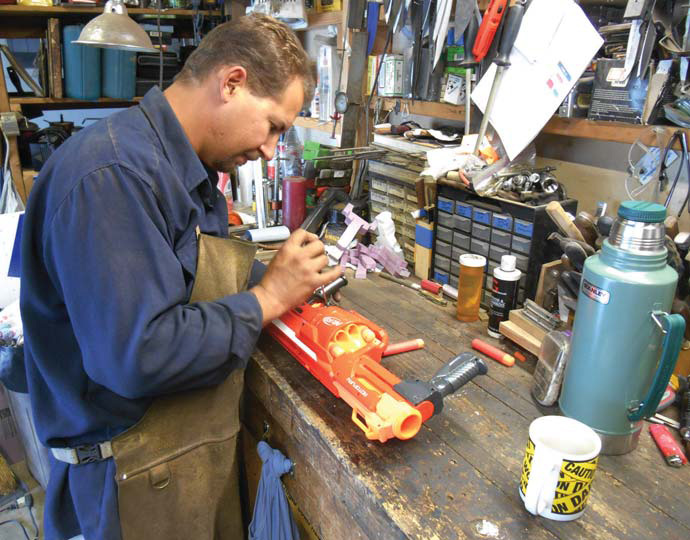
The kitchen is not the place to be tempering knives, warming up knife sheaths for waxing them, heating Kydex® for the molding, or burning out axe heads. A $5 toaster at the flea market will do all that in your shop and is a bargain.
2) Pots & Pans
Get a selection of pots and pans, cutting boards and a small scale from a thrift shop. Don’t be tempted to use a “good pan” for that one, little task.
3) A Shop Sink
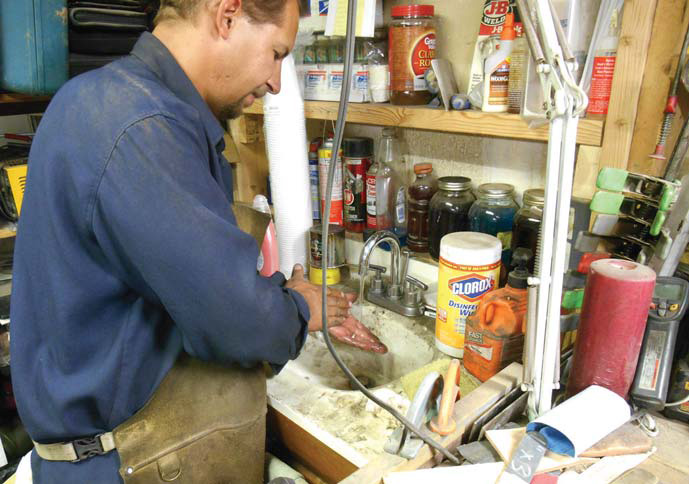
Would you want to eat out of this sink? No. That’s why it’s the dedicated shop sink, not the one inside the kitchen.
Install running water in your shop, or at least have a five-gallon bucket handy. Make sure there’s a countertop, too, in case of spills.
On that note, wipe your feet off before re-entering a home.
4) A Coffee Thermos
If who like your coffee as much as I do, get a big thermos, fill it in the morning, and take it to the shop with you. This cuts down on the trips away from the shop, as a trip inside the house to grab another cup can turn into an hour away by the time you get the cup, peek in the fridge, check for phone messages, etc.
Plus, every time you re-enter the house, you track shop dirt and oils in with you.
5) Discipline/Knowing When to Stop
Know when to quit for the day. This is one lesson I’m still learning. You get wrapped up in your work and the next thing you know it’s 2 in the morning.
Not only will you spend that night on the couch, but you may spend the next one there too if, as a result, you also forgot the plans you made, dinner, one or more of the kids’ school activities, etc. Besides, it’s tough to make good knives after a rough night on the couch.
6) Do Something Special for Your Family
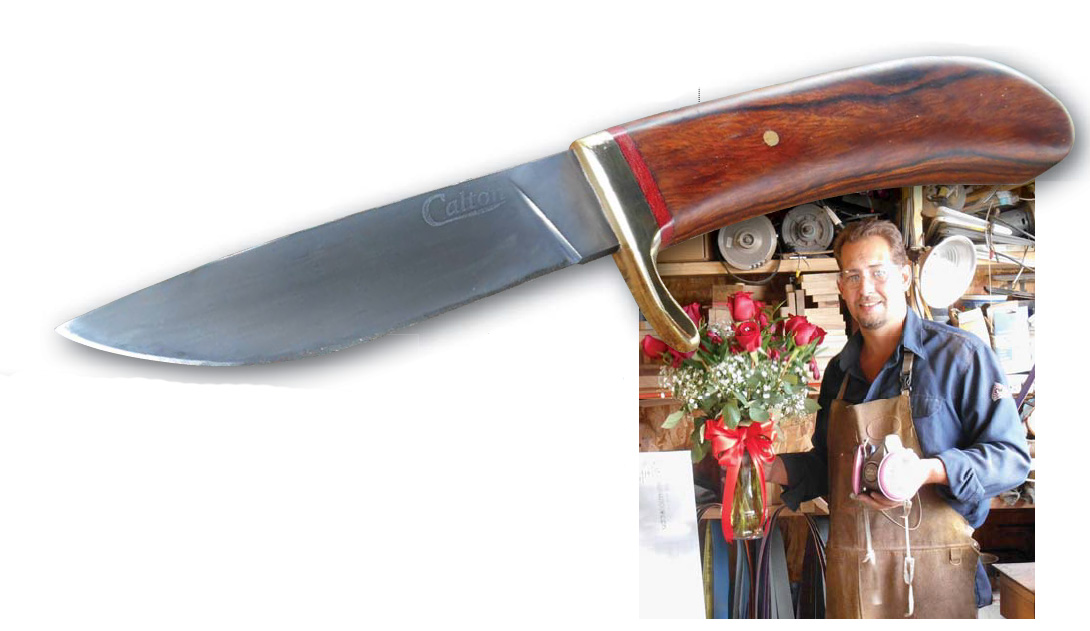
Make knives, buy flowers, repeat.
Use some of your knife money to buy your wife/husband/partner/significant other flowers. Buy them on a regular basis. Put it on the calendar if you must so you will remember. Think of the flowers as supplies, like grinding belts.
This is very important!
7) Mind the Dust
Know that what happens in your shop does not stay in your shop, and act accordingly. Dust from exotic woods will make it into your home. You may not be allergic to the dust but your wife, kids or family pets may be.
Keep an eye peeled for anything out of the ordinary when introducing new woods or materials into your shop. This also goes for smoke from quenching. Use “green” quenchants when you can, including vegetable-based oils and water. And keep the door to the rest of the house closed until you clear the air.
8) Consider Where Your Shop is Located
If you’re considering moving your shop away from your house, think long and hard about it.
Yes, a home-based shop offers some challenges. However, it offers quite a few benefits, too. Namely, the morning commute is a thing of the past, and people know how to find you.
Move the shop away, as some friends of mine have, and you may end up moving it right back anyway.
9) Make the Most of Breaks
Maximize the time between your work by throwing in a load of laundry, starting supper, taking care of a household task, paying bills, etc. This helps your family’s day-to-day quality of life.
10) Test Your Knives in the Kitchen
If you make them, there is no better test of the kitchen knives you create than to use them in making dinner. This is a twofer in that not only do you get the immediate feedback from hands-on testing, but also the household benefit of preparing meals.
11) Double Up Your Shop
With your shop set up, you have all sorts of tools on hand you can use for other projects. From fixing your kid’s bicycle to tuning up a lawn mower, you’ll find taking care of these everyday things can reset your focus for knifemaking later.
One thing that humble knifemakers find difficult to do at times is to express pride in their work. It’s the same thing with we knife editors and publishers. But when you look at these eight knife books that F&W Media has put out over the past few years, they’re not only impressive as a whole, but each individual title is clearly an example of quality work.
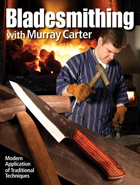
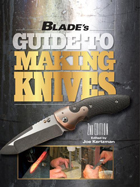
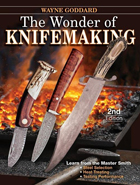
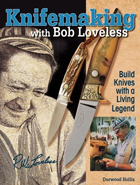
If you were interested in knifemaking and started with the two books Bladesmithing With Murray Carter and Knifemaking With Bob Loveless, you’d be well ahead of the game and your peers. Add in BLADE’s Guide To Making Knives, 2nd Edition, and suddenly you’re learning the craft from such knifemakers as Don Fogg, John Lewis Jensen, Tim Zowada, Allen Elishewitz, Vince Evans, Rick Dunkerley and Kevin Hoffman. Are you kidding me?! And how many of you have NOT heard of Wayne Goddard? His book The Wonder Of Knifemaking, 2nd Edition is a must-have for any knife book library.
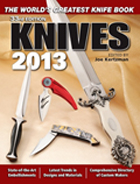
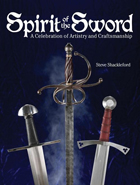
If custom or handmade knives are your thing, the 33rd Edition of the Knives annual book, Knives 2013, will blow you away with full-color photography, feature articles written by the world’s best knife writers and a complete directory of custom knifemakers. Another sweet, full-color, gorgeous coffee-table book is Spirit Of The Sword by Steve Shackleford. It takes you on a trip from historic to modern swords and back again.
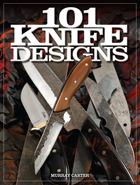
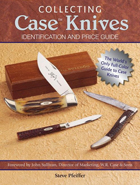
For knife collectors, you can’t go wrong with a book devoted entirely to Case Knives, the most collected brand in the world. Check out Collecting Case Knives by long-time collector, expert, accumulator and investor in everything Case, Steve Pfeiffer. And if after all that, you’re ready to design your own knives, or just need inspiration from over 100 classic knife designs, be sure to put in your pre-order for the brand-new, soon to hit bookshelves and stores everywhere 101 Knife Designs by none other than Murray Carter.
Admittedly, that’s one impressive knife book lineup, and would make any knife enthusiast’s library complete!
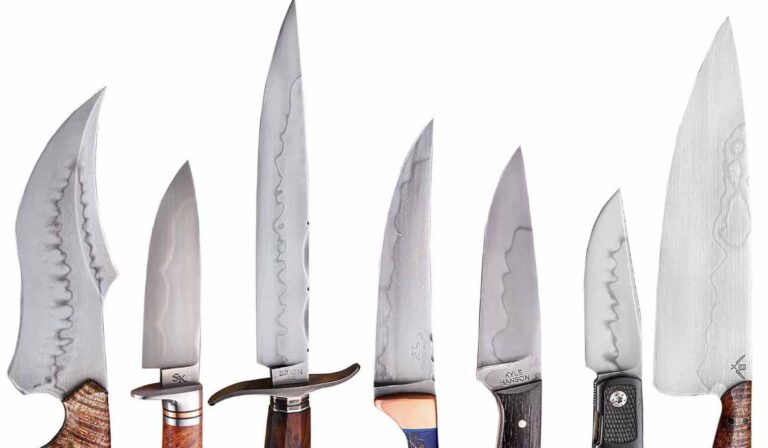
The often wavy hardening line running laterally and roughly midway from one end of the blade to the other on some knives is the hamon (pronounced ha-MOAN). Most if not all blades with genuine hamons are forged and differentially hardened. The wavy line serves as a demarcation point between the softer spine for toughness above and what extends down to a hardened edge for enhanced cutting below.
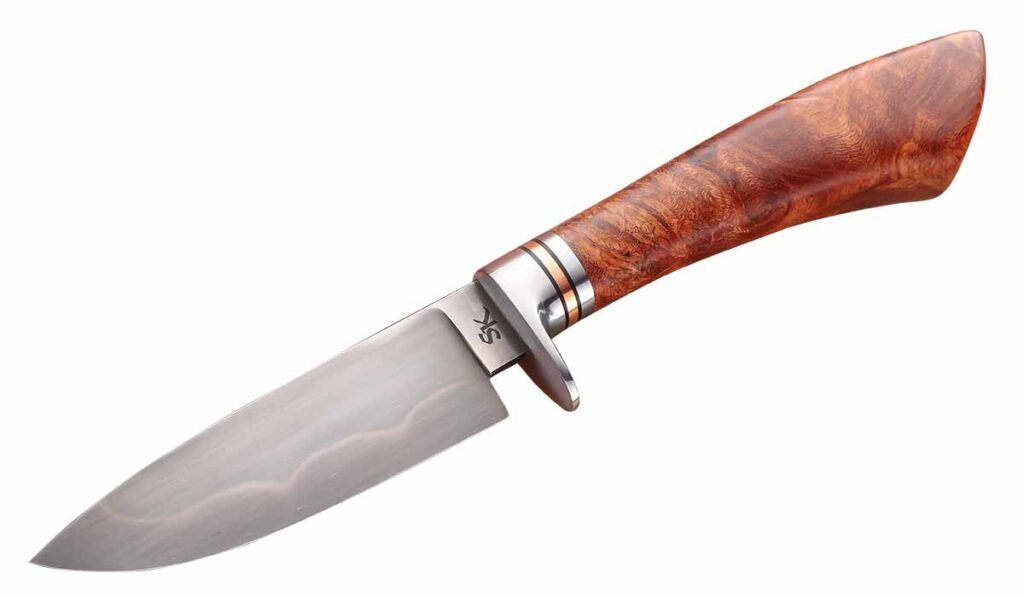
Steve Sando: Classic Hunter
Steve Sando used a coffee patina to color the hamon of the 4 3/8-inch blade of 26C3 carbon steel on his classic hunter. Steve’s differential hardening of the blade resulted in a Rockwell hardness of 62 HRC on the edge and 40 HRC on the spine. Blade grind: flat. Handle material: Afzelia wood. Overall length: 9 1/8 inches. (SharpByCoop image)
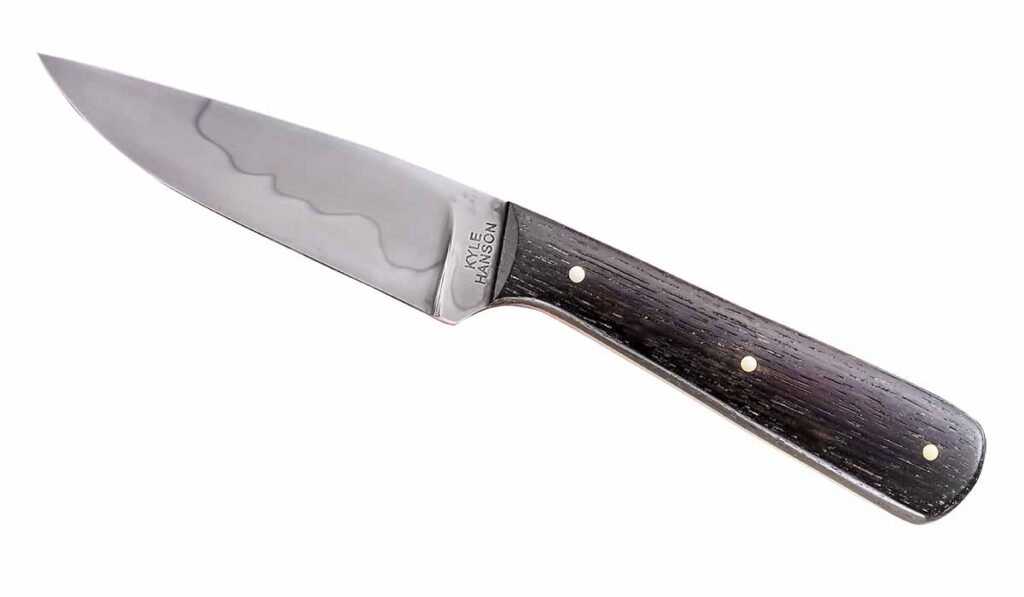
Kyle Hanson: Tapered Full Tang Hunter
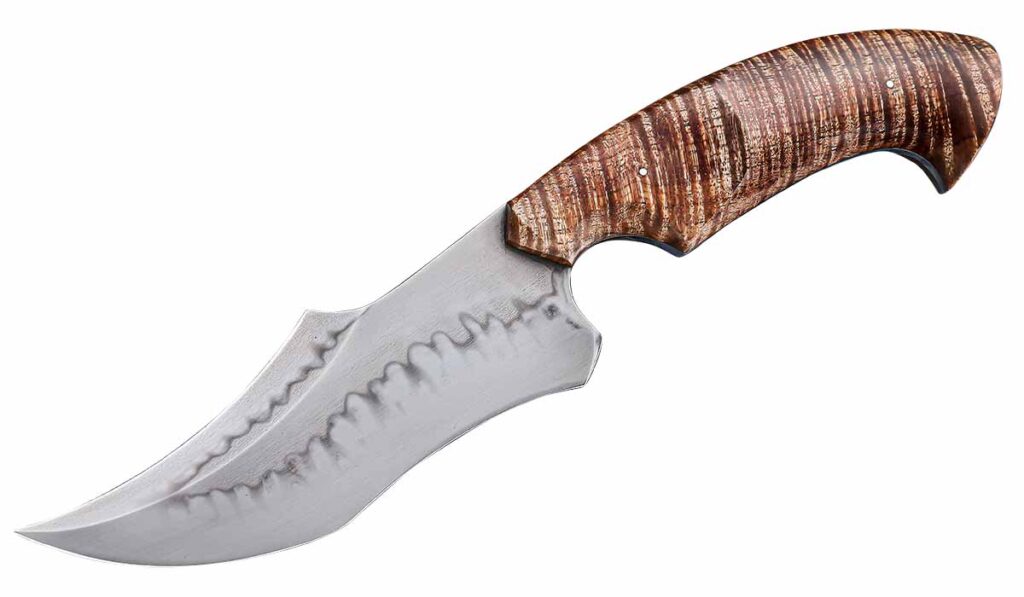
Not merely W2 but “Oldass W2” tool steel is the canvas for the hamon on the blade of Kyle Hanson’s tapered-full-tang hunter. Handle material: 5,600-year-old bog oak. Overall length: 8.25 inches. A leather pouch sheath (not shown) by Kenny Rowe accompanies the knife. (SharpByCoop image)
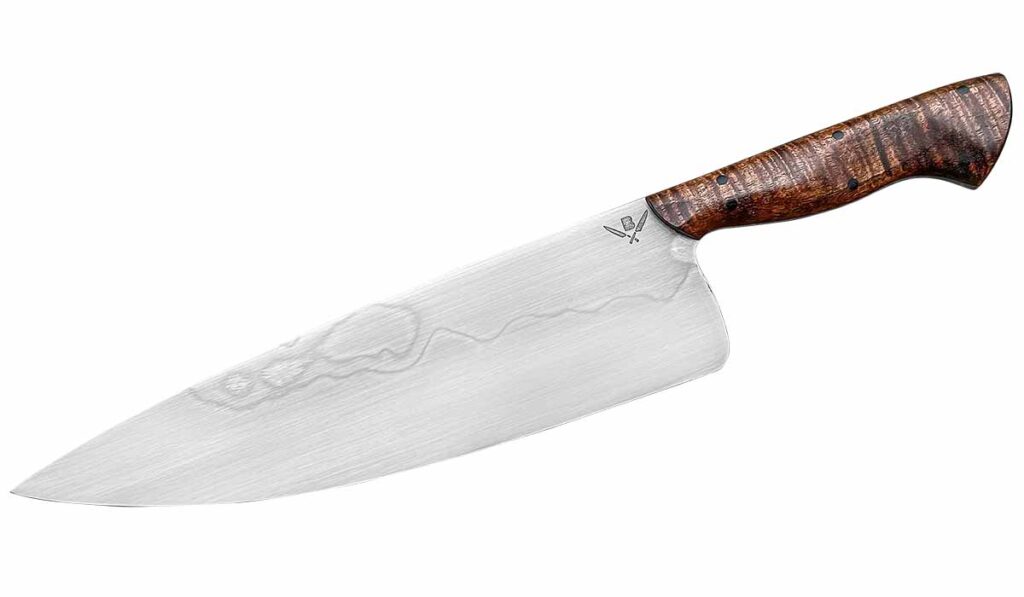
Geoffrey Baze: Chef’s Knife
ABS apprentice smith Geoffrey Baze opts for W2 tool steel to showcase the hamon on the 9.5-inch blade of his chef’s knife. The contoured bird’s beak handle is Tasmanian blackwood. (Jocelyn Frasier image edit)
John Doyle: Dress Classic Gunstock Model
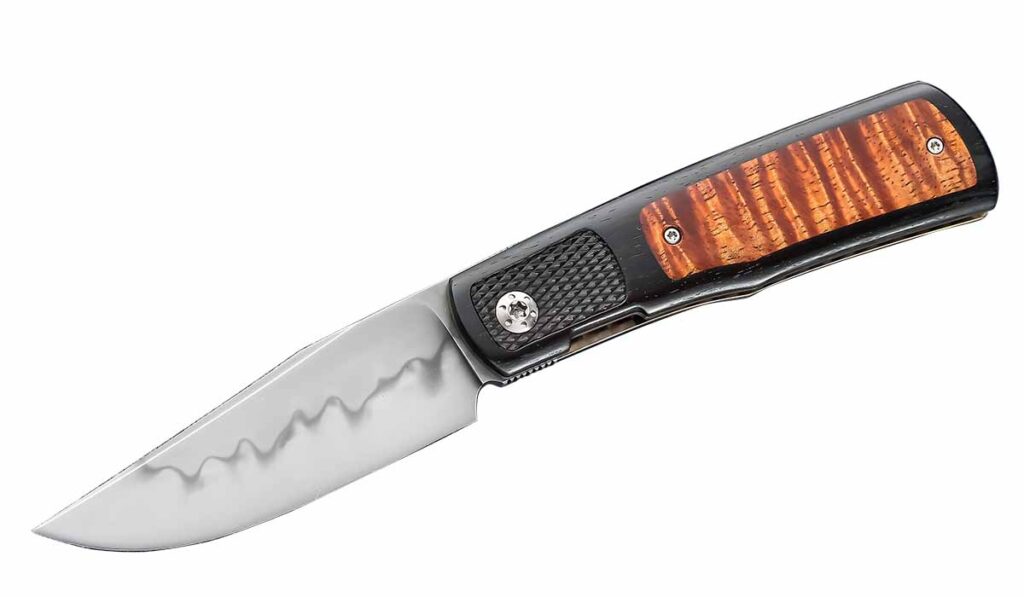
While not unheard of, folders with blades sporting hamons are not all that common. John Doyle does the deed on his Dress Classic Gunstock Model with pocket clip. The 3.25-inch blade is W2 tool steel and the handle frame is African blackwood with koa inserts. Lock: linerlock. Liners: jeweled, anodized titanium. Closed length: 4.125 inches. (SharpByCoop image))
Peter Pruyn: Boning Knife
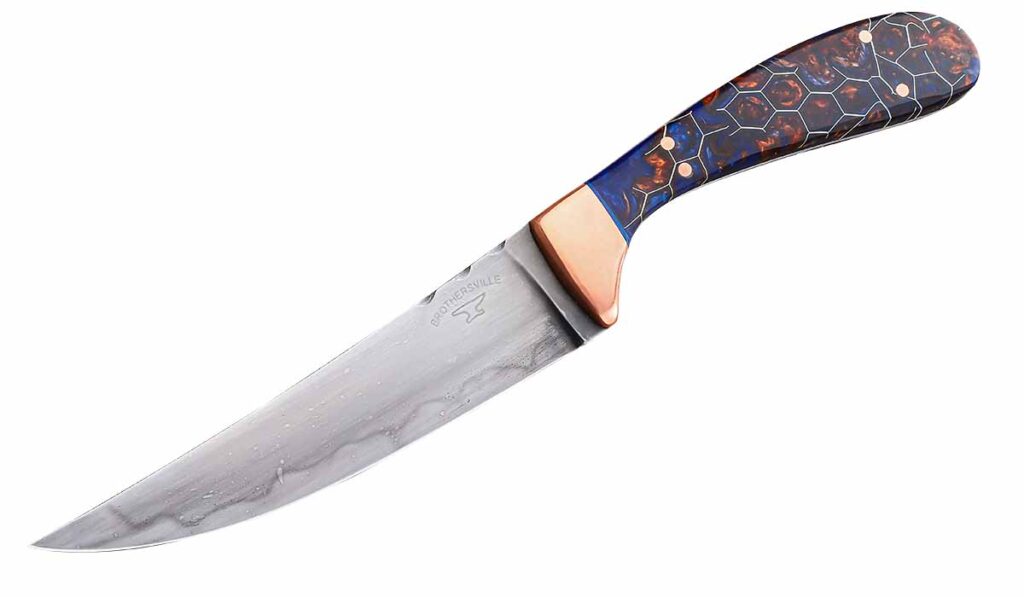
Like many makers who differentially harden their blades, Peter Pruyn used the clay-coating method for his small boning knife. The 5-inch blade is flat ground from 1095 carbon steel. The blueberry crumble resin-based scales are from Voodoo Resins and the bolster is copper. Overall length: 10.5 inches. Peter’s price for a similar knife: $450. (SharpByCoop image)
Eliott Robinson: Fighter
An apprentice to ABS master smith Sam Lurquin, Eliott Robinson nails it with the hamon on his fighter’s upswept recurve blade of U10A carbon steel. The bird’s-beak handle is Tasmanian blackwood. Respective blade and overall lengths: 5 and 9.5 inches. A quality inlaid sheath (not shown) by Jeremy Guillaume completes the outfit. (SharpByCoop image)
Brion Tomberlin: Coffin-Handle Bowie
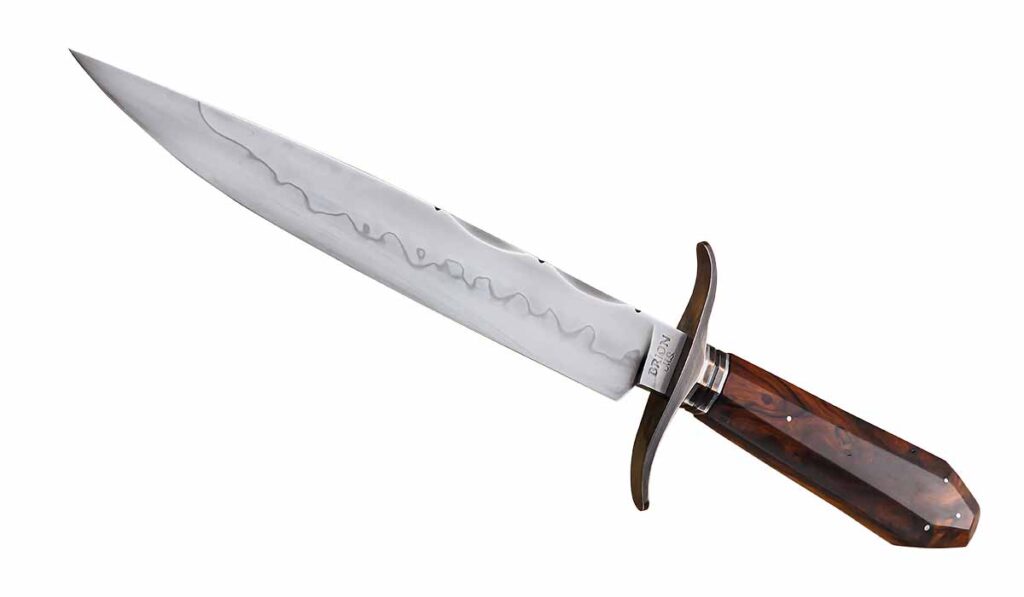
The hamon of ABS master smith Brion Tomberlin’s coffin-handle bowie dissects the 8.5-inch W2 tool steel blade almost perfectly. Blade grind: flat. Handle material: ironwood. Overall length: 13.25 inches. Brion’s price for a similar knife: $2,200. (SharpByCoop image)