

Knifemaking

Knifemaking is the building of a knife, which includes the blade, handle and other accouterments. Blades are made by either removing metal from a steel blank via a grinder – known as stock removal – and the forging to shape of hot steel into a blade in the process known as bladesmithing. Other parts, including bolsters, guards, pommels, etc., are needed to complete the finished knife.

Featured Knives – – Knife Collecting – – Tactical Knives – – Survival Knives

Marketing For Knifemakers: Do You Need A Website?

In a recent Facebook post, Mike Jeffries of 2 Birds Metal Works asked fellow knifemakers if they had a website, if it was worth the time and money to set up and maintain and how they approached it. He often throws out marketing-related topics for discussion. If you’ve followed any of those threads, you’ve already picked up some digital marketing tips from fellow makers. So, with Mike’s permission, our first in a series of Marketing For Knifemakers articles will delve into some of the feedback he received, assess some statistics and provide examples of custom knifemaker websites. Obviously, if you are an uber-successful full-time knifemaker, you can stop reading, unless you want to reach a still wider audience. This article, though, is aimed at those on the cusp of going larger or full-time with their craft. So, knifemakers: Do you need a website?
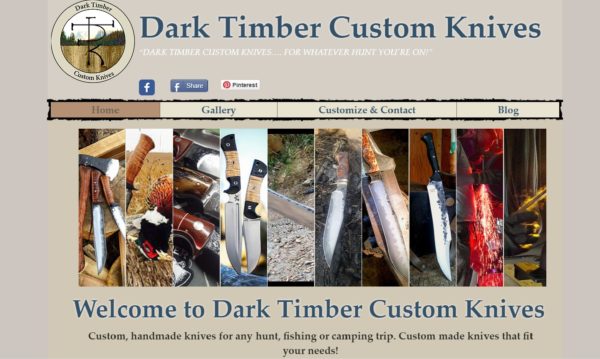
Dark Timber Custom Knives maintains a well-run website.
Experiment. Do a search for “custom knifemaker.” The first one to come up is Dark Timber Custom Knives, run by Peter Kohler. Why? A blog, and most of the photos are labeled. There needs to be content that bots can search through.

We’ll save whether you should go the do-it-yourself route or hire a pro for another time. We simply want to determine if a website is worth your time, money and effort at this point in your knifemaking career.

  1. What Are Your Knifemaking Goals?

Are You A Hobbyist Or Part-Timer?

There is no shame in continuing to improve your craftsmanship, loving the journey and decidedly not going forward with a website. Continue to learn with each knife, sell a few to keep yourself in supplies and follow along with the community to stay up on industry news. Facebook (FB) and Instagram (IG) are all you really need.

Is Knifemaking Your Calling?

If you’re “arrived,” you already have a website and you can stop reading, unless you want a few tips on maximizing your customer base. If you’re striving to reach higher rungs on the artisan ladder, focus on bettering each knife, learning from mentors and obtaining your journeyman smith rating if you forge. You can either start a website or wait. Once you think, and your peers confirm, that you’ve hit your knifemaking stride, though, you will definitely need a website. You will also need to tailor that site to reach the public you set out to attract.
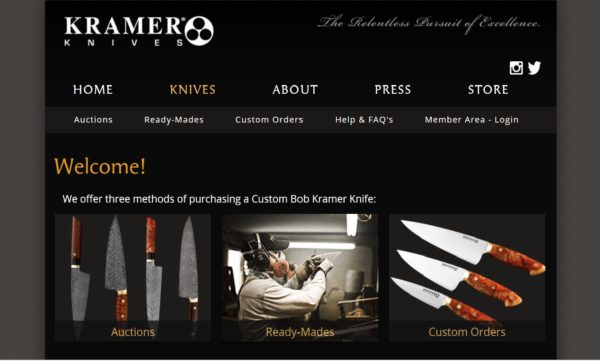
Bob Kramer comes up third in a search for custom knifemaker, right behind Arizona Custom Knives.
Bob Kramer of Kramer Knives maintains a website that reflects his appreciation of metallurgy and how it contribute to his “effortless art.” A website is an “experience” that should reflect the maker’s philosophy, style, story. Kramer’s does all that, which is why he come up third in a search for “custom knifemaker,” right after Arizona Custom Knives.

Are You Actively Growing Your Business?

You’re comfortable with your style and level of craft. You’re 100 percent committed to knifemaking as a full-time trade. You’re making money at it. You may be maxed out, or you may go through times of feast and famine. You, perhaps more urgently than other custom knifemakers, could benefit from a website sooner rather than later.

  1. Whom Do You Want To Reach?

Honestly assess your style of knives and ask yourself who would be interested in your work? That can be a distasteful question when you solely want to focus on your art, but it’s not just about selling knives. It’s about tapping into the community that will be assessing and judging your pieces.
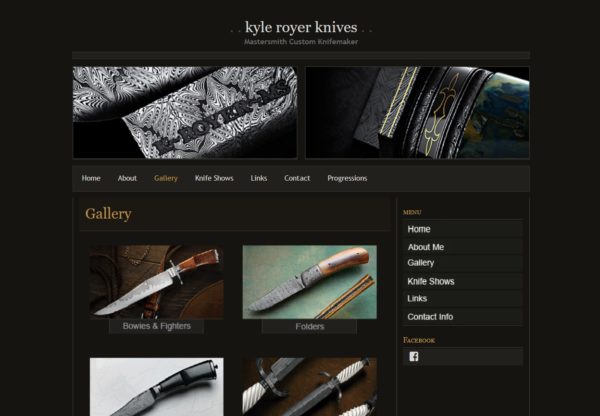
Kyle Royer uses exquisite photos to tell his knifemaking journey on his website.
Kyle Royer Knives‘ website is full of professional photos by Caleb Royer and every single one of them includes full specs. Kyle is an American Bladesmith Society master smith. He was 23 when he wrote his About page. He’s 27 now. Is it perfectly grammatically correct? No. Is it genuine and true to him and his knifemaking journey? You bet. Your knives need to be perfect, not your writing. Write as you would speak.

The Collector

If your folders are carried in a velvet pouch or arranged on a display shelf, a website, of course, is essential. You already know this. You’re spending the majority of your time in your shop or socializing with your clientele in the normal course of living your life. However, “owning” your name may not be enough in a waning high-end knife market. Is your site attracting the gentleman who wants something to go with his watch, the art collector who may be looking for a new-to-him art to explore, or neither. We’ll be exploring more about best practices for your site in an upcoming Marketing For Knifemaker’s article.

The Brotherhood

If you’re making tactical knives for the military, for law enforcement or for civilian self-defense, then you need a website, period. This category also includes trainers and balisongs for combatives instructors and practitioners.
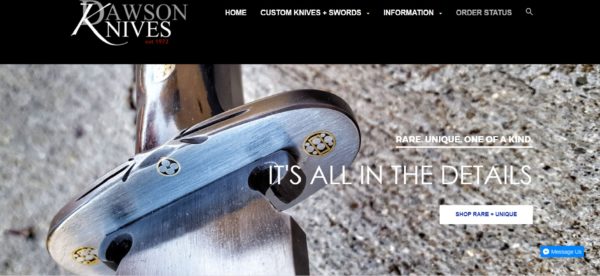
Blogs are not obsolete. Dawson Knives has a well-maintained blog and a website experience that is part exquisite art, part military homage.
Dawson Knives comes up fifth in a “custom knifemaker” online search. This site is both exquisite art and an homage to the military. However, it’s high ranking is due in no small part to its depth. Check out its active blog, The Daily Grind.

The Outdoorsman

If you’re making knives and tools for bushcrafting, camping, hunting, fishing or survival, you, too, need a website. Obviously, there is crossover in these categories. Your Rambo-esk survival knife may be totally tacticool, so you’ll want to appeal to The Brotherhood as well as The Outdoorsman.

The Everyman

The everyman carries a knife for everyday chores, or keeps one in her purse, or has a few in a kitchen “junk” drawer. You absolutely need a website to reach this person.

The Cook

How can you convince people who cook that you can make a knife that will perform as well as an expensive classic, but in a color other than black? Answer: a website.

  1. How Do People Find You?

Word Of Mouth

There’s still 30 percent of the adult US population (250 million) that is not online. That’s where you stake your name on the quality of your product and never let it out your door if you’re not 100 percent sure of it.

You also learn to ask. You ask your happy customers to write reviews for you. You ask your less-than-happy customer to honestly share his disappointment and how you went above and beyond to not only make it right, but make it better than all right. You ask fans to tell their friends about you. You ask them to share your posts.

Article Appearance

Print publishing is indeed on the decline, but digital publishing is coming into its own. Articles in which your work is included can give you a boost in search engine optimization because it’s packaged with over 300 words and includes links, images and video—all things that help rank that article, and thereby your knife images, higher.

Social Media

If you’re on the cusp of growing larger, you undoubtedly have social media well underway. We’ll be doing articles on each platform and how you can best maximize it to get your type of knives in front of a broader audience.

Online Search

This is where we want to focus. In order to meet new customers where they are, you must put yourself in their shoes. Sit down at the computer and think like a non-knifemaker. That can be a challenge. By focusing on Facebook and Instagram, knifemakers are talking to each other and customers who already know them. There is so much overlap that the circle of influence has shrunk to solely each other and fans. Fellow knifemakers are the best source of cheerleading, constructive guidance and fellowship, but they can’t help you reach those outside the knife industry.

Mike Jeffries owns 2 Birds Metal Works in Louisville, Kentucky.
Mike Jeffries of 2 Birds Metal Works in Louisville, Kentucky, will often throw out marketing questions for knifemakers on Facebook. Some of the feedback he receives is invaluable, though you should always verify current marketing practices because things change quickly in the digital marketplace.

Make a list of the things that people might type into a search engine to find you. Enlist a non-knifemaker’s input if necessary. Let’s use 2 Birds Metal Works as an example. Mike makes knives to handle your cutting needs “from kitchen to camp.” So, his aim will be to attract the The Outdoorsman and The Cook. Except for current customers and fellow makers, people know neither “Mike Jeffries” nor “2 Birds Metal Works,” so what might they enter to stumble upon Mike’s work.
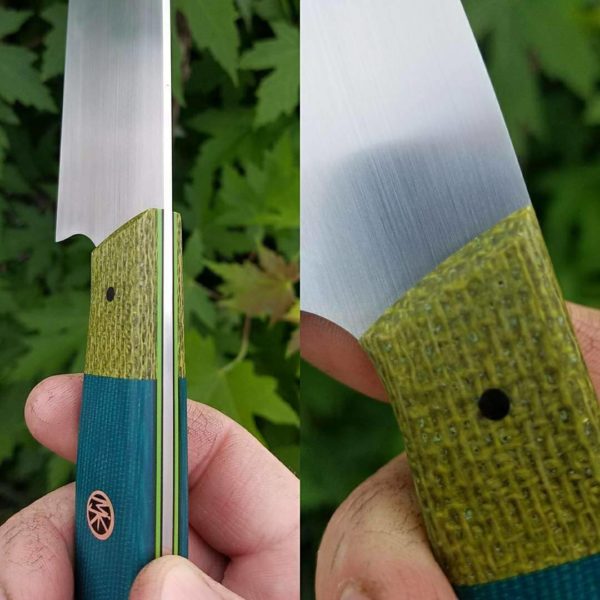
The maker's list price on this Mike Jeffries' chef knife is 300-$380, depending on options.
Mike Jeffries’ chef knife has a 7-inch AEB-L stainless blade with a Vintage Blue Westinghouse Micarta handle with Shadetree Emerald Burlap bolsters. The signature pins are made of copper. The overall length is just under 12 inches. Maker’s list price: $300-$380. Contact Mike Jeffries, 2 Birds Metal Works, [email protected], 502-592-4240, on Facebook at 2 Birds Metal Works & Mike Jeffries Knives.

As clumsy as that sounds, that’s what you want to have happen. Mike offers a chef knife with a teal blue and lime green handle. Let’s say a woman is searching for a housewarming gift for her sister, whose favorite color combination is teal and lime. She types in “teal and lime gift.” That’s it. Nothing about knives in the equation. If Mike has written a full caption to go with an image of his knife on his website along with the suggestion that it makes a nice gift, he has just increased the chances of his site coming up in a search. If he also describes in a blog post how he made this knife and covers his reasoning behind his color choices as well as all his other creative decisions, he’s gone even farther to ensure his site has a chance of coming up on a vague search like in our example.

Is it foolproof? Of course not, but you’re honestly playing the search engine optimization game with images and descriptions and blog posts. If you do that for each type of knife you make, over time, it will pay off in higher rankings for a variety of searches.

  1. Isn’t Social Media All A Maker Truly Needs?

In A Word, NO!

Digital marketers had predicted that websites would give way to social media and email would die at the hand of Messenger. That’s not how it’s turned out.

The only way your Facebook profile will come up in a online search is if someone actually searches for your name or company name. You’re trying to reach people who have never heard of you and don’t even think of knives as an option for, say, gift-giving. You could argue that you would never want your art falling into the hands of someone who can’t appreciate what a custom knifemaker does. OK, but what if by getting a knife into their hands by whatever means, you create an impassioned fan, who then tells her friends how brilliant the colors were, how perfectly the knife worked, how great it felt…

Content Is Still King

Words still matter in this hashtag world. “Content” refers to anything used to fill an article, social media page or website. It can be writings, visuals in still or video form, and links, but in order for visuals and links to have weight, they must have words associated with them. And you need a place to park your content where it’s forever accessible, and not lost on some never-ending feed. (Saving posts helps you, but not your potential customer.)

How can this be? Isn’t Facebook pushing video? You bet. It’s trying to be You Tube, which is owned by Google, and although FB has a more engaged audience, more people visit You Tube in a month than visit FB. Efforts are probably underway to extract video content so transcriptions can be combed by search engine robots. But even that won’t help if a maker is just silently showing all sides of a knife. We’ll talk more about video and how best to harness it in another Marketing For Knifemakers article.
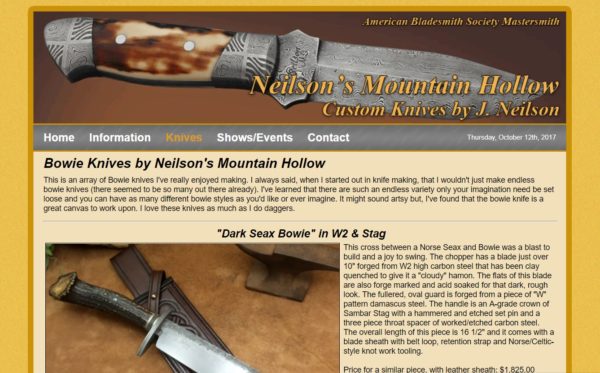
J. Neilson's website makes good use of photo descriptions.
J. Neilson, American Bladesmith Society master smith and “Forged In Fire” judge, has a website that makes exceptional use of photo description. Knives on the Neilson’s Mountain Hollow site not only get a list of specs, but a full description of inspiration, construction or something else memorable about the build.

So back to words. Every day the Google bots do their thing, combing articles, photo titles and captions, video titles and descriptions, links and meta data fields, to rank websites according to relevancy. Ever wonder why video is embedded in an article, or why slide shows come with accompanying written commentary? Words, dude, words. The term “blog” may be passe, but blogs still matter—greatly. You are reading one. We call it an “article,” but it’s still an article under my name and the Mightier Than The Sword banner. Every single example of a website that comes up high under a search for “custom knifemaker” includes either a blog or highly descriptive photos captions. J. Neilson’s blog ranks high in a search for “custom knifemaker” not because it’s filled with “Forge In Fire” references, but because of his depth of description on each of many, many knives.

Battling Anti-Knife Bias

As many of you are fully aware, there is definitely bias at Facebook and it’s against weaponry. Selling of guns and knives is not allowed, so don’t put prices on your marketplace items. Even though they encourage you to boost your post, if you ever try to, you’ll be informed that what you’re selling goes against FB policy. So, what’s a custom knifemaker to do? Play the game, organically and on your own terms—with a website. Your post to Facebook lasts about 5 hours; your blog post/article has a 2-year lifespan.

What does “organic” mean, anyway? It refers to building content naturally and not paying for ads to boost results. It’s about “articles” or “blog posts” on your website, photos, video and links that all work together to speak on a specific subject. The words are compiled naturally, and not “stacked” repeatedly in an unnatural cadence.
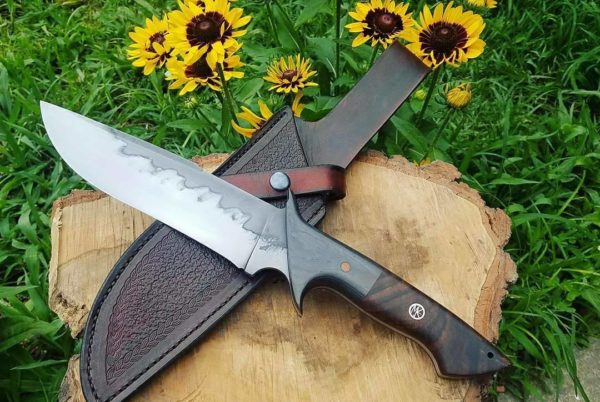
Mike Jeffries of 2 Birds Metal Works ventured into a cowboy fighter that was well received at BLADE Show 2017.
Normally, Mike Jeffries focuses on “kitchen to camp” knives, but he decided to try an old-school American Bladesmith Society-style knife, but with a full tang. The Cowboy Fighter even caught the eye of Jason Knight and Murray Carter when they stopped at the 2 Birds Metal Works table at BLADE Show 2017. A blog post would be the perfect place to tell this knife’s story and what it meant to Mike on his knifemaking journey. The 7 3/4-inch blade is made of W2 steel with hamon. The handle is walnut burl with unidirectional carbon fiber bolsters. Overall length is 13.5 inches. Maker’s list price: $750 with leather sheath by Two Drunken Celts Custom Leather. Contact Mike Jeffries, 2 Birds Metal Works, [email protected], 502-592-4240, on Facebook at 2 Birds Metal Works & Mike Jeffries Knives.

Let’s say you have a blog on your WordPress website. You should aim for a minimum of 300 words per post to optimize search engine optimization (SEO). You explain what you’re working on that week. You mention blade lengths, because people use blade lengths as part of their search criteria if they’re in a state that limits them. You mention steel, your process, the handle material, including color, price, what comes with it, how it is shipped, and how people can put in an order for one. You give shouts out to your suppliers and mentors or supporters on the project then share it to Facebook.

You will still be speaking to your established audience while increasing your chances of being picked up in a generic search. Pretend you are talking to people who know nothing of custom knifemaking, because you are. Take the opportunity to educate as you go, minimizing abbreviations and lingo. You’re broadening and educating your clientele with each post. You write, “Everyday (one-word adjective) carry, abbreviated as EDC, refers to something you carry every day (two-word noun).” See how I did that? (Laugh here.) At the end of the week, you write another post sharing how you did. You include pictures of your works-in-progress, rather than “WIPs,” and a finished example. You share your successes and challenges.

Instead of saying “click here” for a link, link to the applicable words. Never forget the “web” part of the worldwide web. Link to others when appropriate, but do not link to everything. You don’t want to pull your potential customer away too frequently. Pick and choose wisely, and be sure to set the link so it opens in another window so they can easily return to your site. All of this helps to rank you higher in searches. It’s more time-consuming than FB or IG, but can be done less frequently, and over time, garners stronger returns on time spent.

5. Who Controls Your Website Experience?

Guess what? You don’t get put in a time-out on your own website. You control your content and exactly how it looks and reads. You can build a photo gallery of finished work that includes a written description with all specs and includes the prices—imagine, no Facebook jail! You can have an About page that gives your journey as a person and as a knifemaker. It doesn’t have to be long, but it should be at least 300 words and include images from benchmarks in your life. People are buying a part of something you’ve poured your heart and soul into; they want to know who you are.
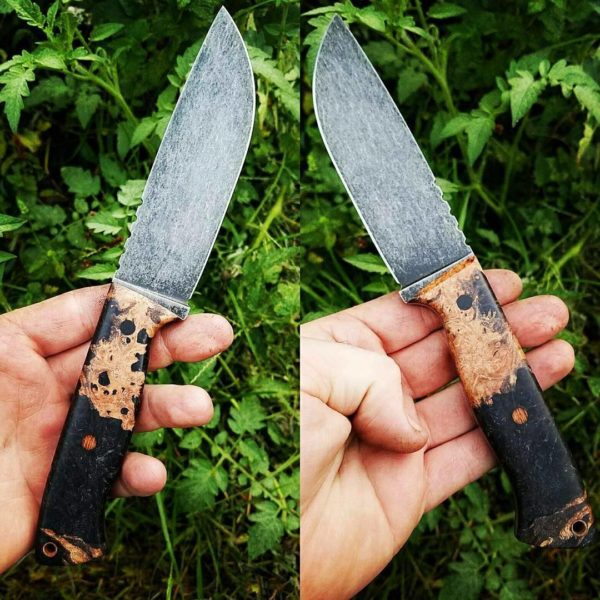
One of Mike Jeffries best-selling knives is his Campcrafter.
This is a good time to mention that you can’t take too many great photos of your finished work, but bad photos hamstring your marketing, period. Mike Jeffries takes some nice photos, but not enough of them to have samples of everything he’s made. His Campcrafter model is his flagship camping knife. It has a 5-inch blade of 80CrV2 high-carbon steel. Overall length is just over 10 inches. This one has a black and burl handle. Maker’s list price: $250-$325. Contact Mike Jeffries, 2 Birds Metal Works, [email protected], 502-592-4240, on Facebook at 2 Birds Metal Works & Mike Jeffries Knives.

You can include platforms to sell directly from your website. You can and should drive traffic to your social media sites and include your website on your social media profiles, but you are in charge of your website content, for better or worse. Best of all, you can include at the very least, a newsfeed, but hopefully you’re seeing the benefit of a blog, so you can share industry new that your customers might benefit from, including your own promotions, giveaways and waffles (sorry, a website won’t change state laws). A blog within your site gives you a platform from which to explain thing about your craft, offer your opinion, talk about your life as a knifemaker, projects you have in mind, specials you’re running, shop tours you’re hosting, hammer-ins you’re organizing. It’s a place where you can put in words what you normally say in a video.

“But I hate writing. That’s too much of a time-suck.” Agreed. Perhaps you know someone who likes it. You can offer them short money to do weekly posts for you. “Arrgh, a money-suck.” Try to look at it as an investment in growing your business. I see plenty of knifemakers who can’t even Share a post. Their buddies do in 2 seconds what they couldn’t figure out in two weeks—that’s an actual quote from one of them. Trade your buddy a knife for an equal value of his digital expertise.

  1. What Does Your Knifemaking Destination Look Like?

Ranking higher in online searches is a long-term endeavor. It takes consistently delivered content over the course of an extended period of time. Google is no more friendly to weapons than Facebook, but all knifemakers are playing under the same set of rules and the ones with websites and blogs are being rewarded.

Make a list of all the terms you want to “own.” Start building content around those terms, and your website will populate itself into relevancy. Remember, it sometimes happens in life that the most gifted are not always the ones who obtain success with their given talent. It is the ones who can take their art and persistently and accurately market it, who will garner both recognition and thereby profitability.

At the same time, if you’re constantly sucked into the money and time trap of marketing, there will be no knives to market. Use your time at the forge and the grinder to think. Start a notebook of both your big vision and the baby steps necessary to get there. Then enlist the help of people who truly get who you are and what your knives are about, so that you are free to make more knives.

A Digital Subscription To BLADE Is The Answer
Save $4 off the print price of a annual subscription to BLADE Magazine with a digital subscription.
You can read your digital issues of BLADE Magazine anywhere you have your phone, tablet or computer, and there’s no need to find storage for all your old issues.

If piling-up issues of magazines seems like a waste to you… If you feel like you don’t have time to read a magazine… If you like the stories we offer in BLADE, but want a more economical option, then a digital subscription is the answer. An annual subscription to BLADE is $17.98, $4 off the print price.
The Ford of Knife Grinders?

Burr King 960-272
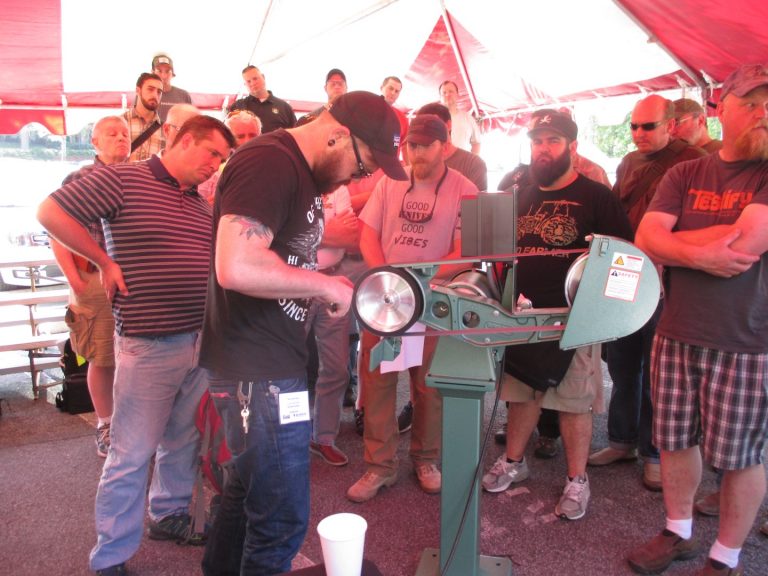
Knifemaker Lucas Burnley shows students how it’s done on a Burr King 960-272 belt grinder under the Burr King-sponsored tent during the 3rd Annual BLADE University at this year’s BLADE Show.

When it comes to the go-to machine for knifemakers, the Burr King 960-272 2×72 may be the Ford of knife grinders.

“The 960-272 has been in production for 40 years. It’s a knifemaker’s grinder. It started with Bob Loveless,” noted Burr King’s James Krier during the grinding classes conducted by Tom Krein and Lucas Burnley in the 3rd Annual BLADE University at the 2016 BLADE Show. “It’s kind of interesting to have a machine over 20 years old that you can still get parts for.” Add the fact that Burr King is celebrating its 65th anniversary this year and you have a source for parts that’s been here for the long haul. “The knifemaker doesn’t have to worry about the company who made it [Burr King in this instance] going out of business,” Krier added.

In sales and marketing for Burr King for 10 years now, Krier said a number of companies that make grinders have passed by the boards in recent years. Not so with Burr King.

“I was talking to a guy about how many grinding companies there had been in the past 20 years and he was saying there were about 25 he could think of that are just out of business, that were up for about two years and then were gone,” Krier said. “That’s why pros who do it for a living will buy something they can actually get parts for 20 years later. It’s gonna be there when they need it.”

The 960-272 is cast aluminum construction. “Every machine is going to be the same. It’s not like it’s a fabricated design or this machine is different from that machine,” Krier continued. “If someone buys a machine and they have one that’s 10 years old and buy another one today, the parts are interchangeable. It’s like having a Ford you can get parts for.” Like old Fords, it’s tough as nails, too. “That’s thing’s bulletproof and ready to go,” Krier assessed.

Burr King makes about 15 different belt grinders, including those for factory knife companies, but the 960-272 remains the bell cow of the lot.


Learn How to Grind Knives

Knifemaking guide to grinding blade edgesThe BLADE staff put together this guide to grinding knives as a way to help new knifemakers jump into these essential skills. Download it now and start reading right away.

Save

Save

Save

Save

Save

Save

Save

Save

What is MokuTi Damascus?

Mokume + Titanium Laminate = MokuTi Damascus

Damascus steel definitions
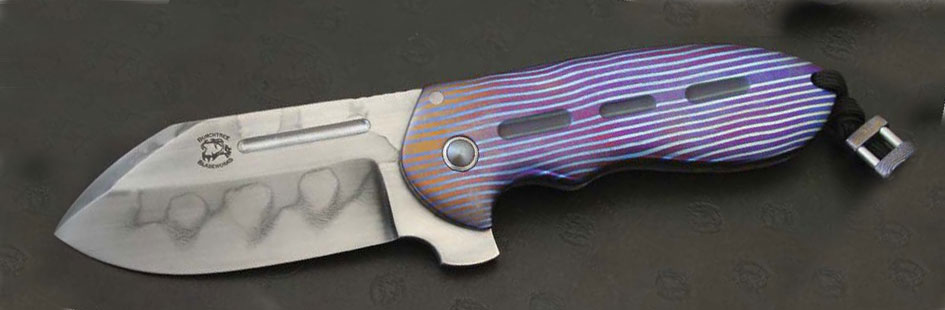
Michael Burch employed Chad Nichols’ “Stripes” MokuTi for his integral folder. The blade is 1095 carbon steel with hamon and a nail nick. Burch said the Stripes MokuTi works well on larger knives. (photos courtesy of Michael Burch)

In the northern Mississippi town of Blue Springs, in a rural area between Tupelo and the Tennessee border, a company called Chad Nichols Damascus is forging steel that is taking knives to a new level. The company’s owner and namesake, Chad is an easygoing Southerner who created a damascus product called MokuTi that boasts a stunning combination of shapes and colors.

The name explains it perfectly. It is mokume that includes titanium laminates. MokuTi adds an exceptional visual boost to a knife, with swirled or mosaic tones of blue, gold, orange, silver and pink, depending on the composition of the materials used.

In his affable manner, Chad assured that Chad Nichols Damascus did not invent the colorful titanium laminate; the company just came up with a new way to achieve it—which, he noted, was not an easy task.

“We haven’t invented the wheel or anything,” Nichols said of MokuTi. “I don’t have to be the first one doing anything. I just want to be the last one doing it. We run this like a business, not an ego trip.”

Years in the Making

Knife with MokuTi steel
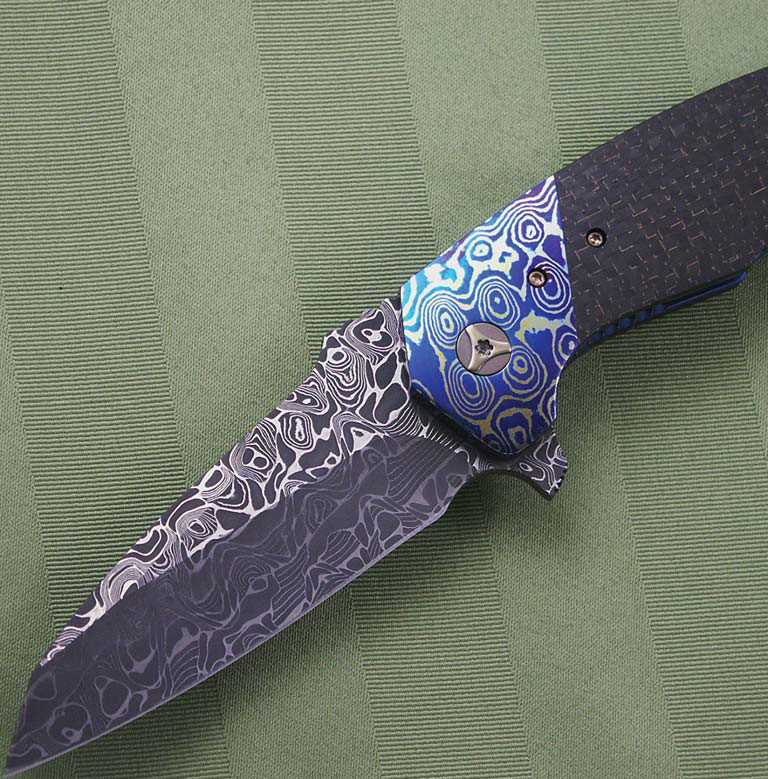
MokuTi is a great way to accent a knife with color. Neil Blackwood does it here for the handle inlay and clip of his Henchman flipper folder. The 4-inch blade is CPM S30V with a two-tone finish. His list price for a similar knife:
$1,200. (photo courtesy of Neil Blackwood)

It would figure that something that looks as good as MokuTi would be difficult to produce. Nichols said it took several years to figure out.

“That’s not blowing it out of proportion,” he laughed. “I messed with it for a while, then I just put it away because I kept failing.”

He remembered getting tunnel vision trying to figure out why it was not working.

“You keep doing it and it’s insane,” he said, “because if it didn’t work the first three times and you didn’t do anything different, it’s not going to work the fourth time.”

Through trial and error he was finally able to figure out how to bond titanium with the other metals, but he is understandably tight-lipped about his proprietary secrets.

“I’m not going to tell you how we do it,” he admitted, “but there’s things we do that might seem minute to some people. However, we found those things to be critical.”

He explained a myriad of variables when bonding the layers in presses and rolling mills, including oxygen, heat and surface texture.

“Without getting into too much detail as far as bonding the layers, I’ll just say it’s tricky and it doesn’t always work,” Nichols allowed. “If I don’t make MokuTi for a month or two, I kind of count on the first two tries being crap.”

Peter Carey MokuTi knife
Peter Carey outfitted his Tension flipper folder with “Crosswalk” MokuTi bolsters and a blade and clip of Nichols’ “Whiplash” stainless damascus. The handle is lightning-strike carbon fiber. Carey’s list price for a similar model: $1,200. (photo courtesy of Peter Carey)

The experimental journey to fruition brought Nichols’ shop down some rocky roads.

“We recently made some MokuTi and threw zirconium in there,” he noted. “We love bonding titanium to other metals, but you just can’t do anything with [titanium and zirconium]. They just won’t bond because I guess the ductility is too different and the metals move at different rates during forging. It was a disaster, so we quit trying.”

It is all part of the ride, he said, and you cannot be scared to “just throw something in there” and see what happens.

Meteorology Matters

Another variable that affects producing MokuTi successfully is the atmosphere. While forging carbon damascus is fairly predictable, Nichols said forging MokuTi is much more complex.

“When you get into stainless and even Mokume, with the copper and brass with the nickel silver in it, and especially with the MokuTi, it gets complicated,” he continued. “What people don’t understand about forging, especially down where I live, is that with humidity of 100 percent is going to get hotter than if it’s 50 percent the next day.”

A Sixth Sense for MokuTi Damascus

Nichols searched for the words to explain his approach. Maybe it is a feeling, maybe it is a sixth sense, and maybe it is just exposure and experience.

“I hate saying this but you just get in tune with what’s going on. It’s like using the word ‘organic.’ I hate it when I have to use that word, but sometimes there’s no other word to describe it,” he lamented. “We made a new pattern a couple weeks ago called ‘Boomerang’ and some guy goes, ‘What’s it like?’ and, between groans, I said, ‘It’s very organic looking.’”

Put a Tie on that Knife

MokuTi folding knife
The MokuTi handle of Jon Graham’s GL Razel SS3 Bolsterlock is joined by a blade of Chad Nichols’ Iguana stainless damascus and Graham’s “Tailclip” pocket clip. Closed length: 5 inches. Graham’s list price for a similar piece: $1,400. (photo courtesy of Jon Graham)

“I’ve used MokuTi on a variety of styles,” said Michael Burch, Missouri knifemaker and owner of Burchtree Blades. “It’s like putting a tie on a knife—it just adds some class.”

Adding MokuTi as an accent is a common way to integrate the material into a knife without breaking the bank. Still, it is not cheap. The more of it the maker adds to the knife, the more it adds to the sale price.

“I charge twice as much for MokuTi bolsters as I would titanium bolsters due to the extra finishing time with polishing and heat coloring,” explained knifemaker Peter Carey. “I use MokuTi on all my folders because it’s strong and has an exotic look.”

Carey said he also uses it as an accent material on his knives, such as for bolsters, pocket clips, back spacers, thumb studs and pivot rings. He said accenting with MokuTi injects some color and flash without overwhelming the knife. A good example of employing MokuTi is as a pivot collar on a stonewashed framelock, Burch added.

Allen Elishewitz folder
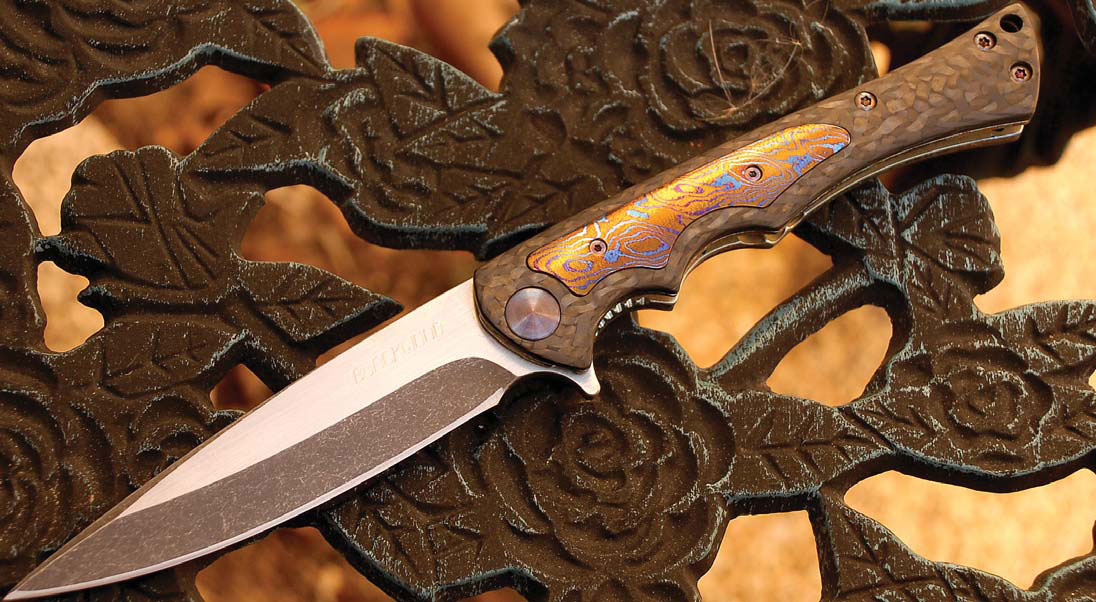
The Mini Tank flipper by Allen Elishewitz has MokuTi bolsters and carbon fiber scales. The blade is Takefu Special Steel’s laminated stainless with a VG-10 core. (photo courtesy of Allen Elishewitz)

“It makes for great contrast and can really dress up a user folder,” he observed. “It’s costly but if customers saw what went into making it, it would seem cheap.”

“It appears that everyone likes the material and it usually ends up on my higher-end knives,” Carey said. “Some of my customers ask for it as full scales or for a framelock, so I use it that way also.”

As Carey noted, MokuTi comes from Nichols Damascus as a billet that must be worked to shape and then colored.

“[Chad] usually colors it so you can see the pattern, but that gets ground off when you work it,” Carey said, explaining that it is a surface color that does not go all the way though the material. “When you get it to final shape and finish, you have to heat color or anodize it to the colors you want.”

“The other cool thing about MokuTi is dealing with Chad,” he maintained. “He’s a great guy, a friend, hard working and you can’t beat his customer service.”

Your Turn: Learn How to Forge Damascus

how to forge damascus steel

50 Years Ago In BLADE: Big Bucks Bowie

Harvey McBurnette etched his name in high-dollar knife sales.

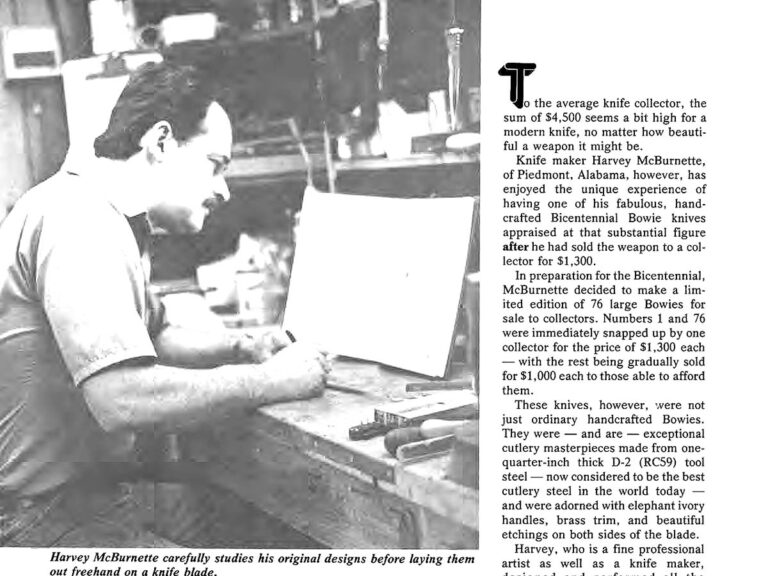
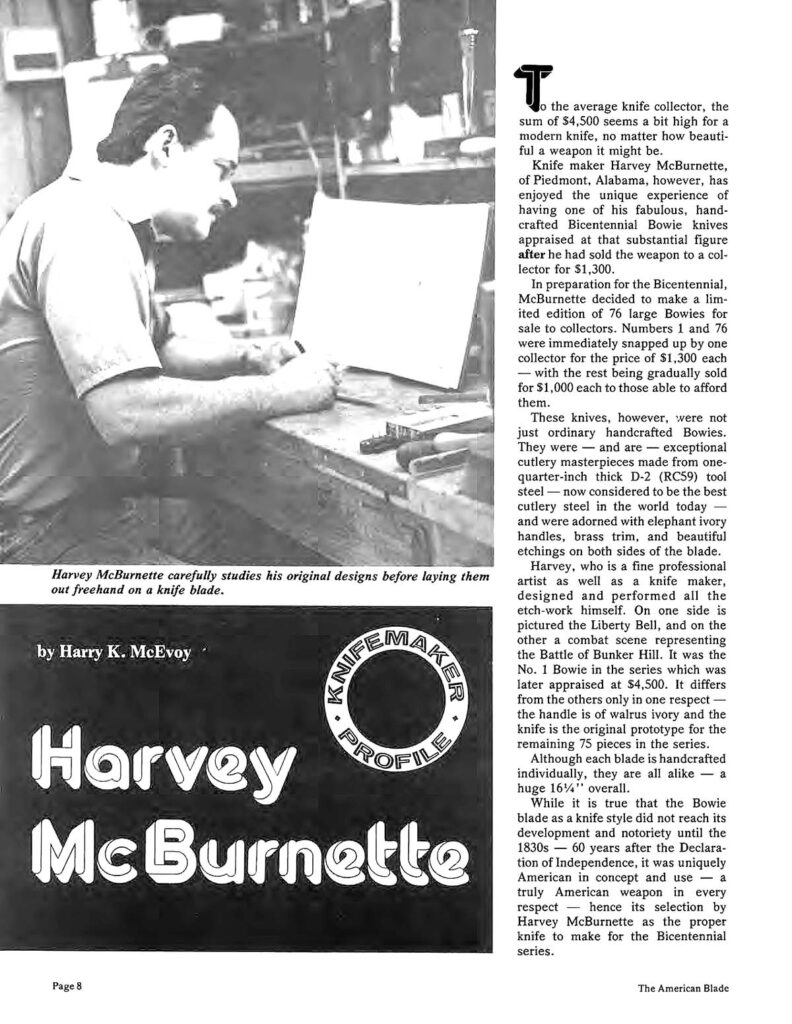
Harvey McBurnette of Piedmont, Alabama, landed in the July-August issue of the 1976 American Blade for somewhat patriotic reasons. Somewhat, because the lead of Harry K. McEvoy’s exposé on the maker was McBurnette’s celebrated Bicentennial Bowies. But there’s more to the matter than a simple commemoration of the nation’s birthday in steel.

McEvoy hooks readers by showing what the artistically talented knifemaker’s work commanded back when your dollar went a long way. In 1976, the exact sum was $4,500. As McEvoy wrote, “[O]ne of his fabulous, hand-crafted Bicentennial Bowie knives appraised at that substantial figure after he had sold the weapon to a collector for $1,300.”

The lead image of the profile on Harvey McBurnette shows him studying his original knife design and free handing it to the steel. The maker had a strong artistic streak and was known, in part, for the embellishments he etched onto his knives.

For context, that’s roughly $26,000 in today’s dollars. What likely made the run of 76 bowies desirable was McBurnette’s unique system of adorning the knives—etching. This system, seen on many of his knives, was a very conscious choice on the maker’s part, as the story reports, serving to differentiate his work from other custom craftsmen of the day.

“I wanted to do something unique, or at least different, with my knives,” McBurnette was quoted as saying in the article. “And since I was an artist I thought if I engraved or etched my blade, I would add a touch I felt was needed to make them stand out. I chose the art of etching because there were a few other knife makers who engraved their knives. Besides, even a master engraver cannot do what an etcher can do.”

McBurnette’s Bicentennial Bowies had quite a motif etched on either side of their D2 tool steel blades. On one side of the 16.25-inch knife is an image of the Liberty Bell, and on the other a battle scene depicting Bunker Hill. The images are the same on all 76 knives, and 75 of them had elephant ivory handles. The knife appraised for the then astronomical sum did differ; the No. 1 of the series was a prototype with a walrus ivory handle.

More Knife History:

Knives, Knifemakers, Tips On Knife Collecting Today and Tomorrow

Great knives, knifemakers, tips on knife collecting and much more are in the offing at venues across the country and abroad today and tomorrow, April 28-29.

    The Solvang Custom Knife Show is in Solvang, California, today ONLY. Some of the world’s finest custom knives and knifemakers are there. For more info click on www.nordicknives.com.

    The 30th Annual NCCA Extravaganza Knife Show is at the Hilton Hotel in Mystic, Connecticut, today and tomorrow.

    The Wolverine Knife Collectors Show is in Novi, Michigan, today and tomorrow at the Suburban Collection Showcase.

    The ABS Spring Piney Woods Hammer-In is today and tomorrow at the Texarkana College/Bill Moran School of Bladesmithing in Washington, Arkansas. For more info click on www.americanbladesmith.com.

    The 13th Annual Knifemakers Show is at the German Blade Museum (Deutsches Klingenmuseum) in Solingen, Germany, today and tomorrow. For more info click on www.messer-macher-messe.de.

    And finally, today is the final day of the Mason Dixon Knife Club Annual Show at the Best Western/Grand Venice Hotel in Hagerstown, Maryland.

For more on the latest knives, knife legislation, knifemaking instruction, knife trends, knifemakers, what knives to buy and where and much more, subscribe to BLADE Magazine, the World’s No. 1 Knife Publication. For subscription information click on http://www.shopblade.com/product/blade-magazine-one-year-subscripti…?r+ssfb042812#BL1SU.

GiantMouse Builds A Better Collaboration Model

The GM2 has the GiantMouse logo on the blue anodized titanium clip.
GiantMouse is pushing the boundaries of two renowned Danish designers, but together with an American businessman are building a better collaboration model.

By now knife industry followers know that renowned Danish knife designers Jesper Voxnaes and Jens Anso teamed up to create GiantMouse LLC. What you might not know is that a California businessman with a love of knives became the organizational drive behind the endeavor. Jim Wirth asked a simple question over beers with Voxnaes and Anso that solidified the venture, and bettered the collaboration model creatively and financially.

When Wirth turned 14, his older brother Chris gave him a small Gerber pocketknife with mother-of-pearl scales as a birthday present. He loved looking at that work of art, and yet, the knife got plenty of use too. From then on, Wirth began attending knife shows, like the former Bay Area Knife Collectors Association show in Santa Clara. He joined that organization so he could attend the meetings and learn more about the knife industry.

His love of knives—and watches—grew and he continued to attend shows, adding the New York Custom Knife Show and BLADE Show. Meanwhile, he developed a data warehouse-business intelligence firm that became an Inc. 500 Fastest-Growing Company. After a merger, Hewlett-Packard bought the company, and Wirth was set as far as his family and living expenses were concerned. He began consulting, advising owners of young businesses and angel-investing, or backing business that show promise.

The American businessman and Danish designers behind the success of GiantMouse Knives.
Jim Wirth, left, a businessman and angel investor, suggested that Danish designers Jesper Voxnaes, middle, and Jens Anso, right, start a new company to produce knives they collaborate on, sharing in profits rather than receiving a royalty percentage.

Wirth had always been a fan of the work of Voxnaes and Anso, so at a BLADE Show, although he’d met them before as a customer, he was more formally introduced to the men through a common friend. Over drinks, Wirth inquired about the royalties each knifemaker was making in their partnerships with well-known manufacturers. Although mum on details, designer royalties on any manufacturing collaboration range from 3 to 7 percent, sometimes as high as 10, of net sales. There are countless variables that determine the final cut, however, according to numerous sources in the knife and product development industries, 5 percent is thought to be fair for both the designer and the factory that takes the risk on whether the product will be a success or not.

Voxnaes and Anso revealed that they had indeed co-designed some knives together. They had even come up with a potential company name, GiantMouse, because Denmark is a tiny country in a giant world and they wanted GiantMouse to be a small knife brand in a giant knife industry. Wirth asked why they hadn’t produced these knives they’d worked on. And with that question, GiantMouse came into being.

GMP2 is released with a upscaled finish, also in limited quantity, but still at a collectable cost.
The P in the GMP2 version stands for pirate and if you look closely, the mouse logo is wearing an eyepatch.

The three men determined that they would only do limited runs of folders four times a year, 300 in a standard finish and 100 in a special finish. These 100 “pirate” versions would include the GiantMouse logo with a patch over its eye. The GM2—GM for GiantMouse and 2 for sequential order—for example, is a full-size everyday carry folding bowie with carbon fiber handle scales. The backspacer, clip and pivot ring are a rich blue anodized titanium. The nested lockbar is also titanium. The 3.3-inch blade is made of Bohler M390 Microclean powder corrosion-resistant martensitic stainless steel with a satin finish and is ground to a 0.157-inch thickness. The handle length is 4.62 inches, and the knife weighs 4 ounces.

The GMF2 is based on a Nordic work knife, but can be used for bushcrafting or everyday chores.
The GiantMouse team knew they always wanted to have some knives available for sale, so they do not limit sales of their fixed knives like the GMF2.

Although the folders are discontinued as soon as the 400 pieces sell out, the GiantMouse fixed-blade runs are unlimited. The GMF2—F for fixed—for example, with leather sheath, is a throwback to a Nordic work blade that can be used for everything from bushcrafting to everyday tasks. The 3.62-inch blade is made of Bohler N690 cobalt high-performance powder steel, ground to a 0.157-inch thickness and finished in a fine stonewash. The 4.43-inch Micarta handle brings the overall length to 8.12 inches. The knife weighs 4.1 ounces.

The way the designers look at it, according to Anso, is that by working very closely and combining their skills, each designer is forced out of his individual comfort zone. Integrating each maker’s ideas and style without compromising on design quality is “a difficult task but makes for a very strong design if done right.” It’s important to each man that the other is able to vouch for everything involved in the design. Both must be happy with the final result of each knife.

Anso and Voxnaes both started making knives in 1989, and they both lived in rural northern Jutland, only about 30 miles apart. They didn’t actually meet until 2005 at a small knife show. They instantly hit it off and have been close friends and colleagues ever since, explained Anso.

The two friends met Wirth at a BLADE Show when Wirth was collecting knives. “With Jim’s well-known talent for business, high ethics and passion for quality, combined with our skills and experience in the knife business, the idea of GiantMouse Knives started to take form,” Anso stated.

As chief executive officer, Wirth drew up the articles of incorporation and launched the website. He also set up the fulfillment center in Southern California. The knives are manufactured in Maniago, Italy, and Voxnaes and Anso handle all interactions with the manufacturer from approving prototypes, through test runs, to quality control of the finished knives. A final inspection is performed when the knives arrive in California. Out of a run of 400, perhaps a half-dozen will be returned because the blade is slightly off center or a flipper action isn’t as smooth as it should be. The knives are then sent to the fulfillment center where they are put in branded packaging and sent to customers.

One might figure that short runs of well-designed knives would be unaffordable because you don’t have a high number of pieces over which to spread the start-up costs. There can also be fees if runs don’t meet a minimum quantity. But the founding trio at GiantMouse committed themselves to this route because it incentivized the designers. “They’re challenged to create more designs. It’s exciting,” Wirth said. And as partners in the company, the designers share in the profits with Wirth. This both pushes the designers and rewards them for their efforts perhaps more than a percent-of-net-sales royalty would.

All along the goal has been to create exceptional knife designs, produce them at the highest quality possible and keep them affordable. For example, the maker’s list price for the GM2, in standard finish, is $325; the GMP2—the P standing for pirate—in special finish, is $375. Ten dollars from the sale of every folder, and currently $20 from every fixed blade, is donated to Save The Children. (The organization helps ensure children at home and abroad receive the heath care, nutrition, education and protection they need to grow up happy and secure.)

Wirth said that he got to go to Demark and see the operations of both designers. Then the trio drove to a knife show. “I sat in the back and listened to Jens and Jesper talking in Danish. Every once in a while, I’d hear ‘Jim,’ and I’d be like, ‘heeey.’ The only Danish I learned was something written on the radio, something like ‘the radio isn’t on.’ Now that’s what I say to them when I see them.” Wirth laughed telling the story. He seemed happy, like you might imagine a 14-year-old boy would be over receiving a beautifully designed knife.

Know What Great Knife Design Is

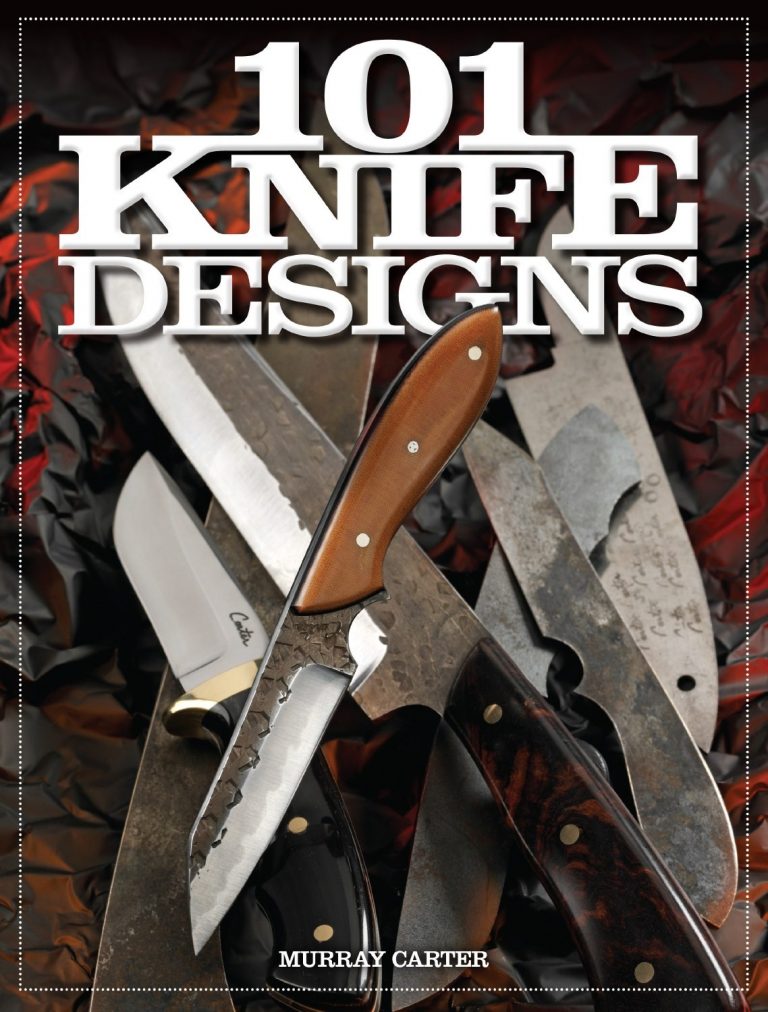
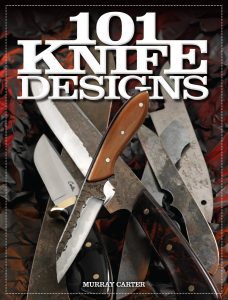
"101 Knife Designs"will give you both theory and beauty behind the great knife designs.
“101 Knife Designs”will give you both theory and beauty behind the great knife designs.

Understanding what makes a great design makes you a better collector and a better maker. “101 Knife Designs” by Murray Carter will not only inspire your work with detailed discussion of blade design, but will give you full-color images of exquisitely designed knives to ogle. At $19.53 you save $10.43 off the cover price.

Tips For Making A Hidden-Tang Knife

0

There are a few things to be careful of when making a knife of hidden-tang construction.

The Blade and Tang Both Need to be Straight

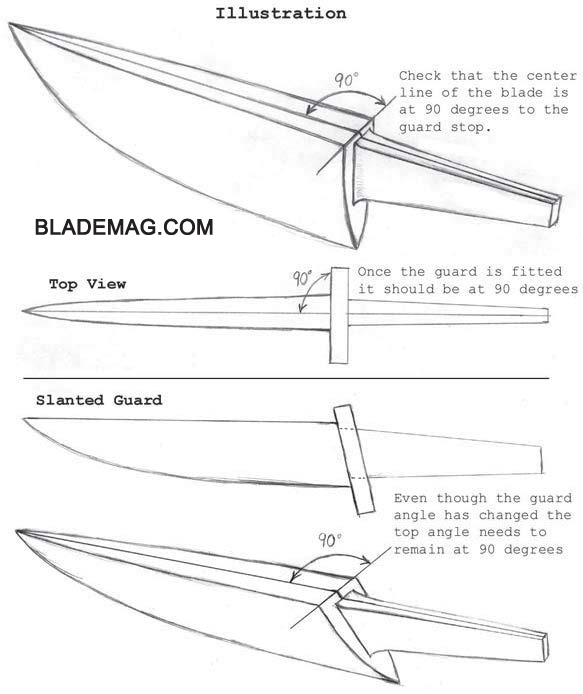
First, make sure that your tang and blade are straight. If the tang is tapered, it must be evenly tapered on both sides. The centerline of the tang must be straight to the centerline of the blade.

If the tang is warped a little to the right or left of the blade, or unevenly tapered, then you are not yet ready to fit either the guard or the handle. Go back to the forge or grinder and make your corrections to get things straight right from the start.

A limited amount of “fudging” can be done while gluing the handle to compensate for a tang that is not 100 percent straight and center. To repeat, in my opinion, it is best to correct things right from the start.

Fitting the Guard

After making sure your tang is not going off to the left or right, go ahead and fit your guard. Take your time! The guard must be at 90 degrees from the center-line of the blade and tang, even if you are making a knife with a slanted guard.

Attaching the Handle

Now you can start fitting your handle. Fit the handle to both the guard and the tang as you normally do. If you do this, the handle will be straight to the blade.

Most often I will not cut the handle material in half when making a hidden-tang knife. I will usually use a solid block of wood or a piece of stag.

First, I drill a couple of starter holes in the end where the tang will be inserted. The thickness of the drill bit will depend on the thickness of the tang. I then file the hole out to fit the tang.

It is more important to fit the handle material to the properly fitted guard than it is to fit it tightly to the tang. This does not mean that the fit should be sloppy, just that it is not necessary to make it that tight. Besides, you need to leave some room in between the tang and handle for the glue to be effective and have a strong bond.

With either of these methods, if the blade and tang are straight and the guard is at 90 degrees to the centerline of the blade and tang, then the handle will have to follow.

Try Knifebuilding:

Advertisement

Must Read Articles

Read this before you make a knife

Knifemaking 101 – Read This Before You Make a Knife

  by Wayne Goddard My experience has taught me that there's nothing like digging in and getting started. I've often said the hardest part of the...
how to forge damascus steel

How to Forge Damascus

Advertisement
Advertisement