Knifemaking

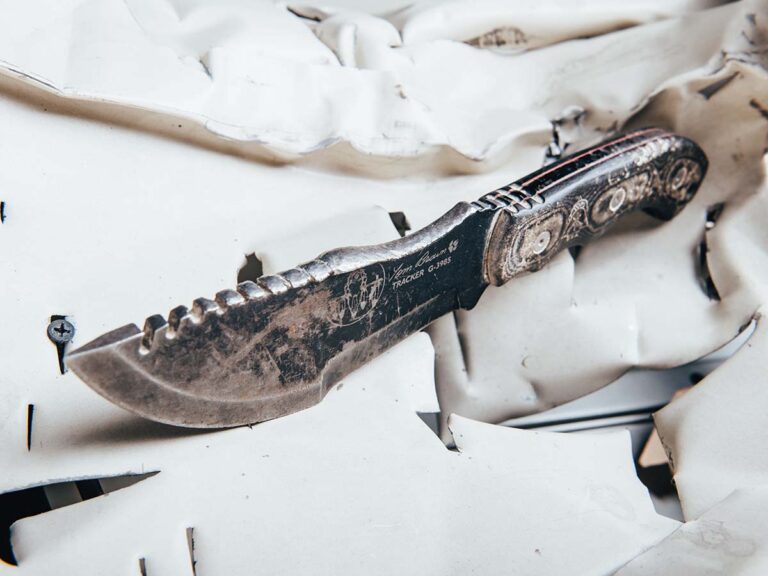
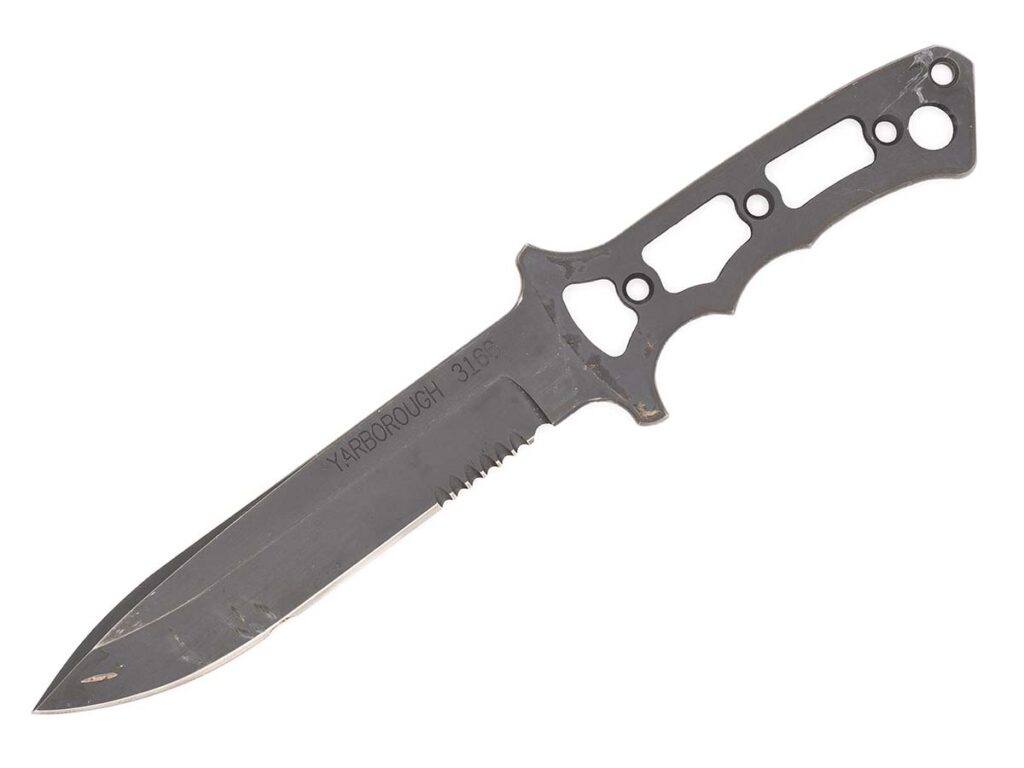
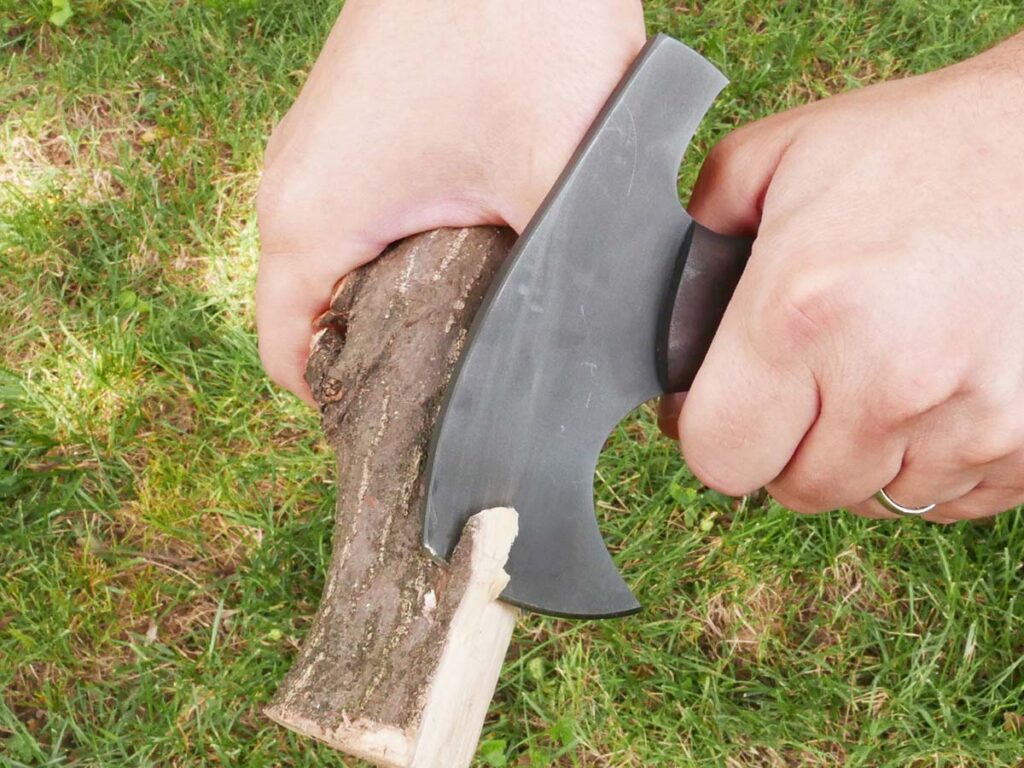
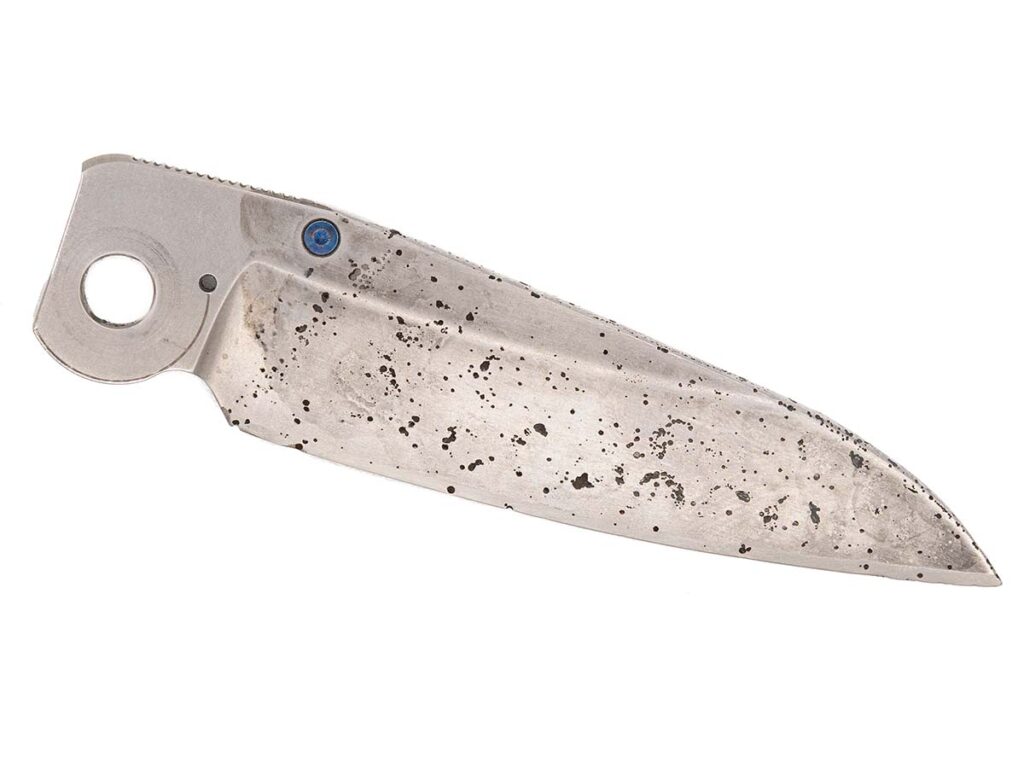
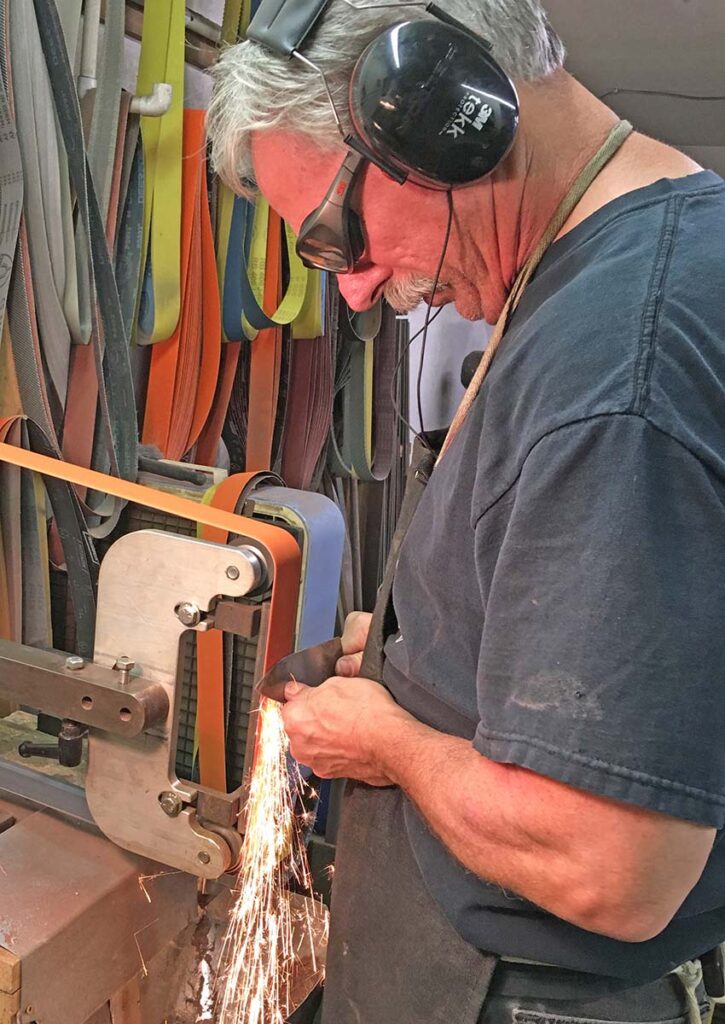
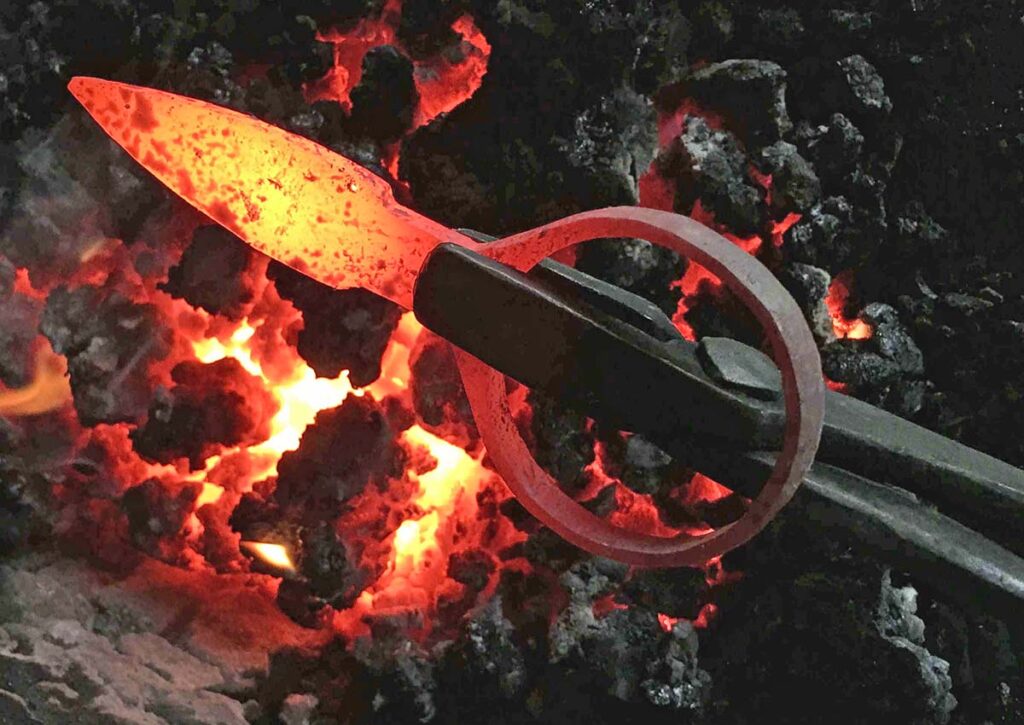
Knifemaking is the building of a knife, which includes the blade, handle and other accouterments. Blades are made by either removing metal from a steel blank via a grinder – known as stock removal – and the forging to shape of hot steel into a blade in the process known as bladesmithing. Other parts, including bolsters, guards, pommels, etc., are needed to complete the finished knife.

Featured Knives – – Knife Collecting – – Tactical Knives – – Survival Knives

Flipping In: The Rise Of The Custom Flipping Folder

Custom Flipping Folders Are Becoming More And More Popular By The Day. These Are Some Of The Coolest Custom Flippers.

The energy surrounding the custom flipper folder market is rising to new heights these days with the fit and finish, good looks and liveliness of high-quality materials, incredible skill, and, best of all, imagination.

A look at the current trends among some of the best in the class offers the custom knife market perspective on the future while also allowing a moment to appreciate and absorb the excellence around us. The commitment to make flipper folders isn’t taken lightly; it involves a concentrated effort to achieve, meet, and overcome the challenges in bringing this type of custom knife to life.

Dan Thornburg – Albuquerque, NM

Of his flipper folders Dan Thornburg said, “Little things like the cutout on the lockbar or depth of bearing pockets all affect how smooth the action will be.” The blade is Moku-Mai by Baker Forge and the handle is ancient walrus ivory. Closed length: 5 inches. His price for a similar knife: $2,000. (Image: SharpByCoop)

“I really enjoy making flipper folders because of the challenge they present in both mechanical function and working with different materials,” explained Dan Thornburg of Albuquerque, New Mexico. “I like figuring out how things work or why something doesn’t.”

Thornburg got started in flipper folders after meeting Paul Lusk at a Houston knife show years ago. “This guy is one of the smartest people I’ve ever met and is one heck of a good businessman,” Dan said of Paul. “His encouragement helped my knifemaking get to the next level.”

Evidence of that next level is readily apparent in Dan’s flipper in a handle of ancient walrus ivory with damascus bolsters. Made by Baker Forge, the blade material is Moku-Mai—mokume forge welded over 80CrV2 carbon steel. Dan said it’s not unlike a san-mai construction using mokume. The product of his ingenuity reflects an intense technical appreciation. 

“I don’t think I’ve changed the design as much as refined the design,” he reasoned. “Little things like the cutout on the lockbar or depth of bearing pockets all affect how smooth the action will be. I do try to keep it simple and not reinvent the wheel, so to speak.”

Thornburg succeeds handsomely in his mission, paying close attention to detail and applying a natural talent for precision. He indicated he likes the flipper tab to double as a single guard and fashions it with the same material as the blade. Then, he advises the owners of his flipper folders to learn their safe operation.

“I think, just like most things, operating a flipper folder is a learned thing,” he said. “The more you flip it open, the easier it becomes. My dad still couldn’t open the best and smoothest folder I’ve made—too old school I guess! For someone that owns and loves flippers, most will fly open.”

Eliot Maldonado – Bulverde, TX

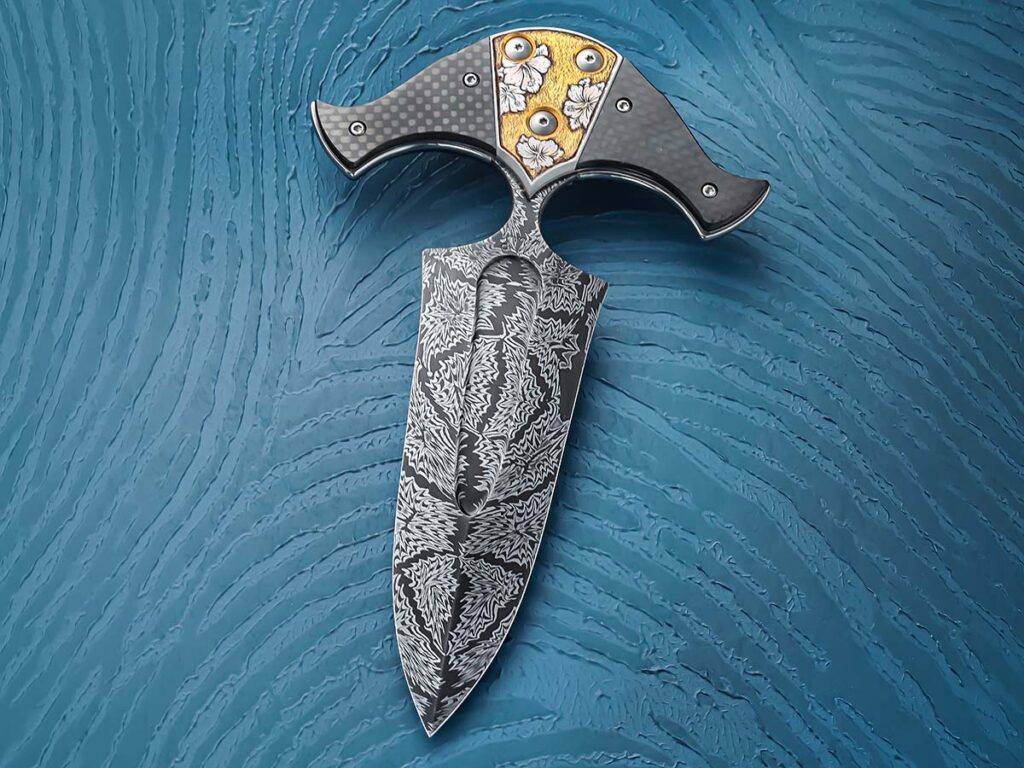
“Having a shorter tab is easier on pockets and looks cleaner,” Eliot Maldonado stated. “When the knife is closed, the tab doubles as a guard, but it is still short enough so that it does not ‘ouch’ your finger when closing.” His flipper employs a tanto blade of Moku-Mai by Baker Forge Steel and a marbled-carbon-fiber handle and Micarta® bolsters. Closed length: 4 inches. (Image: SharpByCoop)

Eliot Maldonado of Bulverde, Texas, started his custom knifemaking career making slip joints and then saw an opportunity. About 15 years ago, he had helped knifemaking friend Alan Davis work with slippies, and Davis assisted Maldonado with linerlocks in turn.

“Soon after, and knowing the function of linerlocks, I experimented with flippers,” Eliot explained. “It was a successful outcome and the passion for flippers started.”

Eliot’s flipper in Baker Forge damascus, a Micarta® bolster, and a marbled carbon-fiber handle demonstrate his appreciation of the finer points in the endeavor. His use of materials has also progressed from the early days. Back then he used basics just in case something went wrong. As he has become more proficient, upgrades to higher-quality blade and handle materials followed.

“I also started changing up patterns, those patterns that appealed to me,” Maldonado said, “like, I enjoy making folders with a classic kind of western—cowboy—look but still make more traditional tactical-type flippers as well.”

Eliot pays special attention to the flipper tab, applying a technique that enhances the action of blade deployment.

“Of course, the use of bearings changes the game when it comes to flippers, and I like a shorter tab with a checkering or ridge for traction. I feel having a shorter tab is easier on pockets and looks cleaner. When the knife is closed, the tab doubles as a guard, but it is still short enough so that it does not ‘ouch’ your finger when closing.”

Eliot is a firm believer in the assertive action of a flipper folder, and he makes no apologies for being a purist. 

“I believe a flipper should snap to open position when flicked by a finger,” he related. “Anything other than that is just not acceptable to me. The way I achieve that is by using caged bearings, stop pin position, the liner relief cut, and the perfect tolerance on the blade and back spacer. The result should be a fast opening with zero blade play and strong lockup.”

Todd Rexford – Florissant, CO

Todd Rexford’s futuristic flipper folder features a stainless damascus blade and a handle of DarkTi zirconium and titanium overlays. The overlays extend into the inside of the frame, while the mechanism features an inlaid lockbar and detent pin. Closed length: 4.6 inches. (Image: SharpByCoop)

The flipper folder genre has changed since Todd Rexford of Florissant, Colorado, began his journey some years ago. He credits demand as the catalyst for focusing his creativity on flipper folders.

“They were in their infancy when I started making them,” he commented. “There were some very good makers doing it, but back then the thumb stud still ruled the folder world. It was really my customers that wanted me to start making them, and I had ideas for my own flippers as well, for what I wanted to see and what the way forward was for my knives.”

The way forward for Todd is clearly indicated by a fine flipper folder of stainless damascus with a handle of DarkTi zirconium and titanium overlays. The overlays extend into the inside of the frame, while the mechanism features a hardened stainless pivot, inlaid lockbar, and detent pin with the Rexford radius bearing system integrated. A titanium pocket clip and back spacer complete the stunning package.

Todd sees the operation of the flipper folder as a critical element of the overall presentation, but hesitates to favor fully opening vs. more of an assisted movement. 

“I don’t judge,” he offered. “If a wrist snap is needed, then so be it. We can’t forget that when I make a stiff-detent lockbar flipper, you won’t be able to open it slowly. It will open with authority and everyone around you will hear it. This goes to show that each detent force has its own place depending on the end users and their task requirements.”

Nonetheless, the smooth operation of the flipper folder is a hallmark of a successfully completed professional effort. 

“The detent force, and how much preload you can place on the system before it overcomes the detent, is one factor that determines if the knife will fully open or not,” Rexford asserted.

“The other factor is the person and his or her finger,” he continued. “Through my years of building flippers, I’ve built everything on the spectrum of this force. Take a stiff detent to a show and half the people love it; half the people can’t open it. I’ve had users time some of my very fast knives in a pseudo drag race using camera-frame timing because they love it, but for a lot of people they may not be able to open that knife. At the end of the day it’s a preference, and I have stopped ‘standardizing’ my force. Yes, a flick will open the knife, but the velocity of the tip may change to suit different customers.”

The Skiff Family – Broadalbin, NY

The Culprit flipper folder by Steven Skiff, Jr. and Sr. won Best in Show at the 2022 NCCA Show. The blade is Damasteel stainless damascus in a Fafnir pattern. Closed length: 4.25 inches. The makers’ price for a similar knife: $1,495.

The father-son team of Steven Skiff, Sr., and Steven Skiff, Jr., from Broadalbin, New York, collaborates to make their own bold statement in the flipper folder realm. While Steven, Sr. makes the blades and does fit and finish, Steven, Jr. handles the CNC milling and produces blade bearings for the Skiffs’ projects, as well as bearings for other customers in the knife industry.

The Skiffs enjoy tackling the relative intricacy of flipper folder construction and relish the opportunity to demonstrate their proficiency, particularly with their team approach. 

“Making flippers is a challenge,” Steven, Sr remarked. “They are deceptively simple looking to make. It can be difficult to get the action exactly the way you want. It’s that challenge that I enjoy and it makes me prefer making them over other knives.”

The Skiffs’ Culprit framelock flipper folder features a blade of Damasteel stainless damascus in a Fafnir pattern, and a titanium handle with zirconium accents and seafoam anodizing. The result is dazzling, and Steven, Sr. credits custom knifemaking greats Andre Thorburn, R.J. Martin, and Kirby Lambert for “having a hand in increasing my interest to continue making flippers.”

The flipper construction process has progressed in the years since the Skiffs began to concentrate on the style. One aspect of that progress is the addition of an over-travel stop. 

“That’s an example of one important advancement that [a number of] us makers started using on framelocks a while ago,” Steven, Sr. observed. “Another advancement includes the evolution of using bearings instead of thrust washers, and we also use a hardened insert in the lockbar to prevent wear.”

The Flipper Folder Continues To Grow

The firm foundation of the flipper folder, both in popularity and mechanical and aesthetic quality, sets the stage for the future.

“I do predict we will see further refinement in materials, as well as in material quality over the coming years,” Rexford assessed. “We have also seen new locking mechanisms being adapted for the flipper category of knives.”

Maldonado looks ahead to “future advances in making a double-action flipper/auto. Of course, using new and exotic blade and handle materials is always something that keeps evolving.”

Future generations of collectors and users come to mind with Thornburg’s ideas of tomorrow. He commented, “I like to use materials that are not common when making my flippers. Mammoth, walrus and elk antler are my main scale materials, and my idea is a fine gentleman’s flipper folder for the upscale customer that will be handed down to their children.”

Altogether, the custom makers and their colleagues are doing their part to ensure that the flipper folder has staying power.

Read More

Cool Customs: Andrew Meers’ Pizza Cutter

0

You Can Never Have Too Much Pizza, And You Can Never Go Wrong Buying A Pizza Cutter Made By Andrew Meers.

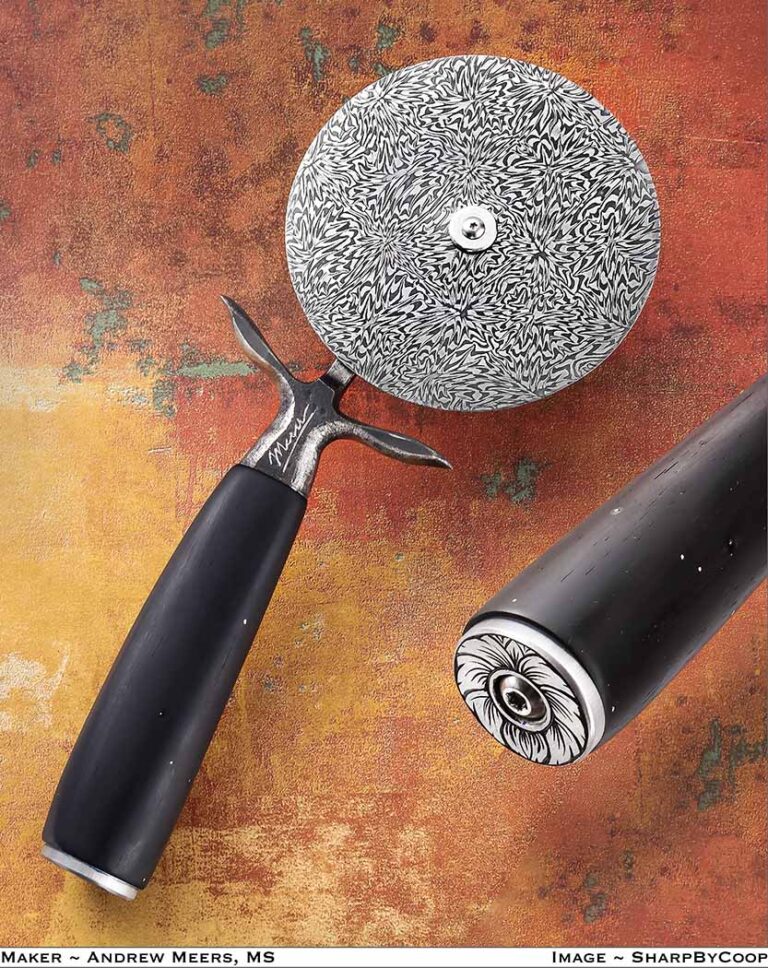
Andrew Meers loves pizza, so when his factory pizza cutter broke, he fixed it—and then made his first-ever custom version of one. The result has features only an award-winning ABS master smith such as Andrew would include.

Fresh out of the oven is the mesmerizing disc cutter in a W’s explosion pattern mosaic damascus. A pet peeve is loose pizza cutter discs that rattle, so he tightened his down with the help of a folding-knife pivot fitting.

Andrew Meers

The arm and guard are forged stainless with a blackened brut de forge look. He forged the crossguard in a plant-like shape, drawing the quillons out and giving them fullers for a bud-like appearance. The grip is ebony inlaid with bits of silver to resemble stars in the night sky.

If 20th-century actor, comedian and singer Dean “The King of Cool” Martin were here, he might croon, “When the moon hits your eye like a big pizza pie, that’s amore.”

For more information on his pizza cutter, contact Andrew Meers:
Email: [email protected]
Website: andrewmeersstudio.com.

Pizza Cutter Specs
Model: Pizza cutter
Maker: Andrew Meers
Dimensions: The cutting disc is 3.5 inches in diameter; the cutter’s overall length is 9 inches
Disc Material: W’s explosion pattern mosaic damascus of 1084 carbon and 15N20 nickel-alloy steels
Handle frame and guard: Blackened forged stainless w/a brut de forge look
Scale material: Ebony inlaid w/silver “stars”
Engraving: In a traditional Japanese line style by Andrew Meers
Andrew’s price for a similar piece: This one sold for $850
Andrew’s favorite pizzas: Meat Lovers, including the Whole Hog (red sauce, pepperoni, bacon, red onion, green pepper, jalapeno and mozzarella), and the Margherita, a typical Neapolitan pizza w/San Marzano tomatoes, fresh mozzarella, fresh basil, salt and extra-virgin olive oil

Read More

Shop Dump: Murray Carter’s Tools Stick To His Knifemaking Roots

Carter’s training at the elbow of a Japanese master smith shows in his shop.

Ever since I was a young boy I have been fascinated with blades,” ABS master smith Murray Carter writes. “Why some blades would cut and others would not was a mystery to me that I felt compelled to solve.

“A chance encounter at age 15 with a karate instructor began my love affair with Japan. A trip to Japan, when I was 18 years old, led to an unexpected encounter with an amazing man, Sensei Yasuyuki Sakemoto, who I would come to learn was the 16th-generation Yoshimoto bladesmith and whose family custom forged samurai swords for some of Japan’s most influential feudal lords. My relationship with Sensei Sakemoto led to a unique six-year apprenticeship, and upon its completion, I was asked to continue on in the 420-year-old family bladesmithing tradition as the 17th-generation Yoshimoto bladesmith.”

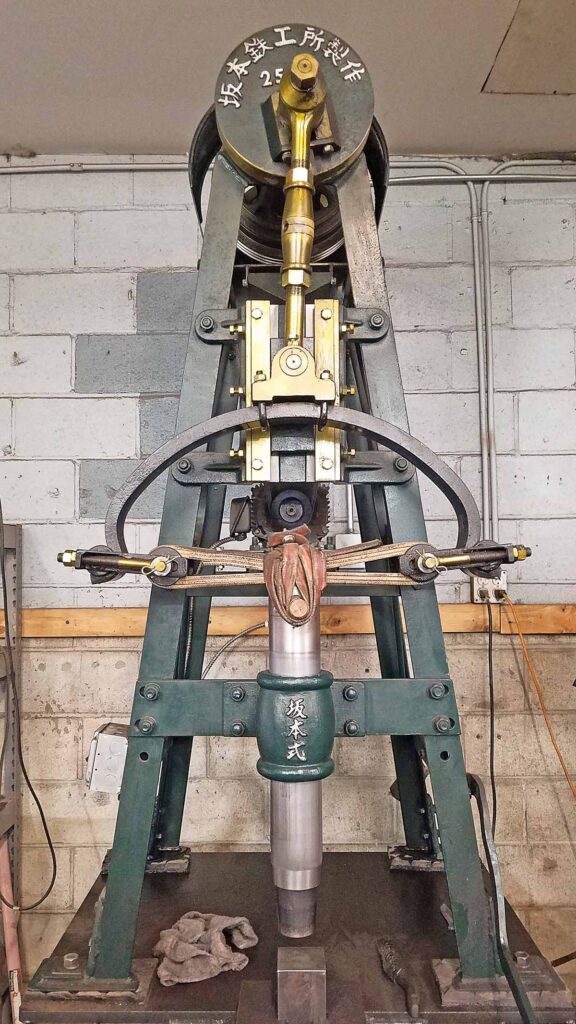
Sakamoto-Shiki Japanese spring hammer
Murray’s forging hammer is a 25-kilogram version of a Sakamoto-Shiki Japanese spring hammer. Japanese laminated steel is heated in a solid fuel forge and forged under the spring hammer with 800 to 1,000 individual hammer blows to achieve a blade that is very close to its final shape and thickness, and with extreme grain refinement.

Murray was off to the races. “I worked as a village bladesmith for 12 more years, constantly availing myself to other industry experts to glean what I could, and spent many long hours in the forge putting my newfound skills and knowledge to practice. I introduced my handforged Japanese kitchen knives to the Western market in June 1997 and achieved the ABS master smith rating in June 2001. In 2005, I moved to Oregon and have been busy plying my trade ever since.”

His shop is steeped in Japanese knifemaking history and his equipment reflects it. He begins with his forging hammer. “The Sakamoto-Shiki Japanese Spring Hammer is a 25-kilogram version,” Murray notes. “This particular hammer is the last-ever spring hammer to be manufactured by Sakamoto Ironworks in Tosayamadacho on the island of Shikoku, Japan. Blades are forged both hot and cold under this spring hammer. The 25-kilogram ram strikes the steel with enough kinetic energy to actually heat up the steel as it is being forged. One of our spring hammers has forged over 40,000 blades to date without breakage or malfunction.”

Next up is his rotating waterstone. “Keeping with traditional Japanese bladesmithing methods, handforged blades are quenched fully thick and then blade geometry is ground by hand on the rotating Japanese waterstone,” he explains. “When purchasing stones from Japan was no longer possible, Radiac Abrasives, Inc., from Salem, Illinois, stepped up and fabricated this stone for us.”

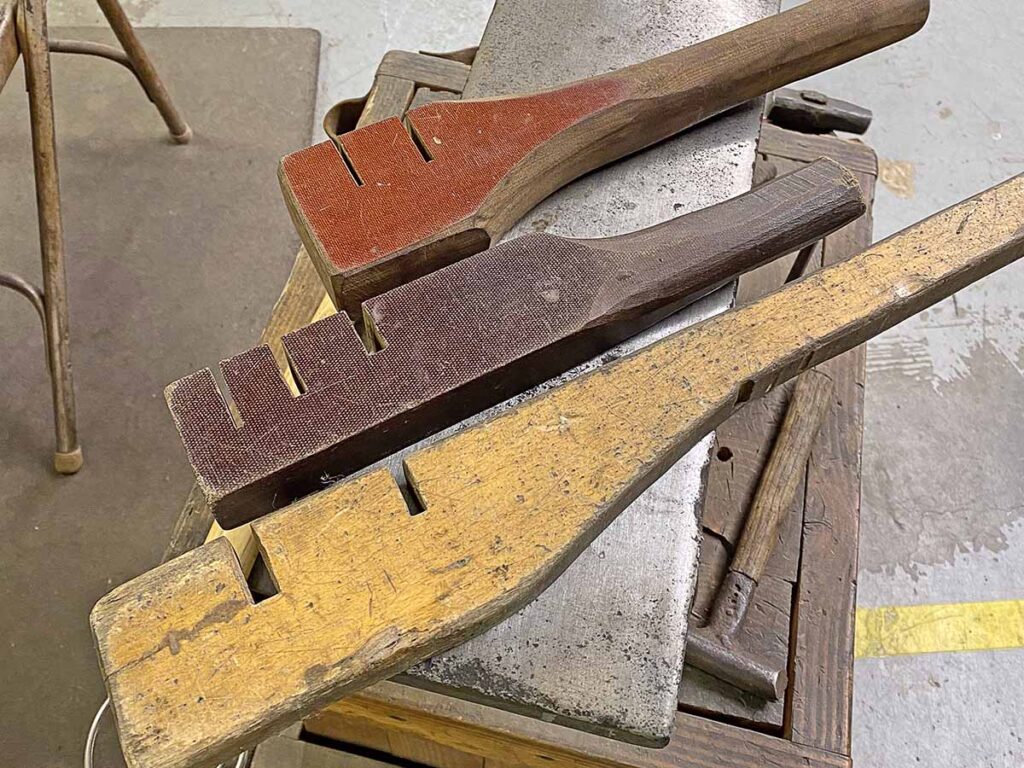
bending sticks
The mage-bou custom made ‘bending stick’ with slots of varying thicknesses is used to straighten hardened laminated blades. It can be made from most any hard material, including oak or Micarta®.

Murray’s forging hammer bears little resemblance to American fare. “The Japanese tagane hammer is made by brazing a carbide bit into a regular hammer,” he writes. “This is a specialized tool skillfully used to straighten bent homogenous steel knives after hardening. It is hammered into the concave side of an unwanted curve in a blade, and the carbide bit penetrates the surface of the metal and moves a tiny bit of steel in either direction, perpendicular to the length of the bit. Handforged saw blades before the days of disposable saw blades used this straightening technique heavily.”

For further blade straightening Carter uses a simple yet effective tool. “The mage-bou custom made ‘bending stick’ with slots of varying thicknesses is used to straighten hardened laminated blades,” he observes. “The bent blade is forced true via the lever and fulcrum effect. Care must be taken not to snap a stiffer blade by applying too much force.”

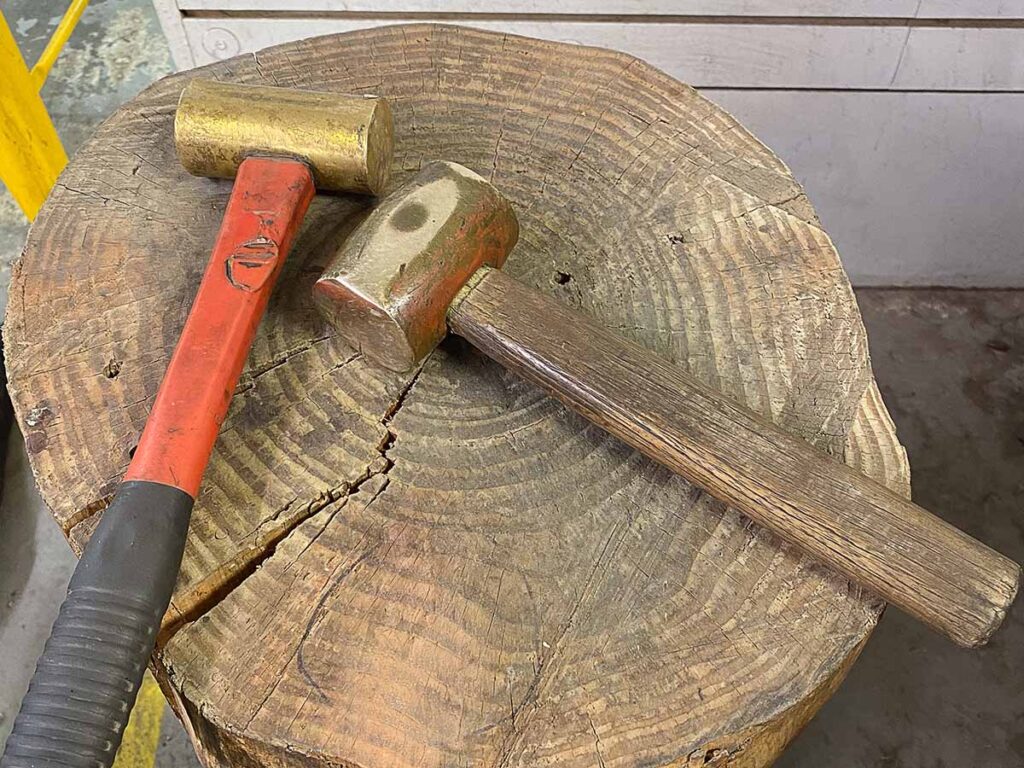
brass hammer and wood stump
The brass hammer and wood stump are used to fine tune the straightening of blades after heat treatment. The convex side of a curve is placed face-up on the stump and judiciously hammered with the brass hammer.

Sometimes it just takes experience and a good eye in lieu of hi-tech. “The brass hammer and wood stump are used to fine tune the straightening of blades after heat treatment,” Murray notes. “It’s probably the most-used workstation at Carter Cutlery. The convex side of a curve is placed face-up on the stump and judiciously hammered with the brass hammer. Examining by eye the effects on the blade after each single hammer blow is the most effective way to do it.”

Check Out More Of Tools Of The Pros:

How To: Marketing Knives On Social Media

How to get the most from your knives on social media platforms.

It’s immediate. It’s visual. It’s effective.

These are just a few of the attributes that describe the impact of social media on modern life. Whatever the topic, some form of social media allows participants, observers, critics and commentators to weigh in, expressing their views and—of course—buying and selling.

For instance, the platform of Instagram has become a prominent factor in the marketing of many custom knifemakers, purveyors and collectors, and the reasons for the phenomenon are varied. They center around the immediacy, visual quality and effectiveness in showcasing and selling, developing a following, and generally in raising a knifemaker’s profile in the all-important marketplace. Setting up an Instagram account is simple, cost-effective and for many generates the desired results.

“Instagram and other social media platforms are an excellent way to put yourself in the public’s eye,” noted purveyor/ABS master smith Dave Ellis of exquisiteknives.com. “Through good knife photography, clear and precise descriptions of the same, and reasonable follow-up you can publicize your products as well as introduce your website. TikTok is rapidly gaining popularity, and YouTube is an excellent way to achieve your goal of spreading the gospel of custom knives.”

“I do videos and tutorials and just basically little blurbs of me building a knife,” Kim Breed commented. “Tutorials let people know this is why I charge what I charge, the little steps that you do when you’re making a knife.” ABS master smith Steve Randall grinds a blade in his shop. (Steve Randall image)

Kim Breed, knifemaker and BLADE® field editor, uses Instagram to generate sales and promote awareness among the buying public while also offering some insights into the knifemaking process. The value of experience is levered through the visual, and everybody gains.

“I do videos and tutorials and just basically little blurbs of me building a knife,” Kim commented. “I show the blade when I’m finished grinding and then the final product. That’s when it is put up for sale. Tutorials let people know this is why I charge what I charge, the little steps that you do when you’re making a knife. For example, when you’re forging you can show that process.”

Breed, whose videos are available on Instagram at kimbreed1911, advises that would-be Instagram users monitor their posts, beware of hashtags that are too generic, and frequently assess the return on their investment of time.

“A lot depends on the hashtags,” he said. “People can copy stuff, come up with a fake account, or hack into anything. Once you start, you’ve got to stay on it. I’ve gotten messages that don’t make sense, and you can catch situations where people have set up fake accounts and used your pictures to get people to send money first when they are scamming. Check every hashtag you do and make sure it’s going to a knife site. That was something I’ve picked up in the five or six years I’ve been doing Instagram.”

For those who choose to display their wares on Instagram or any other social media, Ellis recommends, “Scammers are everywhere, so do your due diligence and look deeper into anything that looks too good to be true. Haters are very common, so expect some negative comments and take them in stride. Getting into a heated battle only fuels the folks that like to fan the flames, so keep a cool head and remember that your goal is to promote the use and collecting of custom knives as an art form and tool.”

Knife Makers & Knife Collectors Connect

ABS master smith Neels van den Berg, who runs Black Dragon Forge based in South Africa, keeps his Instagram use in perspective. There are obvious positives and potential pitfalls, but he sees an incredible opportunity to raise visibility.

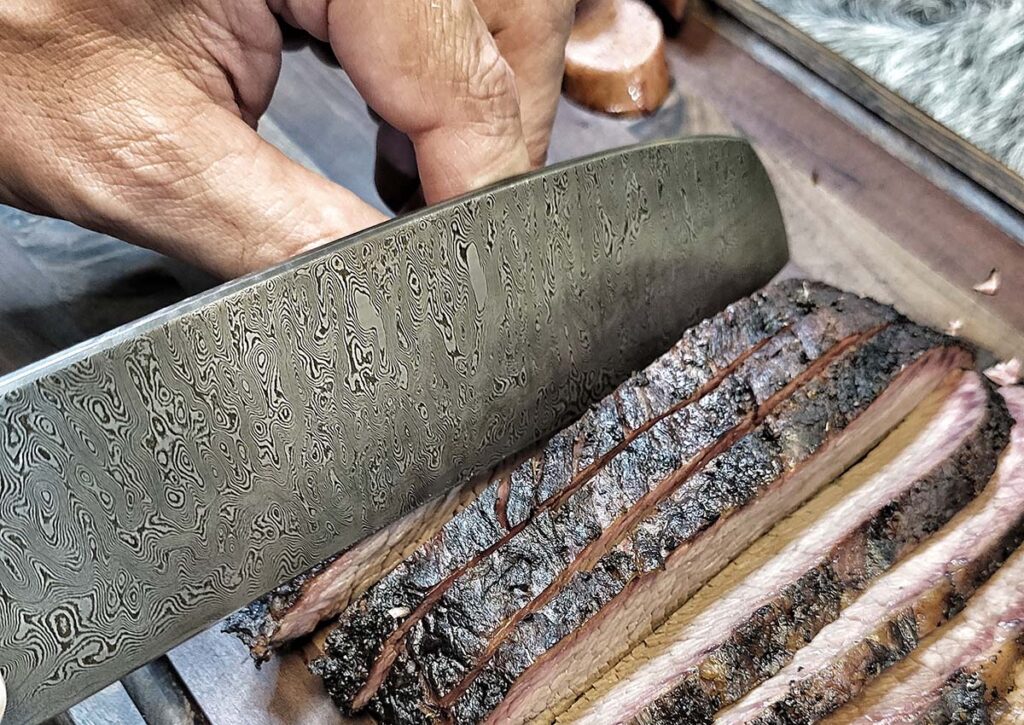
Showcase your knives as tools for culinary use, outdoor adventures or collectible art. The BBQ Chef’s Knife by Matt Williams has a 9-inch blade of 400-layer damascus forged from 1084 carbon and 15N20 nickel-alloy steels. Overall length: 15 inches.

“Instagram is a free platform designed primarily for sharing photos and videos to foster social interaction,” Neels commented. “Users can reasonably expect to engage with its 2.11 billion users worldwide by uploading and interacting with content through likes, comments and direct messages [DMs#]. However, it’s important to understand that Instagram’s core purpose isn’t sales, it’s connection. Social media users should approach the platform as a tool for storytelling, networking, and building a community rather than expecting it to function as a direct sales engine. Understanding this distinction is critical when crafting a marketing strategy for your business.”

According to van den Berg, Instagram can amplify a knifemaker’s reach, create brand awareness and build credibility, which may lead to sales. But these are byproducts of fostering genuine engagement and building relationships through the platform.

“For a knife business or hobby, this means showcasing the passion and craftsmanship behind your work,” Neels remarked. “People will follow you for who you are—your skills, values and story—not just for what you have to sell. Social media users are often turned off by hard sales pitches, so the focus should be on creating content that resonates emotionally or intellectually with your audience. While sales might be part of the eventual outcome, it shouldn’t be the primary intent. Instead, aim to captivate your audience by showing the process behind your craft: the highs and lows, the struggles and triumphs, and the sheer joy of creating. When you build this level of connection, your products naturally become a way for followers to support you rather than a commodity you’re trying to sell.”

Videos of forging are another great way to demonstrate how knives are made and build interest among viewers. (Lin Rhea image)

The secret to Instagram and social media success is certainly influenced by the delivery. Setting up a presence and presenting a perspective on the maker’s work and creative journey do make a difference.

“Users should expect to display their point of view in a clear and cohesive way,” related ABS master smith Nick Rossi of Vassalboro, Maine-based Nick Rossi Knives. “That means who they are, what they make, and why they make it. Social media is a relatively efficient way to project that to a potential customer. Sales and cultivating a customer are byproducts of that action.”

Setting Social Media Goals

Finding the right combination of social media outlets depends on the knifemaker’s perspective. Analyzing what the maker hopes to achieve drives the investment of time and attention.

“The best social media platform depends entirely on your goals, audience and the type of content you want to share,” van den Berg observed. “Each platform serves different purposes and attracts unique demographics, so a thoughtful combination works best.

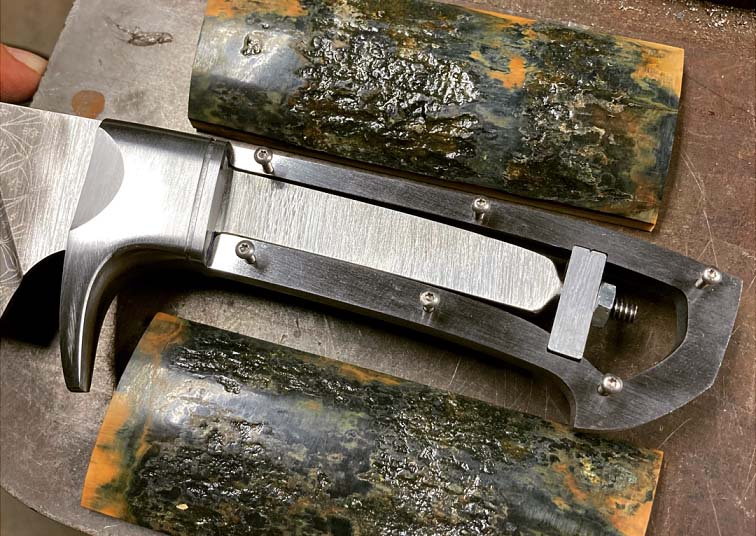
According to Neels van den Berg, using in-progress shots can sidestep direct visual triggers while still highlighting a maker’s work. In his version of frame handle construction, bladesmith Salem Straub uses a threaded fastener in an internal slot in the frame to mechanically lock all the parts together tightly. (Salem Straub image)

“I have three primary goals on Instagram: 1) Showcasing my craftsmanship—I aim to highlight the intricate details and artistry of my creations, emphasizing their quality and uniqueness. This draws attention to the skill and effort behind each piece, making my work stand out in a crowded marketplace; 2) Building my brand identity—My goal is to establish a recognizable and authentic brand that resonates within the knifemaking community. This isn’t about a logo or maker’s mark, it’s about the story, values and personality behind my work; 3) Engaging with my community—Social media is about relationships. By actively participating in discussions, responding to DMs and comments and sharing insights, I foster a sense of community among knife enthusiasts and artisans.”

To achieve his goals, Neels relies on high-quality visual content, educational posts, consistent branding, and authentic interaction through responses to comments or joining a relevant conversation.

Ellis commented, “For retail sales, I prefer TikTok and YouTube. By utilizing every media that you can, your products are constantly put in front of not only the buying public, but you are also promoting yourself to show promoters and attendees.” Instagram and Facebook are the priorities for Rossi “because that’s what most of my customers use.”

He added, “I only have time to manage two platforms on top of being a professional craftsperson. For collecting and very niche topics, Facebook groups provide a wealth of knowledge. I have a private Facebook group for only my online and in-person students that has worked very well for advice and troubleshooting.”

 “I want people to think of me as a skillful knifemaker with a focus on forging, a maker of interesting and innovative knives, and an experienced educator,” noted ABS master smith Nick Rossi, here giving a class on how to hand rub a blade to a satin finish in a BLADE University class.
“I want people to think of me as a skillful knifemaker with a focus on forging, a maker of interesting and innovative knives, and an experienced educator,” noted ABS master smith Nick Rossi, here giving a class on how to hand rub a blade to a satin finish in a BLADE University class.

Variations of content help keep social media posts entertaining and business related, and encourage a possible exchange of information.

“We live in a world of short, informative, and, let’s face it, lively. Clicks mean interaction, potential video formats,” Rossi observed. “Attention spans have grown shorter, and social media users have come to expect shorter, action-packed video. If you are going to have narration, subtitles are important. Users want the option of viewing without sound. Choosing popular songs may help your videos pop up in the algorithm more readily. I want people to think of me as a skillful knifemaker with a focus on forging, a maker of interesting and innovative knives, and an experienced educator. Each post focuses on one of those three things.”

Social Media Do’s And Don’ts

An awareness of certain standards provides knifemakers with extra assurance that their posts meet the chosen platform’s guidelines and minimize the risk of being flagged or taken down. Though Breed said he has done well with Instagram sales, the limitations of filters can have negative effects on viewership.

“Filters can hurt a knifemaker, so before you might get 100,000 or 200,000 views,” he said, “but you can’t do that if you picture a knife as an item of war, and watch out what you say about politics and whatever. Stay away from there.” Ellis agrees. “Stay away from animals or any violent visuals when posting,” he added. “Stick to the art or utilitarian uses for custom knives, and you should be OK.”

For van den Berg, compliance and creative communication are essential to success when visualizing or discussing knife-related topics on social media.

“The key is to reframe how your work is presented, ensuring that it aligns with platform guidelines while still engaging your audience,” he remarked. “Avoid flagged terms like ‘knife,’ ‘blade,’ or ‘weapon,’ and instead use neutral or creative alternatives such as ‘tool,’ ‘craft,’ or ‘functional art.’ These terms emphasize the artistry and utility of your pieces, shifting focus away from their potential as weapons. Repositioning your knives within broader contexts is another effective tactic. Showcase them as tools for culinary use, outdoor adventures or collectible art. Using in-progress shots, close-ups of handles, or images that emphasize materials and craftsmanship can sidestep direct visual triggers while still highlighting your work.”

Another knifemaker option is to place the work in context.

Knifemaker/BLADE® field editor Kim Breed advises that would-be Instagram users monitor their posts, beware of hashtags that are too generic, and frequently assess the return on their investment of time.

“To further circumvent restrictions, use storytelling and indirect messaging,” Neels encouraged. “Instead of explicitly saying, ‘Check out my new knife,’ share the inspiration behind the design or challenges faced during its creation. Platforms like Instagram and TikTok, which favor storytelling and visual diversity, are ideal for this approach. Additionally, private groups, email newsletters, or niche forums provide safer spaces to share uncensored content with your core audience.”

Reaching as many followers, shoppers, and potential buyers as possible, custom knifemakers who take advantage of social media routinely find that the reward is in lock step with the attention and time devoted to originate and maintain a strong presence. For those who manage it well, social media exists in the present and will remain a formidable asset in the future.

More Knifemaking & Knife Collecting:

Sub-Hilt Knives: Aesthetics And Aggression In Harmony

The sub-hilt is at once belligerent and beautiful, adding a strange allure to the knives that sport it.

There is no consensus as to the origin of the sub-hilt knife, though most agree the sub-hilt fighter was popularized by BLADE Magazine Cutlery Hall-of-Fame® member Bob Loveless in the 1970s, if not earlier. Some believe the sub-hilt design was for hunting, and that the main purpose for the added hilt was for greater leverage when a surer grip was needed. A few have even postulated the additional hilt was for use as a brace in pulling the knife out after being stabbed into bone or another hard material, a use that it would no doubt accommodate most effectively.

Gary Langley: Gentleman’s Fixed Blade

Custom maker Gary Langley’s sub-hilt fighter may be small at 9 inches overall but makes up for its size in sleek blade grinds, exquisite mother-of-pearl scales and gold inlay. Blade and overall lengths: 4.5 and 9 inches. Alice Carter did the engraving. (SharpByCoop knife image)

Many knife enthusiasts think of a sub-hilt fighter as being a heavier-edged companion—and in many cases it is—but custom knifemaker Gary Langley’s iteration is a little gem of a knife.

“The small Loveless-style sub-hilt fighter is 3/16-inch CPM 154 steel with a double hollow grind on a 3-inch wheel,” the Dumas, Texas, maker notes. “The heat treatment is by [Cutlery Hall-of-Famer] Paul Bos. I originally designed the knife without the rear bolster. I added it when I couldn’t source the mother-of-pearl scales long enough—and I believe it turned out even better.”

It has what might be called a 19th-century Michael Price San Francisco knife look that makes it a prime candidate for a true gentleman’s fixed blade.

Andrew Blomfield: Sub-Hilt Bowie

ABS master smith Andrew Blomfield’s sub-hilt bowie is a tour de force of explosive mosaic damascus, salt-blackened steel, brass spacers, and exquisite Australian ringed gidgee wood. Blade and overall lengths: 11 and 16 inches. (SharpByCoop knife image)

An ABS master smith from New South Wales, Australia, Andrew Blomfield enjoys building large knives such as bowies and daggers. “The bigger the knife the better,” he states. An example is his sub-hilt bowie.

“I feel that this knife has great flow and balance,” he begins. “The blade is an explosion mosaic pattern damascus hardened to 59 HRC. The guards and pommel are salt-blackened steel with brass spacers and the handle is a beautiful piece of Australian ringed gidgee.”

The guard’s bottom quillon curves back toward the sub-hilt to partially enclose the user’s hand a la a D-guard, but also has hints of both a C- and an S-guard to it. Very unusual!

Andrew Meers: Rose of Sharon

ABS master smith Andrew Meers calls his 16.5-inch sub-hilt fighter Bees and Flowers, due in no small part to the Rose of Sharon and bees engraving. The 12-inch blade is a damascus of 1084 carbon and 15N20 nickel-alloy steels in a mosaic pattern. Guard and furniture are 416 stainless steel. Overall length: 16.5 inches. (SharpByCoop knife image)

ABS master smith Andrew Meers of Raleigh, North Carolina, says, “I started with the sub-hilt in mind, which is a departure for me.” To say his deviation from the norm worked out well is an understatement.

“I like to incorporate Japanese influences wherever I can, and I wound up adding an integral habaki into the guard design as well,” he explains. “I wanted a blade that was able to feature a mosaic pattern, so I chose a broader shape that expands towards the point rather than tapers. The handle is a simple design to contrast the visual complexity of the guard.”

The engraving theme is of the Rose of Sharon and bees.

“The client had requested a floral theme, and we worked on the rest of the design and layout from there,” Andrew says. “The engraving was meant to complement the layout of the guard and furniture.”

Justin Harrington: A-Team

Built for an Army buddy, Justin Harrington’s superb sub-hilt fighter incorporates a masterful balance of random pattern damascus, mokumé gané and African blackwood. Blade and overall lengths: 8.5 and 13.5 inches. (SharpByCoop knife image)

Justin Harrington of Clemmons, North Carolina, began smithing 18 years ago and is the owner of Cyclops Forge. Of the sub-hilt he says, “It’s the racecar of fighting knives—weight, balance, curvature, tip control and placement all are important variables to be employed to reach a harmony which is felt right away when correctly done.

“This knife started its life as a phone call from an Army A-team member who wanted a special combat retirement gift for his buddy. The three of us got together and forged a damascus billet for the knife over three days in my shop. The 8-inch recurve blade is a random-pattern damascus of 1084 and 15N20 carbon steels. The guard and sub-hilt are made from a copper-and-nickel mokumé gané I make in my shop. The handle is around 5 inches of sculpted African blackwood with a bronze pin.”

The sub-hilt has a forward lean and spoon-cupped quillon that slants toward the guard to capture the user’s index finger. The result is a handle that seems to want to grab your hand.

Cool & Sexy

Whether fighter, bowie or what have you, the sub-hilt-knife genre may be more recognizably custom than any other. From the classic Loveless Big Bear fighter to the wide array of today’s renditions, top sub-hilts are cool, sexy and in harmony with the best custom knives extant.

Read More:

Hunting Knife Sheaths: The Constant Companion

The Correct Sheath Is Pivotal To The Complete Hunting Knife Package. A Good Sheath Can Keep Your Knives Safe And Sharp For Decades.

The Correct Sheath Is Pivotal To The Complete Hunting Knife Package. A Good Sheath Can Keep Your Knives Safe And Sharp For Decades.

For the hunter in the field, a dependable and durable hunting knife is indispensable equipment, and it follows that the sheath that holds the knife must be equally up to the task.

Secure carry, protection for the blade and handle, easy access, and the ability to stand up to the elements and hard use are essential. While there is a variety of sheaths available and each one contributes something to the equation, the sheathmakers themselves have come to eye-opening conclusions as to the making and deployment of the correct sheath for the hunting knife. Personal preference is still a prime mover, but the basics make the difference between cooperation and catastrophe in the field.

“The best style for a hunting knife sheath is whatever the hunter wants,” explained veteran sheathmaker Paul Long. “Personal preference is very important. However, the knife that would best be described as a hunter would be best suited in a deep seat pouch with a loop that would carry relatively high on the belt. In most cases the deep pouch would preclude the need for a retention strap. For a double-guard hunter, a drop-loop belt sheath would probably be best with a snap strap for secure retention.”

Depending on the style of the knife, the guard often dictates the best pouch configuration. “I favor the pouch-type sheath, and the hunting knife generally has a single guard as opposed to a double guard,” related sheathmaker Paul Lebatard, who also has found success with his custom knives through the years. “I make a lot of doubles, too. You would have to make a snap-type sheath with a keeper strap, but on hunting knives with single guards the pouch type is always best.”

Three different styles of pouch sheaths by Kenny Rowe, from left: regular pouch, plain leather; strap pouch, floral hand carved; and full flap pouch, full coverage gator. (Kenny Rowe image)

A sheathmaker for over 50 years, Chris Kravitt zeroes in on the personal preference perspective. “First and foremost, it’s a matter of the configuration of the knife, and then if more than one style will work it becomes a matter of personal preference,” he observed. “My preference is to go with the pouch because it is easier to draw and resheathe the knife without worrying about straps.”

At the same time, Kravitt acknowledges varying hunting knife construction and its influence in sheath form and function. “If a knife has a double guard, it isn’t going to work on a pouch sheath, and if you have a knife with an integral handle, possibly,” he said. “Certain things don’t lend themselves to the traditional style, like when the blade is the widest part of the knife or there is no bolster or ricasso extending beyond the edge.”

Kenny Rowe, owner of Rowe’s Leather in Hope, Arkansas, adds another option on the hunting knife sheath. “Ninety percent of these sheaths would be the pouch type because they cover most of the knife, and with the guard you can make a welt where the knife has some resistance coming in and out,” he noted. “Some sheaths will have a lid that has a snap on it, and that is as secure as you can get with the flap snapping over the front of the sheath.”

The consensus with the pouch sheath makes sense for all the reasons that the hunter encounters in the field. For its toughness and the ability to shape and mold the sheath as desired during the construction process, cowhide reigns supreme among sheath materials. Most sheathmakers use 7-to-9-ounce* vegetable-tanned cowhide.

Style Of Sheaths

The use of exotics such as ostrich, stingray, alligator, crocodile or other hides is a continuing option, though for the most part they are used as accents, often in the form of inlays, rather than adding any performance-related component to the sheath.

“Exotics are very useful in sheathmaking but primarily for aesthetics,” Long explained. “Elephant and shark are two that are tough enough to withstand very hard use and are usually built as an overlay on a vegetable-tanned base sheath. I work with various snakes, lizards, ostrich and many others.”

Ultimately, Chris Kravitt—here working on a sheath in his shop—stands by the individual perspective. “First and foremost,” he begins, “it’s a matter of the configuration of the knife, and then if more than one style will work it becomes a matter of personal preference.” (Chris Kravitt image)

As Kravitt noted, “The basic sheath is going to be cowhide 99 percent of the time, but for overlays and inlays my favorite is stingray, which is near bulletproof but more expensive and harder to work with—but great stuff. Ostrich leg or shin is very nice, and Malaysian horned frog has a very nice texture to it. Snakeskin is not very durable, but it’s fine when the knife and sheath are for show since it won’t hold up with regular use.”

Tooling and carving also provide style points and may be pleasing to the eye. However, neither actually contributes to the performance of the sheath in field use. “I occasionally do some tooling with stamps, but carving is a talent I don’t have,” Lebatard remarked. “Still, on almost every sheath I’ll put something in keeping with the theme of the knife, like a small deer. Someone might place an order and specify that they just want a bare, plain sheath, or they may want just their initials on it. That’s a good thing about leather. When it is wet it can be molded and stamped, and when it dries it will hold that impression.”

Tanning And Steel

Vegetable tanning is essential when the blade meets the sheath leather for an extended period. In contrast to chrome-tanned leather, a vegetable-tanned leather is not known to corrode or stain a blade left in the sheath for any length of time. That old admonition to store the knife itself separately from the sheath will then get a longer look.

“A lot of people say not to store knives in the sheaths, but as long as the sheath is made of good vegetable-tanned leather, I’ve never had a problem,” Lebatard noted. “I made a knife for a friend a few years ago and he didn’t want a sheath. He was going to get someone else to make the sheath for him. Several years later, he brought the knife to me and he had had it in a chrome-tanned leather sheath. It was nearly rusted through. The chrome-tanned leather is very corrosive.”

Kravitt has had similar experiences. “I hear so many people say not to store knives in leather sheaths, but I have kept knives in sheaths for years and never had a problem,” he recalled. “My sheaths are all vegetable tanned as opposed to chrome tanned. Chrome-tanned leather may have salts and other things in it.”

Drainage And Inserts

Waterproofing is another essential element, and in the construction itself there are questions surrounding drainage holes and inserts as well.

Most sheathmakers shy away from inserts since contact with the blade may dull the edge. After all, the welt and/or strap should suffice for a snug fit. Inserts in and of themselves may be judged to provide some measure of redundancy, but contribute little to the overall stability of the lockup or in protecting the knife itself. Long says, “Even the best inserts, being rigid, will do more harm to a blade than top grain leather.”

The different decorations Kenny Rowe offers with his sheaths include, from left: smooth; border tooled; basket weave; acorn and oak leaf hand carving; exotic skin overlay (gator); exotic skin inlay (beaver tail); and exotic skin full coverage (ostrich leg). (Kenny Rowe image)

At first glance it might appear that a drainage hole is a good idea to help maintain cleanliness and prevent the buildup of moisture or debris within the sheath. Not so fast!

“I do not ordinarily put a drain hole in my sheaths,” Long asserted. “Nor do I do any waterproofing of the interior of the sheath. Rather, I depend on the normal intelligence of my client to not go swimming with their sheath, and to at least try to clean the blood and guts off the blade before reinsertion.” 

Rowe agrees. “I don’t see any sense in it,” he commented. “I can count on one hand the number of sheaths I’ve made with drain holes in them, and I’ve been making sheaths for 35 years at least. The only time I would expect someone to have their sheath in really wet conditions would be if they accidentally rolled into a deep river or their boat sank. I wouldn’t expect someone to haul off into neck deep water with their hunting gear on. For debris, it’s easy enough to take a wire with a little hook in the end and just rake the sheath out, or blow it out with air, or stand it upside down and shake it or tap it on a table.”

Kravitt, on the other hand, will utilize a drain hole and an insert from time to time. Often, the insert itself is fashioned from leather to avoid additional friction against the knife edge. The employment of the drain hole is in direct response to the future use of the gear in the field.

“If I know the sheath will be used in harsher conditions, I think it should have a drain hole,” he remarked, “not just for draining moisture, but also removing debris—especially when the user has spent a lot of time in the woods.”

Sheathmakers do tend to rely on the owner of the product and of the hunting knife to exercise responsibility in the field. “Explain to the client, if they are a novice, about the ‘care and feeding of a leather sheath,’” Long smiled.

How To Care For A Hunting Sheath

The well-crafted sheath is the constant companion of the hunting knife, either in the field or a collector’s cabinet, and the best measure of the sheath’s contribution is its role in that partnership. For the sheath to function properly, owners must remember the fundamentals of hunting knife care. Keep both the knife and sheath clean. Wipe away moisture and other fluids. Maintain the surfaces as needed. Don’t put the knife away wet and expect the sheath to do more than expected.

Adhering to best practices will ensure long life for both the hunting knife and its all-important sheath.

*According to the Montana Leather Co. website (montanaleather.com), leather thickness is typically measured in ounces. For instance, an ounce of leather is equal to 1/64 inch. As a result, 7-to-9 ounce leather will be in the 1/8 inch range, give or take a few millimeters.

Read More

Shop Dump: Kirby Lambert, Mike Quesenberry, And Rick Eaton

0

Three Knifemakers Take Us Into Their Shop To Show Us Their Process And How They Forge Steel Into Beautiful Blades.

How serious was Kirby Lambert about buying the necessary equipment to become a custom knifemaker?

“I dropped out of school at the University of Calgary to start my knifemaking career,” he began. “In order to purchase machinery, tools, and equipment I had to sell off the one thing I had that was worth any money—my 1969 440 Dodge Charger.

“My milling/drilling machine was one of the very first pieces of equipment I purchased at the beginning of my knifemaking career. It’s a Force International that was made for House of Tools, which is no longer in existence. I purchased it around 2002, and every knife I’ve made since that time has either been drilled and/or milled on it.

“Some of the most important and most-used pieces of machinery I have are my belt grinders,” Kirby continued. “My favorite is the TW-90 [the one with the yellow belt illustrated in one of the accompanying pictures]. Not only is it one of the most versatile grinders on the market, it’s also designed and made by my good friend, Travis Wuertz. This grinder does it all and then some. Not only do I use it for grinding bevels and the like, it comes with small wheel attachments and an incredible surface-grinding attachment, which is perfect when having limited shop space.” 

Kirby bought his other TW-90 grinder from KMG many years ago and uses it often to this day.

lambert knife
One of the latest flipper folders from Kirby Lambert is the Raine in Damacore stainless damascus by Damasteel, a carboquartz handle, and Zircuti bolsters and clip. (SharpByCoop knife image)

“Another must-have tool for any folder maker is a tapping head,” he observed. “It allows you to tap and thread holes quickly and easily. I purchased the one I use from KBC Tool in the early 2000s. It’s mounted to a drill press that has some sentimental value. I got it from knifemaker Bill Schiller, who helped me out a lot when I was first getting started in the early 1990s. Sadly, Bill passed away in 2017.”

Lambert extolled the virtues of a good buffer for fine surface finishing. 

“Another of the first tools I purchased that I still regularly use is my buffing unit. I bought it from Bill Schiller as well,” Kirby recalled. “He had done some modifications to it by machining heavier shafts/arbors. With a number of different wheels, buffers and compounds, I use this machine to achieve a variety of finishes on knife blades and parts.”

Kirby’s heat-treating oven is key for preparing the steel that goes into his blades—and it holds sentimental value as well.

“My Paragon oven was given to me by my dear friend and mentor, Brian Lyttle. I worked with Brian for a few years in his shop in Alberta before moving back to Saskatchewan to set up my own shop. If it weren’t for Brian, I would not be where I am today. He passed away in 2016,” Kirby lamented. “No matter how fancy the steel or materials, a knife doesn’t become a knife until it’s properly heat treated. It’s the most crucial step in knifemaking and is the moment the knife gets its soul.”

Mike Quesenberry

Quesenberry belt sander
Mike made his 9-inch disc sander from sourced components—a 1-horsepower, 3-phase Leeson motor paired with the KBAC-24D VFD and a 9-inch flat steel disc.

A knifemaker since 2005, Mike Quesenberry received his ABS journeyman smith stamp at the 2009 BLADE Show. At the 2014 BLADE Show he earned his ABS master smith stamp and the coveted B.R. Hughes Award for the show’s best knife submitted by a master smith applicant. In a nutshell, Mike makes top-shelf stuff and has the shop to do it.

“A good grinder is essential for the knifemaker and the TW-90 is a great one,” he opined. “Travis Wuertz was the innovator with this style of grinder and has had countless copycats. It’s made with the best materials, motors and VFDs [variable frequency drives] on the market.

“The one invaluable accessory is the surface-grinding attachment. As knifemakers we are in constant need of making things flat, and this does it quickly and efficiently. I own two of these machines. The first one was out of the initial batch back in 2010 and is still going strong today. I can’t say enough positive things about the TW-90.

“If you’re looking to cut down on your hand-sanding time, the 9-inch disk sander is the answer. I made mine from sourced components—a 1-horsepower, 3-phase Leeson motor paired with the KBAC-24D VFD and a 9-inch flat steel disc. The stand is fully adjustable and the addition of the task lighting makes seeing a uniform scratch pattern a breeze. I use repositionable adhesive for the 9×11 sandpaper sheets and for the quarter-inch rubber backing, available from K&G supply. The bare steel disk gives crisp flats and the rubber backing allows higher-grit finishes and bevels blended to a zero edge.”

Keeping everything organized is key, and Mike considers his workbench the most valuable asset in the shop. 

quesenberry knife
Mike Quesenberry forged this damascus double-lugged full integral with a tapered tang. The shaped blackwood scales are left proud and secured with domed Argentium pins. (Caleb Royer knife image)

“The efficiency and organization behind it save me countless hours. My wife, Antoinette, was a huge help in the construction of this bench. Without her it would have never looked this nice,” he noted. “The two side stands are made from Craftsman toolboxes with different drawer configurations. They sit on 2×6 frames, giving rigidity to the structure, but, most importantly, the screw or pin that falls off the bench has nowhere to go. I have found that a paper cutter is the most efficient way of processing strips of sandpaper, and I go through a lot of it. The granite surface plate with 120-grit paper is great for finishing flats.

“The most used part of my bench is the vise. It’s a small one—3-to-4 inches is ideal—and perfect for holding knife-sized work. The stand is built from 21/2- and 3-inch square tubing. It allows the vise to move in and out and up and down. Versatility is the key, allowing you to sit or stand and be comfortable no matter if you’re hand sanding or doing detailed filework. Hours spent at a workstation that is not ergonomic can be hard on the body. Take the time and build a friendly work environment—your body and productivity will thank you.”

Rick Eaton

engraving vise
A GRS engraving instructor since 2005, Rick has an engraving office desk station that includes a GRS GraverMach with Magnum and 901 Monarch handpieces, plus an 860 high-speed rotary handpiece.

Knifemaker Rick Eaton forges the blades for his exquisite art knives, so a dependable hydraulic press is a must.

“For forging damascus I use a Carlisle Imagination Xpress 25-ton hydraulic press made by Jeff Carlisle of Simms, Montana,” Rick stated, adding he doesn’t know if Carlisle still makes the presses or not. “I got this one in 1999 after starting to learn how to forge damascus from Shane Taylor and Steve Schwarzer at Shane’s family ranch. This press has given me 23 years of use with zero problems and I’ve made a whole lot of damascus with it. It has a two-stage pump so the hydraulics work fast. If you have one machine for forging damascus, this one is great. Dies are easy to make and changing them is fast when going to different operations.”

For cooking his steel, Eaton made his own heat-treating oven. 

“It’s has a 20-inch outside diameter and about an 18-inch vertical interior diameter. It’s propane fired with forced air using a blower. I received guidance from Shane and Steve on how to build it back in 1999. It has castable refractory cement in the bottom with Kaowool insulated sides covered in more refractory cement. I’ve relined it multiple times—it’s about due for another one. It works great for large cans or stacks [of steel].”

One of Rick’s specialties is the interframe folder, which requires an extraordinary degree of precision to execute. For reducing and transferring his designs he relies on his pantograph. 

Eaton knife
The Roman Gold folder by Rick Eaton features a Roman-style mosaic damascus blade. The 18k-rose-gold-slab handle is full-relief carved and engraved with two scenes in the bulino style. (Eric Eggly/PointSeven knife image)

“I use a Gorton P2-3 pantograph, made about 1972, that I’ve owned since 1994. I do all my interframes and side-locks using it,” Rick noted. “The one issue with this pantograph is it only goes down to a 2:1 ratio, so my final templates are made at this size. For doing interframes I hand make a 4:1 template, then use this one to make a 2:1 template to cut the handle. This machine gives me the ability to remake an interframe pattern accurately and quickly. Any of my knives that are numbered were done with this, even though my high-end art models are not copied—they are all one-offs.”

Like Kirby Lambert and Mike Quesenberry before him, Rick is a big fan of the TW-90 belt grinder. 

“For many of my grinding chores I use a Travis Wuertz TW-90 vertical/horizontal grinder with a 2-horsepower variable 220 motor. I can do just about anything with this grinder,” he commented. “It tracks real well and I love all the different attachments that you can get with it. It’s a top-of-the-line grinder.”

Rick not only does all the engraving on his art knives. He’s been a GRS engraving instructor since 2005. 

“I have an engraving office desk station with a GRS GraverMach with Magnum and 901 Monarch handpieces, plus an 860 high-speed rotary handpiece. It has the GRS positioning vise on top of the satellite stand,” he stated. “I also use the Acrobat stand Leica A60 variable microscope, and for keeping the tools sharp it has a GraverHone with Apex sharpening system, all hooked up to a large air compressor out in the shop area. This is GRS’s top-of-the-line setup.”

Read More

Advertisement

Must Read Articles

Read this before you make a knife

Knifemaking 101 – Read This Before You Make a Knife

  by Wayne Goddard My experience has taught me that there's nothing like digging in and getting started. I've often said the hardest part of the...
how to forge damascus steel

How to Forge Damascus

Advertisement
Advertisement