
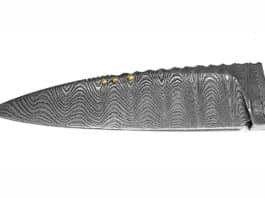
Knifemaking

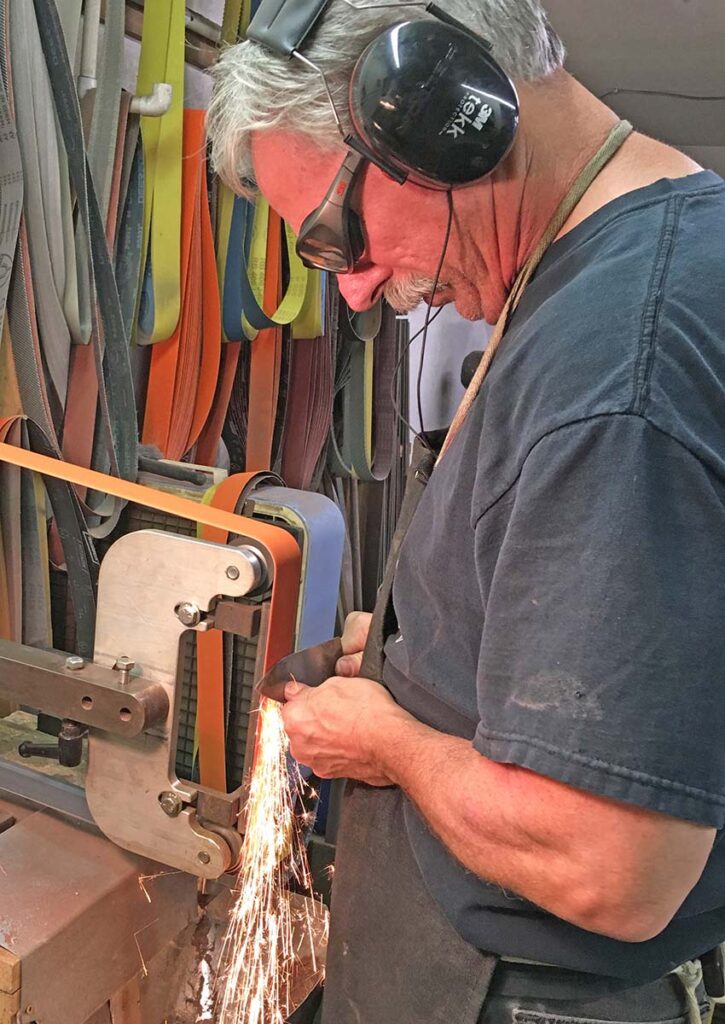
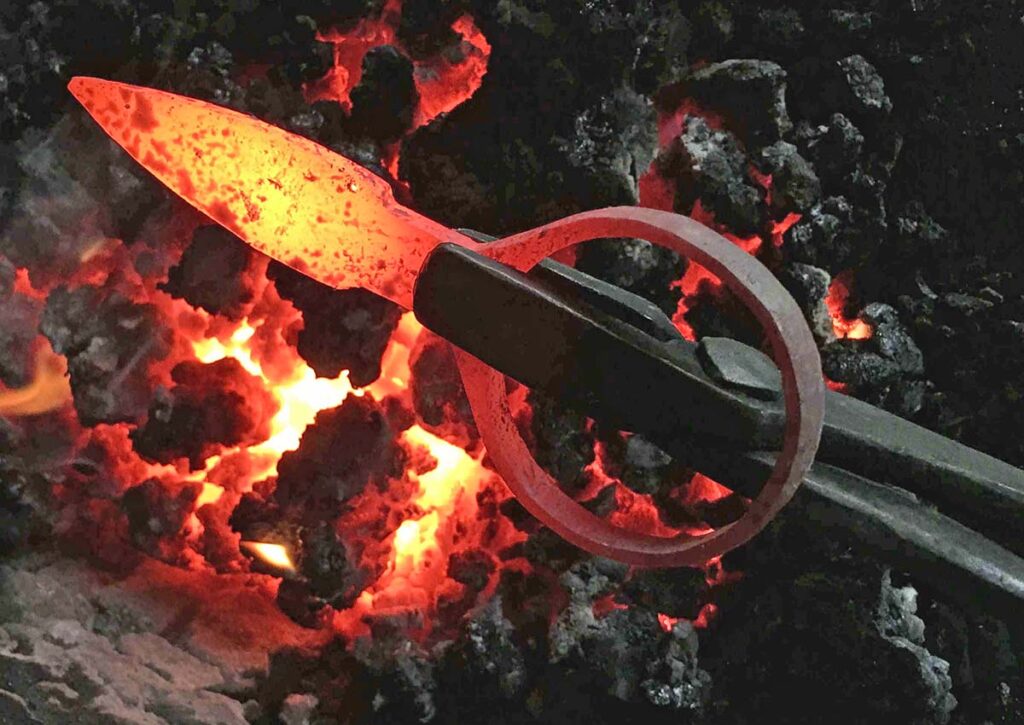
Knifemaking is the building of a knife, which includes the blade, handle and other accouterments. Blades are made by either removing metal from a steel blank via a grinder – known as stock removal – and the forging to shape of hot steel into a blade in the process known as bladesmithing. Other parts, including bolsters, guards, pommels, etc., are needed to complete the finished knife.

Featured Knives – – Knife Collecting – – Tactical Knives – – Survival Knives

Bad And Beautiful

Few Patterns Are As Stunning And Audacious As Daggers And Fighters. These Four Makers From Around The World Show What Elite Craftsmen Are Creating Today.

Knives with attitude always have been popular among many makers and cutlery enthusiasts, and, if you’ve ever been to a BLADE Show, chances are you’ve seen some eye-popping examples. Many have in-your-face themes, with daggers and fighters getting lots of love among them.

Wardog Fighter By Samuel Lurquin

The Wardog Fighter by Samuel Lurquin includes a handsome leather pouch sheath with logo by Jeremy Guillaume, a sandblasted-then-blued blade, a tight-waisted bird’s beak handle, and a dog tag with appropriate verbiage and logo. Overall length: 12.8 inches.

If Samuel Lurquin’s Wardog Fighter looks familiar, that’s because it is—it served as one of three cover knives for the June BLADE®. However, due to space requirements, we were unable to give the knife its just due in that issue, so we correct that oversight here.

Sam is an ABS master smith from Belgium who makes bullet-proof tactical fixed blades ticketed for extreme “rough ’n tumble” use beyond the call of duty. Sam’s English is somewhat limited, so we turned to Dave Ellis, proprietor of Exquisite Knives, who specializes in upscale cutlery from around the world. Dave is California’s first ABS master smith who has since retired from hammering steel to become a purveyor of fine custom knives. Dave’s overview of the Wardog is insightful. 

“Sam’s combat knife was designed to be very concealable, nothing flashy that sticks out! Twenty years discussing the needs of end users helped him design a knife to be used hard in the field,” Dave observes. “Rather than taking credit for the knife’s design, Sam instead deferred to the many experts when it came to ergonomics, concealment, and design to ultimately come up with this sleek fighter.”

The beefy clip-point blade is 7.5 inches to go with the 5.3-inch black G-10 handle. 

“I asked Sam if he considered this to be the perfect combat/field knife,” Dave states. “His response was quite sincere. He said, ‘There’s never just one perfect knife.’ Use dictates the design of each piece, and this design Sam hopes is one that he could stake his own life on. This is very important to Lurquin—that if all else fails, his knife will prevail.”

Dave explained the Wardog’s finish process: “The blade was sand blasted then cold gun blued. The bluing produced a forced rusting [patina] that Sam removes with steel wool. The blade is stonewashed for the final finish, one that will stand up to hard use.”  

Sam designed the thick, all leather sheath and had his friend, Jeremy Guillaume of 8 Ball Leather, make it. “It’s double welted and has double latches to keep the knife secured on many media—belts, backpacks and the like,” Dave concludes. “Sam felt that Kydex is too noisy, thus the use of leather.”

Commando Dagger By Joe Israel

Joe Israel offers his Commando Dagger with the smaller Shrike EDC knife. A big fan of the Fairbairn-Sykes dagger of World War II fame, Joe patterned the handle on that of the F-S classic. The Kydex sheaths are by Harry Savage.

One of this issue’s cover knives, Joe Israel’s Commando Dagger is born out of Joe’s intense fondness for the armed forces knives with a double edge. 

“I’m inspired by all the great military daggers like the Case V-42, Fairbairn-Sykes, Gerber Mark II—these knives have always fascinated me,” he observes. “I wanted to create something both beautiful and a bit sinister which, after all, is what I think daggers are.”

Though very stylish, Joe’s knife is meant to be used. 

“For the Commando Dagger, I start with 3/16-inch CPM 154 stock that I flat grind by hand and heat treat myself, including a liquid nitrogen cryo. The blade is 6 inches long and the overall length is 11 inches,” he states. “It’s then hand sanded to 3,000 grit and mirror polished.” 

The blade is sharpened on both sides. If the curvaceous handle smacks of a certain famous World War II combat knife, it is purely intentional. 

“I always loved the shape of the Fairbairn-Sykes handles and I try to emulate their elegant shape in my Commando Dagger,” he comments. “The knife is full tang with a brass guard that I pin and solder in place old-school style.” The scales are black linen Micarta® with blood-red G-10 liners secured with brass pins.

Joe supplies his knives with no-frills, all-business black Kydex sheaths, and also offers them in leather. “Harry Savage makes the sheaths for the daggers and he’s just great to work with,” the maker opines. “His work is always top-notch. The small knife in the picture accompanying this story is my Shrike EDC. It’s available in a variety of steels and handle materials. I offer Kydex and leather sheaths for my other knives, too.”

The Toothpick By Matthew Roberts

Matt Roberts chose ladder-pattern damascus for his Toothpick dagger because it complements the symmetrical blade profile, and the coffin-handle design for its simplicity and flowing lines.

Matthew Roberts is an ABS journeyman smith with a passion for forging. 

“I modeled the Toothpick after the Gold Rush daggers and Arkansas toothpicks of the 19th century,” he explains. “I have no knowledge whatsoever of historical knives and their dimensions. I made this because it looks vicious. Utility was an afterthought for this build.

“I forged the blade from 15N20 and 80CrV2 steels,” he continues. “I chose ladder-pattern damascus because it complements the symmetrical profile. The blade geometry is very acute with a full distal taper—the point is ground to near zero.” The Toothpick has a 7.25-inch blade length and is 12 inches overall. The blade is 1.2 inches wide at the widest and has about a .165-inch maximum thickness.

Matt chose a coffin handle design for its simplicity and flowing lines. The radius of the handle profile mirrors the blade profile. The handle material is African blackwood that Matt faceted heavily. 

“Blackwood seemed to be an appropriate choice because I wanted the blade to be the focus of the piece,” he notes. “Also, blackwood is a very heavy wood which helped bring the point of balance well into the handle.” The guard and spacer are 416 stainless. The spacer fluting is mirror polished.    

Matt chose a simple sheath to reflect the clean lines of his dagger. “It’s buffalo hide over bridle leather,” he states. “The hide has a matte finish and is very soft.”

Coffin Dagger By Julian Sacco

Julian Sacco’s Coffin Dagger features a W2 tool steel blade made via the stock-removal method and an unusual smoky hamon he chose for an “ominous feel.” The African blackwood handle is configured in what the maker calls an “old-school-coffin” style.

Julian Sacco’s dagger redefines the word sleek—and that only begins to describe the distinctiveness of his take-down-construction Coffin Dagger. 

“The inspiration for this piece came from seeing a lot of other makers do coffin-style bowie knives,” Julian relates. “I felt a shape like a coffin would fit really well on this dagger, as it’s an entirely mirrored piece all the way around. Essentially I wanted it to have an old look and feel to it and I think the coffin style fit that profile perfectly.”

The blade is ultra-slim and has a notable hamon.

“The blade is W2 tool steel and is done in the stock removal method,” he notes. “I don’t have much experience with hamons but, as per the theme of this dagger, I tried to create a smoky pattern to give it an ominous feel.” The knife has a 7-inch cutting edge and is 13 inches overall. “I wanted this to be more of a nimble and easy maneuvering piece,” Julian states, “somewhat like a stiletto dagger, but not quite.”

The grip’s modified wasp waist exudes creativity as well. 

“The handle is shaped entirely to look like an old-school-style coffin, which I think it resembles quite well. I wanted to have an aggressive look to the overall construction, which is why I shaped the pommel with such sharp lines,” he remarks. “To match the guard I kept those similar shapes and lines on the outside while smoothing the areas that would be gripped in order to make it comfortable for the user. The brass pommel and guard were an excellent choice as I knew they would patina in a way that would fit the overall rustic look and feel I was going for, while the African blackwood handle complemented that look exactly how I hoped it would. It perfectly fits the profile of an old coffin with its rich lines and bold grain, tying the entire theme of the piece together.”

Read More

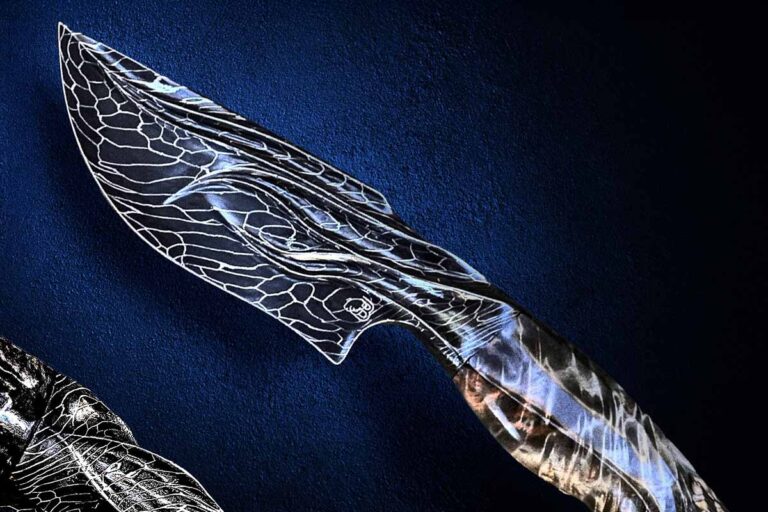
Cool Custom: Jordon Berthelot’s Integral Hunter

Jordon Berthelot marries two electric materials in one knife.

Jordon Berthelot achieves a hypnotic union of blade and handle materials in his integral hunter.

The blade is his HHH lightning damascus and the handle is cottonwood from Robswildwood.

“I used a wide variety of different bits and burrs with Foredom and Dremel tools to freehand carve the blade and handle,” he wrote.

Jordon Berthelot

“As my teacher Spencer Aplin always says, the most difficult part is deciding what to carve and how to give it the flow I want, which is so true,” Berthelot said. “I decided to incorporate the blade carving into the handle so it gave the whole piece a complete look, and also added some great purchase of the handle in multiple different grips.”

Berthelot Integral Hunter Specs
Blade length: 4.5”
Blade material: HHH lightning damascus forged from W1 tool steel/nickel rods w/4800 powder
Handle material: Cottonwood from Robswildwood
Overall length: 9”
Maker’s price for a similar knife: $3,500

See More Custom Knives:

91-Year-Old Knifemaker Murray Sterling is Still Going Strong

1

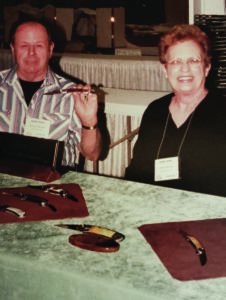
Murray Sterling has seen a lot and done a lot in his 91 years on this earth. For the past 30, he’s made a name for himself as a custom knifemaker. When approached about doing a story for BLADE® that focuses in part on his age, he agreed without hesitation. 

“I’m proud that I’m still here to talk about it!” he grinned. “I love to go out to the shop and do this stuff. I don’t have any real physical ailments and I’m steady enough. I can do just about anything—and I just love doing it. It’s therapy!”

In terms of making knives, Murray seems to be at his best these days. He attributes it all to experience, saying every time he makes a knife, he refines his knowledge base. “I can make 10 knives in a row, and I’ll learn something from one to the other,” he related. “A little different, and a little easier, a little better.” 

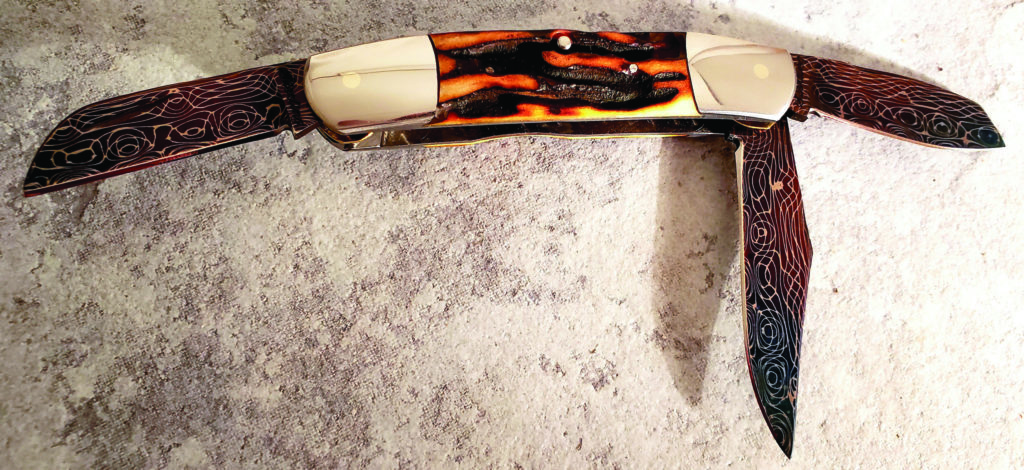
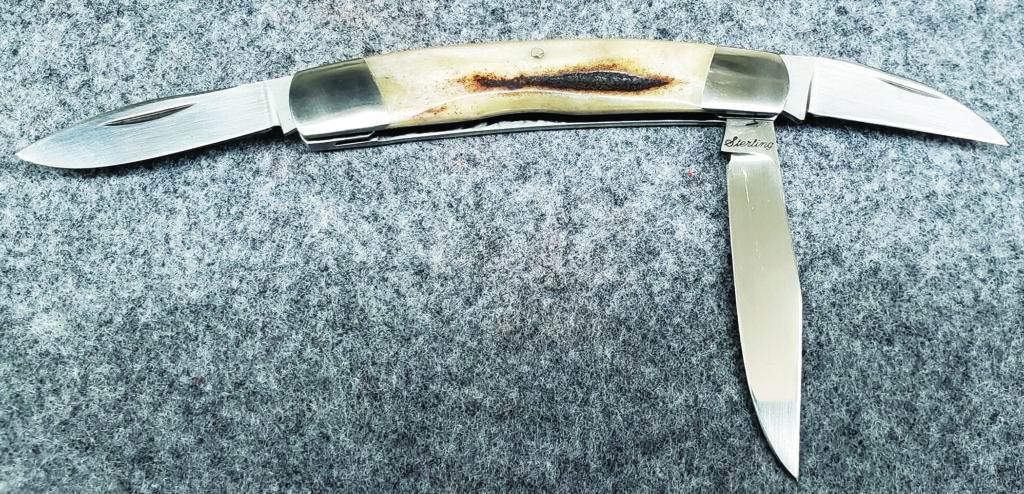
Murray made this stag stockman earlier this year.

One of the most interesting things about Murray’s career is that he didn’t even start making knives until after he retired, likening it to “a good retirement hobby.” Machining was his original career choice. He recalled that back in 1947, when he was a “late teenager,” he and his cousin decided they didn’t want to go to school anymore. Murray said, “Let’s go get a job,” and they drove to a nearby tool-and-die shop. “They hired both of us,” he remembered. “My cousin didn’t stay too long but I was there for about four years.”

Flash forward about a decade and Murray had gotten married and started his own machine shop. Being in southern California in the wake of World War II, he found himself doing jobs for big companies like Hughes Aircraft and Northrop Aviation. A typical job was machining hydraulics parts for aircraft such as the DC-7 and, later, the B1 Bomber. His work product spread out across the world.

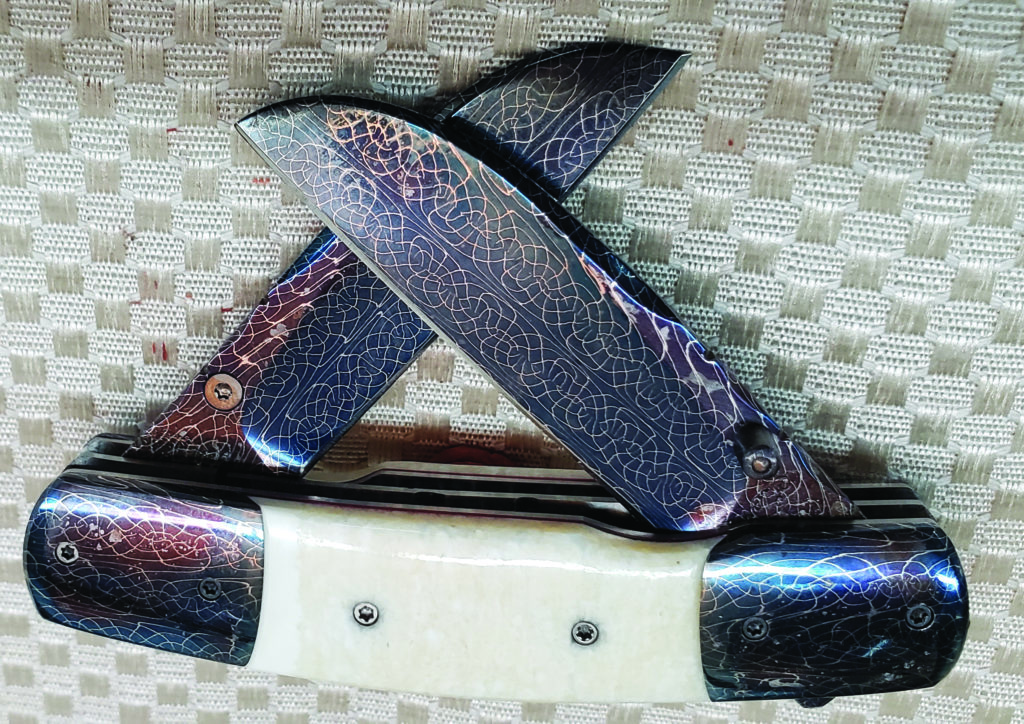
Pictured: Murray’s dual linerlock folder sports 2 3/8-inch blades of Doug Ponzio damascus, ancient walrus ivory scales and filework. Closed length: 3.5 inches.

“It was all about high quality and reliability,” he recalled of his formative days, and he carried that ethic forward over the following three decades of his successful business. In 1986, he decided to retire, but kept his shop in the family for a few more years. This was about when computer numerically controlled machines were becoming prevalent, so, Murray recalled, he figured it was time to get out of the business. Consequently, he closed up shop and brought some machines home to start making knives.

“I’m an old-school machinist. I started on old overhead belt-drive machines,” he recalled. “When I went out of business, we had some pretty modern machines, but not CNC.”

Murray doesn’t keep it a secret that he’s not a big fan of using CNCs or water-jet equipment, though he understands why makers use them and that the machines certainly make things easier. He explained that in his day all the machines had handles, but the trend continued toward “machines with buttons that can be programmed from 50 feet away.”

Murray’s dual mid-release auto features ATS-34 stainless blades, a 416 stainless steel frame and stag scales. Closed length: 4 1/8 inches.

“When I started working in that tool-and-die shop, there were about six tool-and-die makers in there,” he remembered. “When they came in in the morning, they’d bring out their files, a cup of coffee and a cigarette. It’s hard to imagine how much hand work they did in those days. They had an old lathe and an old mill, but most of the work was done on the bench filing and sanding.” 

As he reflected, he added that he admires some of the “out-of-this-world” knife designs that have resulted with the benefit of computerized, automated machines. “They do fantastic work, no question about it,” he allowed. “The machinery these days makes it much easier. If I was 20 years younger, I’d probably have one!”

FIRST KNIFE SHOW

His journey into the knife world began in 1977, when he ventured into the MGM Grand in Las Vegas for a knife and antique gun show. It was there he experienced his first custom knife show and bought his first custom knife—a coffin-handle folder from BLADE Magazine Cutlery Hall-Of-Fame® member Wayne Goddard. “That was when I got impressed with the work that these guys were doing with the equipment they had in those days,” he recalled.

Murray set out to learn knifemaking in 1989. Along the way, he had guidance and education from a lot of makers, as well as reading iconic books on how to make knives. However, he draws a distinction between that and actually learning the craft. He characterizes himself as mostly self-taught through a lot of trial and error and the determination to put in shop time.  

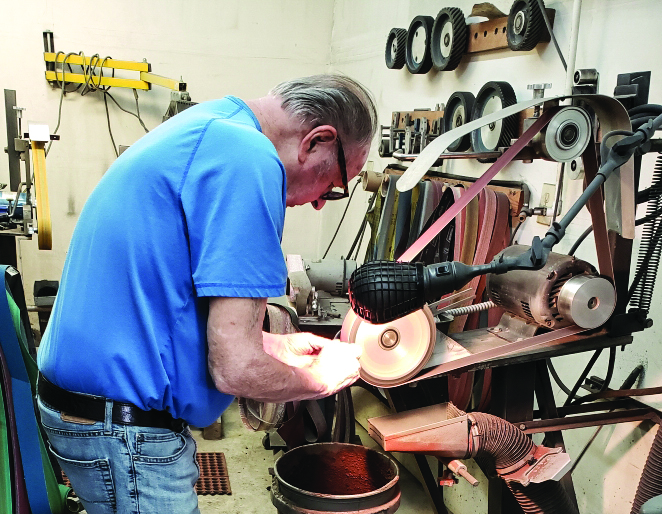
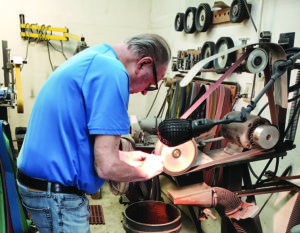
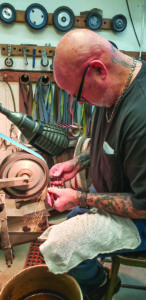
Murray profiles bolsters on his belt grinder.

“Hollow grinding is not something you can teach somebody,” he explained. “They can tell you how to do it and show you how to do it, but you have to put in the time and learn to get the feel for yourself. You can’t give the feel to somebody.” So, he burned up a lot of gloves, as well as his fingers sometimes, until he finally learned how to do it.

He made fixed blades until about 1991, when he talked to slip-joint master Jess Horn a lot about transitioning to making folders. Murray said that’s when he learned he needed to add a surface grinder to his shop. “I didn’t make really good folders until I got a surface grinder,” he allowed. “I learned a lot from Jess.”

That year, Murray also sold his first knife. By 1995 he had won his initial award—for best folder—at the Oregon Knife Collectors Association Show. He was on the map.

Murray made this stag stockman in 1999. Note the blade mark of his surname in cursive.

Over the course of the ensuing 25 years, he would go on to make and sell a wide variety of folders that runs the gamut of styles and mechanism applications, from traditional multi-blade slip joints to modern automatics and seemingly everything in between. His choice of blade steel is ATS-34 stainless, and a wide array of beautiful damascus forged by Mike Norris, Devin Thomas, Alabama Damascus or Doug Ponzio.

“I’ve never had a lot of luck selling wood handles, so I like a lot of stag, ivory and pearl,” he explained. He also uses acrylic to great effect. When he wanted to start doing inlay, Murray said, he turned to award-winning maker Tim Herman. “I wanted to do inlay and I called him—this must have been 15 or 20 years ago,” he recalled. “I’m still doing inlay the way he taught me, which is the hard way.”

As for mechanisms, he enjoys making several variations of locks including button, front, mid, rear and even dual locking liners. He also makes autos that feature bolster release, button release, mid-release, top release, frame release and most any release imaginable. 

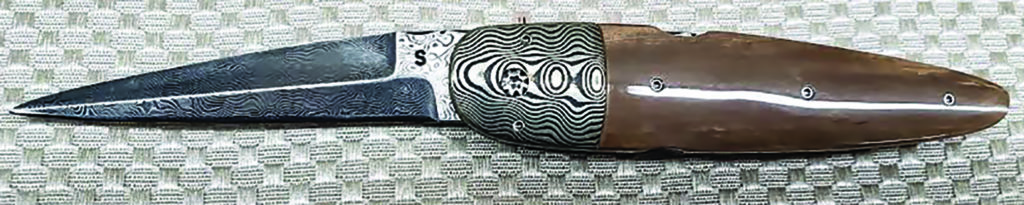
A double-ground damascus blade, a bolster of mokume gane and an ancient ivory handle highlight Murray’s folder. Note his “S” mark on the ricasso.

“They’re hot and cold,” he surmised of making autos. “Two years ago, I sold 10 right off the bat in Atlanta. Then the next year, they cooled off, so I went to something else. Every year you have to come up with something new and stay aware of the trends.”

In fact, the true problem Murray admitted to is, after making knives for 30 years or so, he must continuously come up with something new. Trends tend to go round and round, he explained, so what was hot 10 years ago will go away and then return.

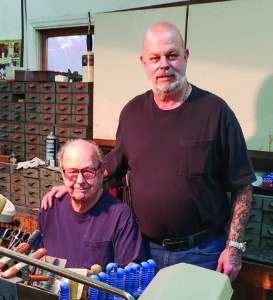
Nowadays, Murray goes to only a couple of shows each year, including the BLADE Show, with his 63-year-old son, Steve, who has started making knives the past couple of years. Murray admits that the shows are getting too long for him and he gets worn out pretty quickly.

“My son goes with me all the time or otherwise I probably wouldn’t go,” he noted. “I don’t go to the ICCE Show”—he’s been a voting member of the Knifemakers’ Guild since 2000—”because it’s a two-day drive and I just don’t think I could handle it.

CHANGING TIMES

When asked about what he’s taken note of as any drastic changes in the industry over all these years, he mentioned few things in particular. One, as mentioned, is the evolution of equipment across the board. “The quality of the knives back in the day was great, but the quality of the equipment today is 100 percent better,” he pointed out. “The gravers, the machines, even the belts you can get today—2,000-to-3,000-grit belts. You couldn’t get that 25 or 35 years ago.”

The other drastic change he’s noticed is the Internet, which he believes changed the industry in terms of selling knives. While the real knife collectors still want to see and know the maker, he’s noticed a lot of impulse buyers on the Web.

Also, he added, “Instead of hundreds of custom knifemakers, today there’s probably thousands of them. They’re using water jets to cut out the blanks and using CNC machines—there’s a lot of production, it seems like. They’re still custom made,” he qualified, “but handmade is kind of going out the window.”

However, as usual throughout our conversation, Murray hesitated to grind for too long on makers who use state-of-the-art equipment, concluding, “There’s a market for everything. High-dollar, low-dollar, mid-dollar—two-dollar knives and two-thousand-dollar knives. There always seems like there’s a buyer today.”

“Hollow grinding is not something you can teach somebody,” Murray explained. “They can tell you how to do it and show you how to do it, but you have to put in the time and learn to get the feel for yourself.” He continues to get that feel on a regular basis in his grinding room.

For more information on Murray Sterling and his knives, contact him at Dept. BL10, 693 Round Peak Church Rd., Mount Airy, NC 27030 336-352-5110 fax 336-352-5105 [email protected], sterlingcustomknives.com.

Why is CPM-154 So Popular with Custom Knifemakers?

john bartlow custom knifemaker
In CPM-154 stainless, John Bartlow said he found a steel that allowed for a flawless finish. At the grinder here in his shop, Bartlow uses the steel on his utility fixed blade equipped with his trademark line cutter in the ricasso. (SharpByCoop knife image)

stag lockback custom knife
A veteran of 30 years in the Knifemakers’ Guild, John Bartlow started out using 440C stainless steel for his knives, moved to ATS-34 and today has graduated to CPM-154. Raphael Durand uses the latter steel on his stag lockback. (SharpByCoop image)

Based in Sheridan, Wyoming, by way of Tennessee, 30-year Knifemakers’ Guild member John Bartlow uses CPM-154 for his bird and trout and hunting knives. When Bartlow first started making knives, he was also a hunting outfitter.

As a result, he gutted and skinned a lot of animals on a weekly basis. Having many of his guides use his knives, he got a lot of feedback over the years about design and function.

“I started out with 440C stainless steel a million years ago,” Bartlow remembered. “I quit that nearly 20 years ago and jumped to ATS-34 stainless and used it for years and years.”

He said that about a decade ago he started to become frustrated with the quality of the ATS he was getting. There weren’t major structural problems like chipping or breaking, but there were very subtle issues Bartlow observed under 10-to-12-power magnification.

“My customers never noticed it but it bugged me,” he continued. “I was trying to get some finishes in that stuff —and I was buying through normal channels from several suppliers—but when I would go to finish it, once in a while I’d get this little area that looked like it had pits in it, or it kind of had a little ‘road rash’ that I could not get rid of.”

He approached other makers about it at the time and they said they’d seen the same thing. That motivated him to jump ship to CPM-154, he said, which is very much a sister steel to ATS-34 and 154CM.

“They are closely related on the family tree of steel,” he said. In CPM-154, he found a material that allowed for a flawless finish. With the powder metallurgy process and the accompanying uniform distribution of carbides, it eliminated the “road rash” issue.

david sharp custom knives
Here grinding a blade in his shop, David Sharp said CPM-154 exhibits excellent edge retention, sharpenability and corrosion resistance.

Custom maker David Sharp uses CPM-154, including on his reproductions of the knives of BLADE Magazine Cutlery Hall-Of-Fame© member Bob Loveless. Since Sharp began building knives in 2010, he has specialized in fine-finished fixed blades.

“A large percentage of my knives have a very fine finish, polished or over-1200-grit hand satin,” the maker based in Hesperia, California, remarked. “CPM-154 is very fine, so when it’s finished to a high level you don’t see the steel’s grain.”

He added that CPM-154 is not quite as abrasion resistant as other of the relatively newer steels, so obtaining a fine finish is a bit quicker. He said that though steels are an oft-discussed topic online, he very seldom has customers request a steel type or brand, which could be seen as a testament that his choice of CPM-154 is a good one.

“I have not noticed a downside,” Sharp continued. “The upside is the finish and that it is, in my opinion, a balanced steel. For the majority of users it exhibits excellent edge retention, sharpenability and corrosion resistance.”

Learn More About Making Knives

book about making knives

How To: Marketing Knives On Social Media

How to get the most from your knives on social media platforms.

It’s immediate. It’s visual. It’s effective.

These are just a few of the attributes that describe the impact of social media on modern life. Whatever the topic, some form of social media allows participants, observers, critics and commentators to weigh in, expressing their views and—of course—buying and selling.

For instance, the platform of Instagram has become a prominent factor in the marketing of many custom knifemakers, purveyors and collectors, and the reasons for the phenomenon are varied. They center around the immediacy, visual quality and effectiveness in showcasing and selling, developing a following, and generally in raising a knifemaker’s profile in the all-important marketplace. Setting up an Instagram account is simple, cost-effective and for many generates the desired results.

“Instagram and other social media platforms are an excellent way to put yourself in the public’s eye,” noted purveyor/ABS master smith Dave Ellis of exquisiteknives.com. “Through good knife photography, clear and precise descriptions of the same, and reasonable follow-up you can publicize your products as well as introduce your website. TikTok is rapidly gaining popularity, and YouTube is an excellent way to achieve your goal of spreading the gospel of custom knives.”

“I do videos and tutorials and just basically little blurbs of me building a knife,” Kim Breed commented. “Tutorials let people know this is why I charge what I charge, the little steps that you do when you’re making a knife.” ABS master smith Steve Randall grinds a blade in his shop. (Steve Randall image)

Kim Breed, knifemaker and BLADE® field editor, uses Instagram to generate sales and promote awareness among the buying public while also offering some insights into the knifemaking process. The value of experience is levered through the visual, and everybody gains.

“I do videos and tutorials and just basically little blurbs of me building a knife,” Kim commented. “I show the blade when I’m finished grinding and then the final product. That’s when it is put up for sale. Tutorials let people know this is why I charge what I charge, the little steps that you do when you’re making a knife. For example, when you’re forging you can show that process.”

Breed, whose videos are available on Instagram at kimbreed1911, advises that would-be Instagram users monitor their posts, beware of hashtags that are too generic, and frequently assess the return on their investment of time.

“A lot depends on the hashtags,” he said. “People can copy stuff, come up with a fake account, or hack into anything. Once you start, you’ve got to stay on it. I’ve gotten messages that don’t make sense, and you can catch situations where people have set up fake accounts and used your pictures to get people to send money first when they are scamming. Check every hashtag you do and make sure it’s going to a knife site. That was something I’ve picked up in the five or six years I’ve been doing Instagram.”

For those who choose to display their wares on Instagram or any other social media, Ellis recommends, “Scammers are everywhere, so do your due diligence and look deeper into anything that looks too good to be true. Haters are very common, so expect some negative comments and take them in stride. Getting into a heated battle only fuels the folks that like to fan the flames, so keep a cool head and remember that your goal is to promote the use and collecting of custom knives as an art form and tool.”

Knife Makers & Knife Collectors Connect

ABS master smith Neels van den Berg, who runs Black Dragon Forge based in South Africa, keeps his Instagram use in perspective. There are obvious positives and potential pitfalls, but he sees an incredible opportunity to raise visibility.

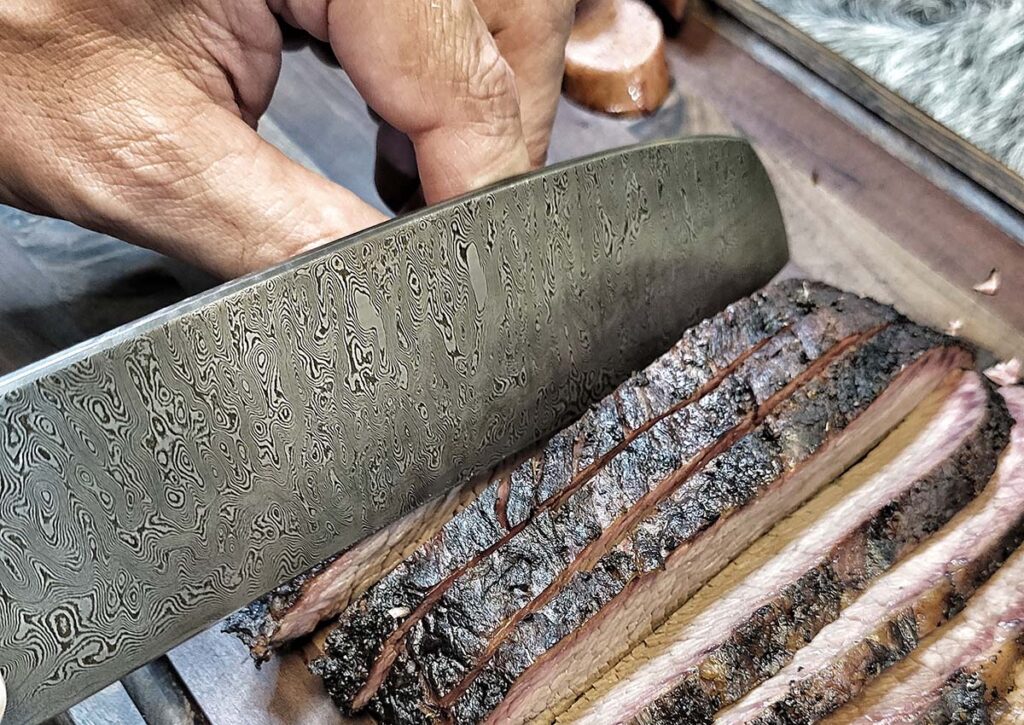
Showcase your knives as tools for culinary use, outdoor adventures or collectible art. The BBQ Chef’s Knife by Matt Williams has a 9-inch blade of 400-layer damascus forged from 1084 carbon and 15N20 nickel-alloy steels. Overall length: 15 inches.

“Instagram is a free platform designed primarily for sharing photos and videos to foster social interaction,” Neels commented. “Users can reasonably expect to engage with its 2.11 billion users worldwide by uploading and interacting with content through likes, comments and direct messages [DMs#]. However, it’s important to understand that Instagram’s core purpose isn’t sales, it’s connection. Social media users should approach the platform as a tool for storytelling, networking, and building a community rather than expecting it to function as a direct sales engine. Understanding this distinction is critical when crafting a marketing strategy for your business.”

According to van den Berg, Instagram can amplify a knifemaker’s reach, create brand awareness and build credibility, which may lead to sales. But these are byproducts of fostering genuine engagement and building relationships through the platform.

“For a knife business or hobby, this means showcasing the passion and craftsmanship behind your work,” Neels remarked. “People will follow you for who you are—your skills, values and story—not just for what you have to sell. Social media users are often turned off by hard sales pitches, so the focus should be on creating content that resonates emotionally or intellectually with your audience. While sales might be part of the eventual outcome, it shouldn’t be the primary intent. Instead, aim to captivate your audience by showing the process behind your craft: the highs and lows, the struggles and triumphs, and the sheer joy of creating. When you build this level of connection, your products naturally become a way for followers to support you rather than a commodity you’re trying to sell.”

Videos of forging are another great way to demonstrate how knives are made and build interest among viewers. (Lin Rhea image)

The secret to Instagram and social media success is certainly influenced by the delivery. Setting up a presence and presenting a perspective on the maker’s work and creative journey do make a difference.

“Users should expect to display their point of view in a clear and cohesive way,” related ABS master smith Nick Rossi of Vassalboro, Maine-based Nick Rossi Knives. “That means who they are, what they make, and why they make it. Social media is a relatively efficient way to project that to a potential customer. Sales and cultivating a customer are byproducts of that action.”

Setting Social Media Goals

Finding the right combination of social media outlets depends on the knifemaker’s perspective. Analyzing what the maker hopes to achieve drives the investment of time and attention.

“The best social media platform depends entirely on your goals, audience and the type of content you want to share,” van den Berg observed. “Each platform serves different purposes and attracts unique demographics, so a thoughtful combination works best.

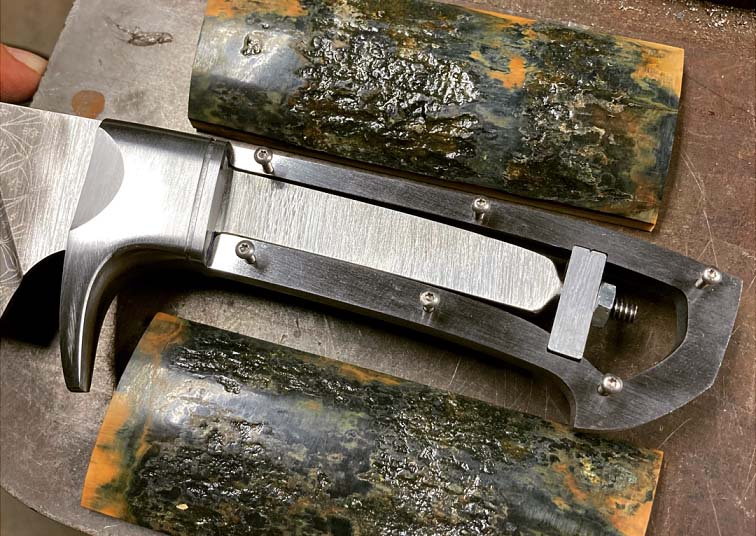
According to Neels van den Berg, using in-progress shots can sidestep direct visual triggers while still highlighting a maker’s work. In his version of frame handle construction, bladesmith Salem Straub uses a threaded fastener in an internal slot in the frame to mechanically lock all the parts together tightly. (Salem Straub image)

“I have three primary goals on Instagram: 1) Showcasing my craftsmanship—I aim to highlight the intricate details and artistry of my creations, emphasizing their quality and uniqueness. This draws attention to the skill and effort behind each piece, making my work stand out in a crowded marketplace; 2) Building my brand identity—My goal is to establish a recognizable and authentic brand that resonates within the knifemaking community. This isn’t about a logo or maker’s mark, it’s about the story, values and personality behind my work; 3) Engaging with my community—Social media is about relationships. By actively participating in discussions, responding to DMs and comments and sharing insights, I foster a sense of community among knife enthusiasts and artisans.”

To achieve his goals, Neels relies on high-quality visual content, educational posts, consistent branding, and authentic interaction through responses to comments or joining a relevant conversation.

Ellis commented, “For retail sales, I prefer TikTok and YouTube. By utilizing every media that you can, your products are constantly put in front of not only the buying public, but you are also promoting yourself to show promoters and attendees.” Instagram and Facebook are the priorities for Rossi “because that’s what most of my customers use.”

He added, “I only have time to manage two platforms on top of being a professional craftsperson. For collecting and very niche topics, Facebook groups provide a wealth of knowledge. I have a private Facebook group for only my online and in-person students that has worked very well for advice and troubleshooting.”

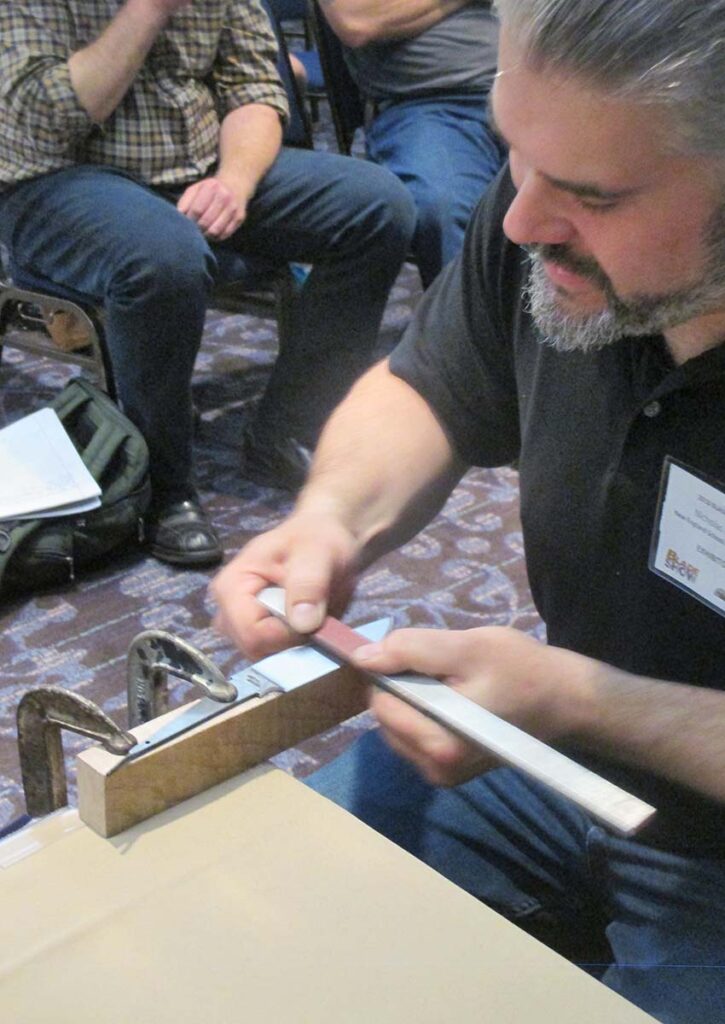
 “I want people to think of me as a skillful knifemaker with a focus on forging, a maker of interesting and innovative knives, and an experienced educator,” noted ABS master smith Nick Rossi, here giving a class on how to hand rub a blade to a satin finish in a BLADE University class.
“I want people to think of me as a skillful knifemaker with a focus on forging, a maker of interesting and innovative knives, and an experienced educator,” noted ABS master smith Nick Rossi, here giving a class on how to hand rub a blade to a satin finish in a BLADE University class.

Variations of content help keep social media posts entertaining and business related, and encourage a possible exchange of information.

“We live in a world of short, informative, and, let’s face it, lively. Clicks mean interaction, potential video formats,” Rossi observed. “Attention spans have grown shorter, and social media users have come to expect shorter, action-packed video. If you are going to have narration, subtitles are important. Users want the option of viewing without sound. Choosing popular songs may help your videos pop up in the algorithm more readily. I want people to think of me as a skillful knifemaker with a focus on forging, a maker of interesting and innovative knives, and an experienced educator. Each post focuses on one of those three things.”

Social Media Do’s And Don’ts

An awareness of certain standards provides knifemakers with extra assurance that their posts meet the chosen platform’s guidelines and minimize the risk of being flagged or taken down. Though Breed said he has done well with Instagram sales, the limitations of filters can have negative effects on viewership.

“Filters can hurt a knifemaker, so before you might get 100,000 or 200,000 views,” he said, “but you can’t do that if you picture a knife as an item of war, and watch out what you say about politics and whatever. Stay away from there.” Ellis agrees. “Stay away from animals or any violent visuals when posting,” he added. “Stick to the art or utilitarian uses for custom knives, and you should be OK.”

For van den Berg, compliance and creative communication are essential to success when visualizing or discussing knife-related topics on social media.

“The key is to reframe how your work is presented, ensuring that it aligns with platform guidelines while still engaging your audience,” he remarked. “Avoid flagged terms like ‘knife,’ ‘blade,’ or ‘weapon,’ and instead use neutral or creative alternatives such as ‘tool,’ ‘craft,’ or ‘functional art.’ These terms emphasize the artistry and utility of your pieces, shifting focus away from their potential as weapons. Repositioning your knives within broader contexts is another effective tactic. Showcase them as tools for culinary use, outdoor adventures or collectible art. Using in-progress shots, close-ups of handles, or images that emphasize materials and craftsmanship can sidestep direct visual triggers while still highlighting your work.”

Another knifemaker option is to place the work in context.

Knifemaker/BLADE® field editor Kim Breed advises that would-be Instagram users monitor their posts, beware of hashtags that are too generic, and frequently assess the return on their investment of time.

“To further circumvent restrictions, use storytelling and indirect messaging,” Neels encouraged. “Instead of explicitly saying, ‘Check out my new knife,’ share the inspiration behind the design or challenges faced during its creation. Platforms like Instagram and TikTok, which favor storytelling and visual diversity, are ideal for this approach. Additionally, private groups, email newsletters, or niche forums provide safer spaces to share uncensored content with your core audience.”

Reaching as many followers, shoppers, and potential buyers as possible, custom knifemakers who take advantage of social media routinely find that the reward is in lock step with the attention and time devoted to originate and maintain a strong presence. For those who manage it well, social media exists in the present and will remain a formidable asset in the future.

More Knifemaking & Knife Collecting:

American Bladesmith Society Announces 2014 Hammer-In Schedule

One of the things that makes the knife industry such a pleasure to be involved with is artisans, bladesmiths and knifemakers in general sharing their knowledge, teaching people their craft and passing down the handcraft from generation to generation. 2

Some of the best at this are the members of the American Bladesmith Society, as well, of course, as those in the Knifemakers’ Guild and countless other knife clubs and organizations. The ABS claims to have had record attendance at its hammer-ins across the country in 2013, and has already announced its 2014 Hammer-In Schedule. Click here for a Complete Knifemaking Collection of books and digital downloads to get you started in your knifemaking endeavors. And without further ado:

ABS Hammer In Schedule for 2014

March 7, 8, and 9, 2014
Spring Great Smoky Mountain Hammer-In
Haywood Community College, Clyde, North Carolina
ABS Contact – Bill Wiggins (828) 226-2551 or Email [email protected]

April 26 and 27, 2014
Spring Piney Woods Hammer In
Texarkana College – Moran School of Bladesmithing, Washington, Arkansas
ABS Contact – BR Hughes (903) 838-0134 or Email [email protected]

June 2014
ABS Youth Hammer-In
Smoky Mountain Knife Works, Sevierville, Tennessee
ABS Contact – Houston Price (865) 397-0053 or Email [email protected]

July 11, 12, and 13, 2014
New England Hammer-In
New England School of Metalwork, Auburn, Maine
ABS Contact – Mace Vitale (203) 457-5591 or Email [email protected]

August 22, 23, and 24, 2014
Mid America Hammer-In
Miami County Fairgrounds, Troy, Ohio
ABS Contact – Butch Sheely (419) 832-5801 or Email [email protected]

September 13 and 14, 2014
Fall Piney Woods Hammer-In
Texarkana College – Moran School of Bladesmithing, Washington, Arkansas
ABS Contact – BR Hughes (903) 838-0134 or Email [email protected]

October 4 and 5, 2014
Heartland Hammer-In
Washburn Institute of Technology, Topeka, Kansas
ABS Contact – Steve Culver (785) 484-0146 or Email [email protected]

October 2014
California Hammer-In
College of the Sequoias, Tulare, California
ABS Contact – Mike Vagnino (559) 636-0501 or Email [email protected]

October 18 and 19, 2014
Smoky Mountain Fall Hammer-In
Haywood Community College, Clyde, North Carolina
ABS Contact – Bill Wiggins (828) 226-2551 or Email [email protected]

The Soft-Backed Blade

For Maximum Toughness Without Sacrificing Edge Performance, Consider A Soft-Backed Blade.

For centuries, smiths from various cultures recognized the necessity of blades that do the job without critical failure. Some Eastern cultures specialized in differential hardening, particularly the Japanese. European cultures tended to forge weld a hardenable edge to a softer spine. In each case, the end result is an edge hard enough to cut well and a spine tough and resistant to breaking.

One of the measures of a modern knifemaker is the willingness and ability to successfully navigate the certifications processes of the world of knives, such as the American Bladesmith Society’s (ABS) journeyman and master smith certifications. Similarly, one measure of a knife blade is its ability to perform various tasks that put its edge geometry and heat treatment to the test. 

If you’ve been around the knife industry any time in the past 40 years or so, you’ve no doubt seen stories of blades that demonstrate edge holding ability that also have the strength and flexibility to bend without breaking. The key to this kind of performance is for the blade to have a hard edge and a soft back. Pardon the pun, but let’s break that down a bit.

First things first—a knife must cut. One key to premier cutting performance is a well-hardened edge. A properly hardened edge comes from the use of steel with adequate carbon, brought to the proper hardening temperature, quenched in the proper quench medium, and tempered to the proper hardness.

Each of these variables has an impact, but at the end of the day if the maker does things right, the edge of a well-performing blade will be hardened and tempered martensite in the 58 to 60 HRC Rockwell hardness range, plus or minus a point or two depending on geometry. If the edge is left too soft, the blade will not cut as it should.

Shawn Ellis originally learned the edge hardening process from ABS master smith Jim Crowell in the early 1990s when Jim—here at the grinder—demonstrated edge hardening using an acetylene torch. (Jay Morrissey image)

But what about the blade’s spine? Does it need to be as hard as the edge? The answer is “it depends.” Hardness as a metallurgical property is directly opposed to toughness, in that the harder the blade the more brittle it is. At the same time, an unhardened blade of annealed steel is very difficult to break but won’t hold an edge. If the maker hardens the blade fully from edge to spine, the knife will be more likely to break under chopping or bending loads.

Let me talk about “more likely” in this case. Are you more likely to be struck by lightning or bitten by a shark? As it turns out, you’re about 7.5 times more likely to be struck by lightning than bitten by a shark, but the odds of being struck are only 1 in 500,000. Either way, neither is very likely. I state that because while it is empirically true that a fully hardened blade is “more likely” to break than a blade with a soft back and hardened edge, if the maker does the heat treatment properly and the user uses the blade properly, either will perform very well with a very low risk of catastrophic failure.

Soft-Backed Bennies

Even if the overall risk of breaking in normal use is small, it still makes sense that some makers want to chase that last bit of performance by taking advantage of the strength of the soft-backed blade. So what does a soft-backed blade do? What are the benefits? By hardening the edge but intentionally softening the spine, the blade is more resistant to breaking when subjected to extreme force. This remains true whether the force comes to the blade parallel as in chopping or perpendicular as in bending.  

ABS journeyman smith and past Forged in Fire champion Shawn Ellis is a proponent of the soft-backed blade. He originally learned the edge hardening process from ABS master smith Jim Crowell in the early 1990s when Jim demonstrated edge hardening using an acetylene torch. 

He heated the edge only, quenched the blade, and then used the torch to draw the temper back. To temper, he started with the torch at the spine and used a wet rag to keep the edge cool. When he was finished, the edge was a light bronze and the spine was blue.

Even though that was quite a few years ago, the method Crowell taught Ellis remains viable. Heating only the edge  leaves the spine soft and annealed but transforms the edge into the tempered martensite required for cutting performance. Using the torch afterward to “blue back” the blade relieves any internal stresses that may result from heating only the edge to the critical temperature, that is, to a non-magnetic state. 

Ellis found that heating the blade at least a third of the way from edge to spine resulted in better performance. Subsequently, he switched to heat treating in a forge, and then later in an oven. 

While it’s possible to edge harden with a forge or an oven, the methodology changes. Edge hardening in this way results in a martensitic edge and a spine that retains the microstructure it previously had. If the blade was forged and normalized, the spine would be soft pearlite. If the blade was ground from bar stock, the spine would be spheroid carbides.

Another way to achieve a hard edge with a soft back is to quench the edge only. You can bring the whole blade up to temperature in a forge or oven, and then place only the edge of the blade in the oil for hardening. This is the method currently taught at the ABS schools. 

In this case, you need enough oil volume to cool the steel properly, so you can’t just fill your quench tank with oil to the half-inch level. Instead, use a limiter plate to keep the edge at the right depth while allowing the tank to have an increased volume of oil. You rock the blade in the oil in such a way that the edge is quenched properly while the spine cools slowly. 

The slow cooling of the spine results in a pearlite microstructure, while the quenching of the edge results in martensite. The result is again a hard edge and soft back, and a “blue back” draw is again recommended. Blades that are edge hardened are resistant to breaking, though the soft spine may bend and stay bent.

The final way to achieve a soft-backed knife is the most difficult but results in the highest performance. In this method, the blade is hardened completely, with the whole blade up to critical temperature and the whole blade quenched fully. After regular tempering in the oven, the blade is then torch tempered on the spine. 

In this scenario, the spine is pushed past blue all the way to gray, but not to the point where it starts to show heat color. Essentially in this case, you’re applying differential tempering rather than differential hardening, adding heat in the 650-800°F range to the spine only, resulting in highly tempered martensite. Since you’re working with higher temperatures, extra care must be taken to keep the edge cool by keeping it immersed in water or wet sand.

ABS master smith Scott McGhee’s Mamba damascus fighter features forge-finished flats with bronze fittings and a koa wood handle. He prefers 1075 carbon steel and uses two propane torches to draw the spine evenly, keeping the edge cool in wet sand.

ABS master smith Scott McGhee teaches the Introduction to Bladesmithing class at Haywood Community College in Haywood, North Carolina. Students learn from McGhee how to make a knife that will pass the ABS performance test using a full quench and a torch draw. He prefers 1075 carbon steel and uses two propane torches to draw the spine evenly, keeping the edge cool in wet sand.

STRUCTURAL RESULTS

I asked metallurgist Larrin Thomas for insight on the structural results of the different edge hardening approaches. According to Larrin, “When it comes to Rockwell hardness, torch tempering a fully hardened blade to 650-800°F results in hardness in the Rockwell hardness range of 45 to 55 HRC, depending on the steel and the time spent at the tempering temperature. Slow cooling the spine by quenching the edge will result in soft pearlite similar to air cooling during normalizing and grain refining. This puts the spine in the range of 20 to 40 HRC, depending on the steel. Some steels have such high hardenability that they will partially harden during air cooling, such as oil quenching steels O1 or L6, and may even reach 60 HRC if the cross section is thin enough.

“The softer the spine, the more resistant the blade is to breaking but the more likely it is to take a “set” during bending. In other words, less bending of a softer spine would be required for the blade to stay permanently bent. The ideal condition would be one where the steel has sufficient hardness to avoid staying bent but sufficient toughness where it will not fracture. This combination of properties is best achieved by a full quench and a spine torch temper.”

For many years now the certified smiths of the ABS have demonstrated competence at these processes. If you want to climb the ladder of knifemaking skills and certifications, or if you want to climb the ladder of high performance hard-use knives, the heat treatment of a soft-backed knife is a skill you’ll want to master. If you’re the kind of knifemaker or the kind of knife buyer who wants 100 percent of the toughness a blade can offer without sacrificing edge performance, consider a soft-backed blade.  

Read More

Advertisement

Must Read Articles

Read this before you make a knife

Knifemaking 101 – Read This Before You Make a Knife

  by Wayne Goddard My experience has taught me that there's nothing like digging in and getting started. I've often said the hardest part of the...
how to forge damascus steel

How to Forge Damascus

Advertisement
Advertisement