Buyer's Guides

You’re looking for a new knife in a certain style – we’ve got recommendations on the best blades for every price point.

Gerber Knives: The Blades That Made It Legendary

0

From kitchenware to commando companions, we go over how Gerber Knives became legendary and some of their all-time best offerings.

Gerber Legendary Blades, often known as just Gerber among the knife community (not to be confused with the equally legendary makers of fine baby foods and formula), is a name that you’ve probably heard. It’s hard to go into any outdoor store without finding one of its many blades.

But how much do you really know about the company?

Today, we’re going to do a deep dive into this iconic knifemaker that has helped shape the knife industry for so many years. We’re going to cover everything from its history to its new and exciting premium knife offerings, along with all the truly legendary knives it’s released along the way. 

Let’s get started. 

History of Gerber Knives

Cooked Up In The Kitchen

In the early 1900s, the Gerber family began their corporate climb with a simple advertising firm in Portland Oregon. As a promotion, Joseph Gerber sent out 24 sets of handmade kitchen knives to clients during the holidays. 
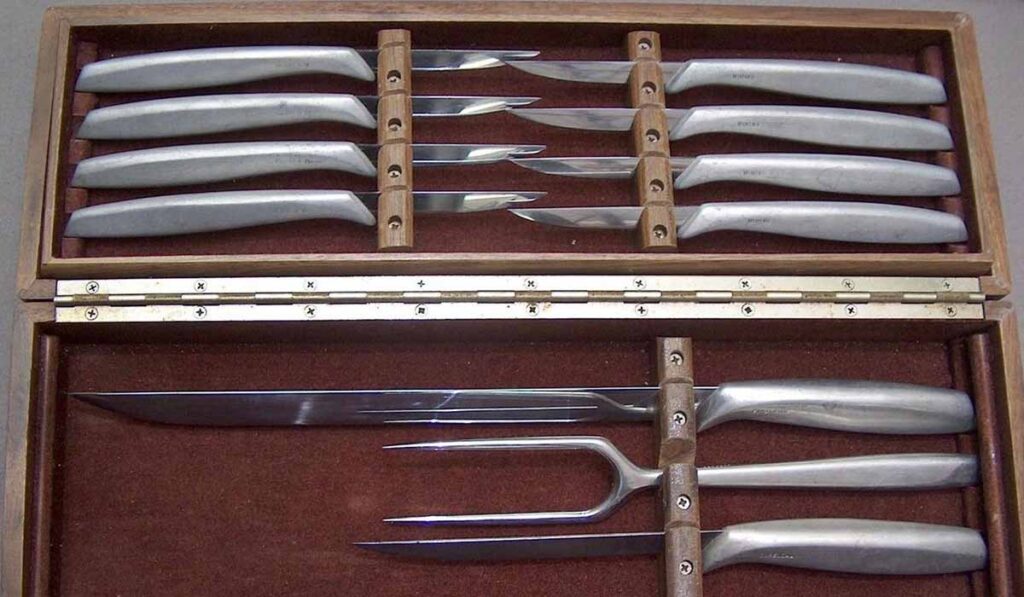
Vintage Gerber Kitchen Knife set
Vintage Gerber Kitchen Knife set. Photo: WorthPoint

These proved so popular that Abercrombie & Fitch, then one of the largest catalog retailers, requested more for its 1939 spring edition. Gerber Legendary Blades was then founded shortly after. 

Originally, Gerber focused on camp, kitchen, and carving knives, and did brisk business around the holidays and wedding season in the spring when many registries included a new kitchen knife set for happy couples. 

Off To War

Following WWII, Gerber expanded its focus and began to work on knives for military contracts, including the now-legendary Mark II fighting knife. Al Mar, a prolific knife designer, added some serrations to the blade allowing it to be marketed as a survival knife as well. 

Since then, the Mark II has been discontinued in favor of the Prodigy and LMF II knives, which are both in service with various militaries. The LMF II in particular currently sees services as an aircraft survival knife. It features a specially insulated handle so that downed pilots can cut their way free of airframes without risk of an electrical shock, even if they have to cut through the fuselage of the aircraft. 
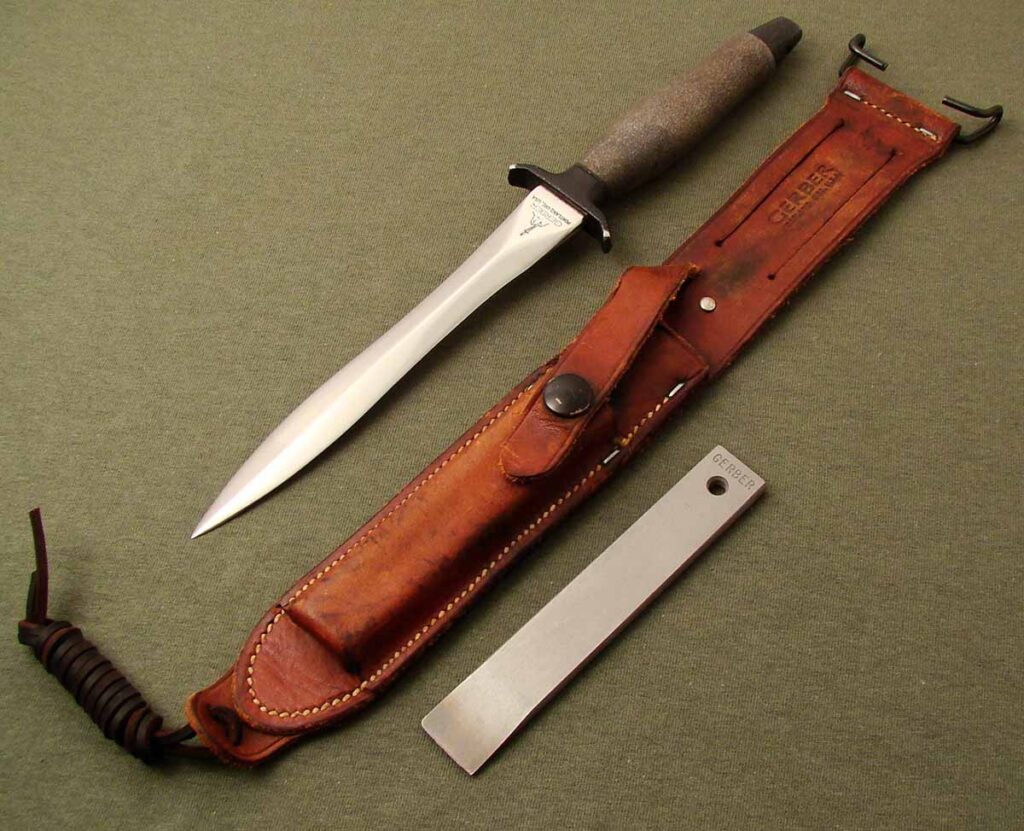
Vietnam Era Gerber Knives Mark II
Vietnam Era Gerber Knives Mark II. Photo: Sharpinvestments.net

Other Gerber knives such as the often-imitated LST lockback folder changed the shape of the knife-making landscape forever. The 06 Auto was, and is, hugely popular with U.S. and NATO forces in the Middle East and has earned a reputation as a tough piece of gear that gets the job done. 

Into Every Niche

Gerber has also collaborated with a wide variety of knife makers and designers, as well as police trainers, special forces operators, and world-class martial artists to design hard-use knives that meet any need in the field. 

One of my personal favorites is Gerber Guardian, a “boot knife” designed by Bob Loveless—the man who popularized the hollow-ground drop-point blade—and is generally considered one of the most innovative knife designers to ever live.
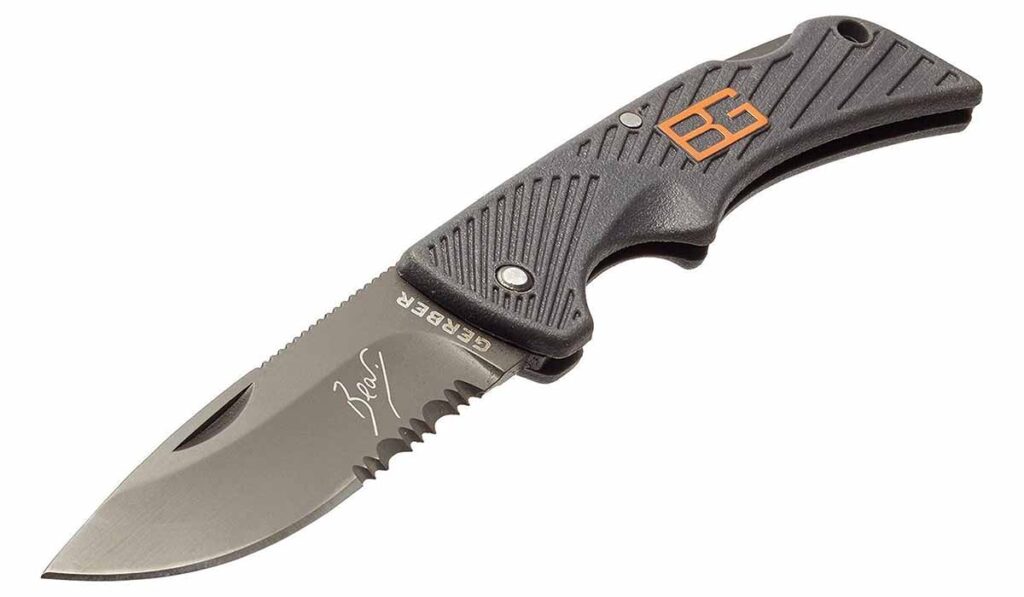
Gerber Bear Grylls compact Scout Knife

Another, now collector’s item, is the River Master, a collaboration with legendary knife maker Blackie Collins. The River Master is an aggressive dive knife designed to cut through fishing lines, nets, vegetation, and other obstacles that can spell doom for a diver—particularly in murky water. 

Blackie Collins, incidentally, gave us the assisted-opening spring mechanism that so very many knives today use, including the 06 FAST, the more budget-friendly, non-automatic version of the 06 Auto. Not to mention he was the founder of a little publication called American Blade (i.e. Blade Magazine).

There’s also the Bear Grylls collection, which includes the top-selling Ultimate Pro knife, which has become somewhat iconic in the years since its release. The original Ultimate was a bit of a flop as Gerber outsourced more of its manufacturing and quality control suffered. 

Thankfully, Gerber has taken things more firmly in hand these days, and while it still offers a variety of very budget-focused “beater” knives, its premium Reserve offerings stand tall with the best of the best in the production knife world today. 

Are Gerber Knives Any Good?

Yes, Gerber knives are good. The company’s more affordable lineup offers great value for the budget-conscious, and their higher-end offerings (particularly the Reserve line) are as good as anything you’ll find in the world of production knives.

Don’t make the mistake of thinking those $7.99 knives on the clearance rack in the camping section of your local big box store are all Gerber has to offer these days. 

The new(ish) Fastball cleaver, the Sedulo, Terracraft, and the now-iconic 06 Auto are all incredible knives I can personally vouch for (we’ll talk more about them later, plus a few other iconic Gerber knives). 

Today, Gerber also remains one of the largest suppliers of knives to the U.S. military and has grown into one of the most respected names in the knife industry. Though owned by Fiskars, a Finnish company also known for great blades, most of Gerber’s best knives are made right here in the US as well.

As a great man in the knife industry has often said, quality is about effort, not geography. But it’s always nice to support the home team, especially when it comes to knives. 

All-Time Greats: Best Gerber Knives to Pay Attention To

06 Auto
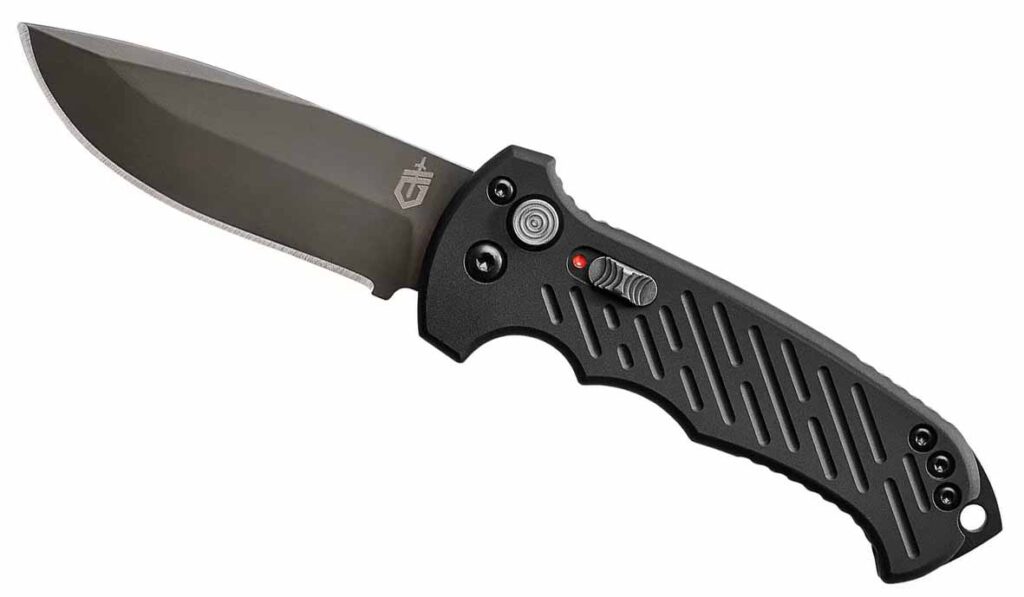
Gerber Knives Auto 06

The Gerber 06 Auto has been a top seller for ten years now and has been a big hit with US forces in Iraq and Afghanistan. This is a knife that has been issued to US forces and flown off the shelves at the PX as well, so it’s safe to say it has the military’s stamp of approval. 

It’s an automatic opening knife, with a 3.6-inch CPM S30V blade. The auto opening and the blade length make it a very useable knife for everything from camp meal prep to self-defense but be sure to check your local regulations before picking one up. 

My time with the 06 Auto has been great, and I’ve used it for all kinds of cutting and sawing tasks around camp and even used it to open a “spam can” of Russian surplus 7.62x54R ammo out in the desert when we absolutely had to have the ammo for a video shoot. 

All in all, a great knife, with a battle-proven pedigree. 

Mark II
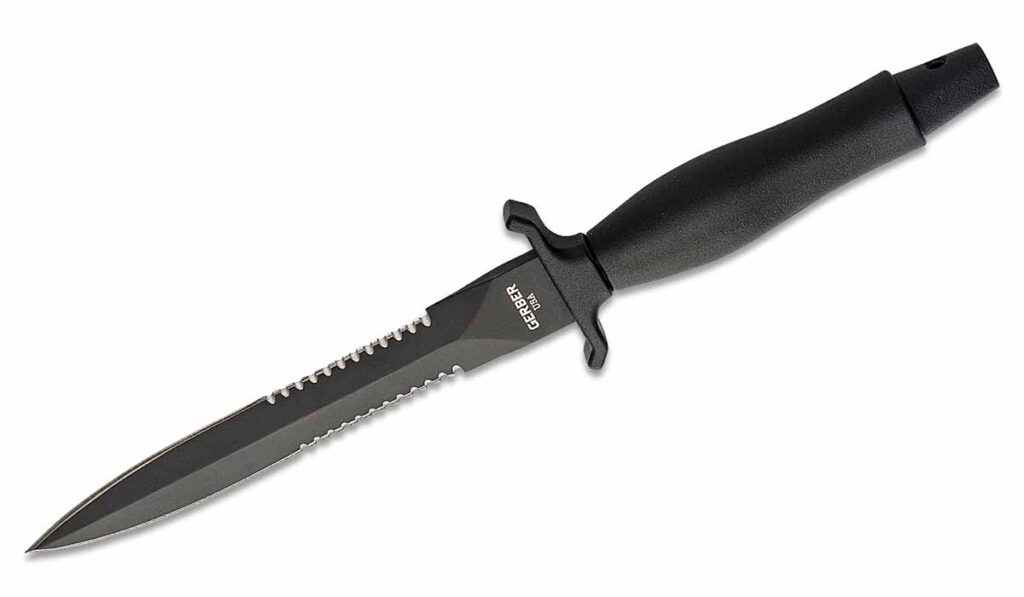
Gerber Mark II

The Mark II was introduced just before the kickoff of the American involvement in Vietnam and is one of the most popular knives around. It features a 6.6-inch 420HC double-edged blade with a black oxide coating. It also features serrations on both sides near the handle, giving it its iconic look.

It was originally conceived as a fighting knife by Captain Bud Holzmann, who based the design on a Roman Gladius, specifically the Mainz Gladius, which is a very famous example of the Roman blade that was found in the Mainz River. 

The knife overall takes some cues from the Fairbairn-Sykes fighting knife issued to British commandos and was the second-most commonly carried knife by American Troops in Vietnam, only behind the iconic Ka-Bar. 

The knife has also been quite famously featured in films like The Road Warrior as the knife carried by Max himself, in Aliens (the cafeteria scene), in the excellent knife fight scene in Captain America: Winter Soldier, and in the bananas knife fight scene at the end of Under Siege with Stephen Seagal. 

LMF II Infantry 
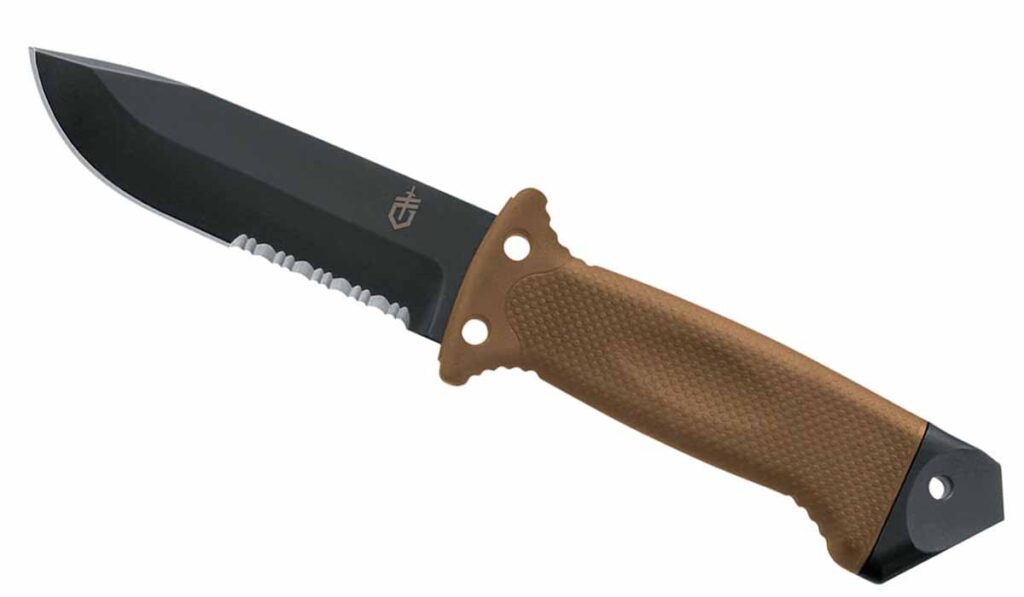
Gerber Knives LMF II Infantry

Currently, the LMF II Infantry is Gerber’s primary tactical fixed blade, and a great option if you need something robust that can be used in the field for just about anything from camp tasks to self-defense (or offense, if you have a profession that sends you into dangerous situations on purpose).  

The blade is 4.84 inches of 420HC stainless with a full tang and a striker pommel that can be used for pounding tent stakes, breaking glass, or whatever other tactical shenanigans you need a striking tool for. 

It also has partial serrations near the guard to allow for quick work sawing tasks, especially if you need to cut rope or thin lengths of wood in a hurry. Or use it to saw open a can because Kevin forgot the can opener. 

The ASEK version has an insulated handle and a partial tang, so it’s less suited for civilian tasks like processing firewood or what have you, but better for say, cutting your way out of a downed aircraft. 

Unless you’re a bush pilot, or cutting copper out of drywall for totally legal and normal reasons, the regular AESK is probably the better option for most folks.

Sedulo
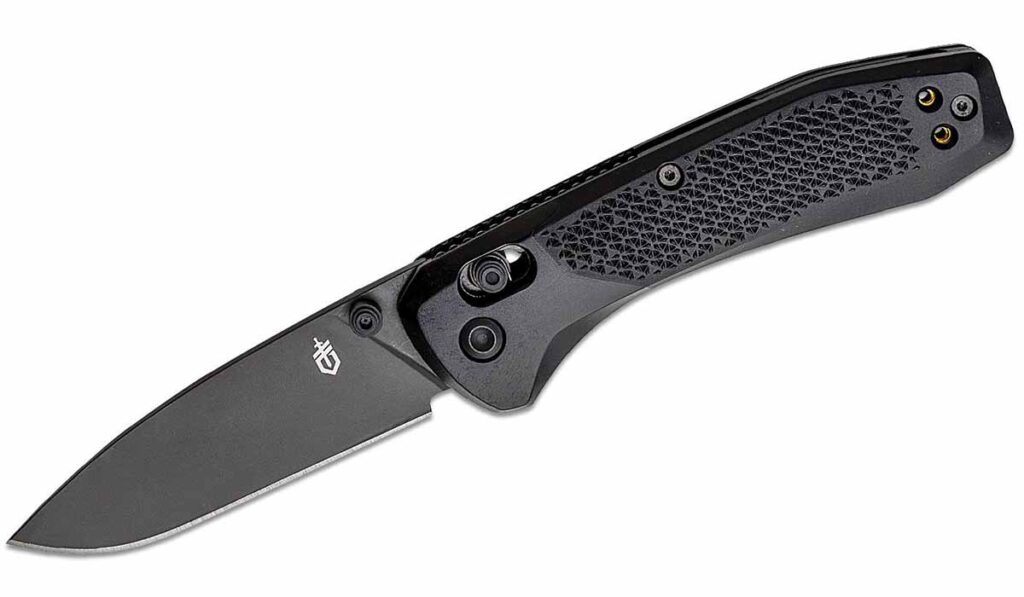
Gerber Sedulo

The Sedulo is a new favorite among Gerber fans, and it takes a bit of inspiration from another insanely popular knife, the Benchmade Bugout, including Gerber’s version of Benchmade’s Axis lock (called the Pivot Lock). 

The basic version retails for less than the Bugout and features a reversible deep-carry pocket clip, a textured FRN handle, and a 3.4-inch CPM S30V stainless blade. That blade length is uncontroversially under 3.5 inches, which is a key cut-off point in many areas in terms of what you can carry, by the way. 

Gerber hasn’t reinvented the wheel here, but they have produced a rock-solid EDC knife with all the modern features we’d expect and is made in America, at a price that won’t lead to any tears when it’s time to whip the debit or credit card out. 

All in all, the knife is something worth paying attention to and a promising direction for the company.

Fastball Cleaver
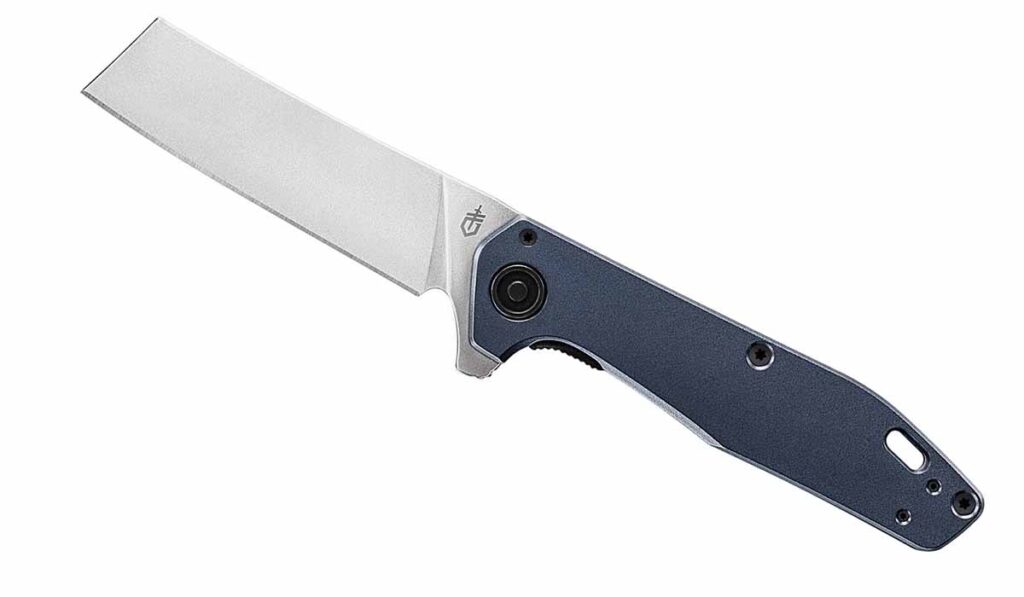
Gerber Fastball Cleaver

The Fastball is a great knife, but for me (and everyone I could find in an informal inter-office survey of about 20 people) the Cleaver version is just superior. 

It features a ball-bearing action with a precision detent and a robust liner lock mechanism that works well. The real highlight is the hefty 3-inch cleaver-style blade is it’s great for regular EDC tasks, camp kitchen prep, and anything else you can think of. 

The blade is ground very flat and relatively thin at just .11 inches, making it an incredibly good slicer, as well as something you can depend on for relatively detailed work despite the .88-inch blade width. That hefty cleaver profile helps with quite a few tasks and is surprisingly useful for opening packages and such as well.

The 20CV steel is a great choice as well, as it sharpens well while also holding an edge for quite a while. In testing, it held an edge about twice as long as 440C. While more prone to edge damage, it held an edge longer than M390 as well (another incredibly prolific and popular EDC steel). 

Terracraft
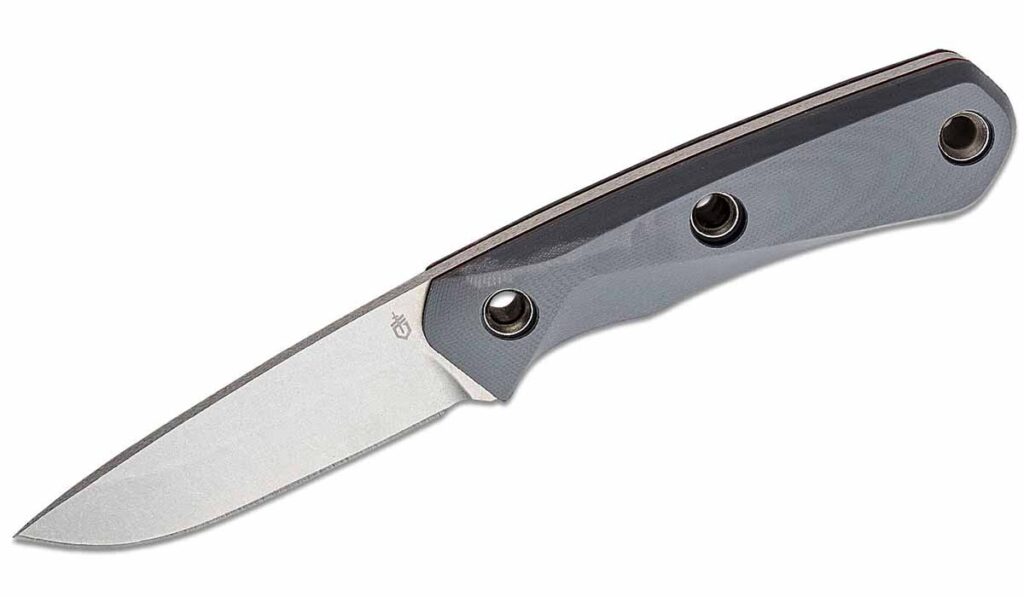
Gerber Terracraft

Bushcrafters, survivalists, and wilderness enthusiasts, this one is for you. The Terracraft, along with the Sedulo, is part of Gerber’s new Reserve lineup. The Reserve label is, well, reserved for their premium, American-made offerings. 

The Terracraft features a CPM S30V blade that has a thick drop point profile, and a 90-degree spine for easy fire starting with a ferro rod. The handle is a beautifully contoured G10 that is sculpted to provide maximum grip even with wet or gloved hands. 

If you’re out in the woods a lot and need a fixed blade, the Terracraft is a phenomenal option, especially if you’re a backcountry hunter, bushcrafter, or just like being able to do everything with just one knife.

Empower
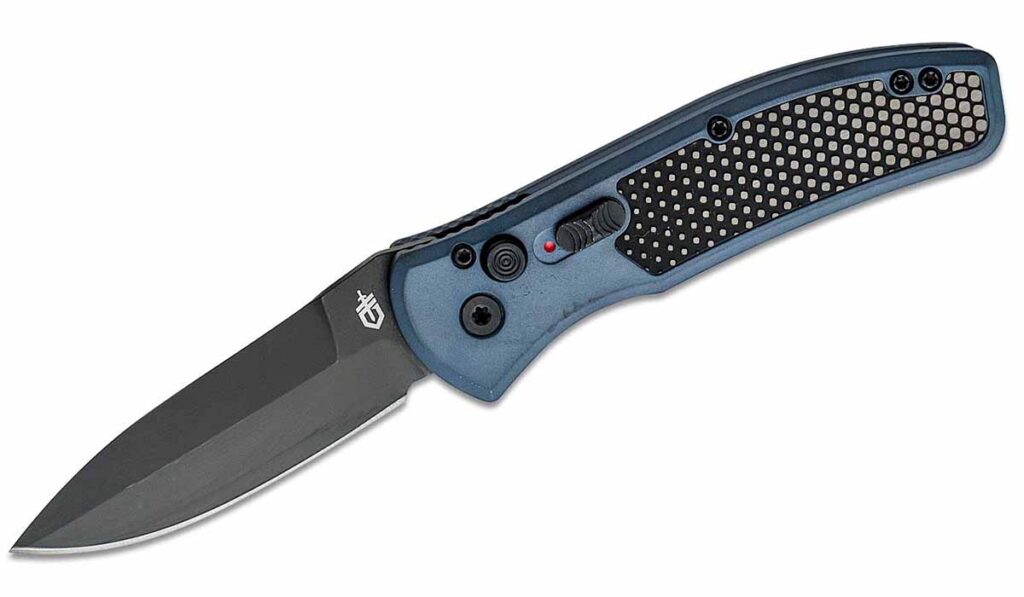
Gerber Knives Empower

The Empower is another great EDC knife that fits in the same general niche as the regular Fastball. It has a 3.25-inch S30V blade with a black oxide coating that gives it a more tactical look than the Fastball. 

The Armored Grip handles are very high-friction and perfect for use with gloves or wet hands. The rest of the handle is coated with a Type III hard anodization that will stand up to hard use, or to years of riding around in a pocket. 

Like all of Gerber’s US-made stuff, it has a lifetime warranty as well, so you know you’re covered if anything does go wrong, which is always great to know.

River Master (Blackie Collins Clip Lock)
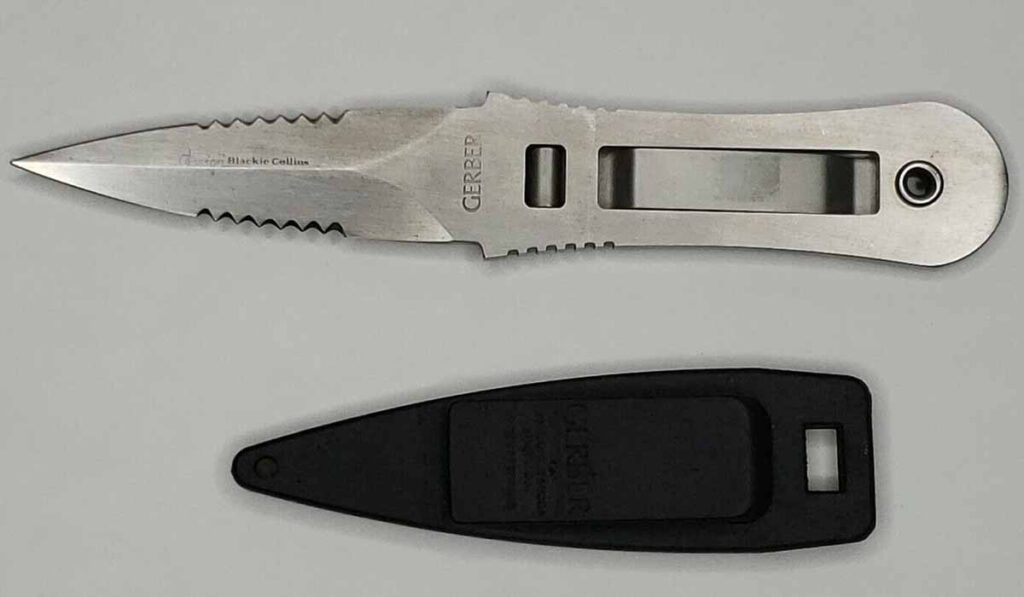
Gerber River Master

Alright, so technically Blackie Collins helped this publication, but I promise that’s not why his knife is on the list. The man had around 100 knife mechanism and design patents and is the inventor of the assisted opening mechanism that so many folding knives use today.
Having said that, I’m including the River Master on here because 1) It’s a great knife and 2) Blackie passed in 2011 and the knife was discontinued so there’s not really a conflict of interest here, and 3) I was stealing my dad’s River Master out of the tackle box 15 years ago before I ever worked here or heard of the guy. I just knew it was a great knife. 
The River Master is a dive-style fixed blade with a handle that is all one piece of stainless so there’s very little chance of anything breaking, or of rust hiding in a gap under a scale or anything like that.

If you’re looking for a classic dive knife, the Clip Lock, specifically the River Master, is a great one to search for on the secondary market. 

Final Verdict on Gerber Knives

Gerber is a name you’d probably already heard of before you opened this article, but you may not have known much about it. Hopefully, we’ve rectified that and opened your eyes to some of the great knives from this industry giant. 

More Gerber Knives:

Tactical Fixed Blade Knife Buyer’s Guide

These tactical fixed blade knives are set to conquer the most extreme tasks.

When the Gulf War took off in Iraq in the early 1990s, the knife industry took off, too, and a steady stream of tactical fixed blades has surfed the wave ever since.

Needless to say, there are military fixed blades aplenty in the cutlery industry with no single design or manufacturer having a chokehold on today’s market. This has given knife users an abundance of choices, from pure fighters to utility users and everything in between.

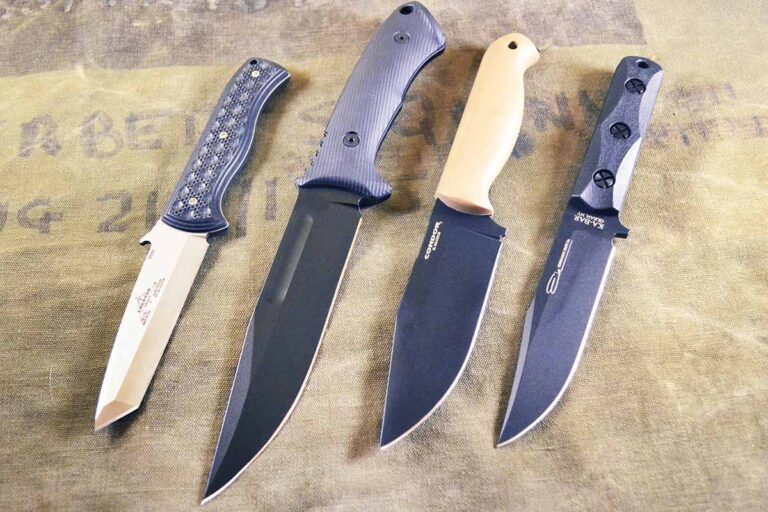
A diverse quartet of the genre includes the Condor Fighter Knife, Emerson CQC-7 Fixed Blade, KA-BAR/John Ek Commando Short Clip and Spartan Blades Harsey Fighter. To determine their strengths and weaknesses, the first order of business was a common test for penetration.

Testing

I set up a heavy-duty corrugated-board box with a 1-inch Styrofoam™ liner made for shipping frozen foods. I tested each knife by thrusting the blade into the side of the box forcefully, and then pushing it through from a standstill with the tip resting on the box. All the knives penetrated the thick, layered material with ease—not surprising considering they have either clip-point or tanto blade patterns, both adept at stabbing. There was very little differential from one model to the next. What follows is a look at each knife and how it performed other chores.

Condor Tool & Knife Fighter Knife

Condor Fighter
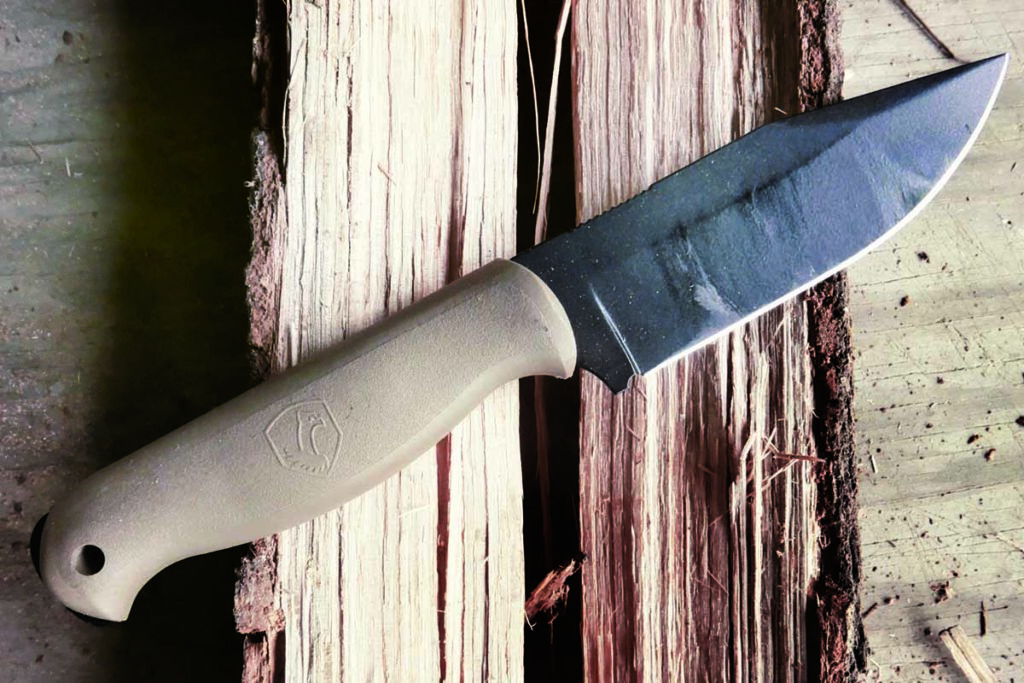
The author took the Condor to task batonning a length of seasoned hardwood with good effect. According to him, “This is one versatile knife that even a bushcrafter would love.”

Condor Tool & Knife specializes in bang-for-the-buck blades and the Fighter Knife is no exception. Indeed, it is the most affordable of the test group. From the side the knife appears to be pudgy but it is actually quite nimble. The clip-point blade has jimping on the rear of the spine for enhanced purchase on detail cuts.

The tan handle is hidden tang in construction with a fine stippled surface texture, an ample palm swell in the middle and a lanyard loop. The exposed steel at the butt can be used for hammering. The sheath is MOLLE compatible, injection molded and features a black leather drop loop.

The knife easily switches from combat to field chores—not surprising as the company specializes in both. The wider blade is similar to that of many field knives, as is its deep grind. Slicing 3/8-inch rappelling rope and taking curls for firestarter were a breeze. I set the blade across the end of a 15-inch piece of tough seasoned hardwood, 25/8 inches across, and drove it clean through. This is a rugged knife. The sheath is relatively unobtrusive and rides about 2 inches above the beltline.

Condor Fighter Knife Specs
Blade length: 4.91”
Blade material: 1075 carbon steel
Blade grind: Flat w/secondary bevel
Blade finish: Black Cerakote®
Handle length: 4.83”
Handle material: Tan polypropylene
Weight: 8.82 ozs.
Overall length: 9.74”
Sheath: Tan polypropylene/leather belt strap
Country of origin: El Salvador
MSRP: $100

KA-BAR John Ek Commando Short Clip

Ka-Bar Commando Shor Clip
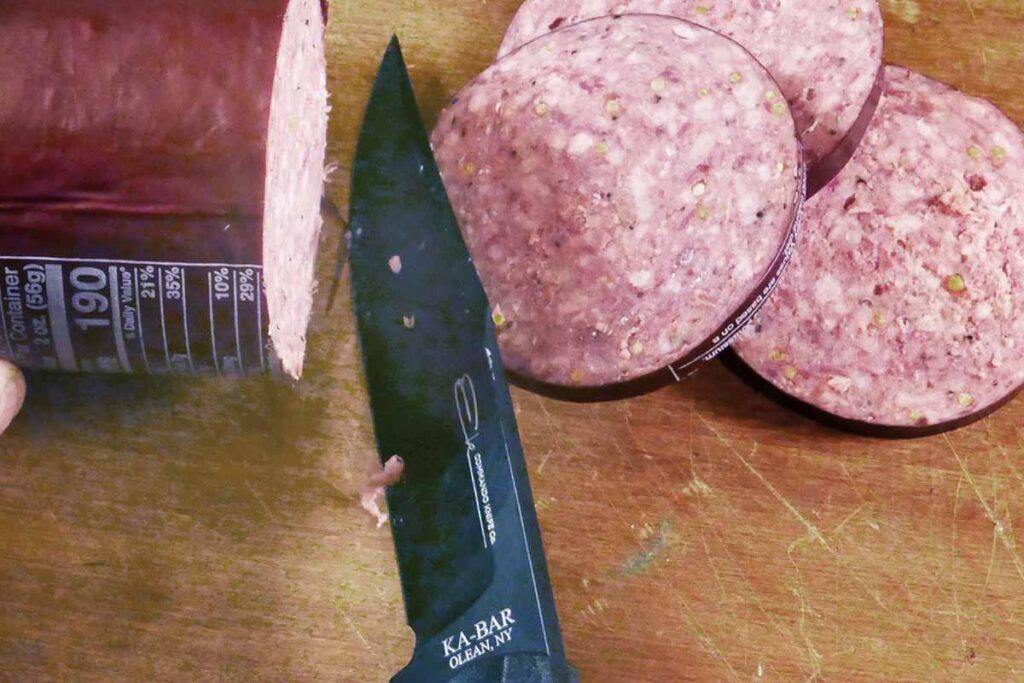
The Commando Short Clip tackled a 2.75-inch-diameter chub of summer sausage admirably. The blade is 5.125 inches of 1095 Cro-Van carbon steel, a time-proven KA-BAR favorite.

The John Ek Commando Short Clip is one in a series of military-type models KA-BAR Knives offers by the cutlery legend. This one is all black and a timeless, no-nonsense John Ek design. The blade is complemented by a 4.125-inch “stick” handle with scales affixed by big, fat screws, an Ek hallmark. The blade clip breaks with a slight harpoon kick, which I’m not sure Ek ever used, though it works wickedly, and there’s a short guard below the blade. The symmetrical handle has a lanyard hole at the butt. All of this is delivered with a modern, MOLLE-compatible sheath.

KA-BAR has done an admirable job picking up the John Ek banner and blending the old with the new. The Commando Short Clip’s narrow blade—1.31 inches wide—proved proficient at slicing. I tested it on paracord, 3/8-inch rappelling rope and a large round of 2.75-inch summer sausage, and it did a masterful job of tackling them all. It is a combat knife at heart and its light weight is not as skillful at tough field chores like hacking wood, but that’s not its department.

The handle is fine for small and medium hands but could be a challenge for those with large ones. The modern sheath is very well done and rides with the butt of the handle just above the waistband. Overall, this modern take on a classic leans toward a combat knife with enough utility to get you by.

KA-BAR/Ek Commando Short Clip Specs
Blade length: 5.125”
Blade material: 1095 Cro-Van carbon steel
Blade grind: Flat
Blade finish: Black powder coat
Handle length: 4.125”
Handle material: Polymer
Weight: 10.4 ozs.
Overall length: 9.25”
Sheath: Black polymer Celcon/MOLLE compatible
Country of origin: USA
MSRP: $155

Emerson Knives CQC-7

CQC-7 Fixed Blade
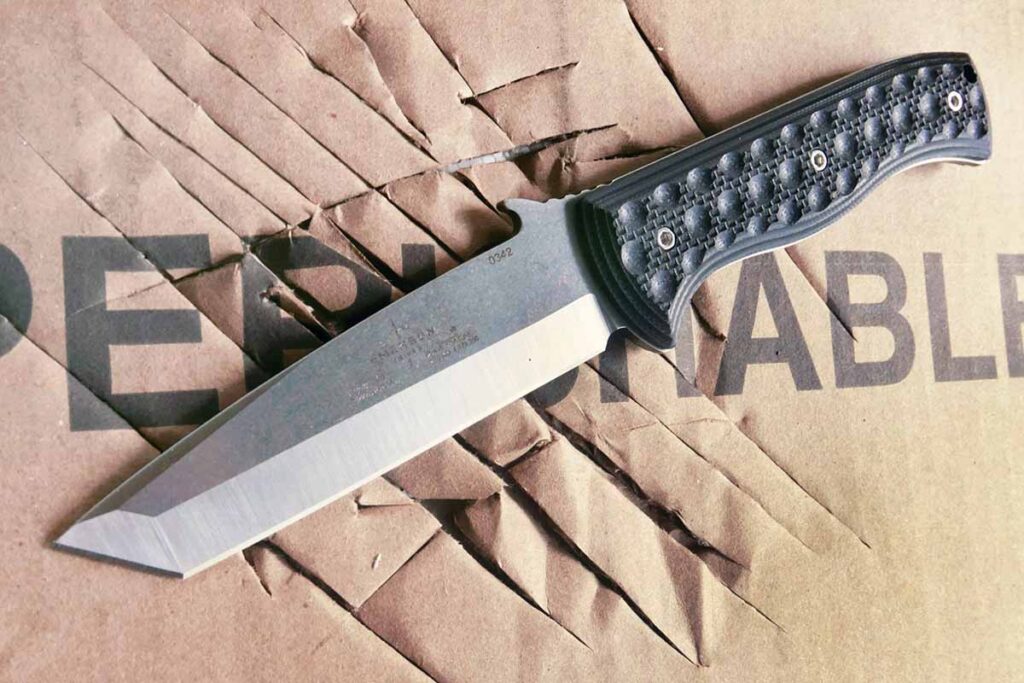
The CQC-7 Fixed Blade has an appetite for slicing and slashing. The 154CM stainless steel tanto blade was extremely sharp and penetrated both layers of the shipping box with controlled slices.

The Emerson Knives CQC-7 Fixed Blade hasn’t gotten a lot of face time because the overwhelming amount of tactical knife coverage of the company is devoted to folders. It’s the way of the world. The Emerson is the shortest of the review subjects and is also the one that tilts more toward being a pure combat knife—something its designer, martial arts specialist/custom knifemaker/cutlery entrepreneur Ernest Emerson, knows a thing or two about. The tanto blade sports a flat V-grind and a stonewashed finish. The blade has three straight grinds: the main edge, tip grind and a clipped saber grind. An Emerson Wave shape on the rear of the blade spine serves as a thumb ramp. The handle has a nice palm swell, a symmetrical dimpled texture for enhanced purchase and a lanyard hole in the butt.

The blade’s 7/16-inch edge grind was delivered wicked sharp and I took it to task slicing one of my favorites, 3/8-inch rappelling rope. The rope is extremely strong because lives depend on it. In one test I pulled the edge through three consecutive cross sections of rope. The drag on the blade was much less than I normally encounter—a pleasant surprise. It slashed the corrugated board outer layer into the Styrofoam effortlessly, and when I slowed the process down with a little more pressure, it dug through the foam as well. The sheath is a study in minimalism, but that’s what you want when concealment is at a premium.

Emerson CQC-7 Fixed Blade Specs
Blade length: 4.125”
Blade steel: 154CM stainless
Blade grind: V-grind
Blade finish: Stonewashed
Handle length: 4.625”
Handle material: Black G-10 composite
Weight: 5.86 ozs.
Overall length: 8.75”
Sheath: Black Kydex®
Country of origin: USA
MSRP: $237.95

Spartan Blades Harsey Fighter

Harsey Fighter
The Harsey Fighter’s ample 5.35-inch handle has black G-10 scales with a ribbed pattern machined into the surface. The flare atop the handle offers excellent finger protection and the grip accommodates the biggest of mitts.

A goodly portion of observers seem to believe the Spartan Blades Harsey Fighter is noted knifemaker Bill Harsey’s consummate work and, though he has a load of nice designs in his stable, I wouldn’t argue. It is the largest of the test knives and a blend of modern styling with traditional cues. It is the Pineland Cutlery version manufactured by KA-BAR under the Spartan label.
The clip-point blade has a fuller that butts up against the ricasso. The handle surface boasts a diagonal rib pattern for enhanced grip and an ample lanyard hole at the butt. The sheath has a fabric-fastener drop loop and retention strap. There’s also a swing-out lock at the rear guard that secures the knife in the main body of the sheath.

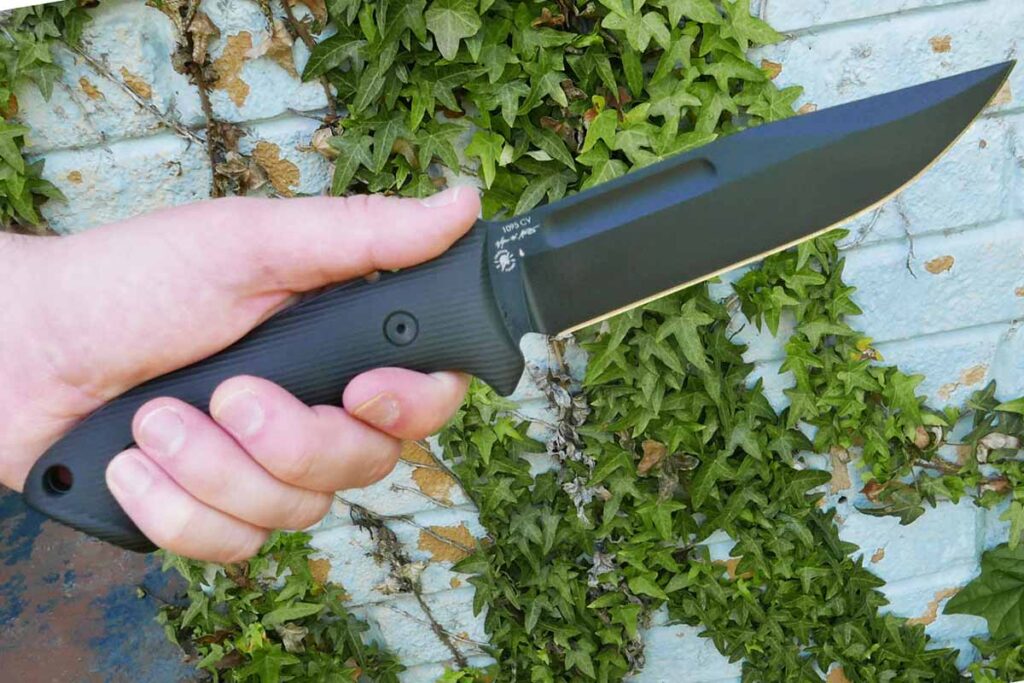
It’s amazing what a couple of inches in length, a couple of ounces in weight, plus an extra inch in the handle add to the versatility of a knife. That’s on average what the Harsey Fighter has over the other knives tested. This is not a knock on the others, just the advantage of having more knife.

For chopping ability I tested the blade on a thick-skinned cantaloupe. I had to chop the melon off center to clear the handle but the blade made its point in one fell swoop. The extra weight allowed me to tackle tougher chores and the added blade length made for excellent slicing and hacking. You can clear a camp with the Harsey Fighter. The comfortably sculpted handle can accommodate the largest of hands and the upper flare offers good finger protection. The sheath is very well made but the guard lock takes some getting used to and is one added step for a quick draw. All in all, the Harsey Fighter earned its mettle in spades.

Spartan Blades Harsey Fighter Specs
Blade length: 6.125”
Blade material: 1095 Cro-Van carbon steel
Blade grind: Flat
Blade finish: Black powder coat
Handle length: 5.35”
Handle material: Black G-10 composite
Weight: 11.5 ozs.
Overall length: 11.5”
Sheath: Black polymer/nylon belt loop/MOLLE compatible
Country of origin: USA
MSRP: $195

Check Out More Outdoor Knives And Tools:

Bone Handle Knife: Tips For Picking The Best One

0

There’s something primal about a bone handle knife. We break down this eye-catching natural material, show what to look for and give you some top picks.

Bone has been around as a handle material just about as long as we have. It is safe to say that ancient cultures across the world have used bone as a handle material for as many as 100,000 years. Perhaps longer. Nobody knows for certain because these materials don’t last forever, even if perfectly preserved.

Bone Handle Knives History

Antler and bone have been used across the world and by virtually all peoples. We see, however, a distinct trend around 12,000 to 10,000 BC where they became the choice handle material for stone or volcanic glass blades. These handles were often carved to allow the instillation of replacement blades, given the brittle nature of the material.

These types of blades were state-of-the-art technology for millennia, with their traditional means of construction still in common use with many cultures at the time Europeans began exploring the world. The stone blades were extremely sharp and could last for months or even years if properly maintained.

Ancient people were experts at shaping these stone blades, and they could do so with great precision. Many of them were not small either, some stone spear points rival modern Bowie’s in length. The strength of these knives is largely dependent on the skill of the craftsman, and some of these blades and their handles still exist today.

Fast forward to the early modern era around 500-1000 years ago, we see that bone is purely a decorative choice on most knives. While functional, there is more of a challenge to working with it than there is wood. Wood in most cases is easily shaped while bone is a much more finicky medium. Bone is substantially more brittle, and it is harder to seal and finish. While it may seem like a durable material, it is quite porous and can shatter if struck.

In a way, bone went from being the material of choice to the choice of those who perhaps wanted to show off. Today this is the same story. It is hard to find individuals who carry around knives with ancient mammoth ivory grips, but they do exist. Will that same individual use that knife for camp work like ancient man? Again maybe, but not likely at the cost of that material.

Common Types Of Bone Used In Handles

Bone

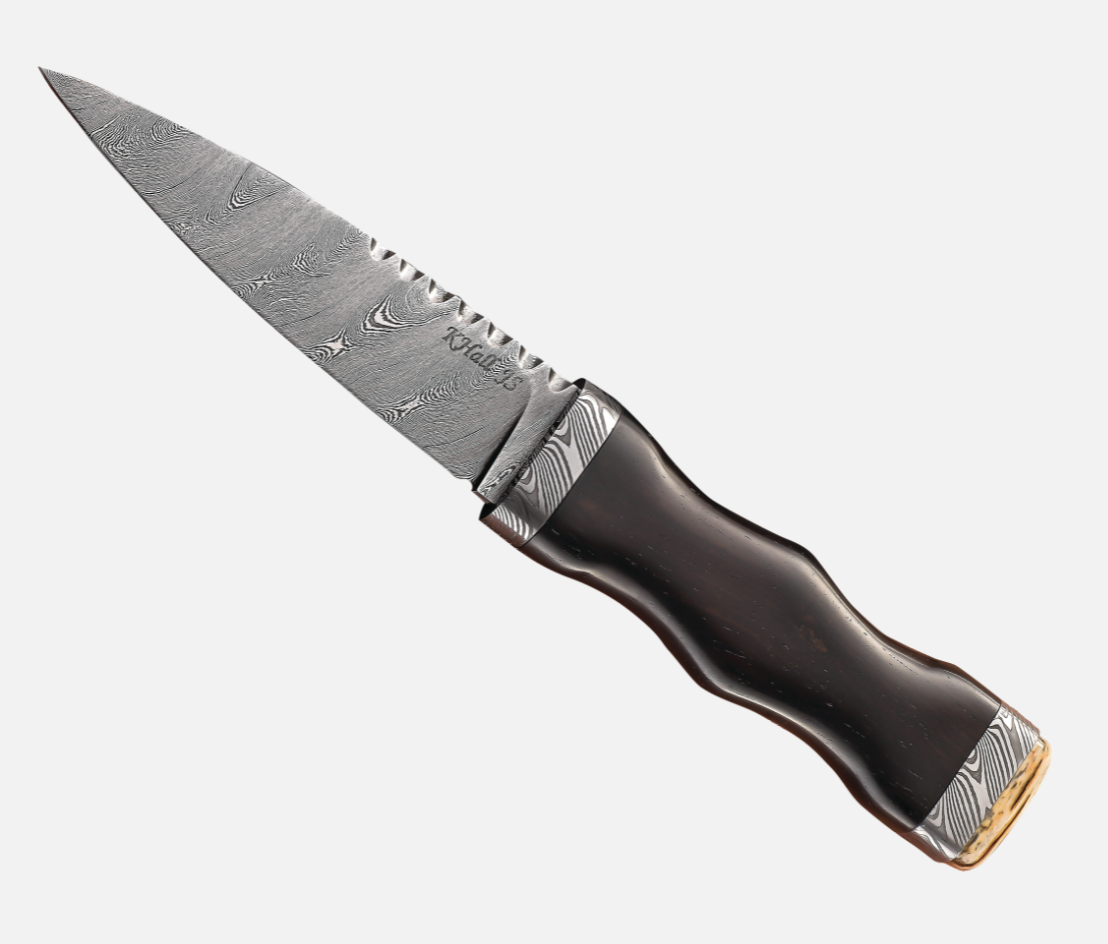
Ken Hall’s sgian dubh features a 4.25-inch blade of twist damascus in a blend of 1075 spring and 15N20 nickel alloy steels. The pommel is formed from stone and giraffe bone. The African blackwood handle not only is ideal for its carvability but also in keeping with the sgian dubh’s name, which is Scottish for black knife.

For the most part, bone handles were typically made from whatever animal was available in the region. In ancient times, this could be any type of bone that was easily hollowed out or shaped. The femur bone (thigh bone) was quite common. Equally popular were the bones of the arm, and even the jawbone, depending on the animal.

Antler

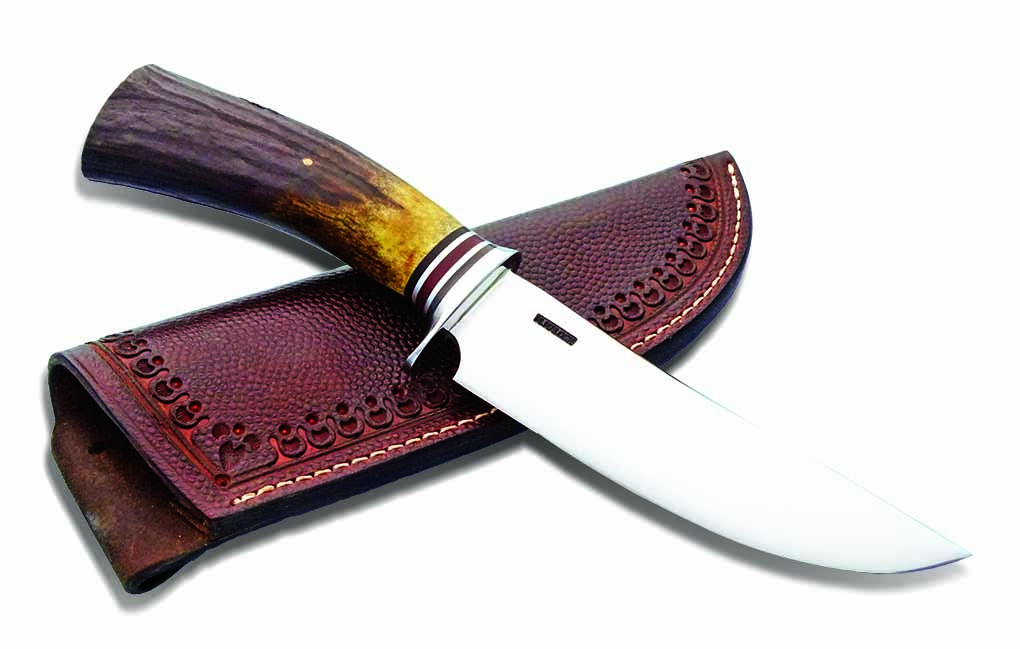
Mike Malosh opts for elk antler with black and maroon Micarta® and stainless steel spacers for the handle of his utility hunter. The 6-inch blade is W2 tool steel and the guard is stainless steel. Overall length: 10.75 inches. The knife comes with a leather sheath by Malosh. The maker’s price: $390. (Impress By Design image)

Antler is and always has been a better alternative than skeletal bone. Antlers grow on members of the deer family only, from the skull and are semi-vascular. This means they have blood flow and skin while they grow. What makes them appealing then and now are they are shed by the animals yearly. This makes them easier to source, not requiring a kill to obtain. Furthermore, antler is extremely strong and dense, much more so than skeletal bone. In turn, it is less prone to shatter and is substantially less porous, meaning it is easier to finish and maintain.

Ivory

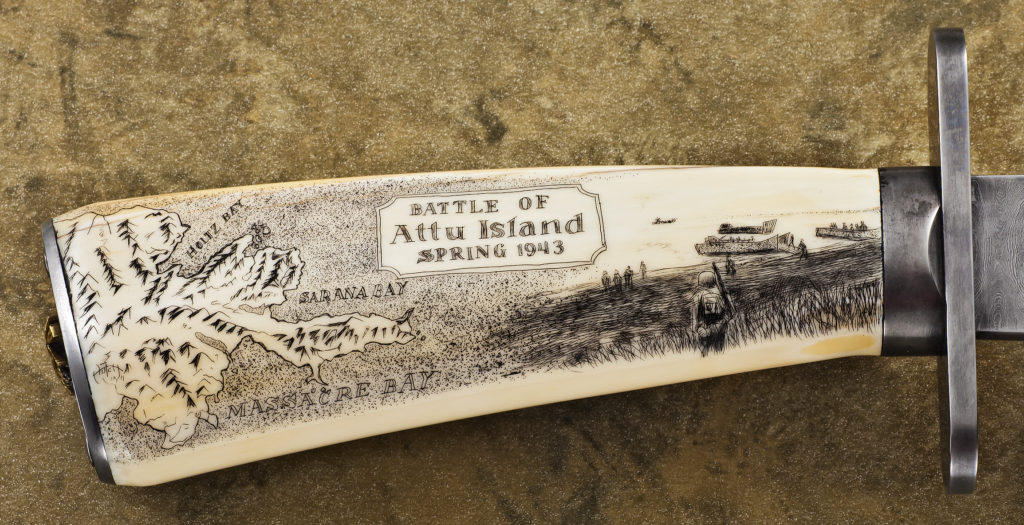
Sharpe used an ancient walrus ivory tusk he already had on hand. Richard (Hutch) Hutchings volunteered to scrimshaw the handle.

Ivory is another material that falls into the bone category. Elephant ivory has been strictly regulated for years. As a result, the material is exceedingly rare and possession of an unaccounted-for sample can land you in trouble. The ivory trade has been bad for the elephant population worldwide, but the animals are largely out of danger now, though this has not lessened ivory restrictions. It is a semi-grainless material that is not only strong but also easily shaped—lending to its popularity.

Mammoth Tusk

Raffir fossil mammoth
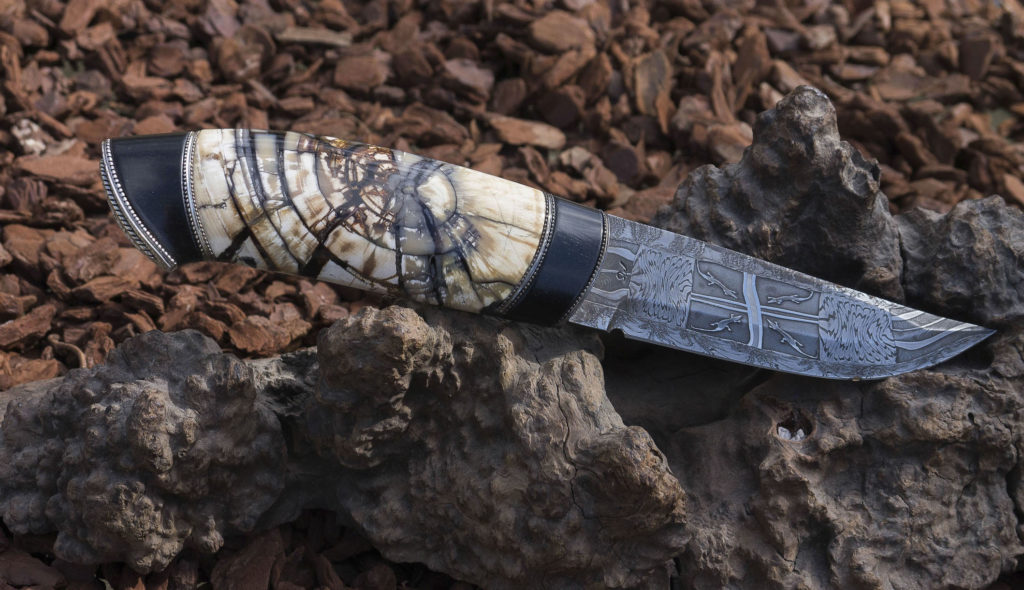
Raffir fossil mammoth ivory comprises the handle of Danish knifemaker Tommy Astrup’s mosaic damascus fixed blade.

While there are regional laws pertaining to mammoth tusk— California, New Jersey, and New York you can’t transfer it—this ancient material is generally legal to sell and possess. (Always check your local laws to make sure this holds true for you.) Given restrictions on ivory, this material has become more common in recent year, sparking a rush to collect it on the Siberian tundra. The permafrost makes it so that these tusks are almost like new. Working with it is no more challenging than working with modern ivory, given the state of preservation is usually excellent. Other ancient materials that are suitable for use on knives include the tusks of walruses and narwhals, but these too are regulated in some states.

Most Desirable Bone Handle Knives

Beauty is truly in the eye of the beholder. While bone handles are certainly attractive, they are not always the best choice for daily use.

The main reason, aside from antlers, most bone material gets very expensive very quickly. Mammoth ivory can run well into the thousands of dollars for enough to make a couple of handles. For this reason, you typically see it as thinner scales as opposed to a full carved grip. If you go that latter route, the finished knife cost can skyrocket into the thousands, perhaps even over $10,000 on a nicely executed custom knife.

Pros And Cons Of Bone Handles

In the world of Micarta and G10 there is little advantage in bone or antler, particularly in durability and longevity. Like any naturally occurring material, there is the presence of unseen flaws that may become liabilities during use. These materials aren’t weatherproof in a true sense and can take on moisture and pull in oils. The mineral structure is different on each bone or antler and as a result, there is no true gauge for strength across the board. The ergonomics are also a challenge as most of these bones and antlers are shaped in a preexisting manner by the animal they came from.

This is not to say that they are useless, rather it is a matter of personal preference. Some people truly prefer how these materials look and feel and that is their right. That does come with accepting that they may be restricted to certain uses as opposed to other handle materials. For instance, hard chopping work and batoning are difficult on handles due to flex and vibration, and bone or antler may simply crack at the pins if a strike is not performed perfectly. The nature of these materials is sentimental, not just to the individual but to mankind as a whole being that they have been with us since the beginning.

Top Bone Handle Knives

Wess Barnhil Gentleman’s Hunter

Wess Barnhil Gentleman’s Hunter
Wess Barnhil Gentleman’s Hunter (bottom)

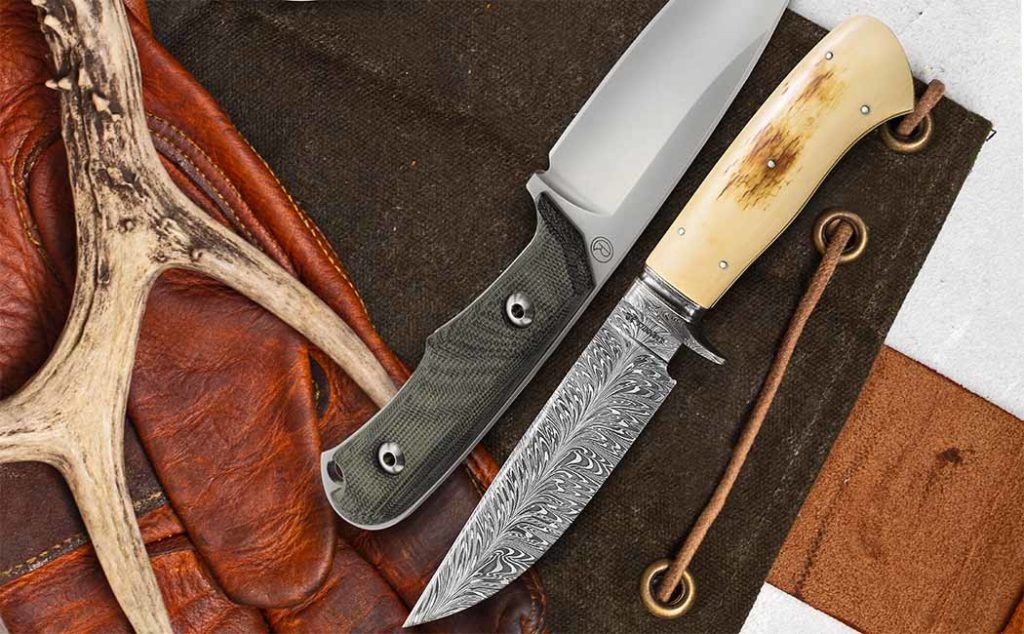
A custom offering by Wess Barnhill, the Gentleman’s Hunter was featured in the November 2022 print issue of Blade alongside some other fantastic bone or antler-handled knives. Modestly priced for a Damascus steel blade, Barnhill’s knife displays an excellent profile and layout for real-world use but is so damn beautiful you’ll probably want to keep it safe from blood and guts! Barnhill’s portfolio features several knives with natural material handles, each a work of art.

MSRP: $1400

Mark Fleming Forged Southwest Trail Bowie

Mark Fleming Forged Southwest Trail Bowie

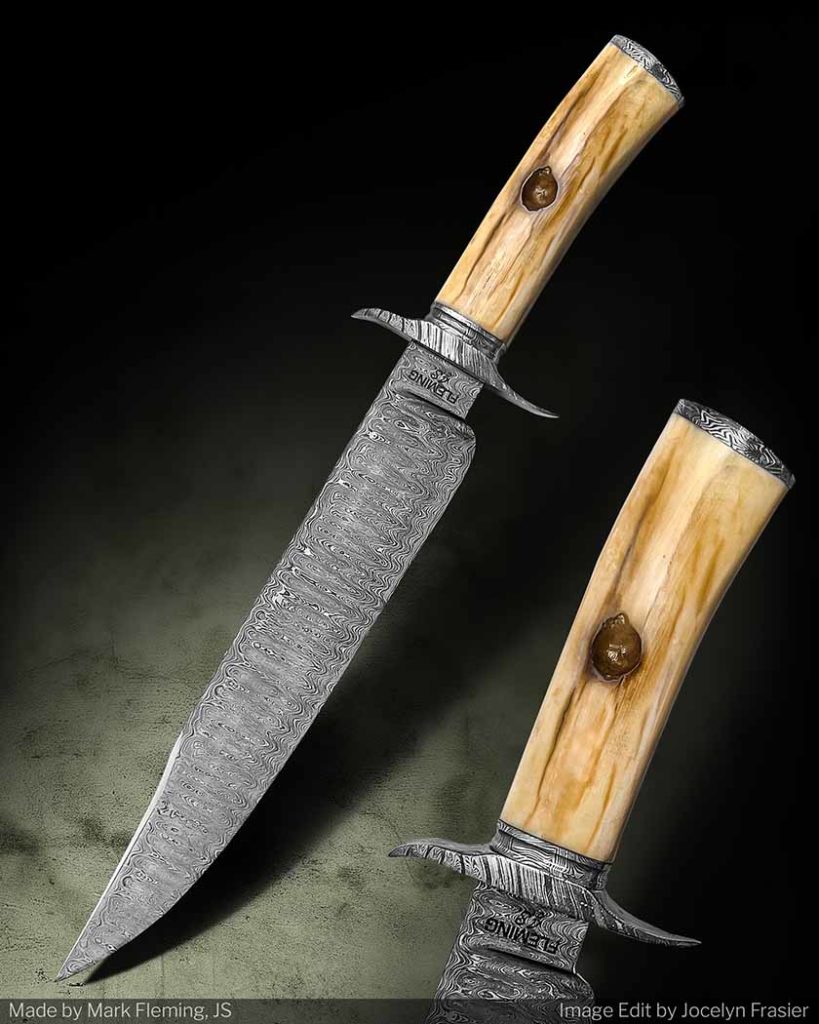
This knife was featured in the December 2022 print edition of Blade Magazine. Mark Fleming is an ABS journeyman smith, but his work looks exceedingly masterful at this point in his career. While this particular knife is custom, a similar piece will run you about $1,900, which is quite reasonable for such a complex execution. The knife as featured included an awesome-looking ancient walrus ivory grip, itself a relic.The grip material was salvaged from a native fire spindle that was used to start friction fires. Interestingly, you probably could still use this in that manner and you wouldn’t be outside the times. Grip indentations for starting friction fires are common on many knives today.

MSRP: $1,900 (for a similar design)

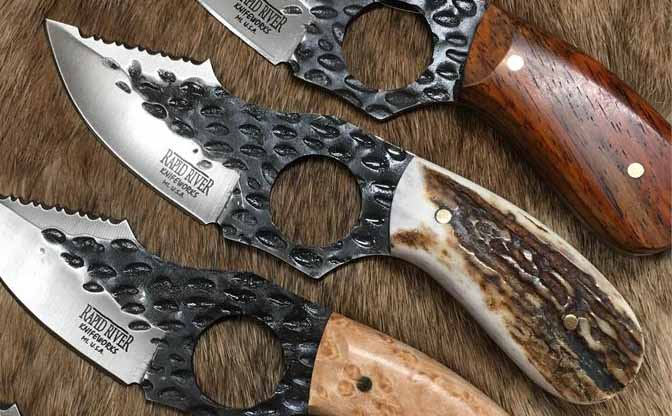
Rapid River Knifeworks Kodiak

Rapid River Knifeworks Kodiak

Rapid River Knifeworks offers a tremendous number of custom services and a wide range of knife products. Located in Michigan’s upper peninsula, the company has excelled in adding traditional flair to its lineup and the products stand out from others across the board. The Kodiak is a hammer-forged knife that is offered in a dizzying number of configurations, not even including custom engraving. The variant we’re concerned with here comes with elk antler as a grip material, and it sure does look great! Unlike many knife companies, Rapid River has a showroom you can visit in person.

MSRP: $175

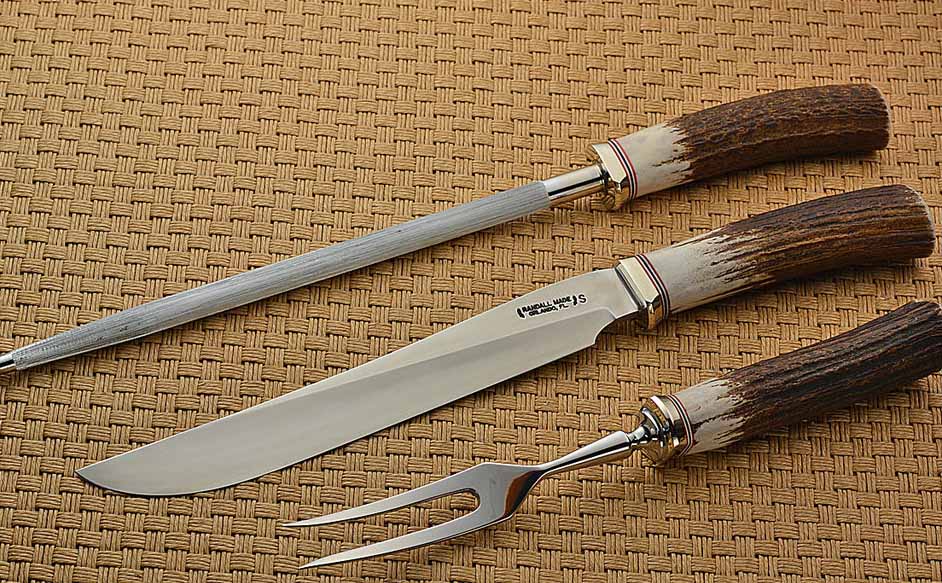
Randall Knives 3-Piece Carving Set

Randall Knives 3-Piece Carving Set

Randall Knives needs no introduction here, however, we are pleased to take a look at a less-prominent product from their standard lineup—its 3-Piece Carving Set. The set comes with a 9-inch carbine knife, serving fork, and sharpening steel, all of which are finished with stag handles. The set includes a storage box and the company notes that you should not put them through the dishwasher. Randall Knives, of course, offers some very well-known classics in natural material handles, many of them available in their standard lineup. If you so desire, you can also take a look at having something custom-built, but you had best get your orders in now. The company website is currently taking orders for delivery in four years!

MSRP: $680

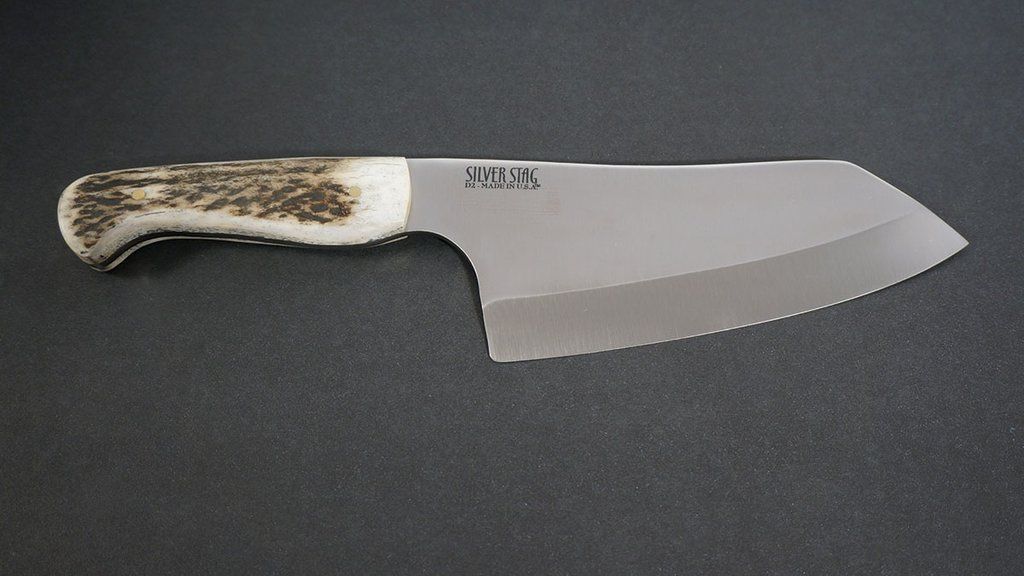
Silver Stag Universal Chef Pro

Silver Stag Universal Chef Pro

Silver Stag makes a great number of products that feature natural handle materials, but a standout example is the antler-handled Universal Chef Pro. This is an all-use kitchen knife that is at home in just about any setting—be it your home or base camp. The knife is ruggedly constructed and has a unique shape with a curved belly and sheep’s foot tip that allows it to be deftly handled for large tasks like carving down to fine dicing. Silver Stag offers a full line of antler-handled kitchen knives, as well as many other outdoor knives from filet knives to custom scrimshawed skinners.

MSRP: $218

More On Knife Handles:

Vosteed Mayhem: The Compression Lock Rides Again

A top-end offering, the Vosteed Mayhem takes a run at proven, yet challenging locking mechanism.

Prolific in its offerings, they must not sleep much over at Vosteed Knives. Yet, the company’s productivity has generally been knife buyer’s gain—at least those attracted to mid-priced fidgety options that by and large have fairly decent lines. Though, one of its latest releases should turn heads if only to see if Vosteed indeed has been able to pull off what few other companies have dared.

Christened the Mayhem (a prototype was showcased at their table at the 2023 BLADE Show), the collaboration with Rob Saniscalchi of R.S. Knifeworks boasts what the firm defines as a hybrid frame/compression lock. Some might recognize the latter aspect of the system as the same mechanism developed and used to great effect by Spyderco. The Colorado company’s patent on the mechanism ran out a few years ago, making it fair game and clone fodder. But given the tight tolerance required for the lock to operate properly, few companies have given it a run.

The Sypderco system is operated by a leaf spring wedging laterally between a ramp on the tang and a stop pin. The system was smooth and easy to operate, as well as strong as the dickens—given pressure is exerted directly down on the spring’s vertical surface, preventing potential bowing. Vosteed appears to operate almost identically, though a bit of the geometry on the blade’s lock elements differ. At arm’s length, Vosteed’s attempt appears on track, but only time and plenty of fiddling by owners will prove if the company truly got it right.

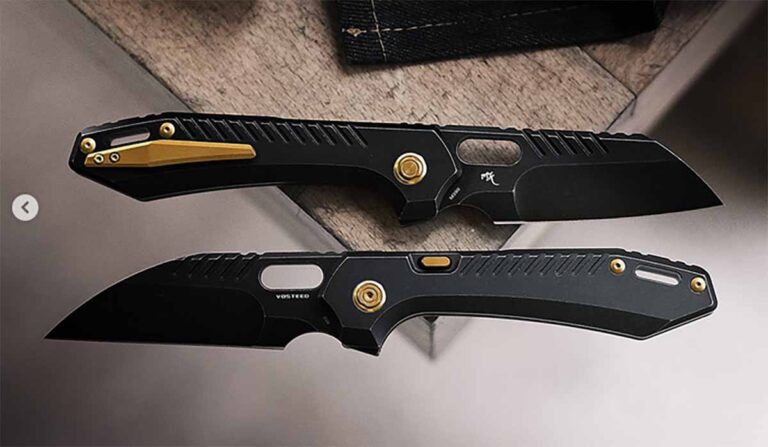
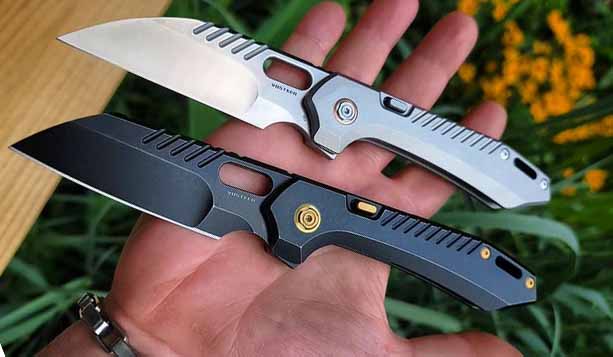
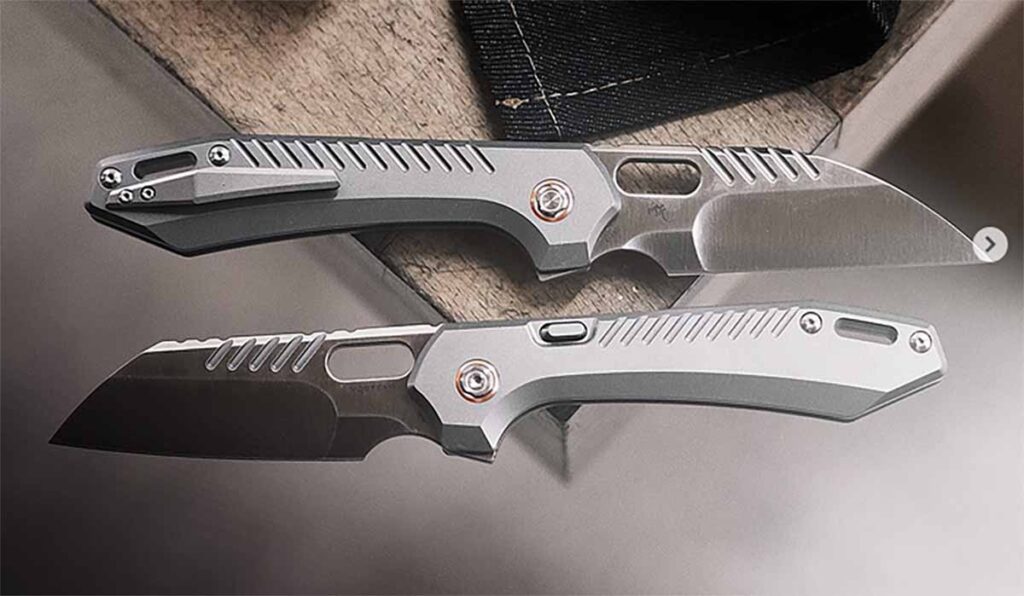
Vosteed Mayhem black and gray finishes
Photo: Instagram

As to its operation, the lock is actuated by a push button on the spine. The system allows for wrist opening, but as has been Vosteed’s OM for some time, it outfitted the Mayhem with multiple deployment options. In this case, both a thumb hole and a kicker; a pair of caged ceramic ball bearings aid in a smooth and fast deployment.

Vosteed offers the Mayhem with a couple of different options. Perhaps the imperative one is the choice between a Wharncliff or sheepsfoot blade, each coming in a 3.3-inch in length and constructed from the highly desirable M390 steel. Each blade has a compound grind, but this appears a play at aesthetics, given the thicker rear grind seems too small for practicality. The blades also feature a choil, so you can choke up, even though the titanium scale is ample enough to land all five fingers of a large hand. The scale itself is clean, with a closed rear and texturing across its back, not to mention a nice taper up to the blade to allow for a firm grip.

The other choice buyers have to make on the Mayhem is finish, with a stonewashed black PVD coating and gray satin options on the menu. The gray version is gray from top to bottom—outside a gold pivot collar—accentuating the knife’s tidy design, while the black iteration is a bit more boisterous boasting gold hardware. Note, the knife offers tip-up carry with a non-reversible titanium clip.

Vosteed Mayhem gray
Photo: Instagram

The Vosteed Mayhem is a break from what most have come to expect from the company, which has made its bones at the affordable end of the market. The new knife—no matter options—runs $250. However, if it proves well executed, most likely will find this money well spent.

Check Out More Buyer’s Guides:

Best Machete For Taming Brush

0

We hack away at meaty machetes that cut to the quick and take no mercy on brush.

In many parts of the U.S.A., greenery is busting out all over with the year’s early warmth and rain. People are trimming shrubs, cutting grass, whacking vines and other yard tasks. If you are a camper or own land, chances are you have a need for a good machete to help clear brush and take down saplings.

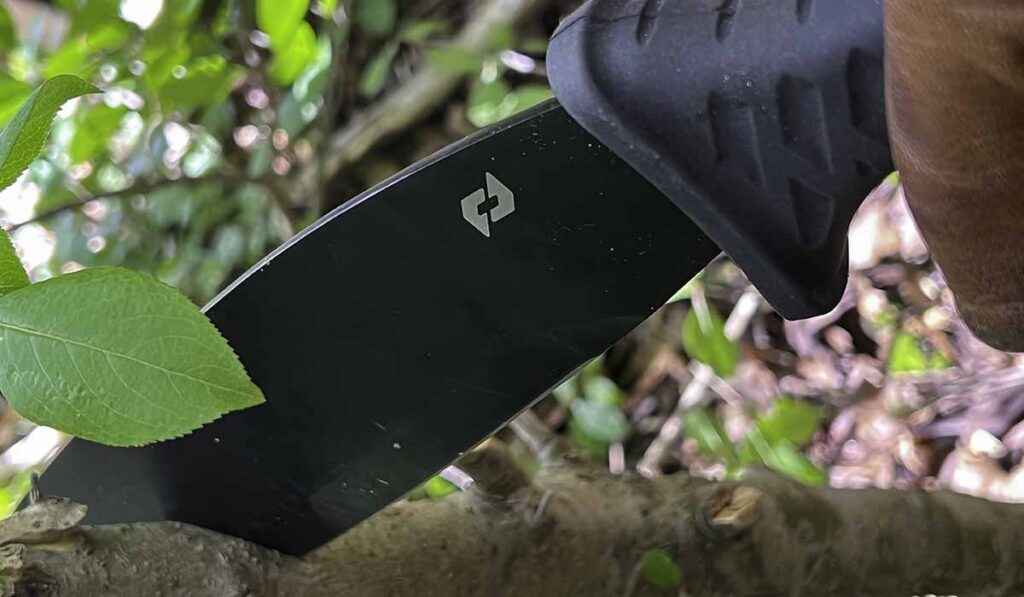
Schrade Delta Class Decimate Bolo

Schrade Decimate Bolo
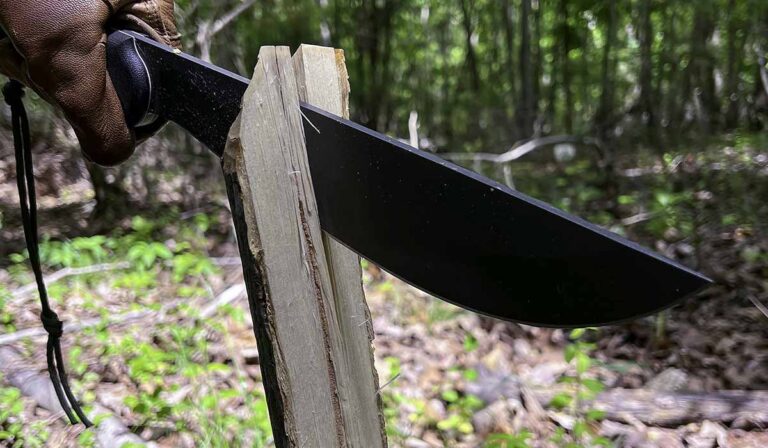
The shallow blade grind enables the Schrade Decimate Bolo to bite deep into green wood. 

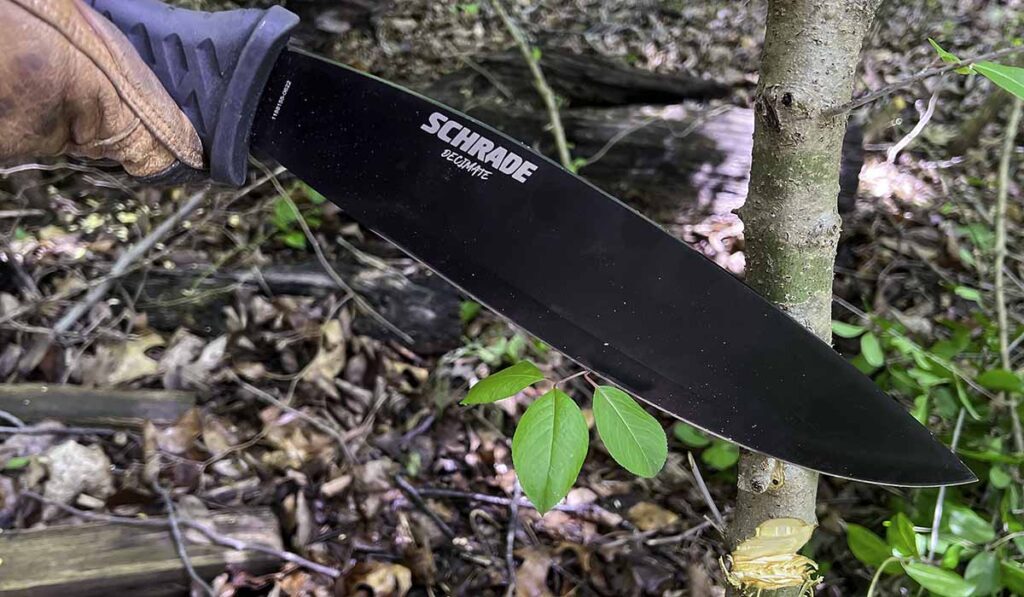
The Decimate Bolo machete is part of Schrade’s Delta Class line of knives, and offers a good balance of performance and value pricing. The 12-inch blade and 8-inch handle make it a formidable slashing/chopping tool. The 3Cr13 stainless steel blade has the power and durability to hack through the toughest jobs without “decimating” your wallet. The steel seems to hold a decent edge and is easy to resharpen. I would compare it to 440A stainless. The blade shape is a fat spearpoint, offering easy forward-heavy balance that works well for extended use. A black coating enhances corrosion protection as well as low-profile visibility.

The handle seems well thought out with several key features. The integral guard prevents forward hand movement, while the bird’s-beak butt prevents rearward sliding of same. A generous swelling mid-handle fills your grip nicely. A heavy molded-in texture aids a nonslip grip and the black rubber overmold has a slightly tacky grab-you-back quality that works well with gloves or without. Wrap your hand around the grip and it feels secure and instills user confidence. 

The accompanying sheath, a ballistic nylon/covered flexible plastic with a riveted construction, is basic but works. Two button snaps near the handle allow the sheath to open wider for easy insertion and removal. A button snap strap affixes the handle to the sheath. The most interesting feature is it carries via a strap and not traditionally on a belt. The back and bottom have two eyelets for strap attachment. Adjustable in length, the strap can fit around your torso to carry sling style for easy portability.  

Schrade Decimate Bolo
The Schrade Decimate Bolo is an effective chopper due to the weight of the blade and the gentle curve of the cutting edge.

A broad profile lends the blade forward balance for delivering effective chopping blows that can take down saplings easily. The shallow grind enables the blade to bite deep into green wood. The slight-downward-angle-kukri-style-blade-to-handle design helps accentuate cutting power. 
One thing: At first it felt like the handle was oversized and too big for my hand. When I put the machete to use, it became apparent the oversized nature is on purpose. I could employ two grip styles to maximize effectiveness. 

If you grip it close to the forward guard, it allows you to execute detailed chopping maneuvers. The blade feels more controllable. But, when you slide your hand rearward to where your pinky catches on the bird’s-beak butt, it locks your grip in and promotes maximum leverage and power for strong chopping strokes. You never feel like the knife will get away from you. The rubber handle also assists in mitigating impact shock, which translates into a more comfortable user experience.

At an MSRP of $49.99, the Decimate Bolo is a fairly decent machete if you want to step up from something of lesser quality in a hardware store. Country of origin: China.

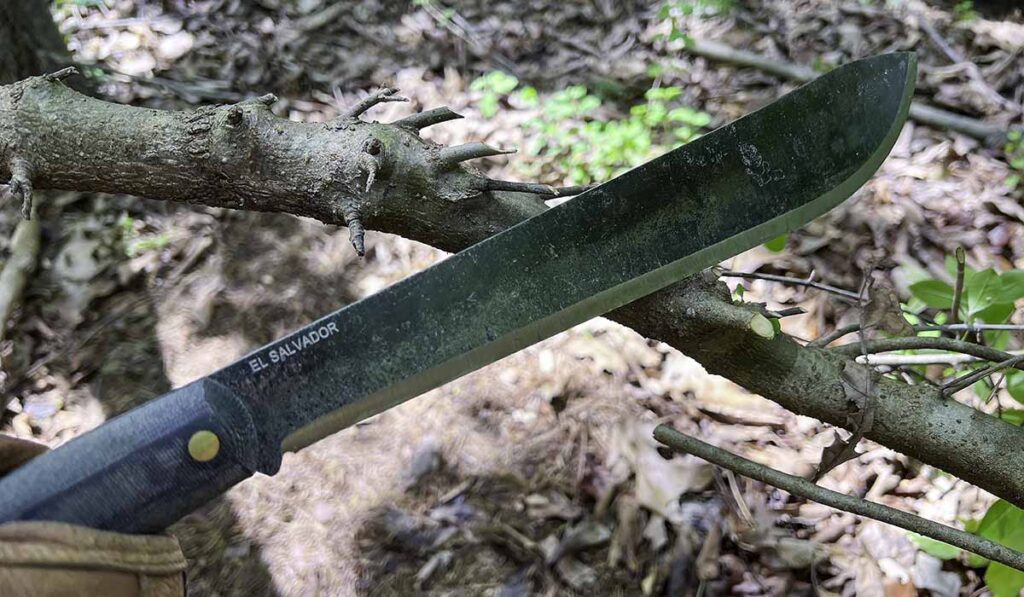
ESEE Knives Expat Darien Machete

ESEE Expat Darien
The ESEE Expat Darien is not only a great chopper but also good for more delicate work such as quickly removing smaller limbs in one motion.

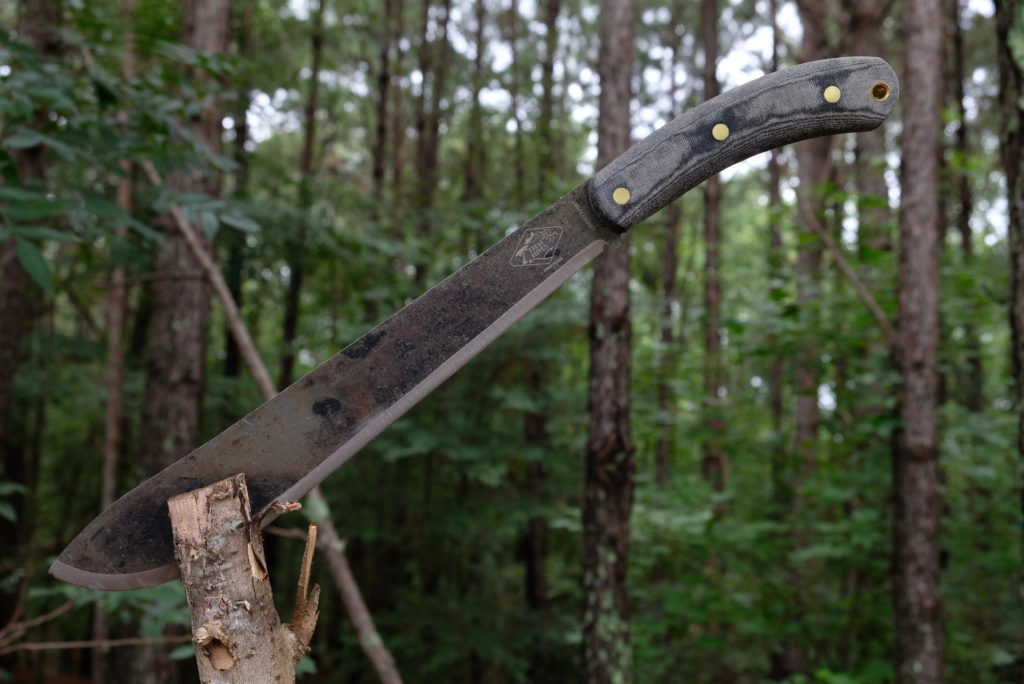
The ESEE Knives Expat Darien Machete is ruggedly made with a 12.4-inch blade of 1075 carbon steel. The blade has a notable two-tone appearance from the heat-treat scale left on the flats and the satin finish of the main grind bevels. It gradually tapers from belly to tang, evening out balance somewhat while having enough blade-forward weight to facilitate easy swinging.  

The 6-inch Micarta® handle has some girth and fills your hand well. The downward curve profile helps lock in your grip and prevents rearward slippage. Three large brass rivets hold the Micarta slabs securely to the full tang. I like how the grip is a bit oversized, allowing you to wrap your hand around it while still feeling comfortable and secure. At 18 inches overall, the machete is an ideal size for serious work yet compact enough for comfortable carry and storing in a truck, SUV or side-by-side.  

The reinforced ballistic nylon sheath is of a sewn, riveted construction, offering the toughness needed for housing the Darien. The desert tan nylon fabric offers a great alternative to the standard, ubiquitous black sheath. A single-button snap strap secures the knife. A large loop accommodates the thickest belts and is sewn securely to the sheath. It’s definitely well-made. MSRP: $120 Country of origin: El Salvador.  

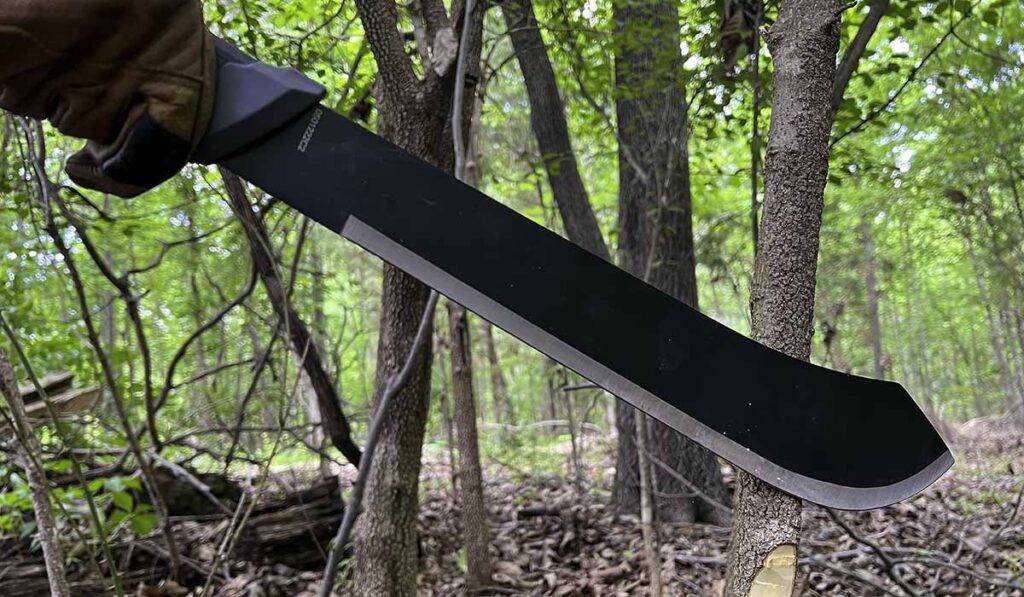
Gerber Gator Bolo

Gerber Gator Bolo
Chopping power is aplenty with the Gerber Gator Bolo and its longer blade. It has enough punch to make chopping saplings an easy task.

The Gerber Gator Bolo’s bolo-style blade flares at the tip to add a pronounced forward balance point that delivers powerful chops. The 15.4-inch blade is 1055 carbon steel in a black coating to resist corrosion. Overall length: 22.4 inches. The handle is a molded FRN with a textured rubber overmold for comfort in wet or dry conditions. The texturing is the same for all Gator series handles, with a simulated alligator hide pattern. Full-tang construction provides strength and improves balance.

The sheath is ballistic nylon lined with plastic to prevent blade puncture. A series of rivets holds the sheath together and a zippered portion opens it wide for easy removal/insertion. Two D-ring attachment points on the back anchor a shoulder strap. What’s weird is the strap is not included. You must supply your own. Neither is there a belt loop, which is somewhat surprising.  

The lengthy blade is ideal for taking out vines, tall weeds, etc. It can fell saplings, though delivering the necessary chopping blows can get tiring. It nonetheless remains an effective machete if weeds and assorted vegetation are your primary target. Out-of-the-box edge quality was sharp enough to do the job.

The handle is comfortable. A large finger recess at the guard is well-suited for wrapping your hand around the grip. The simulated gator-hide texturing excels at holding your hand in place, gloved or no. The lanyard works well in the event you lose your grip. Some users say lanyards are a danger as letting go of the handle may cause the dangling machete to swing around on you as opposed to letting it drop to the ground safely. If you don’t want the lanyard, cut it off.

I found the Gator Bolo an effective chopper despite its dramatic blade-heavy balance. Just remember to let the weight and gravity do their thing on the downstroke. The blade bit hard into green wood and the shallow grind thins out the cutting edge nicely. The blade held an edge fairly well and is easy to resharpen. I improved edge quality using a coarse-grit diamond sharpening rod followed by a fine-grit ceramic honing rod—not even five minutes and I had a good edge on it. MSRP: $60. Country of origin: China. If you need a machete with reach, this one’s for you.  

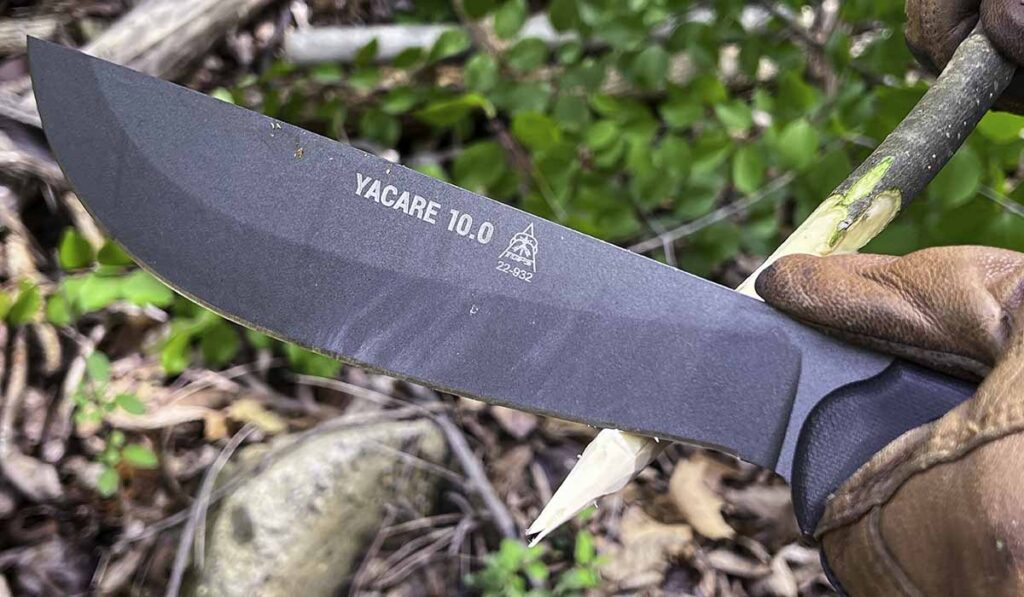
TOPS Knives Yacare

TOPS Yacare machete
Whittling is possible with the TOPS Yacare and its great balance and gently curving cutting edge. It’s got an excellent edge with plenty of bite right out of the box.

Designed by company general manager Craig Powell, the TOPS Knives Yacare 10.0 is a barong-style machete 15.5 inches overall.  The blade is 1095 carbon steel, a good performing material that’s easy to sharpen, and 10.25 inches—easily long enough for serious work. The blade’s forward balance works well as both a machete and a wood-chopping tool for dispatching saplings, vines and brush. The knife feels very controllable too, which is great for finer cutting tasks, something larger machetes normally don’t do well. The blade bites hard with every swing. The continuously curving cutting edge almost constantly presents itself at an angle to whatever is being cut, which enhances efficiency at powering through tall grass, weeds and saplings.  

The black Micarta handle features integral front and rear guards to capture your hand and is definitely a user. The grip edges are contoured and rounded for comfortable purchase, and white fiber spacers add a nice visual pop. Micarta has long been a favorite handle material of mine and I prefer it on fixed blades such as this one. It’s a very durable, lightweight material that is dimensionally stable and impervious to fluid absorption. It can be textured to add grip traction without being overly aggressive. Hence, TOPS uses Micarta in a lot of its knives, both big and small.  

The sheath is heavy-duty and well-made. It’s a ballistic nylon material that is quite rigid. A wide fabric-fastening strap secures the handle. As a nice added touch, there’s an exterior accessory pouch with a Fastex buckle closure. It stores things like a medium folder, sharpener or even a multi-tool. The belt loop is the same width as the sheath and heavy duty as well. MSRP: $270. Country of origin: U.S.A.

More Machetes

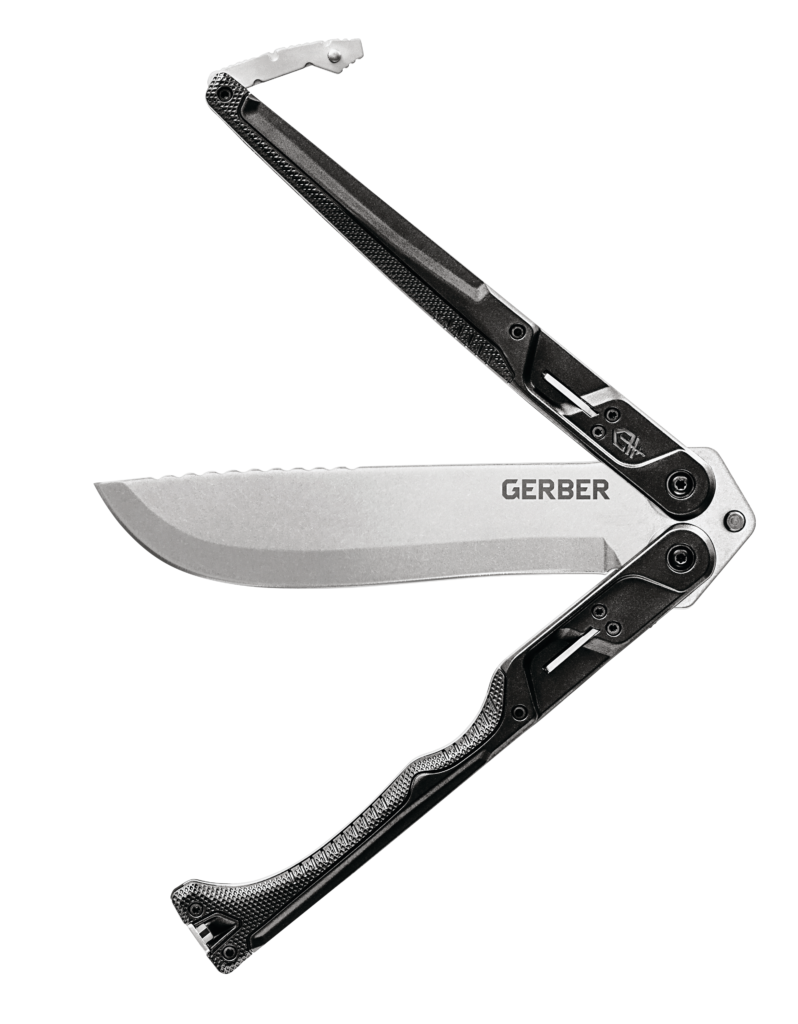
GERBER DUBLEDOWN FOLDING MACHETE

Blade length: 6.75”
Blade steel: 420HC stainless
Blade pattern: Recurve drop point
Blade Finish: Stonewashed
Weight: 18 ozs.
Overall length: 15.1”
Knife to know: Available in a green or black handle and a choice of blade finishes
Sheath: MOLLE/belt carry
Country of origin: USA
MSRP: $129-$139

ESEE Darien

The ESEE Darien features an ergonomic Micarta® handle for comfort and comes with a rugged canvas sheath. According to ESEE, the knife is a chopping machine whether in the Amazon, the jungle or your own backyard. It carries the same “no questions asked” warranty as the knives in the standard ESEE line.

ESEE DARIEN
Blade Length: 12.38”
Blade Material: 1075 carbon steel
Rockwell hardness: 54-56 HRC 
Blade’s Maximum Thickness: .094”
Handle: Micarta®
Knife weight: 15.5 ozs.
Overall Length: 18.18” 
Sheath: Canvas
Sheath weight: 4.5 ozs.
Country of origin: El Salvador
MSRP: $100 and up

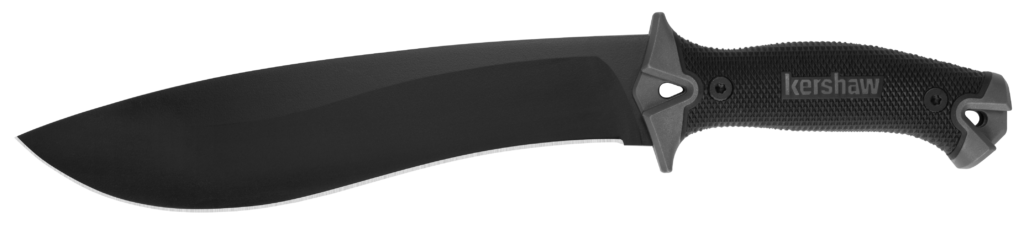
Kershaw Camp 10

Though a camp knife in design, the Kershaw Camp 10 doubles as a machete, too. Clearing brush, making kindling and more, it does the trick. The integral crossguard is a nice safety feature and the handle has holes for either a forward or rear lanyard.

KERSHAW CAMP 10
Blade length: 10”
Blade material: 65Mn spring steel
Blade finish: Black powdercoat
Blade pattern: Recurve drop point
Handle: Full tang, glass-filled nylon with Sure-Grip overmold
Knife weight: 1 lb. 2.3 ozs.
Overall length: 16”
Sheath: Glass-filled nylon w/gear straps and belt loop
Sheath weight: 5.7 ozs.
Country of origin:  Design, prototype and quality control in USA; manufactured in China
MSRP: $80.84

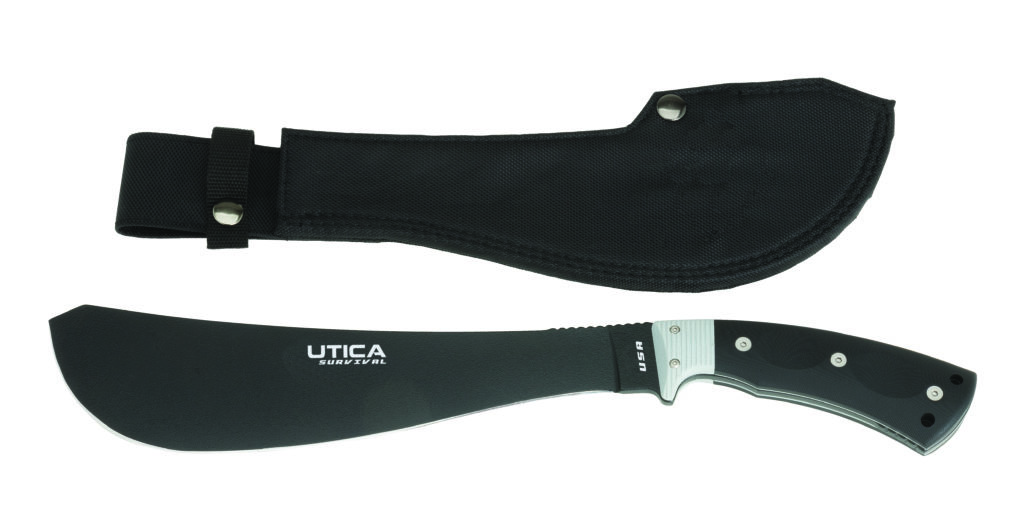
Utica Stealth I

The combination of a deep blade belly and dropped handle is designed to maximize the Utica Stealth I’s chopping and brush clearing performance. A single integral guard enhances user safety. The nylon belt sheath has a button strap to help secure the knife when sheathed.

UTICA STEALTH I
Blade length: 11.25”
Blade material: 1095 carbon steel
Blade finish: Black oxide
Handle material: Micarta®
Weight: 21.87 ozs.
Overall length: 17.5”
Sheath: Nylon
Country of origin: USA
MSRP: $129.60

Coast F1400 Machete

A D-guard and full-tang construction help highlight the Coast F1400 machete. The sheath has a metal clasp for a secure hold.

COAST F1400
Blade length: 14”
Blade steel: 3Cr13 stainless
Blade finish: Black oxide over glass bead
Handle material: Fiberglass-filled Nylon 6
Lanyard: Paracord
Weight: 1 pound, 1.2 ozs.
Overall length: 19.2”
Special feature: Sawback blade
Sheath: Nylon with hard plastic liner and riveted/sewn edge; includes belt loop 
Country of origin: China
MSRP: $29.99

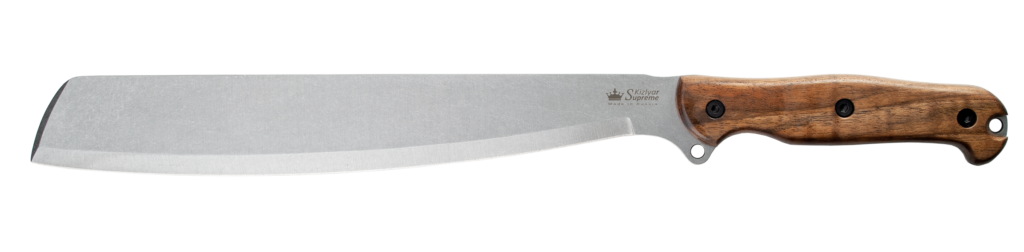
Kizlyar Supreme Bushmate

The Kizlyar Supreme Bushmate looks as much like a competition cutter as a machete, but the thin blade and Scandi grind makes it perform much better in the bush. The handle has two lanyard holes for rear or forward attachment, the latter doubling as an integral single guard.

KIZLYAR SUPREME BUSHMATE
Blade length: 10 7/8”
Blade steel: 420HC stainless
Blade grind: Scandi
Blade’s maximum thickness: .039”
Blade finish: Satin
Handle material: Caucasus walnut
Weight: 13 ozs.
Overall length: 17 3/8”
Knife to Know: The Bushmate is also available in a convex AUS-8 stainless steel version with a maximum blade thickness of .1889” and a 19-oz. weight
Sheath: Embossed leather
Country of origin: Russia
MSRP: $185

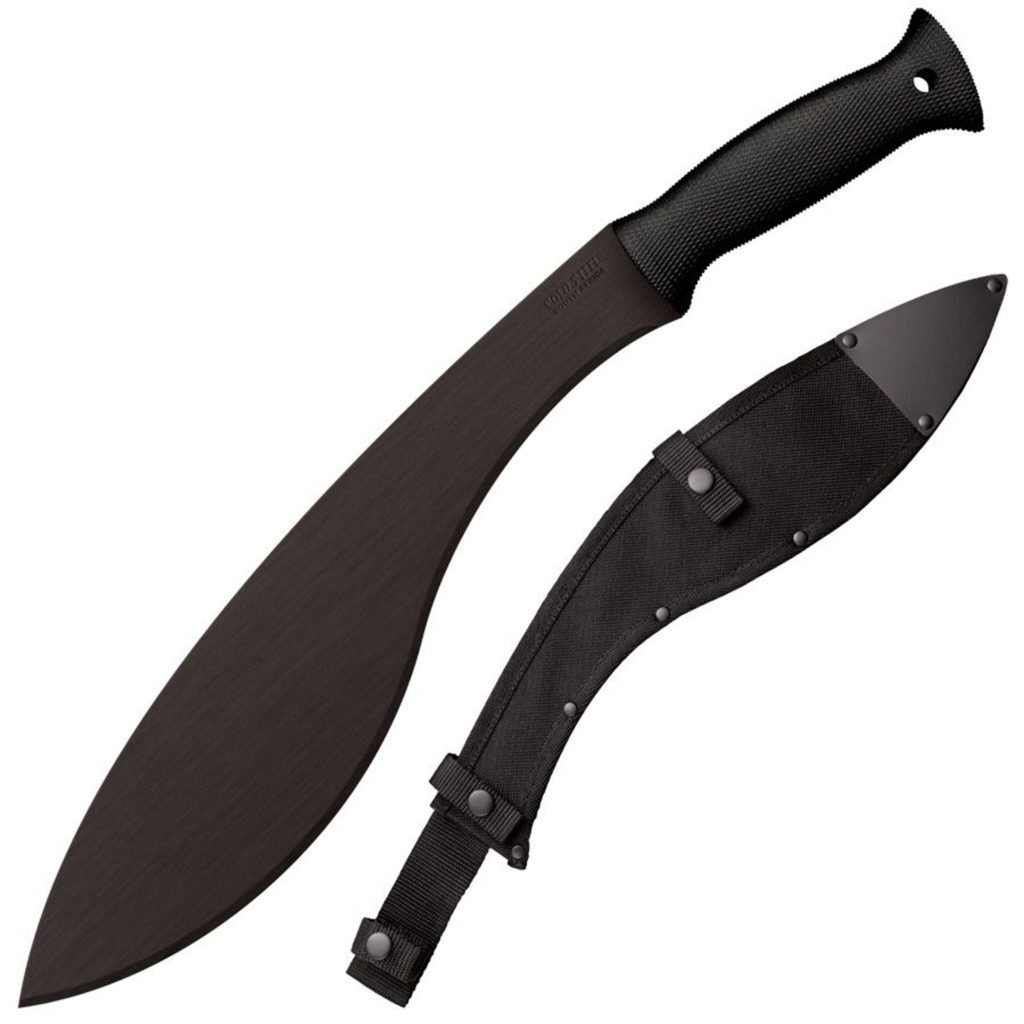
Cold Steel Kukri Machete

The Cold Steel Kukri Machete comes in two deep-bellied blade lengths: 13 (shown here) and 17 inches. Either is designed as a lightweight cutter for belt carry or lashed to a pack. The sheath comes with a reinforced tip and multiple snap downs.

COLD STEEL KUKRI MACHETE Blade length: 13”
Blade material: 1055 carbon steel
Blade finish: Black baked-on anti-rust matte
Handle material: Polypropylene thermoplastic w/hole for a lanyard
Handle length: 5”
Weight: 16 ozs.
Overall length: 18”
Sheath: Cor-Ex®
Country of origin: Import
MSRP: $29.99

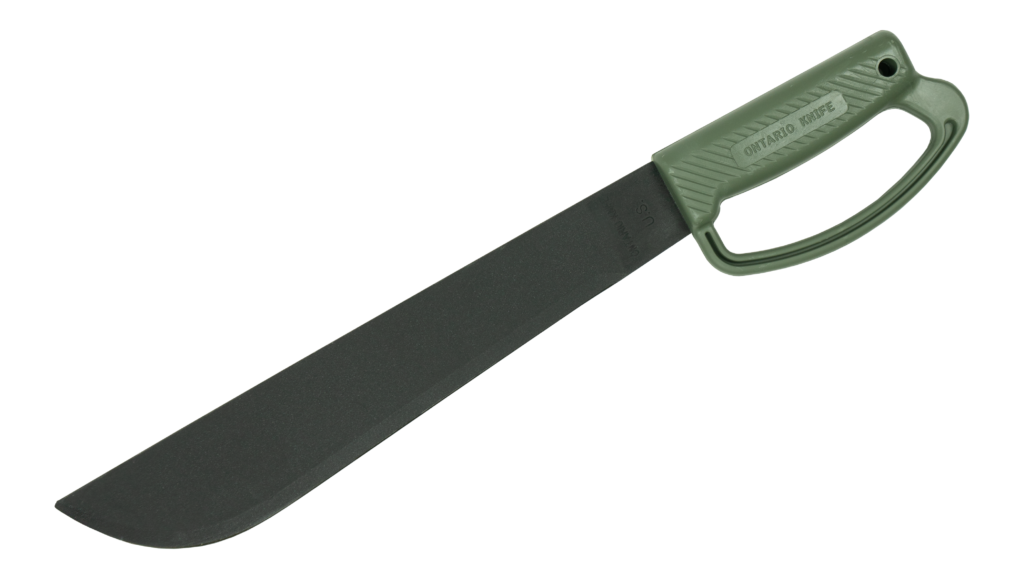
Ontario Camp Plus Machete

The Ontario Camp Plus Machete includes an ample D-guard handle for user safety. The carbon steel’s Rockwell hardness of 52-55 HRC renders the blade malleable enough to better endure high impacts.

ONTARIO CAMP PLUS MACHETE Blade length: 12.5”
Blade material: 1075 carbon steel
Blade finish: Phosphate coated
Handle material: OD green molded plastic
Weight: 1.65 lbs.
Overall length: 17.7”
Sheath: Black denier nylon packcloth w/heavy liner and belt loop
Country of origin: USA
MSRP: $29.07 (sheath sells separately for $11.95)

Smith & Wesson Cleaver Machete

The Smith & Wesson Cleaver Machete boasts blade cutouts to lighten the load, full-tang construction, an integral guard, and an ergonomic dropped handle with finger groove and a hole for a lanyard.

SMITH & WESSON CLEAVER MACHETE Blade length: 10”
Blade steel: 420 stainless
Handle: Overmolded rubber
Special features: Sawback blade and textured hammer pommel
Weight: 1.12 lbs.
Overall length: 16.54”
Sheath: Synthetic w/zipper and snap strap
MSRP: $51.99

Editor’s Note: Dexter Ewing contributed to this post.

Check Out More Buyer’s Guides:

New Knives: From Tactical To Outdoor Blades

These babies are jaw droppers…

Have a hankering to extend your wish list with a little something new? Look no further as we’ve gathered up a slew of new custom and factory blades fresh on the market and ready to please. This collection has a definite tactical and outdoor tilt to it, with plenty of fixed blades. But, we’ve snuck a few worthy folders in just to keep the balance.


Erik McCright Fighter

New mccright

Fighter Specs
Blade length: 7.5”
Blade material: Old W2 tool steel w/hamon
Handle material: Vintage Micarta® w/a fileworked frame
Bolster: Textured mild steel
Overall length: 12”
Knife to know: Erik McCright is an ABS journeyman smith
Maker: Erik McCright (Jocelyn Frasier image)


Simone Milanesi Lacantina Indy

New Lacantina

Indy Specs
Pattern: Bowie
Blade length: 6.29”
Blade material: Mosaic damascus of K720 tool and 15n20 nickel-alloy steels forged by Spina Gianluca
Blade grind: Full flat
Blade finish: DLC (diamond-like carbon)
Handle material: Rosewood w/carbon pin
Guard & fittings: Fat Carbon
Overall length: 11.6”
Maker’s price for a similar knife: $2,000
Knife to know: Simone Milanesi Lacantina’s Indy won The Knifemakers’ Guild Best Bowie Award at BLADE Show 2023
Maker: Simone Milanesi Lacantin (SharpByCoop image)


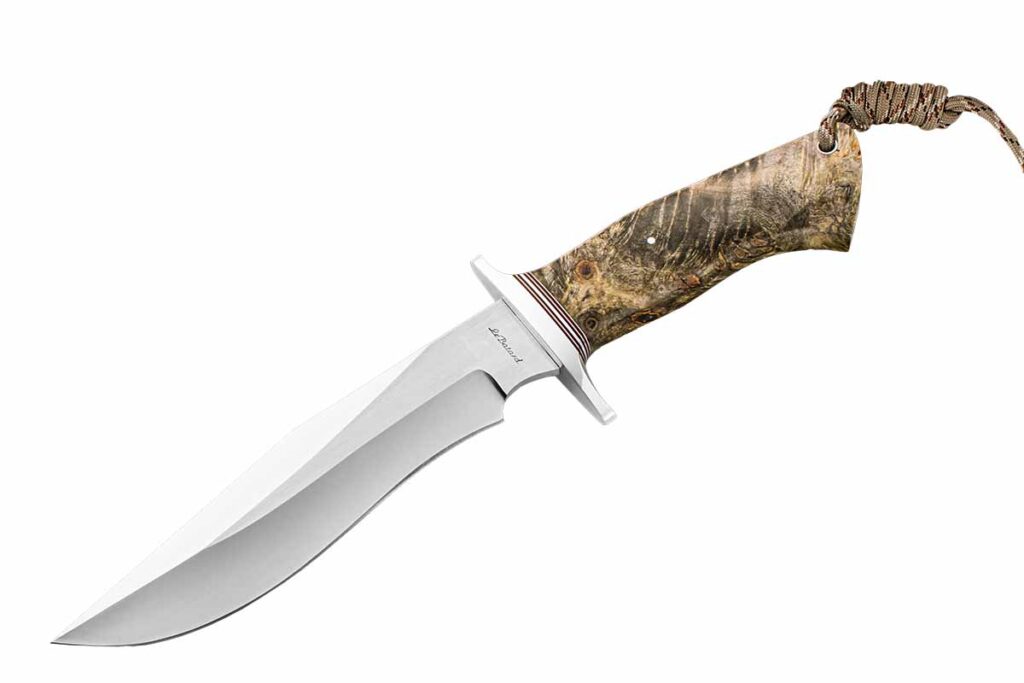
Paul LeBatard Recurve Bowie

New LeBatard

Recurve Bowie Specs
Blade length: 7”
Blade steel: CPM 154 stainless
Rockwell hardness: 61 HRC
Blade grind: The top false edge and primary bevels are hollow ground on a 10” contact wheel and satin polished; the flats are hand finished to 800 grit
Blade @ thickest: 3/16”
Handle material: California buckeye burl
Lanyard material: Desert camo 550 paracord
Double guard: 7075-T6 aluminum
Overall length: 12”
Maker’s price for a similar knife: $750
Maker: Paul LeBatard (Jocelyn Frasier image)


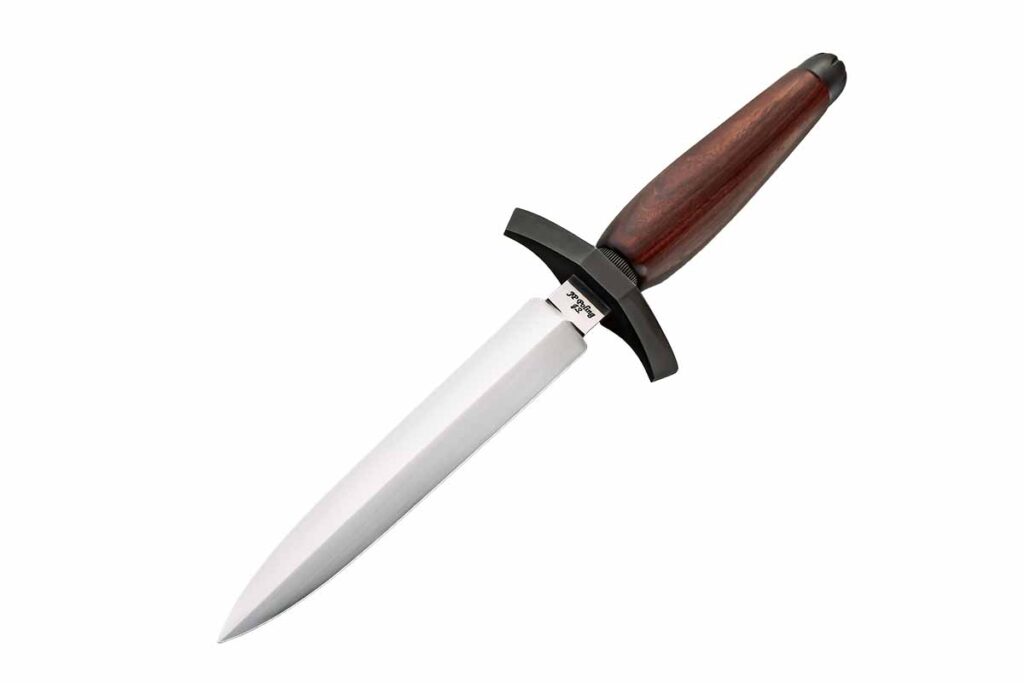
Jim Poling Dagger

New Poling

Dagger Specs
Blade length: 6.5”
Blade material: 5160 carbon steel
Blade grind: Flat/convex
Handle material: Rosewood
Fittings: Mild steel
Overall length: 12”
Maker’s price for a similar knife: $600
Maker: Jim Poling (SharpByCoop image)


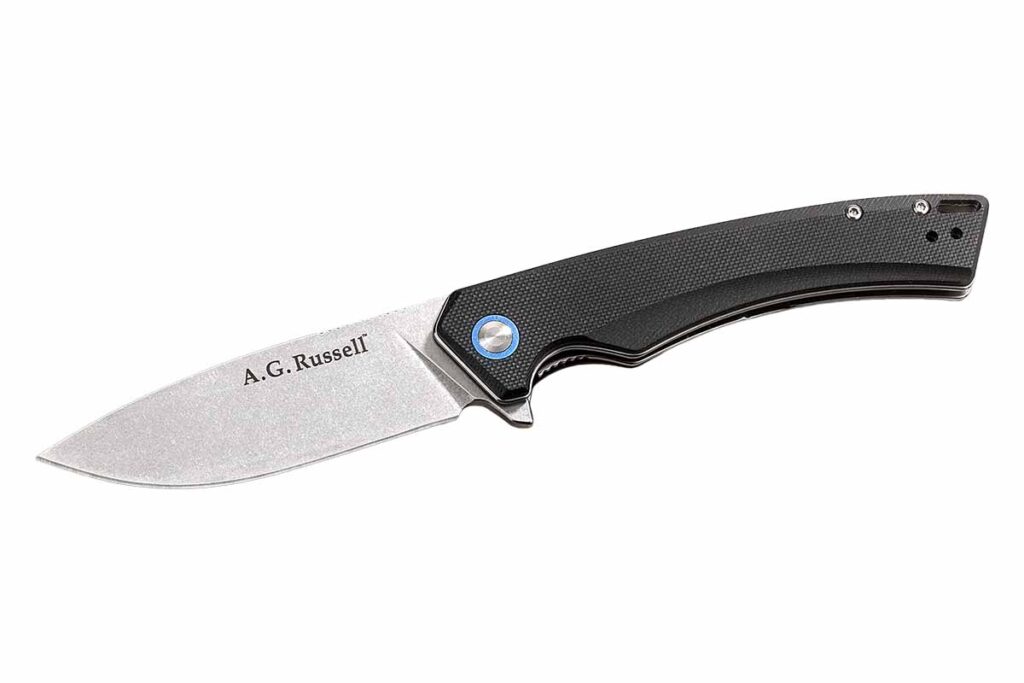
A.G. Russell Knives Power Ball C2

Russel Knife

Power Ball C2 Specs
Knife type: EDC
Blade length: 33/8”
Blade material: D2 tool steel
Rockwell hardness: 59-60 HRC
Blade finish: Stonewash
Blade pattern: Drop point
Handle: Black G-10 w/blue pivot accent ring
Pocket clip: Reversible, deep carry
Lock: Linerlock
Weight: 3.7 ozs.
Closed length: 4.75”
Knife to know: Also available in a green handle w/orange pivot accent ring
Country of origin: China
MSRP: $67.95
Company: A.G. Russell Knives


Halfbreed Blades CFK-02 (Compact Field Knife)

New CFK

CFK-02 (Compact Field Knife) Specs
Knife type: Fixed blade
Blade length: 4.01”
Blade steel: N690 stainless
Rockwell hardness: 59-60 HRC
Blade @ thickest: .16”
Blade finish: PVD coated and stonewash options
Blade pattern: Pikal
Handle steel: VG-10 stainless
Weight: 4.87 ozs.
Overall length: 8.07”
Sheath: Injection-molded plastic
Mounting: Ulticlip and DOTS Belt
Countries of origin: Australia and Taiwan
MSRP: $275
Company: Halfbreed Blades


CRKT Redemption

New crkt redemption

Redemption Specs
Designer: BLADE Magazine Cutlery Hall-Of-Fame® member Ken Onion
Blade length: 4.06”
Blade steel: MagnaCut stainless
Blade @ thickest: .15”
Blade finish: Stonewash
Handle material: G-10
Bolster: Stainless steel
Lock: Crossbar
Weight: 4.9 ozs.
Closed length: 5.1”
Knife to know: The Redemption is based on Onion’s Deadman’s Hand custom knife named after the aces-and-eights hand Wild Bill Hickok purportedly held at the time of his death
Country of origin: Made in the USA in collaboration w/Hogue Knives
MSRP: $225
Company: CRKT


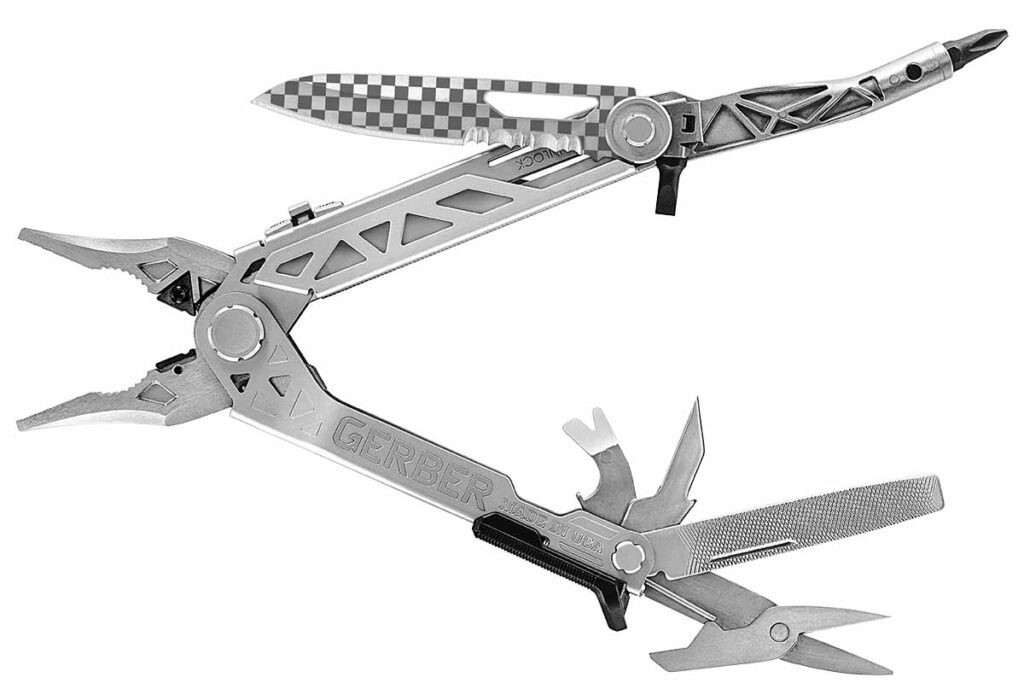
Gerber Center Drive

New Gerber CenterDrivePlus

Center Drive Specs
Knife type: Multi-tool
Blade length: 3.25”
Blade steel: 420HC stainless
Implements: Serrated blade, file, awl, pry tool w/nail puller & bottle opener, scissors, fine- & coarse-sided file, pliers, rotatable carbide wire cutters & strippers; magnetic flathead and Phillips bits; in/cm ruler
Weight: 9.5 ozs.
Closed length: 4.7”
Sheath: Fabric
Knife to know: One-thumb opening system; the pliers are spring-loaded; magnetic 3.2” Center-Axis bit driver; tool lock
Country of origin: USA (sheath made in China)
MSRP: $130-$145
Company: Gerber


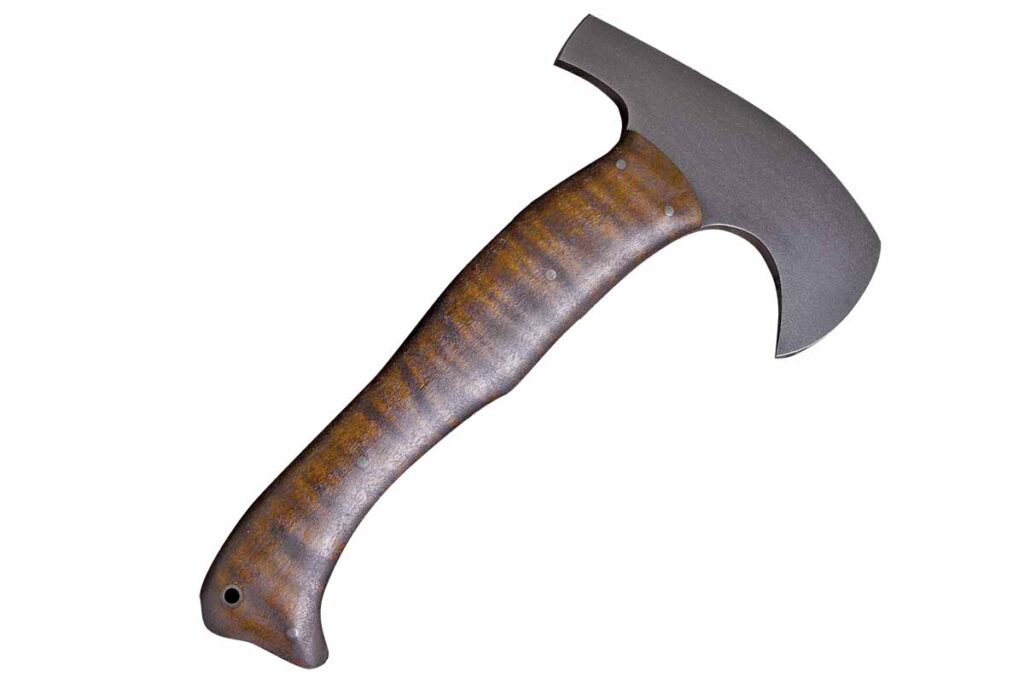
Winkler Knives WK Hunter Axe LT

New WK Hunter Axe LT

New LeBatard
Head length: 4.75”
Axe material: 80CrV2 carbon steel
Blade @ thickest: .25”
Blade finish: No-glare black oxide
Handle: A wide variety of natural and synthetic options; contact maker for info
Construction: Skeletonized full tang
Overall length: 9”
Sheath: Fast-draw carrier, lined Boltaron®, HD shockcord quick-release retention system, nylon belt straps, multi-carry options
Country of origin: USA
MSRP: $450
Company: Winkler Knives


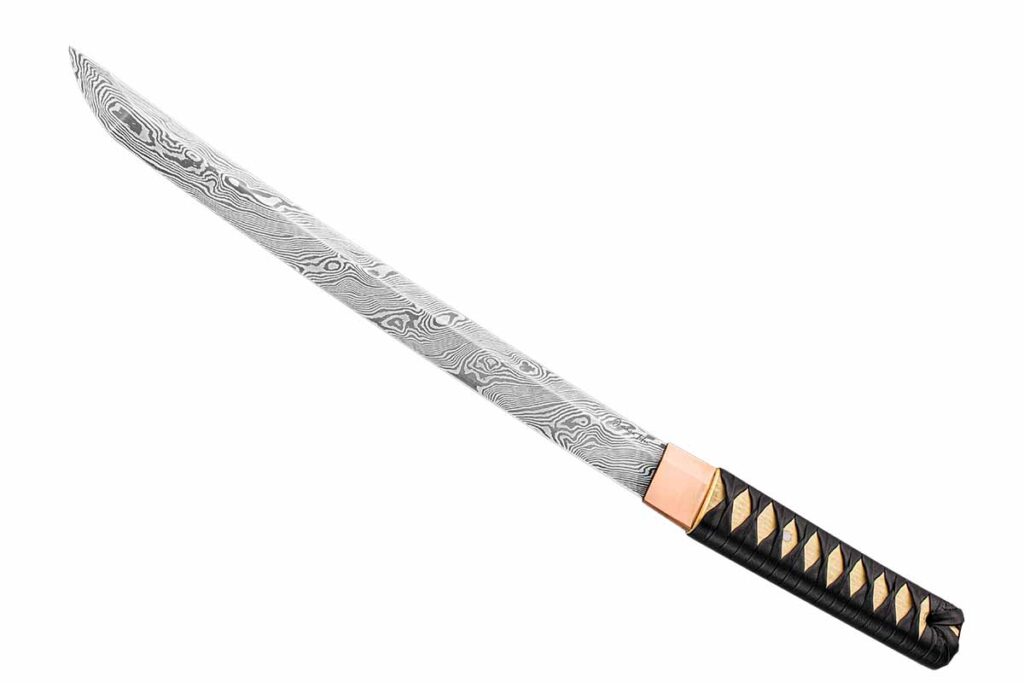
Jesse Hu Tanto

New Hu

Tanto Specs
Blade length: 12”
Blade material: Twist Damascus of 1084 carbon and 15N20 nickel-alloy steels
Blade grind: Traditionally ground w/a shinogi-zukuri geometry
Handle material: Poplar and leather w/brass spacer
Habaki (collar): Copper
Overall length: 17.5”
Maker’s price for a similar knife: $3,000-$4,000
Knife to know: The maker is an ABS apprentice smith
Maker: Jesse Hu (Jocelyn Frasier image)


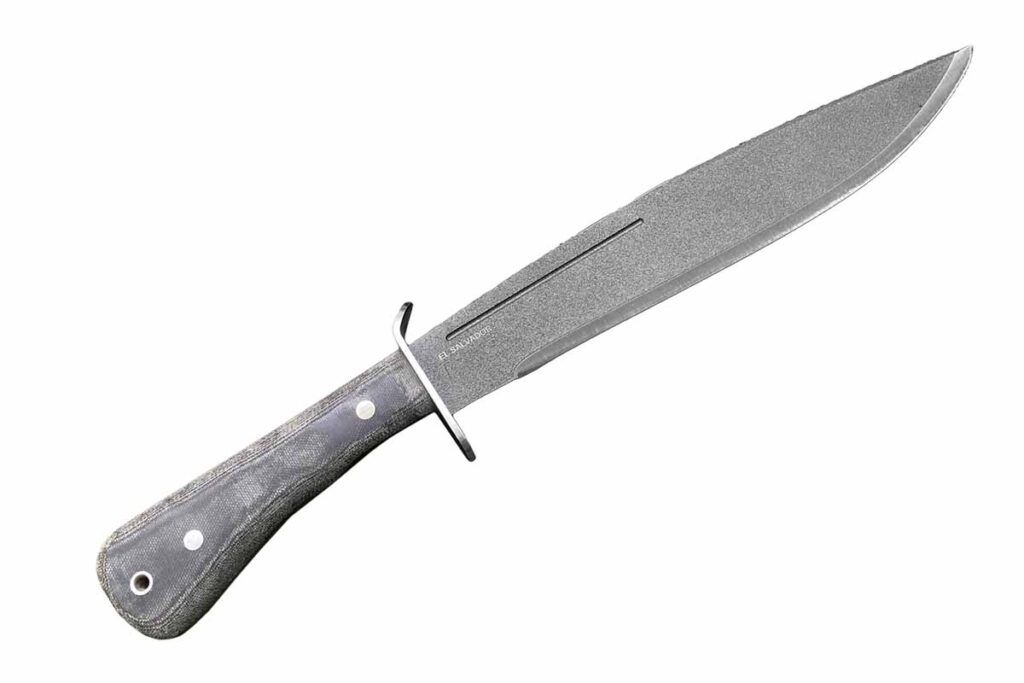
Pearson Industries MOST

Person

MOST Specs
Knife type: Fixed blade
Blade length: 11.375”
Blade material: 1075 carbon steel
Blade finish: Black Traction powder coat
Blade @ thickest: .196”
Handle material: Black canvas Micarta®
Construction: Full tang
Weight: 24 ozs.
Overall length: 17.125”
Sheath: Kydex
Country of origin: El Salvador
MSRP: $279.95
Company: Pearson Industries


Joseph Bandeko Fixed Blade

New Bandeko

Fixed Blade Specs
Pattern: Double-keyhole dagger
Blade length: 11.28”
Blade material: 15N20 nickel-alloy steel
Blade grind: Flat
Handle material: African blackwood
Handle pins: Argentium silver
Pommel: 416 stainless steel
Overall length: 16.93”
Maker’s price for a similar knife: $4,495
Maker: Joseph Bandeko (SharpByCoop image)

Check Out More Knife Drops:

Nessmuk Knife: Options In The All-American Outdoor Knife

History repeats itself in modern renditions of an all-American classic.

Some patterns stand the test of time and become legendary for a reason, be it a story, movie or book. The Nessmuk-style knife stands out because of its shape.

Nessmuk was the pen name of George Washington Sears, a 19th-century American writer, conservationist and outdoorsman. He wrote about his wilderness adventures, particularly his solo canoe trips in the Adirondacks, a picturesque mountain range in northeastern New York state. He promoted a simple and lightweight approach to camping and woodcraft.

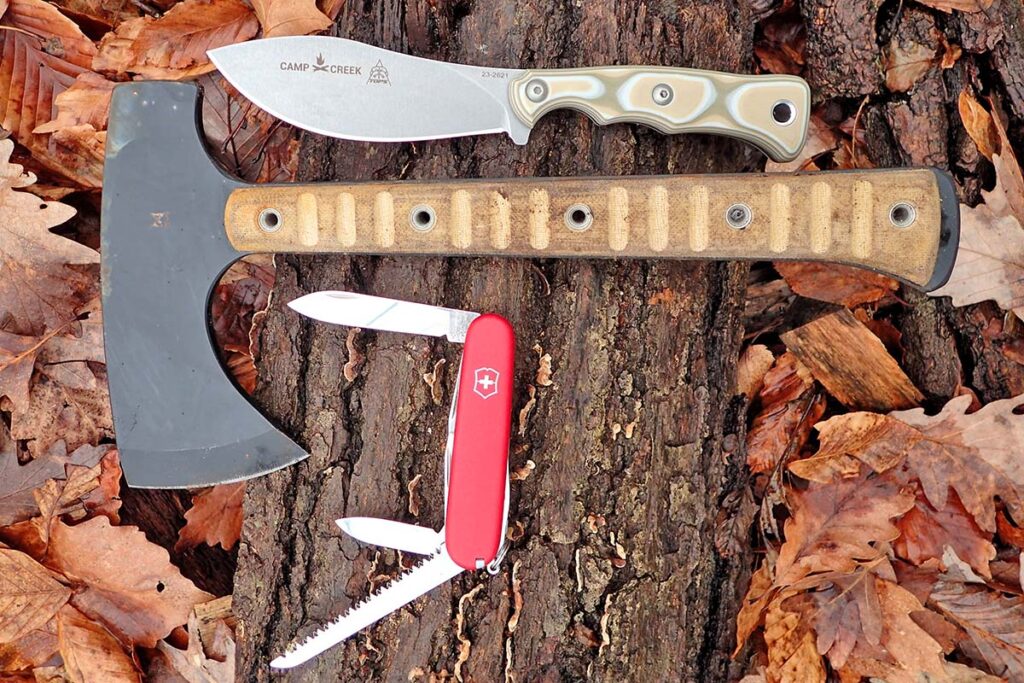
A modern “Nessmuk Trinity” with a Helm Forge hatchet, Victorinox camper, and TOPS Knives Camp Creek.
A modern “Nessmuk Trinity” with a Helm Forge hatchet, Victorinox camper, and TOPS Knives Camp Creek. Nessmuk would be proud of this edged-tool setup.

According to the story, the Nessmuk knife was named after a childhood friend of Sears’s from the American Indian community. The knife was not well documented and very little is known about it except for a diagram in Sears’s book Woodcraft and Camping. The book describes the knife as “thin in the blade, and handy for skinning, cutting meat, or eating with.”

What Is A Nessmuk

The Nessmuk-style knife has a unique shape that sets it apart from other models. The 4-to-5-inch blade has a hump on the spine that is closer to the point. The blade also has a deep belly and an upswept point, which makes it ideal for slicing, skinning and similar tasks. The distinct blade shape is the defining feature of a Nessmuk-style knife.

George Washington Sears, aka Nessmuk, preferred thin knives with keen edges. He paired his knife with a double-bit hatchet and a folding knife, forming his “trinity” of cutting tools.

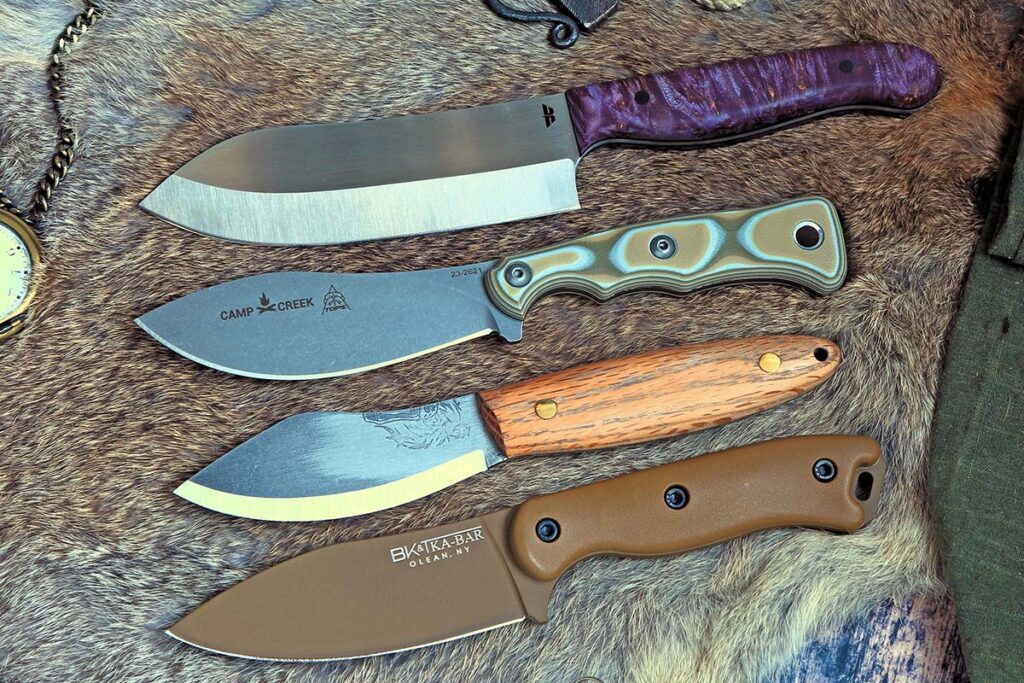
Nuge Camptoku, TOPS Knives Camp Creek, Bear Forest Knives PuuMuk and KA-BAR/Becker BK-19 Nessmuk knives.
The Nessmuk-type knife is a highly regarded design. The test versions are, from top: Knives By Nuge Camptoku, TOPS Knives Camp Creek, Bear Forest Knives PuuMuk and KA-BAR/Becker BK-19.

Usually, a Nessmuk blade is carbon steel ranging from 3/32 to 1/8 inch at the thickest. The handle comes in a variety of materials, including wood, bone or antler depending on availability and user preference. It is important for the handle to be comfortable and ergonomic, fitting the hand well.

What Makes A Good Nessmuk

A Nessmuk knife is a fixed blade Sears designed and used for his expeditions. It has a distinctive curved blade that resembles a skinner or a butcher knife and a handle that fits comfortably in the hand.

A quality Nessmuk knife should be able to perform various tasks in the woods, such as skinning game, slicing meat, carving wood, making feather sticks, cutting cord—even shaving. It should be sharp, sturdy, well balanced and easy to maintain. A Nessmuk knife should also be lightweight and compact so as not to add much bulk or weight.

TOPS Knives Camp Creek

Camp Creek combines all the features of a superior hunting knife with impeccable fit and finish
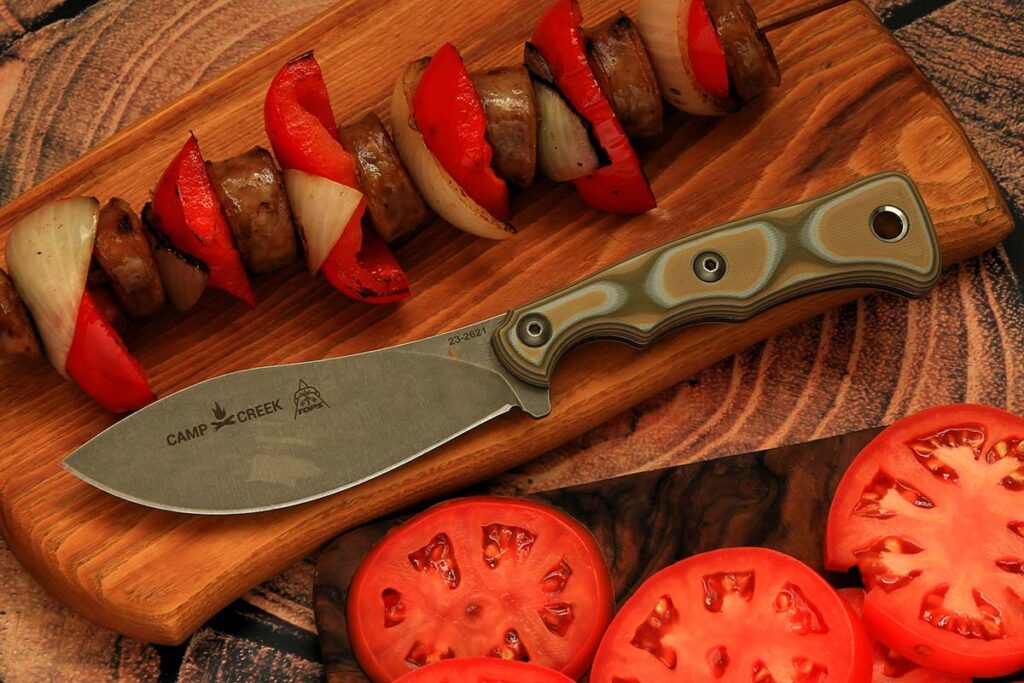
The Camp Creek combines all the features of a superior hunting knife with impeccable fit and finish. It sliced camp food and passed the tomato test with flying colors.

The TOPS Knives Camp Creek is a hunting/camping knife designed by Leo Espinoza, company president. The blade is CPM S35VN steel, which boasts superior edge retention and stainless properties. The handle is a three-color camo-style G-10.

The Nessmuk-like design is perfect for hunting, skinning, processing wood and food prep around the campsite. The knife has a contemporary tan Kydex sheath and a brown leather dangler on a swivel.

Camp-style kabobs were my focus with the Camp Creek due to its classic butcher knife shape. I knew it would excel slicing meat and veggies and it didn’t disappoint. It aced the tomato-slicing test and will see more dirt time in the future.

Definitely the most Nessmuk shaped of the review knives, the super-sharp, flat-ground blade has all the right curves and excels at food prep and woodcraft.

Camp Creek Specs
Designer: Leo Espinoza
Blade Length: 4.38”
Blade Steel: CPM S35VN stainless
Blade Grind: Flat
Blade @ Thickest: .13”
Blade Finish: Tumble
Handle Material: Camo G-10
Overall Length: 9”
Sheath: Coyote tan Kydex and leather
Country of origin: USA
MSRP: $305

Bear Forest Knives PuuMuk

Eating off the Nessmuk hump
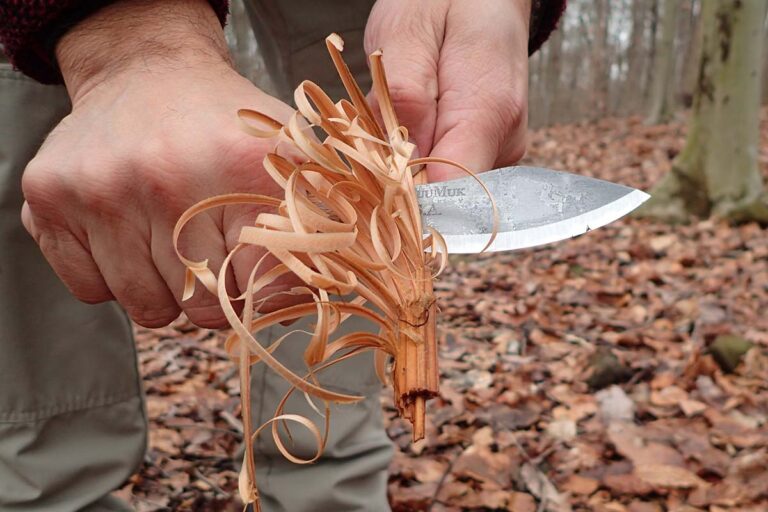
The author ate off the Nessmuk hump of the PuuMuk, perhaps the way Nessmuk himself did a century-and-a-half ago.

Made by Bear Forest Knives (BFK), the PuuMuk combines the design elements of a puukko and a Nessmuk-style knife. It has a straight handle without a guard and a choice of blade grinds: high saber or Scandi. The knife features full-tang construction. The blade was sharp as can be, especially the Scandi version.

The handle is like all the knives I have used from BFK—comfort is not compromised in any way. The red oak scales are secure and comfortable in any grip.

I used the PuuMuk as I would a general camp knife. I improvised carving a fork out of wood and general woodcraft like making feather sticks for a fire. The PuuMuk prepared food outdoors, slicing bacon, tomatoes, avocados and peppers. I used it as an impromptu spoon to eat off the back of the Nessmuk blade hump; perhaps Sears did the same. I used the PuuMuk for one month straight in the kitchen, doing all a kitchen knife would typically do. It didn’t take much time before the steel took on a respectable patina, adding to the look of the old-timey pattern.

The knife’s standout feature is the thin Scandi-ground blade and sharp 90-degree spine, adding a modern improvement to the classic pattern.

PuuMuk Specs
Blade Length: 3.75”
Blade Material: 80CrV2 carbon steel
Blade Grinds: Scandi and high saber options
Blade @ Thickest: 3/32”
Blade Finish: Acid wash
Knife to know: The blade’s 90-degree spine accommodates ferro rod striking and tinder scraping
Handle Material: Red oak
Overall Length: 8.375”
Sheath: JRE Industries brown leather
Country of origin: USA
MSRP: $179.99

KA-BAR Becker BK-19

BD-19 Trap
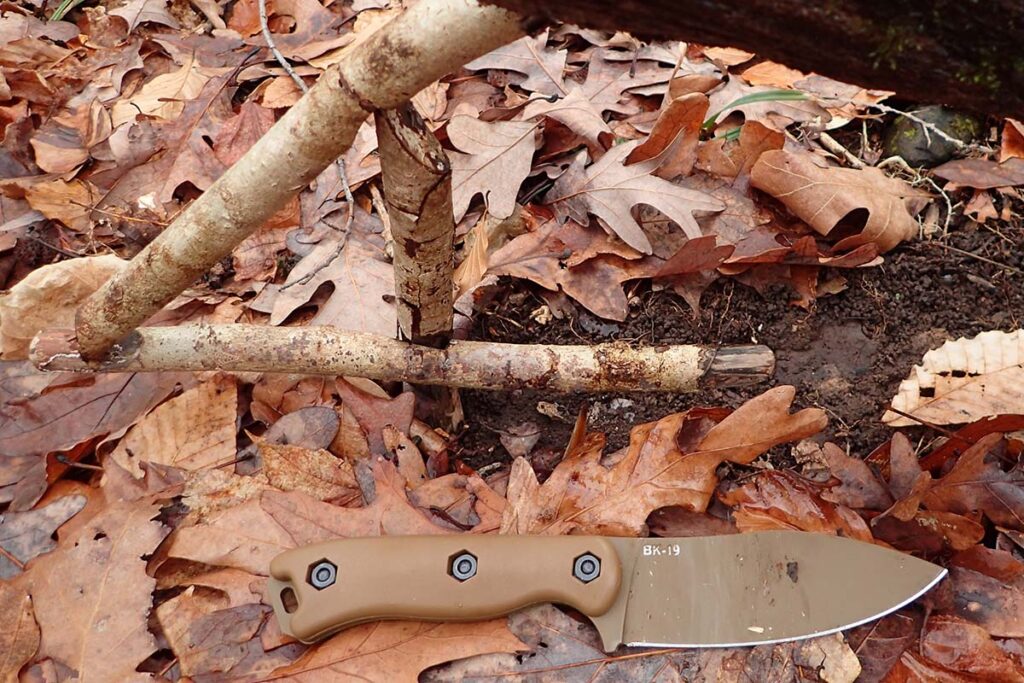
In survival Nessmuk mode, the author made a figure-four trap with the BK-19 in a jiffy.

The KA-BAR Becker BK-19 is a solid tool battened down with stainless steel Torx hardware and comes with a MOLLE-compatible, bulletproof Celcon sheath. Designed by Ethan Becker of Becker Knife & Tool, the 9.6-ounce edged tool stands out with the beloved Nessmuk blade shape so highly regarded in the bushcraft community.

The blade has more of a drop-point look than the other three test models. It is a survival Nessmuk if ever there was one. I put the knife into the deep end, splitting wood via a stout baton and crafting a figure-four deadfall trap. The robust blade easily split timber and processed wood for a late winter fire.

The handle was comfortable in several grips, and the exposed tang pommel added another degree of usefulness among the bunch, standing out as the hard-use survival Nessmuk the likes of which Mr. Sears would be proud.

The standout feature of this compact powerhouse is the sheath, which can be worn on a belt or in a scout carry orientation. The belt loop webbing is removable, and the retention is so good that the snap closure at the top is unnecessary. However, the closure can come in handy when in transit. KA-BAR has figured it out for you with two drain holes to help keep the sheathed blade dry in wet conditions.

BK-19 Specs
Designer: Ethan Becker
Blade Length: 4.3125”
Blade Material: 1095 Cro-Van carbon steel
Blade Grind: Flat
Blade @ Thickest: .165”
Blade Finish: Burnt bronze
Handle Material: Ultramid synthetic
Overall Length: 9.125”
Sheath: Celcon
Country of origin: USA
MSRP: $165.38

Camptoku Knives By Nuge

Camptoku Nessmuk
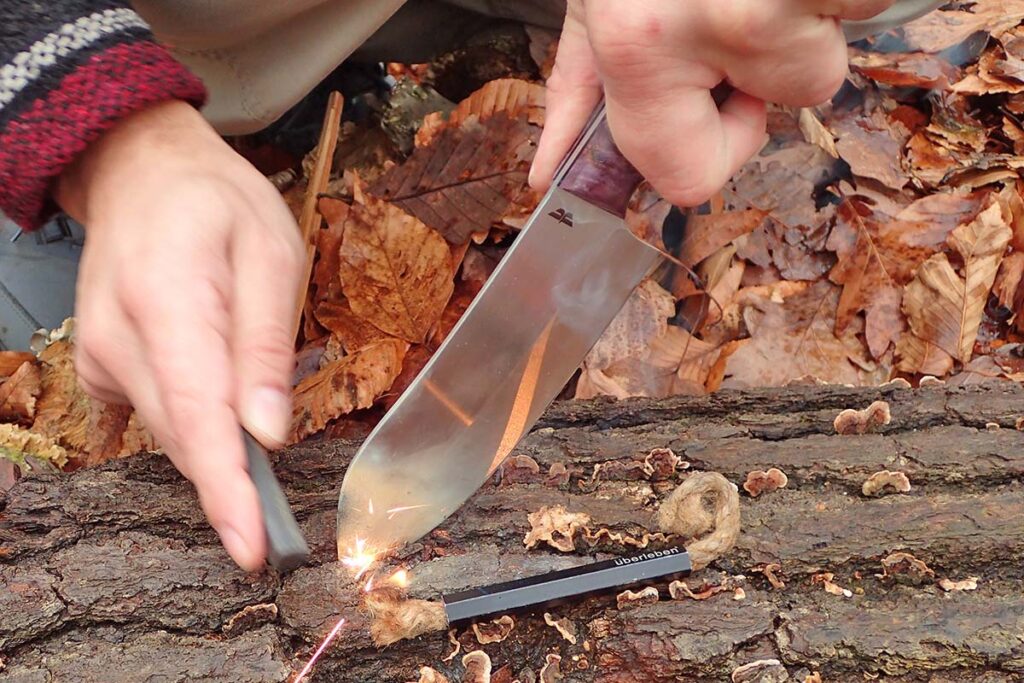
The Camptoku has a sharpened 90-degree section at the front of the spine, allowing the author to ignite some tinder with a ferro rod quickly.

The Camptoku from Knives By Nuge is a versatile general-purpose camp knife blending the esteemed Nessmuk blade with a santoku pattern, resulting in a rugged tool for outdoor and meal tasks. The Nitro-V stainless steel blade offers excellent durability and easy maintenance. The Camptoku comes with G-10 or wood scales and a custom-made slip sheath (no belt loop).

It is the longest of the bunch and a bit of a divergence from the traditional Nessy. However, it pays homage to the revered design and moves it into a new era. The thin blade screams kitchen use and allows for a comfortable chef’s pinch grip with a rounded spine for comfort. Meanwhile, the front 1.5-inch section from the Nessmuk hump to the tip has a sharp 90-degree spine for striking a ferro rod or scraping tinder.

The handle is a generous 4.75 inches, making it suitable for kitchen and woodcraft grips. Incredibly comfortable in a fist handhold, the knife is a chameleon when put into service in a chest-lever or pinch grip. The G-10 liners and pins offer that dash of undeniable modern class.

In the field the Camptoku served as the ordained kitchen knife, slicing tomatoes, meat and vegetables for stew while also starting fires to cook what it had been used to prepare.

Camptoku Specs
Blade Length: 5.5”
Blade Steel: Nitro-V stainless
Blade Grind: Saber
Blade @ Thickest: 3/32”
Blade Finish: Satin
Knife to know: The blade has a 90-degree spine in a 1.5” section from the hump to the tip for ferro rod striking and tinder scraping
Handle Material: Choice of G-10 or maple burl
Overall Length: 10.5”
Sheath: Kydex
Country of origin: USA
MSRP: $425

Dime Novel Knives?

George Washington “Nessmuk” Sears spoke ill of the bowie- and hunting-style knives of his era (mid-to-late 19th century), writing of them, “The ‘bowies’ and ‘hunting knives’ usually kept on sale are thick, clumsy affairs, with a sort of ridge along the middle of the blade, murderous-looking, but of little use; rather fitted to adorn a dime novel or the belt of ‘Billy the Kid’ than the outfit of the hunter.”

Here To Stay

The Nessmuk knife is a versatile and practical tool that can easily handle various outdoor tasks. The pattern has become crucial to American cutlery history and shows no signs of going away. Here’s hoping it never does.

Check Out More Outdoor Knives:

Advertisement

Must Read Articles

Read this before you make a knife

Knifemaking 101 – Read This Before You Make a Knife

  by Wayne Goddard My experience has taught me that there's nothing like digging in and getting started. I've often said the hardest part of the...
how to forge damascus steel

How to Forge Damascus

Advertisement
Advertisement