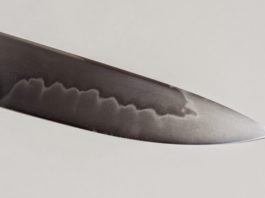
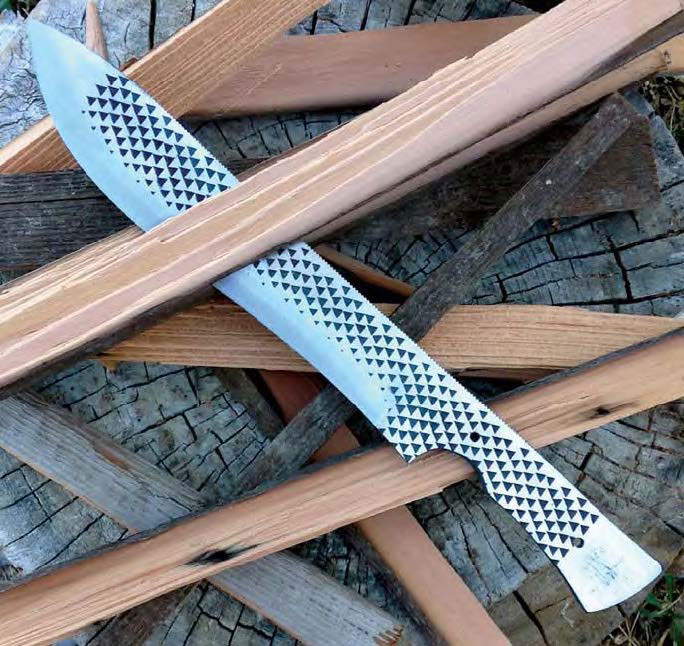
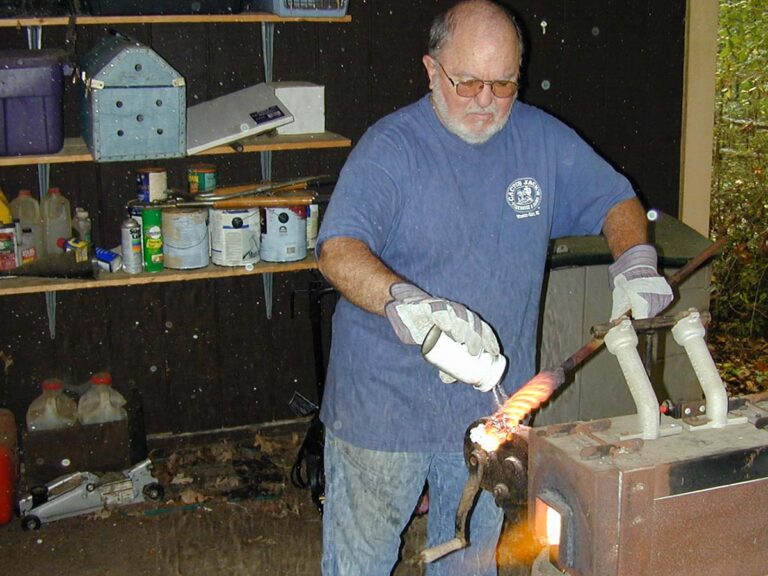
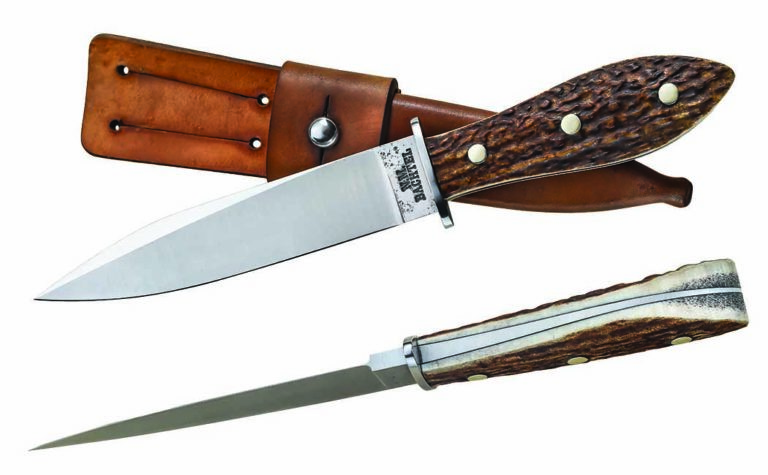
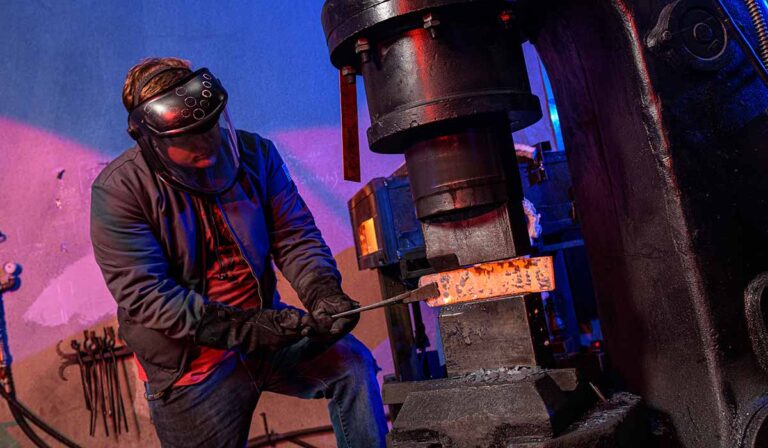
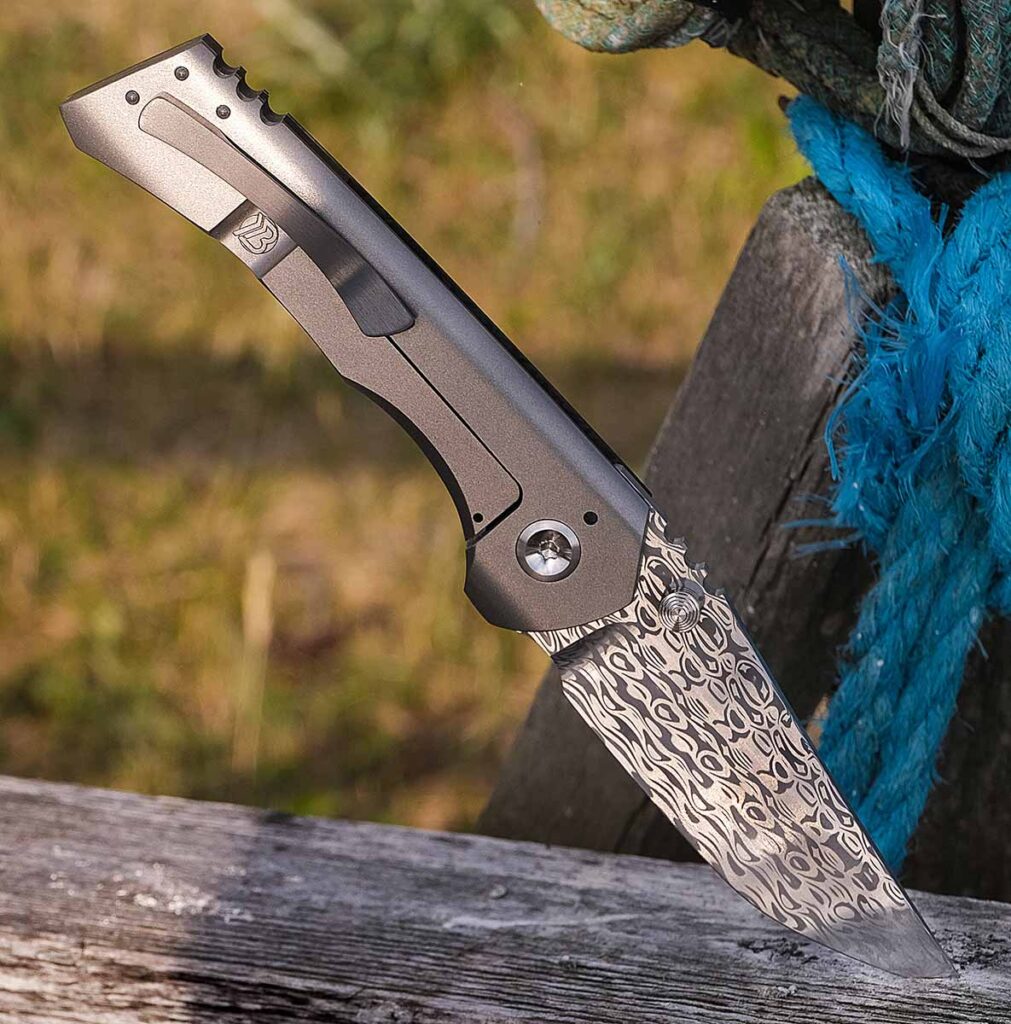
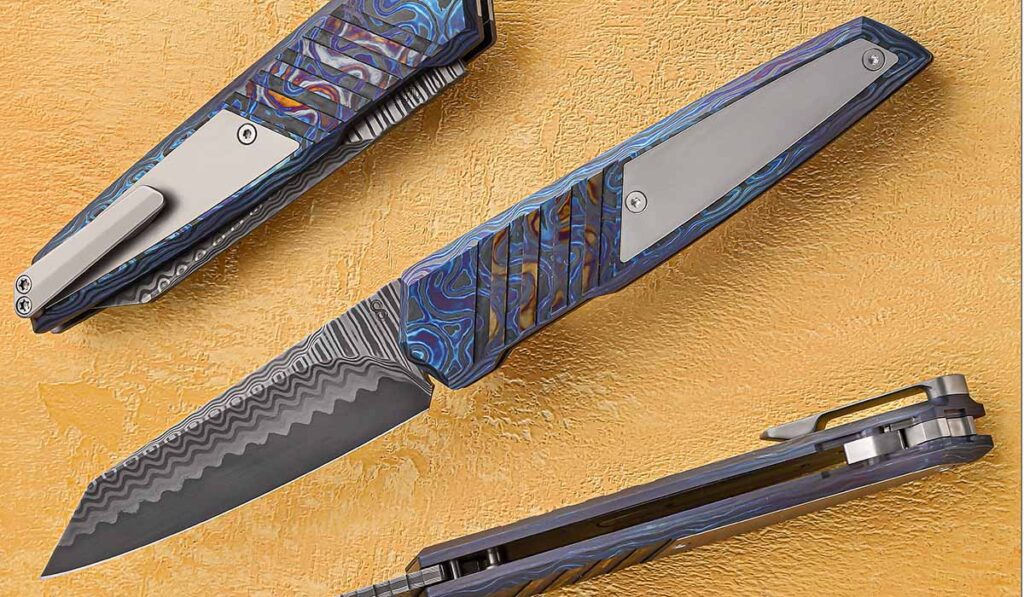
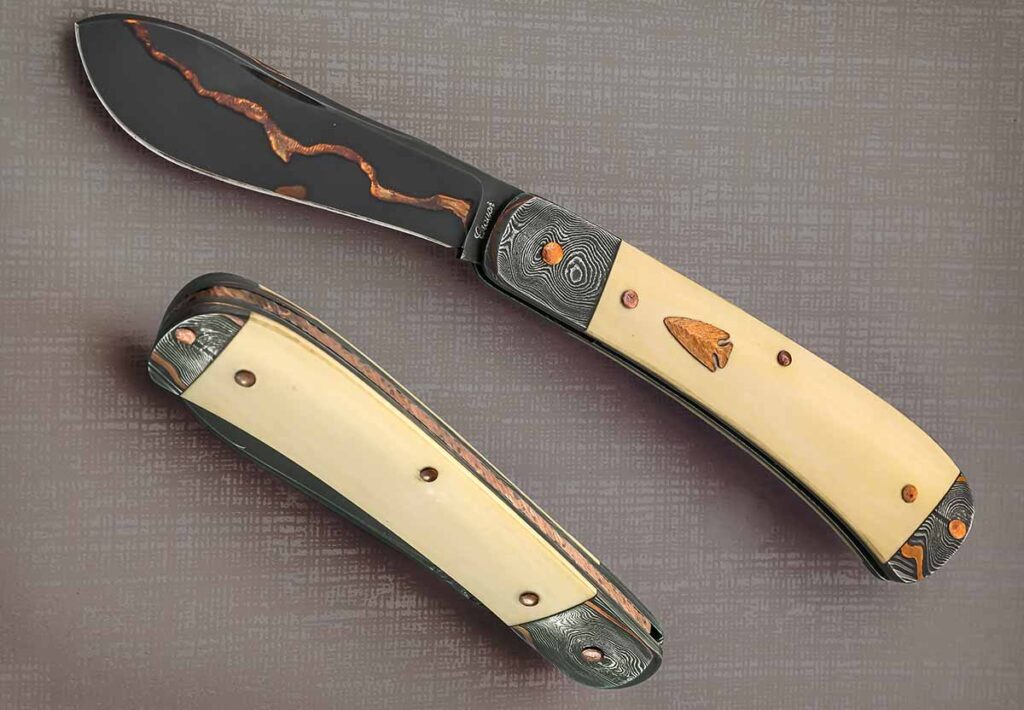
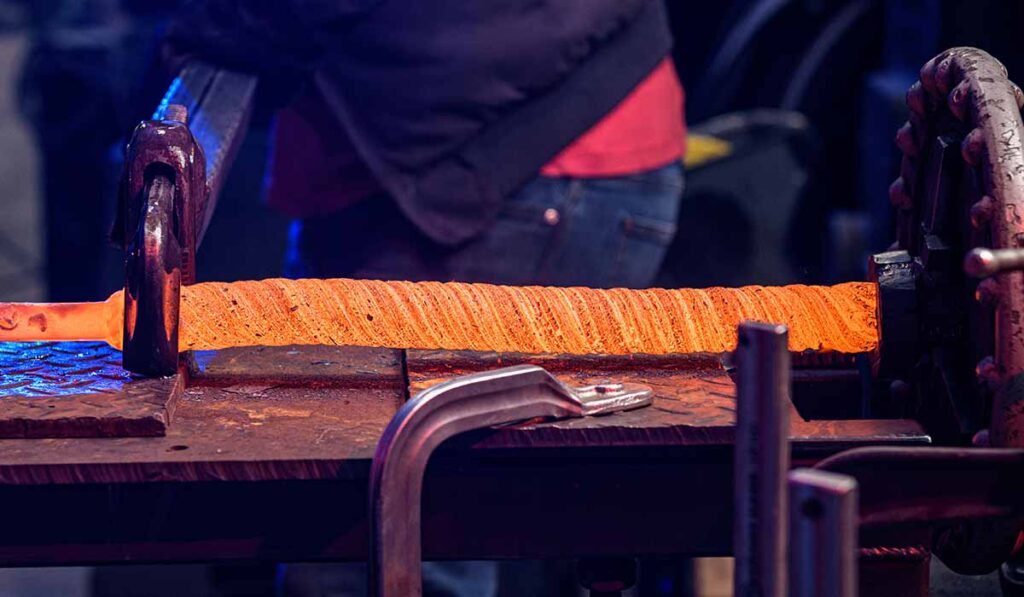
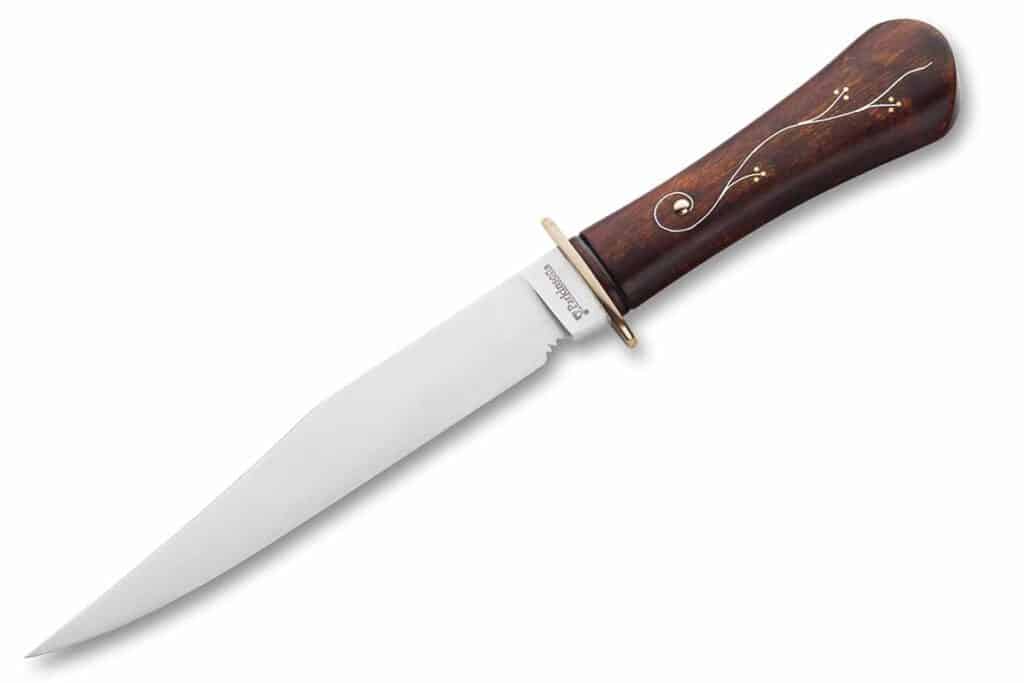
Knifemaking is the building of a knife, which includes the blade, handle and other accouterments. Blades are made by either removing metal from a steel blank via a grinder – known as stock removal – and the forging to shape of hot steel into a blade in the process known as bladesmithing. Other parts, including bolsters, guards, pommels, etc., are needed to complete the finished knife.
Great friends to the knife community, Hughes, Klotzli and Rexroat leave a hole publishing, sales and knifemaking.
The knife community lost three great friends with the recent passing of Carolyn Ann Hughes, H.P. Klotzli and Kirk Rexroat, all three of whom were extremely well liked and well respected within the knife fraternity.
Widow of BLADE Magazine Cutlery Hall-of-Fame® member B. R. Hughes, Carolyn served as editor of The ABS Journal, the official publication of the American Bladesmith Society, for many years. She won several ABS honors, including the Margaret Moran Silver Slipper Award. Inseparable at various ABS and other knife events, Carolyn and B. R. helped lead the Society for almost 60 years, as B. R. was one of the four original ABS founding members. He passed away September 17 and Carolyn joined him on February 22. She was 86.
For many years H.P. Klotzli was the headman of Klotzli Messerschmiede of Switzerland, a wholesaler/distributor of Spyderco, CRKT, M-Tech and Fallkniven knives, as well as hi-tech knives made in Switzerland, scissors and more. He took over the business from his parents in 1972 and ran it until 2019. He was among the first to use carbon fiber for factory knife handles, including on a linerlock folder based on a design by Cutlery Hall-of-Famer Michael Walker. H.P. worked on several other custom and factory collaborations as well.
An ABS master smith, Kirk E. Rexroat forged fixed blades and folders part time out of his shop in Banner, Wyoming. He made his first knife in 1981 and did his own engraving. His stag-handle/damascus Rendezvous Bowie was the cover knife for the May 1999 BLADE®. He also designed and built knife prototypes for Al Mar Knives, one of which, the Havana Clipper, was the BLADE Magazine 1998 Most Innovative Imported Design. He passed away February 27 at the age of 67.
One of the last living links to knifemaking’s golden era is gone.
The knife community lost one of its last members from the golden era of knifemaking with the passing of George Miller “Tim” Britton, who died after a short illness on December 9. He was 85.
A veteran (1959-65) of the United States Marine Corps and known as North Carolina’s first professional knifemaker, Tim began fashioning knives in 1971. Early on he specialized in small personal and fancy boot-type knives and assorted fixed blades and wound up his career making all manner of classic slip joints.
He appeared in early ’70s issues of The American Blade and later in BLADE®. He learned about knives and how to make them from Jim Mustin of Cajun Knives and BLADE Magazine Cutlery Hall-of-Fame® members Frank Centofante and Blackie Collins. Other influencers were Tim’s knifemaking contemporaries such as Cutlery Hall-of-Famers Ted Dowell, Jimmy Lile and Bob Loveless and well-known makers Rod Chappel and Bob Dozier. Tim was an admirer of Chappel’s handles and those of Bill Luckett, too.
Britton’s career spanned the early days of O1, 440C and D2 for blade steels to today’s CPM grades.
Tim specialized in classic slip joints, this one in BG42 stainless steel, Fiji fire pearl and 24k-gold inlay. Closed length: 3.25 inches. (Eric Eggly/PointSeven knife image)
“I started with O1 in 1972 and Blackie Collins talked me into 440C,” he once told BLADE. “Peer pressure … Ted Dowell, Frank Centofante, Jimmy Lile and Bob Dozier had settled on D2. [Today’s steel] leaves them all in the dust.”
No matter the steel, its proper heat treatment and also edge geometry, not to mention comfortable handles, were of critical importance to Tim.
“Buying a knife from a reputable maker should be simple,” he once observed. “My questions would be steel type, Rockwell hardness and what kinds of tools the maker has in his shop. I’m a dinosaur.”
A colorful character known for speaking his mind, he spent time as a member of The Knifemakers’ Guild and the ABS.
“Forging is a macho trip,” he once stated. “I fancy myself a smithy in times past.”
He understood well the importance of effective marketing, regularly running one-third page color ads in BLADE, and he demanded the most in return from them. He also loved the BLADE Show and was a regular exhibitor along with Deb, his wife of 26 years.
Rest easy, Marine, and semper fi.
Remembering Others The Knife Industry Has Lost:
Betty Dowell, Driving Force Behind Knifemaker Ted Dowell, Passes
B. R. Hughes, Pioneering Writer And Bladesmithing Teacher, Passes Away
For Maximum Toughness Without Sacrificing Edge Performance, Consider A Soft-Backed Blade.
For centuries, smiths from various cultures recognized the necessity of blades that do the job without critical failure. Some Eastern cultures specialized in differential hardening, particularly the Japanese. European cultures tended to forge weld a hardenable edge to a softer spine. In each case, the end result is an edge hard enough to cut well and a spine tough and resistant to breaking.
One of the measures of a modern knifemaker is the willingness and ability to successfully navigate the certifications processes of the world of knives, such as the American Bladesmith Society’s (ABS) journeyman and master smith certifications. Similarly, one measure of a knife blade is its ability to perform various tasks that put its edge geometry and heat treatment to the test.
If you’ve been around the knife industry any time in the past 40 years or so, you’ve no doubt seen stories of blades that demonstrate edge holding ability that also have the strength and flexibility to bend without breaking. The key to this kind of performance is for the blade to have a hard edge and a soft back. Pardon the pun, but let’s break that down a bit.
First things first—a knife must cut. One key to premier cutting performance is a well-hardened edge. A properly hardened edge comes from the use of steel with adequate carbon, brought to the proper hardening temperature, quenched in the proper quench medium, and tempered to the proper hardness.
Each of these variables has an impact, but at the end of the day if the maker does things right, the edge of a well-performing blade will be hardened and tempered martensite in the 58 to 60 HRC Rockwell hardness range, plus or minus a point or two depending on geometry. If the edge is left too soft, the blade will not cut as it should.
Shawn Ellis originally learned the edge hardening process from ABS master smith Jim Crowell in the early 1990s when Jim—here at the grinder—demonstrated edge hardening using an acetylene torch. (Jay Morrissey image)
But what about the blade’s spine? Does it need to be as hard as the edge? The answer is “it depends.” Hardness as a metallurgical property is directly opposed to toughness, in that the harder the blade the more brittle it is. At the same time, an unhardened blade of annealed steel is very difficult to break but won’t hold an edge. If the maker hardens the blade fully from edge to spine, the knife will be more likely to break under chopping or bending loads.
Let me talk about “more likely” in this case. Are you more likely to be struck by lightning or bitten by a shark? As it turns out, you’re about 7.5 times more likely to be struck by lightning than bitten by a shark, but the odds of being struck are only 1 in 500,000. Either way, neither is very likely. I state that because while it is empirically true that a fully hardened blade is “more likely” to break than a blade with a soft back and hardened edge, if the maker does the heat treatment properly and the user uses the blade properly, either will perform very well with a very low risk of catastrophic failure.
Soft-Backed Bennies
Even if the overall risk of breaking in normal use is small, it still makes sense that some makers want to chase that last bit of performance by taking advantage of the strength of the soft-backed blade. So what does a soft-backed blade do? What are the benefits? By hardening the edge but intentionally softening the spine, the blade is more resistant to breaking when subjected to extreme force. This remains true whether the force comes to the blade parallel as in chopping or perpendicular as in bending.
ABS journeyman smith and past Forged in Fire champion Shawn Ellis is a proponent of the soft-backed blade. He originally learned the edge hardening process from ABS master smith Jim Crowell in the early 1990s when Jim demonstrated edge hardening using an acetylene torch.
He heated the edge only, quenched the blade, and then used the torch to draw the temper back. To temper, he started with the torch at the spine and used a wet rag to keep the edge cool. When he was finished, the edge was a light bronze and the spine was blue.
Even though that was quite a few years ago, the method Crowell taught Ellis remains viable. Heating only the edge leaves the spine soft and annealed but transforms the edge into the tempered martensite required for cutting performance. Using the torch afterward to “blue back” the blade relieves any internal stresses that may result from heating only the edge to the critical temperature, that is, to a non-magnetic state.
Ellis found that heating the blade at least a third of the way from edge to spine resulted in better performance. Subsequently, he switched to heat treating in a forge, and then later in an oven.
While it’s possible to edge harden with a forge or an oven, the methodology changes. Edge hardening in this way results in a martensitic edge and a spine that retains the microstructure it previously had. If the blade was forged and normalized, the spine would be soft pearlite. If the blade was ground from bar stock, the spine would be spheroid carbides.
Another way to achieve a hard edge with a soft back is to quench the edge only. You can bring the whole blade up to temperature in a forge or oven, and then place only the edge of the blade in the oil for hardening. This is the method currently taught at the ABS schools.
In this case, you need enough oil volume to cool the steel properly, so you can’t just fill your quench tank with oil to the half-inch level. Instead, use a limiter plate to keep the edge at the right depth while allowing the tank to have an increased volume of oil. You rock the blade in the oil in such a way that the edge is quenched properly while the spine cools slowly.
The slow cooling of the spine results in a pearlite microstructure, while the quenching of the edge results in martensite. The result is again a hard edge and soft back, and a “blue back” draw is again recommended. Blades that are edge hardened are resistant to breaking, though the soft spine may bend and stay bent.
The final way to achieve a soft-backed knife is the most difficult but results in the highest performance. In this method, the blade is hardened completely, with the whole blade up to critical temperature and the whole blade quenched fully. After regular tempering in the oven, the blade is then torch tempered on the spine.
In this scenario, the spine is pushed past blue all the way to gray, but not to the point where it starts to show heat color. Essentially in this case, you’re applying differential tempering rather than differential hardening, adding heat in the 650-800°F range to the spine only, resulting in highly tempered martensite. Since you’re working with higher temperatures, extra care must be taken to keep the edge cool by keeping it immersed in water or wet sand.
ABS master smith Scott McGhee’s Mamba damascus fighter features forge-finished flats with bronze fittings and a koa wood handle. He prefers 1075 carbon steel and uses two propane torches to draw the spine evenly, keeping the edge cool in wet sand.
ABS master smith Scott McGhee teaches the Introduction to Bladesmithing class at Haywood Community College in Haywood, North Carolina. Students learn from McGhee how to make a knife that will pass the ABS performance test using a full quench and a torch draw. He prefers 1075 carbon steel and uses two propane torches to draw the spine evenly, keeping the edge cool in wet sand.
STRUCTURAL RESULTS
I asked metallurgist Larrin Thomas for insight on the structural results of the different edge hardening approaches. According to Larrin, “When it comes to Rockwell hardness, torch tempering a fully hardened blade to 650-800°F results in hardness in the Rockwell hardness range of 45 to 55 HRC, depending on the steel and the time spent at the tempering temperature. Slow cooling the spine by quenching the edge will result in soft pearlite similar to air cooling during normalizing and grain refining. This puts the spine in the range of 20 to 40 HRC, depending on the steel. Some steels have such high hardenability that they will partially harden during air cooling, such as oil quenching steels O1 or L6, and may even reach 60 HRC if the cross section is thin enough.
“The softer the spine, the more resistant the blade is to breaking but the more likely it is to take a “set” during bending. In other words, less bending of a softer spine would be required for the blade to stay permanently bent. The ideal condition would be one where the steel has sufficient hardness to avoid staying bent but sufficient toughness where it will not fracture. This combination of properties is best achieved by a full quench and a spine torch temper.”
For many years now the certified smiths of the ABS have demonstrated competence at these processes. If you want to climb the ladder of knifemaking skills and certifications, or if you want to climb the ladder of high performance hard-use knives, the heat treatment of a soft-backed knife is a skill you’ll want to master. If you’re the kind of knifemaker or the kind of knife buyer who wants 100 percent of the toughness a blade can offer without sacrificing edge performance, consider a soft-backed blade.
A study of Michael Price’s work, Nick Bachtel’s reproduction gentleman bowie has the looks to wow.
Bladesmith Nick Bachtel has parlayed his fascination with the knives of 19th-century great Michael Price into a faithful reproduction of a Price-style gentleman’s bowie.
Nick studied every Price knife and other like ones of the genre he could find online and elsewhere to help arrive at the way the 19th-century cutler constructed the gentleman’s bowie. However, it was when he saw a picture of a Price knife in BLADE Magazine Cutlery Hall-Of-Fame® member Bernard Levine’s book, Knifemakers Of Old San Francisco, that “a light went off.”
Nick noticed that the handle had three pins so the knife had to have a full tang, not a hidden tang as he had previously thought, so he forged the knife, heat treated it, fit up the guard and forged the tang wider.
“I call it a captured-guard full tang,” the 24-year-old said of the method that apparently originated among bladesmiths in Ireland, Price’s native country. “It’s such a weird, unique, almost comical way of making a knife—and difficult to do as well,” Nick observed, “but boy, did Price make it!”
Nick Bachtel (inset) calls the construction he used to make his reproduction of a Michael Price Gentleman’s Bowie “captured-guard full tang.” For the style to work, it must be forged, Nick stressed. He said another way to do it would be in a frame handle construction and a tapered tang, though a Price aficionado would be able to tell the difference. (SharpByCoop knife images)
The icing on the cake for Nick was ABS journeyman smith Jordan LaMothe’s story, “How to Make the Price Guard” in the December 2019 BLADE®. As Nick noted, “The Price style is the pinnacle of the traditional forged blade.” What better style is there for a young, up-and-coming bladesmith to explore?
Gentleman Bowie Spec Check Knife name: Michael Price Style: Gentleman’s Bowie Maker: Nick Bachtel Blade length: 5 7/8 inch Blade material: 52100 carbon steel Handle: Elk antler and nickel silver Overall length: 10¾ inch Sheath: Traditional center-seam vegetable-tanned cowhide w/frog stud Maker’s List Price For A Similar Knife: $1,100(includes sheath)
Damascus steel is produced on a mass scale by some of the best in the business
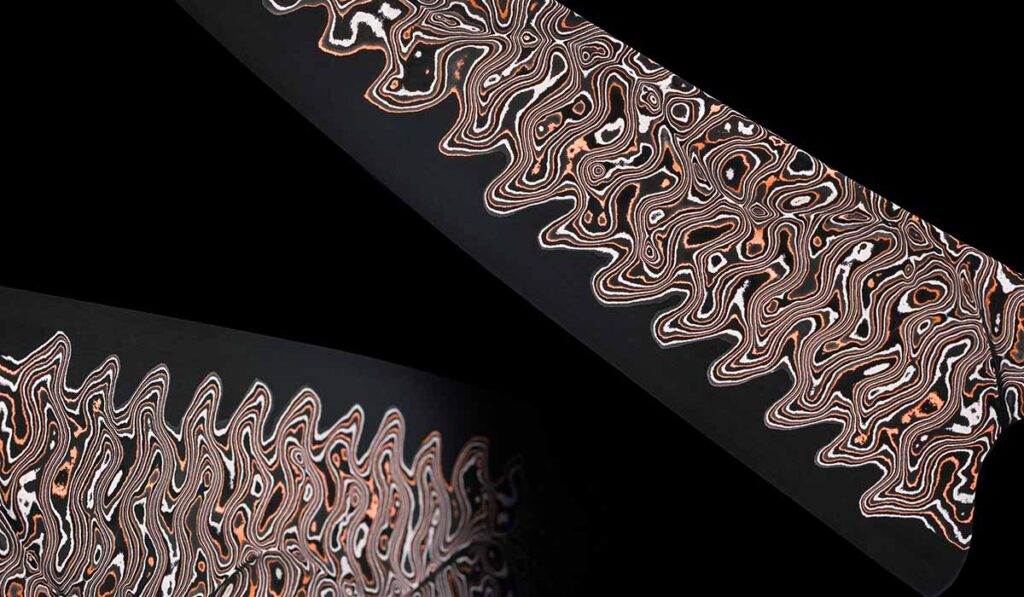
Forging damascus steel for knives and ancillary products on a broad scale makes the beautiful and highly popular knife material readily accessible to the marketplace, and drives the creativity of custom and factory knifemakers. The availability of the resulting damascus knives is reaching new levels while bringing on innovation at the same time.
At Nichols Damascus, owner Chad Nichols touts his willingness to put together “laminates of any kind we can think of.” Nichols Damascus is busy with titanium and copper alloys, carbon and stainless steels.
“We have a pattern called Boomerang, and any configuration we make it in sells very well,” Chad commented, adding that he believes the popularity of the material has increased dramatically due to the internet and social media.
One of the latest patterns in Damasteel’s Dragon series, Svavner was used to create the blade steel for the Valyrian swords of the Targaryen family on HBO’s House of the Dragon. Brian Brown uses the steel here on one of his sporty folders. (Damasteel image)
He asserts that his forging operation charts its own course. “We’re just having a good time playing with hot stuff,” he smiled, “and we make a lot of core material. This is where we clad a homogeneous steel like Magna Cut with a damascus on the outside.”
WANTS & DESIRES MET A family-owned business situated just north of Sweden’s capital of Stockholm, Damasteel has focused for years on making top-quality steel for custom knifemakers, among other lines of business. “Over the last couple of years we have released our Dragon family of damascus patterns, culminating with the release of Svavner, which we launched alongside the release of HBO’s House of the Dragon,” noted owner and iron master Per Jarbelius. “They used our steel to create the Valyrian swords for the Targaryen family. It was an amazing project to get to work on.”
Damasteel has also just released Drakkar, a patterned steel in sheet form. It’s a first for the company and Jarbelius says it has been well received, emphasizing its nesting options with the ability to go from bar to sheet. A product line called Damacore has been available in DC18N and DC21R steel for a few years now and signaled a major expansion in the company’s repertoire. “It’s becoming even more popular as the number of san-mai offerings grows on the market,” Per noted. “We’re hoping to eventually be able to offer every pattern we do in both the DC18N and DC21R.”
Among the most popular Baker Forge & Tool damascus patterns are the copper and bronze laminates. A current hot one is Elite CopperMai, a damascus blend of copper, 1084 carbon steel and pure nickel over a solid core of 80CrV2 carbon steel that creates either a chevron or a ripple pattern (the latter here on a knife by JB Blades). (Baker Forge & Tool image)
Philosophically, Jarbelius relates that Damasteel has always paid attention to the wants and desires of its market. “We make patterned and un-patterned stainless steel, and our priorities have always been performance and beauty,” he explained. “Our artistry is core to our identity, and we want to make patterns that connect with users on an emotional level. Research and development is a big part of what we do. But hearing from makers is equally important; we value the opportunity to get feedback from people using our steel.”
Damasteel further connects with its user community each year in hosting the Damasteel Chef Invitational, showcasing the talents of top-class culinary knifemakers. The evening event provides a glimpse inside the shops and workspaces of incredibly talented artisans. “It’s absolutely world class,” Per concluded. “It’s a great learning experience, too, for people who have never used our products. They can ask questions and connect with our team as well.”
Forging An Industry
Vegas Forge concentrates on the production of high-quality damascus steel in a variety of exotic patterns and alloy combinations. “In 2016, we opened our shop in Las Vegas and quickly discovered that many of our potential customers were extremely hesitant to use damascus steel again due to some bad experiences they had had in the past with other damascus steel companies or makers,” explained owner Jesse Harber.
Damacore has been available in DC18N and DC21R steels for a few years now and signaled a major expansion in Damasteel’s repertoire. Persevere by Princeton Wong sports a 3.5-inch blade of Damacore DC18N handled in black Timascus™. Closed length: 4.625 inches. Princeton’s price for a similar knife: $2,700. (SharpByCoop image)
According to Harber, customer service is a watchword at Vegas Forge. Returning customer calls, handling inquiries, responding to emails, and delivering orders in a timely manner complete the full circle from outstanding damascus to overall satisfaction.
“Once we had solved that, we turned our focus on creating new, interesting patterns, new billet shapes and different alloy combinations,” Jesse advised. “In the beginning, we had 10 damascus patterns that we offered customers, all flat billets which are what knifemakers primarily use. Today, we offer 26 flat-billet damascus patterns. We offer most of those patterns in stainless or carbon damascus as well as titanium damascus and mokume gane. In addition, we have eight round-bar damascus patterns that we sell to customers who make things out of round bar like custom rings, pens, razors and such. We also make blocks of damascus in six different patterns for manufacturers of guns, golf putters and other products.”
The most recent patterns to emerge from Vegas Forge include Virus, Lytic, Forged Koa and one that is so recent that it remains unnamed thus far. Virus depicts what most people would think a virus looks like under a microscope—sporadic circles and lines that are “beautifully chaotic.” Lytic has the look of lytic DNA cycles under the microscope.
Baker Forge’s CopperMai was one of the first copper damascus steels to capture the imagination of custom knife enthusiasts. Bubba Crouch uses it on his trapper with an integral damascus frame and double-line antique Micarta® handle. Closed length: 4 inches. Bubba’s price for a similar knife: $3,000. (SharpByCoop image)
“Both of these patterns were created during the pandemic, so that’s where the inspiration—if you want to call it that—came from!” Harber laughed. “Forged Koa looks like a rare piece of twisted koa wood. It has multiple depths and contrasts to make it look like koa. It’s made by stacking 600-plus pieces of steel into a can and then lightly twisting it. As you grind into it, the pattern opens up and exposes all 600 layers, which is pretty spectacular.”
A few years ago, Vegas Forge began producing a titanium damascus that Harber dubbed Damtanium. The combination includes damascus with layers of Grade 2 and Grade 5 titanium. Almost simultaneously, the company introduced Zirmascus, an alloy of zirconium and titanium layers.
“We’re always trying out new steels in our san-mai damascus,” Jesse added. “San-mai is like damascus, but at the center of the damascus billet is a solid core. We have used Elmax, Magna Cut, and Nitro-V, to name a few.”
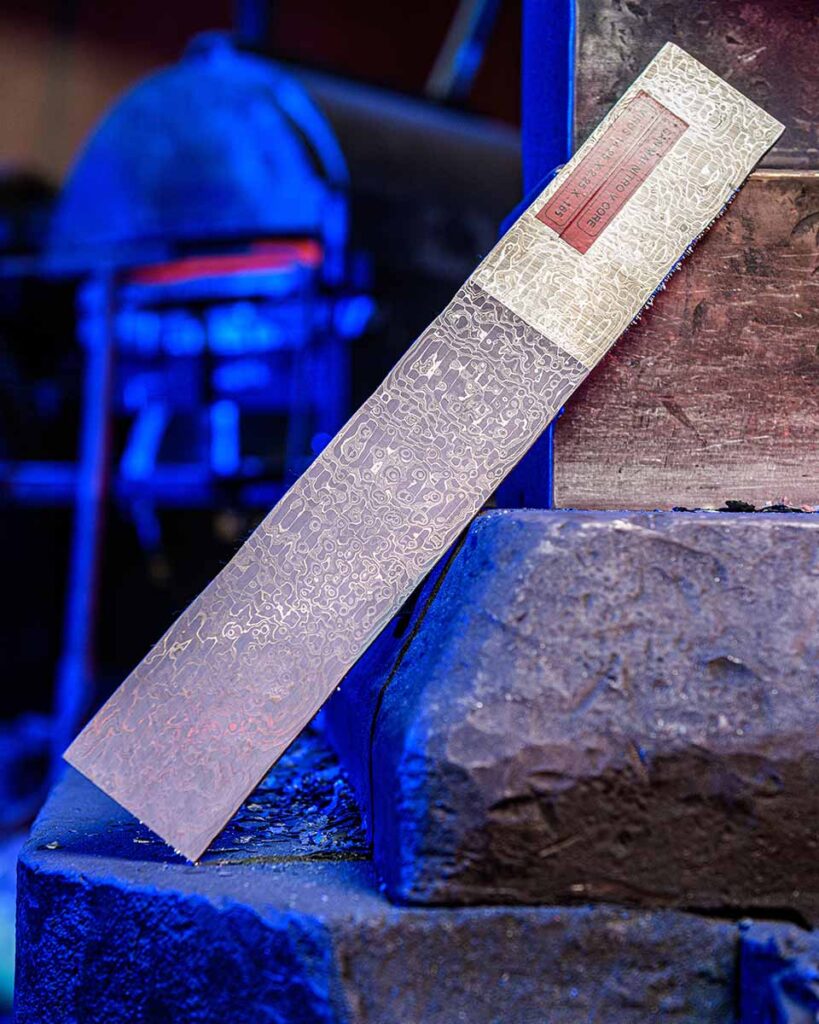
Jesse Harber said Vegas Forge uses its san-mai damascus to try out a number of stainless-steel cores, including Elmax, Magna Cut and Nitro-V, the latter shown here in bar form. (Vegas Forge image)
All this experimentation and innovation is the product of an expanding horizon and an imagination that isn’t inhibited or afraid to step into some uncharted territory. Harber thinks the future is bright at Vegas Forge, and the new product array has brought ever-increasing interest to the doorstep.
“In the beginning, the knife world kept us alive,” he declared. “We were getting no love from other industries. Today, the knife world still accounts for half our business. There isn’t another industry that we love more. We’ve attended hundreds of knife shows over the years, and there is no doubt that knife people are our people. We sell to a lot of custom knifemakers as well as larger manufacturers. I love the custom world, and I don’t even know how many custom knives we own at this point.”
Incorporating Copper And Bronze
Coy Baker founded Baker Forge & Tool in 2019 with a focus on damascus and san-mai. That bedrock quickly elevated to include non-ferrous laminate steels. Baker Forge is now an industry leader in copper and bronze laminated steels with dedicated distribution centers in the United States, Canada, the United Kingdom and Australia.
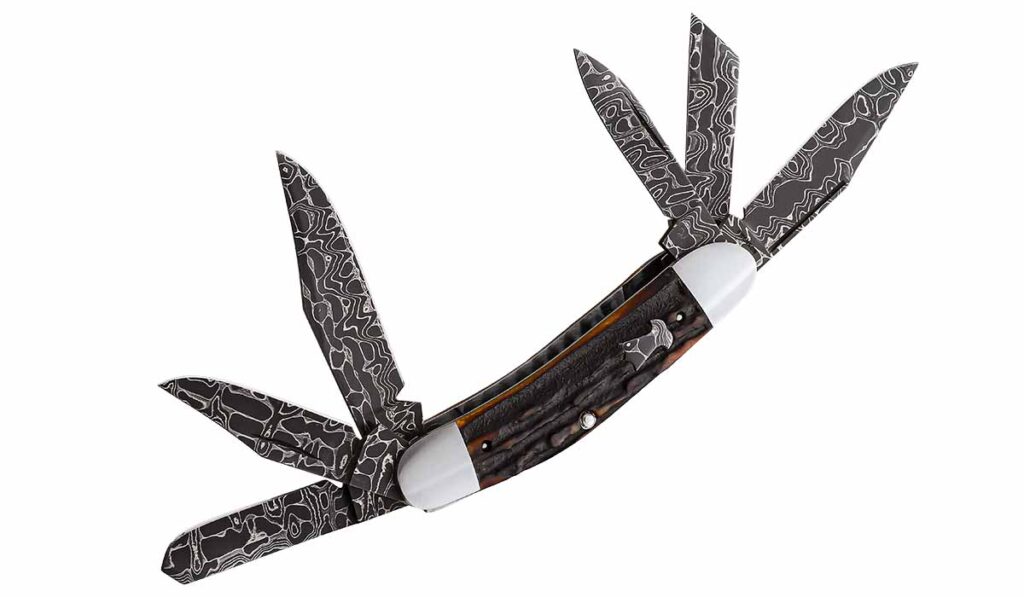
Chad Nichols Damascus offers a wide range of damascus patterns including the Intrepid on Luke Swenson’s six-blade stag sowbelly. Luke’s price for a similar knife: $4,000. (SharpByCoop image)
“Our current buying market is about 80 percent to the knifemaking industry, about a 50/50 split between retail custom makers and commercial knife companies,” Coy related. “We cut our teeth in the custom knifemaker market in the beginning and have slowly expanded into the commercial side. We aim to always be able to provide damascus steels to everyone from the hobby smith to the biggest knife companies.”
Among the most popular Baker Forge damascus patterns are the copper and bronze laminates. However, one-off custom runs generate real excitement. One trending steel group is Elite CopperMai, a damascus blend of copper, 1084 carbon steel, and pure nickel over a solid core of 80CrV2 carbon steel, creating either a ripple or chevron pattern.
“This layout is very appealing to customers due to the stark contrast between the layers and its ease of finishing,” Coy remarked. “We have been expanding into using new core steels in our laminates. Recently, we have used some Hitachi #2, which quickly became a crowd favorite for its edge-retention properties. Later this year we will be expanding into Apex Ultra steel and possibly some other stainless options.”
“Forged Koa looks like a rare piece of twisted koa wood,” Vegas Forge’s Jesse Harber explained. “It’s made by stacking 600-plus pieces of steel into a can and then lightly twisting it. As you grind into it, the pattern opens up and exposes all 600 layers, which is pretty spectacular. (Vegas Forge image)
This quick look inside the damascus steel industry offers a glimpse of past, present, and future. The tried and true, the cutting edge, and what will be are coming together to keep pattern steels fresh and exciting among makers, users and then the wider buying market.
Fabulous forged knives, new smiths, new chairman top ABS annual meeting.
Some of the finest forged knives of the year, the newest American Bladesmith Society master and journeyman smiths and a brand new chairman helped highlight the annual meeting of the ABS held during BLADE Show 2024 at the Cobb Galleria Centre in Atlanta.
ABS master smith Kevin Cashen officially began his first term as ABS chairman at the annual meeting, succeeding ABS master smith Steve Dunn who passed away unexpectedly earlier this year. It was a bittersweet transfer of the office for all concerned, though a sparkling array of award knives and an impressive group of new master and journeyman smiths that includes those from Brazil, Europe, China, New Zealand and the USA were an appropriate way to greet the new chairman and pay tribute to the former one.
ABS Annual Awards
Award Winners
W. W. Scagel Award: Butch Sheely
Paul Burke Award: Robert A. Wilson
Distinguished Service Awards: Karen Cashen, Joel Worley
W. F. Moran Award: Matthew Parkinson
Antique Bowie Award, JS: Mace Vitale
Antique Bowie Award, MS: Karis Fisher
Joe Keeslar Award: Jason Chen
B. R. Hughes Award: Fabio Barros
Chairman’s Awards: Kevin Cashen, James Rodebaugh
Fabio Barros
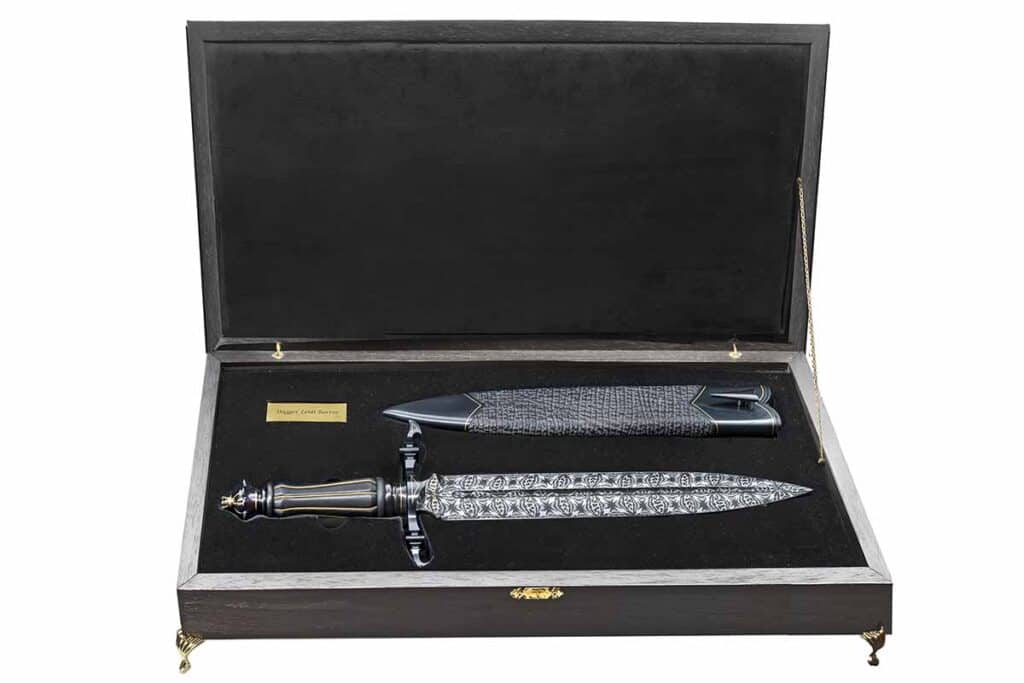
It was a weekend Brazil’s Fabio Barros probably will never forget. Not only was he the sole applicant to gain the coveted rating of ABS master smith, he also won the B. R. Hughes Award for the best knife submitted by such an applicant. In the eyes of some, that he was the only successful MS applicant might have detracted from his Hughes Award—if not for the fact that the same knife also won Best Art Knife at the concurrent BLADE Show.
B. R. Hughes Award Winner
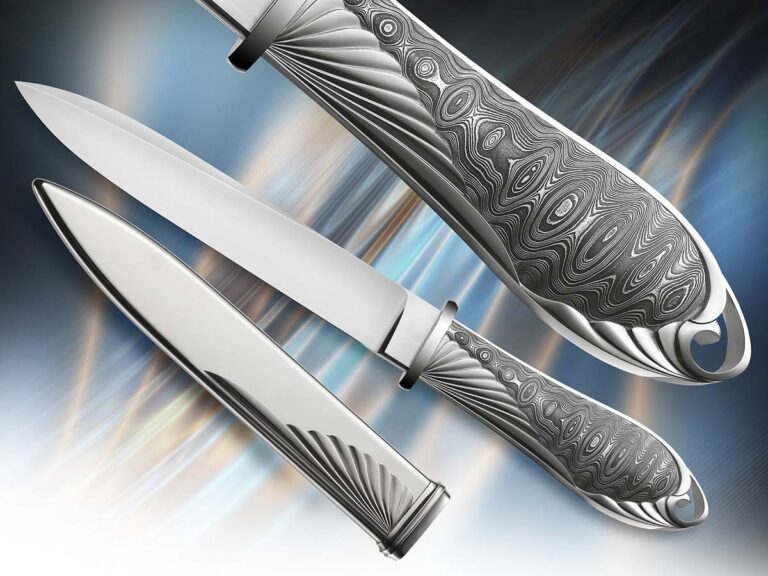
B. R. Hughes Award Winner: Fabio Barros Knife name: Leidi Barros Dagger Maker/designer: Fabio Barros Blade material: Apricot pattern mosaic damascus w/four-sided roughing Construction: Take down Handle: Fluted ebony with gold-braid wire wrap Guard, shim and pommel: Black oxidation with gold appliqué Pommel stone: Onyx Sheath: Shark leather w/gold inlay Display: Ebony case w/exquisite finish Knife to know: The knife is named in honor of Leidiana Barros, wife of Fabio Barros; the handle design is inspired by the queen in a chess set
Karis Fisher
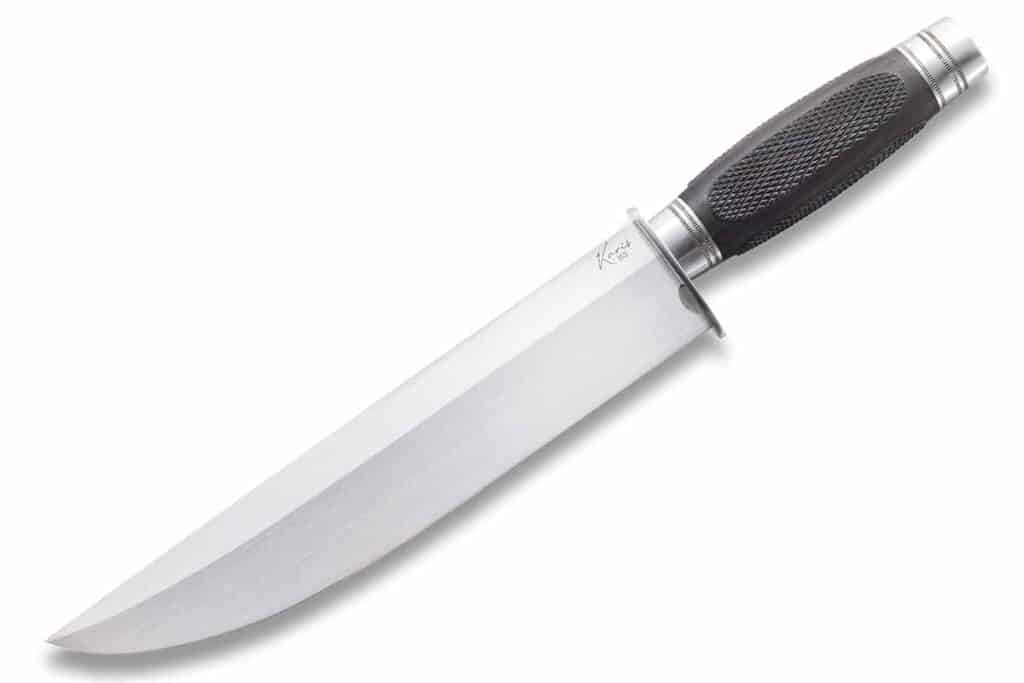
Karis Fisher added to her trophy case by winning the Antique Bowie Award for the best bowie in a 19th-century style by an ABS master smith. It was another feather in the cap of the young smith, who won for a reproduction of the Searles/Fowler bowie—with it being her first attempt at a repro to boot. Added Karis, “I’ve always wanted to try and make a reproduction, and I was drawn to the Searles bowie due to the mix of complexity and clean and timeless design.”
Antique Bowie Award, MS Winner
Antique Bowie Award, MS Winner: Karis Fisher Knife: Searles Reproduction Blade length: 9.25” Blade material: 52100 carbon steel Blade width: 2” Blade @ thickest: .25” Blade grind: Double ground Guard material: Stainless steel Handle material: African blackwood Ferrule and butt material: Stainless steel Ferrule and butt embellishment: Coined liners Overall length: 14.5” Special features: Half-moon cutout in blade and raised checkered panels on handle Knife to know: The knife is based on the Searles-Fowler bowie made by Daniel Searles in Baton Rouge, Louisiana, in 1828 Maker’s price for a similar knife: $2,500
The Challenge: “The most challenging part of this build was definitely the planning of the knife and trying to stay true to the original while building it solely off pictures.”
Matthew Parkinson
ABS journeyman smith Matthew Parkinson won the W. F. Moran Award for the best knife in the Moran style for his interpretation of a Moran fixed blade. “It wasn’t based on any one knife of his but more a general sort of impression of his body of work,” Matthew wrote. “That is to say, it is my design trying to work within his style—an interesting challenge!”
W. F. Moran Award Winner
W. F. Moran Award Winner: Matthew Parkinson Blade length: 7.25” Overall length: 12” Blade material: 1084 carbon steel Blade @ thickest: 3/16” Blade width: 1.125” Guard and pins: Bronze Handle: Maple Inlay: Sterling silver Maker’s price for a similar knife: $1,100
Maker’s remarks: “The Spanish Notch is just a detail to the choil rather than a plain rounded choil. I saw several similar examples on a knife that Mr. Moran had made and thought it might be a nice touch. The groove at the base of the handle is a carved molding. This is a detail I use frequently in knives that don’t have stabilized wood handles, as inlaid handles normally are. It helps keep a clean, even fit but still allows the wood to move, at the same time adding a nice visual feature that adds to the overall design.”
The Challenge: “I think the most challenging part of doing these is working within another maker’s aesthetic, especially one like Mr. Moran who has a huge and varied body of work. That’s the part that teaches you the most, I think. I find building one of these can give you insight into why another maker chooses one feature over another, or why a line or form is there. Those design ideas become incorporated into your own style and help you grow as a maker.”
Mace Vitale
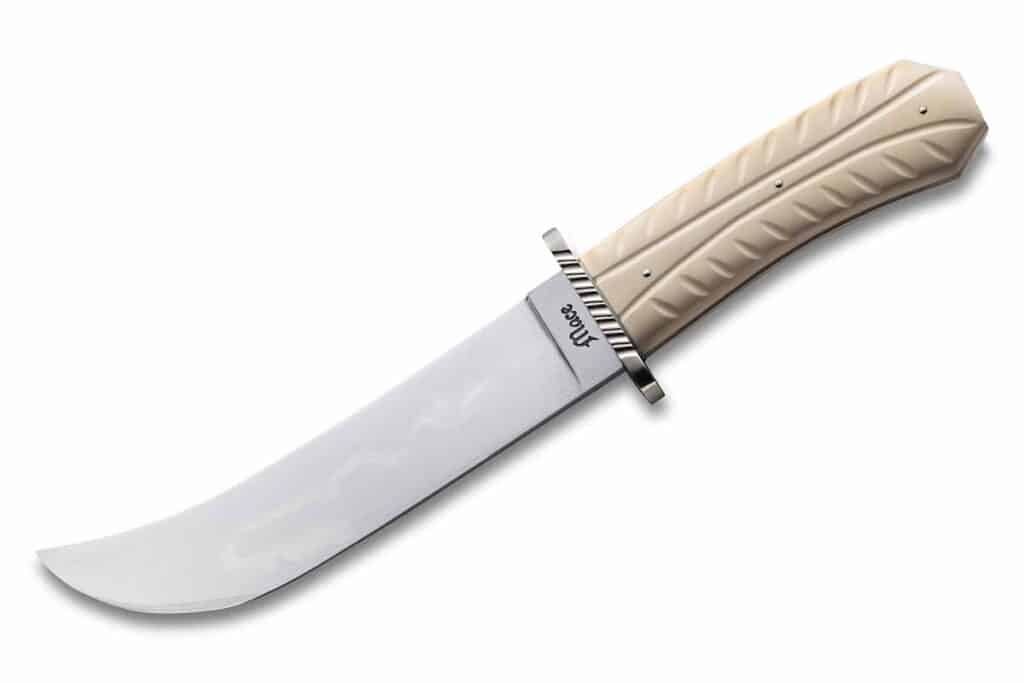
Mace Vitale captured the Antique Bowie Award for the best bowie in a 19th-century style by an ABS journeyman smith for a knife inspired by an antique piece made by Otto & Koehler of New York around 1850. The unusual knife features a markedly upturned blade tip and an ever-so-slightly downturned handle with a modified coffin-style butt featuring two carved lines and two rows of individually carved oblique divots that run its length. “The carving on the handles I’m positive were for extra grip. The knife has an excellent feel in the hand,” Mace observed. “There has been a bit of discussion as to the purpose of the original. As a knifemaker it was pretty clear to me when I picked up the original that it was very purposefully built to be a fighting knife.”
Antique Bowie Award, JS Winner
Antique Bowie Award, JS Winner: Mace Vitale Knife: Inspired by an antique fixed blade from New York makers Otto & Koehler from around 1850 Blade length: 6.5” Blade material: W2 tool steel Blade width: 1.25” Blade @ thickest: 3/16” Blade grind: Flat Fittings and pins: Nickel silver Handle: Mammoth ivory Overall length: 11”
The Challenge: “The most difficult part of building this knife was trying to keep all the parts going the way I wanted. When making a knife like this, it is put together and taken apart many, many times, and I found myself constantly putting the handle or guard on upside down. I was glad once it was done.”
Jason Chen
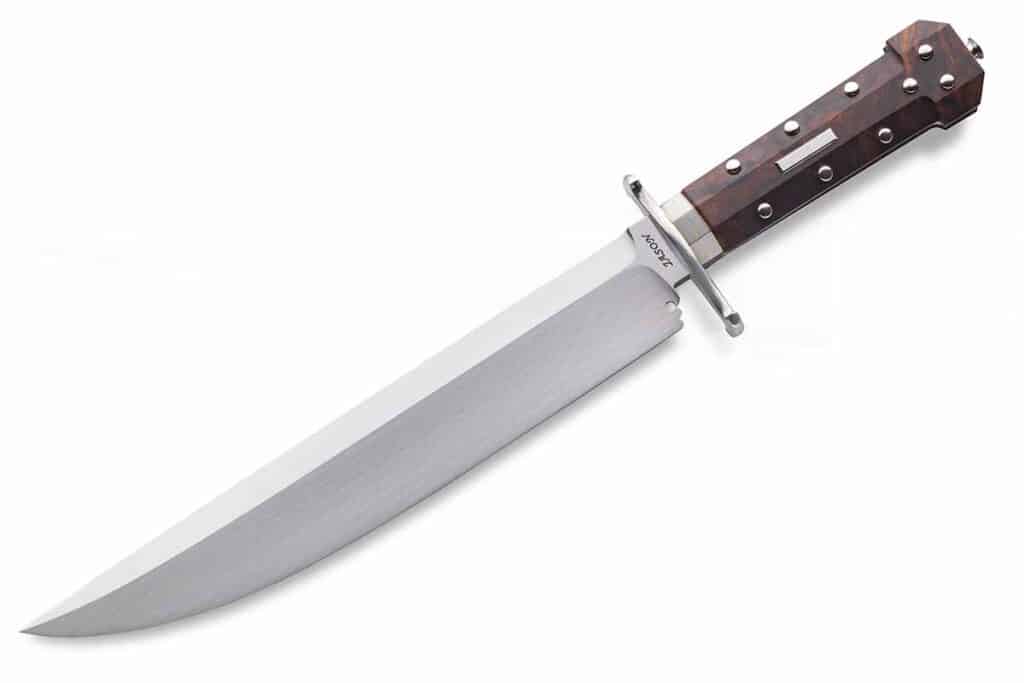
Newly minted ABS journeyman smith Jason Chen of YunNan, China, won the Joe Keeslar Award for the best knife submitted by a successful JS applicant for a spotless reproduction of a bowie not unlike the antique L. Kimball knife. The fact Jason prevailed over the best knives of 13 other successful JS applicants adds to the difficulty of his winning this year’s Keeslar Award. He is to be congratulated—as are all of those receiving top honors at the annual ABS meeting.
Newly minted ABS journeyman smith Jason Chen won the Joe Keeslar Award for the best knife submitted by a successful JS applicant for a bowie not unlike the antique L. Kimball knife.
New ABS Masters & Journeymen
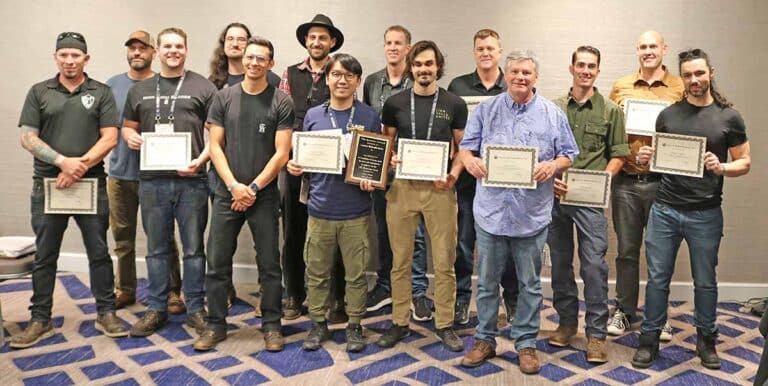
Five applicants presented for ABS master smith and one passed. Twenty-four applied for ABS journeyman smith and 14 were approved. The panels of judges were chosen by the ABS. The smiths who made the grade were: ABS master smith: Fabio Barros, Brazil; ABS journeyman smiths: Cameron Alarcio, California; Jason Chen, China; Pieter-Paul Derks, Netherlands; Zane Dvorak, Ohio; Robin Gagchian, France; Chris Gardner, Nevada; Aidan Garrity, Connecticut; Erik Greiner, Texas; Tony Lewis, Arizona; Dan Lewis, New Mexico; Tony Severio, Louisiana; Warren Thacker, Tennessee; Thiago Vidotto, Washington; and Liam
A veteran maker shares timeless advice on commissions, design, and running a successful craft business.
I rarely do commissions. It’s difficult to keep some clients from wanting to take part in the process. Their job is to tell you how much they like the piece when it is finished and gather the money to cover their overextended budgets. In your role as crafter/knifemaker, don’t let them bully you. There are no grounds for complaints if you give them what they originally approached you about.
The most difficult part of doing commissions, aka taking orders, is keeping everything on schedule. A delivery date is just that. Even if it’s a couple of years out, don’t wait until the end to go looking for materials and services. Casters work better with a heads-up beforehand and engravers may need a year to get past what they are working on. As a result, get your name on the list with others waiting for a bit of the crafters’ time to cast your pieces and for the engraver to work out a design for your project.
I run on satisfied customers. One black mark cancels out a slew of gold stars. I’ve never had a customer who wasn’t satisfied, period. I give even my smallest work the same close attention to detail as the larger and more standout ones. Every piece deserves the most attention I can give it to bring it to the right state of finish when everything is done.
I don’t spend time debating how much it costs if they are paying up front. It’s out of your hands at that point. If they insist and it does make for a tighter presentation, I have no complaints—if I’m still doing it my way.
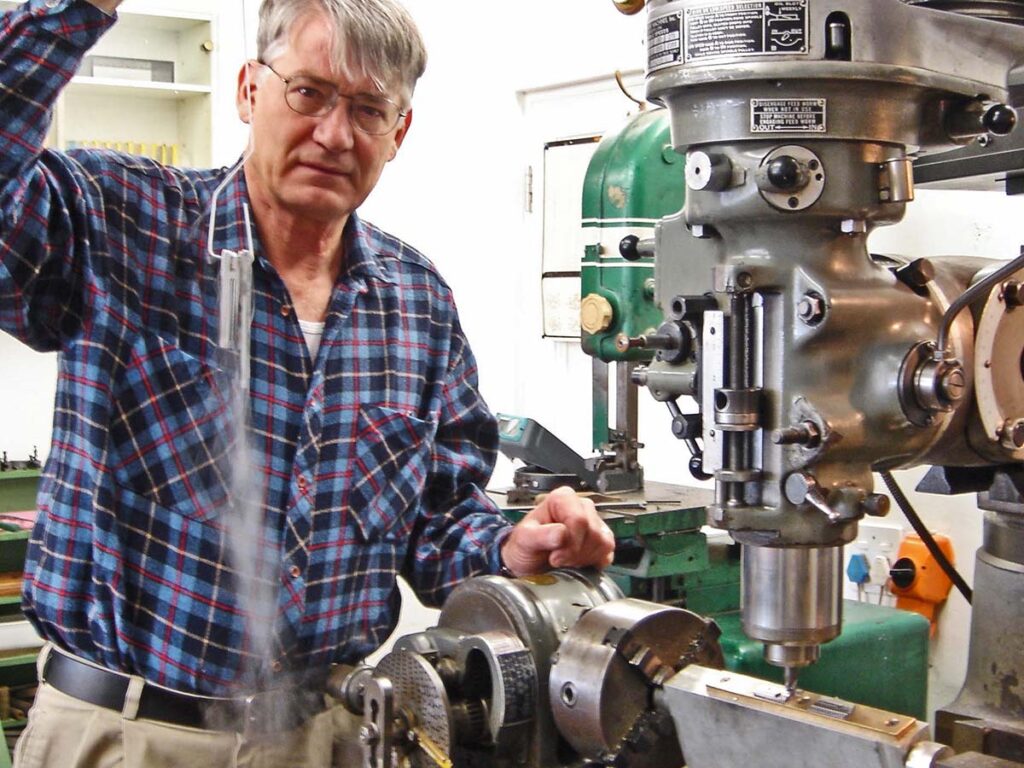
When buying tools think about their longevity—good ones last, cheap ones don’t. South African knifemaker Des Horn’s Bridgeport milling machine is one of the good ones. (Des Horn image)
One time I had a 36-carat uncut ruby for a specific part of a presentation. The clients changed that out and added another $10,000 to the materials list. Put a pound of 24k gold in the mix, two feet of AAA lapis lazuli and another pound of silver and you have nearly a year of work making it all look like something that befits the materials. There is nothing finer than 24k gold and large ruby star sapphires set in deep blue AAA lapis lazuli.
Of course, there is the matter of it not existing until you do it. That part can be intimidating at times. Then there are the occasions when the client goes well over the beginning budget. If this happens, you must deal with the backlash from him blaming you, when all was done at his request.
Maintain Your Health
People were making wondrous things with simple ingredients 4,000 years ago, without the benefit of dental care, bifocals and electric lights and on a diet that barely sustained them most of the time. They died by 45 usually, so had only the time between when they were 9 or 10 until their eyes began to fail them by 40 or so. I have been making and selling my work for more than 50 years with all the benefits living in a civilized time can bring. I am still excited about projects, no matter the size. I still eat lots of fruits and greens and shredded wheat large biscuits.
If you want to do your best work, you must stay healthy. Like any other working mechanism, your body tissues need the time to relax and rejuvenate. For example, if you don’t give the fingers in your hand enough time off, they will give you problems later in your career. The cartilage in your joints will only take so much punishment, so give the muscle tissues in these areas time to relax a bit before moving onto your next project.
Engravers may need a year to finish an ongoing project before they can accept your order. As a result, get your name on the list with others waiting for an engraver to work out a design for your project. The engraving on a Herucus Blomerus folder is by Henk Viljoen. (SharpByCoop image)
Sometimes it may take a few days for an overworked appendage to return to normal if you’ve stressed it in some way. Always protect your eyes and ears from foreign objects and stressful sounds. I finally took the large subwoofer out of my studio because it was leaving me partially deaf by the end of the day, even more so than most of my tools.
Design Process
Design is where you make your identity come to life with a few pencil marks and colored markers. You want to present a consistent image that people will remember and that you can live with in the future.
The most important thing to know when you begin making anything is what it’s supposed to look like when it’s finished. That’s where those blank sheets of paper and erasures come into play.
Make your design mistakes on paper. Don’t wait until you’re well into something before admitting to there being some mystery grey areas concerning how it’s supposed to work. Wait to start something until you have a good idea as to how to feasibly do it. The sketches are just that; they allow you to put a bunch of feasible ideas down on paper next to each other and put big X’s on the ones that don’t work with the others. It may take a few tries to get what you’re looking for down, but now you can start thinking about materials, colors, etc., and establish the theme of the drawing. This will help you decide the things needed to make it real.
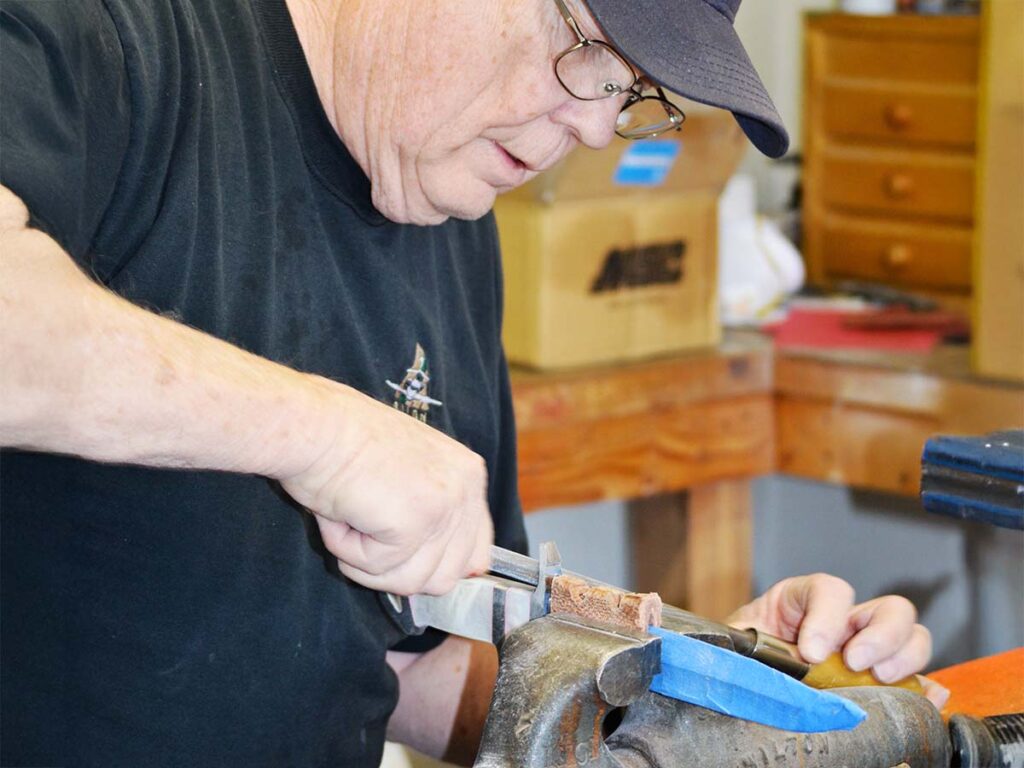
Your body needs time to relax and rejuvenate. For example, if you don’t give your fingers enough time off, they will give you problems later in your career. Steve Johnson files a guard in his shop. (Steve Johnson image)
Once you’re working, don’t deviate from the drawings unless it will make it a stronger presentation. I always try and give the piece the best ideas I can to make it able to stand with the other things I have made, and give the customer the best I can do at the time. It makes for more hours but also gives a much stronger presentation.
Money Matters
All crafters have money fixed firmly in their minds. If you can just get the circumstances right, you know people will like your work and you will sell it.
As a group, crafters are undercapitalized and have no backup cash for when calamity strikes. Until you can show a profit and can pay your suppliers, you don’t have enough funds to sustain your business when the bottom falls out of your market, either locally or globally. All of today’s crafters have experienced this. I wish I had an answer—I wish someone had an answer.
Maintaining Materials
Materials are “the paint” of my work: silver for white, gold for yellow of differing shades, bronze for brown gold, jade for green, emeralds for green, Nigerian green tourmaline for green, rubies for red, carnelian for orange/red, lapis lazuli for blue, etc. Your stockpile of materials controls the variables in your work. Where would Van Gogh have been without yellow, orange and electric blues on his pallet?
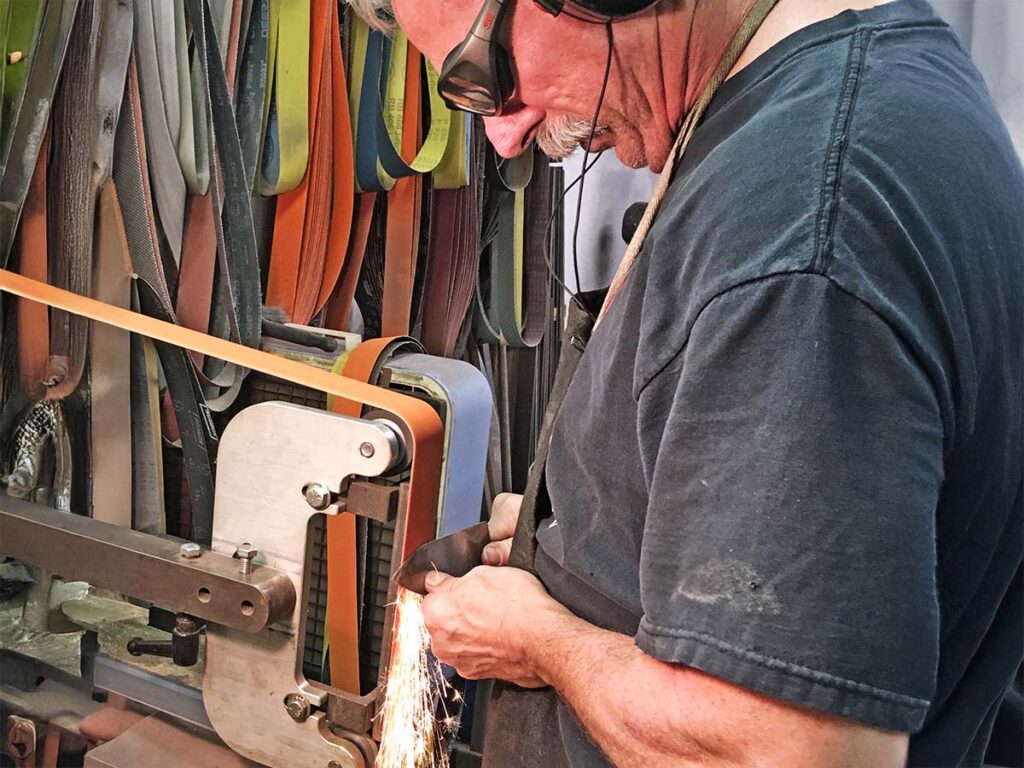
Always protect your eyes and ears from foreign objects and stressful sounds. ABS master smith Steve Randall shows how it’s done. (Steve Randall image)
It has always been considered easier to do color photography than black and white photography. I think there is a correlation in craft. The simpler the design, the more important it is not to deviate from the original line. A fine example of this is the work of Wolfgang Loerchner; it is so clean and simple in design, with wonderful materials, and no room for any deviation in the completed piece. That’s difficult for me. His work is spotlessly fine while I spend part of my time trying to make it look like I didn’t have any difficulties in the making.
If your budget allows it, always stockpile unusual materials that are necessary in your work so there are no down times while you wait for four feet of Madagascar ebony, or a pallet of clay to be dropped at your step. If you already have it on hand, there are no delays.
Buy quality materials. You don’t want your turned goblet to twist and crack and eventually fall apart because the wood wasn’t properly dried or treated after it was done. Most natural materials will take no heat because they were created at normal earth temperatures. Too much heat and anything will crack—if not today, weeks or years later. Epoxies usually give way at anything over 150° F. Buffers will bring the temperature up to that point quickly, making the epoxy no more than a filler rather than bonding the materials together.
Knifemaking Tools
Every craft has its list of necessary items you need to do it well. When you’re buying those things think on the longevity of the tool—good tools last, cheap ones don’t. I’m still using items I purchased in the early ’70s on a regular basis. They don’t always have to be “show dog quality” in appearance if they still work well.
Conclusion
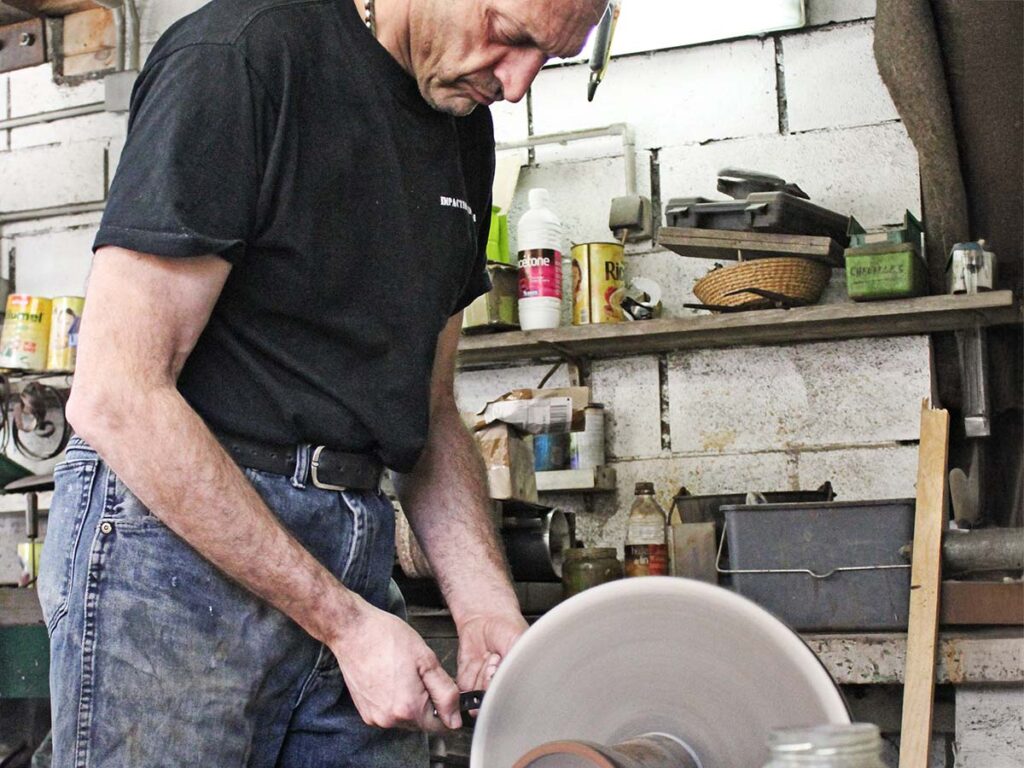
Too much heat and anything will crack—if not today, weeks or years later. Epoxies usually give way at anything over 150° F. Buffers will bring the temperature up to that point quickly, making the epoxy no more than a filler rather than bonding the materials together. Veteran French knifemaker Fred Perrin polishes a knife on an old-school buffing wheel in his shop. (image courtesy of Michael Janich)
To you out there who have jumped on the craft wagon: always think things all the way through beforehand. It will make your landing much more enjoyable. I know I have given you a list of things that is larger than you want to deal with, but if you want to see your name in lights someday, you must follow the simple rules every business must have to survive or you will only make it more difficult for yourself, your career as a crafter, and, most of all, your family standing behind you.
It’s always a swim against the current for all of us.