
Knifemaking

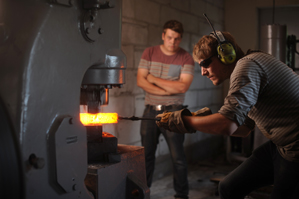
Knifemaking is the building of a knife, which includes the blade, handle and other accouterments. Blades are made by either removing metal from a steel blank via a grinder – known as stock removal – and the forging to shape of hot steel into a blade in the process known as bladesmithing. Other parts, including bolsters, guards, pommels, etc., are needed to complete the finished knife.

Featured Knives – – Knife Collecting – – Tactical Knives – – Survival Knives

Summer’s Finest: Custom Damascus Knives You Need to See

Explore 11 jaw-dropping custom knives featuring premium damascus steel blades, exotic handle materials, and master craftsmanship.

This summer’s crop of custom knives brings damascus front and center. From twisted and ladder patterns to stainless blends and copper-clad creations, each blade in this collection highlights not just the maker’s skill, but their artistry with steel. Whether forged for daily carry, culinary precision, or collector prestige, these knives turn heads with standout materials—think crystallized titanium, crosscut mammoth, and ringed Western Myall—paired with performance-driven designs. Featured makers range from journeyman smiths to Guild members, each offering a unique take on the timeless beauty and cutting power of damascus steel.

Carlos Queiros Thorn Persian TRS
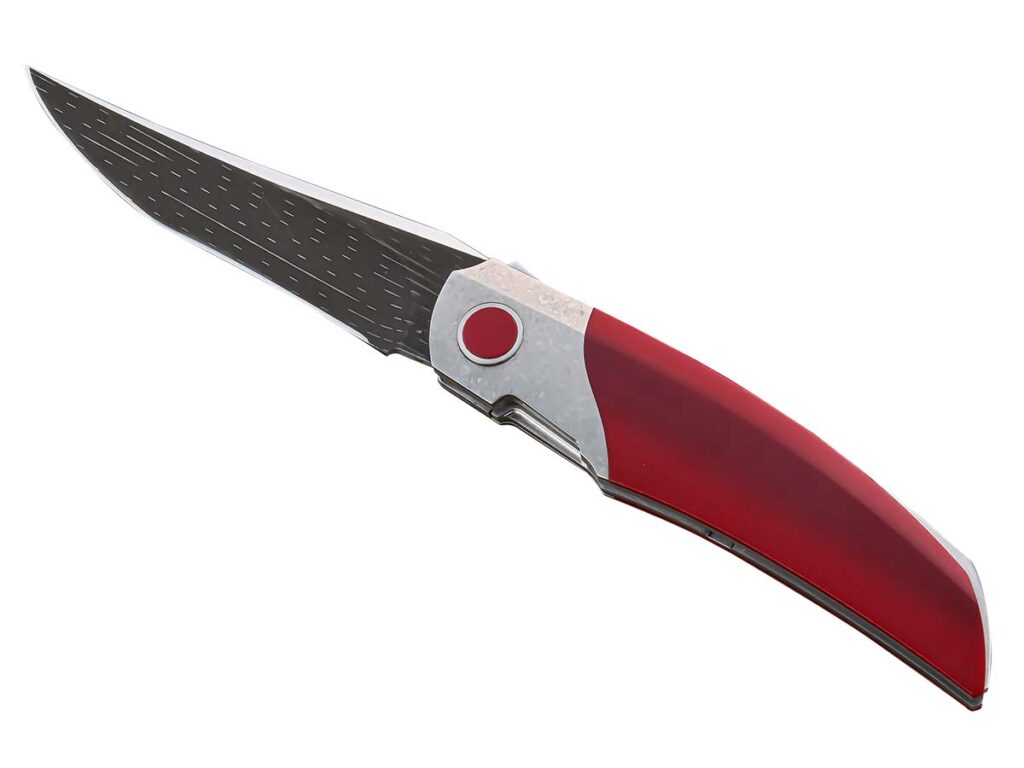
Carlos Queiros Thorn Persian TRS

Knife type: Folder
Blade length: 3.35”
Blade material: Chad Nichols Starfire stainless damascus
Blade grind: Flat
Scales: Vintage bright red linen Micarta®
Bolsters: Crystalized titanium
Pocket clip: Yes
Closed length: 4.53”
Maker’s price for a similar knife: $4,700-$4,800 at press-time exchange rate
Maker: Carlos Queiros (SharpByCoop image)


Casey Brown Dagger
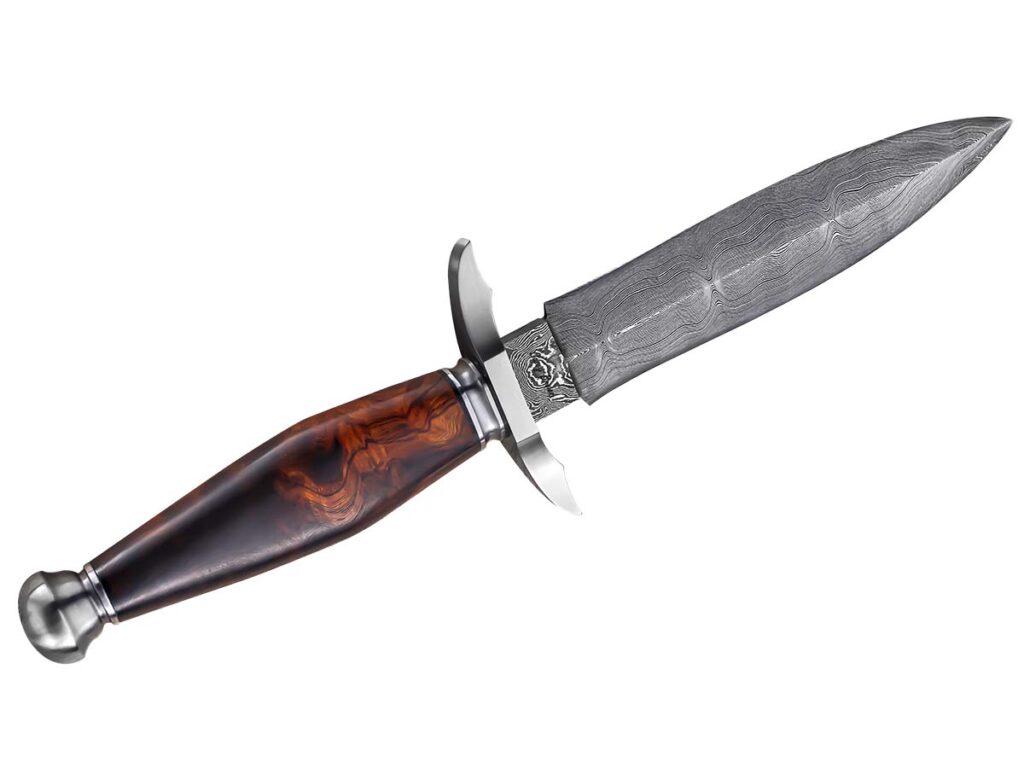
Casey Brown Dagger

Blade length: 5.5”
Blade material: Ladder-pattern damascus
Blade grind: Flat
Scales: Desert ironwood
Guard/fittings: 416 stainless steel
Overall length: 10.25”
Maker’s price for a similar knife: $900
Knife to know: The maker is an ABS journeyman smith
Maker: Casey Brown (SharpByCoop image)


Luka Allen Petty Knife
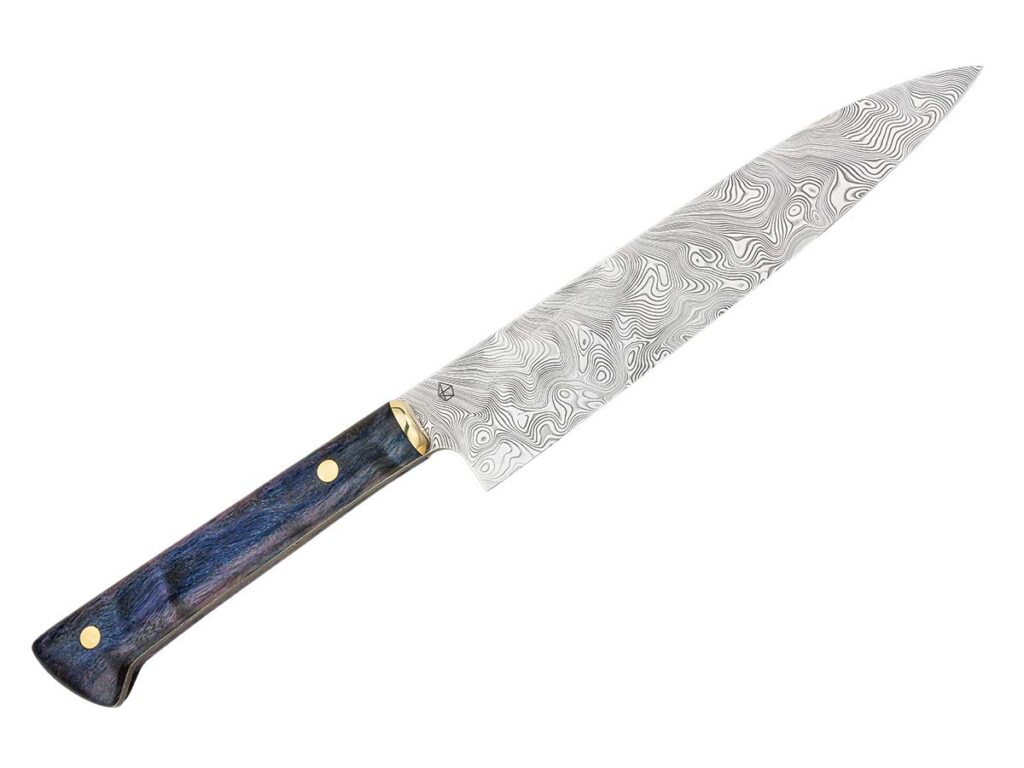
Luka Allen Petty Knife

Blade length: 5 5/8”
Blade material: Bjorkman’s twist damascus by Damasteel
Blade grind: Flat
Scales: Cottonwood
Fittings: Brass
Overall length: 9.75”
Maker’s price for a similar knife: $450
Maker: Luka Allen, lukaallen.com (Jocelyn Frasier image)


Micah Dunn Chef Bread Knife
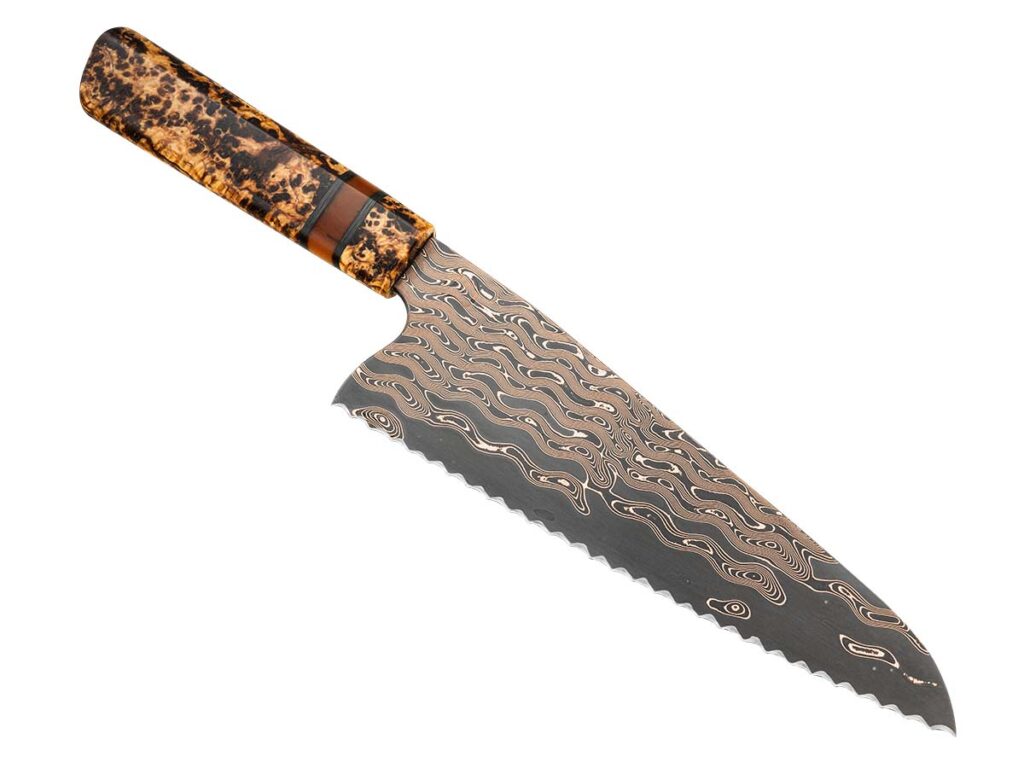
Micah Dunn Chef Bread Knife

Blade length:7.5”
Blade material: Baker Forge & Tool copper-mai Surge pattern
Blade grind: Flat
Scales: Spalted chestnut burl and vintage Micarta®
Overall length: 12.25”
Maker’s price for a similar knife: $1,200
Maker: Micah Dunn, mdedgeworks.com (Jocelyn Frasier image)


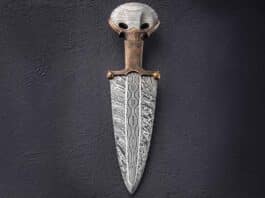
Dennis Friedly Art dagger
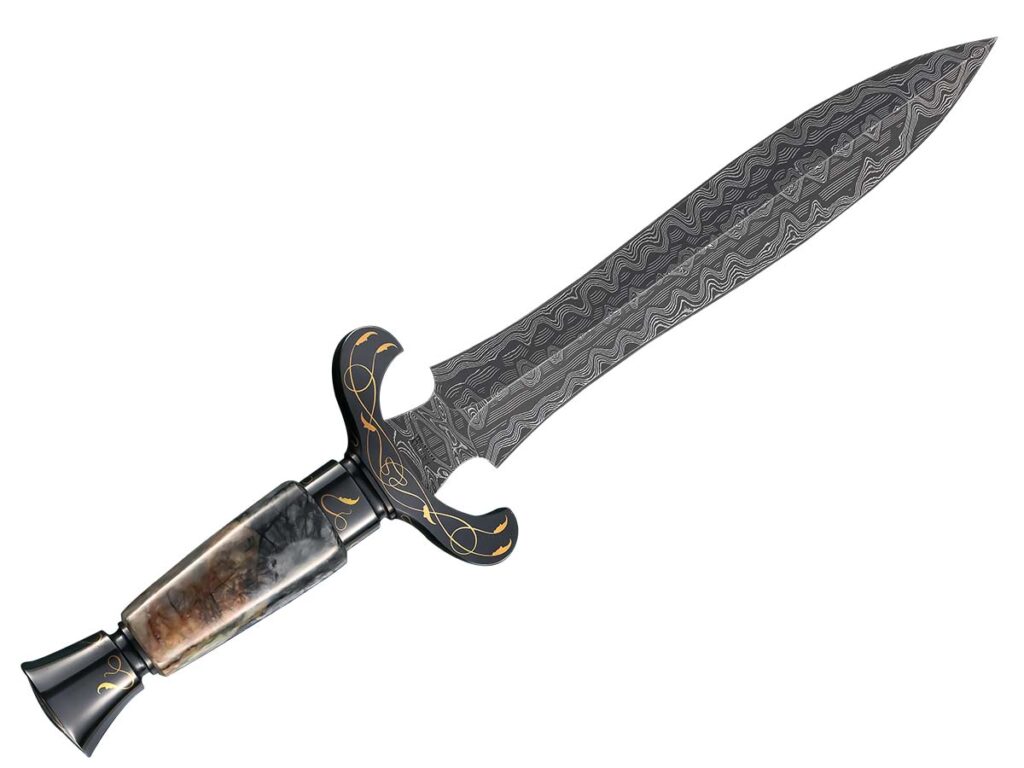
Dennis Friedly Art dagger

Blade length: 9”
Blade material: Mike Norris damascus
Blade grind: Hollow
Scales: Picasso marble
Fittings: Blued steel
Embellishment: 24k-gold inlay by Ray Cover Jr.
Maker’s price for a similar knife: $7,200
Knife to know: The maker is a voting member of The Knifemakers’ Guild
Maker: Dennis Friedly, friedlyknives.com (SharpByCoop image)


Dane Standen Cleaver
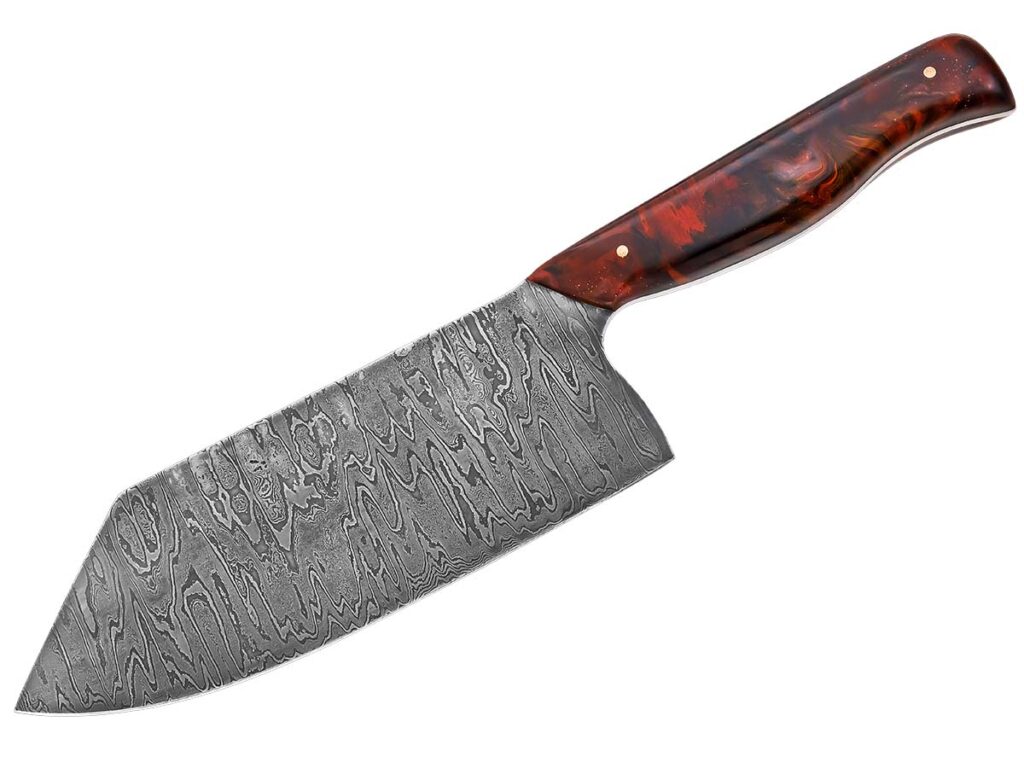
Dane Standen Cleaver

Blade length: 7.3”
Blade material: 243-layer textured damascus of 1084 carbon- and 15N20 nickel-alloy steels
Blade grind: Flat
Scales: Colored resin
Pins: Copper
Overall length: 12.2”
Maker’s price for a similar knife: Contact maker for info
Knife to know: The maker is a probationary member of the Australian Knifemakers Guild
Maker: Dane Standen (Rod Hoare image)


Josh Howard Folding Hunter
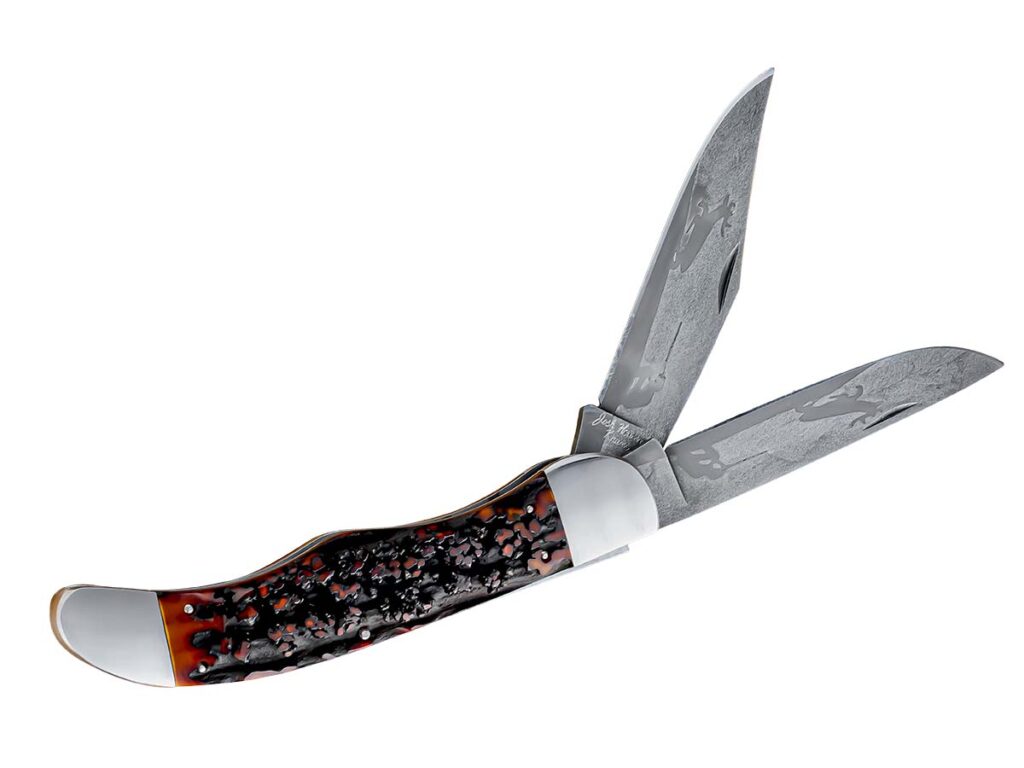
Josh Howard Folding Hunter

Action: Slipjoint
Blade length: 3.5”
Blade material: Pattern-welded deer hunting scene
Blade grind: Hollow
Scales: Amber stag
Handle frame & bolsters: Stainless steel
Closed length: 5.25”
Maker’s price for a similar knife: Contact the maker for info
Maker: Josh Howard, deerlickridgeforge.com (SharpByCoop image)


Chad J. Jones Hunter
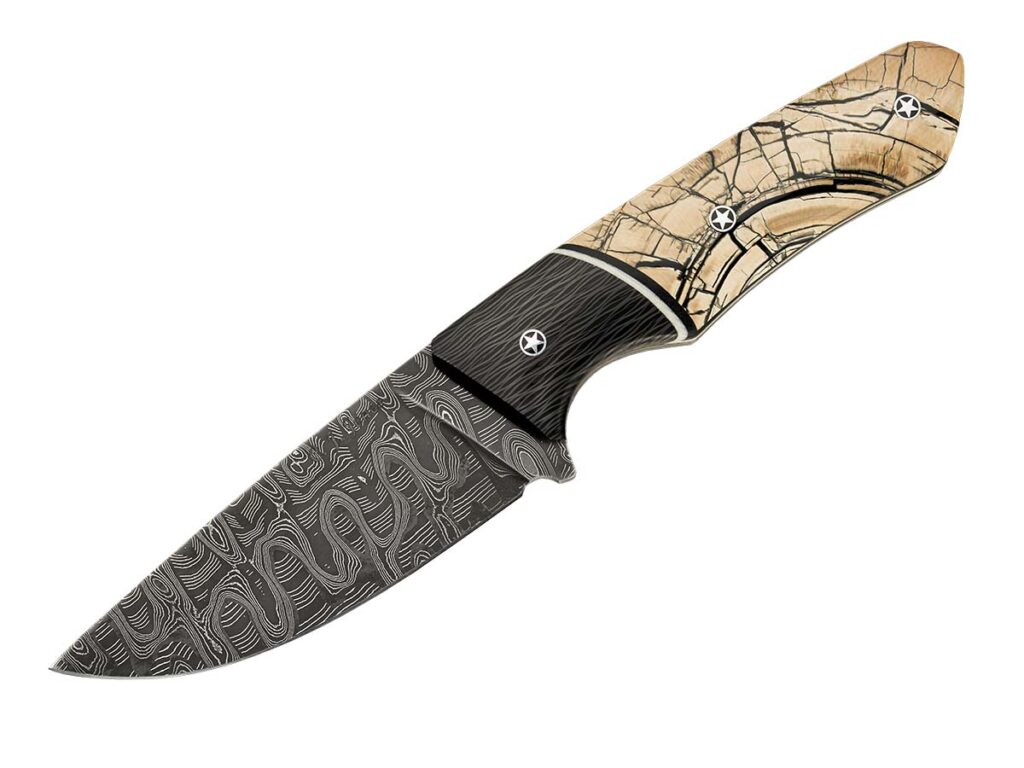
Chad J. Jones Hunter

Blade length: 3.75”
Blade material: Mike Norris Hornet’s Nest stainless damascus
Blade grind: Flat
Scales: Crosscut mammoth tusk
Liners: Black and white G-10
Bolster: Zebra carbon fiber
Overall length: 8”
Maker’s price for a similar knife: $1,250
Maker: Chad J. Jones (Jocelyn Frasier image)


William Manning Hunter
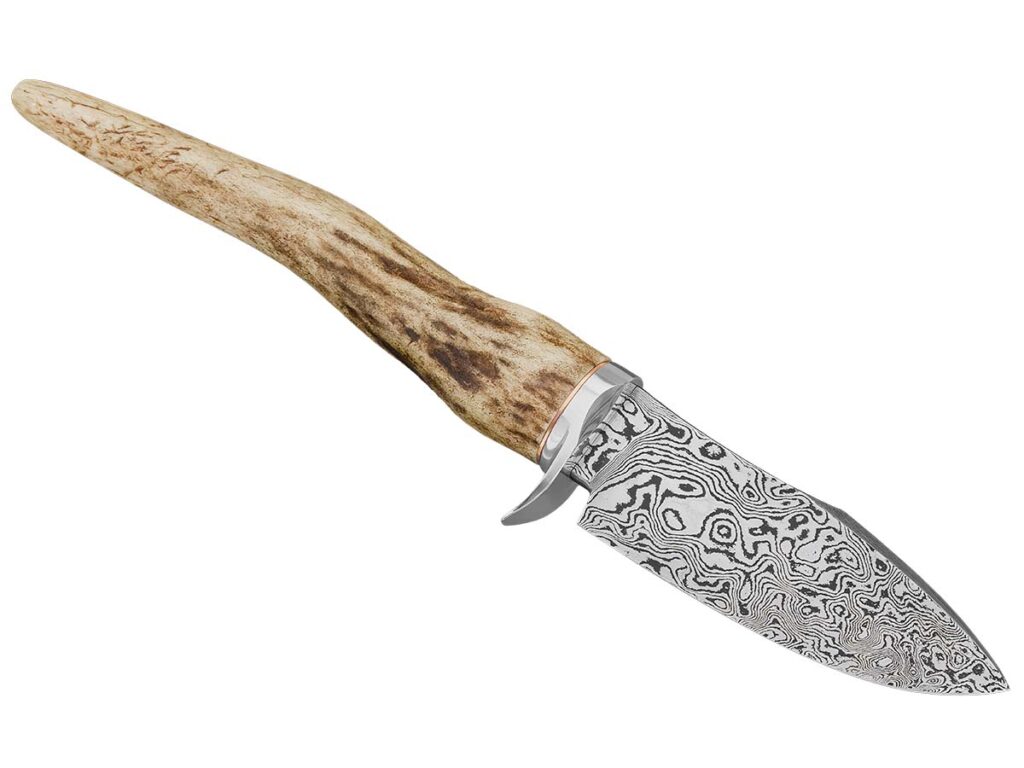
William Manning Hunter

Blade length: 3.35”
Blade material: Random-pattern damascus of 1084 carbon-and 15N20 nickel-alloy steels
Blade grind: Flat
Scales: Antler w/copper spacer
Guard: 416 stainless steel
Overall length: 8.27”
Maker’s price for a similar knife: Contact maker for info
Knife to know: The maker is a probationary member of the Australian Knifemakers Guild
Maker: William Manning, manningblades.com (Rod Hoare image)


Francois Mazieres Medium Paring Knife
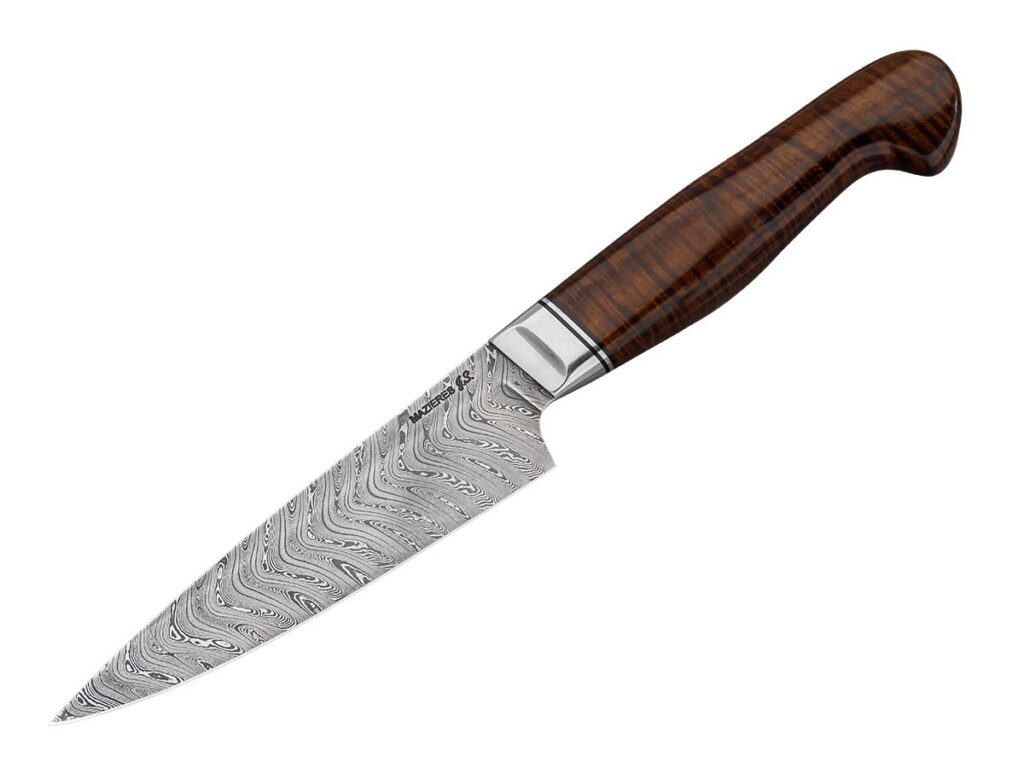
Francois Mazieres Medium Paring Knife

Blade length: 5”
Blade material: Pattern-welded damascus in 150 layers of 1084 and 1075 carbon- and 15N20 nickel-alloy steels embossed using
chevron dies for the final pattern
Blade grind: Flat
Scales: Stabilized South-Australian ringed Western Myall wood shaped in a composite Western/cowboy style
Spacers: G-10 and stainless steel
Bolsters: Scalloped, pinned and soldered 416 stainless steel
Construction: Hidden tang
Overall length: 10”
Maker’s price for a similar knife: $320.62 at press-time exchange rate
Knife to know: The maker is a member of the Australian Knifemakers Guild and a journeyman smith in the American Bladesmith Society
Maker: Francois Mazieres, Yandiwa.com.au (Rod Hoare image)


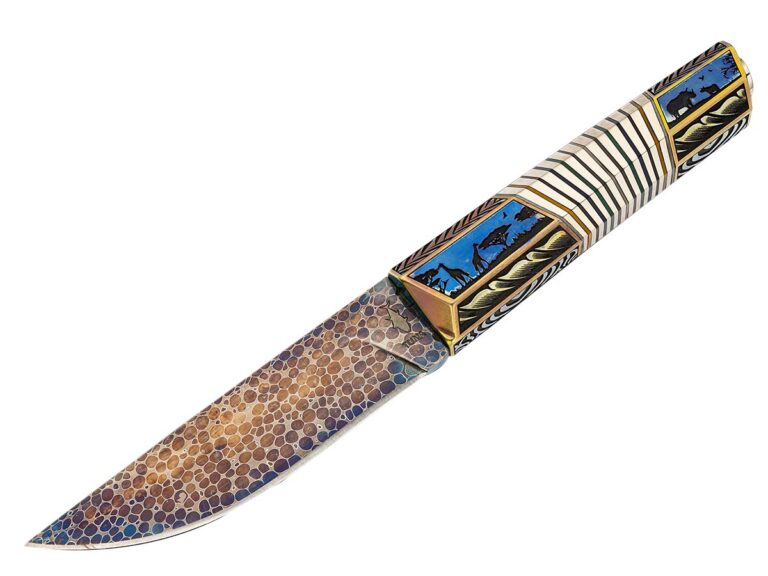
Nate “Tuna” Grant Utility Fixed Blade

Nate “Tuna” Grant Utility Fixed Blade

Blade length: 4”
Blade material: Rietveld Dragonskin damascus by Bertie Rietveld
Blade grind: Flat
Handle: Titanium, nickel silver, fiber liners, laser engraved
Overall length: 8”
Sheath: Guster leather; inlaid w/exotic animal skin; belt model with snap
Maker’s price for a similar knife: $5,000
Knife to know: The maker’s utility fixed blade won Best Utility at the 2024 Lost Pines Knife Show
Maker: Nate “Tuna” Grant, madebytuna.com (Jocelyn Frasier image)


Bryan Montalvo Basset
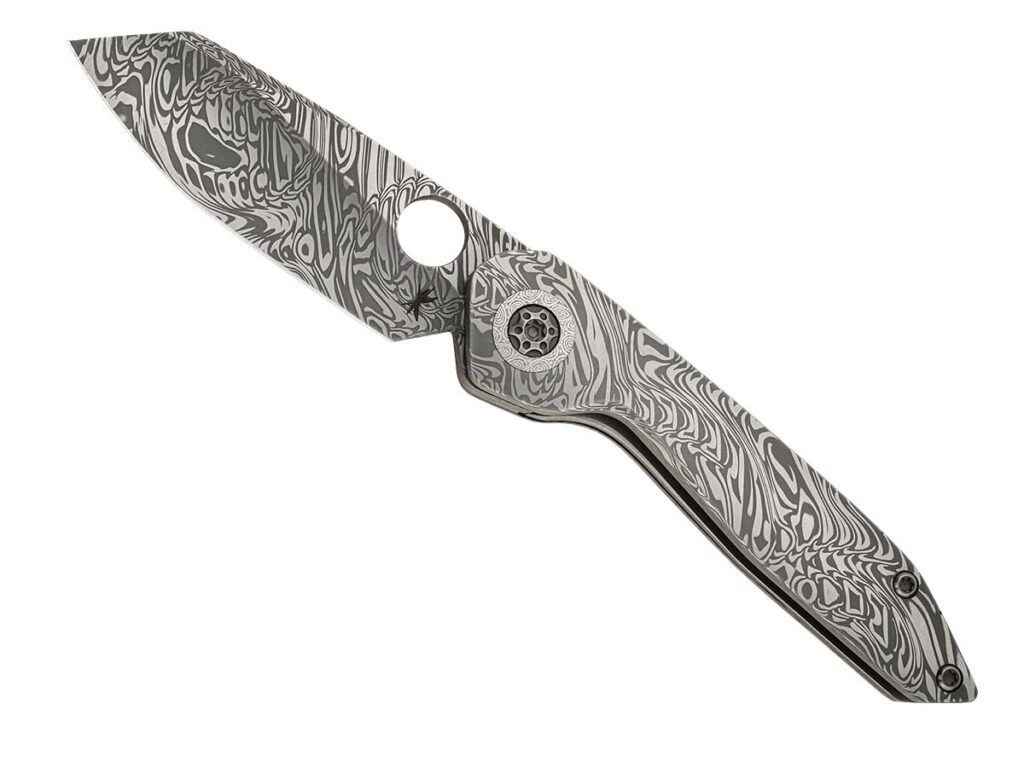
Bryan Montalvo Basset

Knife type: Folder
Blade length: 3.25”
Blade material: Grabak damascus by Damasteel
Blade grind: Hollow
Blade pivot: Skiff caged ceramic bearings
Handle: Same material as blade
Lock: Linerlock
Pocket clip: Same material as handle
Closed length: 3.5”
Maker’s price for a similar knife: $3,000 at press-time material costs
Maker: Bryan Montalvo, keanisonknives.com (Jocelyn Frasier image)


More Knife Reviews:

Video: Interview with Jim Behring of Treeman Knives

0

Fun Gun Gear Presents: “Treeman Knives”. Jim Behring Started out making Hand forged knives, but after a number a SEAL Team 4 members had him make their personal knives, he’s now making a complete line of High quality Combat knives for real world hostile enviorments. Interview at the 2012 Blade Show, Atlanta, GA.


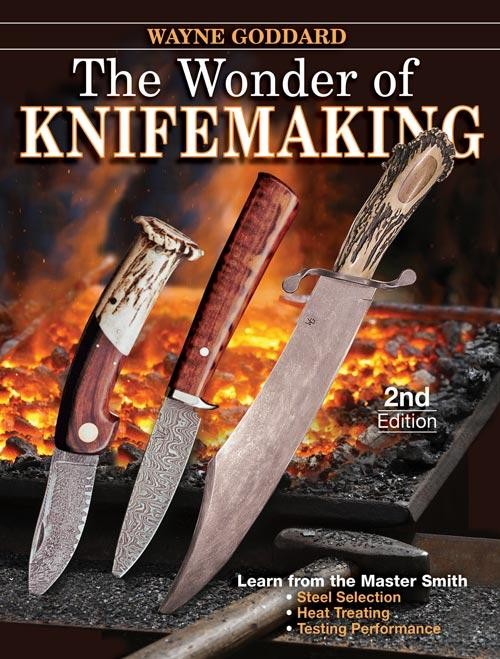
Get started in knifemaking with the new book, BLADE’s Guide to Making Knives, Volume 2. Click here to check out this information-rich resource.

Dagger Design: Point For Perfecting Blade Performance

0

In this look at dagger design, we move beyond history and symbolism to the structural realities of geometry and construction. From the curve of the edge to the presence—or deliberate absence—of a fuller, each feature serves the dagger’s singular purpose: to deliver a clean, decisive thrust and to endure long enough to do so again.

Dagger Profile & Point Geometry

A single, shallow fuller lightens the blade without compromising stiffness—proof that subtle geometry changes transform handling. Kelly Vermeer-Vella and Bruce Bump do the honors here.

A dagger’s profile is its outline when viewed from the flat side; its point geometry is the shape of its cross-section near the tip. Mastery in dagger design comes when the two elements merge into a seamless conduit for force, guiding energy from the wielder’s hand into the target.

One guiding principle is to avoid parallel edges along the portion of the blade intended for penetration. On utility knives, parallel edges are excellent for long, slicing cuts, but in a dagger they can create excessive suction and drag during withdrawal. They also represent a missed opportunity to enlarge the wound. A blade with gently convex curves tends to create a wound tract that widens as it penetrates, then releases more easily on the way out. The effect is twofold: the strike inflicts substantial damage on entry, and the blade slips back out with minimal resistance. In a fight where fractions of a second matter, ease of withdrawal could determine whether the wielder stays alive.

The balance point rests just forward of the guard, lending a stab-ready steadiness that rewards control. The author made this balanced dagger.

Cross-sectional design reinforces how a dagger behaves in the hand. The Roman pugio often carried a pronounced central ridge that gave it a triangular cross-section, lending the blade excellent stiffness. Later European daggers frequently adopted a diamond-shaped section that struck a balance between rigidity and lighter mass. In practice, triangular sections feel solid and grounded, with the ridge channeling force straight to the point. Diamond sections distribute the force across four bevels, trimming weight just enough to make the blade a touch quicker, though sometimes at the cost of absolute stiffness.

Experimental archaeology adds nuance to this comparison. Triangular sections resist torsional stress more effectively, while diamond sections tend to slip more cleanly into soft targets. Renaissance arms rooms often contained both forms, chosen with intent: defense versus assassination, battlefield versus court intrigue.

Dagger Ergonomics & Balance

Careful placement of a ricasso notch ensures consistent hand alignment, turning technique into muscle memory. Note the refined handle and ricasso detail on Cutlery Hall-of-Famer Billy Mace Imel’s piece.

Even the finest blade geometry falters without a grip that enables control. Here, ergonomics and balance determine the dagger’s effectiveness.

Early medieval daggers often featured grips as short as 3-to-4 inches. This compact length forced the hand into a firm grasp close to the guard, a practical safety measure when blood, rain or sweat made surfaces treacherous. Fourteenth-century Germanic examples show how a modest flared guard and compact handle could prevent slippage while preserving agility.

Balance points were just as carefully managed. In many 16th-century Italian stilettos, the center of gravity sits just ahead of the guard, giving the weapon a stab-ready steadiness. The narrow, edgeless blade minimizes rotational drag. Highland dirks, by contrast, often used teardrop pommels to counterweight the blade, shifting balance closer to the hand and allowing forceful thrusts whether on horseback or on foot.

A weighted pommel counters blade weight, shifting balance back toward the hand and straightening the thrust on a Renaissance-influenced dagger by the author.

Makers sometimes introduced subtle refinements. A ricasso notch carved two or three centimeters from the guard ensured that the user’s thumb returned to the same anchor point every time. A shallow fuller reduced forward weight, so that an 8-inch stiletto might balance almost identically to a heavier 10-inch combat dagger. These small calibrations transformed the blade from a piece of steel into an extension of muscle and bone.

Dagger Strength Features

There are no gimmicks on Joe Syverson’s minimalist dagger with clean taper—just clear profile, rigid spine and reliable balance. The design reflects simplicity that serves performance.

The dagger’s tip, however slender, must withstand resistance from mail, bone or even poorly placed strikes. European smiths between the 14th and 17th centuries developed several overlapping solutions that remain relevant today. Fuller placement was one of the most important: a carefully cut longitudinal groove reduced weight while preserving stiffness, as seen in 16th-century Venetian stilettos where the fuller often ran from just below the guard almost to the point.

Ricasso thickness was another safeguard. A blade too thin at the base was liable to flex and buckle under pressure, and even worse, a weak ricasso translated into a fragile point once the final bevels were ground. By keeping this area stout, smiths not only gave the blade strength but also provided a tactile zone of unsharpened steel where the thumb or index finger could anchor securely.

Even with an ornate sculpted handle and dramatic damascus, the blade remains an unbroken taper from guard to tip on Henning Wilkinson’s art dagger. Note the lavish surface detail.

Hardening practices added a third layer of reliability. Most European daggers were quenched and tempered uniformly to a Rockwell hardness in the neighborhood of 48-to-52 HRC. A few Italian masters appear to have experimented with clay tempering to leave the ricasso slightly softer, but this might also have been accidental. In any case, the visible temper lines familiar in Japanese blades were rare. What mattered was consistency: a uniform temper that balanced edge retention with toughness made it so the dagger could survive repeated thrusts against armor and bone alike.

Avoid Feature Creep

Next-generation work in this forward-looking piece by Jean-Pierre Potvin proves the old lessons endure: blade geometry is still central even if the rest of the dagger is fantastical.

Through all the refinement, one lesson emerged repeatedly: every extra feature risked undermining the dagger’s true purpose. Serrations, pry tips and decorative piercings might look clever but each introduced problems. Serrations can snag on clothing and tear rather than pierce. Pry tips disrupt the straight thrusting line. Even ornate cut-outs, while attractive, create weak points that could split under stress.

Historical makers knew better. Even the most extravagant Renaissance daggers—with gilded hilts, inlaid gems or etched scrollwork—maintained an unbroken distal taper from guard to tip. Embellishment was typically reserved for the surfaces, not the structure. However adorned, the dagger kept faith with its defining role: the straight, unyielding line of the thrust.

Conclusion

Inventive cross-sections and flawless transitions demonstrate that modern makers can push design without breaking the rules. Elizabeth Loerchner captures the concept in the strong geometry of her experimental modern dagger.

From the Roman pugio to the Renaissance stiletto, the dagger’s identity rests not in ornament but in discipline: geometry over gimmicks, strength over flourish, function over feature creep. Clear profiles, rigid spines and balanced grips remain the hallmarks of a true dagger. These principles are as relevant to the modern craftsman as they were to the smiths of Venice, Florence or Solingen. A dagger’s promise, after all, is measured not by extravagance but by the sharp integrity of its point.

More On Daggers:

How Much Money Do You Need to Start Making Knives?

0

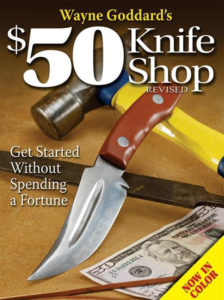
Editor’s note: This article was originally published in 2005, so be sure to adjust for inflation. That said, Wayne Goddard’s $50 Knife Shop book is the next step if you’re looking to get started on a minimal budget.

The short answer: A few thousand dollars if you want to get serious about knifemaking, and considerably less than that for hobby projects.

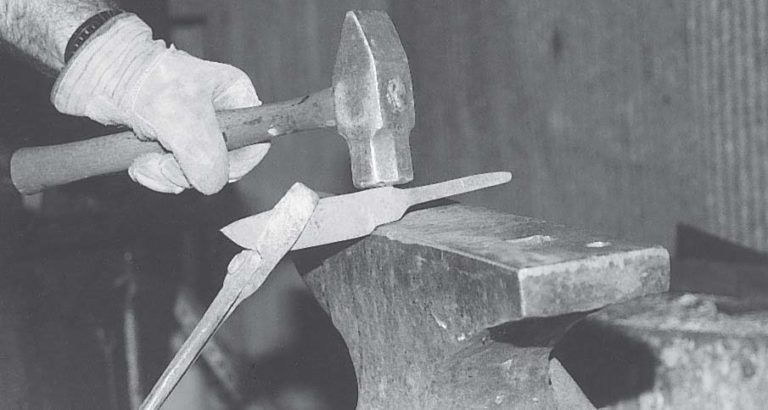
At most forging demonstrations I do, I try to use only minimal tools because I want people to see what can be accomplished with just a few basic implements—a hammer, a few tongs, a good anvil and a forge. Most folks are not set up with every type of tool that can be used in bladesmithing. As you have seen, with just a few basic tools you can make much more than just a basic knife or hawk.

Using only basic tools does require a bit more sweat. This may be fine if you are a part-time blacksmith or bladesmith, but may not be the most efficient avenue for someone trying to make a living at it. If the latter is the case, you can quickly run into thousands of dollars setting up your shop.

tips for how to make a knife
Next step: Learn how to get started making knives with just 50 bucks in tools in “Wayne Goddard’s $50 Knife Shop.”

For starters, if you do not already have a place to set up your forge, then the biggest expense will be for shop space. Obviously, the space cannot be an old woodshed. Keep in mind that you are working with hot metal and fire, and that you need to set up the forge where the metal sparks will not fly where they could cause trouble.

The room also will need good ventilation, no matter if your forge uses gas or coal.

If you already have such a place to use as your forge room, then you can start setting things up. Your next biggest expense will be the forge itself, either gas or coal. I recommend a gas forge because it is cleaner and you have more control of the heat. Such a forge could run about $600.

You need a good anvil; my preference would be at least a 125-150 pounder. You will need a sturdy worktable with a quality, heavy-duty vise, a bench grinder, and a few well-chosen tongs and hammers. This will be all you need to do most of your bladesmithing.

However, whoever told you that you can spend thousands of dollars setting up a shop with all the tools was not pulling your leg. Power hammers, various dies, a drill press and other tools of the trade will make your work easier. Specialized knifemaker’s grinders from Burr King, Bader or Square Wheel will cost you but will be worth the investment.

You could write a whole book on tools that would make your life easier and your pocket emptier. Visit a well-established blacksmith shop and you will be surprised how much tooling will be there. Of course, you do not have to purchase everything at once, but over the years as time and funds allow, you probably will.

My opinion is that you do not have to spend thousands of dollars to set up a shop where you can create a great variety of beauty and function. However, if bladesmithing is your chosen trade, to not invest in the equipment that will save you time and sweat is not a smart option.

Like they say, you need to spend money to make money.

Cool Custom: Ray Rybar’s Prospector Push Dagger Strikes It Rich

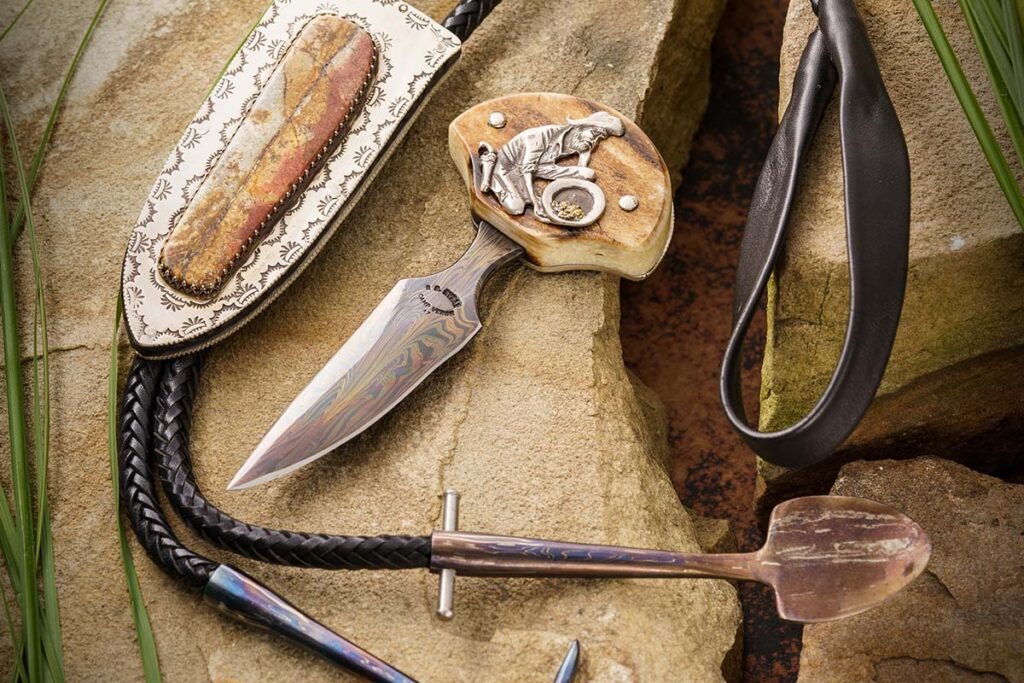
Sourced from Geronimo country Rybar’s Prospector dagger and bolo combo prove pure gold.

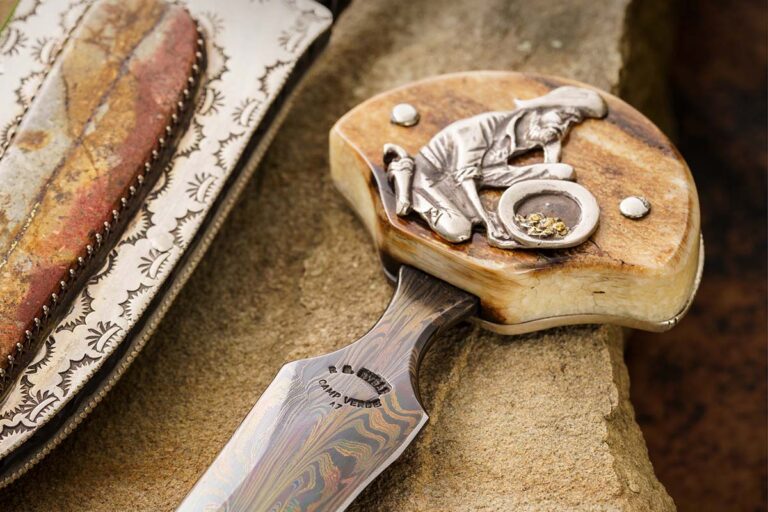
The Prospector by Ray Rybar is a push dagger/bolo combo that bespeaks not only his talent as an ABS master smith but also the array of beautiful, valuable ore in and around his home in Camp Verde, Arizona.

Ray lives in the middle of an Apache reservation where he owns three or four gold mine claims. Camp Verde was the headquarters of U.S. Army Gen. George Crook during the Army’s pursuit and eventual defeat of Geronimo and his Chiricahua Apache band in 1886. Navajos live in the area as well.

Ray Rybar Prospector Push Dagger and bolo
Also from near one of his claims, the rock for the inlay has a naturally occurring “stringer” of gold down the center. A local Apache weaved the beautiful leather bolo strap, and Ray forged the shovel and pick of carbon steel and heat colored them. (Eric Eggly/PointSeven images)

Ray teaches various forging and other classes. On occasion he takes his students out to forage for blade and other materials in and around his claims. There they find not only gold every so often but also iron/nickel meteorite, samples of Fe3 and Fe4 iron, ore that can be developed into copper, silver and more. He teaches his students how to convert the iron ore into high-carbon steel. He saves up the leftover steel forged by his students and also rocks he finds and slices with a slab saw for his knives and sheaths. The results can be spectacular—of which The Prospector is a most representative example.

Prospector Specs
Knife name: The Prospector
Maker: ABS master smith Ray Rybar
Knife type: Push dagger/bolo
Blade length: 4”
Blade material: Damascus forged from iron ore converted to high carbon steel and also iron/nickel meteorite
Handle: Ancient walrus ivory w/silver pins and backing
Handle inlay: Prospector is solid silver and his tray contains real gold nuggets
Sheath: Silver front and back and ebony center w/silver pins; decorated with various marks/designs made with stamps Ray cut from carbon steel and based on those used by the local Apaches and Navajos
Sheath inlay: Rock containing quartz, feldspar and a stringer of gold
Bolo strap: Leather weaved by a local Apache
Maker’s price for a similar push dagger/bolo: $6,500

Check Out More Cool Custom Knives:

Are More People Forging Today?

10_260I was watching American Pickers on the History Channel last night, and the stars were looking at an anvil, and Mike said something to the effect of, “More and more people today are going back to the basics and learning to forge, and learning the art of glass blowing and things like that …”

And it got me thinking about how my wife, Tricia, and I do this art tour every year where they give you a map and you go to artisans’ houses for kind of an “open house” art tour. And there’s usually a glass blower every year.

And then there’s that other History Channel show, Forged In Fire, and it seems like new knifemakers keep coming out of the woodwork …

What do you think, are more people forging today than in recent past?

Shown in the image are Finnish brother knifemakers Jakob (forging) and Simon Nylund.

Cool Custom: Derick Kemper’s Scottish Dirk

A bonnie blade to be sure, Kemper makes a statement with his Scottish dirk.

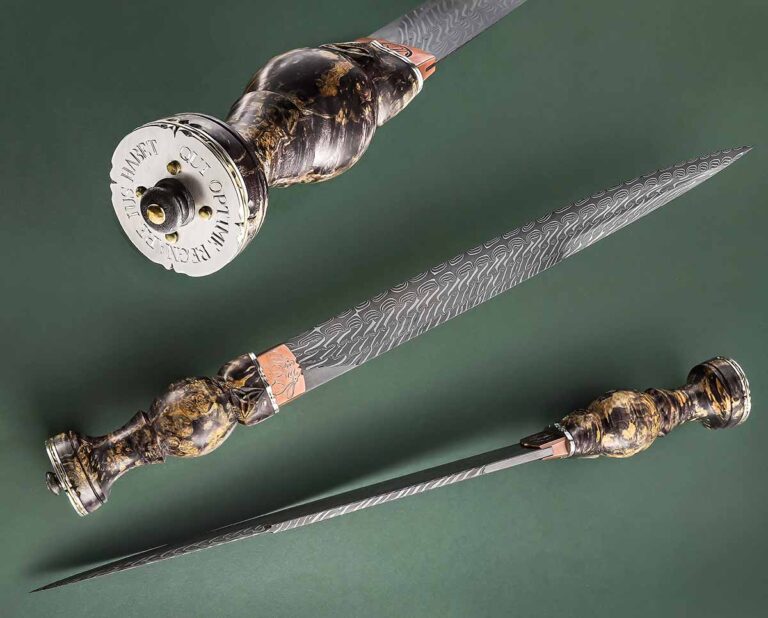
Derick Kemper celebrates his Scottish heritage with his sprawling reproduction of a Scottish dirk. It’s overstated to salute the legend and lore of his Scottish Highlander ancestors who fought so valiantly for their independence from Great Britain, beginning with the Jacobite rising of 1745.

The edge of the stunning damascus blade is a simple twist pattern of W2 carbon and 15N20 nickel alloy steels. The three bars above it are Derick’s version of Robert Eggerling’s paisley pattern—a modified twist of 203E carbon steel for the bright section and W2 and 15N20 as well.

The habaki has Derick’s Damselfly Forge stamp of two damselflies and his initials in the middle engraved on one side, and the white rose of Scotland’s “Bonnie Prince Charlie” (1720-1788) on the other.

Derick Kemper
Derick Kemper

The chess-piece-like handle is oversized as well, with the pommel engraved in Latin, Qui Optime Regnare Ius Habet. The English translation is “Who hath best right to reign,” a slogan that appeared on the flags and accouterments of many of the Highlanders in the 18th century.

Check Out More Cool Custom Knives:

Advertisement

Must Read Articles

Read this before you make a knife

Knifemaking 101 – Read This Before You Make a Knife

  by Wayne Goddard My experience has taught me that there's nothing like digging in and getting started. I've often said the hardest part of the...
how to forge damascus steel

How to Forge Damascus

Advertisement
Advertisement