
BLADE Knife Sharpener Buyer’s Guide

What are the Best Knife Sharpeners?

It’s challenging to know which knife sharpeners are junk and which are worth the money. To help, BLADE staff and contributors assembled this list. These are the knife sharpeners that those “in the know” use, but they won’t break the bank.

How BLADE Chose These Knife Sharpeners

BLADE received no compensation for the items that appear on this list. BLADE does not benefit financially from affiliate programs on any of the links. These picks are based on experience, knife sharpener reviews from the magazine, and what’s hot in the marketplace. There are more excellent options beyond this list. 

Remember: a sharpener can’t help you if it never leaves the drawer! Buy a knife sharpener you’ll enjoy using.


Top Pick: Electric/Manual Combo Knife Sharpener

Work Sharp Combo Knife Sharpener

PROS

  • For all types of knives
  • Simple to use for beginners, but yields advanced results
  • Offers electric sharpening (removing metal) and manual honing (straightening metal) in one unit
  • Easy maintenance with compressed air

CONS

  • Produces metal dust (store it away from food)
  • Only offers 25-degree angle for edges
Best knife sharpeners for the money
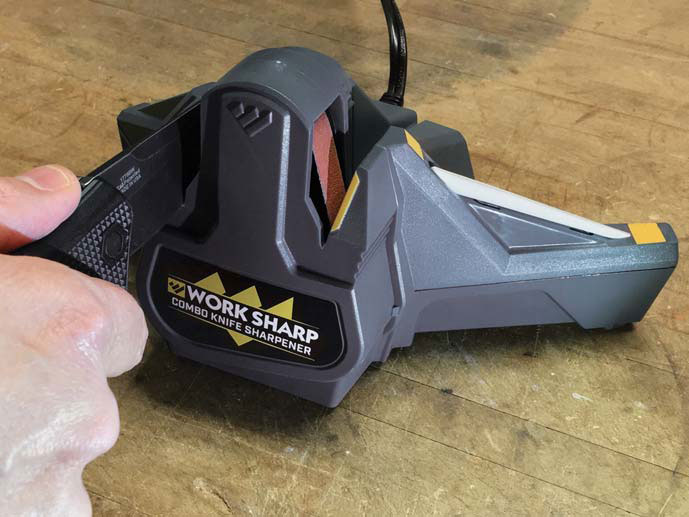
The Work Sharp Combo Sharpener is designed for those who want simplicity along with the results that abrasive belt sharpening offers. One speed, one belt, one angle—everything is fixed. (DMS Captures image)

Winner: 2016 BLADE Magazine Accessory of the Year!

Featuring a flexible abrasive belt, the motorized Work Sharp Combo Sharpener (WSCS) from Work Sharp is simple and effective. It uses long lasting abrasive-belt-sharpening technology and puts a convex edge on any blade.
best electric knife sharpenerIt has one sharpening angle, one motor speed and one grit of belt only. Simply plug it in and turn it on. Configured in a nice, compact form, the built-in angle guides eliminate the guesswork of holding a consistent 25-degree angle.

Pull the blade through each slot to sharpen both sides. After achieving a sharp edge using the belt, switch to the tapered ceramic rod to further hone the edge to hair-popping sharpness. Rest the blade flat against the yellow pads and move it from tang to tip in one sweeping motion using light pressure.

At an MSRP of $59.95, it’s a bargain.

GET IT HERE


Kitchen Electric Knife Sharpener

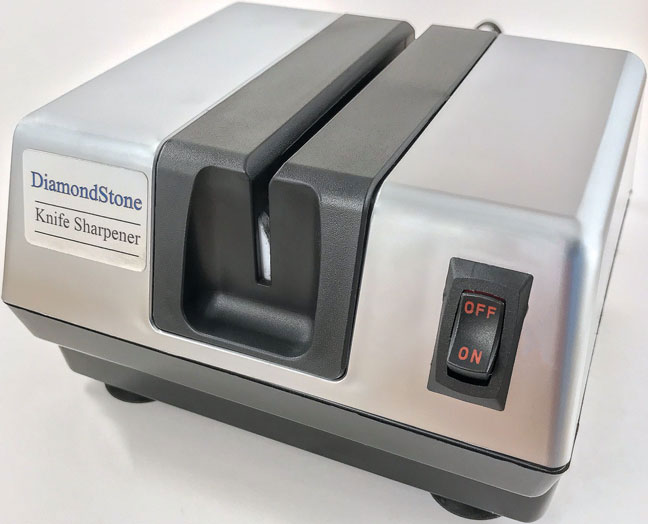
McGowan DiamondStone Electric Sharpener
Electric knife sharpener for the kitchen
The McGowan DiamondStone electric sharpener is a singlestage unit with counter-rotating abrasive wheels that produce a keen edge quickly on any blade, though it does so especially well with kitchen knives.

PROS

  • Quick and easy to use
  • Works especially well on kitchen knives
  • Chrome finish doesn’t look out of place on the countertop
  • Design keeps metal dust to a minimum
  • Less noisy than other models

CONS

  • Boxy design may not be visually appealing to everyone
  • Only produces hollow-ground edges 

The DiamondStone electric sharpener from McGowan Manufacturing incorporates abrasive wheels that simultaneously sharpen both sides of the blade to create a burr-free, hollow-ground cutting edge.

Housed in a combination metal/plastic housing, the DiamondStone is available in brushed chrome or black. The brushed chrome blends in nicely on a kitchen countertop with other kitchen appliances.

Out of the box, the sharpener looks well built with top-notch fit and finish. It is quite boxy in appearance, with a pronounced slot running down the middle. Inside the slot sits multiple diamond-infused ceramic wheels that interlock and rotate counterclockwise in relation to each other in order to sharpen both sides of the edge simultaneously. The unit runs smoothly with minimal noise.

Place the blade in the slot starting with the tang end and pull straight toward you, using a minimal amount of pressure on the wheels and drawing back at a moderate pace to allow the ceramic wheels to do the work. As you approach the blade tip, lift the handle slightly so you can sharpen the blade’s belly evenly as well. Once you reach the tip, lift the knife out of the slot and repeat. Usually, a few strokes through the DiamondStone yield a very sharp edge.

This is an ideal type of sharpener for novices because there’s only one motion involved—pulling the blade through the machine.

MSRP: $84.95 – GET IT NOW

See also: Chef’s Choice Model 320


Pull-Through Manual Knife Sharpener

AccuSharp Pull-Through Knife Sharpener
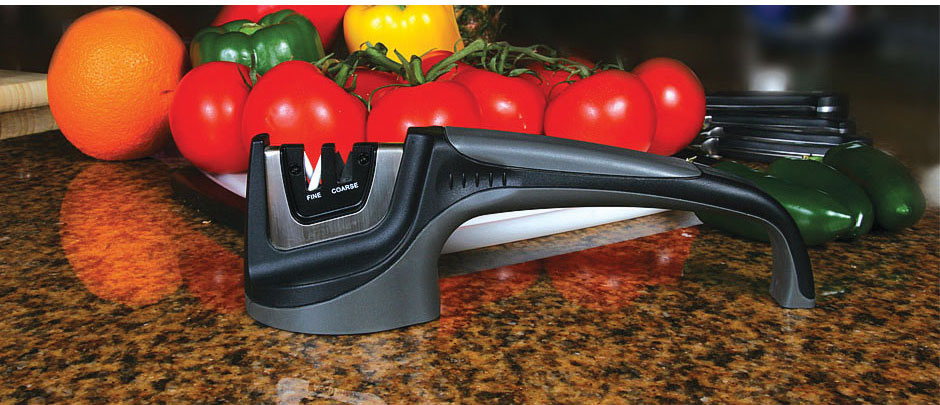
Best manual knife sharpener reviews
The best pull-through, manual knife sharpeners feature a secure grip, a sturdy design, and solid construction for durability. A $20 investment ought to last you several years. (AccuSharp image)

PROS

  • Rubber grip for secure sharpening
  • Sharpening and honing options
  • Heavy duty design
  • Compatible with most plain-edge knives
  • Could not be simpler to use

CONS

  • Sharpener/honer may become loose after years of use (as with most manual pull-through knife sharpeners
  • Lacks the “cool factor” of more advanced knife sharpeners

Yes, there are plenty of pull-through, manual knife sharpeners out there. Some of them even resemble the design of the AccuSharp Pull-Through Knife Sharpener. So why did this one make the list?

To put it simply, this is a well-built manual knife sharpener with a sturdy design. That’s really all you need to worry about, because the sharpening technique will be the same. Draw the blade through the sharpening or the honing V with gentle pressure. Let the tool do the work. So long as you can safely move the blade through the V, this manual sharpener will tackle any type of knife (except for serrations).

This is a knife sharpener to keep in the kitchen drawer, the work bench in the garage, at the cabin, or even in a backpack.

MSRP: $19.99 – GET IT HERE

See Also: Just about any other manual, pull-through knife sharpener. Look for solid grips, a sturdy design, and solid construction. It’s OK to pay a few dollars extra for durability’s sake.


Knife Honing Rod Tips

What’s the difference between honing and sharpening knives?

Honing rods refresh an edge, but they do not sharpen. That’s an important distinction. Honing is something that’s done regularly to tune up a blade, such as before preparing a meal, or immediately after sharpening. That’s because honing straightens the existing edge. Sharpening removes metal from the edge, which is why it shouldn’t be done as often as honing. 

Confusing this entire category is how some honing rods are called sharpening rods, and vice versa. The key is to look at the material.

Three Types of Honing Rods

Generally speaking, there are three types of honing rods: steel, ceramic and diamond. While each has different characteristics, there are some things to watch for:

  • A secure, ergonomic grip
  • A sturdy guard that protects your hand
  • A ring on the handle for slipping a pinky through in case you drop it
  • The rod should be longer than the blade of the knife/knives you intend to sharpen
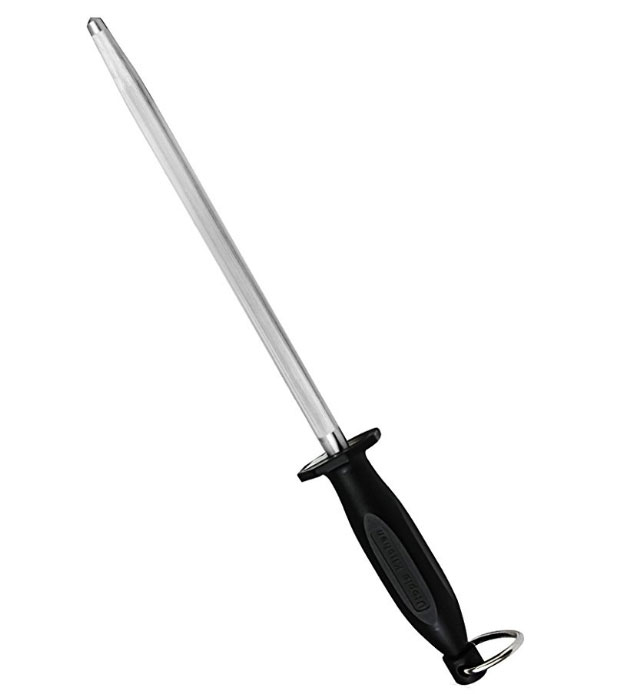
Best steel knife sharpening stick
There’s no need to overspend on steel honing rods. This 12-inch rod from Utopia Kitchen goes for $15.99.

Steel honing rods are the most common type, and the least expensive. Because they’re made from metal that’s softer than what’s typically found on knives, they’re excellent honing tools. Don’t pay more than $20 for one.
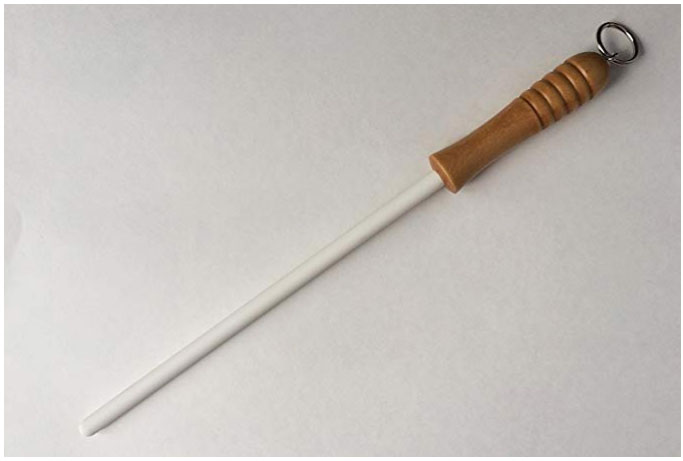
Best ceramic knife sharpening stick
The Idahone Fine Ceramic Sharpening Rod sells for $34.99 at most retailers.

Ceramic honing rods are a bit more aggressive than steel versions. They’ll remove some steel in the process of honing. Isn’t that technically sharpening? Yes! However, if you’re someone who doesn’t sharpen as often as you should, a ceramic honing rod is a way to delay the inevitable. Expect to pay between $30 to $40 for the best value. 
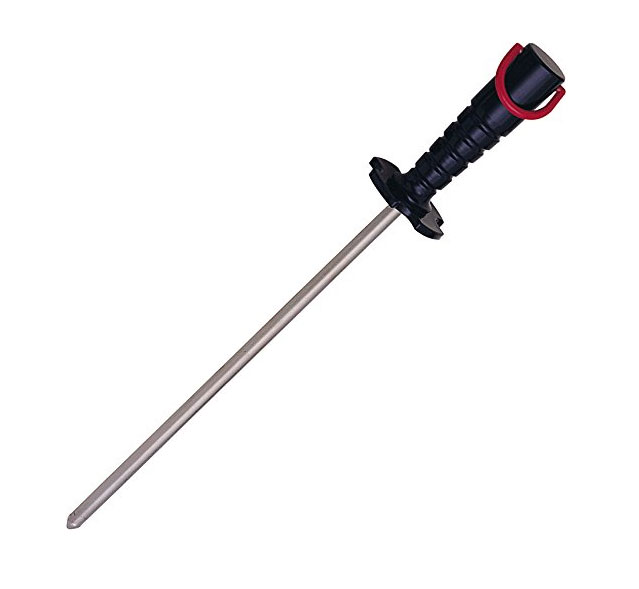
The 12-inch Diamond Steel Sharpening Rod has an MSRP of $39.68.

Diamond honing rods remove the most amount of steel during the honing process, which is why they’re basically sharpeners. If you go down the diamond rod route, pick up a steel or ceramic honing rod, too. On the plus side, diamond rods will last a lifetime. Pay $35 to $45 for a nice ROI.


Portable Keychain Knife Sharpener

CRKT Knife Maintenance Tool (KMT)
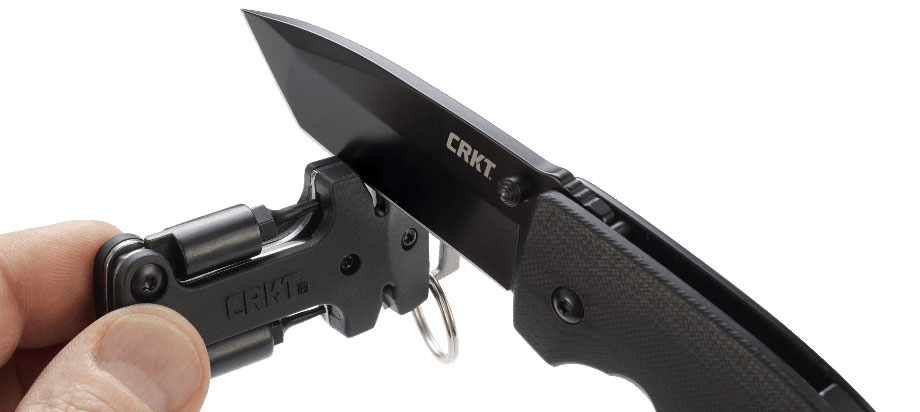
CRKT KMT
The CRKT Knife Maintenance Tool is an excellent portable knife sharpener. (CRKT image)

PROS

  • Compatible with most folding knives
  • Tungsten manual sharpener on one side
  • Ceramic honing edge on the other
  • Attaches to keychain
  • Bonus: T6 & T8 Torx screwdrivers

CONS

  • Too small for larger fixed blade knives
  • Maybe you prefer a different screwdriver?

Winner: 2018 BLADE Magazine Accessory of the Year!
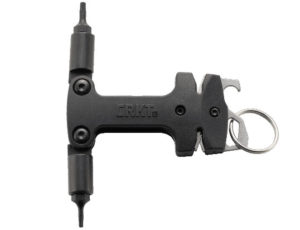
Portable knife sharpeners for keychains
The KMT weighs in at only 2.2 ounces. It sports a glass reinforced nylon handle. (CRKT image)

Too many keychain knife sharpeners are garbage. They fall apart, don’t get the job done, or are challenging to hold safely. The CRKT KMT, however, is an exception.

Place the KMT horizontally on a surface, then pull a blade through the tungsten carbide sharpener or the ceramic honing edge. Use gentle pressure, because the classic V will automatically bite into the edge’s preset angle.

The T6 and T8 screwdrivers may seem like filler for a keychain knife sharpener, but they actually offer a nice grip while working the blade.

An MSRP of $29.99 may seem high for a keychain knife sharpener, but consider the abuse you put your keys through on a daily basis, and it’s worth the price. 

GET IT HERE

See also: DMT Mini-Sharp Sharpener


Serrated Knife Sharpener

GATCO Scepter 2.0

How to sharpen knife serrations
Here’s how to sharpen serrated knives. (Bear & Son photo)

PROS

  • Tapered diamond rod makes sharpening knife serrations a breeze
  • Built-in carbide sharpener tunes up plain edges, too
  • Bonus: Magnesium fire starting rod
  • Compact design: Both rods fit inside the body
  • Rugged body keeps components safe

CONS

  • Best used in tandem with a separate, dedicated sharpener for plain (non-serrated) edges
  • May not want to pay extra for the fire starting rod

GATCO knife sharpener for serrations
A view of the Scepter 2.0 fully assembled, with both rods inside the body. (Bear & Son photo)
Knife sharpeners for serrated knives
The two rods screw apart and back into the knife sharpener’s body. This is a serrated knife sharpener that should last you a lifetime. (Bear & Son photo)

The GATCO Scepter 2.0 leans toward the survival category, but don’t let that turn you away from it. This is an overbuilt tool that should take care of sharpening your knife serrations for the rest of your life. Diamonds are forever.

The tapered diamond rod easily sharpens all types and sizes of serrations on tactical, sporting and kitchen knives. Simply lock the rod into the groove of a serration and lightly run it toward the blade’s edge. The classic V of the tungsten carbide sharpener will handle plain edges, too.

But the real gem in this design is the way the components can all be screwed into the rugged, 6061-T6 aluminum carbide body for secure storage. 

Do you really need the magnesium fire starting rod? Maybe, maybe not, but that’s just gravy. 

MSRP $39.99 – GET IT HERE

See also: Lansky Folding Diamond Tapered Sharpening Rod


Knife and Tool Sharpener

Spyderco Tri-Angle Sharpmaker 204MF

PROS

  • Trusted by “knife nuts” for decades
  • Takes the mystery out of sharpening sticks
  • Comes with brass rods to protect hands
  • Offers 30- and 40-degree angles
  • Can handle plain edges and serrations, as well as non-knife items
  • Comes with instructional DVD

CONS

  • Novices may find it challenging
  • Higher price vs. other sharpeners (MSRP $104.95 — although a sharp knife is worth it!)

Spyderco’s Tri-Angle Sharpmaker 204MF has been an industry leader for many years.

“In the 1970s when [Mrs. Gail Glesser] and I started selling knife sharpeners at local fairs, we were buying and selling other people’s sharpeners,” begins BLADE Magazine Cutlery Hall-Of-Fame© member Sal Glesser, CEO and founder of Spyderco. One of the sharpeners the Glessers sold was a V-stick type that they liked, though they identified some of its shortcomings.

“We invented the Tri-Angle Sharpmaker because, while similar to the [V-stick] sharpener, it solved many sharpening challenges/problems the [V-stick] couldn’t perform,” he says.
One of those problems is the V-stick model could not sharpen serrated blades. Enter the Sharpmaker’s triangular-shaped rods, which allow it to address both plain edges on the rods’ flats and serrations using the “points” of the triangle.

Once you set the sharpener up, start your blade from where the edge starts closest to the tang and run it down the hone, at the same time pulling the blade back toward you, ensuring the hone contacts the entire length of the cutting edge all the way to the tip. Hence, you’re doing two simultaneous motions—moving down the hone and pulling the blade back toward you. Do it all with light pressure.

MSRP $104.95 — GET IT NOW

See also: Wicked Edge WE120


Ceramic Knife Sharpener

Chef’s Choice Ceramic + Steel Model 702
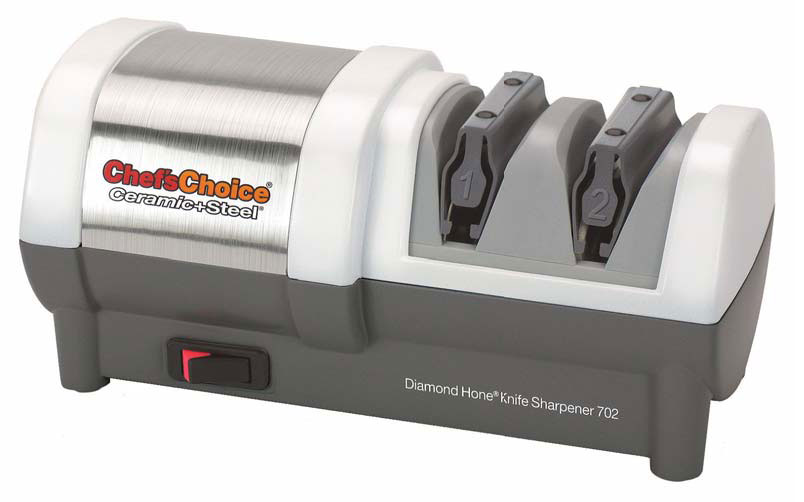
Ceramic knife sharpener
Don’t think you can learn how to sharpen a ceramic knife? Think again. (Dexter Ewing image)

PROS

  • Handles ceramic or steel blades
  • Don’t need to mail ceramic knives in for sharpening
  • Works with most types of knives
  • Simple to use

CONS

  • Only offers a convex edge
  • Pricier than other sharpening options

As with all motorized Chef ’s Choice sharpeners, the 702 will handle steel kitchen knives. However, it also will put the same quality edge on any ceramic kitchen blade. Employing advanced diamond abrasive technology, the 702 features two sharpening slots that hold the knives at pre-set angles, optimized for the best edge on both ceramic and steel blades. Turn the motor on and, using a steady drawing motion, pull the blade through each slot.

The 702 applies a convex edge, or what the Chef ’s Choice literature calls a “gothic arch,” to either steel or ceramic blades. The resulting grind leaves behind more “body,” which gives the edge added strength and resists chipping, while still remaining very sharp. This translates into a longer lasting edge.

MSRP: $119.99 – BUY IT NOW

See also: Kyocera Diamond Wheel


Knife Sharpening Stones/Knife Benchstones
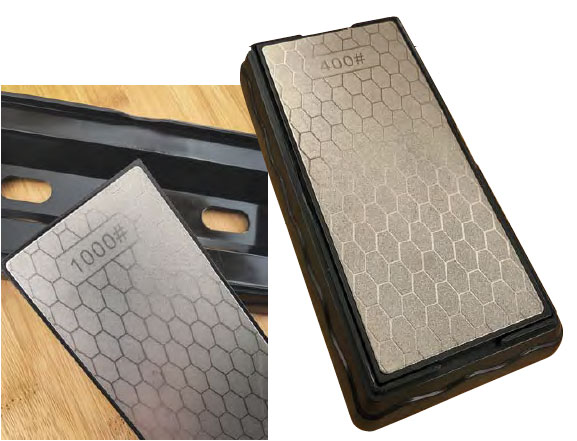
Knife sharpening stones
The DMD Double Sided Bench Stone features two grits on one stone. Coarse (400) and fine (1,000) grits address high-performance steel blades. The metal plate is double sided and lies on the base just so to provide sharpening convenience. (DMS Captures image)

DMD Double-Sided Bench Stone

PROS

  • As with all knife sharpening stones, total control over edge angle
  • Two sides offer two grits
  • You look like a pro
  • Sharpens knives and edged tools

CONS

  • May be too advanced for knife novices
  • Some prefer a larger stone

The DMD double-sided bench stone sports two different grits: a coarse 400 and fine 1,000. The base is molded ABS plastic and features wide, anti-skid rubber feet to keep the sharpener in place while working on a flat table, counter or bench. The sharpening surface sits in a cavity of the base. To change grits, flip the hone over and return it to the base.

A hex-like pattern on both sharpening surfaces removes the tiny metal particles so they won’t collect and clog the surfaces as you sharpen the blade.

Work with the DMD and discover the convenience of a double-sided diamond bench stone, a rarity among such stones. The coarse side easily and quickly re-establishes worn edges to sharp. After you establish the primary edge, flip the sharpening surface over to the fine side and fine-tune the blade.

Pro Tip: Try using a permanent marker to color in the entire cutting edge on both sides of the blade. As you sharpen, note where the ink is removed and where it remains on the cutting edge. By doing so you can adjust your angle accordingly to capture the entire cutting edge and, therefore, keep the angle consistent for a sharp blade.

MSRP: $37.35 – GET IT NOW

See also: Lansky Bench Stones


Rechargeable, Cordless Knife Sharpener

Smith’s Cordless Knife & Tool Sharpener
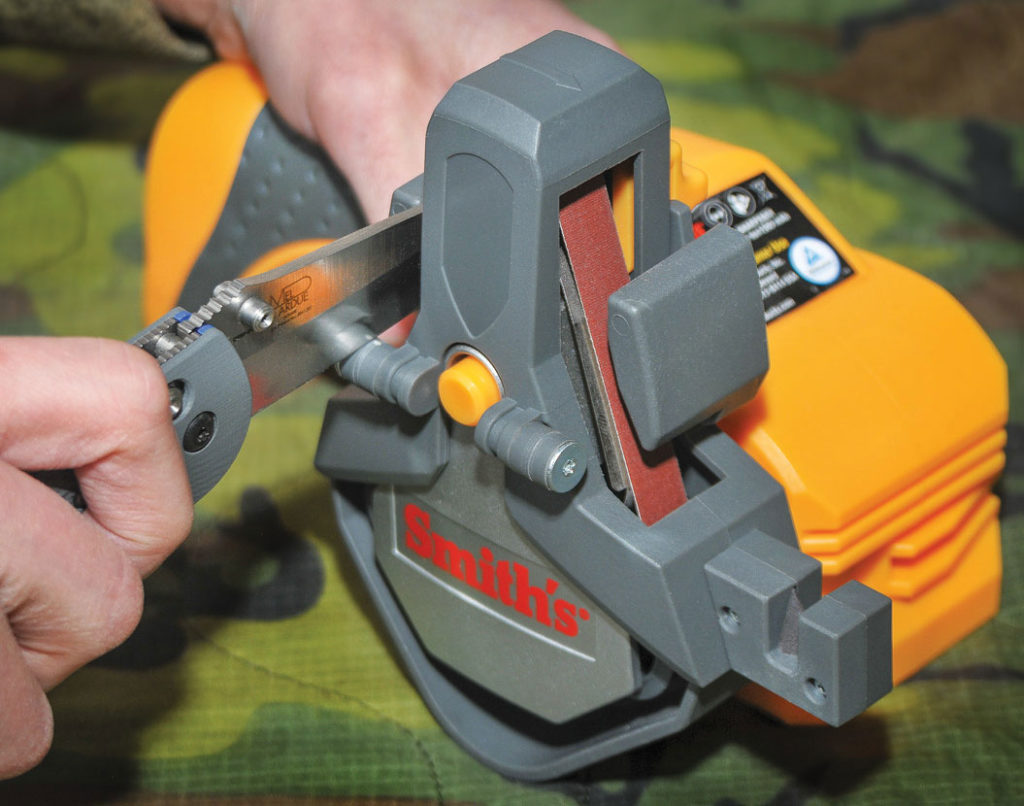
Portable electric knife sharpener
The Cordless Knife & Tool Sharpener from Smith’s Products features easily adjustable angle guides that hold the knife at the proper set angle for a consistent edge. (DMS Captures image)

PROS

  • Take an electric knife sharpener anywhere
  • No need to replace batteries
  • Sharpens knives and tools
  • Interchangeable belts for different grits
  • Backer plates offer extra safety

CONS

  • Belts can wear out
  • “Grabby” belts can apply an uneven edge if you’re not careful
  • Battery life limits use time

The Cordless Knife & Tool Sharpener represents a new step for Smith’s Products. While the company has sold and continues to sell electric sharpeners, this is the first time it has offered a powered abrasive-belt unit. Moreover, Smith’s added an extra twist by making it cordless and rechargeable. A pivoting head enables the unit not only to sharpen knives, but other cutting and digging tools such as axes, hedge clippers, bypass pruners, shovels and more. It comes with three interchangeable belts in coarse (80), medium (220) and fine (600) grits.

The belts are simple to change and color-coded for easy recognition. In addition to the multiple grits of belts, an adjustable guide maintains a consistent angle throughout the sharpening process. Another cool feature consists of “backer plates” behind the flexible sharpening belts.

“The backer plates prevent the belt from wrapping around the tip of your blade when you pull it through the sharpening slot,” says Ricky Dukes, Smith’s vice president of marketing.
Pull the blade through the slots to easily achieve a very sharp cutting edge. An ergonomic, soft-grip molded handle makes holding the sharpener very comfortable as well as non-slip.

In order to operate the sharpener, depress the rocker switch with your finger. Release the switch and the motor shuts off. There is no trigger lock to enable the sharpener to run continuously. Hence, if you need to stop the unit to regain control, simply release the switch.
One of the unit’s advantages—being cordless and rechargeable—is also a downside. BLADE’s tester operated it non-stop for 8 minutes and 20 seconds before it ran out of charge with no warning. Around the 8-minute mark the motor slowed slightly and 20 seconds later it shut off . There was no gradual tapering off —it simply shut down.

MSRP: $79.99 – GET IT HERE


More Quick Links for Sharpening Knives


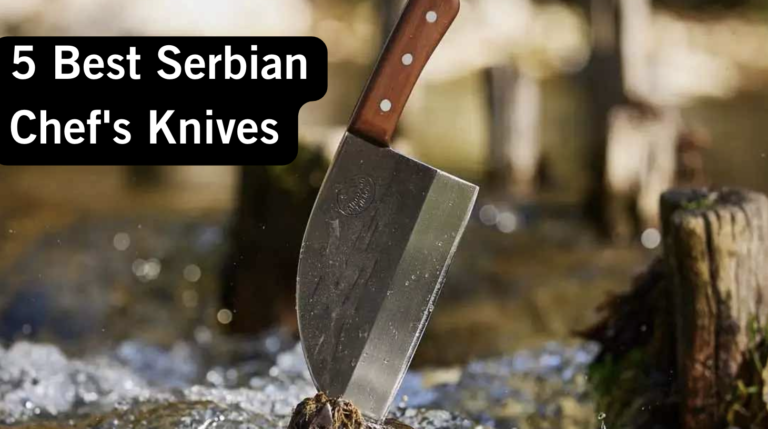
5 Best Serbian Chef’s Knives You Can Buy

Growing In Popularity, The Serbian Chef’s Knife Has Gained A Reputation For Strength And Versatility.

When many think of kitchen knives it falls into two categories: Japanese-style knives and German/Western-style knives. However, there is slowly a third type of knife gaining popularity: the Serbian knife.

Also known as an Almazan knife (or just an Almazan), the Serbian chef’s knife has a unique history when compared to other blade styles. Rather than evolving and adapting over time, the Serbian chef’s knife is tied back specifically to Almazan Kitchen.

Almazan Knife And Kitchen Backstory

The company was founded by two men in Serbia, uncle and nephew Boban and Aleksandar Almazan. Essentially, clever marketing and a unique look have vaulted the knife into the limelight.

Despite Almazan’s and other knives’ bucolic charm, there is little attaching the style to a particular historic Serbian design. Instead, the moniker comes from the Almanzan clan hailing from Serbia. In some corners of the globe, the knife is simply known as an Almanzan knife … makes sense.

Interestingly, the Almanzans seemed able to harness to disparate trends in the knife world with the Serbian chef’s knife. On one side, was the ever-growing interest in cooking, the other the rise of cleaver-like knives for bushcraft. They must have had some passing inkling of this crux, given they marketed their knives to both communities, as well as played up the wilderness and food prep in their marketing.

Serbian Chef Knife Design Points

Unless you’ve lost your glasses, it’s fairly apparent what sets the knife apart from its counterparts–its huge hooking blade. If we’re honest with ourselves it’s a cleaver with a tip–somewhat reminiscent of a large deba bĹŤchĹŤ, but overall heftier.

Generally, most Serbian chef’s knife makers tout their wares as handmade–of course at factory scale, with all that entails. Most of the blades have a very thick spine giving them the chops to tackle heavy-duty jobs. Though, most lack a defined belly, lending them better hacking jobs.

By and large, Serbian knives are constructed of carbon steel and have won some kudos for maintaining a good edge. Furthermore, almost all makers favor a wood handle of some sort, most likely because it maintains the rustic, outdoorsy aesthetic Almazan originally pioneered.

Should I Get A Serbian Chef’s Knife?

Honestly, like all things knives, that’s up to you. Maybe the Serbian chef’s knife is the kitchen or backwoods tool you’ve been waiting for or perhaps is all online hoopla. There are many who fall in the latter category and are vocal about it.

Despite this, it does seem the cleaver-style design has a place in the galley, particularly if you happen to process chuck wagons full of meat. The large width of the blade makes it ideal for hacking, particularly joints and bone. Additionally, boasting a tip, it could potentially tackle basic kitchen jobs in a pinch.

That said, as a catch-all chef’s knife, most cooks are likely going to find themself more comfortable behind a traditional design. The large blade is unwieldy for basic cooking jobs, such as chopping and mincing. Furthermore, the lack of a belly on most examples slows the knife down considerably on general tasks.

Bushcraft? Sure, there’s the potential. A Serbian chef’s knife certainly has the ability to work in a hatchet’s stead. Outside of that, well, things get dicey. It’s not exactly the style of blade you’d reach for to skin a buck or whittle fuzz sticks. Not to mention, do you really envision toting one of those beasts in your kit? (Add a pound to your ruck, not mine!)

Of course, this is coming from a more traditional mindset of kitchen and backcountry work and utility. And much like beauty, utility is often times in the eye of the beholder.

5 Top Serbian Chef’s Knives

Almazan Kitchen Original Serbian Chef’s Knife

Almazan Kitchen Original Serbian Chef’s Knife

The blade that started the craze. The Original from Almazan Kitchen set the standard for every Serbian knife that’s come after it. Hand forged in Serbia, and weighing a shade under 1 pound, this blade is a menace in the best possible way. 

The carbon-alloy blade is tempered to a 58-60 HRC. The full-tang construction features a triple-riveted handle for grip and gives the user a sense of confidence. The uncle-and-nephew team that founded the company, Boban and Aleksandar Almazan, wanted to make a knife that would be as comfortable in the forest as it would be in the kitchen, for some they’ve succeeded.

Beyond just the knife itself, Almazan also sells accessories including leather sheaths, cutting boards, and kitchen equipment made from olivewood. 

The knives have also benefitted from the company’s wildly successful marketing, in particular the Almazan YouTube channel. Fueled by more than 3 million subscribers, the company and its knife have blown up in recent years.

MSRP: $152.92 (There is also a stainless version for $30 less)

Damas Knives Bushcraft Serbian Knife

Damas Knives Bushcraft Serbian Knife

This model from Damas Knives is emblematic of the new(ish) design, with its wide blade and rustic handle. The knife is hand-forged from a single sheet of XC75 high-carbon steel with a 59 HRC and ground to a 21-degree angle.

The blade’s strength and the Rosewood handle’s sturdiness allow the user to butcher big cuts of meats, nimbly dice veggies, and even slice right through small bones. Beyond the food uses, this piece can tackle cutting wood and brush on a hike. 

MSRP: $145

Imarku Butcher Knife

Imarku Butcher Knife

From one of the most trusted names in kitchen knives comes a budget Serbian chef’s knife that swings far above its price point. 

This knife from Imarku features a hammered design and is hand forged. The blade is made from high-carbon, high-manganese German X50CrMov15 steel. The hard 56-60 HRC steel holds a razor edge and has good rust resistance as well. You can see the spots from the hammering up and down the blade, which gives it its signature look.

The knife comes with a leather sheath and, like other Serbian knives, has the strength to cut through bones and butcher large meats. 

Imarku stands apart from other Almazans due to the price. The company has found a way to make a top-tier example for under $100. 

MSRP: $59.99

Kopala Original Kitchen Knife

Kopala Original Kitchen Knife

Now for a little something different from Kopala. Its original kitchen knife is made in the Serbian style but in a far different shape from the other knives on this list.

Instead of the rounded cleaver-esque design, Kopala has made a smaller, swooping blade–reminiscent of a scimitar–attached to a triple-riveted Rosewood handle. The high-carbon blade is balanced enough to cut through raw fish and other assorted meats.

The main drawback on the knife, unlike the others on this list, is the company did not design it to cut through bone. That takes away the versatility that makes the traditional Serbian knife so beloved. However, as the most inexpensive knife on our list, if that’s a compromise you’re willing to make then the knife is more than worth it.

MSRP: $29.88

HDMD Serbian Chef Knife

HDMD Serbian Chef Knife

Rounding out our list is a fine all-rounder from HDMD Knives. Handmade from high-carbon steel and pakkawood, this blade from HDMD is an excellent middle ground if you have any interest in a Serbian knife.

It follows the construction of knives like the original Almazan. It’s hand forged, roughly six inches long, and has a 56-58 HRC. It weighs about .75 pounds and can handle whatever you throw at it in the kitchen. 

Where it stands apart is in the price. This blade is under $100, which makes it a perfect entry point for this style of knife.

MSRP: $79

Read More

Making Knives from “Supernatural,” “Game of Thrones” and “The Hobbit”

Making knives with kids
When she was 15, Charlotte asked Wally if she could make a knife. He likes teaching her so he said, “Sure, let’s do it!” (Morgan Graham image)

Making “Ruby’s Knife” from Supernatural

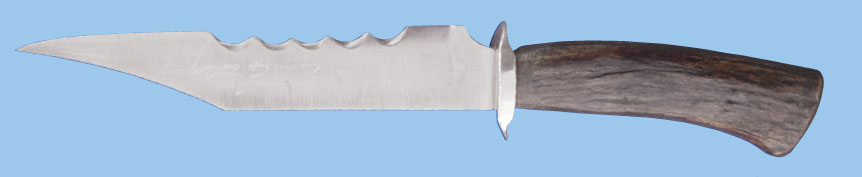
My daughters Savannah and Charlotte had always been craftsy and artistic, but they rarely spent time in my shop. One day in 2016, Charlotte, who was 15 at the time, asked me if she could make a knife. It was to be based on a knife from a TV show she was watching called Supernatural. A character on the show named Ruby used the knife to kill “demons.” It is a very unusual design.
I like teaching so I told her, “Sure, let’s do it!”

A Daughter’s First Knifemaking Project

Knifemaking safety
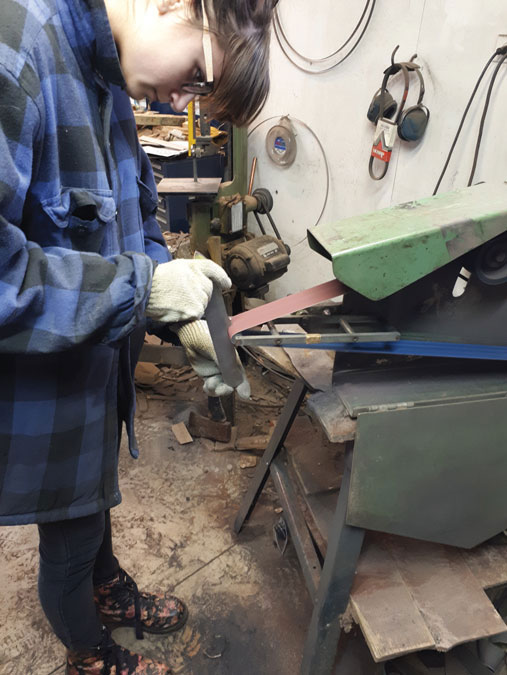
To get Charlotte started, Wally had her practice grinding. Note her safety glasses and gloves.

For her first knife I thought grinding it out would be easier than forging it. To get started I had her practice grinding wood to learn how to use the 2×72 belt sander. Grinding the bevels of the blade in wood to practice gives you very fast feedback and speeds up the learning process. I don’t use jigs, so it can be tricky to get hollow grinds the same height up the blade on both sides. Flat grinding is an easier technique to start with compared to hollow grinding, so we began with that.

Charlotte cut out and ground the blade, getting it ready for heat treating. We heated the blade until it reached critical temperature (when a magnet will not stick to the steel), then took the blade out of the fire and quickly quenched it in oil. Next we tempered the blade and sanded it to a high polish.

Charlotte carved the markings on the blade, and we found a piece of deer antler very similar to the TV knife to use as the handle.

Safety First

Knifemaking eye and hearing protection
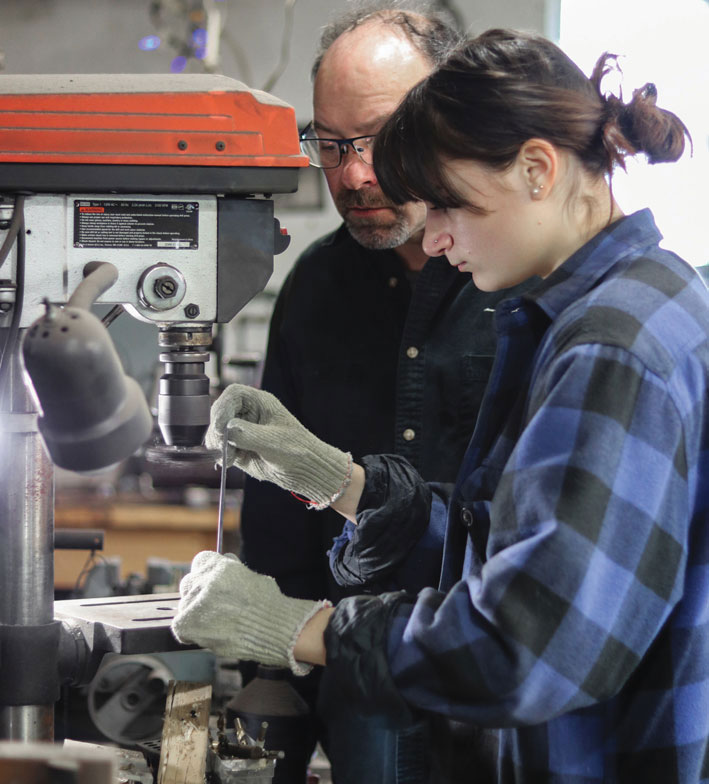
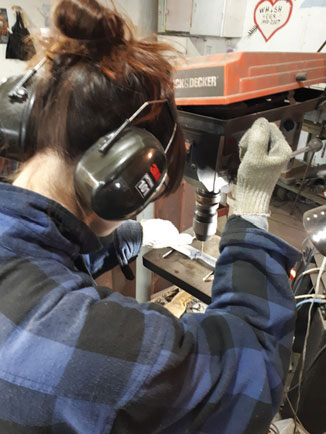
Charlotte drills a hole while in her dad’s
shop. Note the gloves and ear protection.

As I taught each step I also taught her about knife shop safety, as so many of the tools and machines can be dangerous.

For instance, it’s important to know how to safely clamp a blade on a table for sanding and how to hold a blade against a buffer—the latter which I think is the most dangerous machine in the shop.

I showed her how to drill holes and gave her a safety tip on how to make sure a blade does not get away from you and spin around and cut you. She had her hair tied back and wore safety glasses, as well as Kevlar® gloves and hearing protection.

A Fantastic Finish

Supernatural TV show demon killing knife
That first knife is always special. Charlotte’s initial piece not only is special but also unusual—based on a model used by a character in the TV show Supernatural to kill “demons.”

Charlotte’s first knife turned out great and it was so cool to see how fast she learned and progressed. It also surprised me that she did not experience all the challenges I had when I started.

The knife’s fit and finish was great, and the blade was straight. She decided to keep her first knife for herself. Each subsequent knife she made was different and she had to learn new skills for each new model.

Making the Game of Thrones Obsidian Dagger

The next knife Charlotte made was a copy of the obsidian dagger from the TV series Game of Thrones. In the show the dagger was made from “dragon glass” and was used to kill “night walkers.”

Charlotte employed O1 tool steel for the blade so she could gun blue it black like the TV dagger. She ground the blade and then textured it with the small half-inch-wheel attachment to look like obsidian. She polished it with a Dremel® tool. My brother Ted loved the knife so much he bought it.

Next Up: Sting from The Hobbit

Next up was a mini letter opener modeled after Bilbo’s sword “Sting” from The Hobbit. The new model required her to grind a dagger blade with a straight line down the center. She used a flat grind and, after heat treating, polished the blade by hand. She also learned how to carve with my high-speed/hand-held grinding tool.

She made the mini sword as a gift for her best friend, Morgan.

Hooked on Knifemaking

Charlotte wants to make knives for fun and as a part-time job, so she decided to make a kitchen knife to sell. It was a Japanese-style model and when it was done, I posted it on Facebook. It sold in no time.

With this new model she learned about Japanese kitchen knives and how thin they are. She also was introduced to forging by texturing the blade, which was later ground off to make the knife thinner.
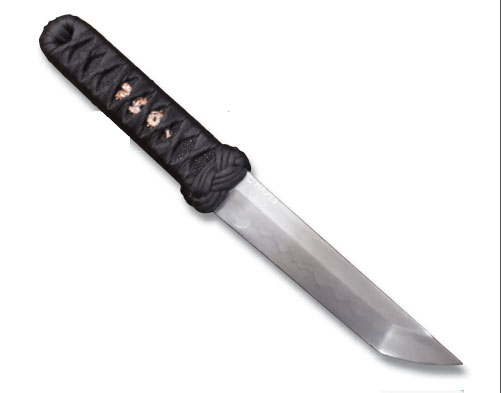
Moreover, she learned a new skill making a multi-part octagon handle for the knife. Excited by her new part-time job, she decided to make a tanto. Again, the new style required learning many new skills. Her tactical-style tanto has a hollow grind, so we started with wood again to teach her how to hollow grind, ensuring the grind was even on both sides. She learned how to grind in a tanto tip and how to make the angle the same on both sides.

Japanese knife handle wrap
Charlotte learned how to tie a Japanese handle wrap and etch the blade to make the temper line or hamon really stand out on her tanto. She also learned how to make the mune (the blade spine).

To make Japanese-style tantos, she had to learn how to create temper lines and put a high polish on the blade. She learned how to tie a Japanese wrap and etch the blades to make the temper line really stand out. She also learned how to make the mune (the blade spine). I posted a picture of the knife on social media and she quickly sold it and received another tanto order.

This past March break she forged out a bushcraft-style knife and will continue to work on it in my shop. She is not taking orders as she has a heavy school year finishing the 12th grade. She has been accepted to the University of Windsor in the forensic science program next fall.

She does have a waiting list and loves working with her hands. Knifemaking fills her need for creativity, just like it did for me. Charlotte intends to make one order at a time and she is getting comfortable using all the equipment. Making leather sheaths is the next skill she wants to learn.

Making bushcraft knives
This past March break, Charlotte forged out a bushcraft-style knife and was working on it in her dad’s shop at press time.

What Better Way to Spend Quality Time with Family?

There are so many branches to the tree of knifemaking and I look forward to seeing where she takes her knifemaking in the future Charlotte is a unique 17-year-old who wants to make knives and can do so just as well as boys. Her favorite part of knifemaking is watching the progress of polishing the blade. She takes her time with each step and really is a perfectionist. I am so proud of both my girls and it has been so much fun to show Charlotte what I have been doing for 32 years.

Go, Charlotte!

* All images by Wally Hayes unless otherwise noted.

2018 Custom Knife Award Winners – BLADE Show 2018

best knife show to go to

The 2018 Custom Knife Awards were handed out on Saturday, June 2, at the BLADE Show in Atlanta. Here are the winners.

Best Fixed and Best in Show: Anders Hogstrom

Best Sword: Matthew Parkinson

Best Damascus: Jimmy Chin

Best New Maker: Ed Cope

Best Art Knife: Jean Louis Regent

Best Knife Collaboration: Ben Breda & Ben Seward

Best Folder: Gusatvo Cecchini

Best Utility Hunter: Haley Desrosiers

Most Innovative Design: Corrado Miro

Best Fighter: Josh Fisher

Best Handle Design: Steve Rapp

Best Bowie: Jean Louis Regel

Best of the Rest: Thomas Ward

Best Miniature: Toshiaki Michinaka

Best Tactical Folder: Svarn II by Cultrotech

An Axe with a Beard?

daniel winkler bearded axe
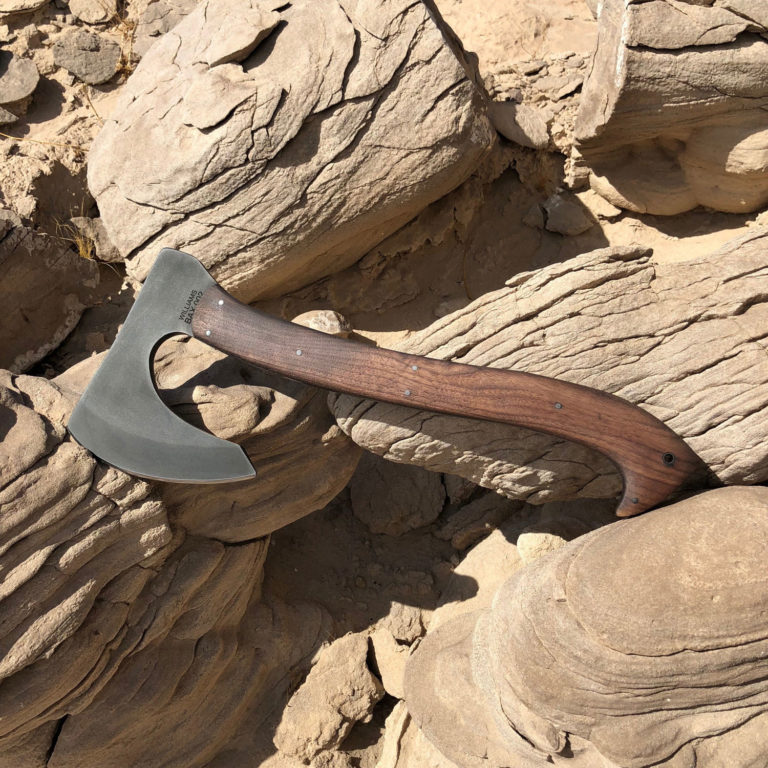
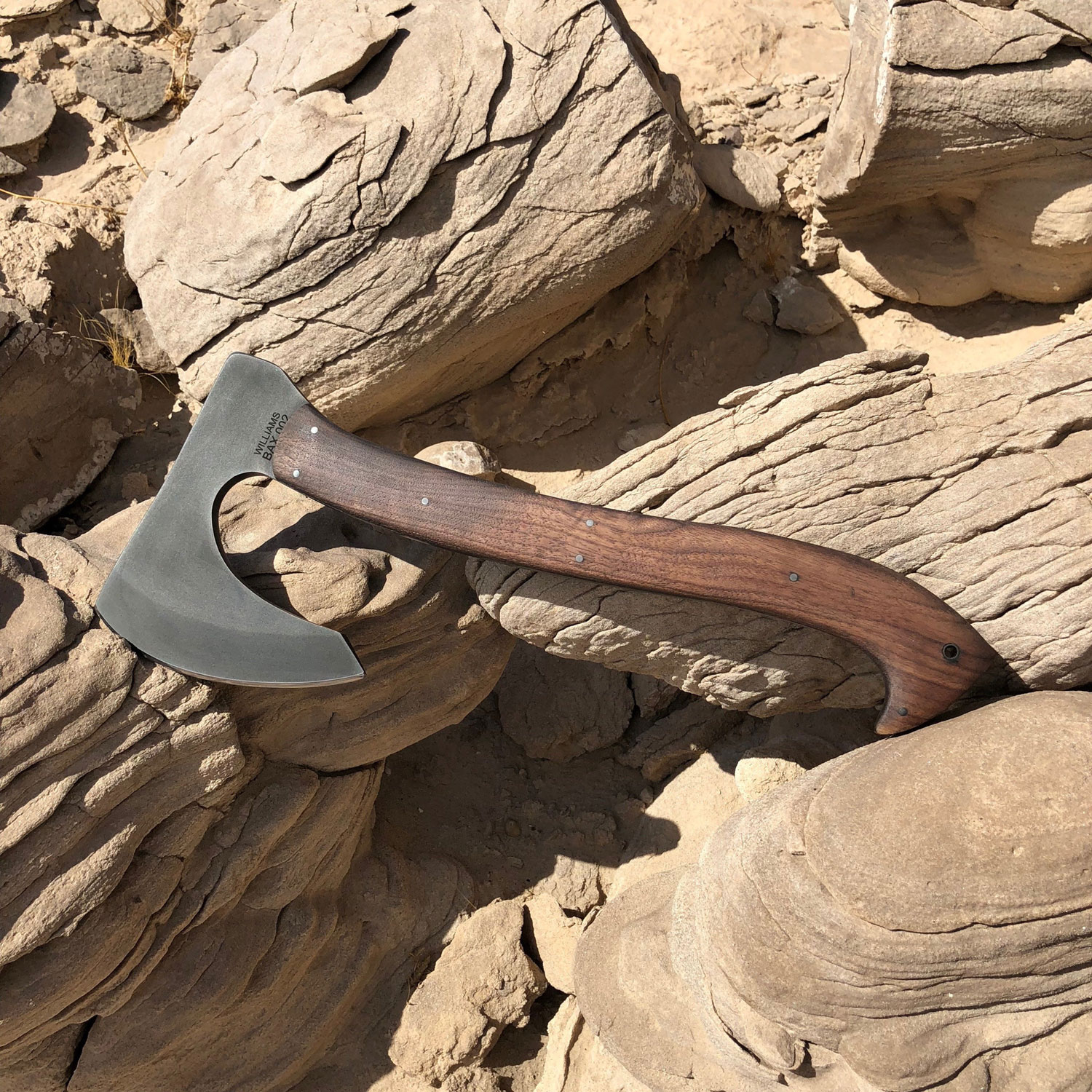
The “beard” refers to the shape of the axe head.

Beards and blades never went out of style, so it’s only appropriate that an axe continue the tradition with a “beard” of its own. The BAX 002 Bearded Axe, offered via Williams Blade Design, draws from Viking lore with a formidable design hatched by ABS master smith Daniel Winkler, someone with plenty of beardly street cred himself.

While the follicles on the BAX 002 are noticeably absent, it should be noted that the “beard” refers to the shape of the axe head. The extra gap this allows between the head and the handle allows the user to “choke up behind the edge for detailed work,” according to a media release. The result offers enough heft to satisfy raiding parties of yesteryear or today.

From Williams Blade Design:

Inspired by the axes of the Vikings, this bearded axe is equally at home in the wild or on the battlefield. The full tang 80CrV2 steel construction makes for an impressively tough tool that excels in the roughest environments. The walnut handle scales provide excellent feel for delicate tasks, and solid grip when the need arises.

Here are the specs.

  • Steel: 80CrV2 (1/4″ 6.4mm)
  • Head shape: Bearded
  • Overall Length: 14.5″ (368mm)
  • Cutting Edge: 5.25″ (133mm)
  • Head width: 6″ (152mm)
  • Weight: 2lb (930g)
  • Handle Material: Walnut
  • Finish: Matte Black Oxidized (Caswell)
  • Sheath: Kydex (lined)
  • Produced by: Winkler Knives II
  • Batch quantity: 50 pieces
  • Release: March 2018
  • Made in: Boone, NC USA
  • MSRP: $575

SOG Knives Refreshes in 2020

THE AWARD-WINNING FACTORY KNIFE COMPANY UNDERGOES A BRAND REFRESH IN 2020

The year was 1986. The Soviet Union hosted its first Goodwill Games. Halley’s Comet was visible from Earth for the first time in 76 years. Up to 6.5 million people participated in a charity event called Hands Across America. Phantom of the Opera premiered in London’s West End. And SOG Specialty Knives—aka SOG—made its debut.

The first SOG-brand knife was a reproduction of the original SOG Bowie in tribute to the Studies and Observations Group* of Vietnam War fame. Eventually, the SOG Specialty Knives line grew to include knives mass produced with attention to detail and quality. Today, the company has grown into an innovative, major player whose products are among the leading choices of Navy SEALs and other military, law enforcement, fire and rescue, tradesmen and everyday knife users the world over. Folders, fixed blades, flashlights, multi-tools and gear— SOG has you covered.

Over the years, it’s only natural that a knife company keeps growing in size and product offerings, constantly evolving itself and its knives. SOG has kept moving forward, and 2020 marks a significant milestone in the company’s evolution: a prominent revamp of sales and marketing strategies, a refresh of existing models and an engineering of new ones to further meet the demands of those who serve and keep us safe, as well as the needs of everyday knife consumers.

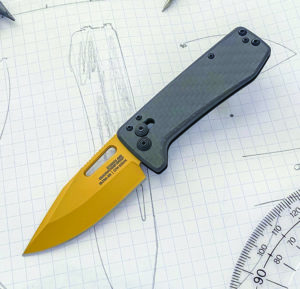
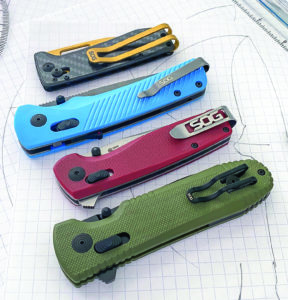
With its slender form factor, XR lock, carbon fiber handle and CTS XHP stainless blade, the Ultra XR defines classy high tech. The super-slim folder carries well and also doubles as a money clip. The gold-titanium-nitride coating adds a bit of bling. The blade also is available in a more subdued black-titanium-nitride coat.

The architect for the brand refresh is Jonathan Wegner, company brand vice president. “We’ve taken the best things from the last three decades, and doubled down on the things that we feel are most relevant to our end users today and into the future,” he explains, “and are focused on delivering solutions that are authentic to the brand.”

Why the transformation? According to Wegner, consumers reported that the company’s more recent focus and quality were not there. Many stated their idea of SOG was from an era that is now past, when the company brought some innovative ideas to market and was driven to produce the best knives and tools for tactical and other consumers. “So, by first studying and observing ourselves, we were able to determine that a significant change was needed,” Wegner notes. “Most of this led to our reposition and future focus.”

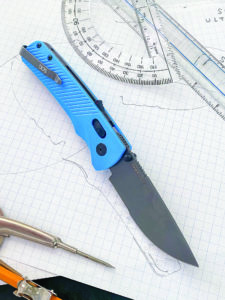
The Flash AT is designed for daily carry with a drop-point blade of D2 tool steel and a handle of molded glass-reinforced nylon in multiple color options.

SOG founder and president Spencer Frazer was the primary driving force behind the company and many of its product designs, from its inception until a couple of years ago when Joe McSwiney was hired to lead the outfit.

“Spencer was involved throughout the brand refresh process, and a lot of what we have done with the brand hearkens back to his original vision,” Wegner states. “Therefore, it was vital that he was involved throughout every aspect of it.” Even back then, Frazer was seriously considering stepping down from overseeing daily operations and returning to his passion of developing innovative products. “So, once the brand refresh and new products strategy were in place,” Wegner says, “he felt comfortable stepping back.”

SOG has been Spencer’s baby since day one, so stepping back at any time or putting just anyone in charge isn’t what he wanted. “SOG’s future is pushing into an even greater extension of the original intent when it was founded,” Spencer notes. “I cannot be prouder of what the company has grown into.”

RELENTLESS by DESIGN

The new company slogan is “Relentless by Design.” This encompasses SOG’s past while embracing the future. Being a major player in the tactical market for many years has pushed the company to continuously innovate and bring new models to market. Starting this fall, SOG will double down on the pushing and debut some intriguing models.

With Frazer retired and the right people in place, the company is poised to embark on a fresh, new and exciting chapter where its knives and other products will be more focused and specifically aimed at three target groups: Professional, Outdoor and Daily. More on them later. Meanwhile, by the time the new vision was in place, many of SOG’s lower-end knives and other products already had been discontinued. “We felt those items didn’t truly represent the types of items we want to be [offering],” Wegner says.

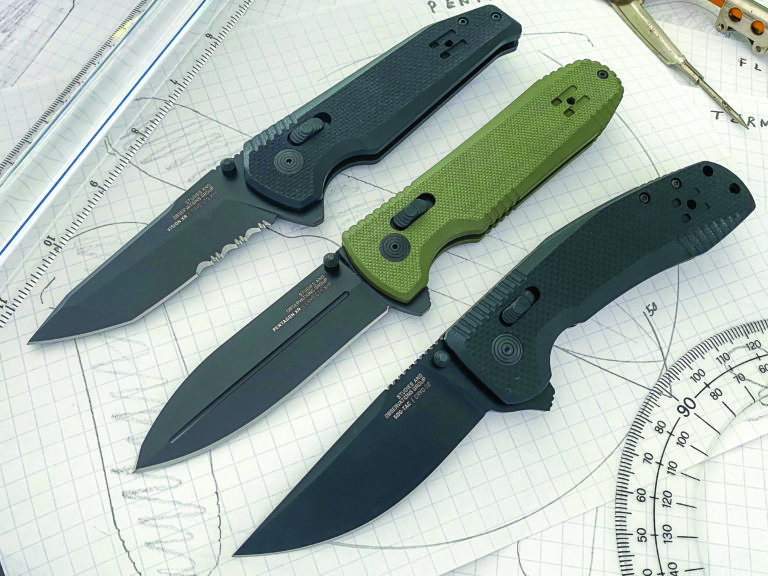
SOG has gone to some stylish pocket clips this year, model examples from top: the Ultra XR and its extra-wide/long clip (it doubles as a money clip), Flash AT, Terminus XR and Pentagon XR.

Along with this, Walmart, which previously sold some of the now- discontinued, lower-end SOG items, was removed as a retailer. Most everyone else who had sold SOG knives will remain, including many knife-specific retailers on the Internet and elsewhere.

Beginning in the fall, the first phase of the brand refresh will officially go live, and, as of press time, some of the new knives already had been released. All of the new product classes are designed to function at peak levels, engineered with intent and built with the best materials for each specific price point.

As part of the new SOG’s knives fall into the three aforementioned categories: Professional (law enforcement, EMT, fire and military); Outdoor (hunters, hikers, campers, fishermen, etc.); and Daily (trades, office workers, warehouse workers and such). All three incorporate what the SOG brain trust calls a visual brand language. This means each category incorporates a specific geometric shape that is a motif for the designs that populate it.

For example, the knives in the Professional category have trapezoidal design elements. Outdoor employs a circular design motif. Finally, Daily employs triangular design elements. The purpose of the visual brand language is so you can readily identify each knife’s purpose.

In addition to the visual brand language, SOG is using new “naming conventions” as well. The standardized approach allows you to easily identify the primary technologies the knives use. For example, XR denotes the knife uses SOG’s XR lock (SEAL XR), AT denotes Assisted Technology (Flash AT), and FX indicates the knife is a fixed blade (SEAL FX). There are a few other designations but these are the most commonly used.

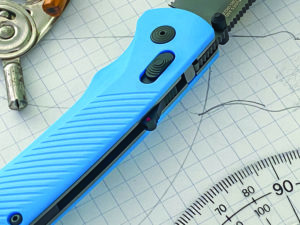
With the assisted- opening AT-XR lock, the Flash AT combines rapid deployment with lock security. Pulling back on the ambidextrous release disengages the lock. Note the lock safety on the handle spine. The red dot indicates the blade is ready to open.

Also new is a color-coded accent stripe on the packaging. Yellow is for Daily, light blue for Professional and gray for Outdoor. Topping it off is new packaging in which you can actually see the product inside and read about its key highlights on the partial flap of the box. The packaging is bold, forward looking and helps usher in the new SOG era.

The blade mark also has changed. The previous SOG logo is now STUDIES AND OBSERVATIONS GROUP—a nod to the past while looking to the future.

FALL KNIFE DEBUTS


First up for the new fall line is the SOG- TAC XR, a Professional class tactical folder using the XR lock, a 3.5-inch drop-point blade of D2 tool steel, flipper opening and a textured G-10 handle. The ergonomic handle integrates a guard, dual nested steel liners, and a deep-carry pocket clip. Handle colors come in black or OD green. Another Professional class piece is the Pentagon XR. Building on the legacy of the Pentagon series of folders and fixed blades, it takes the dagger-ish styling and adds the XR lock, textured G-10 handle, dual nested steel liners, flipper opening and a 3.5-inch spearpoint blade of CTS XHP stainless steel. Handle colors are black, FDE and OD green. The Vision XR flipper folder brings some aggressiveness to the Professional series, with bold styling and a 3.5-inch double- ground tanto blade of CTS XHP, and a textured black G-10 handle with dual nested liners.

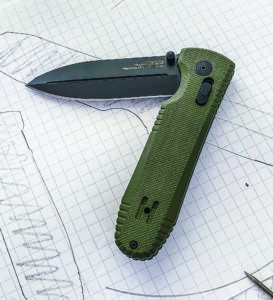
The revamped Pentagon XR tactical folder has multiple choices of G-10 handle colors, and a fullered spear- point blade of CTS XHP stainless steel. The knife features flipper-tab and ambidextrous thumb-stud opening options.

In the Daily category is the Ultra XR, an ultra-thin, ultra-lightweight gentleman’s folder with a linerless carbon fiber handle and a 3-inch clip-point blade of CPM S35VN stainless. An extra-large, fold-over pocket clip doubles as a money clip. The blade is available in gold titanium nitride or black coating options. Another Daily category entry, the Flash AT features a 3.5- inch drop-point blade in D2 powered by SOG’s Assisted Opening Technology. The molded Zytel handle is available in a choice of red, cyan, yellow and black. The new folders use pivot bearings for ultra- smooth blade action.

SOG long has been a viable player in the production knife market and the new refresh elevates the company even further. Expect more good things to come.

TSA Knife Rules: Can You Take a Knife on a Plane?

What knives can you bring on an airplane?
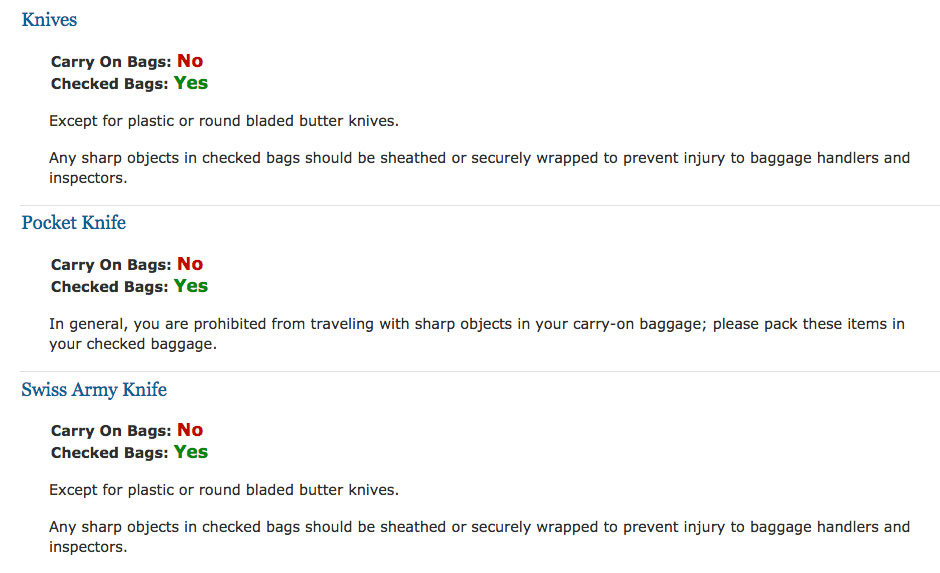
What knives are TSA-approved? Unless it’s a plastic butter knife, put it in your checked baggage.

  • Put knives in checked baggage when flying.
  • Don’t bring anything you would miss if it were lost or stolen.
  • What knife is legal everywhere? Small, non-locking knives that open with two hands are almost always legal.
  • Research knife laws of your destination.

Despite a failed attempt in 2013 at allowing certain kinds of knives on airplanes, blades remain restricted when traveling on airplanes. Here are some tips for traveling with knives.

TSA Knife Rules

The following are the current rules for knives on airplanes from the Transportation Security Administration (TSA).

What knives are allowed on airplanes?
What knives does the TSA allow on airplanes? Here’s the list. Keep in mind that checked luggage is still subject to search, so don’t pack anything you’d miss if you lost it.

That said, there are still other considerations even if you decide to bring knives in your luggage.

Put Inexpensive Knives in Your Checked Baggage

Knives you can bring on a plane
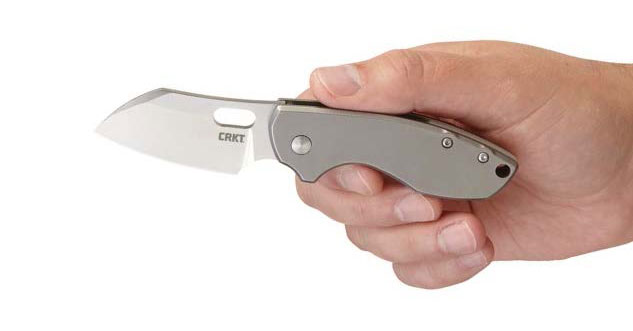
For vacationing knife enthusiasts, Plaza Cutlery’s Dan Delavan suggests a Spyderco, Kershaw or CRKT knife in the $30 to $70 range. An example of the latter is the CRKT Pilar with a 2.4-inch blade of 8Cr13MoV stainless and a closed length of 3.5 inches. MSRP: $39.99.

The kinds of people who walk into Dan and Pam Delavan’s Plaza Cutlery retail knife store in Costa Mesa, California, go for all kinds of knives, from classic folders to KA-BARs. But when they walk through Plaza Cutlery’s doors to buy a knife for vacation, most buy inexpensive models to slip into their checked baggage—inexpensive in case the knives get lost, stolen or confiscated.

“When they fly, that’s when the knife changes,” Delavan said.

He shows them budget models by Spyderco, CRKT and Kershaw, knives ranging from about $30 to $75. If customers are into Spyderco knives they might buy one from the Byrd line, folders from Spyderco with cost-friendly materials. If the customers like higher-end models, they might buy a Benchmade.

“It’s all relative to what you can afford,” Delavan said.

Plaza Cutlery is in South Coast Plaza, a mall that bills itself as “a luxury shopping experience”—a vacation destination in and of itself. Nearby Disneyland is an international draw. Hollywood and its attractions are close, too.

When Delavan heads to Disneyland with Pam and the grandchildren, he often carries the Victorinox Swiss Army Classic, which can slip on a keychain. He said it’s small enough that the park allows him to carry it. Of course, always research the knife laws of the areas you will be visiting. For most places in the USA, a small, non-locking knife should be OK, “but you’ve got to check” to be sure, Delavan noted.

What Knife is Legal Everywhere? Best Bet: Small, Non-Locking Knife that Opens with Two Hands

What knife is legal everywhere
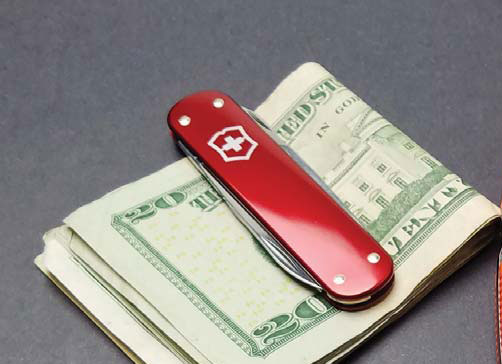
While there are no guarantees that a knife will be legal everywhere, your best bet is with a small, non-locking knife that opens with two hands. This Victorinox Money Clip is a great example.

Joe Tarbell’s retail store, JT’s Knife Shop, sits in a small building in Port Jervis, New York. The family-owned business began as an army surplus store near the Delaware River, which, during the summer, fills with kayakers and rafters.

“People ask me about knife laws quite often and it’s a pretty complicated subject,” he said. “Knife laws can be very vague and misunderstood. I have even had police tell me a lot of it is up to the discretion of the officer. I tell people to research the best they can and check out AKTI [American Knife & Tool Institute]. I can’t tell you how many people think that the law states that a blade can’t be larger than the palm of your hand, which is ridiculous.”

If a customer is traveling overseas, he suggests a small, non-locking knife such as a multi-tool or an Opinel.

What Happens If TSA Confiscates Your Knife?

You’ll likely have to buy it back, if you can find it. Start with GovDeals.com, where government-seized property is often sold.

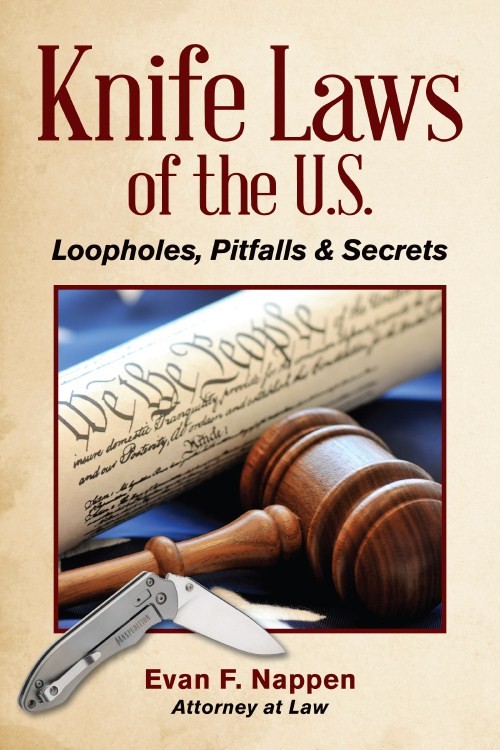
Know Your Knife Laws with This Book

Knife Laws of the United States

Advertisement

Must Read Articles

Read this before you make a knife

Knifemaking 101 – Read This Before You Make a Knife

  by Wayne Goddard My experience has taught me that there's nothing like digging in and getting started. I've often said the hardest part of the...
how to forge damascus steel

How to Forge Damascus

Advertisement
Advertisement