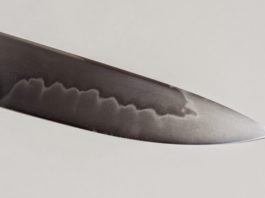
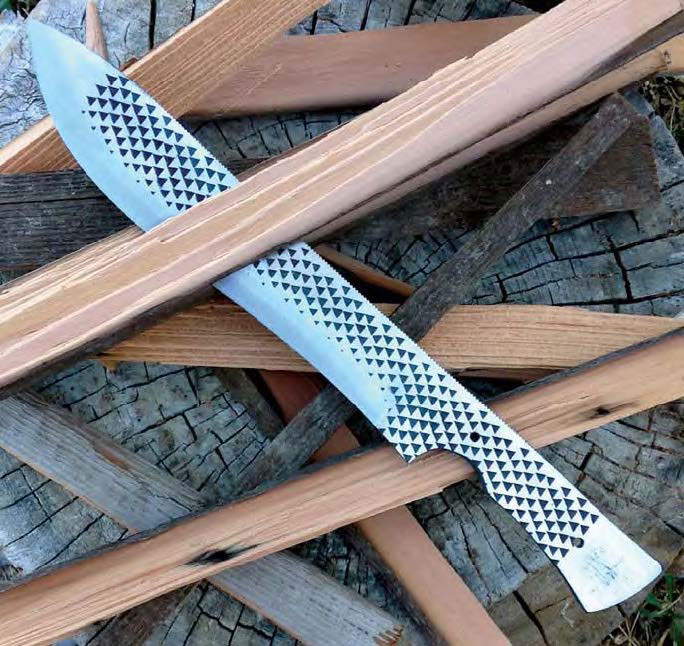
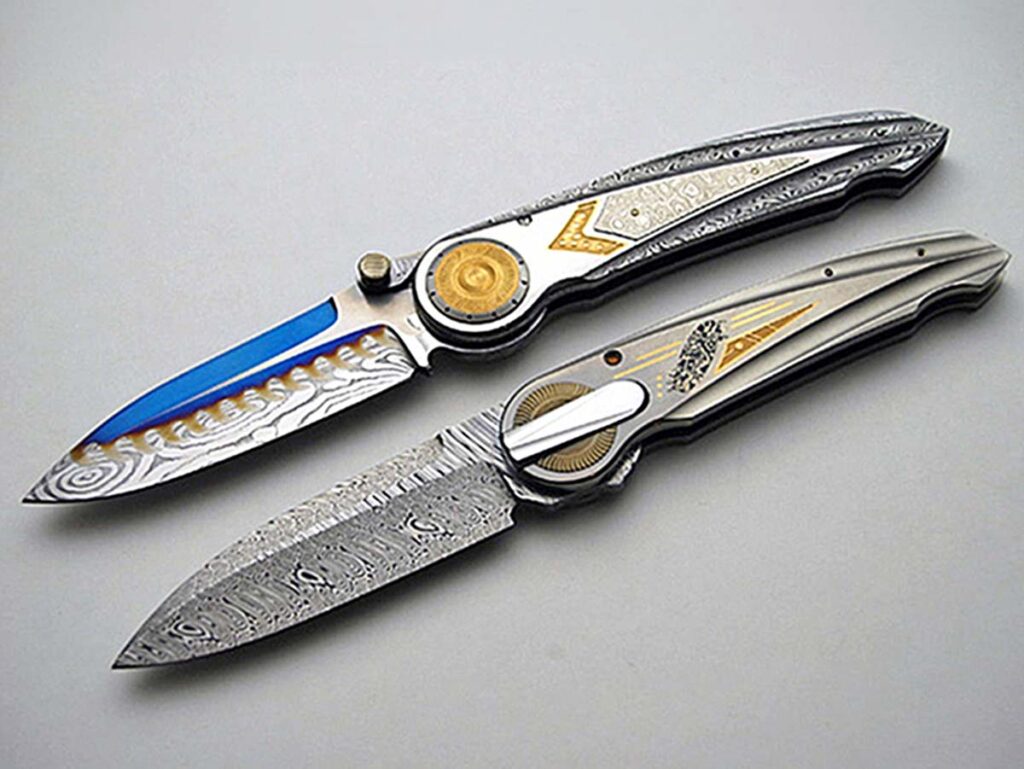
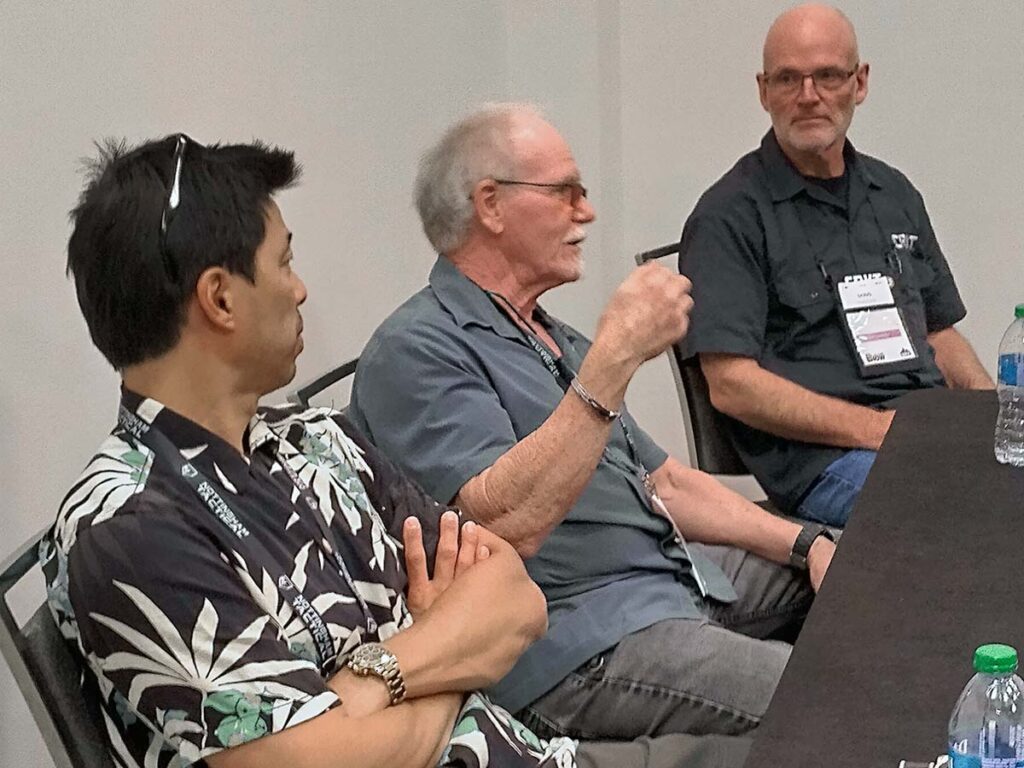
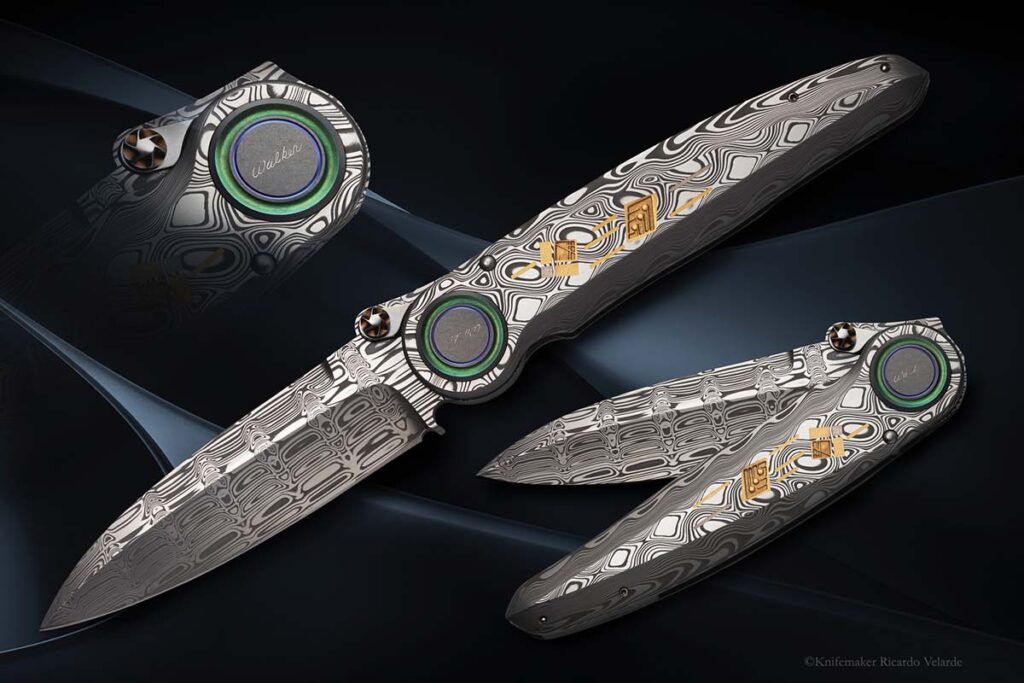
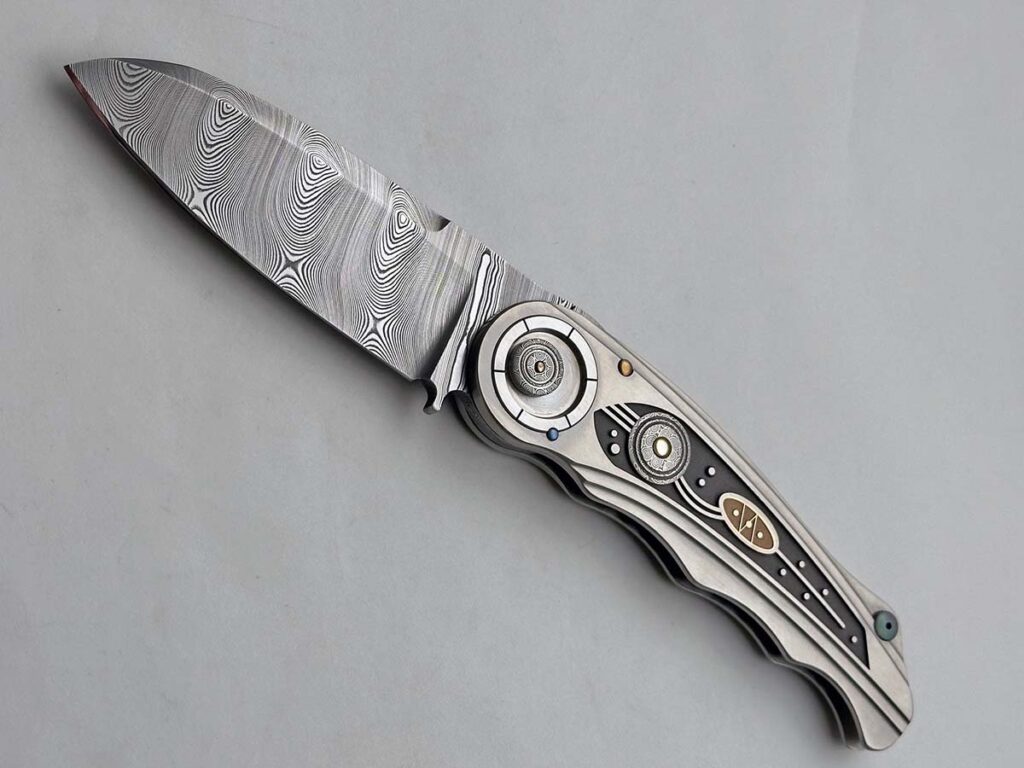
Knifemaking is the building of a knife, which includes the blade, handle and other accouterments. Blades are made by either removing metal from a steel blank via a grinder – known as stock removal – and the forging to shape of hot steel into a blade in the process known as bladesmithing. Other parts, including bolsters, guards, pommels, etc., are needed to complete the finished knife.
From One-Day Course To One-Of-A-Kind Knives, Kurt Swearingen’s Buffalo Hunter Set Shows How Quickly The Knifemaker Has Honed His Craft
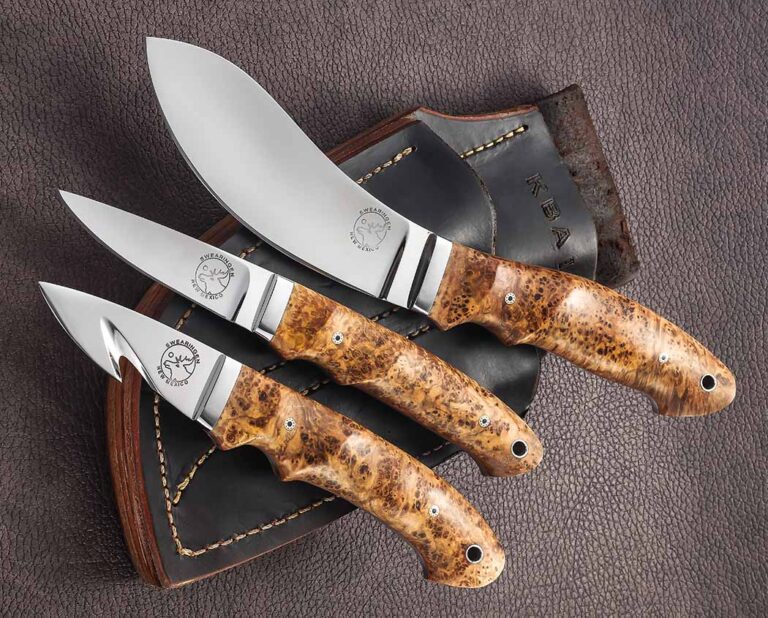
ABS Journeyman Smith/Knifemakers’ Guild member Kurt Swearingen went with tradition and what works in his three-piece buffalo hunter set.
Made for North American big game, the set includes a Green River-type skinner, caper, and gut hook in CPM 154 stainless steel blades and black ash burl grips. Kurt based the design on a similar set he’d seen from the 1800s. He chose CPM 154 because that’s what he uses on his fixed-blade hunting knives and the ash because it’s a wood native to the Great Plains, home of the American bison.
He made the sheath from three layers of stacked 9-ounce leather with two layers of welts. The sheathed set weighs 2-3 pounds so he hollow ground the blades and outfitted them with bolsters instead of guards to save on weight and size. The set wears on a belt, though Kurt modified it so you can string it on a pack or a saddle.
Who Is Kurt Swearingen?
Swearingen’s knifemaking journey began back in 2007 after taking a one-day class. From there he learned from one of the all-time greats, Lin Rhea, who helped him to perfect forging and heat treating techniques that have helped make his knives stand out from the pack.
Just seven years after that course that started it all, Swearingen earned the rank of journeyman smith. Today he specializes in hunting and camp knives of all types.
Buffalo Hunter Set Specs
Model: Buffalo Hunter Set Maker: Kurt Swearingen Patterns: Green River skinner, caper and gut hook Blade lengths: 4.75 inches, 3 inches, and 2.75 inches Blade steel: CPM 154 stainless Handle material: Black ash burl Sheath: Three layers of 9-ounce stacked leather Maker’s price for a similar set: $1,850
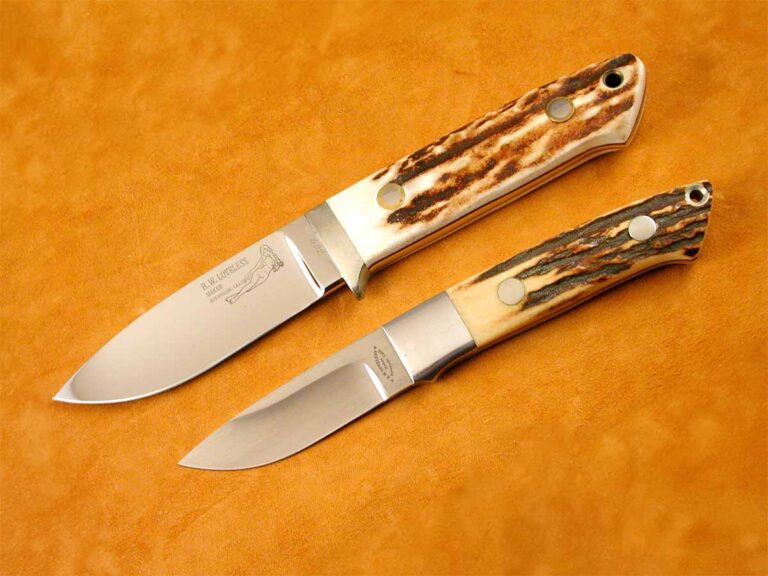
A week after BLADE Magazine Cutlery Hall-Of-Fame® member Bob Loveless died at age 81 on Sept. 2, 2010, Los Angeles Times reporter Valerie J. Nelson wrote a lengthy story on the man who sold his first knife to the Abercrombie & Fitch sporting outfitter for $14 more than 55 years earlier.
Nelson wrote that Loveless “made some of the world’s most coveted sporting cutlery by refining knife design to high art.” These succinct words convey a glimpse of the influence this giant in the cutlery industry wielded during his lifetime. In this 50th anniversary year for BLADE®, his legacy stands tall among those who have dedicated their lives in building the knife industry to what it is today.
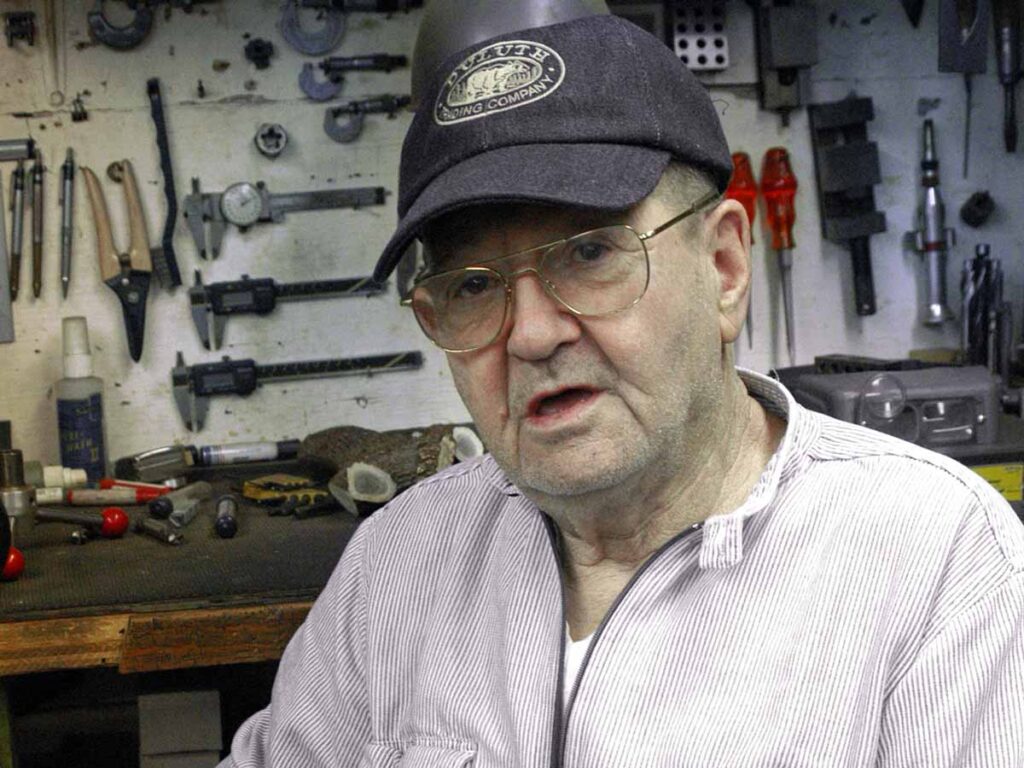
Bob Loveless in his shop in October 2006. (image courtesy of Aaron Merritt, grandson of Jim Merritt)
Truth is, there’s scarcely an aspect, nook or cranny of the knife business that Robert Waldorf Loveless did not touch during his lifetime. He was forthright, sometimes gruff and always prone to speak his mind. During an interview for BLADE, he once asked this writer what the tapping noise was that he heard in the background. When I responded that it was the keys clicking as I was taking notes while we talked, he bluntly asked, “Can’t you remember anything? Why can’t you just listen?”
Loveless’ Defining Designs
No matter. Loveless was articulate, extremely intelligent and deep down passionate about art in knives. Cutlery Hall-Of-Famer Bruce Voyles knew Loveless and respected him for what he was.
“The thing about Loveless is he made a knife with eye appeal,” Bruce observed. “It was different, and a lot of people don’t understand why, but it was [his use of the] natural French curve. It was the design appeal.”
True enough, Loveless was a master of design. He had actually studied briefly at the Institute of Design in Chicago in the 1950s, and was a student of the Bauhaus Movement, a cultural and artistic design wave that peaked in the mid-1930s, something of a North Star, a muse if you will. Its dictum: Form Follows Function.
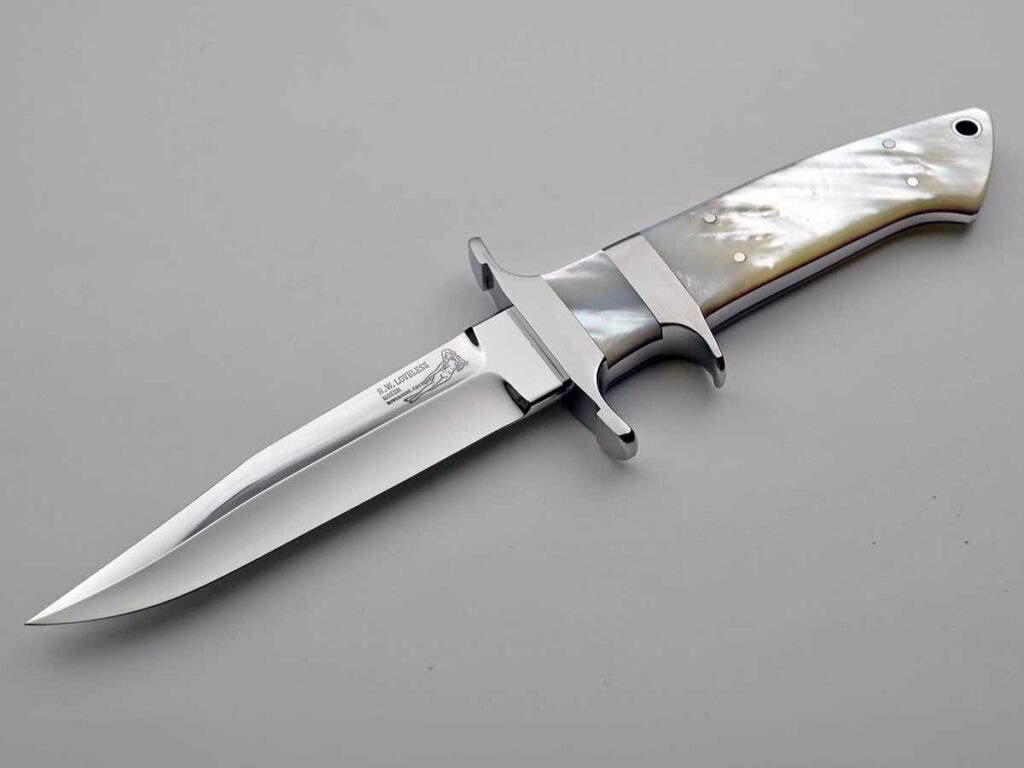
Another of Loveless’s favorite designs is the sub-hilt, radiant in one of Bob’s Baby Bear fighters with mother-of-pearl scales, Naked Lady logo and Riverside, California, stamp. (Exquisiteknives.com image)
Longtime Loveless authority John Denton told reporter Nelson, “He is pretty much the Picasso of the knife world and the father of 20th century knifemaking. His design is what made him famous.”
Dave Ellis, proprietor of Exquisiteknives.com, agrees.
“Going back to the 1950s, Loveless has been instrumental in perfecting some of the more common traits found in contemporary knives,” he related. “The dropped hunter is probably Bob’s most emulated design, although the Archer chute, sub-hilt fighter and more show that Bob did not rest on his laurels. When a smaller, carry-sized fighter was called for, Loveless came up with the New York Special.”
Denton recalled the Loveless willingness to revive and reintroduce design and construction concepts that caught hold in modern times and energized new frontiers of imagination and artistry.
“He was not the first to use the tapered tang,” John explained, “but he found out about it from an old knife made in the 1850s that was given to him by Billy DuPont of the DuPont family. Loveless brought it back into the modern world with the tapered tang taking the weight out of the knife. Bob said, ‘It has to look so good you want to pick it up and feel so good you don’t want to put it down.’”
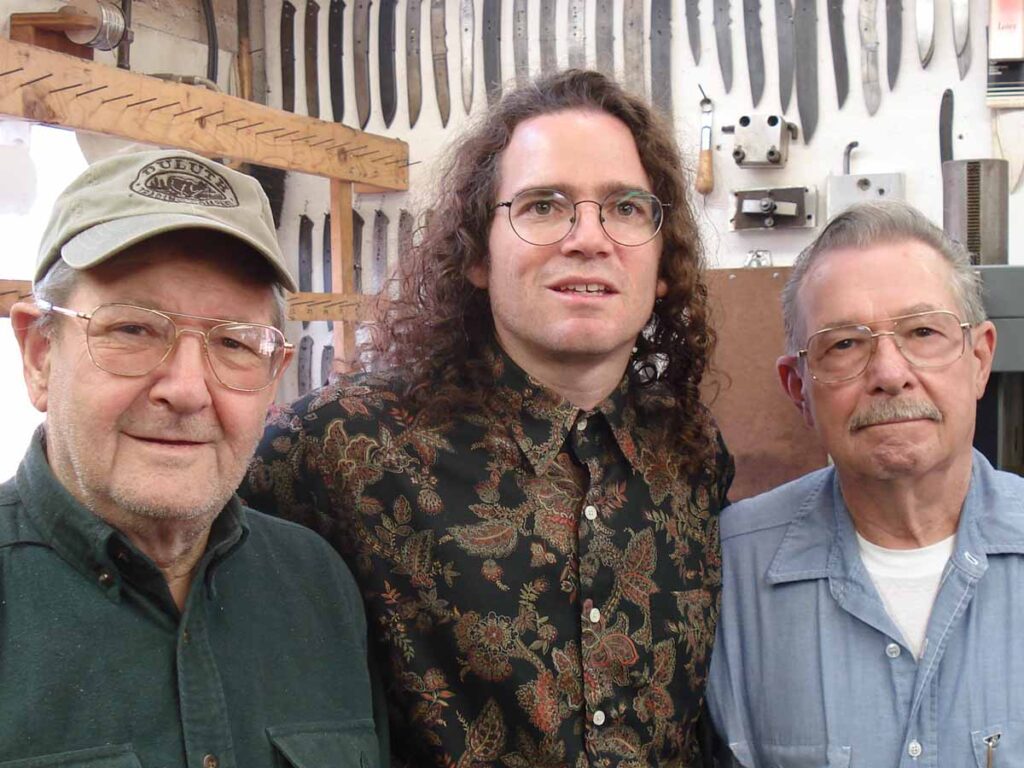
From left, Bob Loveless, John Denton and Jim Merritt in the Loveless shop in Riverside, California.
According to Denton, Loveless also brought the brass wrap handle, hidden pin, two-tone pins and half tang into play.
Design achievement crowns Bob’s career, but there was so much more to him—so much that attempting to compile a summary of his contributions would require more space than this publication might allot in another half-century.
Voyles commented, “I always liked him because he could sum up a complex subject in a sentence. He and I visited one time and I would throw out topic after topic, and he would snap back a quick response. When you left him you knew you left somebody that was phenomenally intelligent on a variety of topics, but that doesn’t mean he had social graces.”
One of Bruce’s favorite Loveless memories was Bob’s rationale during the controversy that raged within the Knifemakers’ Guild as to what truly defined a handmade knife. Loveless liked Jack Daniel’s, so Voyles and Cutlery Hall-Of-Famer Dan Delavan bought a 1.75-liter bottle of Gentleman Jack whiskey (Single Barrel wasn’t available at the time) and presented it to Loveless at his home in Riverside, California.
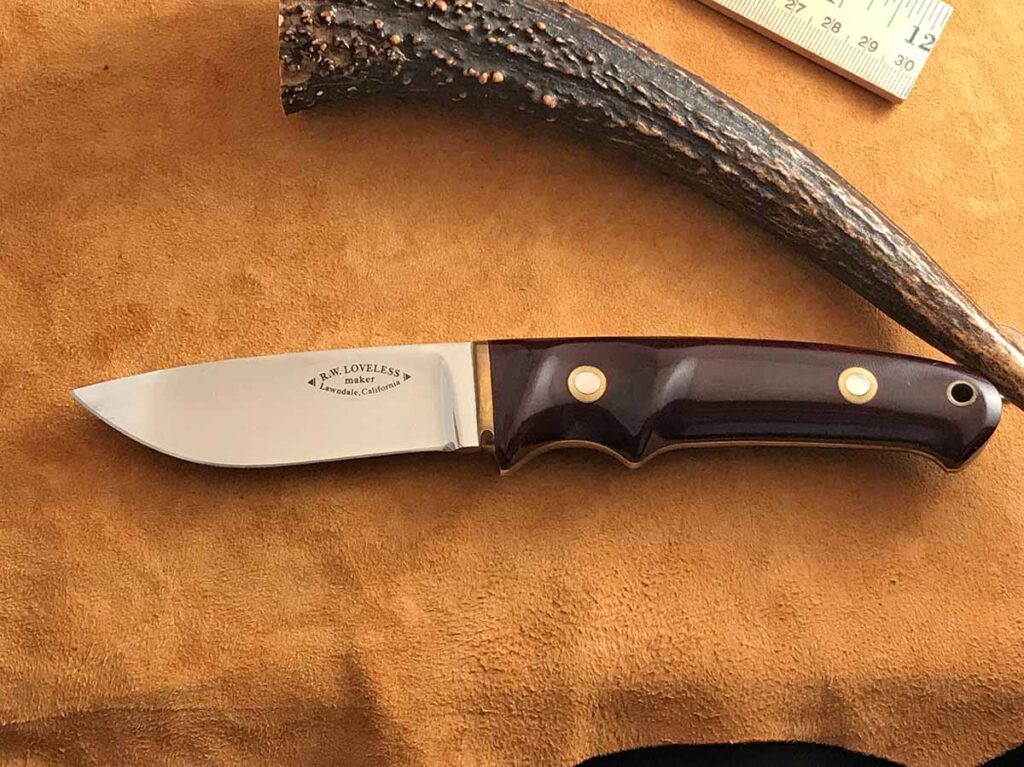
In an arrangement between Loveless and Schrade’s Uncle Henry Baer facilitated by A.G. Russell, Loveless sent this actual prototype to Schrade to copy and make the Schrade Loveless collaboration in the early 1970s. It has no guard, an “improved handle,” and a more pronounced belly than most of the Loveless dropped hunters of later years. The handle is burgundy Micarta®. As John Denton observed, the knife “has a magical feel from the ol’ man.” (Denton image)
“I said to him, ‘I hope you will accept this gift in the spirit in which it is intended,’” Bruce smiled. “He laughed and put the bottle on his shelf. Then we sat down and asked him what he believed to be the definition of a handmade knife. We videotaped his answer. He said, ‘I wish I had a machine that I could dump handle material, steel and pins into, and then a knife would come out the other end, boxed and ready to send to somebody. So, make your knives any way you want to. The marketplace will sort you out soon enough.’”
Simple, straightforward and wise.
Bob’s Impact On The Industry
Loveless played a pivotal role in the genesis of knifemakers’ organizations. He was a founding member of the Knifemakers’ Guild and a pioneer with the California Knifemaker’s Association. He was a staunch supporter of knife shows, bringing people to the events just with his mere presence. According to Ellis, Bob regularly attended the Guild Show, BLADE Show, Solvang Show, California Custom Knife Show and Phil Lobred’s Art Knife Invitational
Loveless also brought along younger knifemakers, working with them and offering advice. A few include Jim Merritt, D.F. Kressler, Yoshihito Aida, Cutlery Hall-Of-Famer D’ Holder and Steve Johnson. Bob’s style and artistic interpretation live on in part with the work of these incredible craftsmen.
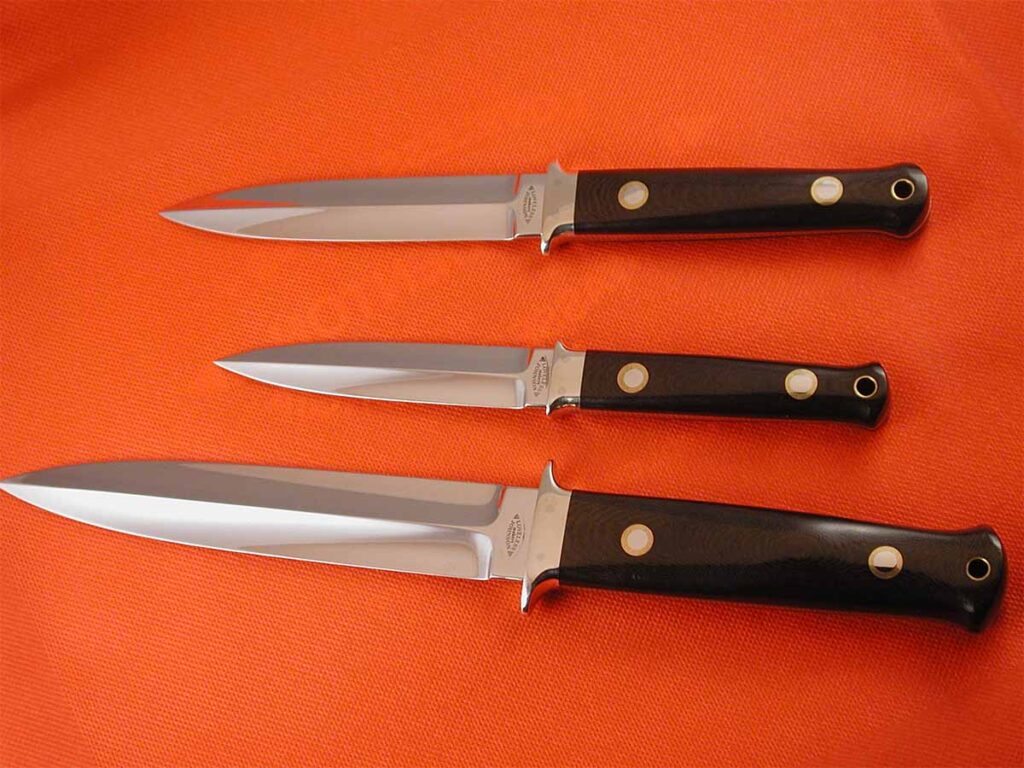
Steve Johnson worked in the Loveless shop in the early ’70s and remembers Bob fondly. “He was a true friend to those who were genuine and sincere with him,” Steve noted. Of this rare set of Loveless-Johnson daggers John Denton wrote simply, “Three really great knives.” (Denton image)
“Many a maker is in debt to Bob Loveless for the support, counsel, corrections and guidance that he gave,” Johnson said. “He was a true friend to those who were genuine and sincere with him, and the relationship that they had with him. Bob, as we know, was outspoken and quick to correct what he felt was not right or smart, which led to some loving him and others not, a bit like Ed Henry—love or hate—but both were so very good to me personally!”
Materials Maven
Loveless was an innovator in the aspect of materials as well, including 154CM stainless steel and the introduction of ATS-34 from Japan, while also popularizing Micarta® as a handle material.
Ellis commented, “Loveless pioneered the use of many of the common steels used today, especially 154CM. The shop was able to purchase such quantities that Bob could pretty much order what he wanted. The favorite handle material of the Loveless shop was green Micarta.”
Johnson remembered, “There was a stack of 154CM steel lying in the driveway at 4319 W 187th Street [the address of the Loveless shop] the day I first walked in. Bob mentioned that he was excited to get some blades done and heat treated right off. Green canvas Micarta was set in stone as the best handle material in Bob’s view. It’s still right up there on top and is used by many a maker. It’s because of Bob’s legacy that this happens.”
Global Influence
A lasting dimension of the Loveless legacy was his bridge to Japan, as well as his overtures in the European markets.
“Bob was deified to the extent that every Japanese knifemaker included his designs among their offerings,” Ellis explained. “Bob was an icon in Japan, and to this day many of the top makers in Asia have Loveless designs in their repertoires.”
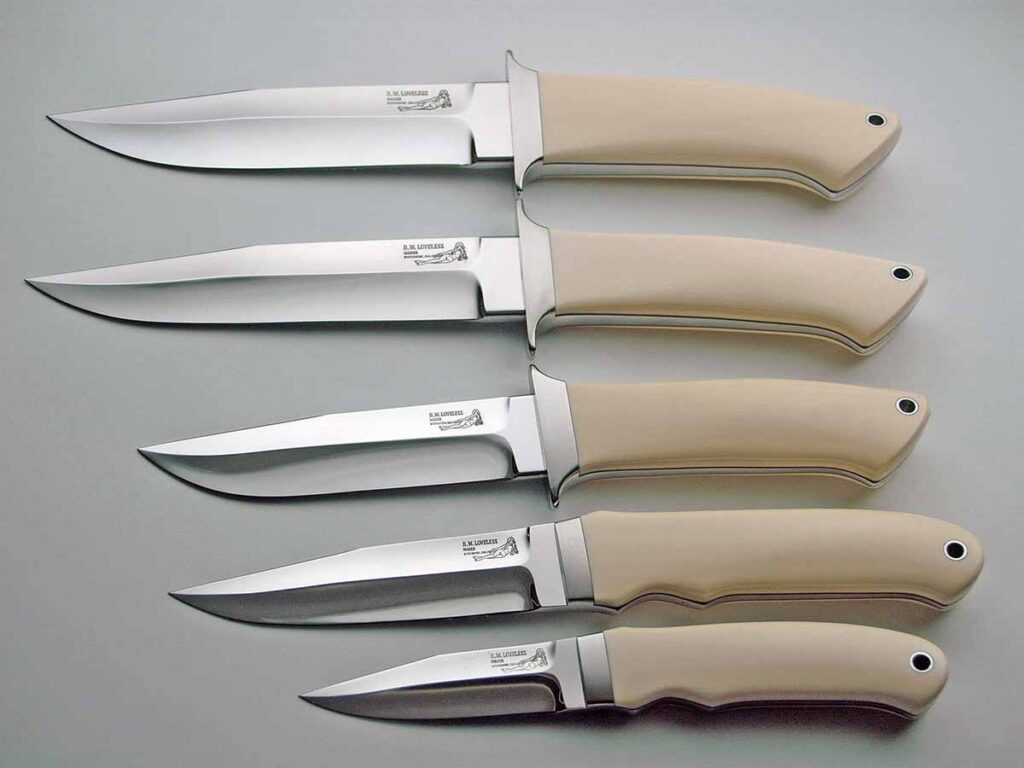
Five Loveless fixed blades sport the no bolt/no pin look in ivory handles. (Exquisiteknives.com image)
Voyles commented, “Bob went over there and showed the Japanese how to make good knives. I went to Japan in 1981 or ’82, and in every factory I went to there was a picture of Bob Loveless and the factory owner. The thing was that Bob’s wife, Yoshiko, was Japanese, so he didn’t have a problem with the language barrier, and he went to Japan to show them how to make knives that appeal to Americans.”
Loveless used his connections to make things happen, and Voyles credits him with the evolution of the folding knife among Japanese manufacturers, as well as a surge in the Japanese collector market.
“Bob didn’t make folders and the Japanese wanted folders,” Bruce recalled. “He had worked on a design with Jess Horn, and Bob put Jess and Japanese collectors in touch with each other. Horn also had a series of folders that he patterned after the old Remington Bullets. When Japanese collectors discovered that, their market for vintage Remingtons went straight through the roof. Loveless sowed the seeds in the 1990s for the collectibility of vintage knives in Japan.”
Collecting Loveless
Today, a Loveless knife is a collectible phenomenon in its own right. Name the year, name the mark on the blade, name the style and the materials, it will sell for astonishing dollars. Denton has noted some models made in the 1970s that sold for $400 then and have reached the rarefied air of $100,000 or more in recent years. The power of Loveless pricing simply takes your breath away.
Bruce is quick to add that Loveless was professionally unselfish. “If you wanted to make a style of his knife in your factory, that was OK,” Bruce noted. “Just ask him.”
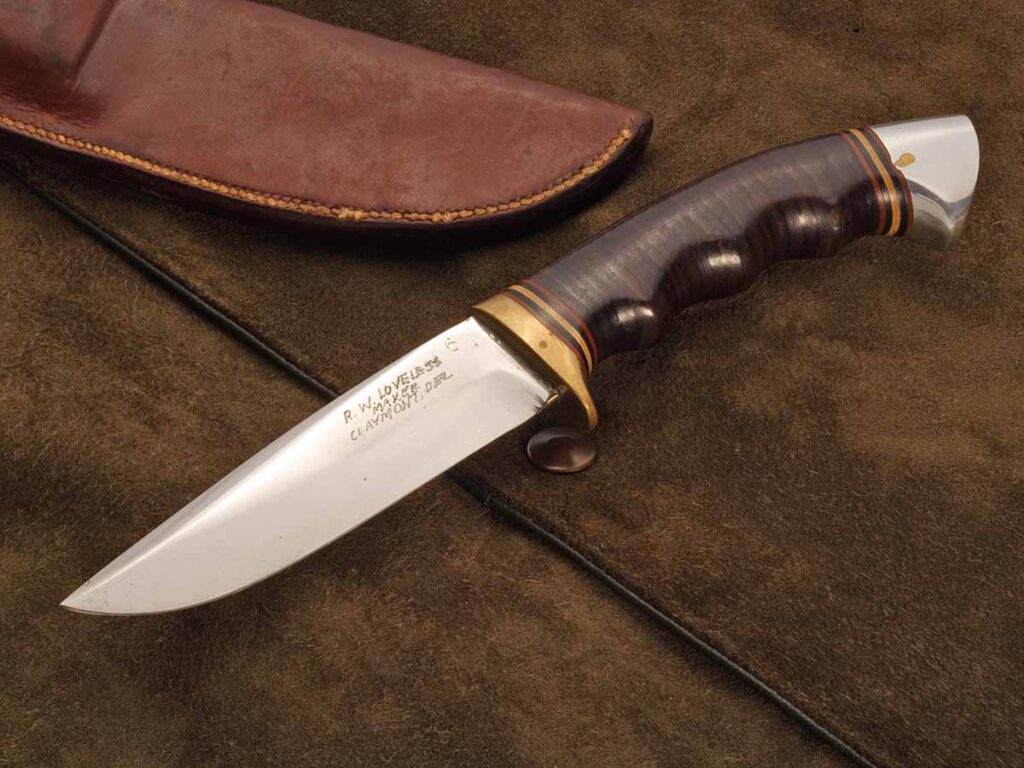
Circa 1955, Loveless sold his first knife to Abercrombie & Fitch for $14 (adjusted for inflation, almost $160 in today’s money). Loveless made this early model for A&F in his shop in Claymont, Delaware.
The pervasive Loveless influence stretched far and wide, from the custom knife shop to the factory.
“His designs for and collaborations with Schrade, Gerber, Lone Wolf and others, and the factory knife market in general, were significant,” Ellis recalled. “Early on the astute factories were taken by Loveless designs and made limited editions in dropped hunters and others. These days factory collaborations are quite common, and you can thank Bob Loveless if you want to give credit where it is due.”
When Sports Illustrated called Loveless for an interview in 1980 and the magazine published his words in the same edition that featured tennis superstar Bjorn Borg on the cover, the impact on the entire knife universe was transcendent. When asked why so many people considered his knives “better” than those of others, he mused, “A knife is an extension of your experience. And I’ve had more experiences than most people. There’s more character running in my veins.”
For those who knew Bob, just the knowing was an unforgettable experience. His contributions to his present and to the futures of others in the knife industry remains incalculable. And so, the longevity of a man does not reside in his years on Earth, but in the perpetual remembrance of his ideas, his workmanship and his innovative perspective on the world.
Therefore, it can be said that when Loveless left us he did not go gentle into that good night. He did not fade away. He didn’t drop the mic. He handed it to those with the foresight and the intestinal fortitude for the days to come. Now, what do we say and do? Loveless might grouse. He might gripe. But he just might also manage a grin.
Robert Young reinvents a classic Loveless fixed blade in flipper form.
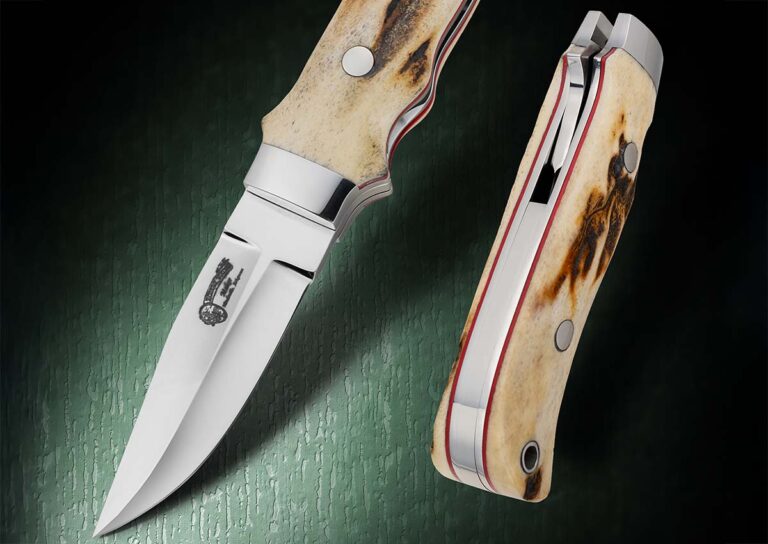
Robert Young reproduces BLADE Magazine Cutlery Hall-of-Fame® member Bob Loveless’s New York Special fixed blade in a flipper folder format, and it’s something that would probably please even Bob himself.
Young also makes a standard fixed-blade repro of the knife. He holds it and the folder—when the folder’s open, both knives are the same size—side by side at shows to see if customers can tell which one’s which, and nine times out of 10 they can’t. Around 1976-77 when he was 16 and a California resident, he learned a man making knives lived three doors down from a friend’s grandfather’s house. Robert visited the man and it turned out to be Loveless. He had no idea who Bob was until later and then visited him about a dozen times.
Robert Young, 64, has been making knives off and on since 1976 and has been full time for two years now. He moved from California to Arkansas in 1993. He’s made about a dozen of the New York Special flippers and also reproduces Loveless City Knife, Junior Bear and Big Bear fixed blades, the latter with a 1-inch-wide sub-hilt. At press time he was working on a folding version of the City Knife and a less expensive version of the New York Special folder. Loveless, of course, never made a custom folder. (Jocelyn Frasier knife image)
“He taught me and I improved a lot real quick,” Robert said. “I wished I’d stuck around there more than I did but I was kind of embarrassed once I found out who he was. I didn’t want to bug him a whole bunch, but he did teach me quite a bit.”
New York Special Flipper Specs Blade length: 3” Blade steel: RWL-34 stainless Rockwell hardness: 62 HRC Blade grind: Double hollow on a 3-inch wheel Blade pivot: Ceramic bearings Scales: Stag Liners: 416 stainless, integral Closed length: 4.25” Maker’s price for a similar knife: $1,500
Marine Corps hero feted with Nawrocki knife at The Battleship Ball.
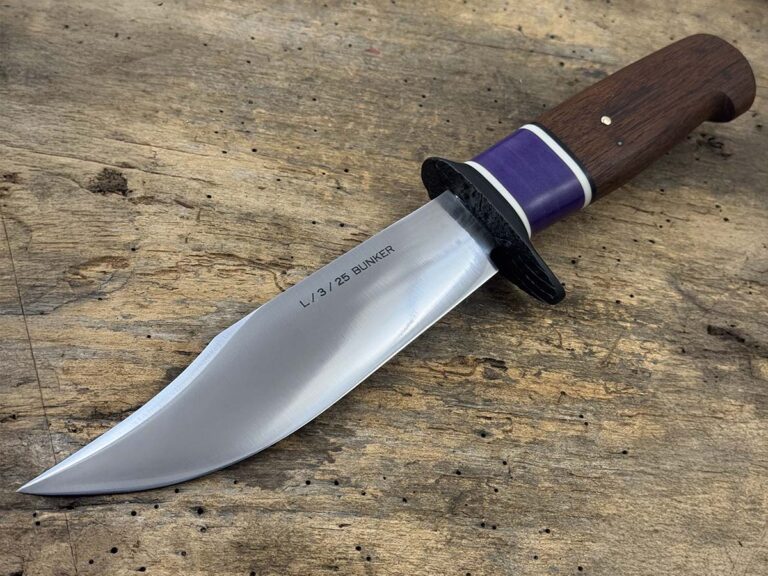
An unforgettable setting for a memorable event celebrating an American hero—all complemented by a beautiful knife by Brian “Rocco” Nawrocki—completed a tribute to USMC Sergeant Scott Bunker during last year’s 250th anniversary of the United States Marine Corps.
Assigned to Lima Company in 2005 during the Iraq War, Sergeant Bunker took multiple machine-gun rounds at point-blank range in house-to-house fighting, resulting in the loss of an eye, half a lung, several ribs and soft-tissue damage to his left arm. He was the guest of honor at The Battleship Ball 2025 on November 1, held on the deck of the vintage World War II Battleship USS North Carolina in Wilmington, North Carolina.
Event organizer/USMC veteran Dean Smith (left) congratulates Sgt. Scott Bunker after delivery of the Nawrocki tribute knife (in display case on the dais) during The Battleship Ball.
The handsome fixed blade Rocco made for Sergeant Bunker includes steel from the North Carolina for the blade and guard. The wood handle is teak from the battlewagon’s deck, along with purple heart ribbon spacers.
The masterful and meticulous impact of the Hall of Famer.
The knife world changed forever on New Year’s Day in 1980. In a geodesic dome house, situated in the mountains high above Taos, New Mexico, Michael Walker proclaimed, “Today, I am a knifemaker!”
Not that he had a ton of experience in the field prior. Up to the roaring ’80s, Walker’s resume was dotted with employment common among many of the free-spirited residents of Northern New Mexico—sculptor, jewelry maker and purveyor of firewood. Perhaps this eclectic background of the aesthetic ideal and practical application was the right balance for him to make his mark in the world of cutlery. The maker has spent a career marrying the beautiful and functional, something that might have only come from someone who not only designed rings and necklaces, but also split logs.
Locking In
Michael Walker
Even on the BLADE Magazine Cutlery Hall of Fame® member’s most artistic designs, there is always an undercurrent of practicality. In particular, his locking mechanisms have shaped modern folding knives. But even turning to innovation as a hallmark had a streak of sensibility. According to Walker, in his 128-square-foot log cabin workshop, he minted 10 fixed-blade knives to start his career. He then realized he’d have to make 10 sheaths to house them. Not wanting to go down the leather-working rabbit hole, he immediately switched his focus to folding knives.
At first, Michael’s work—at least mechanically—was somewhat rote, mainly slip joints and folders. But soon after his knifemaking endeavor started, he began revolutionizing how a blade locked in place. Arguably, his most weighty invention came early, when the “Walker Liner Lock” was born around 1981. Walker’s inspiration for creating the linerlock was a knife that could open with one hand without repositioning it.
To the greater knife world and beyond, Walker’s most lasting legacy is the liner lock, an innovation the author points out was developed as the maker’s solution to operating a knife one handed. While it’s among his best known contributions to knife design, Walker rarely employs it in his more recent creations. (SharpByCoop image)
Most knife enthusiasts are familiar with the locking system, prevalent as it is today. Steve Shackleford described it thusly, in his section on Michael in Greatest Living Knifemakers: “Basically, the linerlock consists of a spring cut out of the titanium liner of a knife handle that, when the blade is opened, is released and moves under the blade tang to hold it open. To close, simply push the spring back toward its original position in the liner and pull the blade closed.”
While Walker is known for his titanium liners, to start, his folders had liners of 440C steel, which he split with a jeweler’s saw and hardened on the tip. Initially, the hardened liner did the trick, but once moving to titanium springs around 1984, he found the material had a tendency to gall, leaving marks or trails on the blade. Incorporating a ball left the blade pristine and, as he found, assisted the closing of the blade. After using the ball detent for a year, Michael discovered a pin was more suitable for the job, and to this day, Walker still uses a press-fitted pin as he can put a bevel or a radius on it so that the operation is better than if a ball were used.
Over the course of his career as a knifemaker, Walker has earned a slew of patents and trademarks for his folder-related inventions. Two such examples are the Zipper blade (top) in which a hard edge metal is fused with a tough spine metal. And the lever lock (bottom), of which of his many lock designs. (David Ellis image)
It’s worth noting that some greats have worked personally or drawn inspiration from Walker’s liner lock. Walker inspired such notable makers as Bob Terzuola and Ernest Emerson, to name just two. The liner lock was just the start for Walker’s refinement of locking mechanisms and knives in general. At present, he holds numerous patents and trademarks pertaining to design elements within knives.
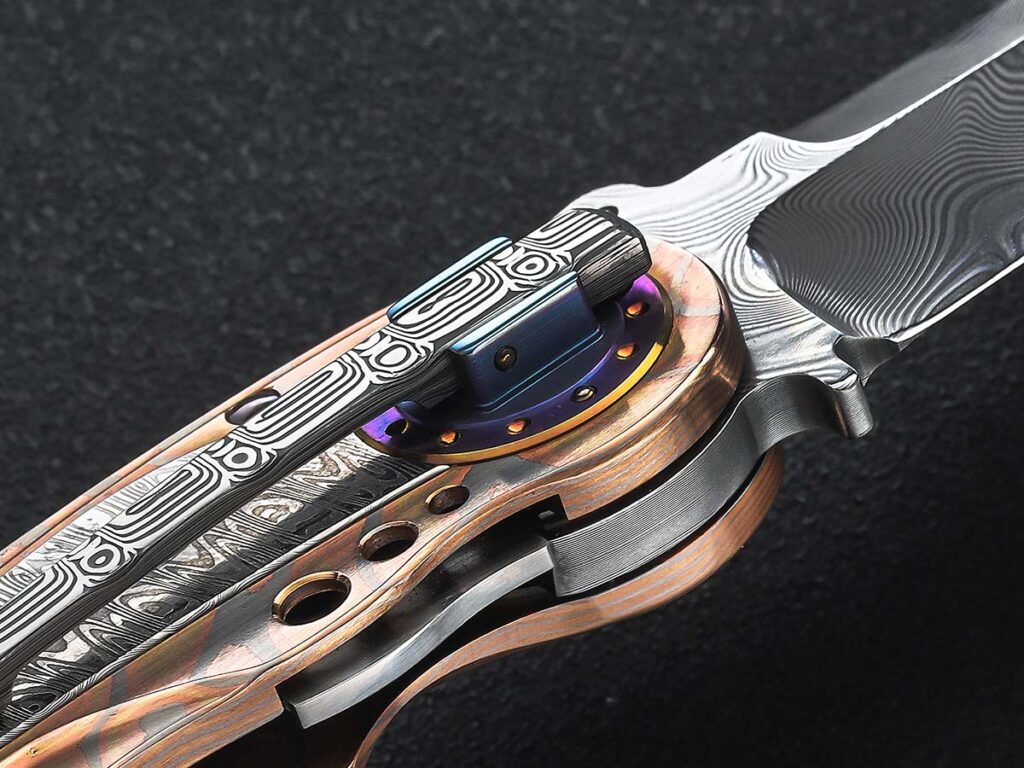
Appraising his career at the Solvang Show 2025, Michael believes two patents are his most significant—the Zipper blade and the blade lock folder. The Zipper is the process of fusing two different metals so a blade has a hard edge and a tough back. While the blade lock is a button lock, with the button situated on the blade and doubling as a thumb stud.
Walker’s first Zipper blade was made from 416 stainless steel with a Vascowear cutting edge. The two were Tig-welded together. Eventually, Michael began to use titanium for the spine, but as it could not be Tig-welded to steel, he used a wire EDM machine for the task. Generally, ATS-34 or 440C was used for the cutting edge on his Zipper blades. Over the years, he has used zirconium, with Walker pointing out that wire EDM can be used to mate most disparate metals. Of his Zippers, Walker’s “Sharktooth” is among his most desirable and his first to attain two patents, both for the composite blade and the blade lock design.
Walker has been fairly open in sharing his design and innovations with makers of all stripes, such as at BLADE University in the picture. Early on, he personally taught legend Bob Terzola his method of making liner locks. (Steve Shackleford image)
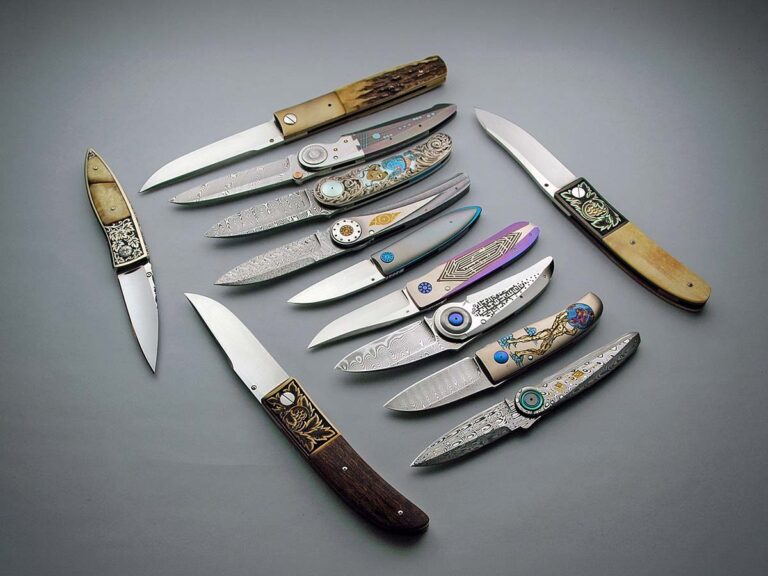
As for his blade lock, here’s my take on one of my favorite Walker designs. When you first hold it in your hand, there is an immediate connection. Typically made with a Damasteel frame, featuring multiple precious-metal inlays, it’s striking in appearance. The blade lock itself—typically fashioned from a rare metal—is simple, quick and silent. The blade grinds are always precise, and the work is as tight as a Swiss watch.
In addition to these advances in knife design, blade aficionados also have Walker to thank for the Crowbar Lock, Lake and Walker Knife Safety (designed in conjunction with Ron Lake), ball bearing lock, and Toughlock. It’s worth noting that many of these intriguing mechanisms can still be found in production knives by Spyderco, CRKT, Schrade, Boker and Klotzli.
Material And Design
Walker’s impact on knife engineering is undeniable, but shouldn’t overshadow his artistic flair. His initial tools when he first ventured into knifemaking were a belt grinder and jewelry-making tools. He may have upgraded his equipment over the years, but he never lost his jeweler’s eye in executing cutlery.
Another clever invention of Walker’s the author points to is the blade lock, a dual-purpose lock. It functions not only as a thumb stud to open the knife, but depressed, it also unlocks the blade to close it, as well. (Image courtesy of David Ellis)
A defining moment for Walker came roughly in 1984, when he brought titanium and anodized titanium to custom knife making. His wife, Patricia, was using the material in her jewelry at the time and played a role in some of his earlier work. Michael said he did the solid anodizing of titanium elements (he credits Reactive Metal Studio for refining his skills), while his wife did the multicolored selective anodizing. Patricia’s contributions remain striking today.
Titanium brings up an interesting anecdote Michael relayed about those early years. Sans a phone in his home, his early business was conducted over a local pay phone—including acquiring 100 pounds of scrap titanium for the princely sum of $100. Anyhow, Michael poured quarters into the phone, attaining material, and laughingly said that it was tough to remain professional in the winter with the snow and wind blowing and the operator coming on the line to ask him to deposit more money.
Material is far from the only defining aspect of Walker’s design language. The form of his knives is distinct and recognizable as a “Walker,” drawing from wellsprings of different influences and mentors. Among the most important, Walker chalks up Charles Loloma, an Indian jeweler and silversmith, who, Michael said, “really thought out of the box.” Frank Lloyd Wright and the Art Deco movement play undeniable roles in the development of his knife forms.
Next to his mechanical contributions to knifemaking, the author points to Walker’s eclectic use of materials and eye for design as important influences to the knife world. The above slide lock is an example, with the distinctive art deco stylings, with multiple metals used on the handle’s inlay. (David Ellis image)
As for knifemaking mentors, Michael said he made his knives by trial and error and quickly learned from his mistakes. He joked, Joe Cordova signed his Knifemaker’s Guild sheet, but Joe made totally different knives than Michael, so he was not really a mentor. Those closest to him had an impact. Outside his initial customer base of friends and family, Walker pointed to retailer/collector Don Buchanan as playing an important role. Walker would bring his knives to Buchanan’s shop, and Don would give him his opinions on things to improve. Buchanan began to sell Walker’s knives and would keep the No. 1 from the lot and sell Nos. 2-10 of each model.
Collecting Walker
I have known Michael for many years. He is very interesting to talk to and approachable when you can find him behind the table at a knife show. I have been a fan and collector of his work for as long as I can remember. Seeing Michael and his knives at the late Phil Lobred’s Art Knife Invitational Show was as exciting as chatting with Bob Loveless or Bill Moran. When the greats of custom knifemaking are mentioned, Michael’s name certainly will be at the top or near it.
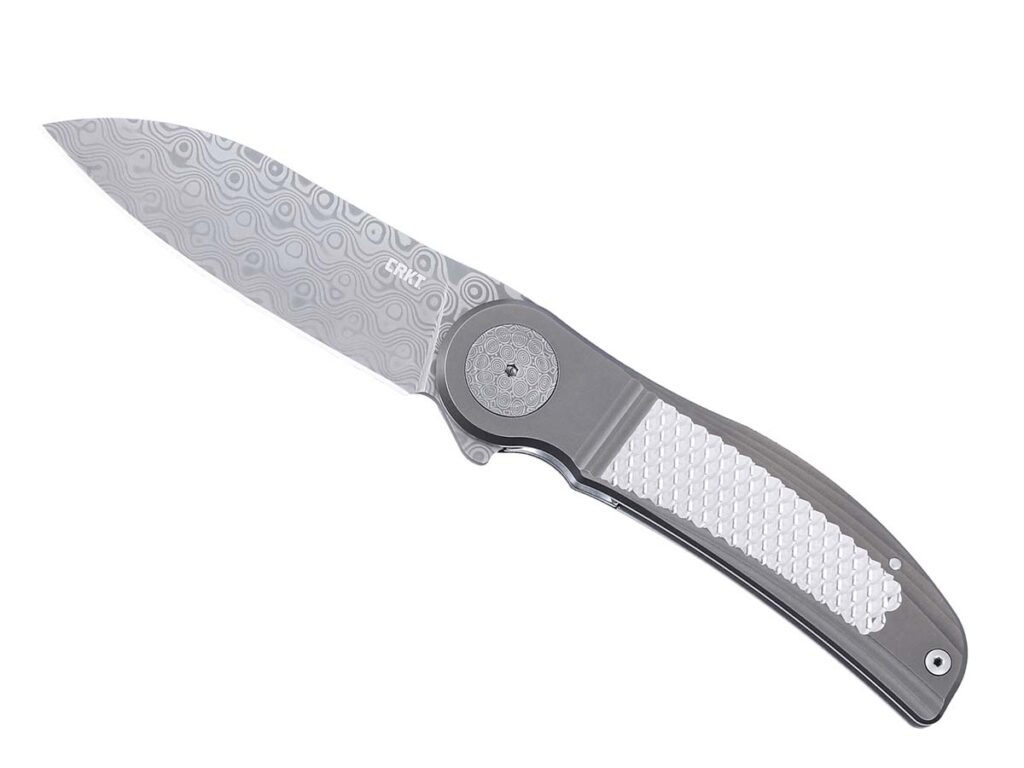
Walker’s work is considered highly collectable, the author pointing many run into five figures. But, his designs are found in many production variants, such as this CRKT Monument.
Any astute collector would be interested in the value of his creations. Will it hold its value? Can I resell when I need to? Early on, I saw Michael’s work moving for $3,000 plus. Not long after, those same style knives doubled. Michael’s Zipper folders climb from $12,000 to over $100,000 in an incredibly short period of time. Currently, a Michael Walker folder is not inexpensive. A nice Bladelock might run you close to $20,000. Rest assured that in time, and that could possibly be a very short time, there will be a buyer, and with some patience, you should be able to turn a nice profit. That said, I caution buyers to always select a knife based on its likability more than turning a quick profit. This goes for any knife!
Michael Walker will go down in history as one of the greatest knifemakers … ever. His remarkable talents, as well as his innovative lock designs, have revolutionized and invigorated the custom knife world.
Frame Handles Remain Just As Useful In Making A Knife Today As It Was Centuries Ago.
Frame handle construction for knives has been around for centuries. Historical examples of many Eastern styles like the kard, khyber and yataghan often feature ornamented frame handles. Nineteenth-century knives attributed to James Black and some of the early American bowies also had frame handle construction. Though it’s been around a long time, the frame handle remains a viable modern construction method for today’s custom knifemakers.
There are many ways to crack the nut/skin the cat on frame handle construction. This article will walk through the frame handle process and point out particular problems and potential solutions for those who wish to pursue building a frame handled knife.
Why You Should Build A Frame Handle
Frame handle construction is best defined as using a wrap-around “frame” to conceal the tang of a hidden tang knife. The first question many people ask regarding a frame handle construction is, “Why would you want to do it that way?”
My first thought goes back to the earlier days of the internet when forums were at their peak, and fine makers like ABS master smith Bruce Bump took the time to document “work in progress” (WIP) threads. Bruce had a fine frame handle WIP on the KnifeDogs.com forum in 2013, and the consensus at the time was that you build a frame handle for quite a few reasons, though the first one is “because you can!”
An exploded view shows an ABS journeyman smith Karl Andersen frame handle construction knife before assembly. (Karl Andersen image)
A frame handle is a much more complex build process than your standard full- or stick-tang knife. However, in addition to the show of skill by the maker, frame handle construction has a few distinct advantages that make the complexity worth the effort:
1. A frame handle allows for the look of a full tang, but with the guard-fitting techniques of a stick tang. For a forged stick-tang-knife design that needs a guard, a frame handle allows the use of full-tang-style handle construction;
2. A frame handle is a good way to use scales or slabs on a stick-tang knife. If you have a good set of stag or mammoth slabs, or if you have stabilized wood slabs that might be too fragile for through-tang construction, the frame handle allows you to use the materials on a stick-tang knife; and;
3. The use of a frame handle gives the maker another area to embellish the knife. Some frames are great for engraving, while others may highlight a damascus pattern. Either way, the frame makes the embellishment stand out in ways that are harder to accomplish on a full-tang knife.
How To Build A Frame Handle
At a basic level, the frame of a frame handle is a piece of material, usually metal, that wraps around a stick tang and mimics the look of a full-tang knife. This presents some challenges that have resulted in a few different creative solutions.
•Challenge 1: The tang must fit inside the frame. Some makers insist on precision so there are no gaps and the fit is tight. Others concede that the handle will be held together with mechanical fasteners and sealed with epoxy, so a precise fit between the frame and the tang is not necessary.
•Challenge 2: All parts of the handle must be securely fastened together. I sat through a class with ABS master smith Mike Williams in which he admonished the students, “Don’t trust in the magic of chemistry” by putting your faith only in the strength of glue. Likewise, veteran bladesmith Jerry Fisk challenges makers to think ahead to what their knives might be like in 100 or 1,000 years, and recommends a mechanical connection that won’t fail over time.
One way to address this challenge is to use pins. If you pin the scales to the frame, pin the completed handle assembly to the tang and follow up with glue, there’s no opportunity for failure. Some choose to make all the pins visible as an artistic element, while others take advantage of hidden pins for all but the one through the tang. Another way is to use a threaded fastener.
Bladesmith Salem Straub recently illustrated the technique on a frame handle WIP on his Instagram feed. Salem used a threaded fastener in an internal slot in the frame to mechanically lock all the parts together tightly. The handle material is relieved on the inside to accommodate the fastener.
Another way to use a threaded connection is to thread the end of the tang and use a fastener on the handle butt. An advantage of this approach is that the fastener itself can become part of the embellishment.
•Challenge 3 is the complex fit-up between all of the knife’s elements. Frame handle construction naturally doesn’t excuse a poor guard fit, but it also provides other places for gaps and misalignment. Once again, there are several potential solutions to alignment problems.
One is the use of alignment pins to make sure everything is secure. Pins on the end of the frame go through any spacers and into holes in the back of the guard so that each part indexes the same during assembly. Some makers, including Bruce Bump in the aforementioned epic WIP, advocate for leaving metal tabs on the end of the frame and fitting the tabs into similar holes on the back of the guard
. In both cases, there’s a mechanical connection that prevents the guard, spacers and frame from rotating out of alignment around the center axis of the handle. Either way, when you build a frame handle, the construction will require you to assemble and disassemble the knife repeatedly, so you’ll need some mechanical way to keep things lined up.
Another fit-up challenge is the overall requirement for clean-fitting joints with no gaps. It sounds simpler than it is, but two surfaces that are dead flat will join together without a gap. The challenge of a multi-piece frame handle with a guard and a few spacers is that you are creating a multitude of surface joints, and every single surface must be dead flat.
At a minimum, you’ll have a joint between the guard and frame, and also between the frame sides and the handle material. Any bump or wiggle on any surface and you’ll have a gap in the final product. Flatness comes in degrees. You can get a fairly flat surface on a platen, flatter on a disk, and still flatter on a surface plate or surface grinder. You have to make the joints as flat as you can with the tools you have available if you want a gap-free fit.
I tend to prefer the look of a tapered tang on a full-tang knife, so I’ve started tapering the frame of my frame handles as well. Others stick with a full thickness frame, where the thickness closely matches that of the blade at the ricasso. Some add spacers between the tang and handle material, while others choose to go with the frame and handle slabs only.
ABS master smith Mike Quesenberry used frame-handle construction on his dog-bone bowie. (Eric Eggly/PointSeven image)
Another fit challenge is presented by the frame itself. In order to adequately finish the visible surface of the frame, whether by simple polishing, bluing or etching, or by engraving, the frame must be 100 percent at final-grit finish prior to final glue up.
Many makers learned to make a full-tang knife by finishing the front edge of the scales, gluing the knife together, shaping the scales down to the exposed tang, and then polishing the handle and the tang at the same time. That method will not work for a frame handle that needs to be blued or etched. Personally, I tend to use dummy pins to fit the entire handle assembly together, then grind the scales down to the frame. In his recent Instagram example, Salem Straub used small screws to hold the handle material to the frame.
With regard to the relationship between the handle material and the frame itself, some choose to leave the material slightly proud of the frame for a “museum” or “heirloom” fit. Others prefer the material to fit flush to the tang. Less commonly, some makers round the frame and leave it slightly proud of the material. Whichever you choose, it is important that the fit be maintained consistently all the way around the frame, from the joint at the guard on the top all the way down to the joint at the guard on the bottom.
Once the profile is set, I polish the handle and the frame together down to final grit, and then apply any surface finish to the frame itself. Once all parts are 100 percent complete, they can be glued together as a final step.
When To Make A Frame Handle
So when should you try making a frame handle? In my mind, if you can make clean full- and stick-tang knives, you could be up to the challenge. If you have slabs of exceptional handle material that deserve more than a simple full-tang knife, a frame handle is a way to step up and put the materials on full display. If you have a knife in mind where the frame and guard need to be blued, damascus or engraved, a frame handle is the way to go.
A frame handle knife has its advantages, but the complexity of the construction presents plenty of challenges. As a skilled maker, you may choose to rise to the challenge of a frame handle just to show that you can.
Knifemakers Continue To Evolve Their Use Of Social Media Platforms To Promote Their Work And Expand Their Customer Base.
It’s been around a while now—long enough for an update on its relevance and impact on the knife industry. Meanwhile, social media in some ways remains a new frontier for both knifemakers and the market.
It isn’t unusual for those interested in buying an existing knife or commissioning one from a pro to use social media such as Instagram, Facebook, and other windows into the lives and work of custom makers. The media provide outreach and information on an unprecedented scale, and custom makers who take advantage of the opportunity to put themselves in front of the buying public take different approaches.
Some use video, others still photos. Some use music, others narration of what the viewer is seeing. Some allow the hum and whir of machines or the ring of the hammer to set the tone and convey the message. The answers to the questions of where and how to apply social media in their work lives vary among makers, but the involvement of social media in their marketing and sales efforts has become a regular part of their routine.
“Instagram broadens the customer base, and if you aren’t using it you are missing out on that client base,” related knifemaker/5th Special Forces veteran/BLADE® field editor Kim Breed (@kimbreed1911 on Instagram). “I was dead set against it, but my son Keith got me going and said that it was something I needed to do. You can target your audience with a hashtag, and then when someone searches for something in particular it will come up.”
Kim likes to use music as a backdrop for his videos and especially enjoys the rock band AC/DC (the band’s song “Thunderstruck” is among Kim’s favorites). Of course, there are other musical selections, and he ties the tune into what is happening on his Instagram and Reels posts.
“When I’m doing hand hammering or power hammering, I love AC/DC,” he smiled, “and sometimes I’ll use dramatic songs when I’m etching, or whatever. Instagram is easy. I can do it on my phone and post it in five minutes, and I’m sure you can do the same thing with Facebook.”
Since the social media surge, Kim has found that how-to video posts are more popular than pictures of knives alone. He also advocates frequent posting of relevant work in progress.
“I try to post something at least once a day,” he remarked, “and it may be something like etching damascus steel. I get good hits and feedback on that and anytime I post videos working with a milling machine or grinder so people can actually see me building a knife.”
Making Social Media Work For You
Isaiah Schroeder, whose forged gyuto was featured on page 82 of the October BLADE®, uses both Instagram and Facebook and publishes an email newsletter around once a month with his latest knives and prices. That way, everyone signed up for the newsletter gets it at the same time and has an equal chance to get one of his new knives. (SharpByCoop image)
Isaiah Schroeder uses both Instagram and Facebook with the handle @schroederknifeworks and has found a much wider audience than might otherwise have become familiar with his work. He is regularly in front of his followers with updates and information.
“I started doing my email newsletter [www.schroederknifeworks.com/newsletter] several years ago,” he commented, “mostly so that I don’t have to be completely dependent on Instagram’s algorithm to show my customers when my new work is available. With this newsletter, everybody who is signed up for it gets it at the same time and has an equal chance to get one of the knives. I do the whole thing myself using a service called Mailchimp, which just makes it easier to keep the list and format the content. My goal is to have one batch of knives per month and one newsletter per month.”
Schroeder uses Instagram primarily but cross-posts to Facebook when preparing social media input. He sees Instagram as a way to reach more people, and a gallery of his work conveys the quality of his knives and materials he uses. Recently, he has seen short videos take hold and is using these to reveal his shop work. The result has been dramatic.
“Instagram has been great for my business,” he smiled. “I’ve sold knives around the world because of it. I focus on cooking knives, and there is a large foodie presence on Instagram so that meshes well with my content.”
Isaiah also appreciates the free flow of information afforded by social media, everything from the knifemaking process to presentation to pricing. The volume of information at the fingertips of the viewer is incredible, and knowledge is buying power.
“I’m not too shy about posting my prices for the public to see,” he reasoned. “I’ve always wondered why some makers won’t post prices. It’s something people always ask about, so they clearly want to know. I’d rather make it known. Then people can have time to decide whether they think it’s worth it for them or not. I guess it might be different if I were selling through a retailer or making custom orders.”
Knifemakers Grow Their Brand
For his custom knives, Mike Vagnino indicated posting work in progress seems to get the best response and exposure regardless of whether they are still shots or videos. (Vagnino image)
Just getting a custom knife enterprise off the ground from a marketing perspective can be a huge challenge, and when custom knifemaker Mike Vagnino and business partner Patrick Ma kicked off Terrain 365, they immediately began looking for ways to raise their new company’s profile.
“Our primary source for promoting the business is social media, which has worked very well for us,” Mike explained. “Our goal, of course, is to sell knives by making people aware of our brand and drawing them to our website. Patrick handles our social media for Terrain 365, and the key seems to be posting often and consistently.”
While Mike emphasizes he is no social media expert, he acknowledges social media’s inclusion in a sales-and-marketing strategy will pay dividends.
“I use Instagram and Facebook primarily to promote my custom knives and any new projects I’m working on, not necessarily to generate immediate sales, but to keep my name out there. For my custom knives, posting work in process seems to get the best response and exposure regardless of whether they are still shots or videos. I choose not to speak during the video because I think what I’m showing is explanation enough—not because I think it’s more intriguing—although that may be the effect. Actually, I think telling a story might help if it’s interesting enough, but keeping the video short to match the people’s attention span nowadays is what I keep in mind.”
In promoting Terrain 365, Mike and Patrick have found that outdoor photos of the knives in action work best. Since their company is geared toward everyday carry knives and those that are ideal for use in the outdoor environment, their knives are constructed in rust-proof, non-magnetic materials. Take a look at Mike on Instagram @michaelvagnino.
Making First Impressions
David Lisch says Instagram may be the place many knife consumers see a maker’s work for the first time, so everything the maker posts should be first rate.
ABS master smith David Lisch issues both an endorsement and a warning when it comes to his use of social media.
“I have found that social media is both a blessing and a curse,” he observed. “It has been a struggle for me to find a balance. If you let it, social media can eat up so much of your time, time you could spend creating, making, and being in life. It is important to find the balance.”
Indeed, every opportunity carries a requirement for thorough evaluation and an awareness of the unintended consequences.
“I have focused my social media on Instagram primarily,” David added. “It is where I share my knowledge and sell my knives and meet my students. I have taken time to figure out what works for me and how to present myself. It might not seem like it at times, but I take Instagram very seriously.”
For those makers beginning to consider social media as an enhancement to their overall livelihood, Lisch provides a voice of experience and makes a few sound recommendations.
“My advice for knifemakers new to Instagram is to treat your feed like a portfolio page. This is the place people will see your work, maybe for the first time. It is your first chance to make an impression on a potential collector. Go in and clean up your feed on occasion and remove any stupid stuff.
“Keep it engaging,” Lisch continued. “Show work in progress as well as finished work. Use your storyline to keep folks up to date with what you are working on, or what is happening on a lighter side. Because your storyline is only up for 24 hours, it is self-cleaning. It is a great opportunity to have fun and connect with the folks interested in your life. Be yourself; do not try too hard to create content that is not you. Use hashtags and try different ones. Post to Reels, and if they are good they may go viral. As your audience grows, remember you are also a role model. If you are working, wear your safety gear. Be real.”
David can be found on https://www.instagram.com/davidlisch/. Click “Highlights” on his Instagram home page for his free video classes.
The social media phenomenon is sure to stay with makers into the future, and participating in the most effective ways will produce the desired benefits for them and their customers. True enough, getting involved may be a bit intimidating, but taking the plunge is becoming more of a necessity every day.