

African Blackwood is on the Rise as a Custom Handle Material

Maybe it’s a bit of a contradiction, but both elegance and simplicity are elements of African blackwood, a handle material with a rapidly rising profile in the custom knife industry.

The color of the material combined with properties that make it a pleasure to work with has resulted in an explosion of interest. Ranging in luster from a reddish to a deep black hue, the wood is the product of a flowering tree also known as granadilla or mpingo. A relatively small tree, it grows primarily in the forests of Senegal east to the horn of Africa and in some parts of South Africa. Long used in musical instruments and high-end furniture, African blackwood is protected in order to prevent overharvesting.
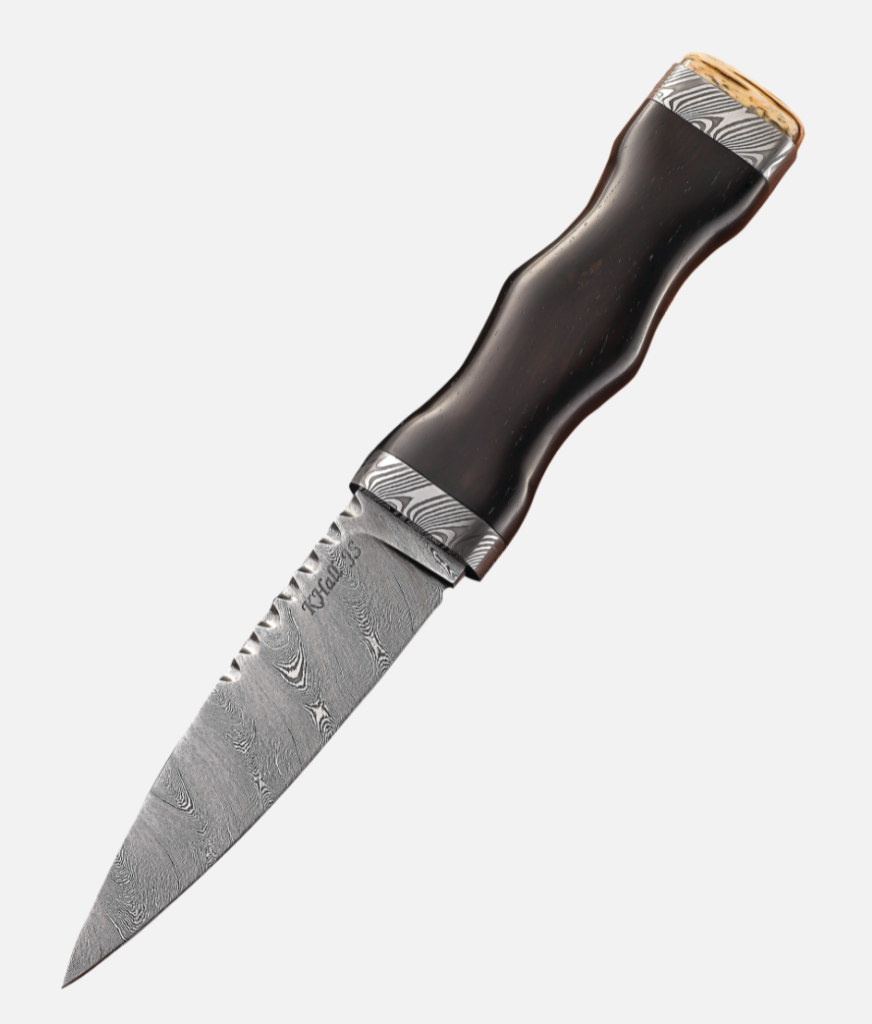
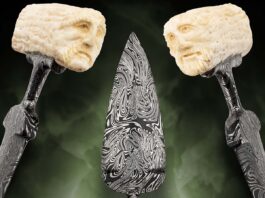
Ken Hall’s sgian dubh features a 4.25-inch blade of twist damascus in a blend of 1075 spring and 15N20 nickel alloy steels. The pommel is formed from stone and giraffe bone. The African blackwood handle not only is ideal for its carvability but also in keeping with the sgian dubh’s name, which is Scottish for black knife.

When the material finds its way to a knife handle, something dazzling happens, and the makers who use it sing its praises. “I’ve always loved black-handled knives, especially with brass,” related Abel Price of Fayetteville, Arkansas, a part-time maker who is completely self-taught. “The black and gold combo just pops and gives it a beautifully elegant Art Deco feel.”

In the mountains of western North Carolina, ABS master smith Andrew Meers finds African blackwood a pleasure to work with. “It’s a dense and stable wood with a consistent grain structure that is excellent for handle material. It is workable and carves well,” he noted. “It has a rich, dark color and finishes out beautifully when sanded, and I haven’t noticed any cracking, shrinking or expanding, especially compared to the cracking I’ve noticed at times in similar looking wood such as ebony. I think these qualities contribute to its growing popularity among makers.”
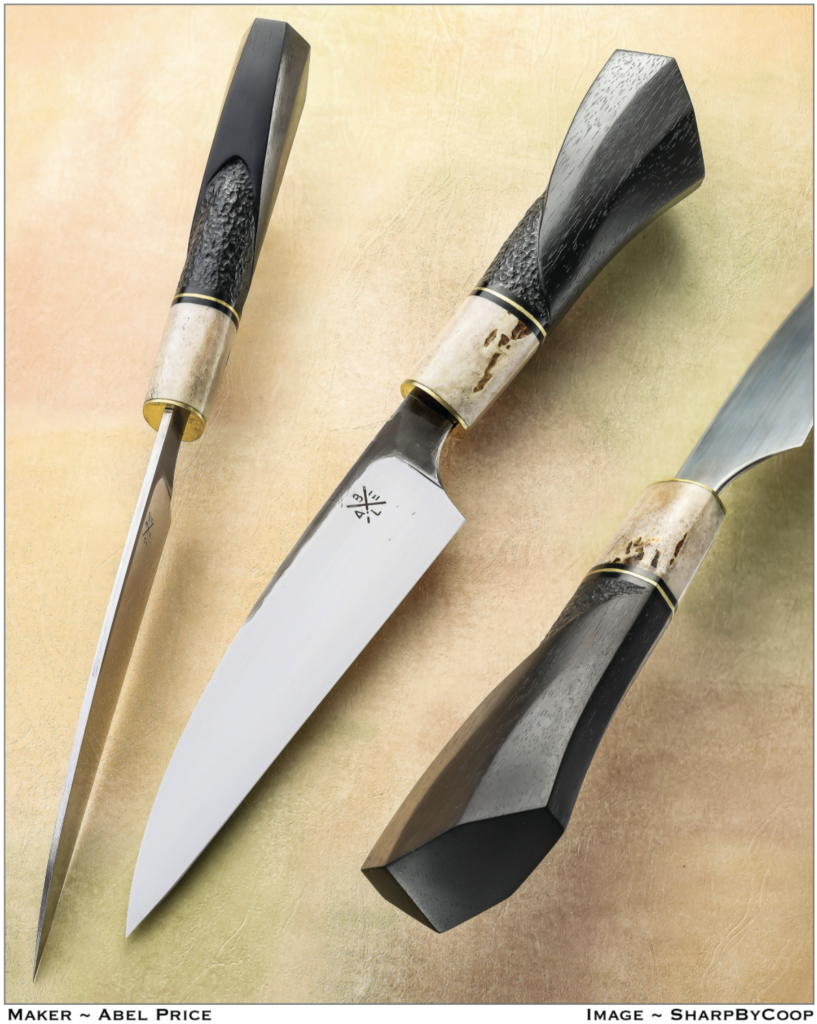
Abel Price used African blackwood for the handle of his Deco Petty kitchen knife. He said the handle “was sculpted to contain design elements of the Art Deco era while hitting several notes of contrast: smooth and stippled, round and flat, black and white, and straight and sweeping lines.”

Andrew uses rasps and files for shaping, a flex shaft for carving, and prefers to sand and buff to finish his handles of the material. Last of all, he applies a coat of Danish oil. So, the finished product is just what the maker wants, and getting there is most often a pleasurable journey rather than an arduous trek. African blackwood exhibits excellent stability and takes a shine quite well. Custom makers agree that the material is ideal for carving, though whether it carves easily or not is open to the interpretation of the individual maker.

“I think the main reason for its carving ability is that it is hard,” commented Pekka Tuominen, a 17-year maker from Keitele, Finland. “Wood has to be hard if you wish to carve it with sharp and tight curves, and also polish those curves. Let’s say it’s not easy to carve, but when wood is hard you can get a good finish. Of course, it’s popular, too,” he observed. “Everybody knows that if some famous knifemaker uses a material, then the rest of the makers at least want to test it.”

MORE ATTRIBUTES

Waynesville, North Carolina-based ABS journeyman smith Ken Hall appreciates additional attributes of African blackwood. “I like using it because it’s a very dense wood, doesn’t require stabilizing, is hard and does not crack easily,” he stated. “It has a tight grain structure, so you don’t have to fill voids, and it can be carved or shaped without difficulty and provides a dark contrast to a steel blade.”
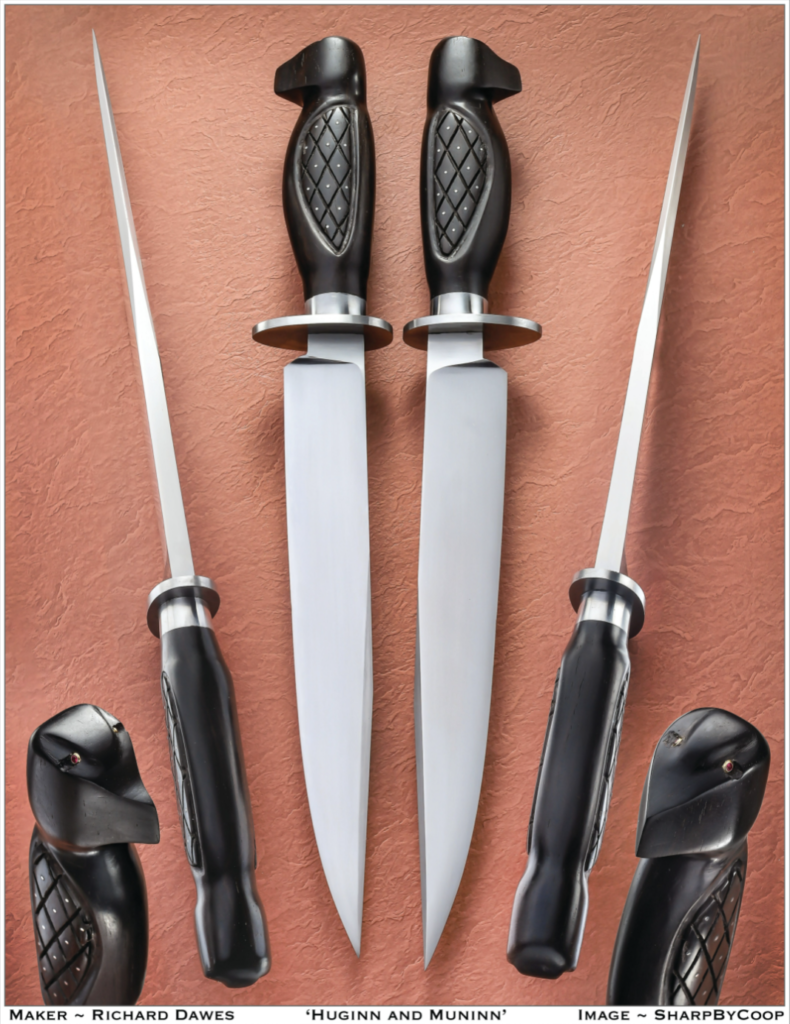
Huginn and Muninn are the names for two bowies by Richard Dawes. Huginn and Muninn are two mythical ravens that attend Odin. Dawes carved the African blackwood handles in a bird’s-head motif based on the style of bladesmith Bill Bagwell, one of the founders of the American Bladesmith Society.

Securing the handle to the blade most often involves a quality epoxy and a combination of pins, depending on the type of knife under construction. “I use rivets, pins and epoxy,” Pekka said, “but I don’t use African blackwood for full tangs. With hidden tangs sometimes just epoxy will keep the tang solid inside the handle.”

When Price went to work on his Deco Petty, a kitchen knife creation with a 6.5-inch blade of AEB-L stainless steel, overall length of 12 inches, and a handle of African blackwood, deer antler and a copper spacer, he knew just what he wanted to achieve. “The goal was to hit form and function,” he commented. “The ultra-thin cutting edge flexes with lateral pressure, and a Rockwell hardness of 61 [HRC] makes for a laser sharp tool in the kitchen. The handle was sculpted to contain design elements of the Art Deco era while hitting several notes of contrast: smooth and stippled, round and flat, black and white, and straight and sweeping lines. African blackwood does everything you want it to do with a perfect finish.”

Hall fashioned his sgian dubh as an interpretation of a historical Scottish knife. “African blackwood is the ideal wood for the sgian dubh because it can be carved and shaped to the hourglass design of the traditional sgian dubh handle,” he noted, “and provide an eye-catching contrast to the stainless steel bolster and pommel.” He added that blackwood is his preferred wood for a handle with a keyhole design because it can take the force applied to pressing the wood into the keyhole.

AESTHETICS & FUNCTION

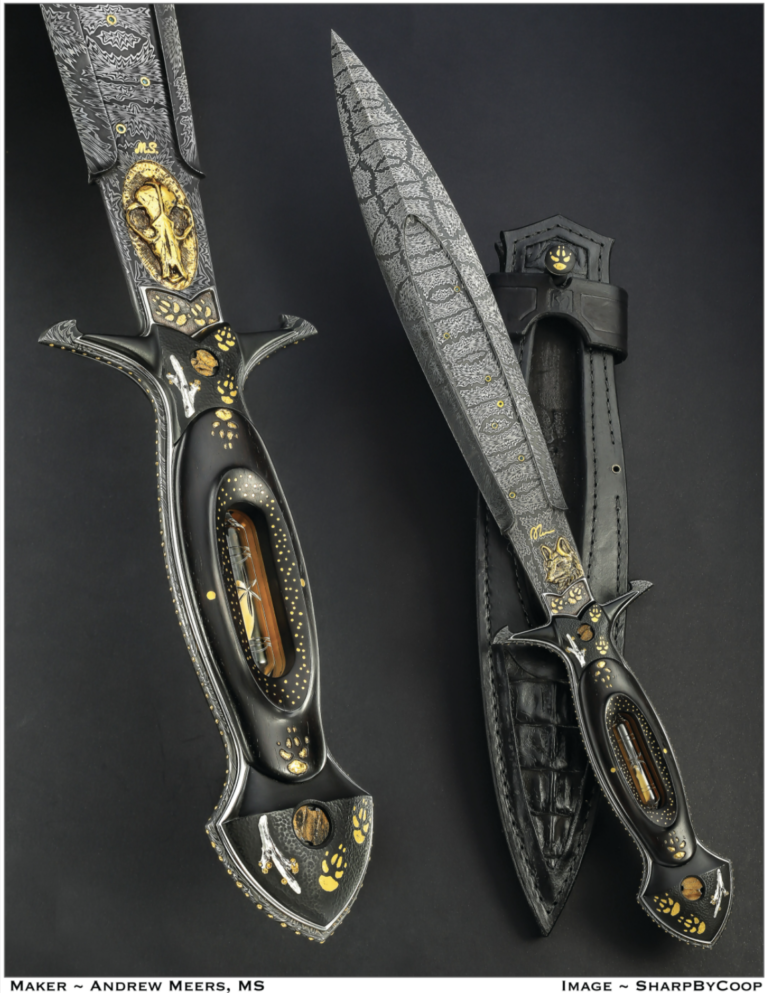
Meers made the striking Vulpecula with a 12-inch damascus blade of 1084 carbon and 15N20 nickel alloy steels. Meanwhile, something of a surprise is embedded in the African blackwood handle.
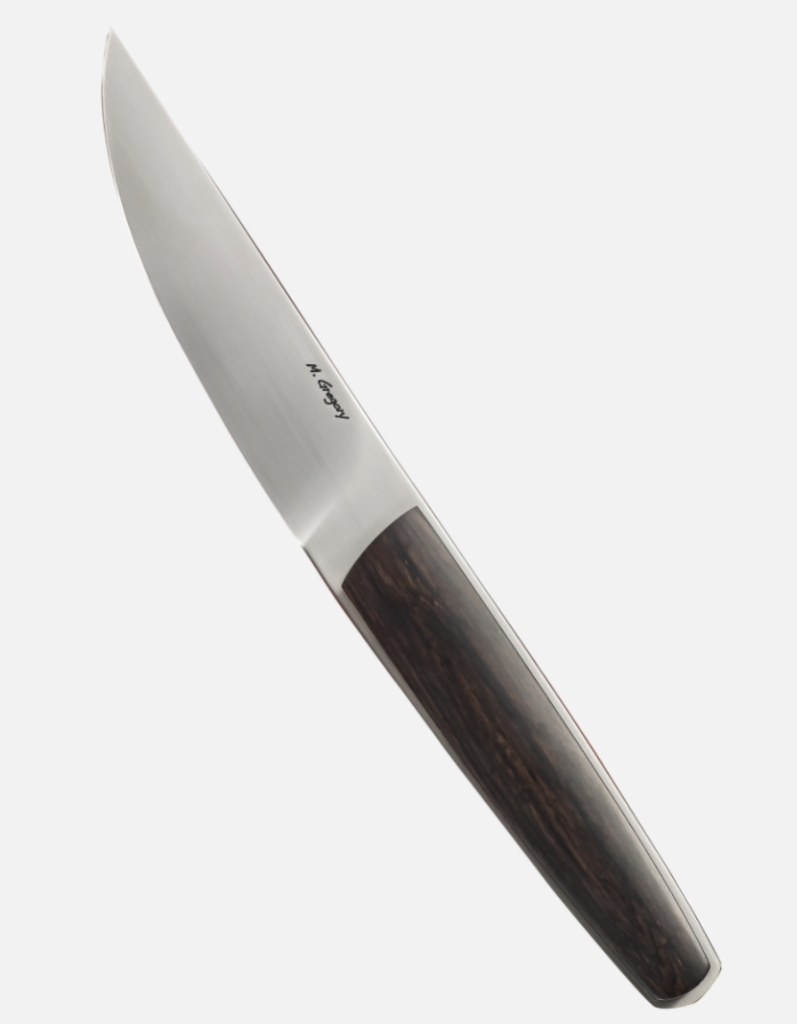
Matt Gregory’s LWT (Lum-Walton Tanto) is based on a design by Mike Walton inspired by the late Bob Lum. The African blackwood handle is polished to a mirror shine and tapers slightly in reverse of the tang, and has a delicate bulge in the center to provide for a subtle yet improved grip. The sheath (not shown) is by Jill Gregory.

“Vulpecula is a reliquary dagger,” Andrew explained. “It is inspired by the tradition of keeping objects, often hair or remains, in an embellished vessel. I found a fox tooth and had it sealed in a glass vial by a friend. I then built this dagger to house the vial as a reliquary.

“The blade fittings and handle are adorned with 24-karat gold inlay depicting a large fox, its skull and paw prints. The hardware is torch-cut steel plated with gold that is brushed back. Vulpecula, the ‘Little Fox’ constellation, is set into the blade with blue diamonds.

“It was a combination of aesthetic and functional choices that made me choose blackwood for this piece,” he concluded. “The wood machines and carves well, so for this handle it was the ideal choice. The blackwood’s depth serves as a rich contrast to the bright gold used in small inlays to represent a starry sky and the fox prints as well.”

Tuominen built his Protector, or Suojaleijee, dagger with a 5-inch welded damascus blade of 1080 and 80CrV2 carbon and 15N20 nickel-alloy steels, a guard of Nicorros (a copper/nickel alloy), African blackwood handle, and a handmade leather sheath with stainless clip. The blade is 7 inches and overall length is 12 inches. “It’s a custom order for an American collector,” he noted. “I used African blackwood because it’s black and more stable than other black-colored woods.”

SOURCES

While African blackwood remains protected, it can be found through various sources. However, Abel has a warning.

“I stocked up at a Rockler store a few years ago,” he remarked. “I’m not looking forward to finding another supplier. I believe the demand is outpacing the supply, and as conservation efforts increase, as they should, so will the price.”
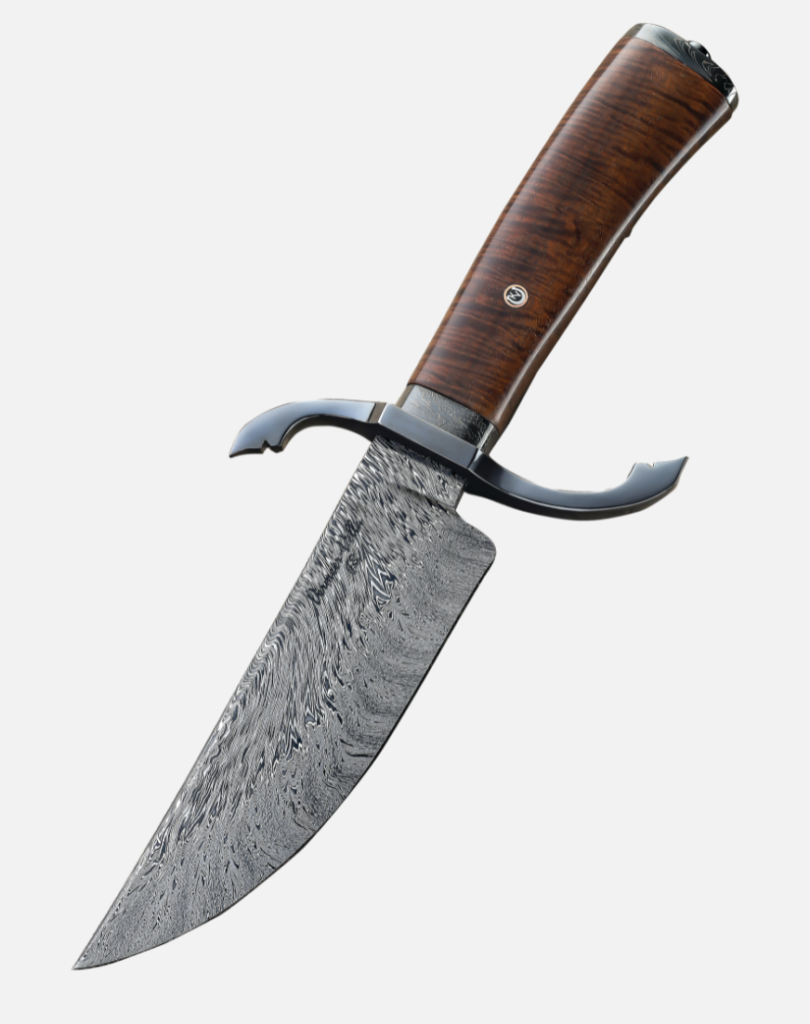
Kelly Vermeer Vella em-
ploys African blackwood
and sterling silver for the
handle of her dagger. The
blade is a damascus of
1075 spring and 15N20
nickel-alloy steel.

Hall searches eBay for African blackwood and makes his selection based on what is available. Pricing, he says, runs $20 to $30 for a handle block or set of scales. While Pekka often sources his African blackwood from European knife shows, he also checks the internet for block-size pieces. Meers has had success with retail suppliers and finds a broad range of dimensions.

The custom knifemaker and the consumer alike have taken a new interest in African blackwood, and that fascination is not likely to fade in the near future.
An Axe with a Beard?

daniel winkler bearded axe
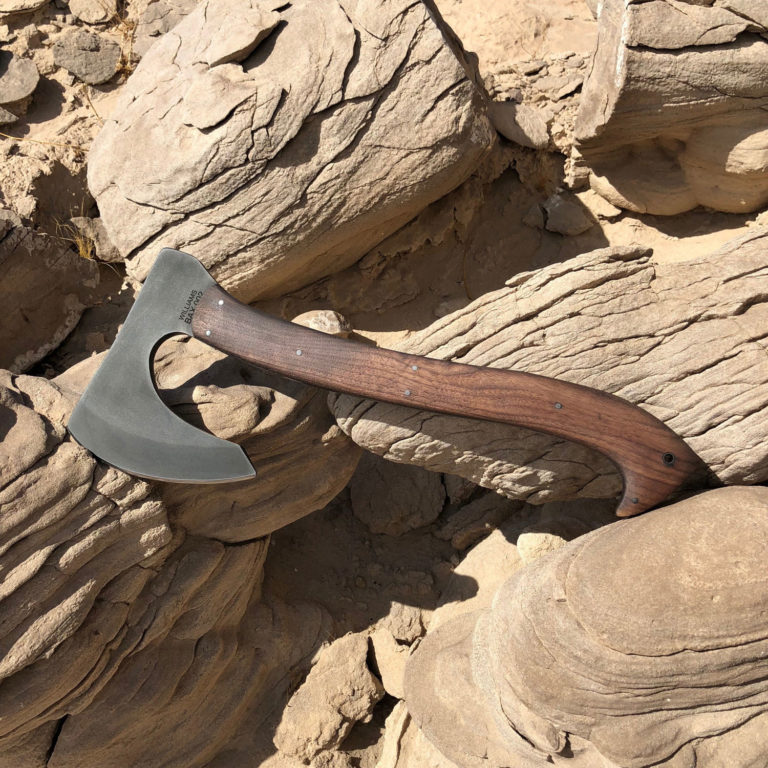
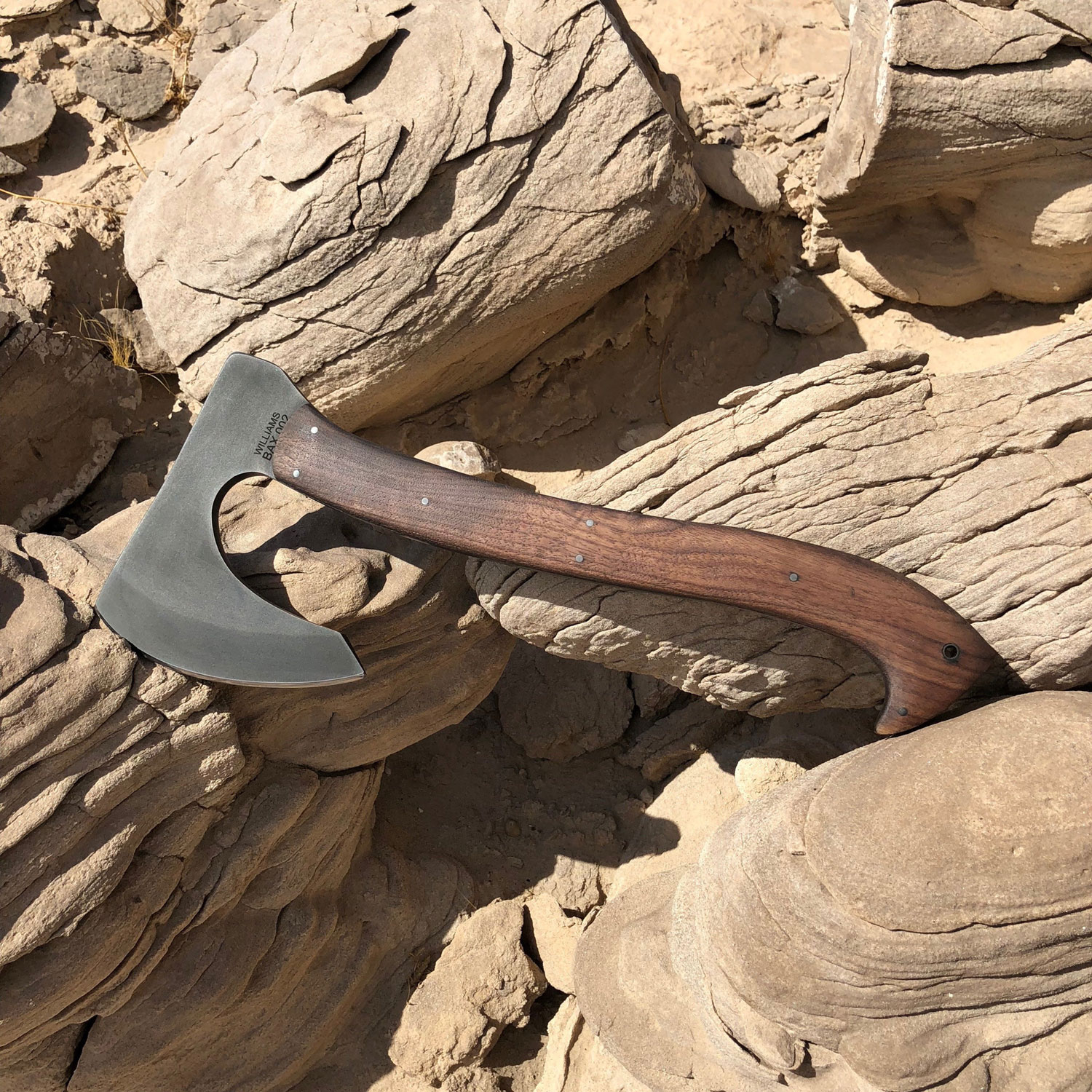
The “beard” refers to the shape of the axe head.

Beards and blades never went out of style, so it’s only appropriate that an axe continue the tradition with a “beard” of its own. The BAX 002 Bearded Axe, offered via Williams Blade Design, draws from Viking lore with a formidable design hatched by ABS master smith Daniel Winkler, someone with plenty of beardly street cred himself.

While the follicles on the BAX 002 are noticeably absent, it should be noted that the “beard” refers to the shape of the axe head. The extra gap this allows between the head and the handle allows the user to “choke up behind the edge for detailed work,” according to a media release. The result offers enough heft to satisfy raiding parties of yesteryear or today.

From Williams Blade Design:

Inspired by the axes of the Vikings, this bearded axe is equally at home in the wild or on the battlefield. The full tang 80CrV2 steel construction makes for an impressively tough tool that excels in the roughest environments. The walnut handle scales provide excellent feel for delicate tasks, and solid grip when the need arises.

Here are the specs.

  • Steel: 80CrV2 (1/4″ 6.4mm)
  • Head shape: Bearded
  • Overall Length: 14.5″ (368mm)
  • Cutting Edge: 5.25″ (133mm)
  • Head width: 6″ (152mm)
  • Weight: 2lb (930g)
  • Handle Material: Walnut
  • Finish: Matte Black Oxidized (Caswell)
  • Sheath: Kydex (lined)
  • Produced by: Winkler Knives II
  • Batch quantity: 50 pieces
  • Release: March 2018
  • Made in: Boone, NC USA
  • MSRP: $575

Blunted Blades And Knife Bans: England Has Gone Over The Edge

England has had an uptick in knife crime in recent years, including the horrible incident costing three young girls their lives in Southport. Certainly, crime of any kind deserves scrutiny and solutions so that society can conduct its daily affairs in a safe and secure environment. Unfortunately, it’s never the calmer heads that prevail when dark winds blow.

Case in point, the utterly asinine suggestions emanating from the host of a BBC documentary on UK knife crime.

From the New York Post:

“Actor Idris Elba announced amid his forthcoming knife crime documentary that the United Kingdom must consider “innovative” prevention methods such as blunting or banning knives.”

Let that sink in… blunting or banning knives. And he’s not talking about neutering simply what might be considered “scary” knives—tactical fixed blades, karambits and the like. No, it’s the whole megillah.

He said in the Post article:

“The truth is that kitchen knives are perhaps 25% of the knives used in most terrible crimes. That’s one of the stats in the film. And those kitchen knives are usually a domestic situation,” Elba warned. “So kitchen knives… of course, it’s very difficult. They’re a domestic knife.”

This walks hand in hand with other extreme actions that have taken place in England regarding knife sales. One of the more atrocious, ID requirements and live video sales to purchase knives online. Why, the next thing you know there’ll be a proposal for licensing knives.

Well, you don’t have to wait long for that either.

Elba thinks this might be the panacea for his country’s woes, banning nearly everything, and licensing those scant few deemed worthies to own their family’s cherished sword or knife.

“So let’s ban them all, and if you have one of those knives, get a license for it,” he suggested of people wanting to keep family heirloom swords. “Simple as that.””

And if you think this sentiment is contained to one crackpot actor, well you’d be wrong.

According to The Telegraph:

“A ban on the sale of pointed kitchen knives has been backed by the Church of England, judges, top trauma doctors and psychiatrists, the police and victims as they argue that it would make life-threatening injuries far less likely.”

It’s unfortunate England has endured an uptick in knife crime, yet this isn’t the license for it or certain segments of it to go off the deep end. I know it might sound crazy, but perhaps the English should address the root of the problem—the perpetrators.

The harsh truth is this: no amount of blunted blades, banned kitchen knives, or bureaucratic licensing schemes will stop individuals hell-bent on violence. You can’t legislate evil out of existence by targeting inanimate objects. England doesn’t have a knife problem—it has a people problem. A system problem. A failure-to-act-when-it-matters problem.

Axel Rudakubana—the perpetrator of the Southport killings—wasn’t some shadowy figure hiding in the margins; he was a neon warning sign flashing in plain sight. Reported repeatedly, known to authorities, radiating red flags—and yet, nothing substantial was done. But instead of holding systems accountable for their glaring incompetence, the knee-jerk reaction is to demonize cutlery.

Blaming knives for violent crime is as absurd as blaming spoons for obesity. The issue isn’t the tool; it’s the hands that wield it—and the institutions that refuse to act until it’s too late. England doesn’t need another ban. It needs accountability, courage, and the will to confront the real problem: violent individuals, not the utensils in their kitchens.

More on Knife Laws:

First Look: Drop-Forged KA-BAR Elishewitz Pocket Tool

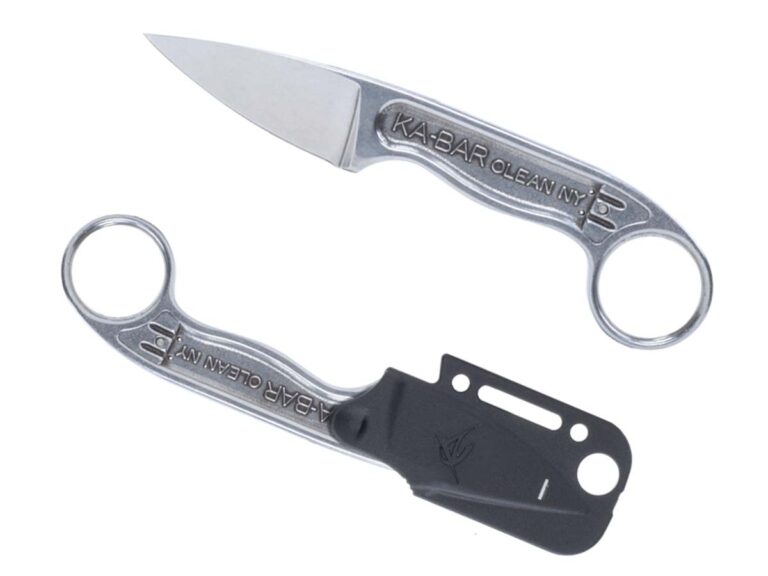
Designed by Allen Elishewitz, KA-BAR’s USA-made drop-forged EPT pairs a 2.5-inch blade with a clip-equipped sheath for easy pocket carry.

KA-BAR has expanded its line of drop-forged steel tools with the Elishewitz Pocket Tool, or EPT. Designed by veteran maker and former Force Recon Marine Allen Elishewitz, the compact fixed blade targets the growing daily carry market with a format tailored specifically for pocket carry rather than belt wear.

Built for Daily Duty

The EPT centers around a short, broad 2.5-inch drop-point blade ground flat to a 20-degree edge per side. KA-BAR crafts the knife from 0.1875-inch thick 425 high-carbon stainless steel, hardened to 56–58 HRC. The stout blade geometry offers plenty of strength for routine cutting tasks while keeping the overall footprint manageable.

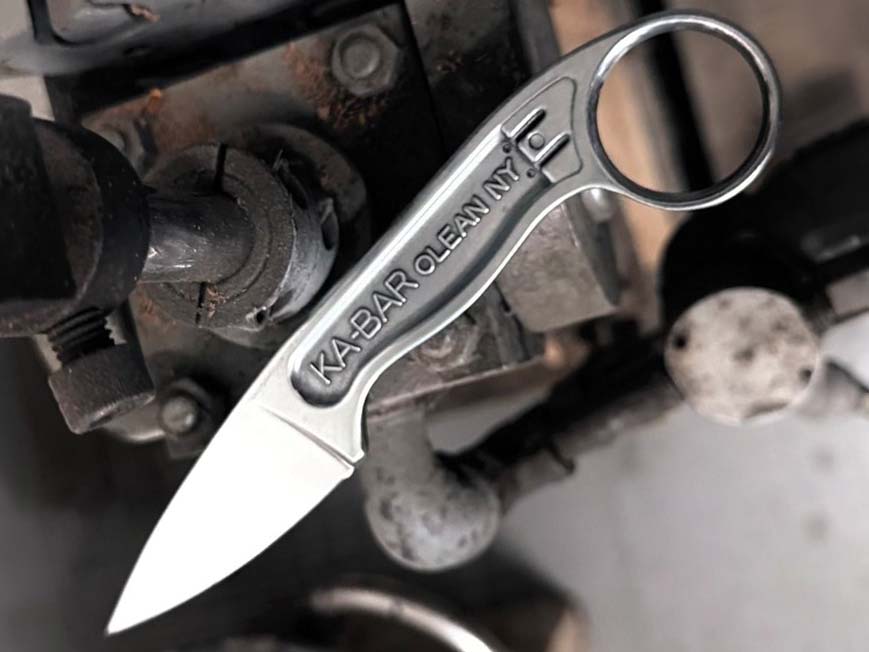
Because the knife utilizes a one-piece drop-forged construction, the skeletonized handle is integral to the blade. A finger ring integrated into the butt end assists with control during use while serving as a quick-draw indexing point when pulling the knife from a pocket.

Pocket-Friendly Carry

Elishewitz Pocket Tool at work in profile.

Rather than relying on a traditional belt sheath, the EPT comes equipped with a custom USA-made sheath featuring a reversible, loop-over wire pocket clip. This setup allows the fixed blade to ride deep inside a pocket in much the same manner as a standard folding knife.

At 6.75 inches in overall length and weighing 3.2 ounces (0.2 lbs for the knife alone), the U.S.-manufactured piece delivers the structural integrity of a fixed blade without adding unnecessary bulk to a daily kit.

Elishewitz Pocket Tool (EPT) Specs
Designer: Allen Elishewitz
Overall Length: 6.75 in.
Blade Length: 2.50 in.
Blade Width: 1.70 in.
Blade Thickness: 0.1875 in.
Blade Steel: 425 High Carbon Stainless (56–58 HRC)
Blade Type/Grind: Drop Point, Flat Grind
Edge Angle: 20 degrees per side
Construction: Integral drop-forged 425 stainless steel
Weight: 3.2 oz. total (2.24 oz. knife weight)
Sheath: USA-made sheath with reversible wire pocket clip
MSRP: $78

Read More:

Bachtel’s Bowie With A Pedigreed Background

A study of Michael Price’s work, Nick Bachtel’s reproduction gentleman bowie has the looks to wow.

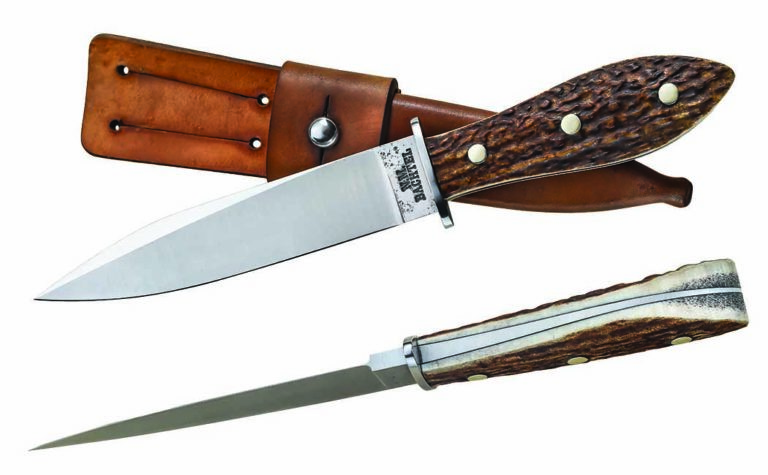
Bladesmith Nick Bachtel has parlayed his fascination with the knives of 19th-century great Michael Price into a faithful reproduction of a Price-style gentleman’s bowie.

Nick studied every Price knife and other like ones of the genre he could find online and elsewhere to help arrive at the way the 19th-century cutler constructed the gentleman’s bowie. However, it was when he saw a picture of a Price knife in BLADE Magazine Cutlery Hall-Of-Fame® member Bernard Levine’s book, Knifemakers Of Old San Francisco, that “a light went off.”

Nick noticed that the handle had three pins so the knife had to have a full tang, not a hidden tang as he had previously thought, so he forged the knife, heat treated it, fit up the guard and forged the tang wider.

“I call it a captured-guard full tang,” the 24-year-old said of the method that apparently originated among bladesmiths in Ireland, Price’s native country. “It’s such a weird, unique, almost comical way of making a knife—and difficult to do as well,” Nick observed, “but boy, did Price make it!”

Nick Bachtel calls the construction he used to make his reproduction of a Michael Price Gentleman’s Bowie “captured-guard full tang.” For the style to work, it must be forged, Nick stressed. He said another way to do it would be in a frame handle construction and a tapered tang, though a Price aficionado would be able to tell the difference. (SharpByCoop knife images)
Nick Bachtel (inset) calls the construction he used to make his reproduction of a Michael Price Gentleman’s Bowie “captured-guard full tang.” For the style to work, it must be forged, Nick stressed. He said another way to do it would be in a frame handle construction and a tapered tang, though a Price aficionado would be able to tell the difference. (SharpByCoop knife images)

The icing on the cake for Nick was ABS journeyman smith Jordan LaMothe’s story, “How to Make the Price Guard” in the December 2019 BLADE®. As Nick noted, “The Price style is the pinnacle of the traditional forged blade.” What better style is there for a young, up-and-coming bladesmith to explore?

For more information contact N.M. Bachtel Forging Co., attn: Bachtelforgingcompany.com.

Gentleman Bowie Spec Check
Knife name: Michael Price
Style: Gentleman’s Bowie
Maker: Nick Bachtel
Blade length: 5 7/8 inch
Blade material: 52100 carbon steel
Handle: Elk antler and nickel silver
Overall length: 10¾ inch
Sheath: Traditional center-seam vegetable-tanned cowhide w/frog stud
Maker’s List Price For A Similar Knife: $1,100(includes sheath)

More Knife Collecting And Custom Knives

BLADE Show Beer Returns To Hydrate BLADE Show 2026

The IPA will be available at “The Pit” during the show.

The ultimate combination of brews and blades is back. Gabe Fletcher’s officially sanctioned BLADE Show Beer will once again be flowing at the 2026 BLADE Show in Atlanta, ensuring attendees can toast to the world’s finest custom steel with a craft pour engineered specifically for the knife community.

Fletcher, the founder of the internationally acclaimed Anchorage Brewing Company and an ABS apprentice smith, has spent decades perfecting the art of fermentation. In recent years, he successfully merged his two passions by launching a series of high-profile knife and beer collaborations with master bladesmiths like Neil Kamimura, Mareko Maumasi and Salem Straub.

That cross-industry synergy naturally evolved into the official BLADE Show Beer. Specifically engineered for the marathon weekend at the Cobb Galleria, the custom brew is designed to be a highly crushable, smooth-drinking India Pale Ale. Sitting at an approachable 4.5 percent alcohol by volume, it delivers a crisp, floral profile that provides maximum flavor without weighing down your afternoon on the show floor.

In addition to running the internationally known Anchorage Brewing Company in Anchorage, Alaska, Gabe Fletcher is also an ABS apprentice smith.

For those heading to Atlanta, the custom IPA will be readily available at every bar across the exhibition floor. It will also be stocked heavily at the Renaissance Atlanta Waverly host hotel, making it the perfect refreshment for the legendary evening handle-swapping and storytelling sessions inside The Pit.

If you cannot make the trek to Georgia this year, you do not have to miss out on the celebration. Fletcher is partnering with craft beer delivery platform Tavour to ship a limited run of the official 2026 BLADE Show Beer directly to residences across 23 states. Whether you are buying custom steel in Atlanta or admiring your collection from home, grab a can and celebrate the intersection of top-tier brewing and elite bladesmithing.

More On BLADE Show:

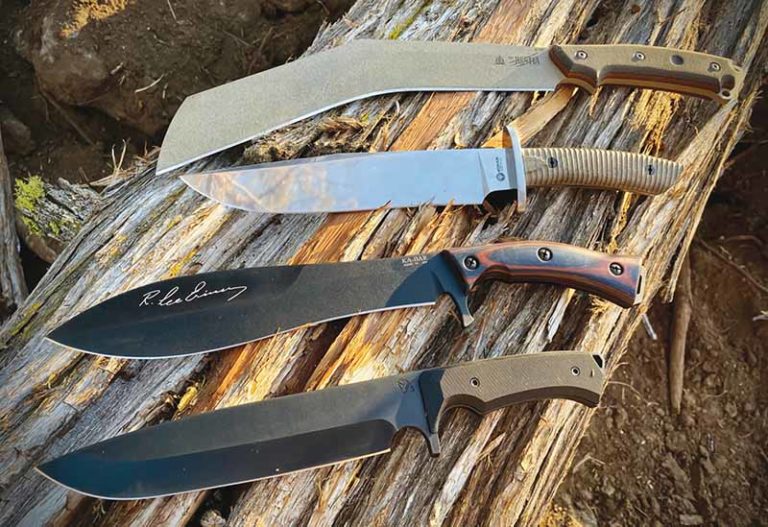
Best Big Knives: Four Behemoths That Are A Cut Above The Rest

Looking for a blade that can handle jobs and and small? These four giants are some of the best big knives out there.

What Are The Big Knives:

Little knives are convenient to carry but, if you have a lot of work to do, big knives are it. I’ve lived and worked with indigenous peoples in Latin America and Southeast Asia and found that wherever folks live close to the earth, they use big knives—machetes, parangs, goloks, bolos and the like. They use them for everything from rough work such as cutting poles and opening coconuts, to dressing out pigs and game, to delicate work such as slicing mangoes.

The advantage of the big blade was illustrated to me one day when I was working alongside a villager who, with his bolo and its 14-inch blade, cut wood for a fire, bamboo poles for a cooking rack, and lopped off a banana leaf on which he filleted two large fish and sliced them thin as a sushi chef—all in the time it took me to bring down a few stalks of bamboo with my hair-shaving-sharp Randall Model 1.

We reviewed the test knives with that standard in mind. We chopped and split wood and sliced meat and tomatoes. We also, just because, cut hanging rubber hose and slashed through water-filled plastic bottles.

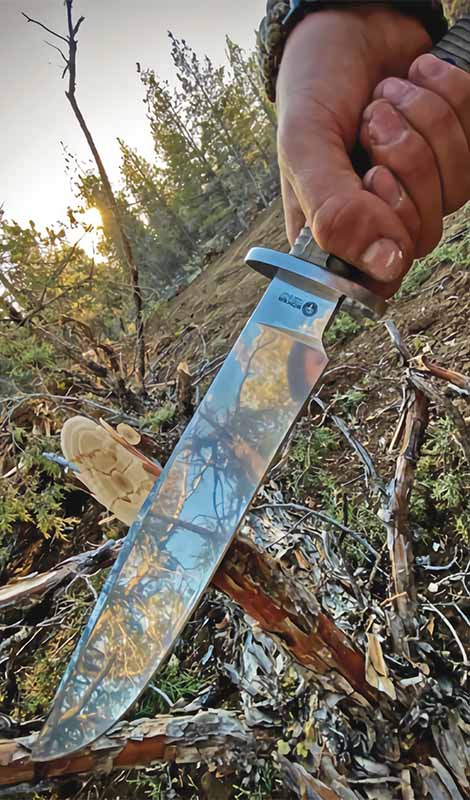
A tree branch succumbs to the reflective blade of the Boker Arbolito El Gigante. It cleaved 2-inch pine saplings in one stroke

Boker Arbolito El Gigante

The Boker Arbolito El Gigante is a handsome classic bowie with a stonewashed blade, comfortable handle and nice leather sheath. Balance is excellent, all very much in the bowie tradition. Construction is top quality; so is performance. It cleaved 2-inch pine saplings with one stroke. The quarter-inch-thick spine was brought down to a well-supported edge fine enough to slice tomatoes thin enough to see light through the slices. We slashed rubber hose and the water bottles with ease.

Like all well-designed and crafted bowies, this is a versatile all-around knife.

BOKER ARBOLITO EL GIGANTE
BLADE LENGTH: 9.25”
BLADE STEEL: Bohler N695 stainless
BLADE THICKNESS: .24”
BLADE GRIND: Flat
BLADE FINISH: Stonewash
HANDLE THICKNESS: .94”
HANDLE MATERIAL: Green Micarta®
WEIGHT: 15.75 ozs.
OVERALL LENGTH: 14.75”
SHEATH: Leather
COUNTRY OF ORIGIN: Argentina
MSRP: $229


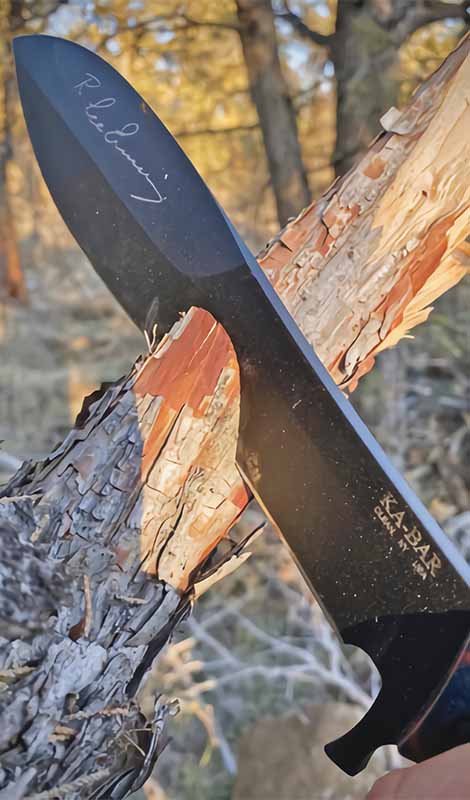
The KA-BAR Gunny chomps into dry pine. Its forward weight and blade design promote effi cient chopping

KA-BAR Gunny

The KA-BAR Gunny is a hybrid design that resembles a bolo. I suspect R. Lee Ermey, the unforgettable Gunny who serves as the knife’s namesake, spent some time in jungles because this combination chopper/slicer’s performance is on par with village-forged bolos I’ve used in Southeast Asia, and that’s a high compliment. Its forward weight and terrific blade design promote efficient chopping. We cut through 3-to-4-inch-thick saplings with two strokes. We took down a tree with a 6-inch-thick truck just because we could. After the chopping, the blade was still sharp enough for camp kitchen work. The belly, good balance and fine edge combined to make slicing meat and vegetables a pleasure. Slashing hanging rubber hose and the water bottle were a piece of cake. The comfortable handle lends itself both to heavy chopping and fine meat cutting, which is unusual.

The Gunny is an excellent all-around bush knife. The sheath has a pocket for a sharpening stone, which was not included with the review model.

KA-BAR GUNNY
DESIGNER: R. Lee “Gunny” Ermey
BLADE LENGTH: 9.75”
BLADE MATERIAL: 1095 Cro-Van carbon steel
BLADE WIDTH: 2”
BLADE THICKNESS: .2”
BLADE GRIND: Flat
HANDLE WIDTH: 1.5”
HANDLE THICKNESS: .94”
HANDLE MATERIAL: Wood
WEIGHT: 15.29 ozs.
OVERALL LENGTH: 15.5”
SHEATH: Leather
COUNTRY OF ORIGIN: USA
MSRP: $292


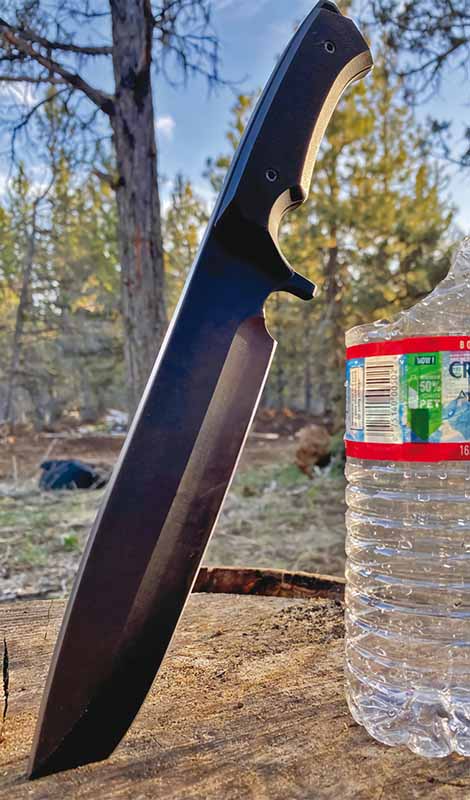
The Medford Knife & Tool Bonfire slashed through water-filled plastic bottles with more consistency than the other review blades

Medford Knife & Tool Bonfire

The Medford Knife & Tool Bonfire came from the maker absolutely razor sharp! The blade design is interesting in that we do not often see a contemporary styled drop point and hollow grind on such a big blade. I don’t know its Rockwell hardness, but the steel is hard and tough.

It was just as razor sharp after we put it through its paces as when we started. The fine edge made for a very good slicer and slasher and lopped off thin branches with one cut. The hollow grind tended to bind when chopping wood, though that’s to be expected—hollow grinds aren’t chopping designs. It’s better to think of this knife as a well-designed and crafted big knife rather than a bush tool such as a panga or kukri. It sliced rubber hose with a snap of the wrist and slashed through water bottles with more consistency than the other review blades, and cut meat just fine. You probably could dress out a bear with it. Use it as a big knife on soft materials and you won’t be disappointed. It comes

MEDFORD KNIFE & TOOL BONFIRE
BLADE LENGTH: 8.25”
BLADE MATERIAL: CPM 3V carbon steel
BLADE THICKNESS: .24”
BLADE GRIND: Hollow
HANDLE THICKNESS: .64”
HANDLE MATERIAL: G-10
WEIGHT: 19.16 ozs.
OVERALL LENGTH: 13”
SHEATH: Nylon
COUNTRY OF ORIGIN: USA
MSRP: $450


TOPS Bestia

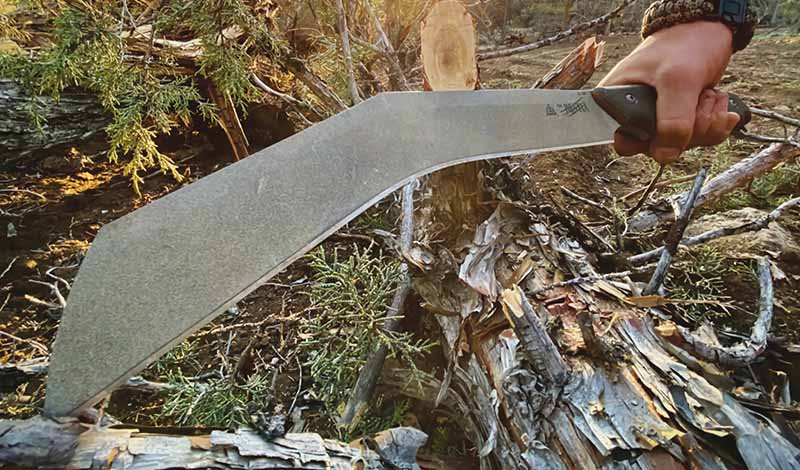
The TOPS Knives Bestia’s kukri-styled 13-inch blade and hefty weight made it the blade of choice for serious chopping or, as the author puts it, “zombie cleaving.”

The TOPS Bestia is just a beast. A kukri-styled 13-inch blade and hefty weight make it the blade of choice for serious chopping or zombie cleaving. We hacked through a 3-inch sapling with one stroke, and used it to clear a stand of saplings and brush. The handle remained comfortable during an hour or so of work. Heavy as a small hatchet, it is more versatile and safer in use, especially in thick brush.

During many survival classes, I’ve seen more injuries from hatchets than from big blades with their longer cutting edges. Given its heft, blade design and chopping ability, the Bestia is surprisingly usable in the camp kitchen. We found it could slice meat quite well, allowing for adjustments in maneuverability due to its blade length.

TOPS KNIVES BESTIA
DESIGNER: Leo Espinoza
BLADE LENGTH: 13”
BLADE MATERIAL: 1095 carbon steel
ROCKWELL HARDNESS: 56-58 HRC
BLADE WIDTH: 2.25”
BLADE THICKNESS: .25”
BLADE GRIND: Flat
HANDLE WIDTH: 2.125”
HANDLE THICKNESS: .97”
HANDLE MATERIAL: Green Micarta®
FRAME/LINER: Micarta
WEIGHT: 1 lb., 13.18 ozs.
OVERALL LENGTH: 19.5”
SHEATH: Kydex
COUNTRY OF ORIGIN: USA
MSRP: $300

VERSATILE BUSH TOOLS

If you haven’t spent much time with a big blade, try one. Work with it for a while. Direct close attention to your work and you’ll find a good big blade to be a terrific, versatile bush tool.

Also Read:

Advertisement

Must Read Articles

Read this before you make a knife

Knifemaking 101 – Read This Before You Make a Knife

  by Wayne Goddard My experience has taught me that there's nothing like digging in and getting started. I've often said the hardest part of the...
how to forge damascus steel

How to Forge Damascus

Advertisement
Advertisement