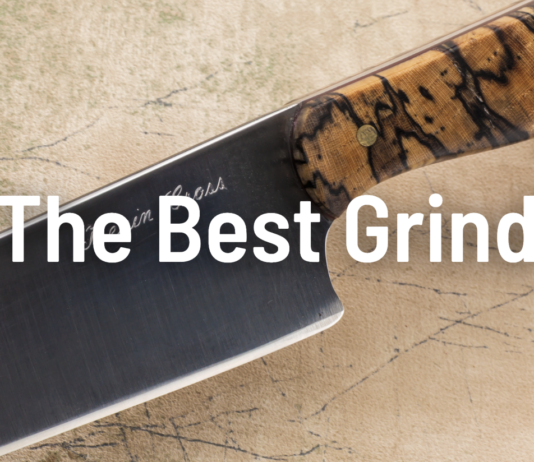
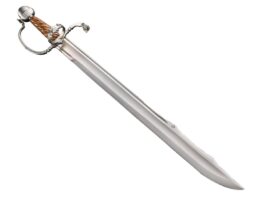
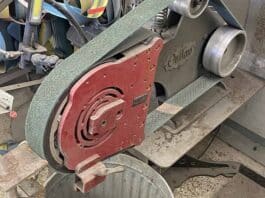
Knifemaking is the building of a knife, which includes the blade, handle and other accouterments. Blades are made by either removing metal from a steel blank via a grinder – known as stock removal – and the forging to shape of hot steel into a blade in the process known as bladesmithing. Other parts, including bolsters, guards, pommels, etc., are needed to complete the finished knife.
Knifemakers have a hard enough time making a living doing what they love without added expenses. So what are the benefits of paying a professional photographer to photograph their knives for them?
The reasons to have knives photographed are many. As managing editor of BLADE Magazine, I can tell you that often when knifemakers send me images of their newest models for possible publication, the self- or friend-taken digital images are low resolution, fuzzy, with busy backgrounds or too low quality for a high-gloss, color magazine. The images might look good on a website, computer screen or printed, but once reproduced on quality magazine paper, in four color, they lose their crispness and look fuzzy.
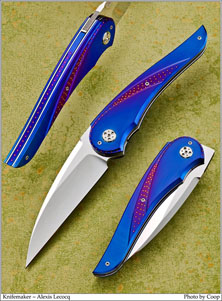
Here are some other reasons to have your knives photographed by a pro from photographer Jim Cooper of SharpByCoop.com.
The benefit of a professional image will promote you in a number of ways:
Large clear print for your portfolio
Crisp website image for email or display
Large digital file for printing
Posted and viewed by thousands on Bladeforums, CKCA forum, and our SBC Facebook page
All files are sent to USA and International editors of knife magazines
Guaranteed: Your knives are always available to view and search on our extensive website
A professional image shows you take pride in your work
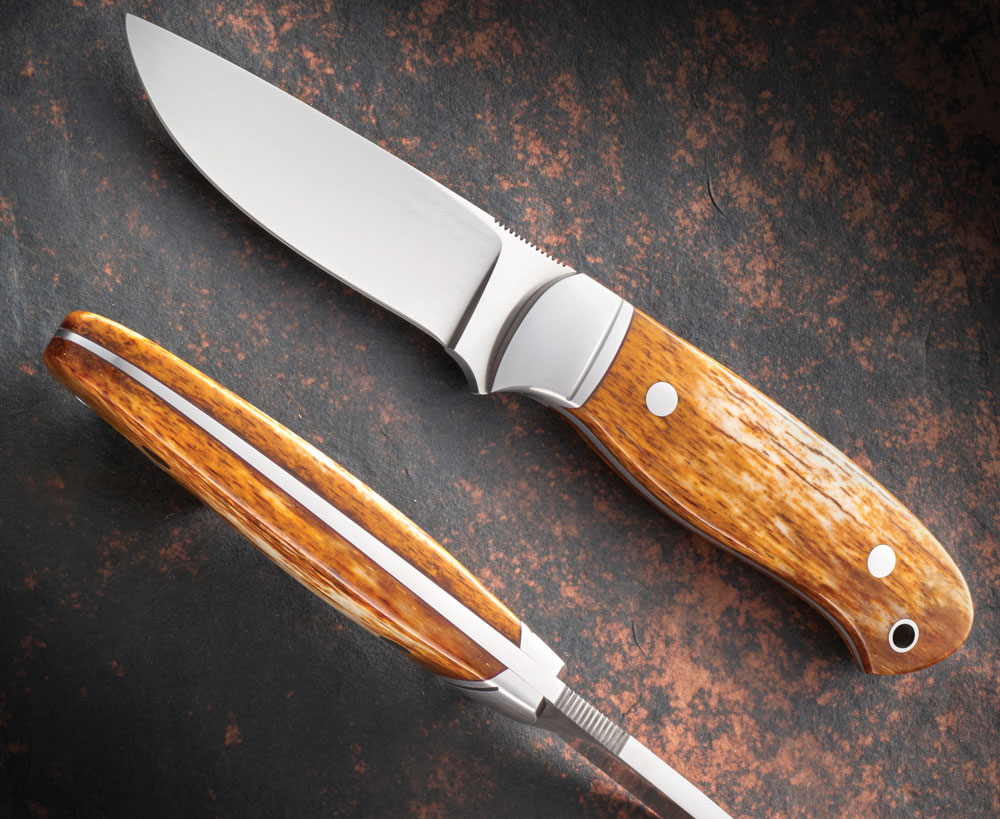
According to Joe Culpepper, cattle bone constitutes 98 percent of the total bone sales at Culpepper & Co., with camel and giraffe bone being the remainder. H.L. Holbrook employs stabilized giraffe bone on his hunter in CPM 154 stainless. Overall length: 8.25 inches. (PointSeven image)
Bone handle knives are good to the bone, including some of the latest blades made today.
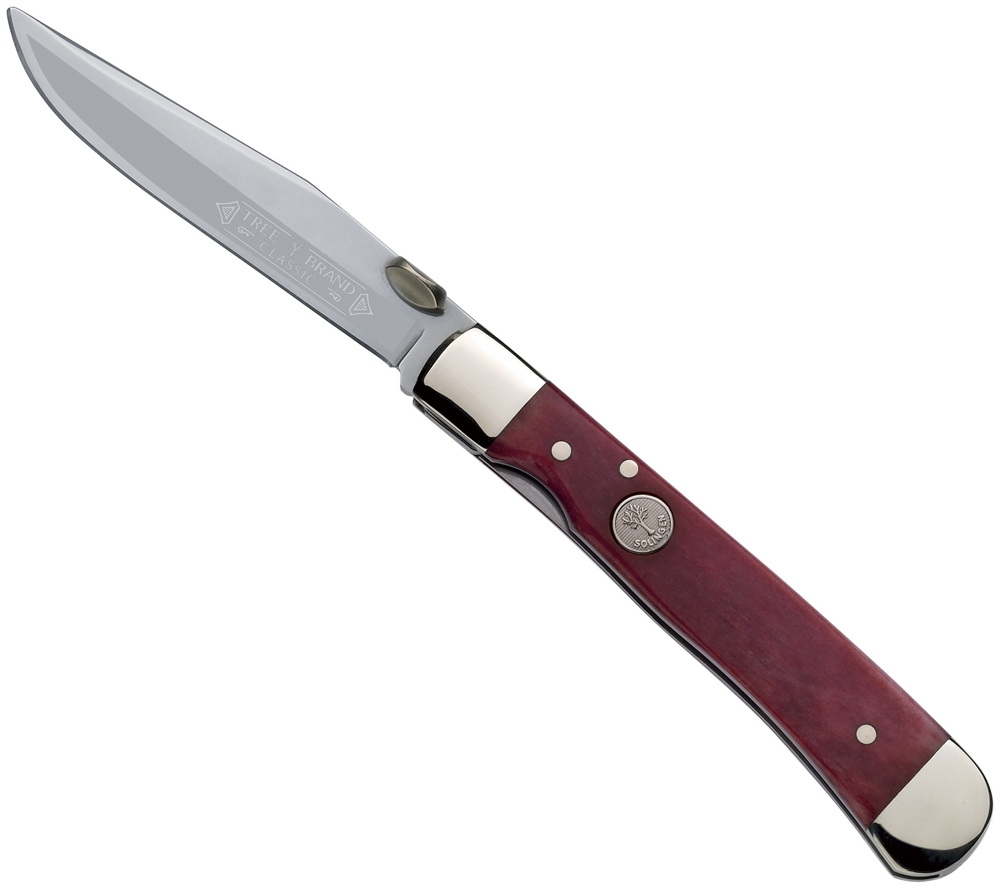
Smooth redbone completes the handle of the Boker Trapperliner. The 3.25-inch blade is 440A stainless steel. Closed length: 4 3/8 inches. MSRP: $107.95. (Boker image)
Bone is one of the earliest materials used on knife handles, becoming a high art during the early and mid-1800s when the factories in Solingen, Germany, and Sheffield, England, were peddling their wares to eager American consumers. When tariffs on the old-world manufacturers were imposed in the waning years of the 19th century, U.S. manufacturers gained a toehold on the domestic pocketknife market, and by the early 1900s were in high gear. Bone was the most prominent and popular handle material in those days—and remains among the most prevalent, if not the most prevalent, to this day.
Many offerings by pocketknife manufacturers are graced with bone scales, and custom knifemakers use it frequently on both fixed blades and folders. BLADE® went inside the knife industry to find out why bone remains such a dominant handle material on today’s knives.
Where’s the Bone?
Most bone used on knives is bovine—that is, from cattle. When you think about how much beef is consumed annually in this country, you have to believe there’s a whole lot of cow bone available. There is. We asked proprietor Joe Culpepper of Culpepper & Co.—a large wholesale supplier and processer of all types of handle materials to both factories and custom artisans—about the importance of bone on his bottom line.
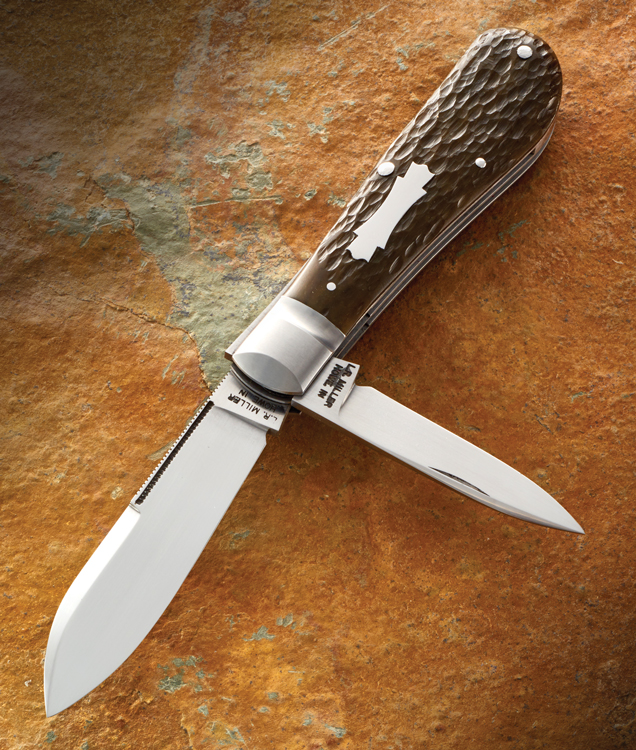
Joe Culpepper of Culpepper & Co.—shown inset with his wife and business partner, Kristi—said both factory and custom makers, though more custom than factory, lean heavily toward bone in browns, ambers, reds, oranges, blacks and other more conservative colors. Levi Miller opts for brown jigged bone on his trapper in 52100 carbon blade steel. Approximate closed length: 3 5/8 inches. (PointSeven knife image)
“Cattle bone constitutes 98 percent of our total bone sales, with camel and giraffe being the remainder,” Joe says. “The overwhelming majority of the cattle bone that we use is from South America, although it is available in nearly every country that has a beef industry.
“We find that cutlers, both factory and custom alike, lean heavily toward browns, ambers, reds, oranges, blacks and other colors that are more conservative. This is probably a bit truer for the custom makers than manufacturers. As for surface texture, we sell a lot of the more traditional jigging patterns that resemble patterns used before World War II. Approximately 60 percent of our sales are to factories, custom knifemakers the other 40 percent.”
Joe indicates he has seen an increase in demand for bone in recent years and, along with it, an jump in prices.
“As with anything, costs are always rising. The cost of jigging, polishing and cutting bone is nearly always a product of labor costs, which is somewhat predictable. Coloring is a different story,” he notes. “All of the dye components have risen exponentially in recent years.
“As far as overhead goes, we have to buy the raw material, have it shipped to our processing plant, treat it, cut it into scales, bleach the scales, sort for characteristics, identify outliers, texture and jig the bone, stack it into vats, color with dye, and test and document a sample before we make the final product available to the industry. There are also hundreds of other smaller processes involved, but these are the major things.”
While jigged bone is the most popular, Joe has seen an uptick in stag or carved bone patterns made to simulate deer antler.
“Most of our varieties of our carved stag bone have seen a rapid increase in popularity in recent years,” he says. “This is primarily because of the ban and scarcity of genuine stag. To my knowledge, we made the first variety of carved stag bone in the 1980s. It was made based on a Delrin [a type of thermoplastic] sample. Carved stag bone is popular in a variety of colors including amber, green, and various shades of brown and orange.” While smooth bone is still popular, it lags behind the jigged and carved varieties—but it does have the advantage of being laser etched and scrimshawed.
A Case Study
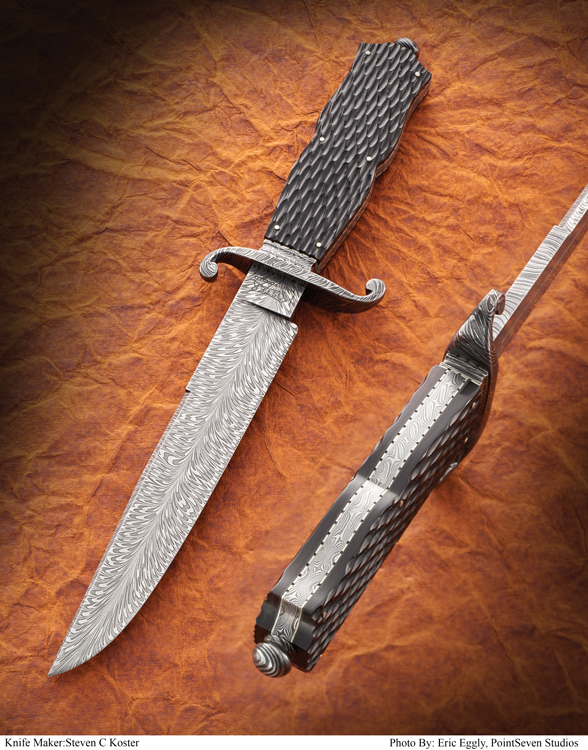
ABS journeyman smith Steven Koster combed through the entire box of bone scales at a Tru-Grit knife show booth to arrive at the nice matched pair of black jigged ones for his English bowie. The blade is Koster’s feather-pattern damascus in 1084 and 15n20 carbon steels. Overall length: 11.5 inches. (PointSeven image)
“Bone handles have always given Case knives their distinctive look and feel,” begins Fred Feightner, Case marketing coordinator. “While all of our handle materials cycle from time to time in terms of consumer favoritism, bone remains our most popular. Right now we are using our traditional cattle bone, the same we’ve been using for generations. Beyond that, some of our synthetics, woods and shells, like mother-of-pearl and abalone, continue to be very popular.”
According to Fred, Case handles its own jigging and color-dying processes. “We receive the bone in smooth slab form, then do all of the work needed to turn it into beautiful Case knife handles—including jigging, dying, drying and cutting to size. There are costs implicit in our manufacturing plans as the bone is sometimes stored before it goes to the production floor. The slabs also need enough time to take just the right color shade before being moved to assembly operations.”
Feightner sees no let-up in the popularity of bone handles in the near future.
“Bone is such a traditional knife handle material. It remains among our top sellers at Case, which is probably true of most makers of traditional folding knives today. Even with all the new handle materials that continually enter the marketplace, there’s still something special about the way a bone handle completes the look of a Case knife. We see demand for traditional folders to continue to grow, especially for Case knives, as our distribution and reach continue to expand into new markets.”
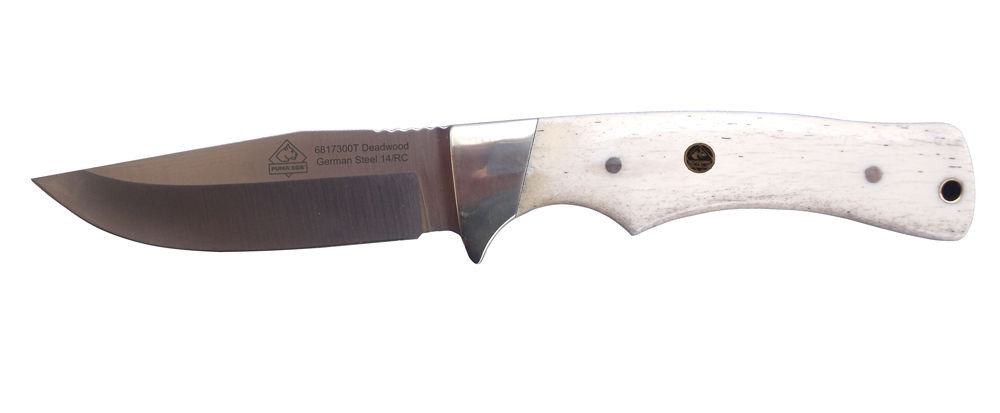
Puma USA opted for smooth white bone on the appropriately named Deadwood Canyon White Bone hunter. The 3.8-inch blade is 440A German stainless. Weight: 4.6 ounces. Overall length: 8 inches. It comes with a leather sheath.
Tried and True
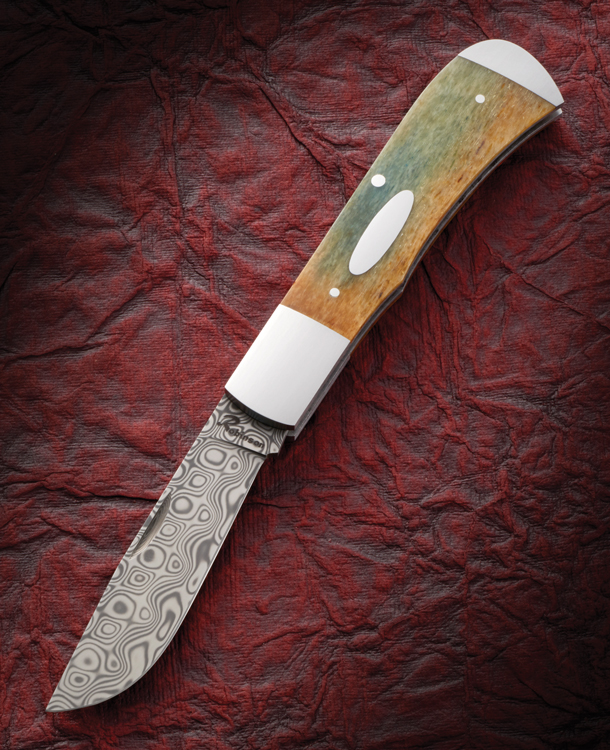
The giraffe bone grip of Calvin Robinson’s “Little Bill” slip joint exhibits a two-tone color effect. The 2 5/8-inch blade is Damasteel damascus. Approximate closed length: 3.5 inches. (PointSeven image)
Steve Koster is an American Bladesmith Society journeyman smith who specializes in traditional fixed blades, most featuring his exquisite handforged damascus as seen in the English-style bowie on page 37. It sports a forged 1084/15n20 feather-pattern damascus blade and a boxed-frame handle topped with thick jigged bone scales.
“I do not jig or dye any of my scales. I get most of them from various manufacturers and suppliers at knife shows,” he states. “The cheekbone scales on my English bowie came from Tru-Grit. I picked through the whole box to find a nice matched pair with a fine jigged pattern. Some of the jigged-bone patterns are not uniform so I have to spend time selecting a matched pair of scales to fit the tang or frame.”
Though Steve uses a wide variety of handle materials on his knives, bone finds its way onto a healthy percentage. “I do about two out of 10 knives with bone scales,” he says. “I like using natural handle materials, and bone has been used for knife handles for hundreds of years. It is very durable and I really like the look of anything natural or antique looking on handles. Natural cow bone, camel bone or any of the ancient bones can be used as they are, or can be stabilized.”
Koster opts for bone with a traditional look. “The imitation stag I don’t care for,” he notes. “I prefer bone that has been picked or jigged, and also bone sanded smooth with a natural finish.”
Rest Assured
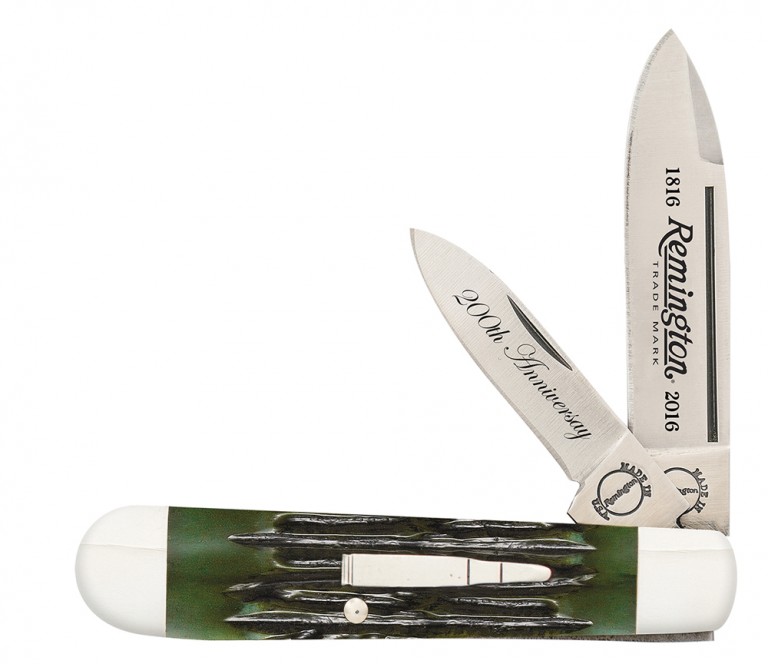
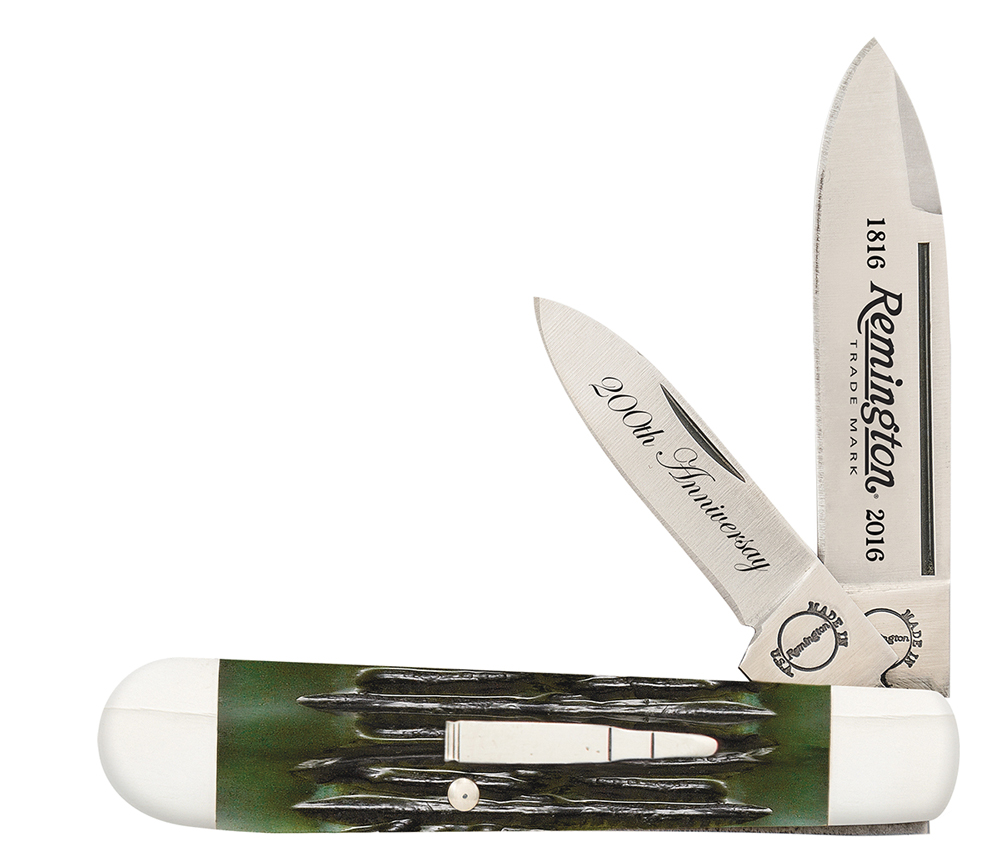
Green bone is a traditional favorite and the Remington Bullet 200th anniversary R11035 jackknife employs it along with blades of 440A stainless. Weight: 3.2 ounces. Closed length: 3.5 inches. Made in a limited edition of 5,000, it has an MSRP of $115.99. (Bear & Son image)
The tactical end of the cutlery industry (page 12) has ruled the roost for many years—and with it synthetic handle materials such as Micarta®, G-10 and carbon fiber—but traditional knives (page 12) still garner a sizable segment of the market. If you’re one of those who appreciate old-school pocketknives and fixed blades, rest assured—the factories and custom knifemakers have your back!one is one of the earliest materials used on knife handles, becoming a high art during the early and mid-1800s when the factories in Solingen, Germany, and Sheffield, England, were peddling their wares to eager American consumers. When tariffs on the old-world manufacturers were imposed in the waning years of the 19th century, U.S. manufacturers gained a toehold on the domestic pocketknife market, and by the early 1900s were in high gear. Bone was the most prominent and popular handle material in those days—and remains among the most prevalent, if not the most prevalent, to this day.
Many offerings by pocketknife manufacturers are graced with bone scales, and custom knifemakers use it frequently on both fixed blades and folders. BLADE® went inside the knife industry to find out why bone remains such a dominant handle material on today’s knives.
The knife steel you choose depends a lot on what jobs the knife will perform.
One of the questions knife enthusiasts ask most is What is the best steel for a knife? Before you can answer such a question, you must first know exactly what it is you need in a knife.
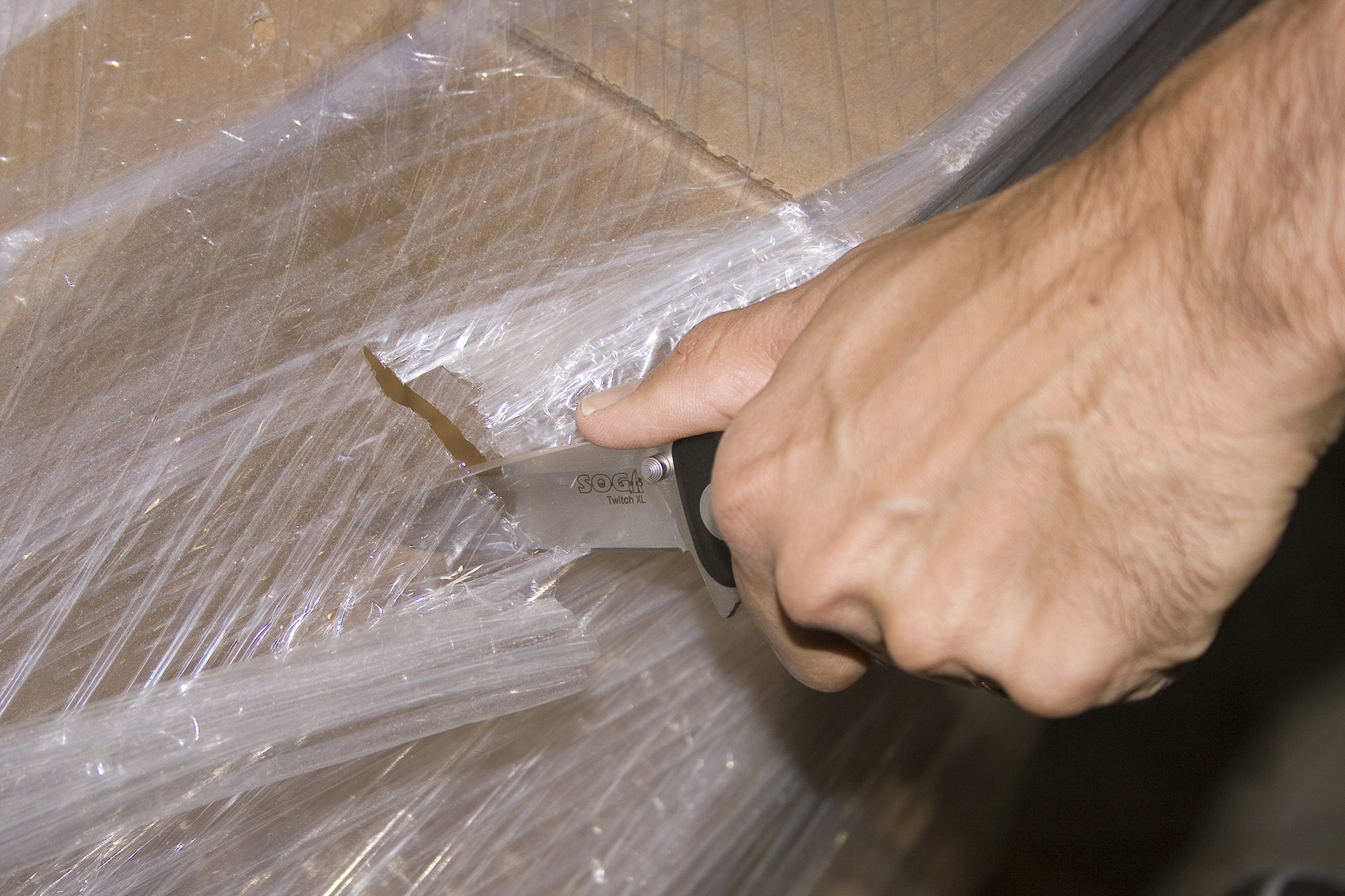
1) Will you use the knife to cut meat, or paper, or rope, or plastic, or a little bit of everything? Much depends on what you will be using the knife for, and just about any knifemaker or knife manufacturer who knows his stuff will know which steel he has on hand will be best for your purposes.
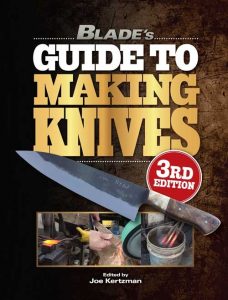
Learn more about selecting steel types and how to make knives in the third edition of “BLADE’s Guide to Making Knives.” The classic is back and better than ever!
2) The steel is just part of the equation. The blade’s geometry is also important. By blade geometry is meant how the blade is ground and tapered from the back (spine) to the edge. If too thick, it won’t slice or cut properly; if too thin, it may chip.
Get a gander at what’s on the slate for NSM in 2026.
According to a recent post by Niagara Specialty Metals (NSM) on BladeForums, NSM (nsm-ny.com) had several steels and materials available either now or that were “incoming” as BLADE was going to press.
The list includes: MagnaCut; CPM154; S30V; S35VN; S45VN; S90V; 3V; 4V; CruWear (aka NSM Wear); 154CM; 20CV; M4; CPM D2; D2; 440C ESR; 416; and 6-4 titanium. The new MagnaMax (page 66) should be available in 2026.
The post stated that all particle metallurgy grades are “coming in from Erasteel and Carpenter and the quality has been excellent.” All of NSM’s air-melt steels and 6-4 titanium are domestic.
The only grades off the list at press time were 15V, 110V and Rex 121. “They were Crucible exclusives,” the post noted of the three grades not on the list, “and we’re working with the mills to bring them back once production can be re-established.”
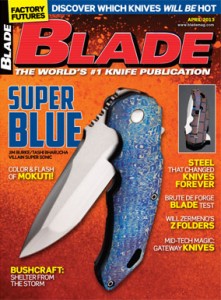
The steel that changed knives forever, the hottest custom makers’ hottest knives, how to build an emergency shelter, Chad Nichols’ MokuTi knife material, how to recognize future knife collectibles, these and much more highlight the new April BLADE®, on most newsstands NOW.
Bill Moran’s introduction of damascus steel at the 1973 Knifemakers’ Guild Show 40 yaers ago this year is the focus of “Steel That Changed Knives Forever.” Find out from those who were there what that was like and from others how the introduction transformed the industry and continues to do so today.
If you were stranded in the woods and needed to build an emergency shelter in a short amount of time, could you do it? James Ayres shows you how in “Shelter From The Storm.”
The custom knives most in demand change at any given moment. Get the latest installment of how they’re changing and what they are in “On The Boil!” The cover knife made by Jim Burke and designed by Tashi Bharucha is one of them.
If somebody asked you what factory knives you should collect now for the future, what would be your answer? See if it gibes with those who know in “Knife Pros Reveal What To Collect.”
There’s much more—a profile of knifemaker Will Zermeno, Ray Kirk’s giveaway knife for the upcoming Arkansas Custom Knife Show, the latest in mid-tech knives, how to clean hunting knives, part two of Ed Fowler’s step-by-step how-to on sheep horn knife handles, a test of Joel Worley’s “Woodsman” brut de forge knife and much more, all in the April BLADE.
For subscription information to BLADE click on www.shopblade.com/blade-magazine-one-year-subscription-us?lid=ssfbbl013113
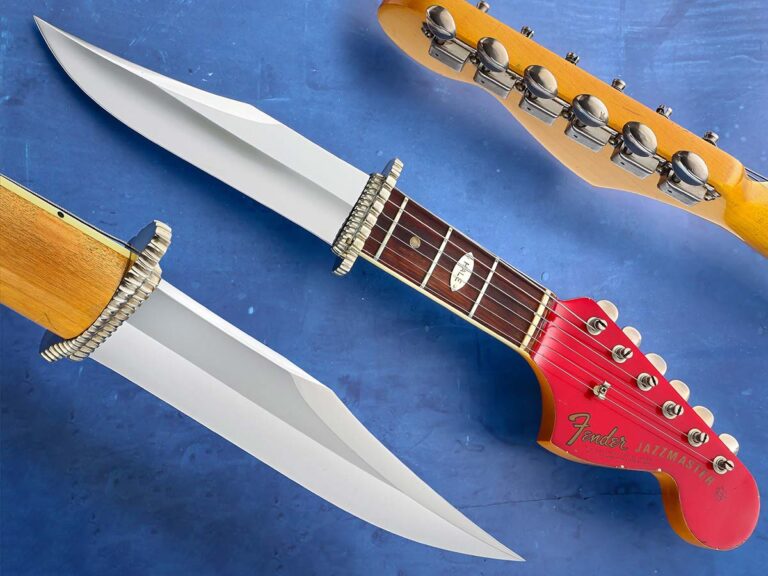
Lloyd Hale made the singular knife circa 2000 from the neck of a 1960s Fender Jazzmaster.
A self-described child of the ’60s, Larry Hirsch jumped at the chance to buy the DeFender when a collector offered it for sale.
Made by Lloyd Hale a quarter century ago from the neck of a 1960s-era Fender Jazzmaster guitar, the knife did not have a sheath originally, so Hirsch got with Hale earlier this year and brainstormed one in the shape of the main body of the guitar, complete with strap and volume and tone control knobs.
Larry Hirsch rocks his world with the DeFender. (Hirsch image)
“I told Lloyd the knobs had to turn because everyone that sees it, the first thing they will do is turn the knobs,” Hirsch said. Sure enough, when Larry displayed the knife at the 2025 Solvang Show, the first person that saw it turned the knobs.
Oh, left whole a 1960s-era Fender Jazzmaster—just the neck alone—would be worth obscene amounts today, but we won’t go there.
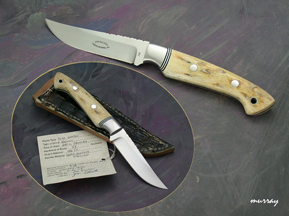
Congratulations to knifemaker Jim Elliott, who I saw featured today, April 30th, 2013, in Highlands Today, an Edition of the Tampa Tribune. Jim is featured in the publication’s “Agri Leader” section for growing hundreds of varieties of orchids, and of course, for being a spectacular knifemaker.
While Highlands Today focuses on his prize-winning orchids, they do give a shout-out to his knives, including an image of the first knife he ever made. BLADE and blademag.com salute his knifemaking, of course, with honorable mention for his apparent green thumb, the latter of which landed him several awards at the seventh annual Orchid Show in Lake Placid two weeks ago.