Knife Collecting

Knife collecting is an extremely rewarding experience for knife enthusiasts. There truly is a knife for everyone. Many increase or hold their value throughout the years, making collecting knives something to pass on to the next generation of knife collectors.

Knife Mechanisms: Gimmicks Or Game Changers?

0

Folder features evolve at a fast clip.

Today’s knife market is a dynamic mix of time-tested traditions, evolving design applications and cutting-edge innovations. Designs are as varied as the people who carry them, and what someone chooses as an everyday carry (EDC) knife can be a cultural marker as much as a cutting tool. One of the key features of EDC knives is their mechanical operation. In this article, we will explore the fascinating realm of folding knives, examining the influence of knife mechanisms on consumer preference, the evolution of some of the most iconic designs and whether today’s emerging ideas are gimmicks or game changers.

Old Is New Again

The folding knife industry is often associated with mechanical innovation. However, according to industry experts, there is a notable trend regarding classic slip-joint knives. The traditional non-locking folder, often affectionately called a pocketknife, is experiencing a demand revival.
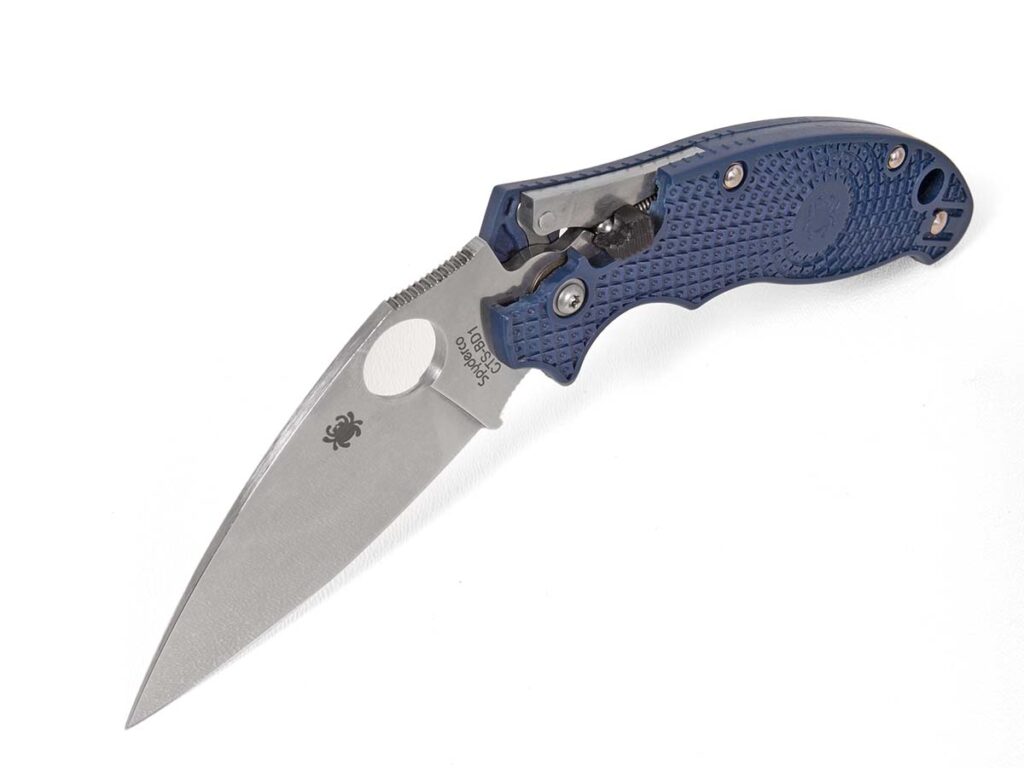
 As its name suggests, the Spyderco Manix 2 Lightweight features ultra-lightweight construction and the Ball Bearing Lock mechanism, which can be seen in this custom cutaway version. The knife’s overall length is 8 inches, with a 3.37-inch blade offered in multiple steel options, depending on the specific model.
As its name suggests, the Spyderco Manix 2 Lightweight features ultra-lightweight construction and the Ball Bearing Lock mechanism, which can be seen in this custom cutaway version. The knife’s overall length is 8 inches, with a 3.37-inch blade offered in multiple steel options, depending on the specific model.

“I’d go out on a limb and say that slip-joint knives are having a moment right now,” said Doug Flagg, former vice president of marketing and innovation at Columbia River Knife & Tool (CRKT). “Innovation will never go out of style, but in a lot of ways, what’s old is new again.” Flagg added that CRKT recognized this slip-joint revival and has already developed recent models to answer consumer demand, including the Symmetry and Venandi models, designed by Richard Rogers, and the Darriel Caston-designed, double-bladed Forebear.

Regarding specializing in traditional folders, W.R. Case & Sons is arguably second to none. On the topic of slip joints, Tony DiFonzo, director of engineering at Case Knives, acknowledged that many people prefer the look and feel of tried-and-true knife designs, like Case’s Sod Buster, Trapper and Stockman. He added that their less-intricate designs imply greater reliability.

“Sometimes, it’s better to simplify and have something that you know is going to work repeatedly,” DiFonzo said. “The influence of debris and the wear and tear of repeated real-world use can cause a knife with complex components to not fire or lock up like it should. We don’t want it to look cool on a shelf; we want it in people’s pockets to use every day.”
According to DiFonzo, Case continues to meet their customers’ demand for traditional knives by producing about 6,000 slip-joint knives daily, contrasting them with their locking knife line, which accounts for only about 20 percent of Case’s overall consumer line.

Mechanical Evolution
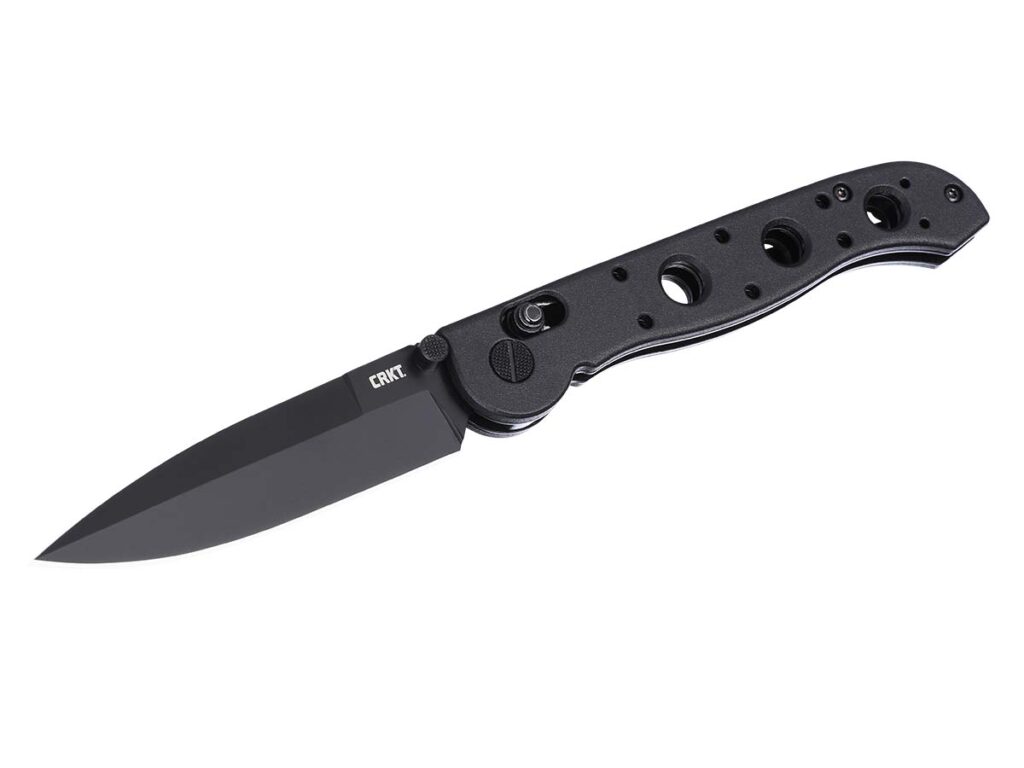
Part of the CRKT M16 series designed by Kit Carson, the M16-03XK features an ambidextrous Crossbar Lock paired with an IKBS (Ikoma Korth Bearing System) ball bearing pivot for seamless deployment and easy one-hand closing. It also has a lightweight Grivory aircraft-grade thermoplastic handle.

These days, many of the mechanisms we take for granted were once novel inventions conceived by imaginative innovators. For example, an assisted-opening knife didn’t exist before Blackie Collins bringing his design to market, famously inspired by the single-strut suspension on his Ducati motorcycle. Before Michael Walker’s revolutionary LinerLock design, closing a locked folding knife was virtually always a two-handed job. In subsequent years, variations and often improvements of both innovations began to proliferate in the industry and become all but ubiquitous. These are only two examples of numerous similar evolutions.

Time makes it easy for innovators who changed the industry to be forgotten after expired patents, as their inventions become “democratized,” as Michael Janich, special projects coordinator at Spyderco, characterized it. He drew careful attention to the importance of these noteworthy creation stories: “It’s counterproductive when it comes to promoting industry education and a sense of history,” Janich said. “People new to knives don’t understand the origin of the mechanism or appreciate its history.”

In 2008, Spyderco created the ongoing Sage Series to draw a historical line between pioneering locking mechanisms and the makers who created or popularized them to assign credit where credit is due. To accomplish this, each Sage Series model features a different key advancement. The Sage 1 incorporates two Michael Walker mechanisms: the LinerLock and the ball bearing detent. The Sage 2 features Chris Reeve’s RIL (Reeve Integral Lock), a.k.a. the frame lock. Sage 3 features Blackie Collins’ Bolt Action Lock, improved by Spyderco with easy-to-operate ambidextrous release buttons. Sage 4 pays tribute to Al Mar by integrating a mid-back lock, a signature element of Al Mar Knives. Completing the series, thus far, the Sage 5 and Sage 5 Lightweight models feature the Compression Lock designed by Spyderco Founder Sal Glesser.
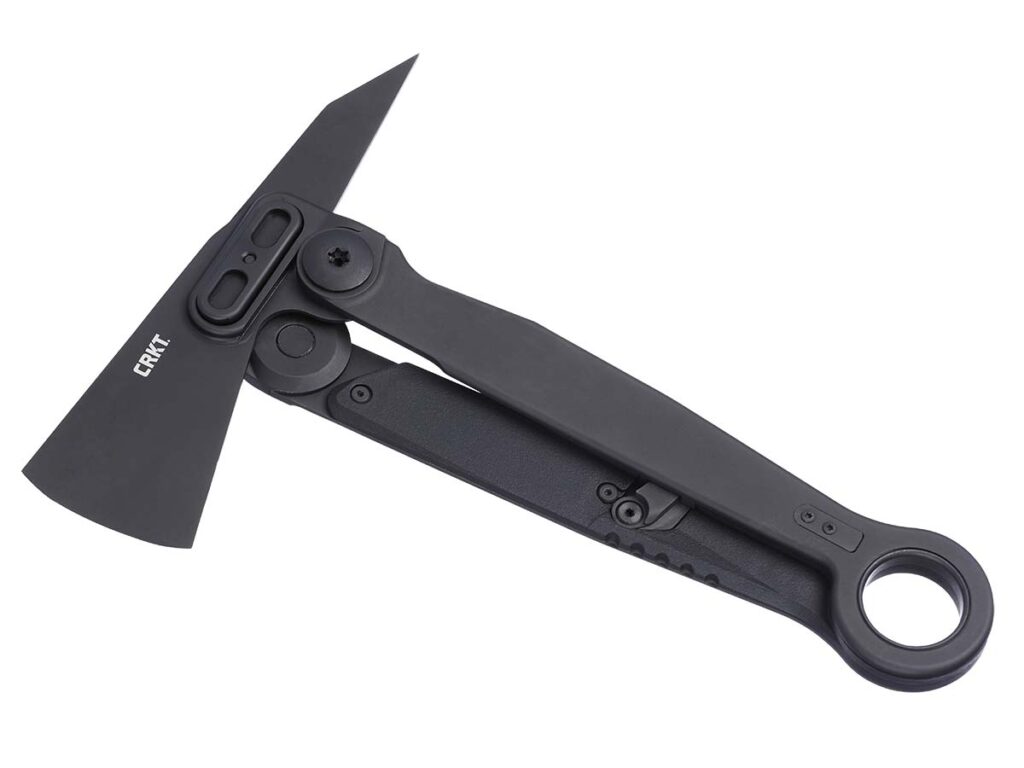
The CRKT Provoke X morphing axe incorporates the company’s Kinematic deployment mechanism from its successful Provoke folder into a new product category. This first-of-its-kind axe combines the excitement of Kinematic deployment with the security of the Deadbolt Lock.

Many folders included in Spyderco’s current line-up feature the company’s proprietary locks, such as the Para 3, a compact version of the popular Paramilitary 2 folder, featuring Glesser’s Compression Lock, and the Manix 2 Lightweight, featuring a Ball Bearing Lock invented by Sal’s son, Eric. Both locking mechanism patents have now expired.

Historical context intact or not, widespread adoption and adaptation of mechanisms due to patent expiration play a significant role in today’s popular trends. Like any other patent, a knife mechanism patent expires after 20 years, after which the design enters the public domain. Then, anyone can legally manufacture and sell products incorporating that mechanism without requiring permission from the original patent holder. Along with Spyderco’s recent expirations, the Benchmade Axis Lock patent also recently expired, which has been felt across the industry.

Versions Of Their Own

“You’ll note an uptick in knives featuring what was originally called the Axis Lock, now commonly referred to as the Crossbar Lock,” Flagg said. “Now that it’s available to the industry at large, many manufacturers, including CRKT, are coming to market with versions of their own.”
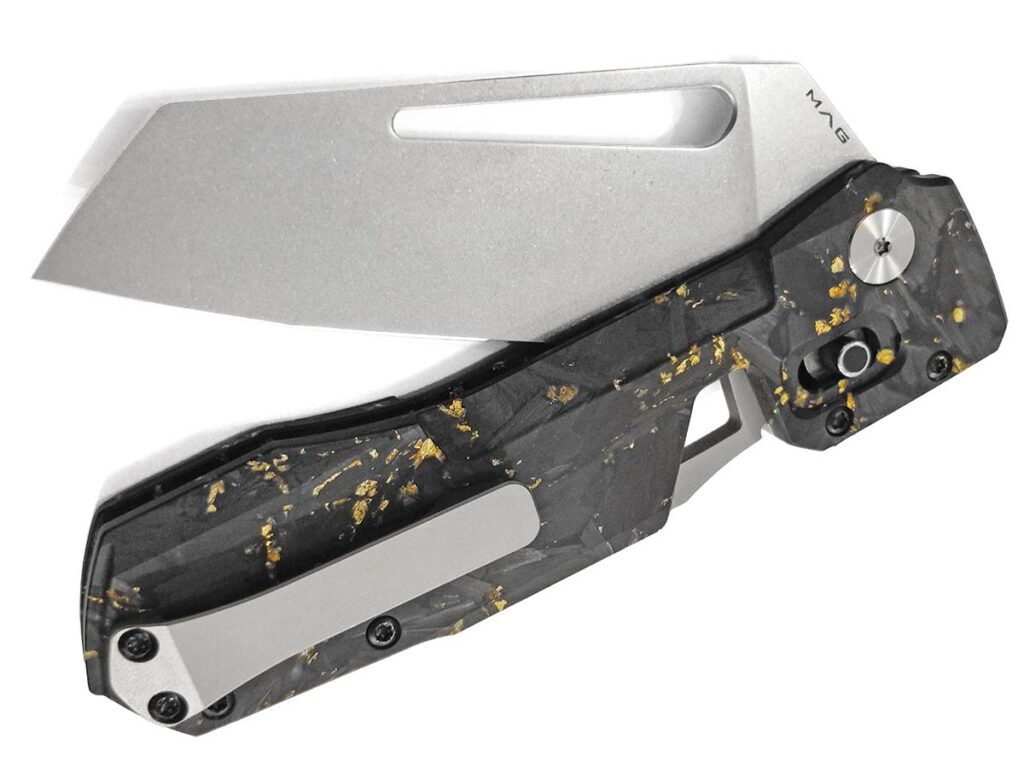
Winterblade’s Factor 8ight features an all-new “QUAD Magnet Detent System,” the company’s strongest and most adjustable magnetic detent system to date, as well as an updated “M-Lock Plus” magnet-driven blade lock, and improved titanium flip-lever deployment mechanism for snappy action.

CRKT began using the Crossbar Lock in 2024 and is now carrying it forward into the iconic Kit Carson-designed M16 collection. “It’s got a fluidity and ease of use that consumers seem to gravitate toward, and I think you’ll see more knives using the technology coming out each year,” Flagg said.

Indeed, many other knife companies produce similar bar-style locks, often under different names, including Hogue’s ABLE Lock, SOG’s XR Lock and Civivi’s Superlock. Patent expiration also levels the playing field for smaller manufacturers by allowing them to use popular mechanisms without the cost or hassle of licensing, which is a game-changer.

Janich says that many of the hot new locks are subtle mechanical variations of the original Blackie Collins Bolt Action Lock from the 1970s, which, he added, never received the recognition it deserved. “The Bolt Action Lock was, to my knowledge, the first to be based on the mechanics of creating a ramp on the back of the blade and wedging a locking device between that ramp and the stop pin or backspacer.”
As an in-line mechanism, he says, the wedge concept became the basis for the Axis Lock, Ball Bearing Lock, Arc Lock and Stop Lock, among others, and it continues to be the basis for many of today’s most popular locks, including the Shark Lock, Atlas Lock and Superlock. “The in-house production secret is making the mechanics just different enough to convince the USPTO [United States Patent and Trademark Office] that it’s unique.”
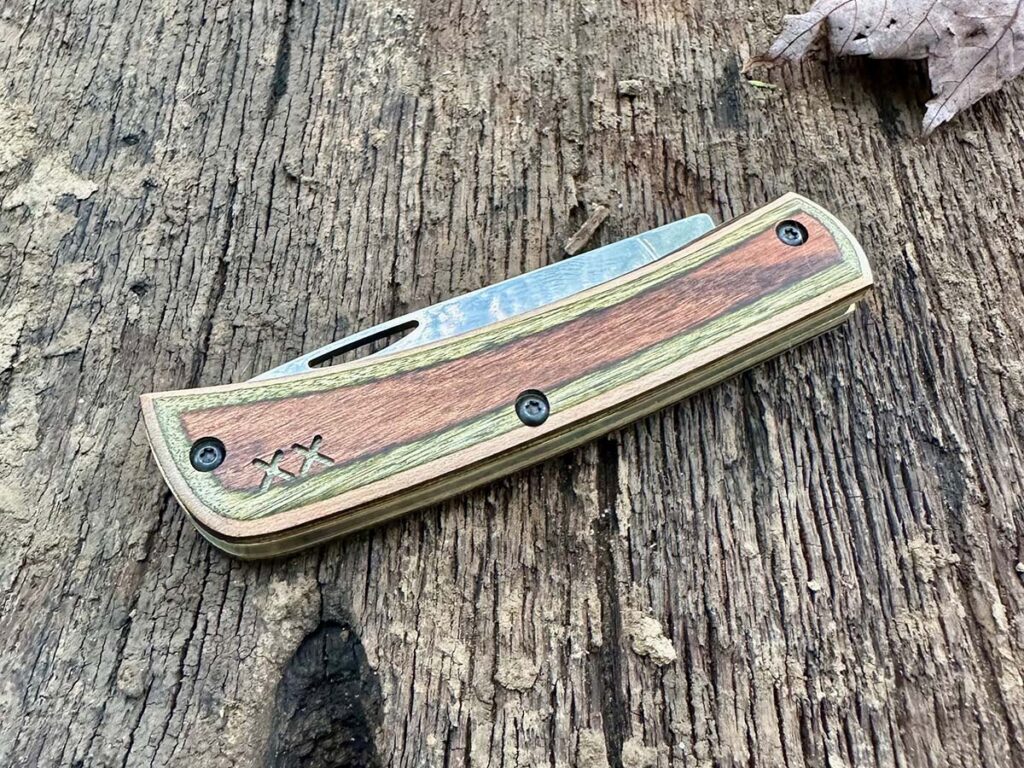
The Classic American Case Sodbuster Jr. is a testament to U.S. craftsmanship and durability. It embodies reliability, functionality, and traditional style all in a compact design. The Sod Buster Jr. in this photo has a 2.875-inch stonewashed skinner blade and a Smooth Black Canvas Laminate handle with Day Glow G10 liners.

Janich said he doesn’t foresee any locks disappearing completely as new ones join the market. He mentioned that the classic back lock mechanism is still the bread and butter of many Spyderco designs. Though he acknowledges it’s an old-school design, he attributes its continued popularity to seasoned knife users who, he said, tend to have strong preferences, especially when lock failure could result in bloodshed.

Gimmicks Or Game Changers?

On one side of the demographics spectrum are seasoned knife users who field dress game and integrate EDC knives into their self-defense strategies. On the other side is the next generation of knife customers, whose industry knowledge mainly comes from YouTube influencers posting POV (point of view) knife reviews. The latter customer base is often mainly drawn to what is widely regarded as the “fidget factor,” where interest and excitement are focused primarily on knives with intriguing opening, closing and locking mechanisms. Smooth, snappy action is in demand, and the more intricate, the better.

“There are lots of younger knife users who have never had to use a knife hard,” Janich said. “In many cases, they like fidget-friendly designs that open and close easily and are entertaining.”
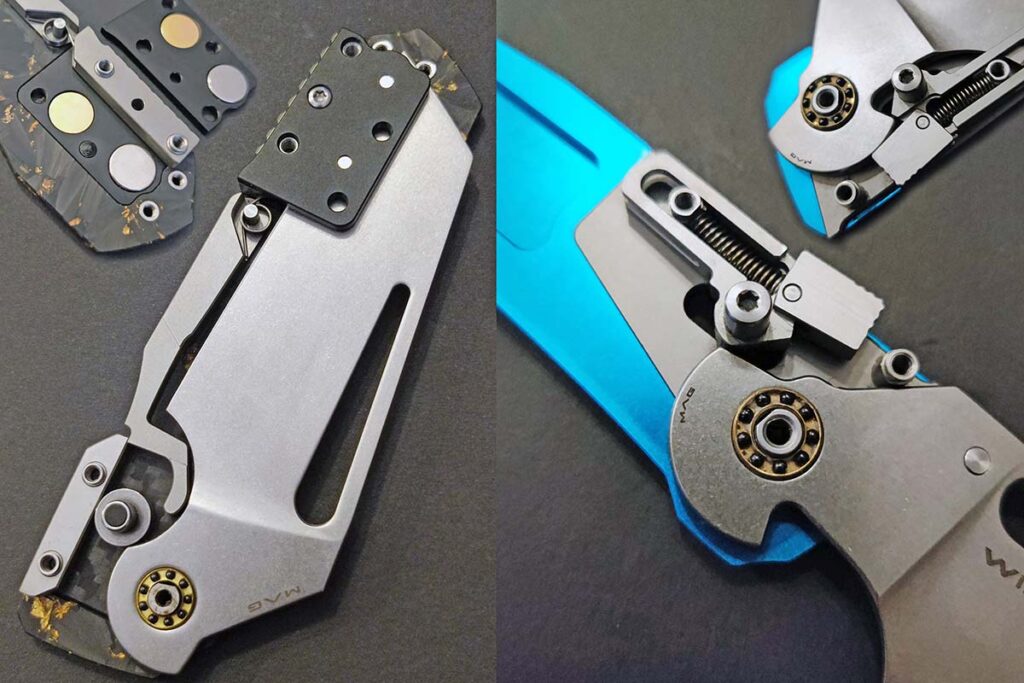
The Severn features Winterblade’s patent-pending compression spring, Stealth Lock, and Dual Lock actuation, which includes a bar lock and a retracting spine lock in one mechanism.

Bryan Winters, owner of Winterblade Knives and a relative newcomer to the knife industry, doesn’t have concerns about “fidget factor” characterizations, despite his knives being on the cutting edge of fidget-ry. He captures his philosophy by saying, “We can’t spell function without fun.” Winters started making his earliest creations in his modest shop in 2019, but 2022 was the year he launched his flagship design, the Factor, a stout, legitimately dependable folder, featuring cutting-edge new mechanisms that integrate magnets into the locking and deployment systems.

“I’ve never set out to design a knife just because I think it will sell well or because it’s a certain gimmick,” Winters said. “I’ll use magnets, but if I think springs are better suited for that particular mechanism, I’ll use springs, or maybe I’ll need some sort of lever or gears, whatever the case may be.”

He explained that, in the Factor, and later incarnations like the Factor 8ight, the detent magnets “suck the blade in” and keep it securely closed. An added benefit is alleviating the contact point of friction with a typical detent ball, allowing for noticeably smoother deployment. A benefit of the neodymium magnets is that they retain their power for almost a century, whereas springs fatigue or wear out much more quickly through continued use.

“My point with the people who say that magnets are gimmicks is, you can do things with magnets, physically speaking, that you cannot do with springs.”

Radical Reimagination

Another novel Winters creation is his radical reimagination of a double-action firing mechanism on the Darkfire OTF. Instead of a typical fixed slider, the blade is propelled in and out via a large blade guard that acts as a lever. The stylized blade guard is part of an overall design aesthetic inspired by the Mandalorian Darksaber from “Star Wars.” Inside, the brilliantly reimagined, simplified mechanism is powered by a single compression spring, again departing from traditional designs.

Whether one prefers the simplicity of a traditional slip joint, the fidget-friendly nature of modern deployment and locking systems, or the cutting-edge ingenuity of truly novel mechanisms, one requirement for success is that function meets the real-world needs of end users. Examples that Flagg pointed out in the current CRKT line are Flavio Ikoma’s proprietary Deadbolt Lock design, featured on several of the company’s knives since its creation five years ago, and Joe Caswell’s Kinematic opening system, which Flagg characterized as “a true innovation marker.” The Kinematic mechanism has several pivot points and linkage arms that “morph” into the opened knife when manually actuated.

“Joe is a bit of a mad scientist, in the best sense of that term, and his Provoke knife, with its Kinematic opening technology, was an instant bestseller for us,” Flagg says of its 2019 release. “Now, we’ve taken it to the next level and brought this innovation into our Provoke X, a morphing tactical axe that combines Kinematic opening with the Deadbolt Lock to create an EDC axe unlike anything the industry has seen before.”

The knife industry has a long legacy of benefiting from an enduring heritage while enabling innovators to push boundaries. It engages a wide variety of collectors and enthusiasts by offering as many knife designs as there are preferences and needs, whether nostalgic, futuristic or anywhere in between. Today’s trends show no indication of that dynamic subsiding in the foreseeable future. As such, all indicators point to an industry that will remain both reassuring and exciting.

More Reviews:

Variations On A Theme

1

Knife Collecting Is Different For Everyone. Some Folks Like To Stick With A Theme And Collect Everything They Can.

It’s all about perspective. 

Everyone agrees that knife collecting is one of the greatest enterprises around. However, there are variations on a theme—if the collection even has one. Probably the biggest variation on the common thread of knife collecting is the existence or absence of a theme, a focus on the collection that revolves around a specific aspect such as an individual custom knifemaker, group of makers, handle material, style of knife, period of time—well, you get the idea.

Theme collecting has its followers and its detractors, and gaining insight into these points of view enriches the collecting experience. First, however, there is a single universally accepted piece of advice regarding the knife collecting adventure: collect the knives that you admire, enjoy, and make you feel good!

“When it comes to collecting, and I mean collecting anything, I think the first rule is to collect what you like,” related long-time knife enthusiast and collector Chris Schluter. “At the end of the day, whatever it is you’ve been collecting might not be worth anything except to you. The collection may go down in value, be obsolete, your kids may not care about it, etc., etc. Collect what you like and can afford. Having fun while doing it is a plus, too!”

Collector J.T. Oldham agrees. “My short answer is to collect what you like,” he said. “I’ve been to enough knife shows and have spoken with many collectors, purveyors, and dealers over the years, and that has been a prevailing sentiment. Collect what you like, with a focus on an element that is interesting or unique.”

Embracing Theme Collecting

If Chris Schluter’s collection of Bob Terzuola tactical folders isn’t comprehensive, it’s the next best thing.

Beyond the “like,” there are those collectors who find a theme and enjoy it for decades, buying, selling, trading, and thoroughly embracing a style or feature. Then it’s always possible to change course, switch ideas around, and find another path.

“I started out collecting hunting knives,” recalled collector Chris Nolen. “This was due to my love of hunting. Later, I learned at gun shows as well as from informative magazines like BLADE® that there were many styles, as well as usages of the knife. I was drawn to bowie knives. I had been introduced to a professional maker, Jerry Berry of Natchitoches, Louisiana, and he was making my hunters because I had switched from commercially made to custom. I drew out a large bowie and sent the plan to Jerry. He built the knife and my theme changed from hunters to bowies. So, I must say, I recommend theme collecting.”

Nolen’s experience is compelling because his investment in that course-changing bowie began with the basics: a drawing. Therefore, the full experience of owning the knife involved an added depth. Nonetheless, other collectors are drawn to aspects of theme collecting that center on different attributes.

“While I do not necessarily collect thematically, upon reflection I realized that my wife, Marlene, does,” advised longtime collector Larry Marton. “Just to clarify the state of affairs in our home with regard to knife collecting, we have two collections—‘ours’ and ‘hers.’ Her collection consists of small knives, predominantly folders, that are about 3.5 inches open. This collection has been accumulated over the past 35-plus years. The knives were crafted by some of the finest knifemakers of our time, both living and unfortunately passed. Marlene convinced each one of them to make her a unique knife, even though most had never made a knife that size before and most would never make one of that size again.”

Oldham takes a long look at trends and depends on the assessments of those close to the industry. “Typically, I have always learned of what is trending in the knife community by reading BLADE Magazine. I’m certain most others do as well. Joe Kertzman has been instrumental in keeping collectors tuned into knife trends for years by editing the annual KNIVES publication. I mostly rely on my network of trusted purveyors. They attend most, if not all, knife shows, do the legwork, speak with makers, and have substantially greater buying power than I do. They tend to focus on particular makers, but due to the large volume of knives they come in contact with, might be able to identify a theme before it exists.”

While Oldham doesn’t consider himself positioned to recommend a theme, he readily admits that he enjoys damascus steel and knives that incorporate embellishments in the shapes/look of human skulls. 

His acknowledgment of the variety of theme options presents the general collector population’s point of view well. There is no right or wrong answer when it comes to collecting with or without a theme, but an eye for certain aspects or commonalities among knives can enhance the effort to grow a collection.

Meeting Other Knife Collectors

This reproduction of a Daniel Searles bowie by Mark Banfield is representative of the period bowie repros in Chris Nolen’s collection. (image courtesy of Chris Nolen)

Among the best features of theme collecting is the opportunity to build relationships as collectors and custom knifemakers interact with one another. 

“Within custom knives, I’ve always gravitated toward tactical folders, so I would say that’s my overall theme,” Schluter explained. “Within that theme, most are from Bob Terzuola, then there are a lot of custom Emersons and at least a dozen knives each from Kirby Lambert and Peter Rassenti, and then numerous knives from Sal Manaro, Mark Roe, Shane Sibert, Chad Nell, and others.

“In any business, if a producer and customer have enough interaction they often become friends, and that may be even more so in the knife hobby. It’s often said that you buy the maker not the knife, and this is absolutely true if you really know the maker. Having the theme I do collecting-wise has certainly produced some lifelong friendships.”

For Larry and Marlene, that premise has held true. “Not only is it exciting to craft a special collection,” Larry commented, “but it is a way to get to know the knifemakers very well and to share the ups and downs of technical and artistic challenges with them. Firm friendships have been molded by this endeavor. Accumulating the collection requires patience, as every knife is made to order. Collecting unique knives that are not today’s momentary trend as an investment is risky, although with patience it can turn into reality.”

According to Nolen, the theme approach applies to whatever the collector’s motivation may be: pure enjoyment, investment, or both. Finding the right balance is a part of the journey, and building a collection that leads to personal satisfaction and lasting value is a powerful combination. 

“There are some collectors that look at knife collecting as an investment,” he said, “and I would still recommend choosing a theme and devoting your collection to that theme. Just remember to get the best possible price. One day you may want to sell, and what you thought may have been a good deal may not have been so swell.”

Stick With The Knives You Like

Another example of one of Oldham’s knives with a skull theme is this Brian Tighe folder. “This was a very popular knife and was published in one of Dr. David Darom’s books,” Oldham wrote.

At the same time, beware of the trend that may glow white-hot and then fade quickly. Experience and a good sense of direction help prevent a misstep.

Concentrating on a specific theme will help insulate a collection from a haphazard mishmash of “stuff.”  However, a collector may choose to purchase on more of a freestyle basis.

“If one were to follow hot themes exclusively,” Oldham said, “then one’s collection would be all over the place. I feel that it’s best to acknowledge the arrival of the hot themes, and then follow them to see if they become trends. A good example of this is the tactical theme or style. We can all safely attribute that style to Bob Terzuola and Ernest Emerson. As soon as that was considered a thing, makers like Brian Tighe, [the late] Darrell Ralph, and Allen Elishewitz were all over it, and at that point, I enthusiastically embraced it and they have become a major focus of my collection. They have all taken that theme to the next level, again and again, to the point that they’re now what I consider ‘rock star makers’ and have created their own genre, which I call ‘tacti-cool.’”

“I believe collecting bowies is very popular right now due to the Forged in Fire series on the History Channel,” Nolen observed. “This is not always the best path to take due to costs. A custom forged bowie can be very expensive. Collectors must first make sure they can afford the elected theme they choose. Small custom hunters and even fighters will most likely be less expensive. I made sure that I could cover the expense, but I suggest that any theme collector set a ceiling on the funds devoted to their collection.”

While expense is always a consideration and at times a downright barrier to entry in collecting higher-end or theme-related knives, the collectors are forever in charge. They may scale their collection toward the right value range and gradually, perhaps, increase funds devoted to the theme. A word of caution does address a fear factor—the fear of missing out.

“One thing I will say is that if you focus too much on one maker or type of knife you may miss out on others,” Schluter cautioned. “However, if you keep an open mind, go to shows, are active on social media, read BLADE, etc., you will still be exposed to plenty of other work. That said, the big plus, at least for me, of having a significant focus on a few particular makers is that you can really get to know their work and can also get to know them personally.”

Knife collectors, whether or not they are theme enthusiasts, are continually looking for enjoyment and satisfaction. Choosing the collecting path is part of the fun, so remembering the basics of trust, quality craftsmanship, and collecting what you like will always make the love of custom knives worthwhile.

Read More

The Tony Test: Lockback Whittlers

Tony Bose said if you can make a lockback whittler, you have arrived as a knifemaker.

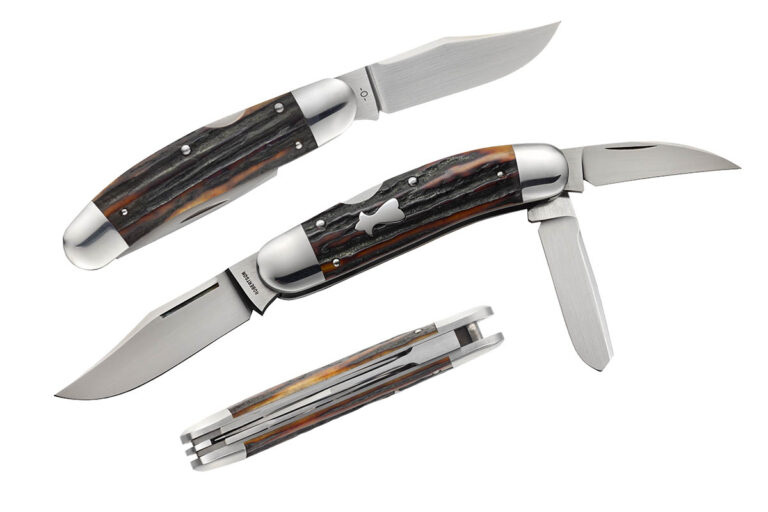
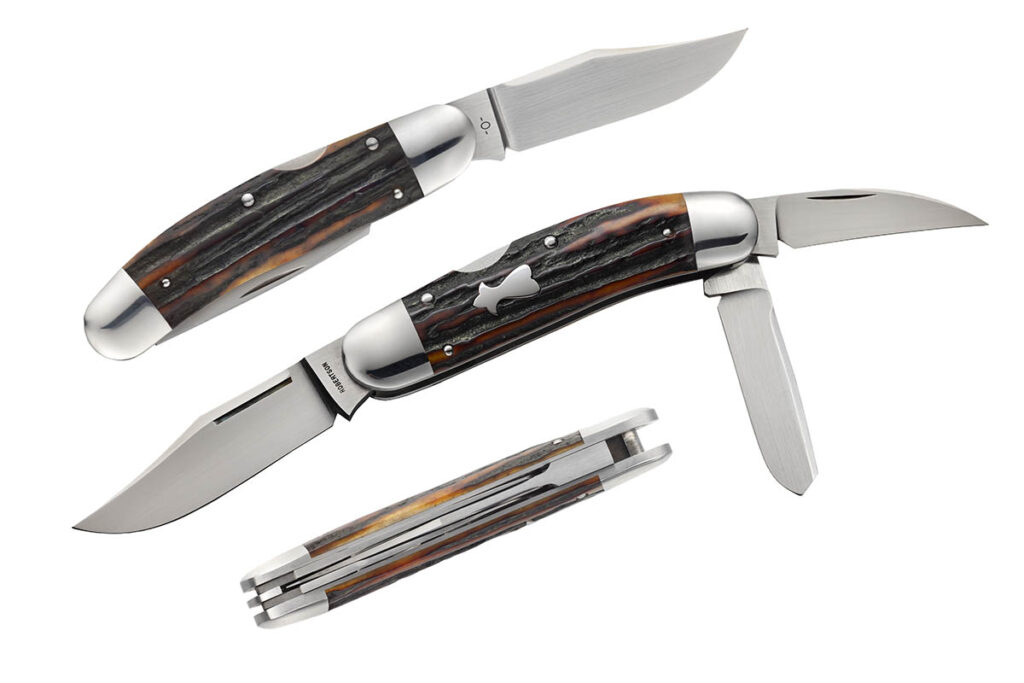
While the whittler is a classic pocketknife pattern that dates back at least to the 1850s, a variation on the theme incorporating both the lockback and slip joint mechanisms offers a challenge to the custom knifemaker and a delight to the owner of this intriguing style.


Custom knifemaker David Taber explains his take on the whittler as a three-blade knife with the main blade on one end and two secondary blades on the other. Simple as that. However, from definition to completed construction it’s a bit more complicated, particularly when the lockback mechanism is thrown into the mix.

“The whittler as originally designed was very functional in that the larger main blade is used for making larger cuts and the two smaller blades are for more detailed cutting,” Taber advised. “The knife is necessarily thin by design with the two small blades nestled on either side of the main blade in the closed position, which makes for a slim, pocket-friendly knife.”

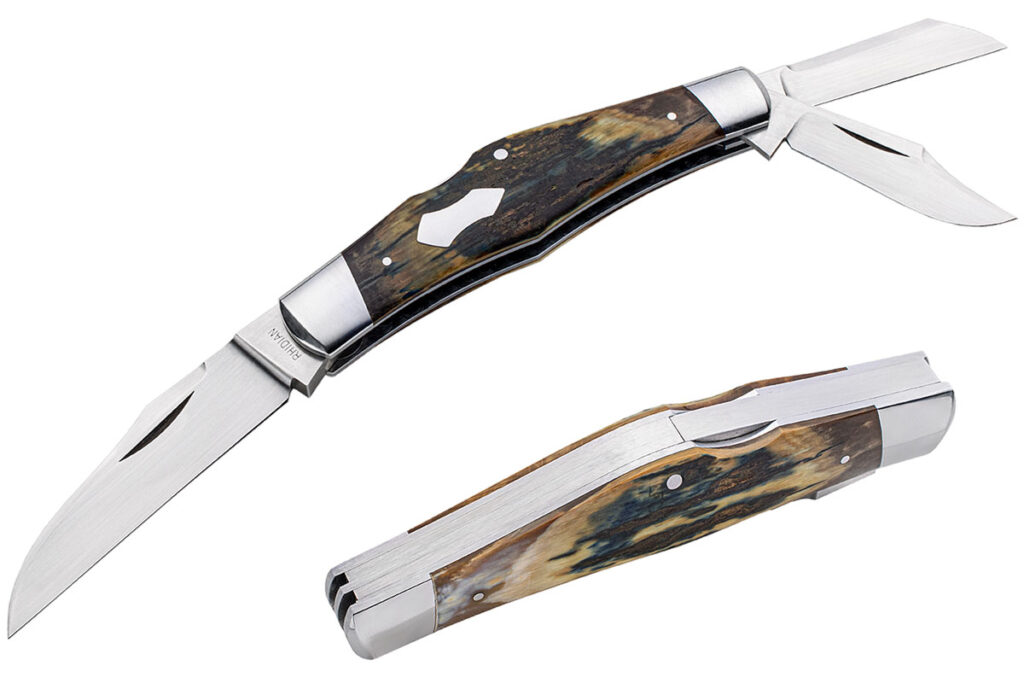
Taber’s rendering of the lockback whittler features hollow-ground blades of CPM 154 stainless steel and a mammoth ivory bark handle. The main locking blade length is 3 inches and his price for a comparable piece would be $2,100. He attributes an early interest in the lockback whittler to comments made by BLADE Magazine Cutlery Hall-Of-Fame® member Tony Bose in a 2008 issue of BLADE® relating to the skill level required to make one.

BLADE Magazine Cutlery Hall-Of-Fame® member Tony Bose (Kerry Hampton image)

“I was intrigued and called Tony,” David remembered. “That single conversation started a lasting friendship and started me collecting and eventually making knives. In later years he challenged me to make a lockback whittler and shared his pattern with me. He said, ‘If you can make one of these, David, you will have arrived.’”

Taber took on the task with gusto and through personal experience describes the challenge. “The difficulty, in my opinion, lies in centering the main locking blade in the closed position between the two slip-joint blades at the opposite end without rubbing during function. Equally difficult is balancing the two springs that operate the two slip joints on the one end and the underside of the lockbar on the other end. Think of it like a sophisticated teeter-totter,” he explained. “Care must also be taken to maintain the length, particularly the end that controls the lock tab. It has been my experience that to shorten it even the slightest amount will increase the load deflection rate and thereby make the lock tab not function properly.”

David Taber’s lockback whittler sports hollow-ground blades of CPM 154 stainless steel, stainless bolsters and a mammoth ivory bark handle. His price for a similar knife: $2,100. (SharpByCoop knife image)

The level of difficulty in making the lockback whittler contributes to its collectability, Taber says, which in turn makes the design rarer in the marketplace. “The typical collector of the lockback whittler is usually aware of the skill required to make such a knife and achieves great satisfaction from owning one,” he reasoned.

MOST DIFFICULT?

Knifemaker Luke Swenson shares a connection to Bose with Taber. The Case-Bose collaboration effort introduced Swenson to the design. “The blade configuration and the smaller blades being half the thickness of the main blade set it apart from other patterns,” he commented.  “Some whittlers have a ‘catch bit’ or a piece of liner material to hold the blades apart at one end so the main blade clears, and some have a tapered wedge, commonly called a splitback. In the case of the lockback whittler, there is a full spacer that rests between the rear slip-joint blades. Also, in a lockback whittler the small blades and spacer are exactly one-third the thickness of the main blade. The main blade locks, and I believe this is for safety and allows for harder use.”

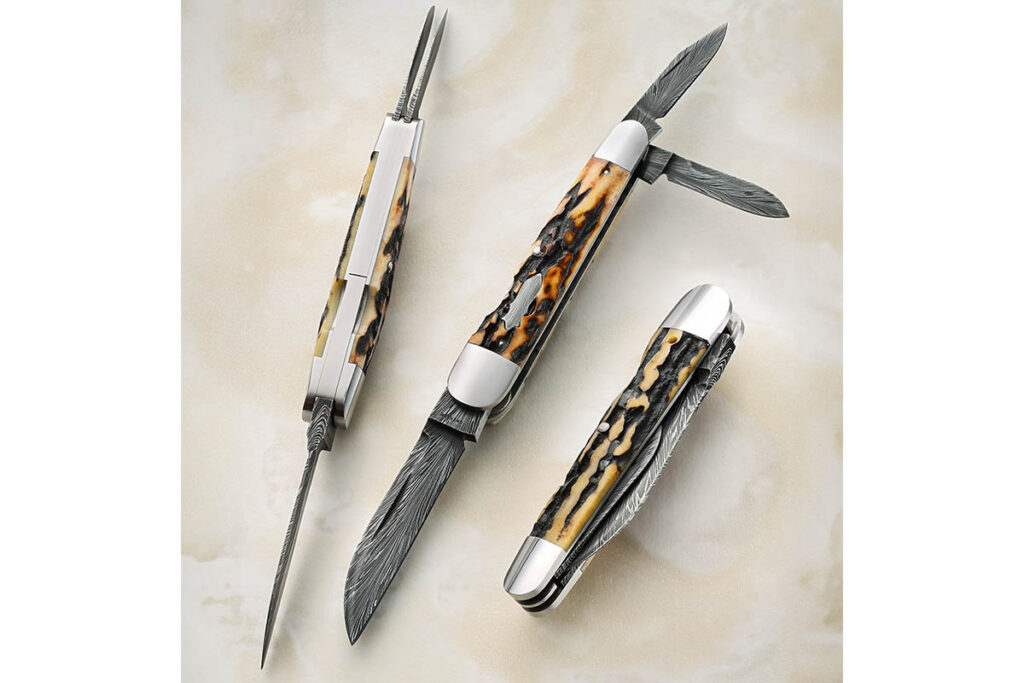
Swenson’s lockback whittler features a hollow-ground 2.8-inch blade of feather damascus forged by Mike Tyre. The fittings are 416 stainless steel and the handle is natural stag. Luke’s price for a similar piece is around $3,000. He describes the lockback whittler as “the most difficult pattern to build, even more so than a six-blade. I believe it isn’t just the combining of elements, but the springs are somewhat tricky in that you have to be paying attention—one false move, or even one over-aggressive pass on your grinder, and you’ll be making new springs. Grinding the small blades isn’t easy and requires a developed feel for getting them right. Very challenging! But if it’s right, the results are magic.”

Feather damascus forged by Mike Tyre comprises the hollow-ground blades of a lockback whittler by Luke Swenson (inset)in natural stag and integral bolsters and liners of 416 stainless. Closed length: 4 inches. Luke’s price for a similar knife: $3,000. (SharpByCoop knife image)

According to Luke, the construction of the slip joint and the lockback are completely different, at least in the opening stages. Putting the two mechanisms together with tiny parts, delicate springs and narrow tolerances tests the skills of the knifemaker in an extraordinary way. “The blades have to sit in the handle to make their tips sit in the handle,” he concluded, “and yet the nail nicks have to be accessible. That takes time and patience to get right.”

Renowned custom knifemaker Wolfgang Loerchner happened past Swenson’s table at the East Coast Custom Knife Show some time back and asked if Luke could make a lockback whittler. “This was in the March of that year, and we agreed on a BLADE Show delivery in June,” Luke laughed. “Keep in mind I’m an unknown maker, and starstruck doesn’t quite describe what I was feeling. I said, ‘Sure, I can get one built.’”

From there, Swenson went to “The Maestro,” Cutlery Hall-Of-Famer Bill Ruple. “He was quite amused and laughed, a little more than was polite I thought, but he agreed to help me through the process,” Luke recalled. “Like all my slip-joint making, anything I learned to do right was in Bill Ruple’s shop. He was key. I don’t believe I would have made the deadline if he hadn’t helped me. I’d send him pictures, and he’d say, ‘remake this and fit it like this instead.’”

The bottom line for the Swenson lockback whittler is its tremendous appeal. “It is a sleek, streamlined beauty,” he offered. “Like anything Tony Bose decided to do, it is elegant and feels comfortable in the hand.”

COMPLEX SIMPLICITY

When knifemaker Tim Robertson envisions his next lockback whittler project, he knows what he’s getting into. “What truly makes the lockback whittler so difficult to build is the way the springs operate,” he noted. “The slip joint is a standard arch spring pushing down on the blade tang while also lifting up at an equal force on the rear of the lockbar, keeping the blade firmly in position. Too much load on either end loosens the opposite end. In a nutshell, the springs have to be balanced between lockbar function and slip-joint function.”

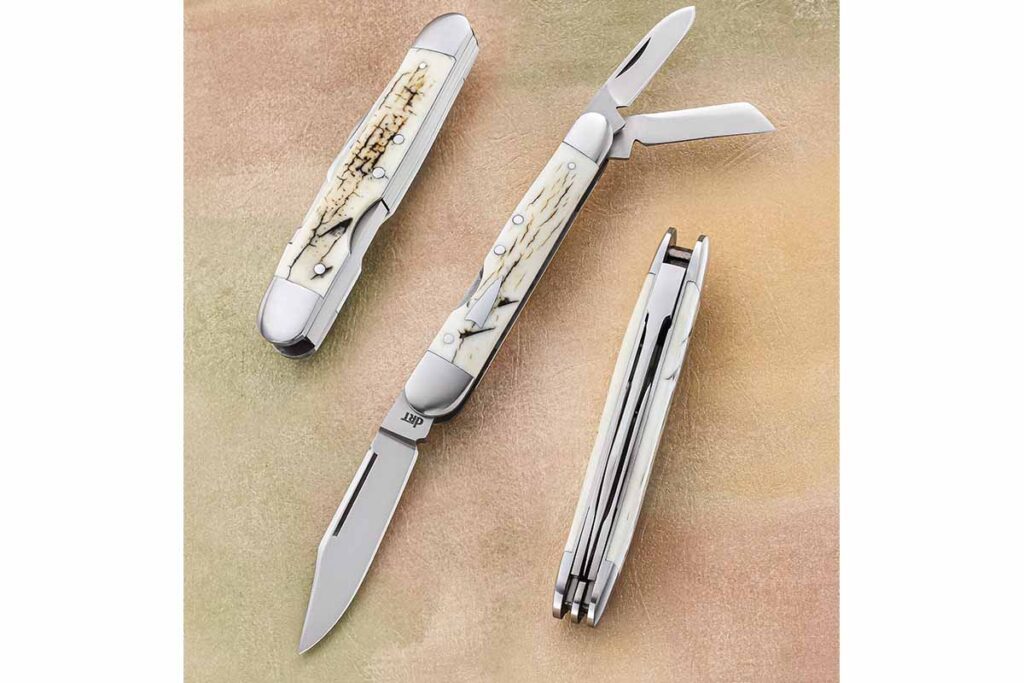
According to Tim Robertson, “The lockback whittler is appealing due to the complexity of the multiple parts and simplicity of design and operation.” Note the spacer that separates the two smaller blades Robertson mentions in the story at the bottom of the closed knife at right. (Mitchell Cohen knife image)

Robertson has become well known for his lockback whittler proficiency, and two recent examples have won awards. His winners of Best Locking Folder at BLADE Show West 2022 and the 2023 Knifemakers’ Guild Best Multiblade Folder both sport CPM 154 stainless blade steel, 416 stainless frames and stag handles. His prices for similar knives would be about $2,500 each.

With a simple explanation for his foray into lockback whittlers, Robertson remarked, “I just wanted to see if I could do it. The lockback whittler is appealing due to the complexity of the multiple parts and simplicity of design and operation.”

Defining the whittler as a knife with three blades and two springs, Tim commented, “The most common types are the splitback variety with a tapered spacer separating the two pen blades. The reason for the tapered spacer is to allow clearance for the blade to fold into the handle without having to have the main blade thickness increased, and then offset ground for the clearance so that one pen blade falls on each side of the main blade.”

SIDE-BY-SIDE KNIVES

Knifemaker Rhidian Gatrill consulted friend and historian Neal Punchard on the origin of the lockback whittler. In response, Rhidian learned that the earliest examples of it were probably made in Sheffield, England, a major center of European cutlery, and later by German and American cutlers.

“It is a premium pattern and difficult to make, so not many companies took on the challenge,” Gatrill explained. “Some of the early Sheffield multiblade sportsman knives and a few rare jackknives had lockback main blades and slip-joint blades, but they are basically two knives side by side. There’s nothing quite like the lockback whittler. There are a few other pocketknives that have locking main blades and slip-joint secondary blades, but they’re not lockback knives. The electrician knives, for example, have a [locking liner] on the screwdriver blade. And there are pen-blade-release knives where the small secondary pen blade gets pushed in to unlock the main blade.”

Rhidian Gatrill’s Lockback Rhiddler captured Best Folder in the custom category at last year’s BLADE Show West. The cleverly named lockback whittler features a locking 2 7/8-inch flat-ground wharncliffe and 2-inch hollow-ground slip-joint clip and coping blades of CPM 154 stainless steel. His price for a similar knife: $2,600. (Jocelyn Frasier knife image)

Motivation to make the challenging pattern was easy for Gatrill, who won Best Folder at BLADE Show West 2023 for his lockback whittler cleverly named Lockback Rhiddler. “I like interesting mechanisms and figuring out how to make them work,” he related. “I wanted to challenge myself and see how hard it was to make. Plus, I was attending my first knife show ever, which was the Oregon Knife Collectors Association show in Eugene, Oregon, and I wanted to take something that would possibly win an award. That knife ended up winning Best Folder and Best of Show.”

Looking for examples of lockback whittlers that were striking in appearance and function, Rhidian did some research and recalls, “Like most pocketknife makers, I admire the knives of Tony Bose, Bill Ruple, Ken Erickson and other masters that came before me. I traced photos of their knives and read forum posts that give a few tips, and I asked a few questions from other maker friends that have made lockback whittlers.”

That research led to an opportunity to present a lockback whittler interpretation that resonated with the collector community. “I believe knife collectors like them for their rarity, complexity of mechanism, and interesting function of combining the lockback blade with the slip-joint blades,” Rhidian concluded. “They also look cool with the thick tang on the main blade that steps down thinner and tapers to a point. A locking blade is always a little safer than a slip joint technically, so there’s that for the user. Not many custom makers have made them, and those who do don’t make many!”

Read More

Cool Custom: Jose Santiago-Cummings BBQ Knife

The Jose Santiago-Cummings BBQ Knife will rock your brisket.

Among Jose Santiago-Cummings’ growing ranks of customers are those he describes as “foodies,” and he built his second BBQ Knife expressly for them.

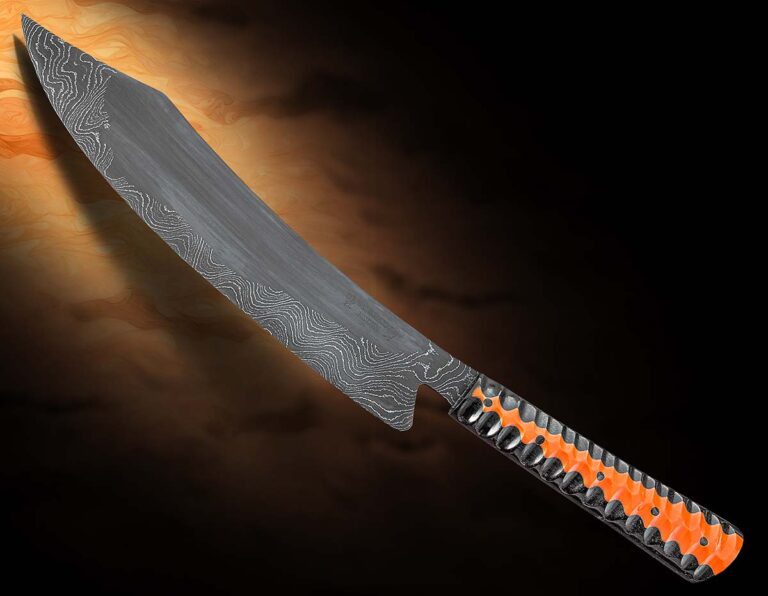
Not unlike a pirate boarding cutlass in appearance, the long, curved blade is designed for the rocking slices needed to cut meat and brisket. It’s similar to how a slicer is used as opposed to, for example, a nakiri for chop cuts.

Jose Santiago-Cummings

Jose, 62, used a cylindrical drum-sander-like attachment on a Ram tool to carve the grooves in the long, upswept handle. Jimmy Floyd forged the clip-point blade of damascus clad in wrought iron.

BBQ Knife Specs
Maker: Jose Santiago-Cummings
Blade length: 8.5”
Blade steel: Damascus of 1084 carbon and 15N20 nickel-alloy steels clad in wrought iron
Blade grind: Flat
Handle: Black and orange G-10 resin
Overall length: 13.25”
Maker’s price for a similar knife: $450-$475

More Custom Knives:

A Knife for Every Room: Curating the Ultimate Home Collection

Is the assortment of knives in your house as appropriate as it should be?

At one time I thought I wasn’t a knife collector. I am a knife enthusiast, knife user, knifemaker, knife writer, maybe even a reluctant knife expert, but not a knife collector.

Back when I thought that way, I looked around and noticed I had a dozen knives within arm’s reach, plus the tools in the kitchen, plus the customs of my own and a few from others, plus all the factory knives. Turns out I had nearly 100 knives, which means I’m definitely a knife collector, or at least an accumulator.

In my usual ADHD stream-of-consciousness fashion, my next thought was, “I wonder if I have a knife in every room of the house?” followed immediately by thoughts of which kind of knife would go in each room. Come along on my imaginative journey as we explore the idea of a knife for every room.

Kitchen

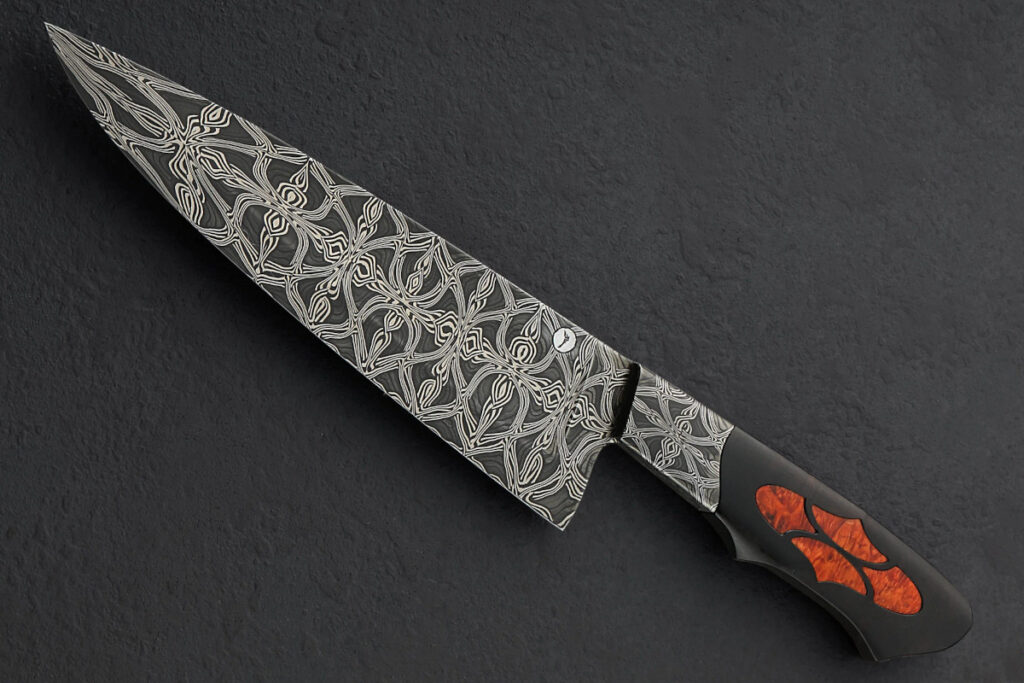
Knives in the kitchen are a given but including one by bladesmith Salem Straub is not. In the author’s perfect household cutlery world, one would be. An example: Salem’s Guimard chef’s knife in mosaic damascus. (EatingTools.com image)

The kitchen is intuitive. Most people have knives there, whether the knives are economy store cheapies, a mishmash random drawerful accumulated over years, a matching production set, or even dedicated custom household cutlery. On my imaginary journey, I can afford the good stuff, like a damascus chef’s knife from bladesmith Salem Straub. But that’s too easy. Why not a whole knife-fork-and-spoon-damascus set, like one from Nate “Tuna” Grant?

Garage

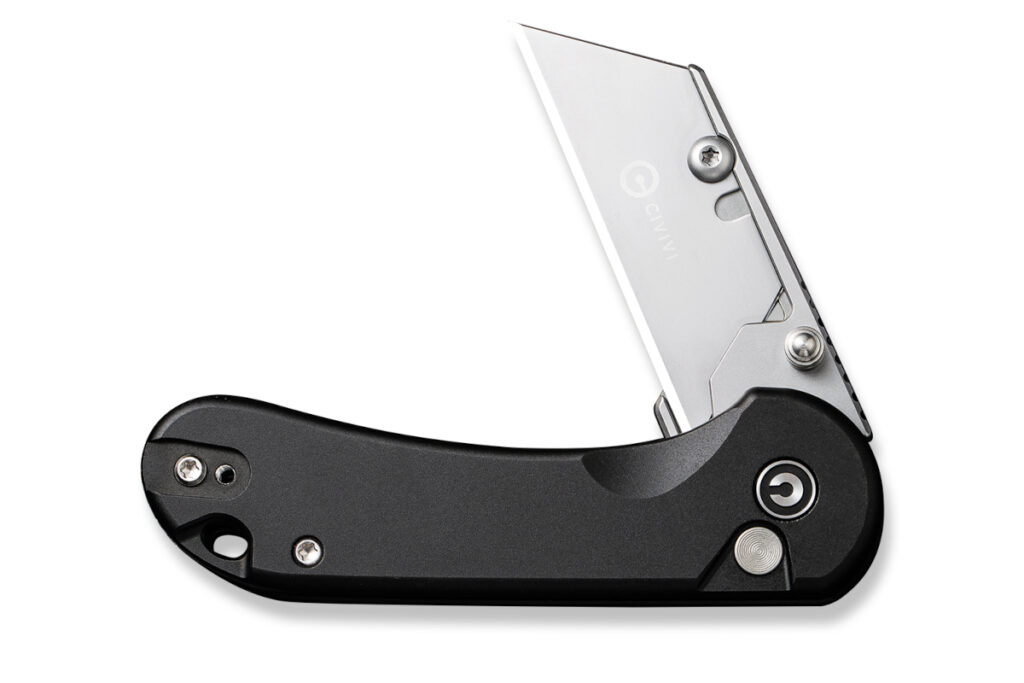
For the garage, the author suggests a factory utility knife of the replaceable-blade variety such as the Civivi Elementum.

The garage isn’t too tough either. My first thought was a utility knife of the replaceable-blade variety. In the past few years there’s been innovation in the custom knife world when it comes to replaceable blade knives, but for utilitarian and “I can use this and not be sad if I scratch it,” I think I’ll go with the Civivi Elementum that uses standard box cutter blades.

Living Room

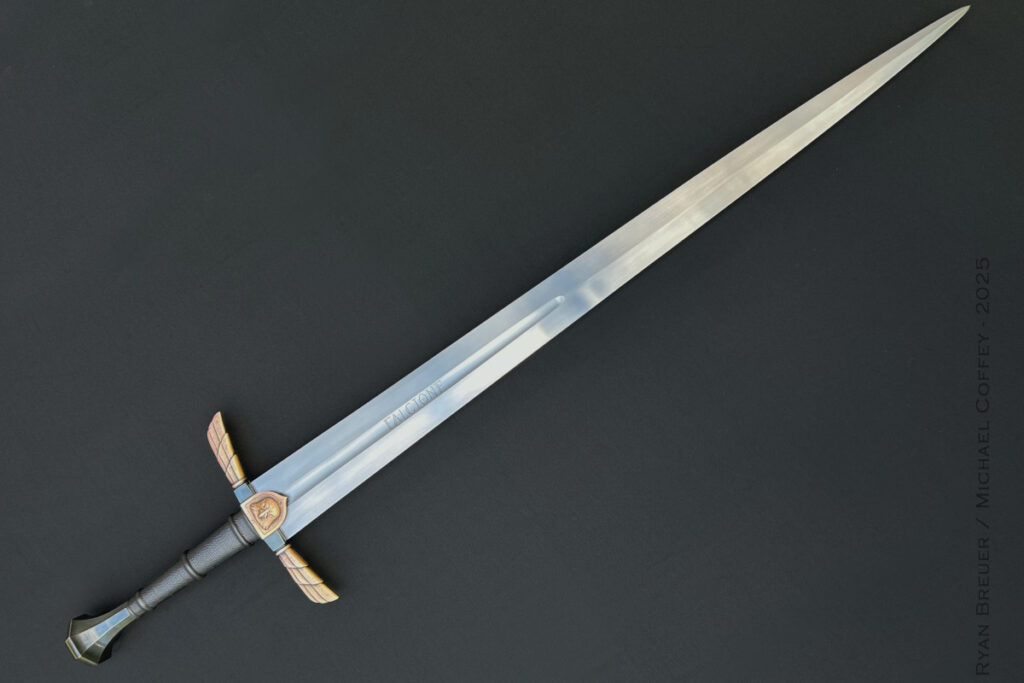
If the living room has a fireplace mantle, it’s a great place to display a custom sword. If you’re feeling medieval, the author recommends something like a hand-and-a-half piece by Ryan Breuer. (Ryan Breuer image)

The living room has the fireplace mantle, which is a great place to display a custom sword. If I were feeling medieval, I’d choose something like a hand-and-a-half piece from Ryan Breuer. Conversely, if I were feeling loud and Japanese, I might choose a fine bright katana like one from David Goldberg with an epic hamon.

Study

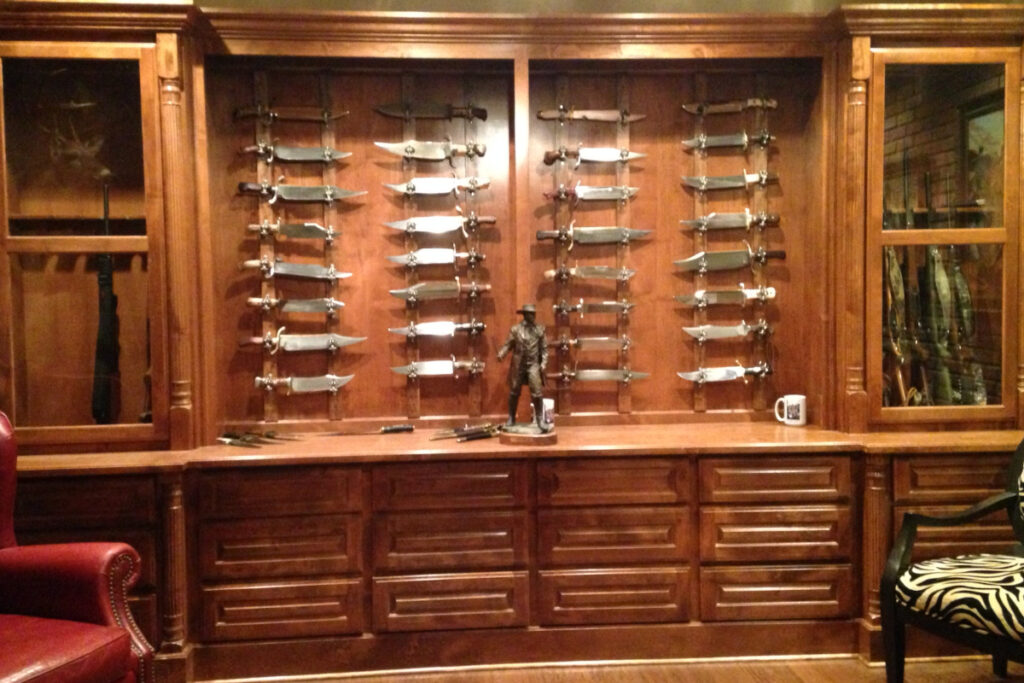
Along with studies, game rooms are also great for storing knife collections. Avid bowie collector Chris Nolen keeps his collectibles in a game room display designed by his son-in-law, replete with a statue of Jim Bowie and slide-out drawers that hold around 10 bowies each. (Chris Nolen image)

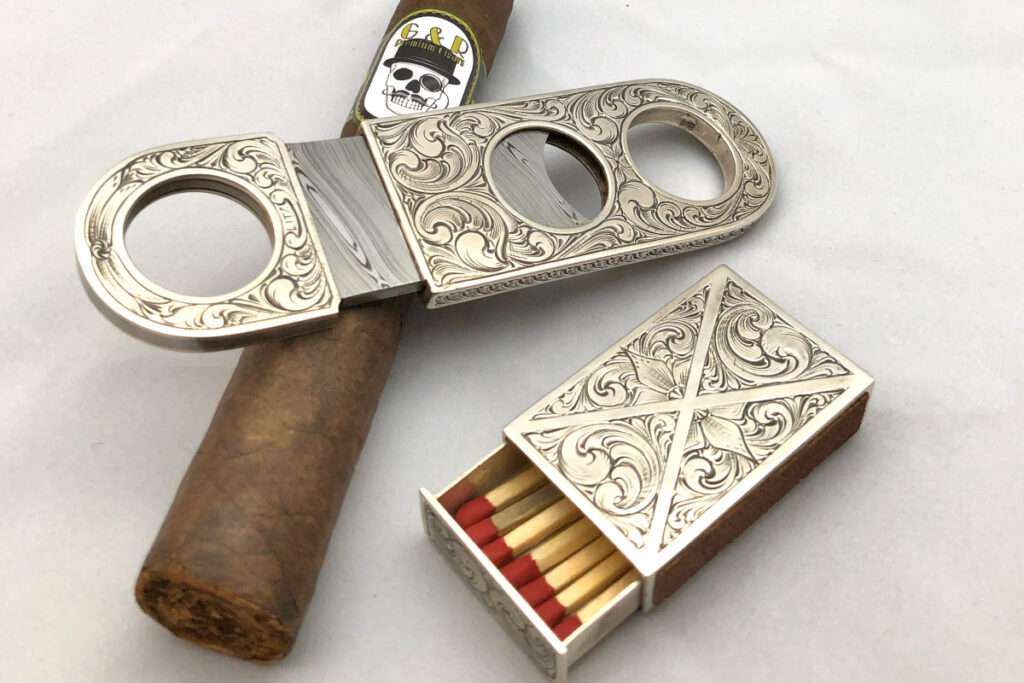
The gentleman’s study is dark, filled with books and memorabilia—the perfect place to store and display the “real” knife collection. Personally, I’d like a collection of custom bowies. I’d include pieces like a fully forged integral mosaic model from ABS master smith Mike Quesenberry, or an exquisite collaboration like The Knifemakers’ Guild award-winning piece by Nick Orr and Bailey Bradshaw. Or maybe I’d go rustic like ABS master smith Lin Rhea’s Preacher Bowie named after a mountain man. I’d round out the room with an engraved silver cigar-cutter-and-match-box set by Travis Payne engraved by Matt Litz for when the guys and I want to relax with a puff.

 An engraved silver cigar-cutter-and-match-box set by Travis Payne engraved by Matt Litz for relaxing with a puff among friends would round out the author’s dream study. (Matt Litz image)
An engraved silver cigar-cutter-and-match-box set by Travis Payne engraved by Matt Litz for relaxing with a puff among friends would round out the author’s dream study. (Matt Litz image)

These days most tend not to receive letters, only junk mail and bills, and most of the junk mail goes straight to the trash unopened. But if I had a home office and I received good mail, I’d have to open it with a custom letter opener like one in a set from Deon Nel. He made a matching set of 16, so I bet he could spare one.

Outdoors

 The backyard isn’t exactly part of the house, but that doesn’t exempt it from being a part of the author’s imaginary knife journey. If you have a standard grill, consider something like a san-mai brisket slicer from Dan Tompkins. (SharpByCoop image)
The backyard isn’t exactly part of the house, but that doesn’t exempt it from being a part of the author’s imaginary knife journey. If you have a standard grill, consider something like a san-mai brisket slicer from Dan Tompkins. (SharpByCoop image)

The backyard isn’t exactly part of the house, but that doesn’t exempt it from being a part of my imaginary knife journey. For those with a standard grill, you might consider something like a san-mai brisket slicer from Dan Tompkins. Or if you’ve got a fire pit, don’t forget Will Stelter’s damascus and mammoth ivory marshmallow fork. Or if you live in the woods, you might want a forged axe like a laminated wrought iron one from Nick Bachtel.

Bedroom

The author’s dream bedroom pillow dagger would be like Buttercup’s in The Princess Bride. If he were Buttercup’s beau, Dread Pirate Roberts, the author stated he might give his lady something like a poignard by Jamie Bishop. (SharpByCoop image)

Bedroom knives are a bit of a stretch. Personally, I have my hunting knives in my bedroom closet. If I were rich and fancy, though, I’d have to have a pillow dagger—you know, the dagger you keep under your pillow just in case. I’m reminded of the scene in The Princess Bride when Buttercup pulls out a fine stiletto in the bedroom, and the great Dread Pirate Roberts line that goes with it: “There is a shortage of perfect breasts in this world. It would be a pity to damage yours.” If I were Dread Pirate Roberts, I might give my lady friend something like a poignard by Jamie Bishop, or even something dainty and feminine like a fine small piece from ABS master smith Veronique Laurent. For under my personal pillow, I’d go with something extravagant like an art dagger from the Sobral Brothers.

Bathroom

Bathrooms are for hygiene and sometimes that takes a knife. To clean your fingernails or pull a splinter in style, the author recommends something like the fine Dourado collaboration between ABS master smith Dionatam Franco and Evan Nicolaides. (Mitchel Cohen image)

Bathrooms are for hygiene and sometimes that takes a knife. If you want to clean your fingernails or pull a splinter in style, I recommend something like a fine collaboration between ABS master smith Dionatam Franco and Evan Nicolaides. The pearl scales will shimmer in the vanity lights, and there are enough tools included to take care of many different tasks. Or if you want to play “Mack the Knife” in a dark alley then come home and comb your hair, Rick Lala can hook you up with his two-tool blade/comb folder.

How Close Are You?

You may not have a knife for every room, but I suspect that many BLADE® readers come very close. Here’s to improving the quality of your knife collection—even the bedroom knives!

Read More:

Eastern European Knife Makers Meeting Custom Market’s Value Demands

An overinflated market for forged blades at home caused the author to look elsewhere. Oftentimes this has been to Eastern European Knife Makers.

2024 Knives annual
This article originally appeared in the 2024 KNIVES Annual.

Since 2017, forged blades have taken the lead. Niche markets like chef’s knives, slip-joint folders, and tactical fixed blades retain enough interest to be powerful sub-markets. Price points and availability in primary and secondary markets lead to the demise of the front-runners. Popular market sectors inspire experienced and new makers to build that type of knife.

Two problems arise from this:

  • Makers will rapidly join a market sector, but collectors are slower to follow.
  • Pricing is primarily based on what other makers are getting for their work and not, for example, the quality of a maker’s knives, name recognition, status among the competition, etc.

Higher prices from less qualified knifemakers encourage the well-known makers to raise their prices, and the cycle continues until the knives become unaffordable. Currently, this is what is happening today in the forged blade market. I saw this trend emerging in 2020, and I started emphasizing makers who offer value for the money with their work.

Overpriced knives led me to increase my research for custom knives with good value in the United States and worldwide. Social media was a great help in this area. As I researched, I found myself saving photos of knives I was interested in. When I returned to re-look at the pictures I had saved, I found many of these makers were from Eastern Europe.

Csizmar Szilard tomahawk
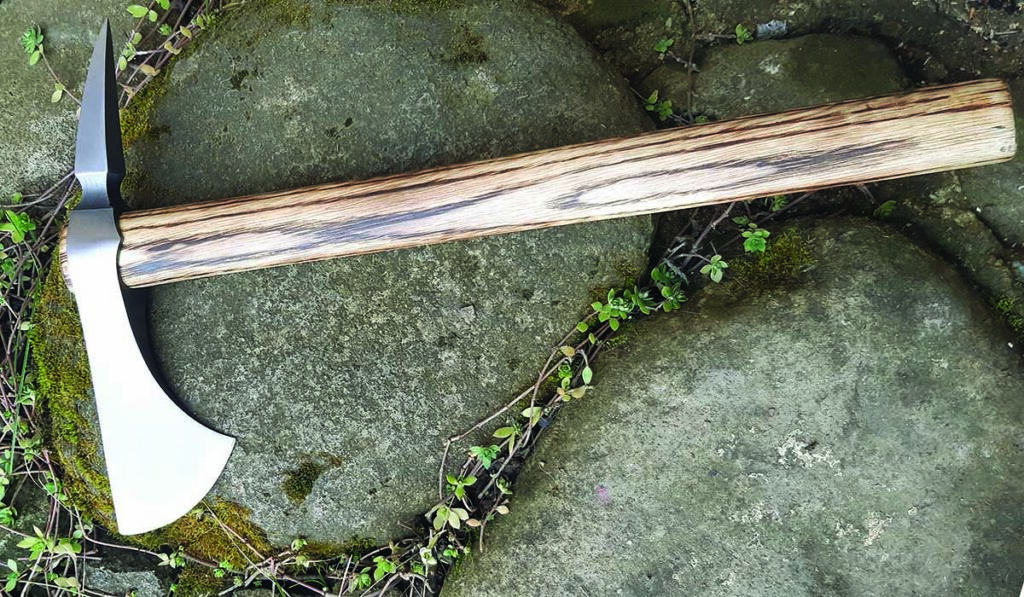
In the spike tomahawk realm is this Csizmar Szilard model with a forged 5160 high-carbon steel head, a hickory haft, and a custom leather sheath. Szilard is a well-known maker in Romania. (Csizmar Szilard photo)

Much like in the United States, prices ranged from reasonable to what seemed extreme. I contacted well over a hundred makers asking questions about materials, construction techniques, pricing, and sheaths, and requested several additional photos. While there are other makers I plan to contact soon, the following are the seven makers I have already started working with.

Meet The Eastern European Makers

Maksim Tjulpin

Maksim Tjulpin has been making knives for 11 years in his home country of Latvia. His interest comes from the diversity of knives that can be made as well as the array of materials. Maksim builds knives utilizing both the stock-removal and forging methods of blade making. He favors forged blades as each has its own unique character.

He primarily uses stabilized wood for his handles, often combined with mammoth ivory spacers. I have found his craftsmanship to be impeccable. The knives feature excellent fit and finish as well as ideal balance and handle ergonomics.

Petr And Peter Dohnal

Petr Dohnal and his son, Peter, have been making knives for 21 years in their native country of the Czech Republic. Working as a computer graphic designer, Petr realized he wanted to build something with his hands. So, he chose to make custom knives. As with many makers, his favorite part is forging the blades, usually damascus. In addition to making his own steel, he uses Elmax, Vanadis 8, and M390, as well as other alloys. He understands that the knife’s intended purpose will often determine the most suitable steel. His handle materials of choice are stabilized wood and antler. I find Petr’s knives a joy to hold in my hand, being sleek, well-made, and exhibiting superior balance and handle ergonomics.

Eastern European Maker: Michal Komorovsky fighter
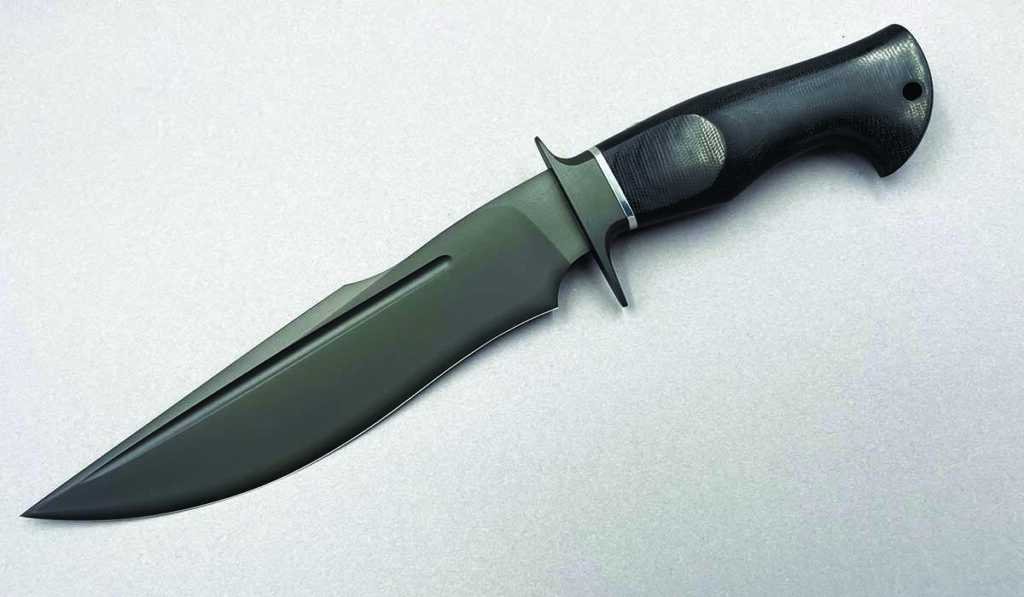
The sleek, stealthy, and sexy fighter by Eastern European knife maker Michal Komorovsky exhibits a 7.75-inch, black DLC-coated Elmax blade, a black canvas Micarta handle, and a leather sheath. The balance of the knife makes it deceptively quick, and a fuller reduces the weight while increasing blade strength. (Michal Komorovsky photo)

Michal Komorovsky

Michal Komorovsky started making knives, in 2011, in his home country, Slovakia, or officially, the Slovak Republic—doing so primarily because he wanted to try something different, and he never looked back. He favors Sleipner steel, which is a new-generation alloy like D-2, as well as M390. When time allows, he forges damascus for his knives, including a wide variety of fixed blades. Michal builds an array of knives, from hunting and tactical models to bowies and even an occasional art dagger.

Many of his tactical knives feature black DLC-coated blades, but he also offers sandblasted and bead-blasted steel, as well as satin- and mirror-polished finishes. Michal uses various handle materials, with desert ironwood being his favorite. I’ve taken a liking to his fighters that exhibit excellent fit and finish, have an outstanding balance, and feel great in the hand.

The Tactical Realm

Piotr Gosciniak

Piotr Gosciniak has been fashioning custom knives in his home country of Poland since 2017. Having a keen interest in the military, Piotr decided to focus his talent on making tactical knives. He occasionally uses high-carbon steel such as 80CrV, but most of his knives are built using quality stainless steels such as Elmax or Sleipner.

Piotr prefers synthetic handle materials like Micarta, G-10, and carbon fiber. He also offers Cerakote coating for his knives. As a former infantry officer, I appreciate the crisp, clean lines of Piotr’s knives. His designs are purpose-driven; these are tools meant to be used. The blade fullers, textured handle material, and thumb serrations add to each knife’s capability.

Petr Dohnal forged a damascus camp knife
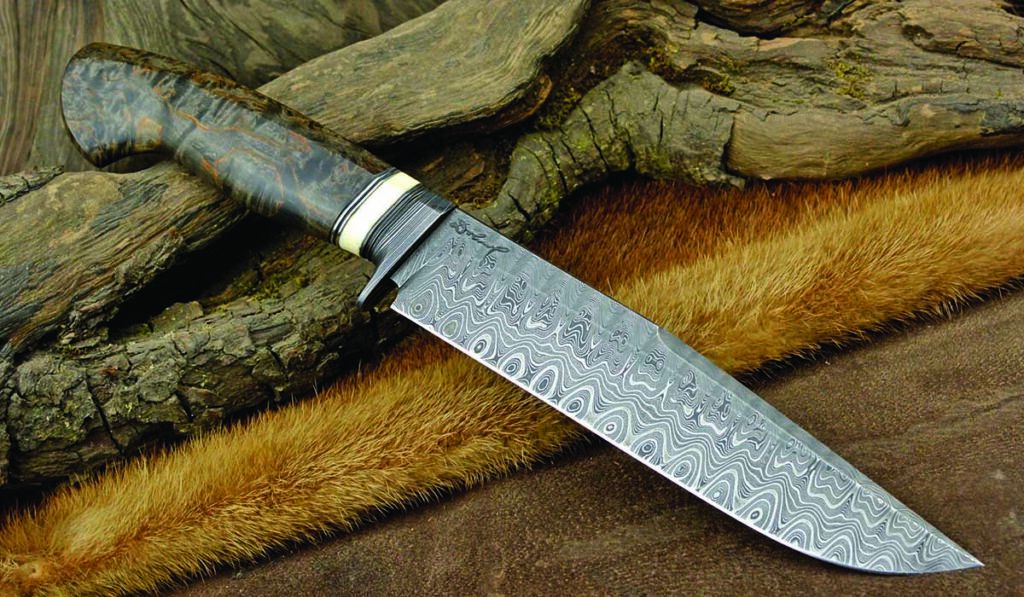
Petr Dohnal forged a damascus camp knife, including the guard, adding a stabilized Karelian birch handle and fossil walrus ivory spacer. It comes with a custom leather sheath. (Petr Dohnal photo)

Jacek Hnatow

Also from Poland, Jacek Hnatow has been building knives for eight years. He started as a collector, then decided he didn’t want to buy knives anymore; he wanted to make them. As an avid outdoorsman, it should come as no surprise that Jacek’s specialties are survival and bushcraft blades. He prefers working with Bohler N690 and Elmax, as well as high-carbon alloys and san mai steel. Jacek’s handle material offerings include synthetics such as G-10 and Micarta, as well as stabilized wood at the customer’s request. His knives, many of which can be huge, are well-balanced with great handle ergonomics. His bushcraft blades are a perfect size to carry in the field, and all of Jacek’s knives are well thought out for the tasks at hand.

Csizmar Szilard

Romanian Csizmar Szilard has been a full-time knifemaker since 2007. When he was younger, he enjoyed video games and one of them allowed players to forge their weapons virtually. So, Csizmar decided to make that a reality. Forging is his favorite part of fashioning knives, hatchets, and axes. He prefers 5160 high-carbon steel for its simplicity and ease of forging. Handle materials are all-natural, with wood and antler being his favorites. Csizmar’s work is clean and balanced, precisely what you would expect from a maker who builds tools that are meant to be used.

Szymek Szlagor

A native of Poland, Szymek Szlagor has been making knives since 2017. Building a knife for himself led to making them for friends and eventually becoming a full-time knifemaker. He enjoys forging and machining carbon steel and damascus. He gravitates toward 5160 high-carbon steel and combines K720 and 15N20 to make damascus. His handle material preferences are natural materials such as stabilized wood and antlers. For his everyday carry (EDC) knives, he prefers to use Micarta. Szymek feels making knives is a beautiful job that involves taking a piece of steel, giving it shape, and improving on it until the blade becomes a tool that will be used and passed down from generation to generation. Having handled his work, he has accomplished his goal.

Working With Eastern European Makers

Language: There are several languages throughout Europe. While it is true that many Europeans speak English, it is equally noteworthy that they do not read and write the universal language well. This is important to know as, more than likely, collectors will be contacting the makers via email or social media. When writing, I often rely on an online translator for help. Understand that such online translating programs could be better. I always let the maker know upfront I am using a translator.

Eastern European Maker: Maksim Tjulpin’s camp knife
Eastern European knife maker Maksim Tjulpin’s camp knife features a 7.1-inch san mai damascus blade, a stainless guard, a black G-10 spacer, and a mammoth tooth and desert ironwood handle. It comes with a custom leather sheath. (Maksim Tjulpin photo)

When emailing or writing to makers, try not to use slang or acronyms, as these usually translate into something that might not have the intended meaning. Remember to be patient with this process, as both collector and maker must understand exactly what each is expecting.

Payments: The preferred method for knife transactions is PayPal. As with most makers worldwide, many are not set up to take credit cards. Those who have traveled to Europe know there are additional fees for using U.S. bank credit cards. Although wire transfers can be made, it is best to check with your bank to find out what the fee for an international wire transfer will be.

Lastly, Western Union is an option that usually comes with an $8 fee. Some buyers might find the process of paying upfront and then having to wait up to a month difficult. However, I have been buying knives regularly from Eastern Europe for the last three years and have never had a package go missing.

Shipping: The maker will generally ship the knife through his or her country’s postal service. Most countries work with the U.S. Postal Service, and once a package is accepted, you can track it coming from Europe. The delivery time frame will average between two and four weeks. While FedEx can be an option, the cost associated will generally eliminate this service from the ideal options.

Szymek Szlagor camp knife
The 13-inch camp knife from Szymek Szlagor showcases a forged Bohler K720 blade with hamon (temper line), a stainless guard and sambar stag handle scales. (Robertson’s Custom Cutlery photo)

Measurements: Europe uses the metric system. As foreign as the metric system is to you, the same is true for the imperial system the United States uses to makers in Europe. Fortunately, there are conversion programs on the internet. In conversing with European makers, please pay attention and differentiate between when they use centimeters (cm) or millimeters (mm), as 1 centimeter equals 10 millimeters, and when it comes to a knife, that could be a huge difference.

Forged In Fire Influence

Most of the makers in this article offer forged blades as part of the repertoire. However, Piotr Gosciniak is the exception, as he specializes in stainless and some high-carbon steel tactical knives. The U.S. market will see a resurgence of this category of knives in 2023-’24. For now, forged blades are the most significant market sector in the United States, partly due to increased interest in forging knives due to the TV show “Forged in Fire.” The interest created by this show was partly responsible for 38 makers earning their American Bladesmith Society (ABS) journeyman smith ratings at the 2022 BLADE Show.

Talking with several ABS master smiths, I was told they saw an increase in the number of makers taking their journeyman smith performance test before the 2023 BLADE Show as well. As a result, I anticipate the final numbers to show a record number of candidates testing for their journeyman smith stamps in 2023. With an increase in knife shows across the United States, hammer-ins, and the accessibility of in-person training and videos on social media, the number of forged blade makers will continue to increase over the next several years.

As these new makers enter the custom knife market, their pricing will be based more on what their peers charge for knives as opposed to a position in the market that their work has earned. In the short term, collectors will be the ones subsidizing too many who are bound to have short careers as custom knifemakers. Long term, the aftermarket will sort out the winners and losers. Therefore, it is incumbent on buyers to understand value pricing and that they should not buy a custom knife that will lose value.

Eastern European Maker: Jacek Hnatow tactical fixed blade
Eastern European knife maker Jacek Hnatow offers the “Wicher” tactical fixed blade in Bohler N690 stainless steel, a black G-10 handle and a custom Kydex sheath. Of full-tang construction, the contoured handle provides excellent grip even when hands are wet. (Robertson’s Custom Cutlery photo)

Over the last 37 years, I have bought and sold knives on every continent except Antarctica. Today, it is easy to find exceptional makers in Eastern Europe and worldwide. I understand that ordering from makers outside the United States can be a leap of faith.

My hints regarding purchasing knives from Eastern Europe should help you with your concerns. The styles, materials, and craftsmanship of makers worldwide have never been better. This is why I suggest you give the makers in this article and others around the world consideration to become part of your collection.

Editor’s Note: This article is from the 2024 KNIVES annual, available at ShopBlade.com

More Custom Knives:

Best Custom Hunting Knives: Is There A Consensus?

Top knife observers decipher the best custom huntering knives ever made.

It’s an ongoing discussion, or maybe a debate, slightly contentious but always cordial. When the question is pondered regarding who made the best custom hunting knives ever, a few names quickly come to mind.

Of course, there is no right or wrong answer. It’s a matter of interpretation, fit and finish, design, form and function, and the feel of the knife in the hand when it’s time to get down to the business of skinning and dressing game. Each respected and well-traveled knifemaker and observer consulted below can tell the stories that back up his top few. But in the end there is no doubt. Each of these revered custom makers and/or bladesmiths has got game. It’s proven in their work.

Bruce Voyles’ Take

BLADE Magazine Cutlery Hall-of-Fame® member and knife auctioneer Bruce Voyles accompanied his fellow Cutlery Hall of Famer, the legendary George Herron, on a few hunting trips and experienced his work in the field.

George Herron' Model 6 and Model 3 skinners
Among the top hunting knives BLADE Magazine Cutlery Hall-of-Fame® member George Herron made are the Model 6 (top) and the Model 3 skinner, aka Little Dude (bottom). The Model 6 sports a 4-inch blade and 9-inch overall length. Blade and overall lengths for the Little Dude: 2.75 and 6.75 inches. Respective blade steel, handle material and construction on each knife are ATS-34 stainless, curly maple and tapered tang. (Jay Mealing knife image)

“George was a fantastic hunter,” Bruce remembered. “When a group of us would go with him, we might kill three deer in a four-day morning and afternoon hunt, but he could get eight if he wanted to.”

Bruce tells the story of an Outdoor Writers Association hunt Herron organized after an invitation from a South Carolina country gentleman that George had helped change a tire. It seems the man owned a large tract of land, and in return for Herron’s kindness he was allowed to hunt deer on the property.

“When we got to that plantation, every guide there was carrying a George Herron knife,” Bruce commented. “The thing about George’s knives is that when you held one and used it, you were using a knife made by a man who had been there. He made tremendous skinning knives, and the balance and feel in the hand are unsurpassed. The balance, shape of the handle, and minor nuances of the tilt of the blade, its thinness, and the tapered tang set Herron knives apart.”

Bill Moran’s engraved gentleman’s hunter
According to BLADE Magazine Cutlery Hall-of-Fame® member Bruce Voyles, the knives of Cutlery Hall-of-Famer Bill Moran feel like an extension of your hand. Mr. Moran’s engraved gentleman’s hunter in damascus and with one of his iconic moon logo sheaths is representative of Bruce’s sentiment. (Eric Eggly/PointSeven image)

According to Voyles, the knives of Herron, Jerry Fisk and Cutlery Hall-of-Famer Bill Moran feel like an extension of the hand. Herron also made knives that were affordable for a hunter to purchase. Since he put many knives in the hunters’ hands because of a reasonable price point, the praise of his work in the shop spread far and wide. Today, there are several quality custom knifemakers contending for recognition, and they include Ralph Smith, Larry Page and Wayne Hendrix to name just a trio, Bruce says.

“Wayne was one of the guys who trained in George’s shop, and while we were hunting he had his own shop set up on the grounds making knives to sell directly to hunters,” he noted. “He was a guide in South Carolina and approaches making hunting knives the same way George did. He’s the closest to George’s knives now.”

Jim Sornberger’s Take

Cutlery Hall-of-Fame knifemaker Jim Sornberger remembers the days years ago when names such as Harry Morseth and Cutlery Hall-of-Famers Bo Randall and Rudy Ruana were synonymous with excellence in hunting knife craftsmanship. He also mentions the fine work of Corbet Sigman and other contemporaries of the 1960s and ’70s.

A.G. Russell made Herry Morseth designed Model 1
“The first new model A.G. Russell made when he acquired Morseth Knives from Harry Morseth was the Model 1, also known as the Ozark Hunter,” Tom Krein noted. “It is a drop-point camp and hunting knife with a 3.5-inch blade, hidden tang, nice guard, and thin-shaped Micarta® handle that make the knife extremely light.” This version sports a stacked leather and fiber spacer handle with a stag butt. (Nordic Knives image)

“It goes back to when I was a kid and my uncle had a gun store in Redding, California,” Jim said. “Those names were famous, and I met Harry Morseth in the ’50s. His Cascade Skinner was my favorite hunting knife for many years with a great handle shape in leather or stag for a good grip and a guard, which is really important in a good hunting knife because you’ve got to hang onto an animal or fish if you’re working and you can’t afford to have the knife slip in your hand. The blades were laminated Brusletto steel from Norway, and the knives came with a safety sheath. Mine was copper-lined leather in the shape of the knife, and later models had a fiber material liner inside.”

Sornberger also mentions Cutlery Hall-of-Famer Gil Hibben, Ruffin Johnson and Clay Gault as makers of outstanding hunting knives. However, trying to identify custom makers that are in that rarefied air with the masters these days requires some reflection. “It’s tough because a lot of guys follow trends nowadays and they find it’s cheaper and faster to make a knife without a guard,” he opined. “Randy Lee has been around a long time and still makes a lot of good using knives. Dave Pitt in Redding, California, does as well, and that’s hunting country. Randy has a stubby little hunter with a 3.25-inch blade and nice guard, and that’s plenty of knife for most hunting applications.”

Tom Krein’s Take

Veteran knifemaker Tom Krein is upfront with his thoughts on the best maker of hunting knives.

“I actually worked for Bob Dozier and A.G. Russell from the mid-1990s to 2001, and honestly this is a tough one. We all use hunting knives differently in the field and for different things, but I would put Bob Dozier forward. He grew up hunting in the bayous and providing for his family, [and] he has a lot of experience making knives. He is an exceptional craftsman, and in the 1980s I feel one of the pioneers in the style of distilling everything down to make hunting knives easier to make and get them in everybody’s hands.”

Jerry Fisk’s Sendero hunter
Award-winning bladesmith Jerry Fisk’s Sendero hunter served as Tom Krein’s inspiration to make knives. (Eric Eggly/PointSeven image)

Krein likes the reasonable price point of a Dozier hunting knife and the attributes that characterize the maker’s outstanding work: a full tang, thinly ground blade, Micarta® handle, and often a Kydex sheath system for safety. “Dozier’s knives check all my boxes,” he related. “The Dozier Personal with a 2-inch blade works great on game, and an investment of $300 will get you a fine Dozier knife.”

Tom also has seen the Morseth line continue with A.G Russell and has tremendous respect for the maker’s legacy. “The first new model A.G. made when he acquired Morseth Knives from Harry was the Model 1, also known as the Ozark Hunter,” Krein noted. “It is a drop-point camp and hunting knife with a 3.5-inch blade, hidden tang, nice guard, and thin-shaped Micarta® handle that make the knife extremely light.”

Tom tips his hat to custom knifemaker Brian Goode, whose hunters and skinners are gaining notice, while he also acknowledges the great work of Jerry Fisk, whose Sendero served as Krein’s own inspiration to begin making knives. And then there’s the geometry and thinness of the blade in ABS master smith James Rodebaugh’s hunting knives that Krein calls “beautiful work.”

James Rodebaugh’s Take

Speaking of Rodebaugh, his thoughts on the best maker of hunting knives include George Herron, whose work he describes as “superb,” and two more greats, D. E. Henry and Cutlery Hall-of-Famer Jimmy Lile. “The first knife I ever owned was a Lile hunter, and he made one heck of a hunting knife,” James remarked. “That knife was my primary hunter before I even started making knives, and it did all I ever asked of it.”

Adam’s clip-point hunter
ABS master smith James Rodebaugh is high on the work of Missouri-based maker Jason Coy and ABS master smiths Jason Knight and Adam DesRosiers. Adam’s clip-point hunter in damascus and stag is a stunner. (SharpByCoop image)

According to Rodebaugh, edge geometry is critical in a hunting knife, along with the design and profile of the handle and proper Rockwell hardness. Each of these characteristics is essential, and the Lile knife was “about as perfect as I’ve ever held, and I’ve dressed well north of 300 animals, not counting small game.”

Rodebaugh’s own knives are reflections of his hunting experience. He has been lauded for the field performance of his Raised Swedge Hunter, which some refer to as a harpoon point, that was actually inspired by a Marble’s hunter design. He has been making the Outfitter hunting knife for about 15 years, forging the blades in batches of five with O1 tool steel hardened to a Rockwell of 60-61 HRC, and a Micarta handle with a palm swell for added comfort.

James has been impressed recently with the work of Missouri-based maker Jason Coy and ABS master smiths Adam DesRosiers and Jason Knight. “Jason saw my raised swedge years ago and asked to use it, and I said ‘absolutely!’ Nobody has probably designed a ‘new’ blade in the last 1,000 years or so. Adam has worked with it as well, and now everybody in the country produces that design feature.”

Of Course, Bob Loveless

The names of custom makers past and present conjure images of their outstanding hunting knives. But no story on the topic would be complete without mention of Cutlery Hall-of-Famer Bob Loveless. While some have said Loveless was a fine maker, some have also said his fit and finish were reasonably good—not great. Nonetheless, the thing about Loveless was his eye for design.

Randy Lee drop point hunting knife
According to BLADE Magazine Cutlery Hall-of-Fame® member Jim Sornberger, Randy Lee has been around a long time and still makes a lot of good using knives. An example is his drop point with an amber-spacer look reminiscent of the My Knife by BLADE Magazine Cutlery Hall-of-Fame® member D’ Holder, a pretty fair maker of hunting knives in his own right. (SharpByCoop image)

“Loveless went to design school,” Voyles explained. “He made a knife with eye appeal. It was different, and a lot of people don’t understand why, but it was the natural French curve. It was the design. People say Loveless made the perfect hunting knife because of the drop point, and to me it doesn’t work as good as one of George Herron’s knives.”

Sornberger knew Loveless well. “Bob was a good friend and signed for me to get into the Guild,” Jim began. “I think Bob found a universal handle shape that he used on all his knives, and it was a combination of a good kitchen knife and all with a guard except for a couple of models he made later on. All fit well in the hand. Bob got a lot of publicity. He could sell snow to Eskimos.”

Krein sees the Loveless drop point as iconic. “But there is a difference with the variance in game animals from squirrels to rabbits to deer, elk and moose. So best at what? I personally think the Loveless drop point is a fine design, but I wouldn’t take it into the woods,” he observed. “It’s just bigger than I like, and I like hidden tangs for hunting knives.”

Rodebaugh reminds that Loveless is a giant among custom knifemakers, and his hunters are noteworthy to say the least. “I met Bob many years ago and didn’t live far from him in California,” James recalled. “He made a good knife, and the drop point had a lot of impact on the industry, but contemporary with Bob were guys like Herron that produced excellent knives. Loveless made a solid working knife and took that to great heights through pretty good marketing, along with his popularizing of ATS-34 stainless blade steel.”

All hunters have a favorite knife, a trusted companion in the field that is handy, dependable, and built for the jobs encountered. While discussing the topic of just who might be the best custom maker of hunting knives is a never-ending exercise, suffice it to say that hunters are fortunate to find such steadfast companion tools when they are needed most.

Check Out More Outdoor Knives:

Advertisement

Must Read Articles

Read this before you make a knife

Knifemaking 101 – Read This Before You Make a Knife

  by Wayne Goddard My experience has taught me that there's nothing like digging in and getting started. I've often said the hardest part of the...
how to forge damascus steel

How to Forge Damascus

Advertisement
Advertisement