Knife History

The history of knives and other edged instruments is tied to the history of people in general. As humankind’s oldest tool, unraveling knife history can lead to even more surprising and enriching information to better understand the world.

Bob Loveless: The Icon’s Indelible Mark On The Knife Industry

Loveless’ impact is still felt today.

A week after BLADE Magazine Cutlery Hall-Of-Fame® member Bob Loveless died at age 81 on Sept. 2, 2010, Los Angeles Times reporter Valerie J. Nelson wrote a lengthy story on the man who sold his first knife to the Abercrombie & Fitch sporting outfitter for $14 more than 55 years earlier.

Nelson wrote that Loveless “made some of the world’s most coveted sporting cutlery by refining knife design to high art.” These succinct words convey a glimpse of the influence this giant in the cutlery industry wielded during his lifetime. In this 50th anniversary year for BLADE®, his legacy stands tall among those who have dedicated their lives in building the knife industry to what it is today.
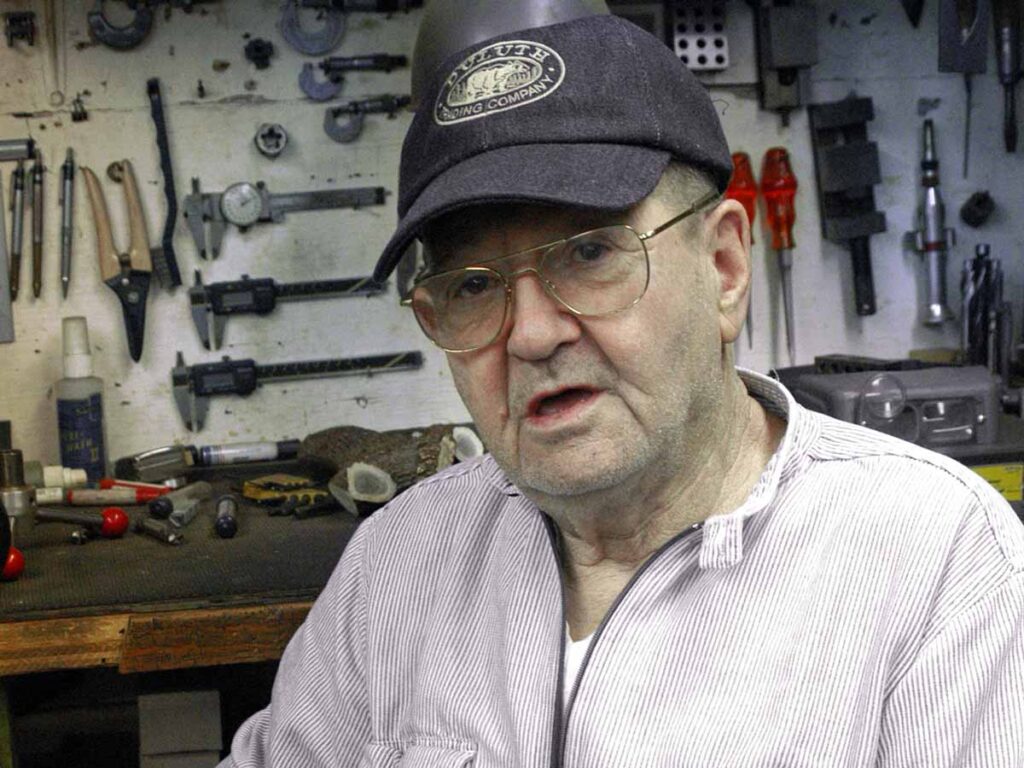
Bob Loveless
Bob Loveless in his shop in October 2006. (image courtesy of Aaron Merritt, grandson of Jim Merritt)

Truth is, there’s scarcely an aspect, nook or cranny of the knife business that Robert Waldorf Loveless did not touch during his lifetime. He was forthright, sometimes gruff and always prone to speak his mind. During an interview for BLADE, he once asked this writer what the tapping noise was that he heard in the background. When I responded that it was the keys clicking as I was taking notes while we talked, he bluntly asked, “Can’t you remember anything? Why can’t you just listen?”

Loveless’ Defining Designs

No matter. Loveless was articulate, extremely intelligent and deep down passionate about art in knives. Cutlery Hall-Of-Famer Bruce Voyles knew Loveless and respected him for what he was.

“The thing about Loveless is he made a knife with eye appeal,” Bruce observed. “It was different, and a lot of people don’t understand why, but it was [his use of the] natural French curve. It was the design appeal.”

True enough, Loveless was a master of design. He had actually studied briefly at the Institute of Design in Chicago in the 1950s, and was a student of the Bauhaus Movement, a cultural and artistic design wave that peaked in the mid-1930s, something of a North Star, a muse if you will. Its dictum: Form Follows Function.
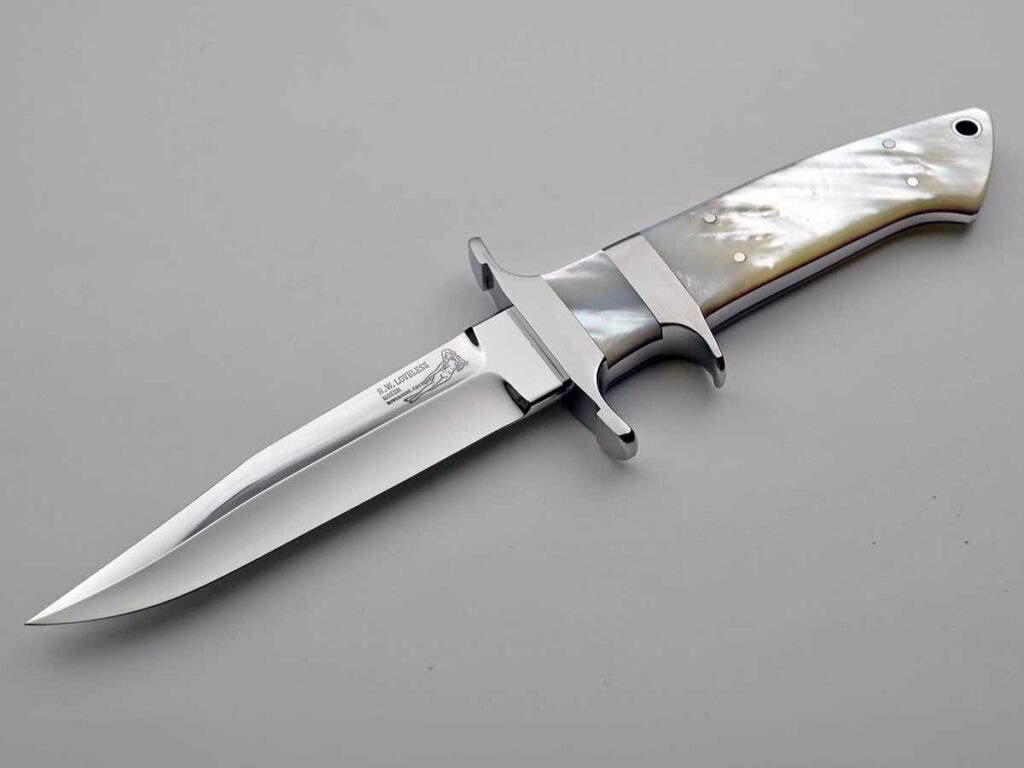
Loveless sub-hilt
Another of Loveless’s favorite designs is the sub-hilt, radiant in one of Bob’s Baby Bear fighters with mother-of-pearl scales, Naked Lady logo and Riverside, California, stamp. (Exquisiteknives.com image)

Longtime Loveless authority John Denton told reporter Nelson, “He is pretty much the Picasso of the knife world and the father of 20th century knifemaking. His design is what made him famous.”

Dave Ellis, proprietor of Exquisiteknives.com, agrees.

“Going back to the 1950s, Loveless has been instrumental in perfecting some of the more common traits found in contemporary knives,” he related. “The dropped hunter is probably Bob’s most emulated design, although the Archer chute, sub-hilt fighter and more show that Bob did not rest on his laurels. When a smaller, carry-sized fighter was called for, Loveless came up with the New York Special.”

Denton recalled the Loveless willingness to revive and reintroduce design and construction concepts that caught hold in modern times and energized new frontiers of imagination and artistry.

“He was not the first to use the tapered tang,” John explained, “but he found out about it from an old knife made in the 1850s that was given to him by Billy DuPont of the DuPont family. Loveless brought it back into the modern world with the tapered tang taking the weight out of the knife. Bob said, ‘It has to look so good you want to pick it up and feel so good you don’t want to put it down.’”
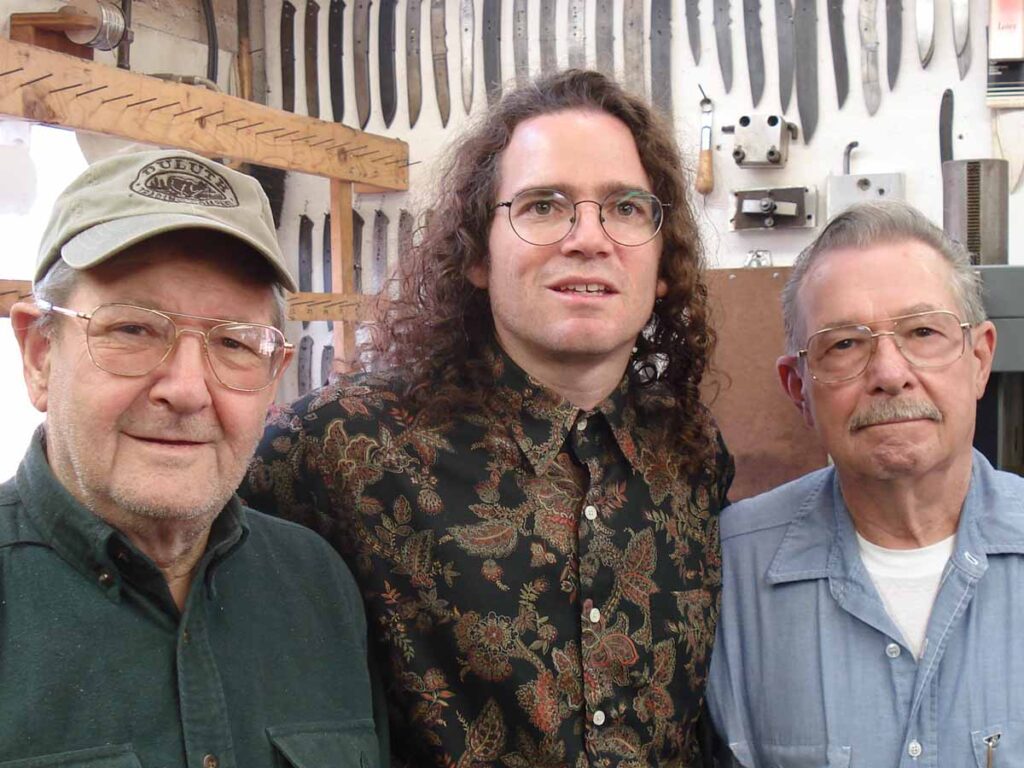
Bob Loveless, John Denton and Jim Merritt
From left, Bob Loveless, John Denton and Jim Merritt in the Loveless shop in Riverside, California.

According to Denton, Loveless also brought the brass wrap handle, hidden pin, two-tone pins and half tang into play.

Design achievement crowns Bob’s career, but there was so much more to him—so much that attempting to compile a summary of his contributions would require more space than this publication might allot in another half-century.

Voyles commented, “I always liked him because he could sum up a complex subject in a sentence. He and I visited one time and I would throw out topic after topic, and he would snap back a quick response. When you left him you knew you left somebody that was phenomenally intelligent on a variety of topics, but that doesn’t mean he had social graces.”

One of Bruce’s favorite Loveless memories was Bob’s rationale during the controversy that raged within the Knifemakers’ Guild as to what truly defined a handmade knife. Loveless liked Jack Daniel’s, so Voyles and Cutlery Hall-Of-Famer Dan Delavan bought a 1.75-liter bottle of Gentleman Jack whiskey (Single Barrel wasn’t available at the time) and presented it to Loveless at his home in Riverside, California.
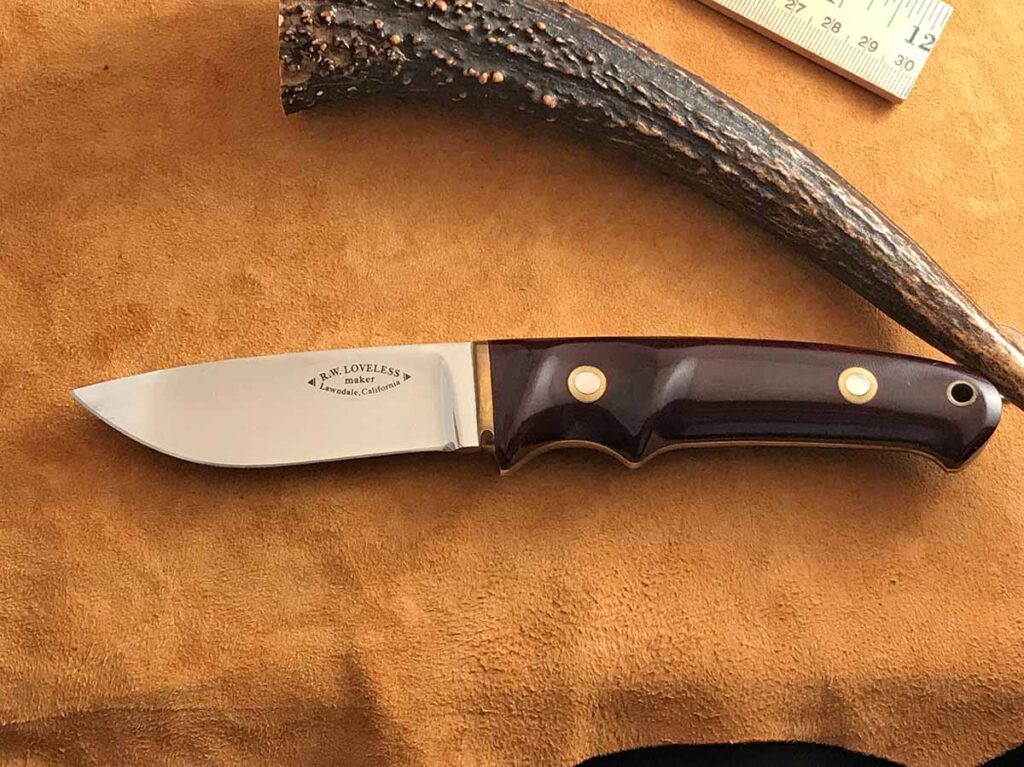
Loveles prototype
In an arrangement between Loveless and Schrade’s Uncle Henry Baer facilitated by A.G. Russell, Loveless sent this actual prototype to Schrade to copy and make the Schrade Loveless collaboration in the early 1970s. It has no guard, an “improved handle,” and a more pronounced belly than most of the Loveless dropped hunters of later years. The handle is burgundy Micarta®. As John Denton observed, the knife “has a magical feel from the ol’ man.” (Denton image)

“I said to him, ‘I hope you will accept this gift in the spirit in which it is intended,’” Bruce smiled. “He laughed and put the bottle on his shelf. Then we sat down and asked him what he believed to be the definition of a handmade knife. We videotaped his answer. He said, ‘I wish I had a machine that I could dump handle material, steel and pins into, and then a knife would come out the other end, boxed and ready to send to somebody. So, make your knives any way you want to. The marketplace will sort you out soon enough.’”

Simple, straightforward and wise.

Bob’s Impact On The Industry

Loveless played a pivotal role in the genesis of knifemakers’ organizations. He was a founding member of the Knifemakers’ Guild and a pioneer with the California Knifemaker’s Association. He was a staunch supporter of knife shows, bringing people to the events just with his mere presence. According to Ellis, Bob regularly attended the Guild Show, BLADE Show, Solvang Show, California Custom Knife Show and Phil Lobred’s Art Knife Invitational

Loveless also brought along younger knifemakers, working with them and offering advice. A few include Jim Merritt, D.F. Kressler, Yoshihito Aida, Cutlery Hall-Of-Famer D’ Holder and Steve Johnson. Bob’s style and artistic interpretation live on in part with the work of these incredible craftsmen.
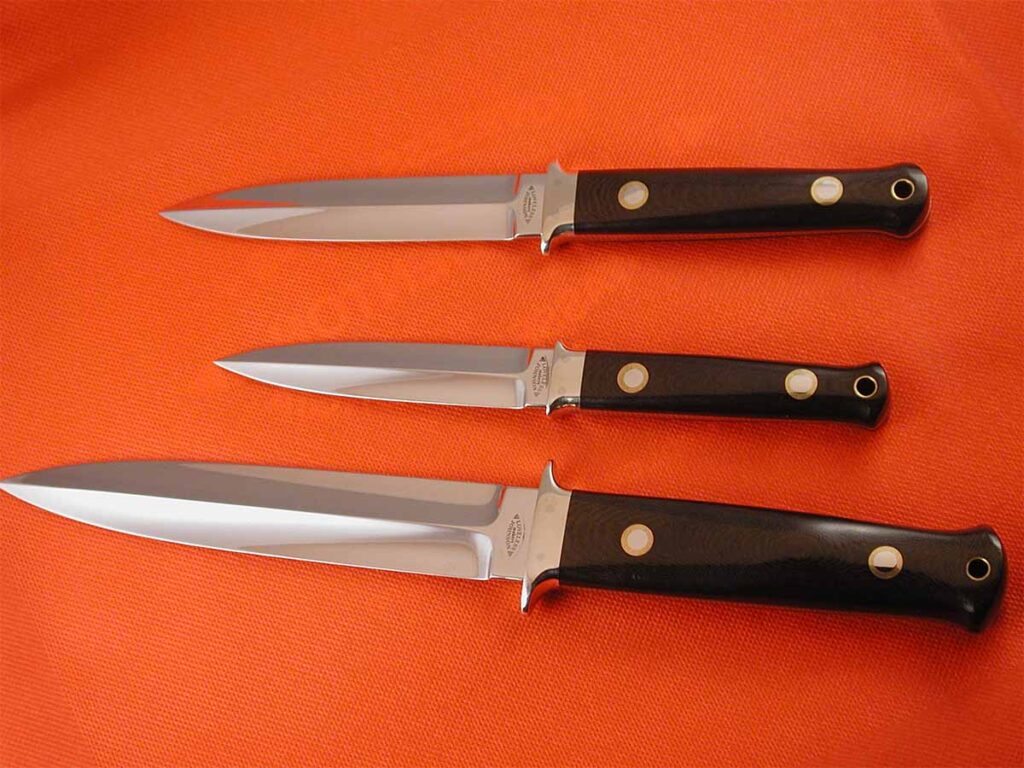
Loveless-Johnson daggers
Steve Johnson worked in the Loveless shop in the early ’70s and remembers Bob fondly. “He was a true friend to those who were genuine and sincere with him,” Steve noted. Of this rare set of Loveless-Johnson daggers John Denton wrote simply, “Three really great knives.” (Denton image)

“Many a maker is in debt to Bob Loveless for the support, counsel, corrections and guidance that he gave,” Johnson said. “He was a true friend to those who were genuine and sincere with him, and the relationship that they had with him. Bob, as we know, was outspoken and quick to correct what he felt was not right or smart, which led to some loving him and others not, a bit like Ed Henry—love or hate—but both were so very good to me personally!”

Materials Maven

Loveless was an innovator in the aspect of materials as well, including 154CM stainless steel and the introduction of ATS-34 from Japan, while also popularizing Micarta® as a handle material.

Ellis commented, “Loveless pioneered the use of many of the common steels used today, especially 154CM. The shop was able to purchase such quantities that Bob could pretty much order what he wanted. The favorite handle material of the Loveless shop was green Micarta.”

Johnson remembered, “There was a stack of 154CM steel lying in the driveway at 4319 W 187th Street [the address of the Loveless shop] the day I first walked in. Bob mentioned that he was excited to get some blades done and heat treated right off. Green canvas Micarta was set in stone as the best handle material in Bob’s view. It’s still right up there on top and is used by many a maker. It’s because of Bob’s legacy that this happens.”

Global Influence

A lasting dimension of the Loveless legacy was his bridge to Japan, as well as his overtures in the European markets.

“Bob was deified to the extent that every Japanese knifemaker included his designs among their offerings,” Ellis explained. “Bob was an icon in Japan, and to this day many of the top makers in Asia have Loveless designs in their repertoires.”
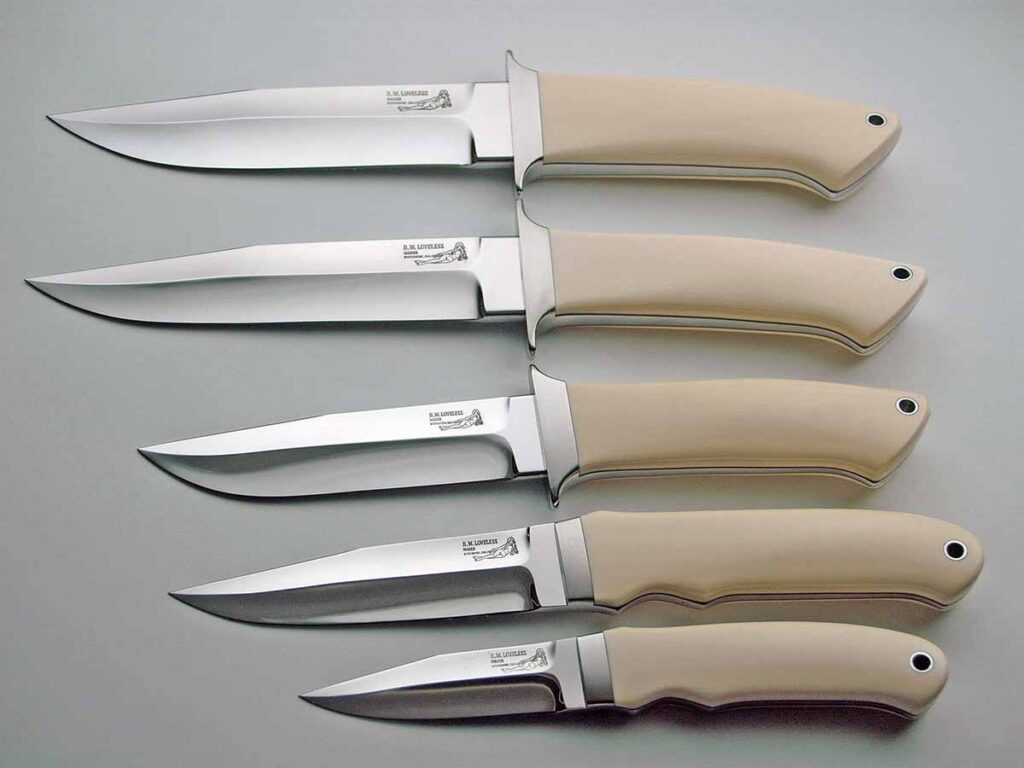
Five Loveless fixed blades
Five Loveless fixed blades sport the no bolt/no pin look in ivory handles. (Exquisiteknives.com image)

Voyles commented, “Bob went over there and showed the Japanese how to make good knives. I went to Japan in 1981 or ’82, and in every factory I went to there was a picture of Bob Loveless and the factory owner. The thing was that Bob’s wife, Yoshiko, was Japanese, so he didn’t have a problem with the language barrier, and he went to Japan to show them how to make knives that appeal to Americans.”

Loveless used his connections to make things happen, and Voyles credits him with the evolution of the folding knife among Japanese manufacturers, as well as a surge in the Japanese collector market.

“Bob didn’t make folders and the Japanese wanted folders,” Bruce recalled. “He had worked on a design with Jess Horn, and Bob put Jess and Japanese collectors in touch with each other. Horn also had a series of folders that he patterned after the old Remington Bullets. When Japanese collectors discovered that, their market for vintage Remingtons went straight through the roof. Loveless sowed the seeds in the 1990s for the collectibility of vintage knives in Japan.”

Collecting Loveless

Today, a Loveless knife is a collectible phenomenon in its own right. Name the year, name the mark on the blade, name the style and the materials, it will sell for astonishing dollars. Denton has noted some models made in the 1970s that sold for $400 then and have reached the rarefied air of $100,000 or more in recent years. The power of Loveless pricing simply takes your breath away.

Bruce is quick to add that Loveless was professionally unselfish. “If you wanted to make a style of his knife in your factory, that was OK,” Bruce noted. “Just ask him.”
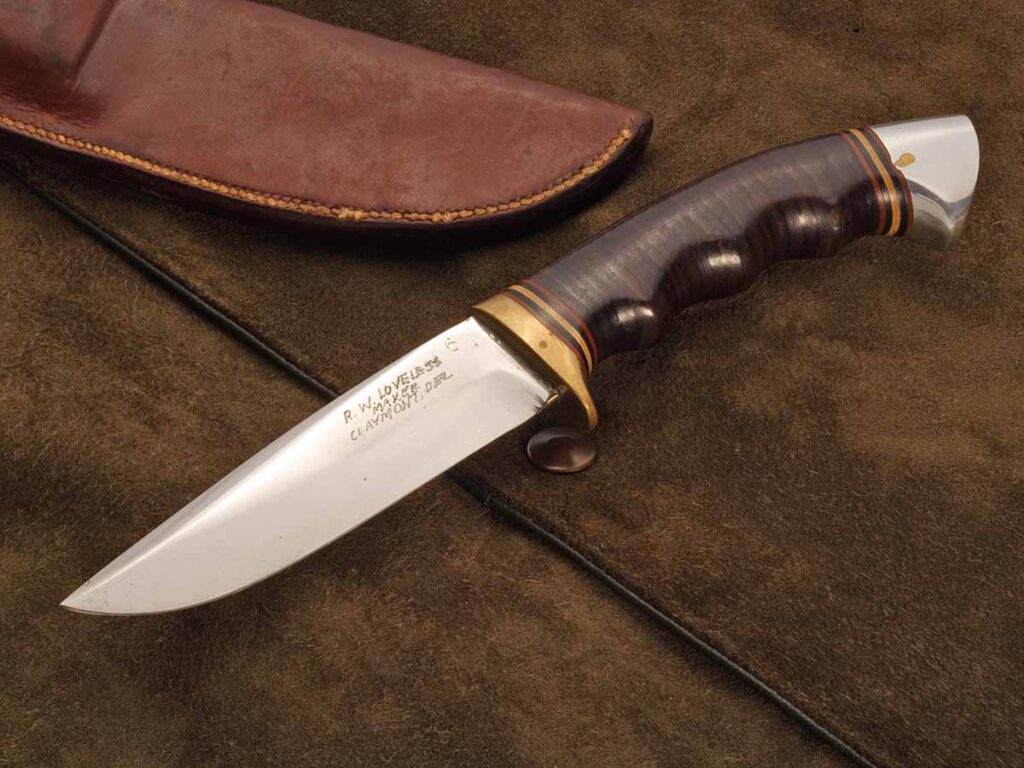
Early Model Loveless
Circa 1955, Loveless sold his first knife to Abercrombie & Fitch for $14 (adjusted for inflation, almost $160 in today’s money). Loveless made this early model for A&F in his shop in Claymont, Delaware.

The pervasive Loveless influence stretched far and wide, from the custom knife shop to the factory.

“His designs for and collaborations with Schrade, Gerber, Lone Wolf and others, and the factory knife market in general, were significant,” Ellis recalled. “Early on the astute factories were taken by Loveless designs and made limited editions in dropped hunters and others. These days factory collaborations are quite common, and you can thank Bob Loveless if you want to give credit where it is due.”

When Sports Illustrated called Loveless for an interview in 1980 and the magazine published his words in the same edition that featured tennis superstar Bjorn Borg on the cover, the impact on the entire knife universe was transcendent. When asked why so many people considered his knives “better” than those of others, he mused, “A knife is an extension of your experience. And I’ve had more experiences than most people. There’s more character running in my veins.”

For those who knew Bob, just the knowing was an unforgettable experience. His contributions to his present and to the futures of others in the knife industry remains incalculable. And so, the longevity of a man does not reside in his years on Earth, but in the perpetual remembrance of his ideas, his workmanship and his innovative perspective on the world.

Therefore, it can be said that when Loveless left us he did not go gentle into that good night. He did not fade away. He didn’t drop the mic. He handed it to those with the foresight and the intestinal fortitude for the days to come. Now, what do we say and do? Loveless might grouse. He might gripe. But he just might also manage a grin.

Read More On BLADE Magazine And Show:

Bob Loveless’ Influence Still Touches Those Closest To Him

Robin Askew moves on, but her father remains there for her.

The constant, the heart and soul of BLADE Magazine Cutlery Hall-of-Fame® member Bob Loveless, was wrapped up in custom knives. There was little time for anything else and there were only rare occasions that he travelled. Bob and his wife, Yoshi, made a few trips to Japan or to Hawaii, on a rare occasion to Europe, but most often with some business purpose involved as well.

And over time, Robin Askew came to appreciate and understand the singular purpose, laser-like focus and personal intensity that drove her father. He was capable of kindness but often brutally frank. He was willing to entertain young knifemakers, share information and then criticize or dismiss flaws with stark, unvarnished perspective. With patience that was sometimes fleeting, he did not suffer fools gladly.

But then, his personality was a tapestry, like all of us, an amalgam of inherited traits and life experience. His mother and father had sent him to live on a farm with grandparents at a young age. According to Robin, he lived and worked with the hired hands, not as a grandchild. At just 15 years old, he joined the Merchant Marine when his mother told the white lie that he was of age.

In addition to the knife her dad made for her, Robin’s other favorite keepsake is a photo of him, a joyous grin radiating from his face, as a cluster of pigeons lands on his shoulders and arms during a visit to Rome many years ago. “It’s a beautiful picture,” Robin stated, “and I look at it every day.”

It wasn’t easy for Bob Loveless, right from the start. But he made something of his opportunities and his native talents, shared them in the way he knew how, paying the price along the way and leaving a body of work of insight into what is beauty and flow in a handmade knife, like no one else has. For the record, he never billed himself as the world’s best knifemaker. He wasn’t, and he freely acknowledged that others were much more deserving of applause for their skills. It was his eye, perspective and sense of beauty and design that thoroughly set him apart.

Four Careers

When Robin grew up, moved out and moved on, she carried the best and the most worrisome of life experiences with her. She made her own way and has come to understand and appreciate the journey.

“I’ve really had four careers,” she reflected. “I worked 11 years in the banking industry and 20 years as a correctional peace officer at Pelican Bay State Prison in Crescent City, California, with 12 years as a peace officer. Put that together with the work in Dad’s office and then when my husband, Jimmie Askew, and I had a restaurant in Crescent City, California.”
When she worked in banking, Robin went to Crescent City on business for her employer. While there she met the most eligible bachelor in town. “It was a 400-mile, eight-hour drive to Crescent City, and I was supposed to be there for a month,” she said. “It became one of those wonderful love stories. Jimmie and I were meant to be together.”

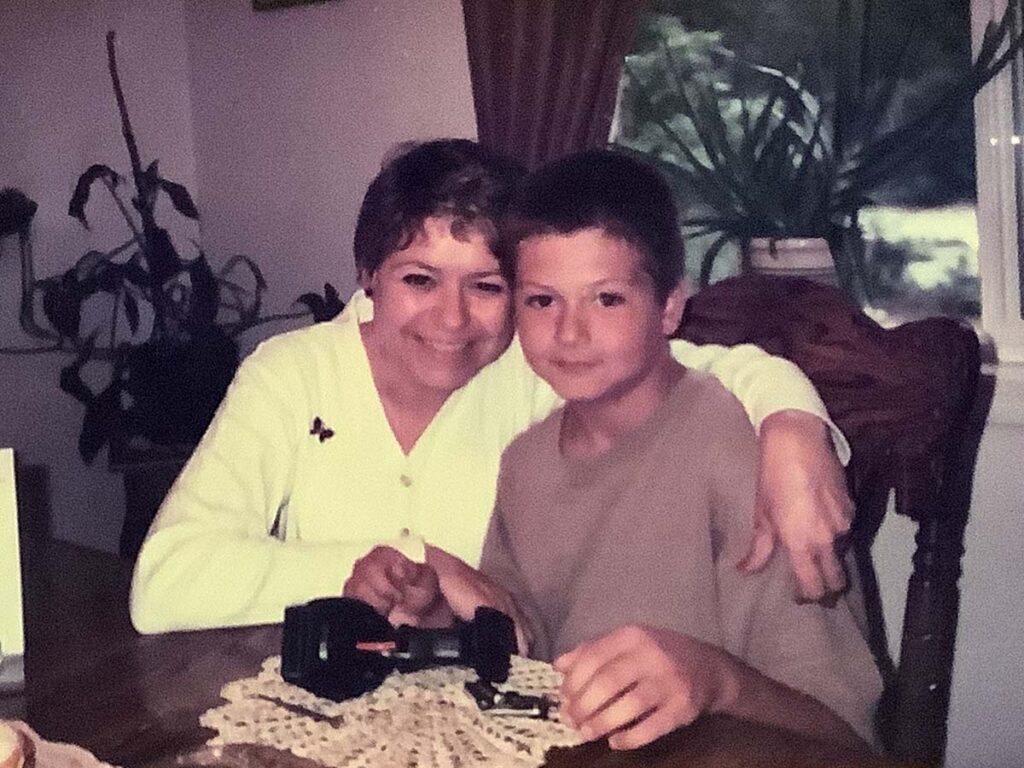
Bob Loveless photographed Robin’s son Nico during a regular visit while they were “out and about.” Nico was 9. The resemblance to his grandfather is striking. (Bob Loveless image)

Jimmie was an award-winning chef, and with Robin’s business background the couple put together a fine restaurant that served a variety of entrees.

“I met Jimmie in 1984,” she recalled wistfully. “We got married the next year, and he passed away 12 years later. He made prime rib, barbecue pork spareribs and fresh seafood. He would go out in the morning on his boat and catch 300 to 400 pounds of rock cod. He would clean the fish and then serve it that night. It was the best seafood in all of Crescent City—wonderful. We also had meat from our mesquite grill, chicken parmesan, grilled Italian sausage, vegetarian dishes and the deep-fried seafood platter.”

Nico

The couple had one son, Nico, who is now 36. When Robin speaks of those days, a tinge of heartache touches her words. But also during that time, she rediscovered the love and care that her father had always had for the family.

Nico and Robin
Nico and Robin

“Dad came up from Riverside to visit us a month before Jimmie died,” Robin recalled. He had been in touch by telephone continually and made himself the father figure that a 7-year-old boy needed during a tragic time.

“After Jimmie died, Dad would come up regularly,” Robin related. “He took Nico fishing four or five times a year. Grandpa was there for Nico. He taught him how to shoot a gun and would charter a boat on the Chetco River in Oregon and they would fish together. He came up to see Nico play soccer, baseball and football, and he stepped in to take care of my son.”

When Bob wasn’t physically present, he was always in touch with Robin and Nico. He worried that Robin worked in the toughest place at Pelican Bay State Prison. It was called the “shoe,” and he once told Robin how he worried for her safety. Her response was from deep inside, a manifestation of something she learned when her father made the introduction to that Japanese gentleman years earlier: “I told my dad, ‘I show them [the inmates] respect, and they show me respect. It’s really the safest place in the prison to work.’ I told him there were two officers for every inmate and that I really had no qualms about it.”

Bob took this picture when he visited Robin and Nico not long after Jimmie Askew passed away. Nico was 10.

That soft spot in Bob’s heart came through time and again as he cared for his daughter and grandson. “He would call us and say, ‘What’s Nico doing?’ He wrote a check to pay for Nico’s braces. He was there for both of us. Being a widow raising a young boy, I could call him anytime and we would talk. I also started to do that with my mother because I wanted to reach out and make sure that my contact with my family was really strong. Dad was so far away, but I talked to him at least once a week. He became the type of dad that my son needed.”

Traits & Quirks

All the while, the legend of Bob Loveless continued to grow. Tales were told. Knives were made and sold. Stories were swapped, and the maker slowly but surely grasped his own impact on the world of knives. At the same time, his various interests, personality traits and, yes, his quirks made him more than just a knifemaking phenomenon. They made him a marvel, a celebrity and an icon.

Bob always carried a gun. “Even when I was a little girl,” Robin laughed, “I remember that he would hang his gun on the towel rack in the bathroom.” For some time, he enjoyed rabbit hunting in the desert with friends. But then another fork in the road pointed a different direction when it came to outdoor activities.

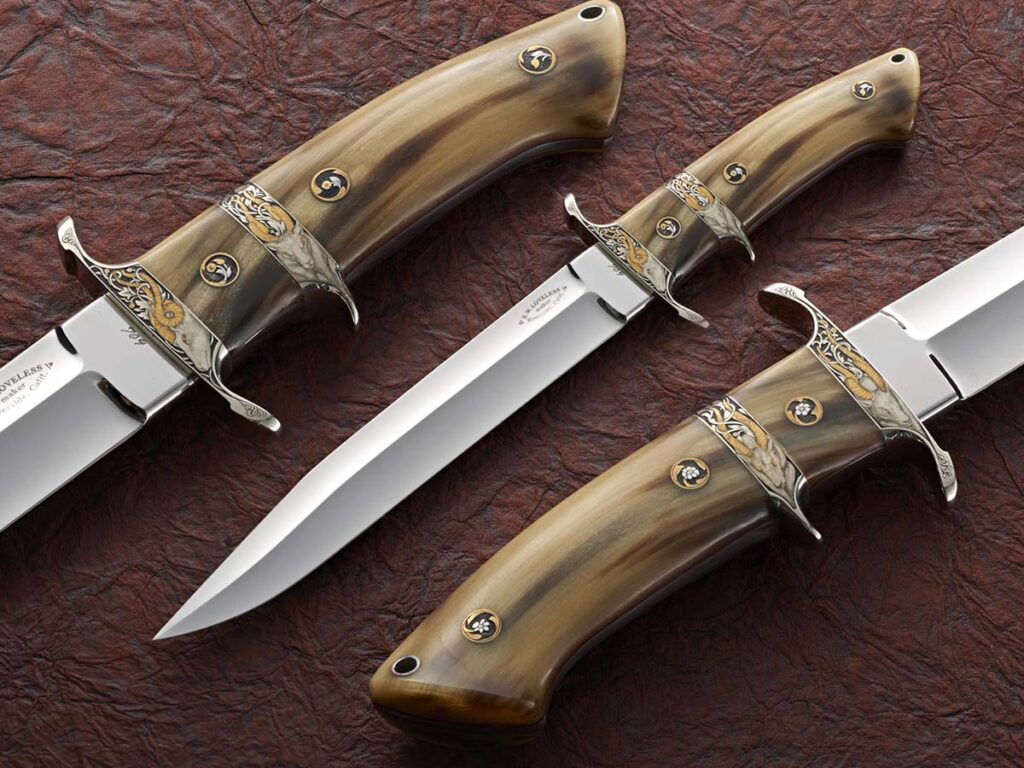
It was his eye, perspective and sense of beauty and design that set Bob Loveless apart. Few if any of his knives capture these traits better than his Big Bear fighter in sheep horn and gold engraving by Dan Wilkerson. (from the John Denton collection; Eric Eggly/PointSeven image)

Robin commented, “They took a lot of hunting trips, and one day Dad decided to stop shooting animals with a gun. He started shooting pictures with a camera. He loved photography, and I have no idea how all that started—but, gosh, I remember when I was a young kid he would take me and Allison on the weekends to camera stores. He would go in and talk for a couple of hours, and we were bored out of our minds. He would take pictures like you wouldn’t believe.”

Adding to Bob’s repertoire of activities, he was also an accomplished gunsmith. If these endeavors sound like a lot to pack into a lifetime, then there is no hesitation in labeling Loveless a true “Renaissance Man.”

Nonetheless, he had pursued his passions, probably without seeking the fame that came along with them. “I do know he never liked living in fancy houses,” Robin remarked. “But he had sports cars, and his favorite car depended on his age bracket. He would drive the back roads to the Chinese restaurant in Riverside and hit 100 miles per hour. At one time, he had three cars and two airplanes. He was a pilot with a lot of camera equipment. He probably got his pilot’s license before he moved to Riverside. I forget what year he got rid of his planes. He had crashed and it was no fault of his own. It happened when a bigger plane was landing and he got banged up. He had a limp after that.”

Keepsakes

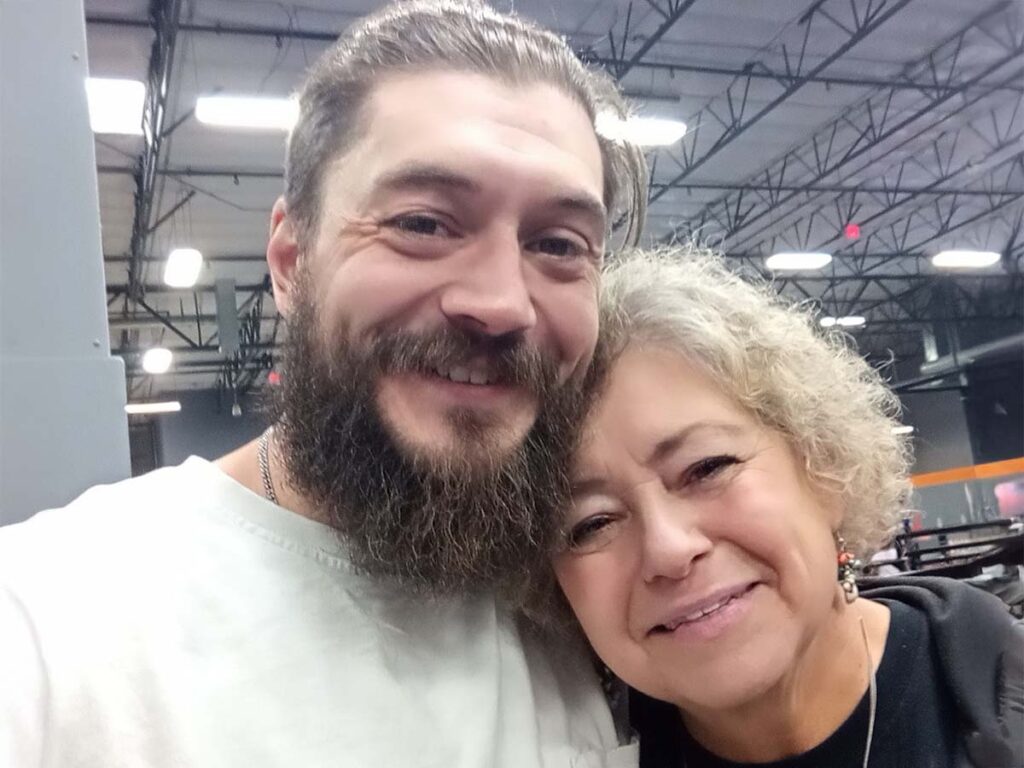
Writes Robin: “My handsome son Nico as he is today, shaggy beard and all. As a mother, I think his eyes and smile show what a kind and good man he is. I know his grandpa would agree with me and like this picture very much.”

Today, Robin’s heart is warmed by her memories, her strong Christian faith, and the knowledge that her dad truly became a father. His life was a mosaic of love and loss, turmoil and moments of calm, fiery and icy emotion, but always with a heart for the good and for his family. She clings to at least a couple of special items that symbolize the tie that binds.

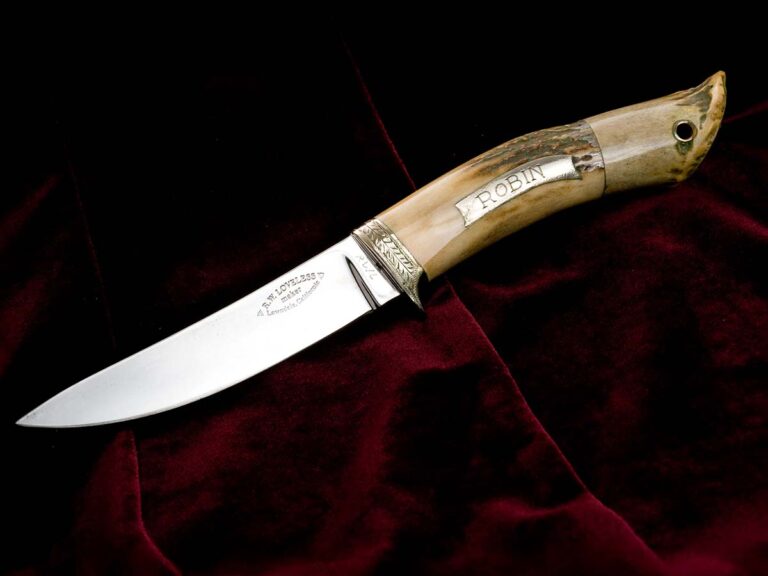
He made a banana skinner for her when she graduated from high school. “It has a stag handle with intricate engraving that he had done by a silversmith,” Robin said, “and I think the handle is at least 6 inches long with the blade about 7 inches. It is absolutely beautiful.”

A few years ago, Steve Johnson cleaned the knife up and put an edge on it. Dave Ellis took photographs of the one-of-a-kind piece, and John Denton, likely the foremost authority on Loveless knives in the world today, offered powerful words and urged her to treasure it always.

His various interests, personality traits and quirks made Bob Loveless more than just a knifemaking phenomenon—they made him a marvel, a celebrity and an icon.

The other keepsake is a photo of Bob, a joyous grin radiating from his face, as a cluster of pigeons lands on his shoulders and arms during a visit to Rome many years ago. It captures a sliver of his enjoyment of life, a glimpse into the heart and soul of just who he was. He was the gruff guy that gave generously to the local animal shelter, the edgy and matter-of-fact curmudgeon who handed substantial financial support to the UPS driver who had served faithfully in the area for years when Bob found out the guy had fallen on hard times. He was simply their quiet benefactor.

“It’s a beautiful picture and I look at it every day,” Robin offered. She ponders exactly where his genius came from and concludes that he inherited it from his mother. She admits that the spark of “genius” has not emerged from any other family member and concludes, “It was meant to be. That kind of genius is created before birth. My father was extremely gifted, and I always knew that.”

True enough, he was gifted, and in some ways that only a relative few others were even aware of.

Growing up Loveless and living within the sphere of influence her famous father created has been an adventure for Robin Askew, a thrill ride that began so many years ago, one that continues well after her dad’s departure from this Earth.

Read More On Bob Loveless:

4 Surprising Superstitions About Knives

0

Editor’s note: This article comes courtesy of Knife Aid, a mail-in knife sharpening service that’s changing blade maintenance. Visit the Knife Aid website here or read BLADE‘s review here.

There’s a certain mystique to knives. They’re ancient, crafted with secret techniques and can instantly convey a message about the person in possession of them. It’s no wonder there are a few superstitions about knives out there. Here are four.

1) A Gifted Knife Can End a Friendship

The saying goes that a gifted knife will sever the ties between the giver and the receiver. To avoid the end of a friendship, the recipient needs to hand over a penny to the benefactor. Like that, the gift turns into a purchase and no harm will be done.

2) Ease Labor Pains During Childbirth

Placing a knife under the bed of a woman giving birth is believed to ease her pain during labor. Also, sticking a knife into the mattress of a laboring woman is supposed to help her birth a boy.

3) Don’t Lay One Knife Across Another

Crossed knives on a table will cause a quarrel. Crossing a knife with another piece of cutlery is a sign of witchcraft. And if you cross your knife with your spoon, you are implying the food didn’t taste good and that you wish bad luck on the chef.

4) Don’t Sharpen Knives After Dark

It was believed that sharpening knives after sunset was bad luck – which makes sense, considering that this superstition goes back to a time before electricity.

No matter if you follow the original advice or apply the antidote of keeping “a pinch of salt in the churn to keep the witches out,” we strongly advise against sharpening in the dark. Always.


Knife Superstitions

Don’t Risk It! Knife Aid Will Sharpen Your Knives For You

No matter what time of day it is, Knife Aid can take care of your knife sharpening and repair needs. Knife Aid makes it easy to mail in your knives for maintenance.

Find out how here.

Carrigan Knife: Is It A James Black Original?

0

In the author’s view, the Carrigan has tells that prove James Black made it.

The work of James Black is iconic. Once you’ve seen one of his knives, you’re not likely to forget it. While a casual observer sees a steel blade that’s well formed and a coffin-shaped handle with black walnut and silver trim nicely complementing each other, informed observers see much more.  

Consider yourself more than just a casual observer. You study the knife in every detail. A steady stream of questions begins to cross your mind. You may contemplate the time period, the location and the tools by which the knife came to be.

Why did the knifemaker do this? What were his thoughts when doing that? What factors prompted the design? What subtleties of design did Mr. Black discern and were there any he learned along the way?

I am not a casual observer when it comes to the work of James Black. In fact, I am among “the birds that have flocked together” to study his work. Our group has been studying and gathering data to serve as a baseline for future revelations that may occur pertaining to historic knives. The database can be used to aid in authenticating existing as well as newly discovered knives thought to have been made by Black.

While our group includes collectors, engineers, historians and archaeologists, it also includes knifemakers. The perspective of each adds invaluable insight to the discussion. And oh, what a discussion it is!

What Is The Carrigan Knife?

For several years I was fortunate to have been the resident knifemaker for the Historic Arkansas Museum in Little Rock, Arkansas. It is a rich environment to learn and observe examples of historic knives, among which are some examples of Black’s work. Noteworthy among those is the Carrigan Knife.

Its historic provenance is solid, pointing directly to Black as being the maker. Since Black did not mark his work by stamping his name on it, the reliable historic provenance of the Carrigan Knife is of even more importance—in fact, it’s pivotal to the attribution of any other possible Black knives. Once determined to be authentic, the other knives in the museum’s collection, or elsewhere, can be attributed to Black as well.  

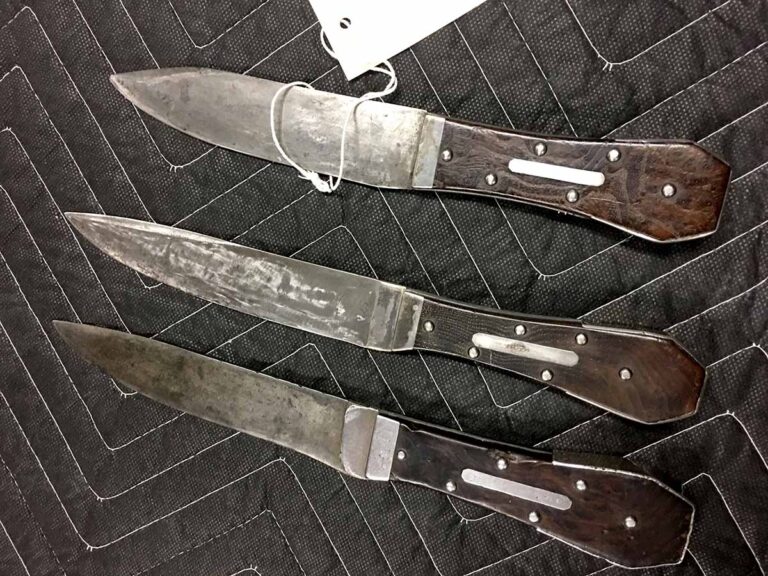
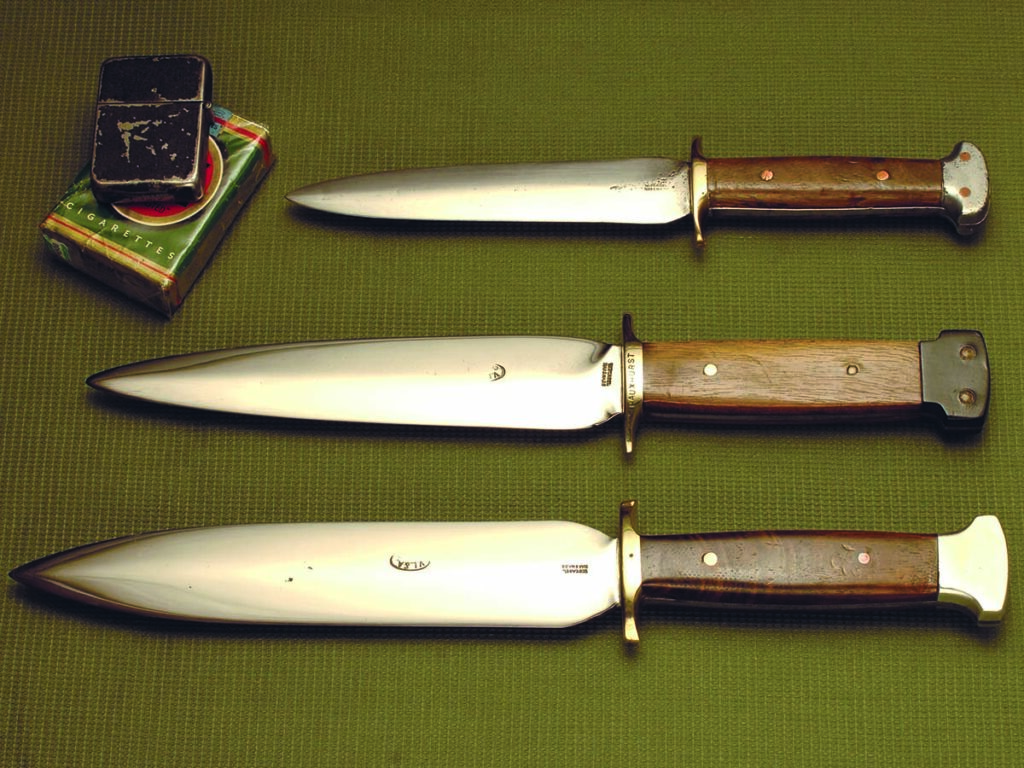
Consider Image 1 (top of page). The knife in the middle is the Carrigan, known to have been made by Black. It has provenance. What about the ones on either side? Do they have rock-solid provenance? No.

In the eyes of the museum curatorial staff as well as in the context of this discussion, an object’s provenance is important. However, some of the knives attributed to Black, while not having direct provenance, have circumstantial provenance.  Does this lessen their value in the historical narrative? No. If determined to be authentic, they are just as important. Even a newly discovered knife with no provenance at all may indeed be authenticated to have been made by Black.

Being able to determine the authenticity of a possible Black-made knife, apart from provenance, would require an examination of the knife. The examiner would need to have intimate knowledge of details and factors unique to Black’s body of work.

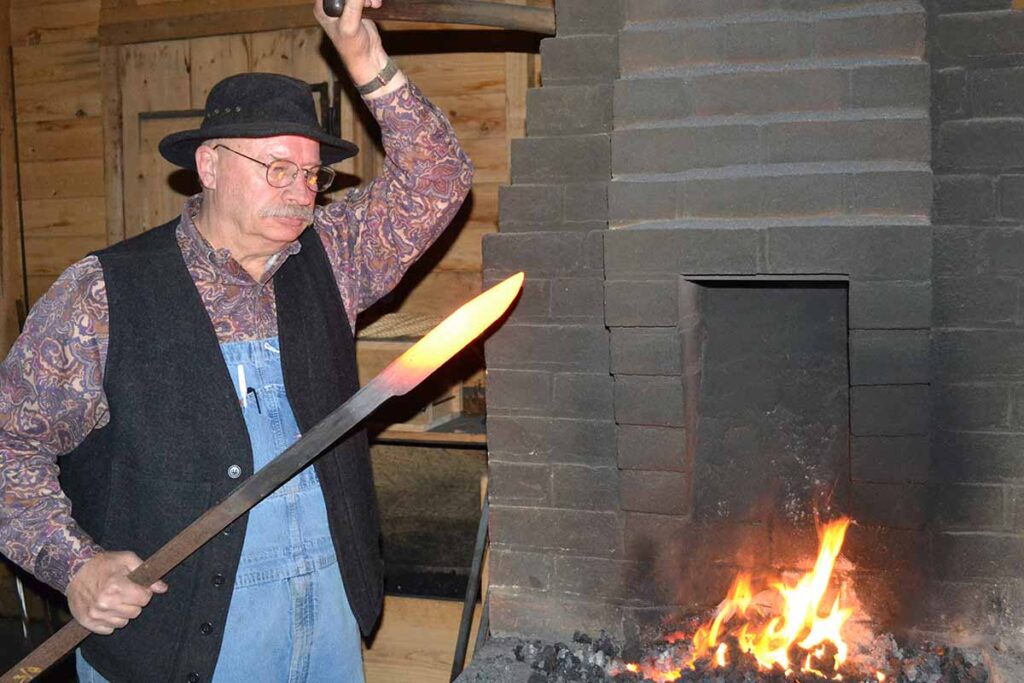
Lin Rhea forging
For several years the author was the resident knifemaker for the Historic Arkansas Museum in Little Rock, Arkansas, home to a number of authentic 1830s and other vintage bowies. (B. R. Hughes image)

In Image 1 you can’t help seeing the obvious relationship between the three knives. While they are not identical, they are so similar that it would be logical to assume they were made by the same hands. While those things are compelling to the belief that Black made all three, much more must be considered to authenticate a knife as his work. Some of those considerations follow.

Any maker’s work, whether currently or in the 1830s, will exhibit common features that, in some way, set the work apart as different from others. Some features may be noticeably subtle and some radically bold. Bold features can be imitated to a degree by others. The subtle features often go unnoticed and are much more difficult to imitate. Black’s body of work exhibits several features that tie the individual knives together circumstantially. Some features are subtle, some bold.

In Image 1 you can easily observe the bold features common to each individual knife, such as the dark handle scales, the silver trim, the coffin-shaped handles, etc. However, to authenticate them as being made by the same maker requires familiarity with that maker’s known body of work and an opportunity to document the features.

The features may be construction techniques or tool marks that are the same from knife to knife. Documenting the common features involves quite a lot. It implies that multiple knives are closely examined for these common features. In some cases, the common features can only be seen through modern technology such as X-rays or other forms of testing.

It is not known how many knives Black made but there’s enough in existence to create a problem of logistics. The knives that are thought to be authentic Black knives are scattered over several states. Getting them together has been tough but we’ve had some success thanks to the knives’ respective owners. The trust and support they’ve shown to the research group is very gratifying.

As you probably have noticed I’ve been very careful with my words since it’s not my place to share too much out of respect to the owners. Some details that are important in matters of authentication shouldn’t be divulged. Lack of these invisible details wouldn’t prevent a modern maker from faithfully reproducing a knife of the style. Remember, imitation is flattery but counterfeiting is illegal. Counterfeiting has been done and there are cases where collectors have been duped. Makers should always mark their work. 

Tells Of An Original James Black Knife

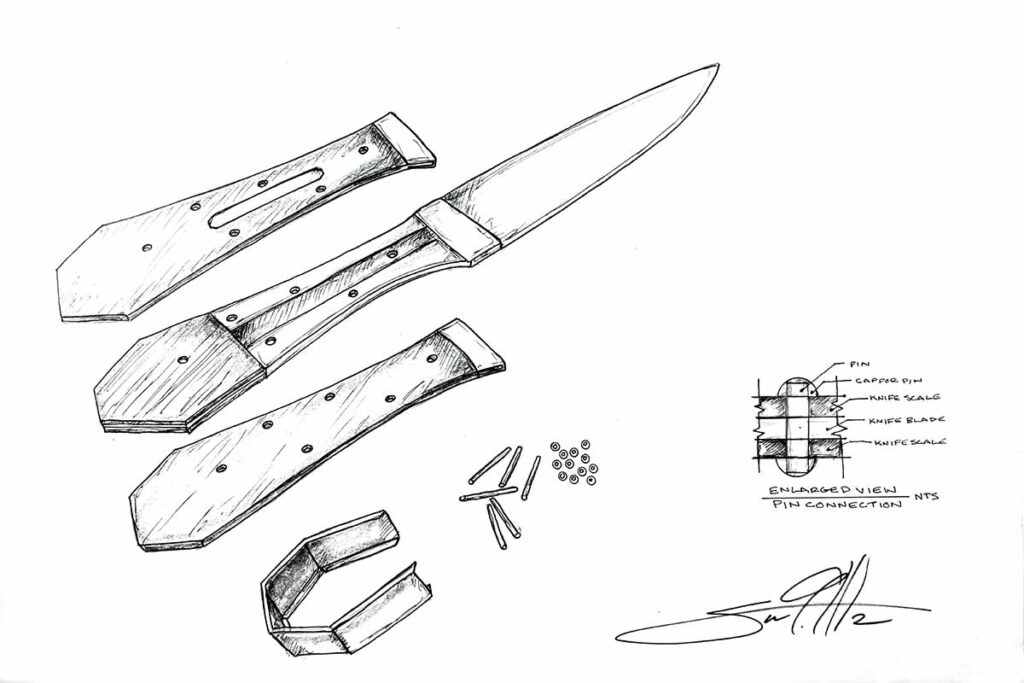
All this said, there are things “invisible” that we can discern by observation. In Image 2 (below), an illustration by Steve Hotz, notice that the construction assembly of the Carrigan Knife is comprised of three basic layers: the blade and two handle scales.

While there are three basic layers, each layer can have other parts that contribute to the overall knife. For example, the blade’s tang has additional pieces of silver: one on the ricasso and one each wrapped around the top and bottom of the spine. These serve as a soft bed for the scales to sit on. While thin, these wraps of silver can be filed flat for a good fit of the right- and left-hand scales. They extend back to where the maker chooses to put the silver pommel wrap. The blade tang is also bored for the pin holes to attach the scales. Moreover, the scales have front caps that are flush fit so the scale will lay flat, as well as escutcheon plates apparently individually mounted to the scale independent of the layer’s assembly. When the three basic layers are completed and prepared sufficiently, the scales, which are drilled to fit the tang, can be assembled to the blade and the capped pins installed as well as the pommel wrap.

The construction assembly of the Carrigan Knife
IMAGE 2: The construction assembly of the Carrigan Knife is comprised of three basic layers: the blade and two handle scales. Each layer can have other parts that contribute to the overall knife. For example, the blade’s tang has additional pieces of silver: one on the ricasso and one each wrapped around the top and bottom of the spine. (Steve Hotz illustration)

What I’ve described is the general assembly of Black’s Carrigan Knife.* The entire blade’s steel tang is covered by a protective layer of silver along with the wood scales. Considering the lack of modern epoxies and rust-resistant steels, I consider Black’s logic and resourcefulness very impressive. He strategically placed the silver on each of the three layers so that, when assembled, they meet and provide protection for the knife’s steel full tang, as well as an aesthetically pleasing appearance.  

Historically, a blacksmith shop may have had a post drill and some early machinery available. I can reasonably assume that Black had some of this equipment too, but I have no way of being sure. Where we today would likely grind a part, Black may have filed it. To save filing he probably forged very close to finish before filing. We today may skip the forging stage entirely if required and still be able to reproduce a close facsimile of his knife. For every step of his process, we bladesmiths and/or knifemakers can transpose a modern technique or tool.  

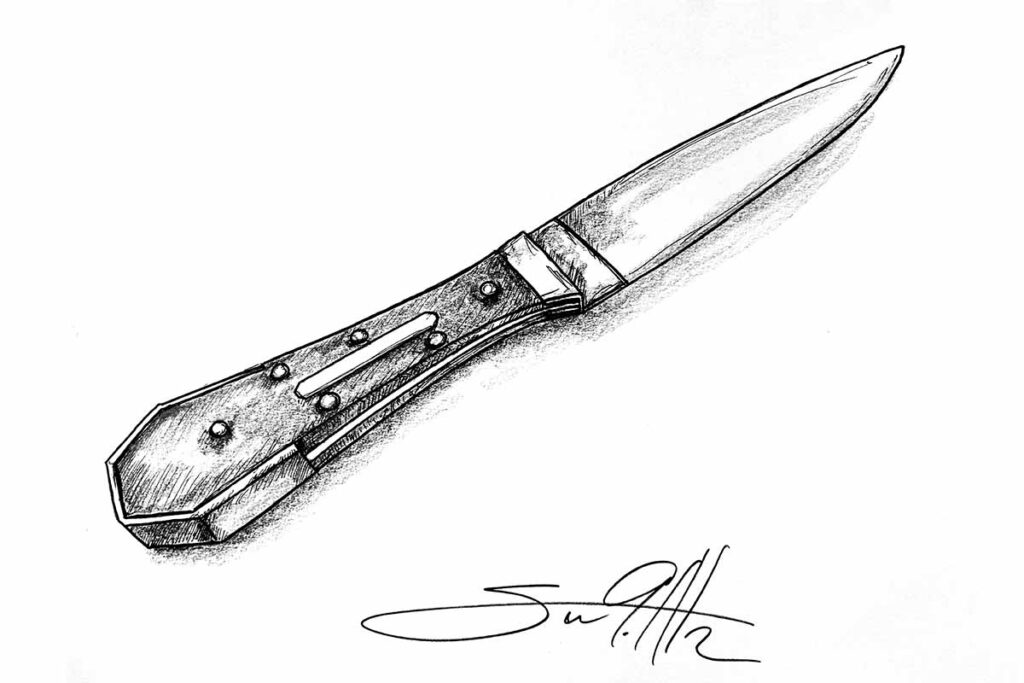
Picture of assembled Carrigan Knife
When the three basic layers are completed and prepared sufficiently, the scales, which are drilled to fit the tang, can be assembled to the blade and the capped pins installed, as well as the pommel wrap. The result is the completed Carrigan Knife. (Steve Hotz illustration)

Black’s process was an interactive, emergent one. The second step emerged from the first. The third step emerged and interacted with the first two steps, and so on. In other words, it was not precision technology as we commonly see today where the parts can interchange from one knife to the next. Emergent technology enabled a craftsman to create complex designs with a reasonable expectation of consistency, albeit not precision.

Again, study the three knives in Image 1. Although they are not identical, you can see the family resemblance. It was a structured process that was organized to lead to a predictable result. On top of that, Black was taking only three materials—steel, wood and silver—and creating a process that makes sense. Considering the relative lack of resources and technology, I think he did well to even create a knife. But he did much more.  

When thinking of Black’s work, think not only of his knife design but his process design. It’s his process design that made his knife design repeatable. Modern knifemakers can learn from him in that regard.

Three Questions To Consider

In closing, following are three questions to ponder. The first two are for all of you and the third is for the bladesmiths and/or knifemakers among you.

  1. If given a limited number of resources, would you be able to make a knife?  
  2. If given these limitations, would you be able to design a knifemaking process? 
  3. In your knifemaking endeavors, how much of your process is an imitation of others and how much is yours?

*Author’s note: I have not gone into detail on each of the individual parts and how Black performed these steps for two reasons: 1) I can only observe the appearance of the knife and speculate on his exact techniques, and
2) It would only serve the purpose of counterfeiters.

Editor’s note: While BLADE® recognizes the author’s superior knowledge concerning the provenance of the Carrigan and other knives attributed to James Black by the author and others, BLADE continues to stipulate that for BLADE to recognize that a knife was made by a specific maker, the knife must bear the specific maker’s name or mark. The presence of such a mark does not necessarily prove the knife was indeed made by the person or company marked, but the absence of a mark is enough to preclude BLADE from attributing the knife’s make to any person, company, etc. Since, as far as we know, Black did not mark his knives, BLADE does not attribute the make of any specific knife to him. That doesn’t mean BLADE is right or wrong, it’s simply our policy concerning the matter. To be both fair and accurate to all, it is a policy we apply not just to Black but to all knives and all knifemakers.

More Knife History:

U.S. Military Daggers: Blades That Have Taken Point

Daggers have struck home the U.S. military’s point from the trenches of Europe to the jungles of Vietnam.

Through the years, the military dagger has been considered an essential piece of equipment for the soldier on the ground and the pilot in the air. As a second line of defense, the dagger must be accessible and capable of quick deployment, not to mention efficient at its job.
As U.S. military personnel have gone into action, their choice of daggers provides a window into their operational history and a view of their actual aptitude when seconds count. Design and dexterity are hallmarks of dagger use in the heat of a life-and-death situation, and these storied weapons of war have gained their place in the annals of close combat.

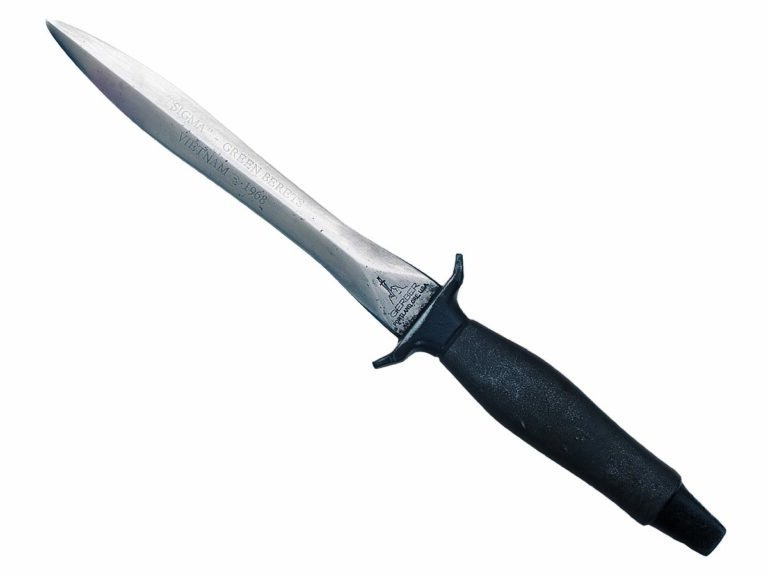
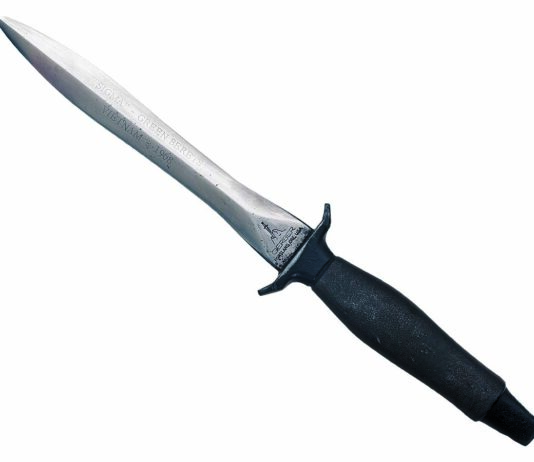
“A good friend of mine was a chopper pilot in Vietnam,” recalled BLADE® Magazine field editor Kim Breed. “The pilots carried the Gerber MK II upside down on their flight vests. When he was shot down, he and his crew chief went through their ammo; then they drew their daggers while they waited for pickup. They locked onto the enemy, rammed them through the side [with their daggers] and hung on. Then they took [the enemy’s] AK-47s away from them and got back into the fight. They defended themselves while Cobra gunships laid down suppressing fire and a rescue bird, a Huey, came and got them.”

Kim’s comrades might well have been killed in the melee had they not had their Gerber Mk II daggers when needed. Designed by Clarence “Bud” Holzmann, the knife gained legendary status during the Vietnam War, and though it was not standard issue, the Gerber Mk II was popular with U.S. troops—from airmen to special forces and everything in between. The wasp-waisted blade of the original remains a symbol of the close combat sometimes experienced in Southeast Asia, while its intimidation factor led to a redesign for the consumer market.

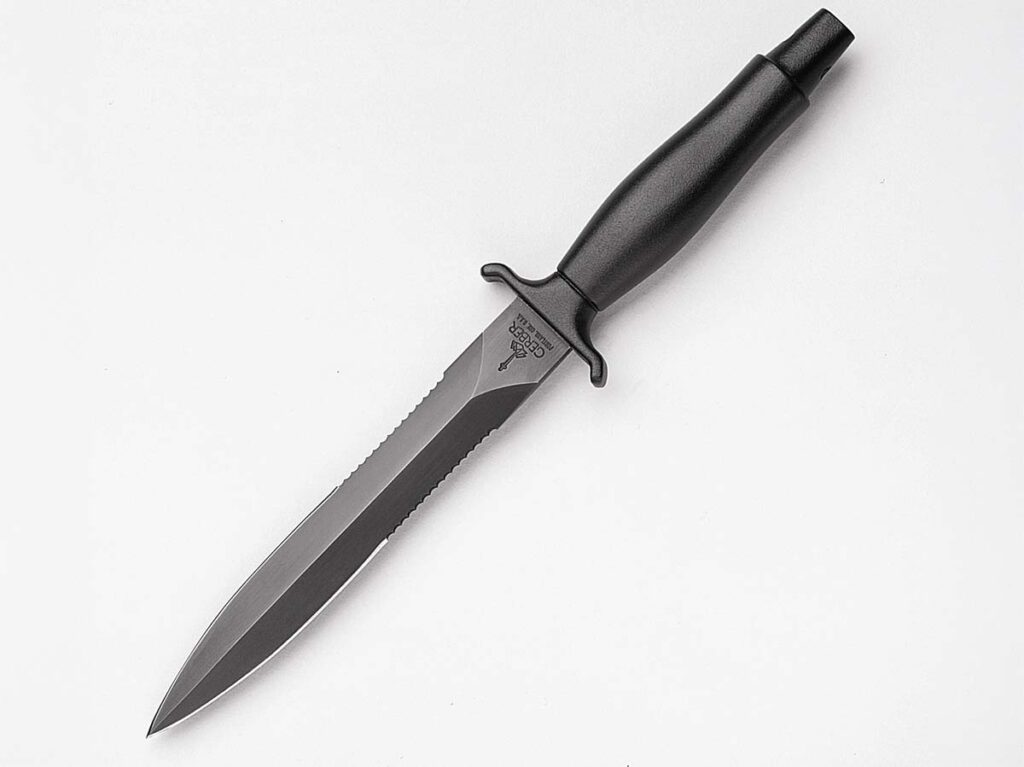
Later variants of the MK II included saw teeth, a feature added by Al Mar, who worked at Gerber at the time. This allowed the company to market it as a survival knife, not a fighting knife. Sporting goods stores and PXs were more likely to sell the latter. (Les George image)

“It was designed the same as the [original] Mk II except it had serrations on both sides. The serrations might be considered a weak point,” Breed explained. “They had cast aluminum handles and a little thinner blade with that wasp waist. When you actually penetrated something, [the waist] helped along with a bit of extra weight up front.”

While the original Mk II may have been a stronger choice back in the day, the serrated Mk II is also a sought-after collectible. A knifemaker, Kim relates some owners have asked him to grind the serrations completely off this Gerber dagger. He declined to do so.

One more story Kim recounts is of a friend who found himself in hand-to-hand combat during a recon deployment in Vietnam. A Viet Cong patrol was walking past, and the last man in their line spotted the Americans in their cover. “Rather than alerting the whole enemy patrol, my friend took the last man down and used his knife,” said Breed.

Regarding the Mk II, knifemaker Les George added, “Al Mar was a designer at Gerber at the time and he added ‘saw teeth’ to the blade to make it a survival knife. The PX was happy to sell it as such since they didn’t want to sell a ‘fighting knife.’”

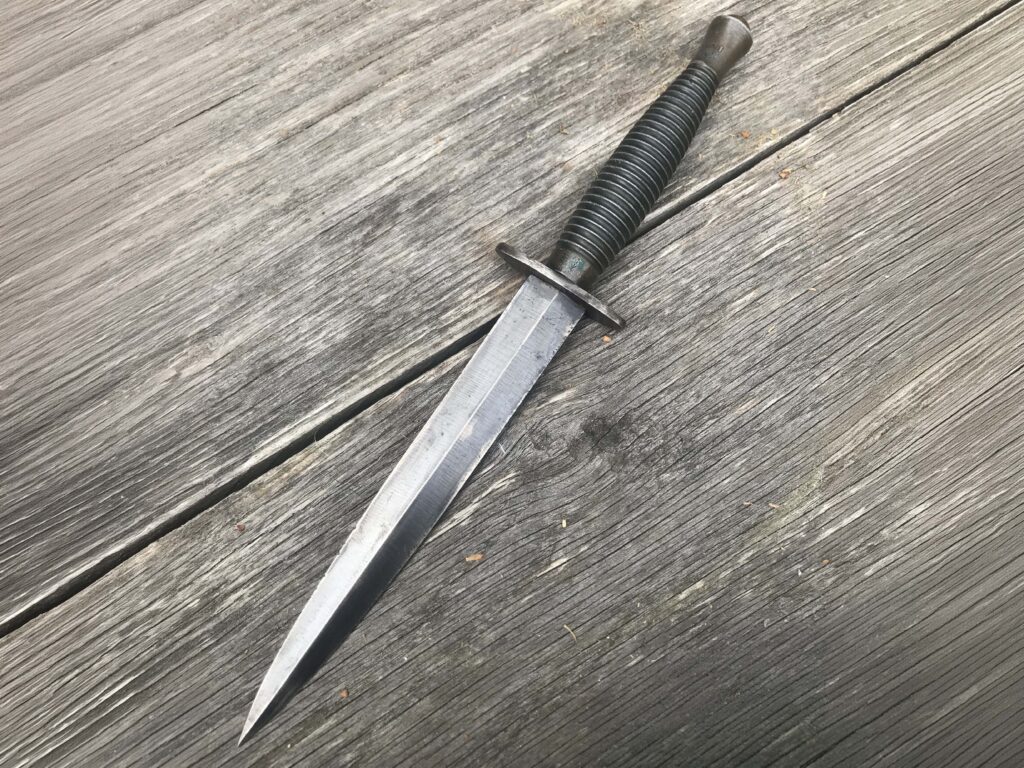
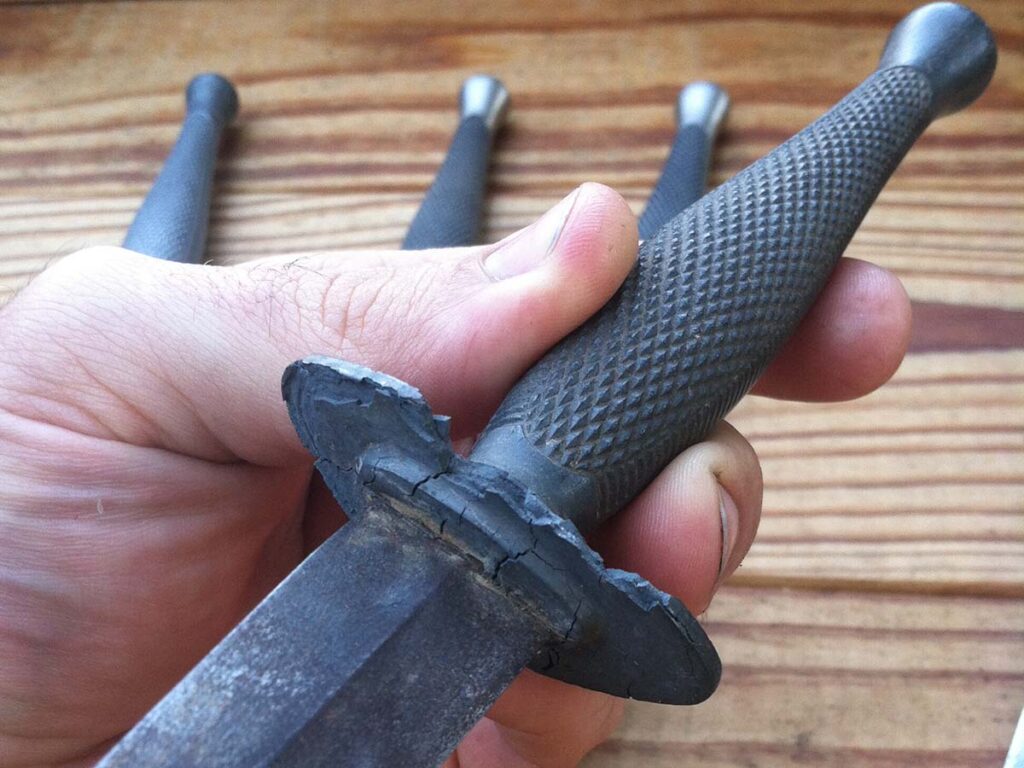
A great many modern military daggers trace their roots back to the legendary English Fairbairn-Sykes dagger. The one pictured is a third-pattern variant with a ring grip. (Les George image)

Industry veteran Bill Harsey also tells a story of combat survival with the Gerber Mk II in Vietnam. “I heard from a Medal of Honor recipient over dinner that his team was overrun by enemy combatants. In close-quarter combat, he drew his knife and stuck it in an enemy soldier. The knife stuck. Even with both hands he couldn’t withdraw it. I have no idea why the knife stuck and he didn’t offer any thoughts. But just to be careful, we have never made a wasp-waisted blade.”

Fairbairn-Sykes And Beyond

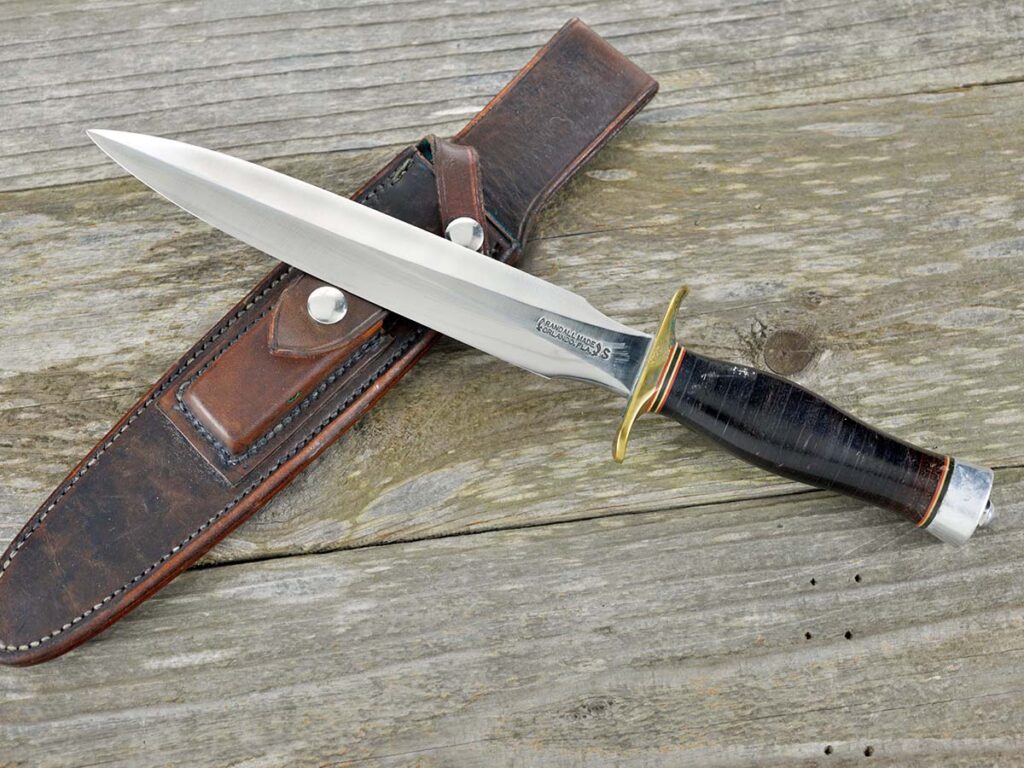
The Randall Knives Model 2 Fighting Stiletto bears the name of one of the most famous knifemakers in history and was developed as a robust alternative to the legendary Fairbairn-Sykes dagger. Randall has gone to war with several memorable designs, and according to Breed, the Model 2 is one of the best remembered.

“The blade is a little wider than the well-known Fairbairn-Sykes dagger,” said Kim. “The Randall was more handle-heavy, with only about a 5-inch blade, as I remember. It feels good in the hand. The guard is not sharp on the fingers, which was a challenge with some of the others. Any Randall daggers are collectible, just like Randalls in general. They didn’t make many of them. The Model 2, to me, is a cross between the Fairbairn-Sykes and the V-42 with a leather stack handle.”

The Randall Knives Model 2 bears the name of one of the most famous knifemakers in history—Bo Randall—and was developed as a robust alternative to the legendary Fairbairn-Sykes dagger. (Les George image)

The Marine Raider Stiletto remains a classic weapon of the World War II era, and it is said to have been the first Marine knife in the Corps’ history designed by a Marine, designed by Lieutenant Colonel Clifford H. Shuey. The story goes that this dagger was developed because the elite Raiders specifically requested a knife for close fighting.

Les offered some observations concerning the Marine Raider stiletto’s proper mission. “When the Marines were issued the Raider Stiletto in World War II, they had been specifically told not to pry with them or throw them,” he said. “So, obviously, they threw them at the first tree they could find and broke the tips off many of those knives.

“I think the Marine Raider Stiletto has the best handle design of all the many knives derived from the Fairbairn-Sykes daggers,” George continued. “It’s not just round. It has features and a shape allowing the blade to be indexed by feel. But the blade is very thin, the tip was fragile and the metal that they cast the handles out of reacts with air. They are all disintegrating. Eventually, we will lose them all.”

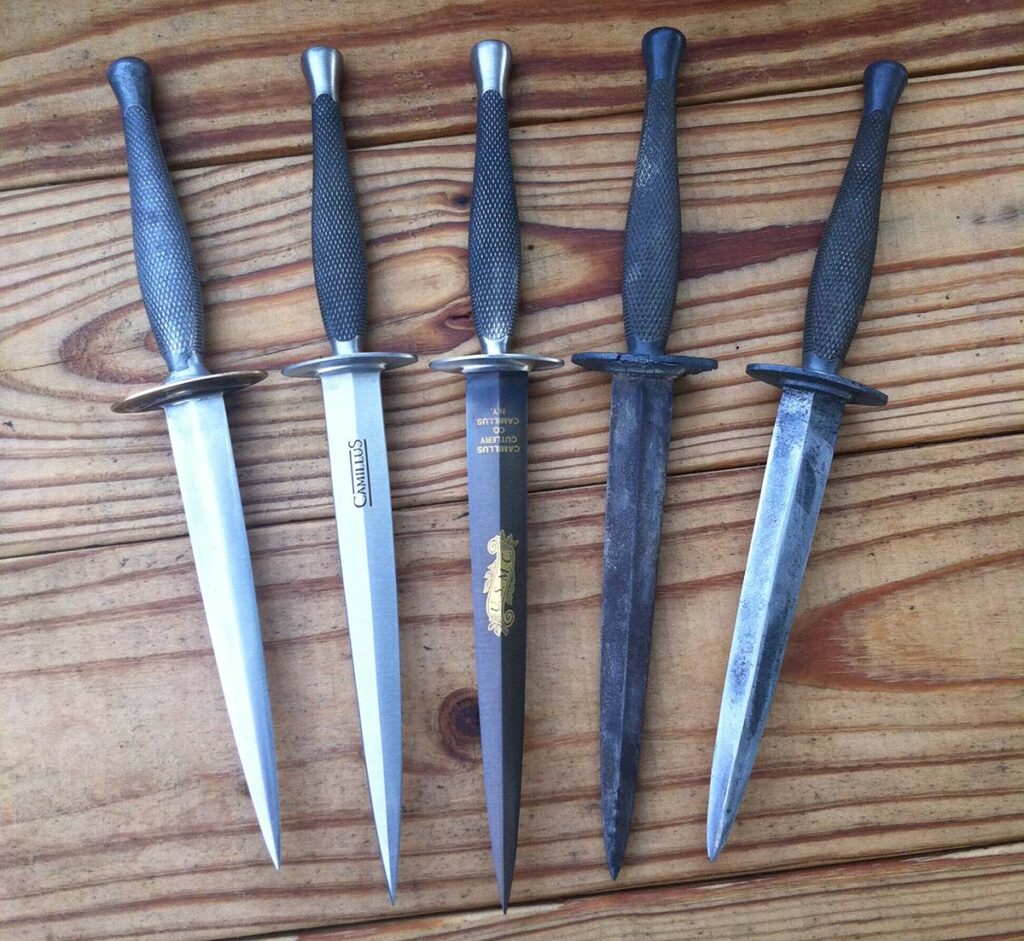
Knifemaker and military dagger aficionado Les George is a fan of the Marine Raider stiletto, seen by his collection of the dagger—new and old. (Les George image)

The handle of the Camillus-made Marine Raider Stiletto was fashioned with a die-cast zinc alloy, while the 7- to 7 ½-inch blade was made of blued or bright steel. The overall feel of the stiletto was hilt-heavy for optimal balance.

“The Marine Raider Stiletto has probably the smallest group of collectors since it primarily appeals to Marines,” commented George. “The rest can be categorized in different ways and have broader appeal. These knives and their more modern counterparts may not find their way to the battlefield as a matter of course, but the history they represent is invaluable.”

Knuckled Under

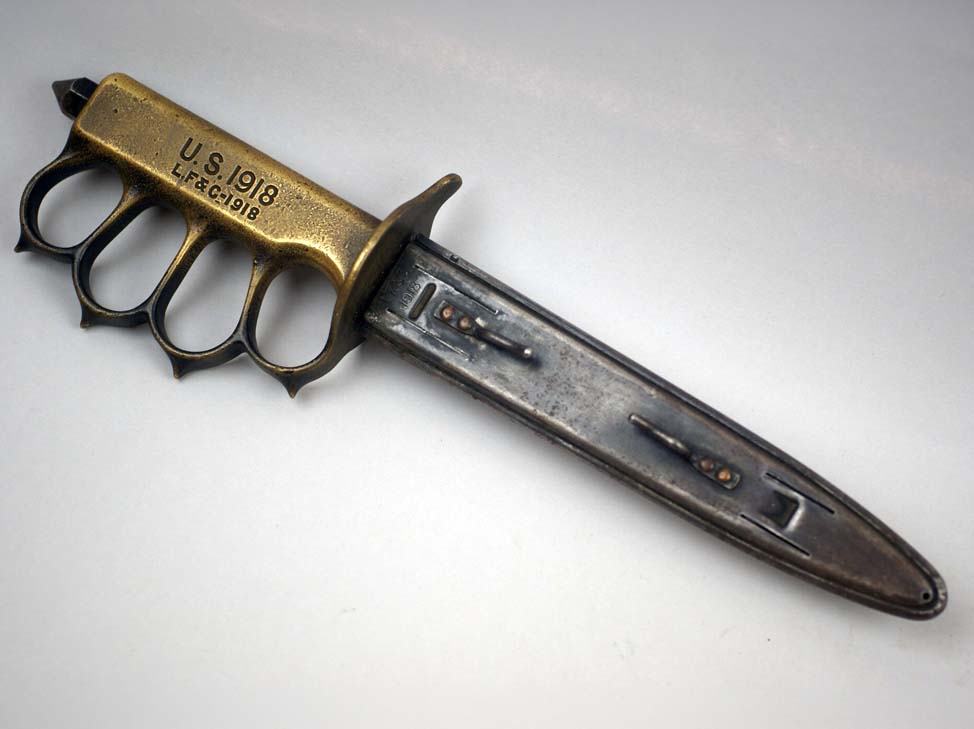
Les includes the iconic M1918 trench knife among those favored few military daggers carried in wartime by American soldiers. Its design was based on the French M1916 Avenger, and the military held field trials after initial 1917 and early 1918 variants were found inadequate. The M1918 was first made by Landers, Frary & Clark, a housewares and hardware company, production was later increased with Oneida, Henry Disston & Sons and the French manufacturer Au Lion.

George considers the knife's handle the best designed of all the Fairbairn-Sykes derivatives. Unfortunately, this is also the dagger’s weak point as the metal used for the handle reacts with the air and disintegrates. (Les George image)
George considers the knife’s handle the best designed of all the Fairbairn-Sykes derivatives. Unfortunately, this is also the dagger’s weak point as the metal used for the handle reacts with the air and disintegrates. (Les George image)

“The LF&C M1918 trench knife did not see action in World War I,” George explains. “It was made for that war, but it ended before the knives made it to Europe. A lot of them were melted down to reuse the handle material. When the Japanese attacked Pearl Harbor, they were the only knives in the system available to be issued to Marines … The M1918 saw use in World War II, Korea and Vietnam. I’m not aware of any combat use of the knife since then, but it is possible.”

The M1918 is distinctive with its integrated cast brass handle and brass knuckle grip designed for close combat, along with small spikes on the finger bows and a skull crusher pommel. The medium carbon steel blade has been criticized at times for being brittle, but nevertheless the knife is recognized as formidable in a hand-to-hand brawl.

“The M1918 was designed to be an effective tool for close fighting,” observed Breed. “With a positive grip and the brass knuckle guard, you didn’t have to stab, or you could hit your opponent with the skull crusher. There were dozens of confirmed kills with this dagger. It was not recommended to dig with them because they were prone to breakage or ‘bendage.’ You could drive that big brass handle into the dirt, but that half shaft that came down from the blade was short on steel and weakened the knife around the tang.”
The eye appeal of the M1918 makes the dagger collectible. “It’s pretty popular and one of the iconic knives of its type,” Kim concluded.

Many think of the M1918 as the quintessential World War I trench knife, though the variant didn't see action in that conflict, adopted too late. Based on the French M1916 Avenger, it was meant to replace the 1917 and early 1918 variants, which were found inadequate. (Les George image)
Many think of the M1918 as the quintessential World War I trench knife, though the variant didn’t see action in that conflict, adopted too late. Based on the French M1916 Avenger, it was meant to replace the 1917 and early 1918 variants, which were found inadequate. (Les George image)

Representative of the fighting men who carried them into harm’s way, these U.S. military daggers of the 20th century continue to fascinate with their double-edge blade, balanced feel and handle characteristics. Their place in history is secure, while collectors and knife industry veterans are doing their best to preserve and retell the stories that surround them.

More On Military Knives:

Military Knives: Historic Star-Spangled Steel

Few knives have served America more than those of the U.S. military.

Editor’s Note: This is the first of a two-part series on the most influential knives to serve the U.S. Military and explores some of the early influences on military knife design.

As what many call the greatest country in the history of countries approaches its 250th birthday, now’s a good time to salute some of the top knives that played pivotal military roles in the forging of the world beacon that is the United States of America.

It is, of course, impossible to recognize in one magazine story every single knife that played a crucial role in the many battles of the wars fought by the USA. However, with the help of some of the knife industry’s leading military authorities—including several of whom have seen the elephant in service to our nation—BLADE® will endeavor to touch on some of the more consequential knives of U.S. military history.

Before embarking on such a quest, the first task is to identify a basic group of the most indispensable knife types over two-and-a-half centuries of American land warfare. At the risk of omitting one or more, five stand out: bayonet, all-purpose utility fixed blade and/or bowie, dagger, machete/chopper and utility folder.

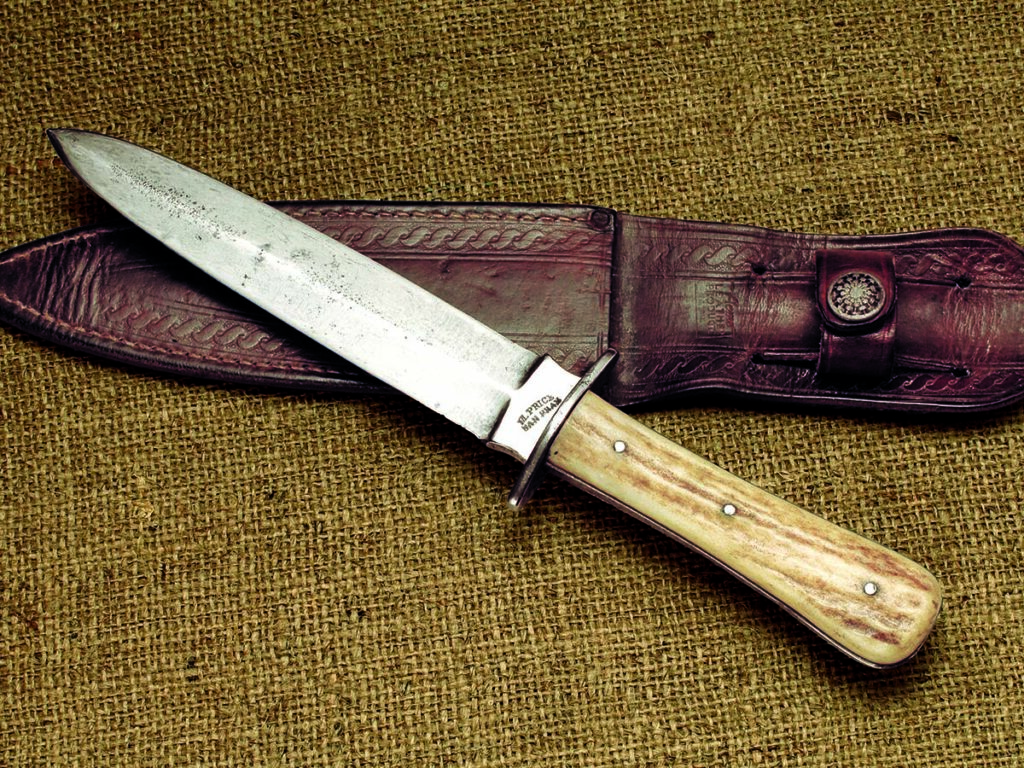
Michael Price recognized that to create a viable knife for self-defense and combat, form must follow function. His solution was to use the full-tang construction method, here on one of his classic mid-19th-century daggers. (Image courtesy of Louis Chow)

“These encapsulate everything that an infantryman used during the 250-year history of our country,” noted Louis Chow, a 24-year U.S. Army veteran who retired with the rank of major and is one of the leading collectors of the knives of BLADE Magazine Cutlery Hall-of-Fame® member Bob Loveless. “The bayonet, of course, from the get-go, from the Revolution to today.”

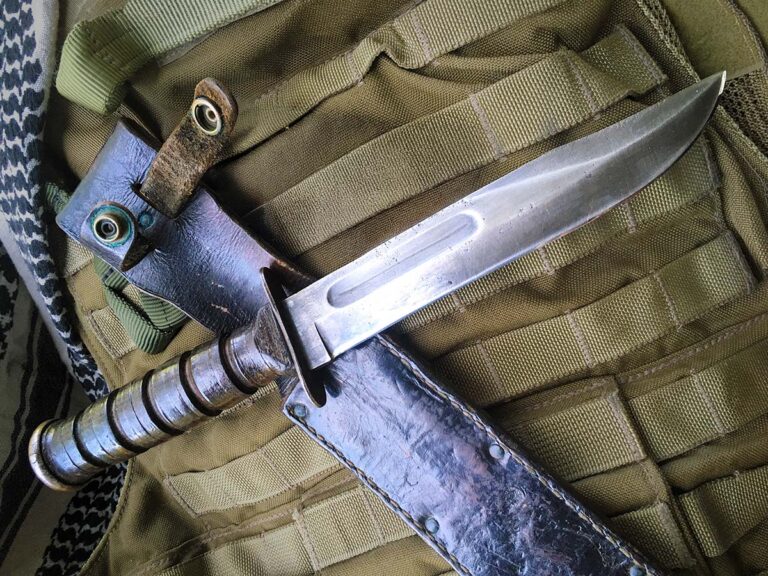
Louis indicated the all-purpose utility fixed blade/bowie could include privately purchased knives such as the Randall Model 1 and, of course, double-guard bowie types like the USMC fighting utility knife, aka the Ka-Bar. He pointed to the mid-19th-century designs of Michael Price as highly influential on daggers through to today, and machetes such as those made by Collins used in the Spanish-American War and before to Vietnam as vital to U.S. war efforts. Though pocketknives were indeed carried by American patriots during the Revolutionary War, the utility folders to which Louis referred are more of the modern Leatherman/Gerber multi-tool type, not to mention the Buck 110, Al Mar SERE, CRKT M-16 and others. As Louis noted, almost every soldier, male or female, in the modern military carries a multi-tool folder.

Many knife enthusiasts know that bayonets are rarely, if ever, used in combat today, nor have they been for well over a century. “It’s hard to actually find someone who used one in combat,” Louis said. Probably the most legendary American bayonet charge was the eminently successful one by Union forces led by Col. Joshua Chamberlain against Confederate troops down a hill called Little Round Top, a major turning point in the Battle of Gettysburg and, of course, the entire Civil War. Ironically, as Louis noted, “the most famous bayonet charge of all was the last one.”

While bayonets have rarely been used in American combat for many decades, that does not mean they do not remain significant teaching tools in today’s U.S. military. “When I was a company commander in 1990, we trained with the bayonet,” Louis recalled. “There are established bayonet courses on every installation, such as Fort Hood in Texas and Fort Benning in Georgia, and we would go there and train with the bayonet.” The rifles and bayonets have changed over the years but the bayonet training techniques remain the same.
Throughout U.S. and nearly all other nations’ histories, governments have been responsible for the issuance of combat knives in the form of bayonets for their infantry fighting forces. During World War II, the USA issued all-purpose fighters and utility knives to many soldiers, sailors and airmen. However, as Louis noted, privately purchased edged tools and weapons have always been the mainstay of our servicemen. During the earliest American conflicts, including the Revolutionary through the Civil Wars, kitchen, utility, farrier-forged and European-imported cutlery were the sidearms of the multitude of militiamen and patriotic volunteers.

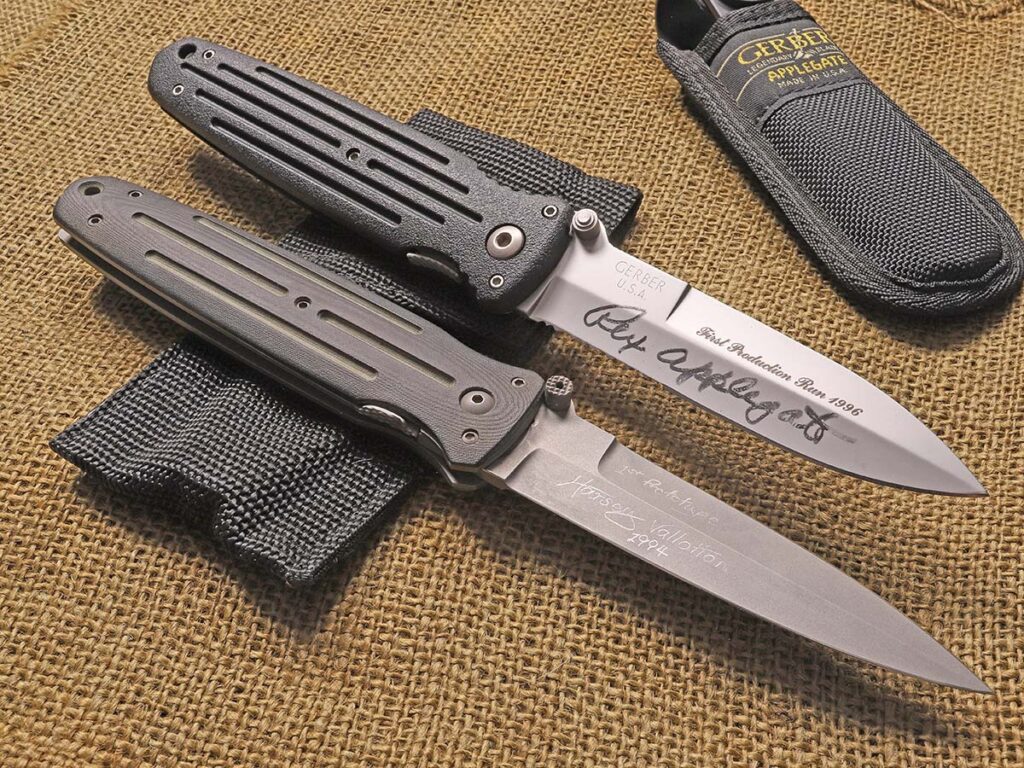
The original Applegate-Fairbairn Folder was a collaboration between Col. Rex Applegate and knifemakers Bill Harsey and Butch Vallotton. Harsey stated that a Gerber official said the Army ordered 50,000 of the knife at one time for the troops. At bottom is the original prototype and at top is a first-production Gerber version autographed by Applegate. (From the collection of Michael Janich)

The knife carried and made famous by Cutlery Hall-of-Famer James Bowie in the 1820s and 1830s was copied in various forms by makers worldwide and served as inspiration to any number of fixed blades carried in the U.S. military. Another large fixed blade that met with success in military circles was the Rifleman’s Knife made by the Ames Mfg. Co. circa 1860. Ames also made the Dahlgren Bowie Bayonet around the same time. Collins & Co. made a variety of bowies/machetes, the most famous probably being the No. 18, also incorrectly called the V-44 by many (according to D.E. Henry in his book Collins Machetes and Bowies 1845-1865, V-44 was the real name of a 1944 Case Survival Knife, not the No. 18).

Generational Blades

Circa the mid-19th century, Michael Price was considered one of the premier cutlers in the western United States. He was best known for exquisite presentation knives that incorporated marine ivory and a variety of beautiful shells. However, as Louis wrote, to create a viable knife for self-defense and combat, Price recognized that form must follow function. His solution was to use the full-tang construction method. And for a century and a half, some of the most notable American cutlers adopted the full-tang method that significantly improved a knife’s dependability and durability.

Early in 20th-century Michigan, Cutlery Hall-of-Famer William Scagel began forging axes and knives of various sizes and styles. He made most of his utility, hunting and bowie knives via the hidden-tang method. Though some of his combat knives were also hidden tang, many others employed the full-tang method.

“It was purported that the Scagel hidden-tang fighters with stacked leather washers were made for the European theater, while the full-tang fighters with wood-slab handles were made for the Pacific theater,” Louis wrote. “It was believed that stacked leather washers would be too susceptible to the humidity, high temperatures and salty air” of the applicable Pacific region. As a testament to Scagel’s outstanding craftsmanship and exceptional design, many of his fighters survived the war in good condition.

William Scagel’s hidden-tang fighters with stacked leather washers reportedly were made for the European theater during World War II, while the full-tang wood-slab fighters were made for the Pacific. The stacked leather washers were thought to be too susceptible to the humidity, high temperatures and salty air of the applicable Pacific region. (Image courtesy of Louis Chow)

In 1937, Cutlery Hall-of-Famer W.D. “Bo” Randall observed an older man scraping the bottom of a boat with a knife that appeared undamaged by the abuse. Intrigued by the improvised tool, Bo purchased it from the owner and contacted its maker, who just so happened to be Scagel. Randall eventually became Scagel’s student and soon opened his own shop, making Scagel-style knives.

“At the onset of World War II, Randall designed and produced some of the most recognizable combat knives ever made,” Louis stated. “Nonetheless, all were made with the hidden-tang method. It was not until the early 1960s that Randall introduced the full-tang Model 14-Attack and the Model 15-Airman combat knives.”
Continuing the generational theme, Cutlery Hall-of-Famer Bob Loveless read a magazine article about Randall knives in 1953. He corresponded with Bo and made his interpretations of Randall knives before experimenting with and then making his own full-tang models.

From the mid-1960s through the early ’70s, Loveless accepted many orders from service members awaiting assignment to Vietnam. He also received bulk orders from units stationed there. One bulk order in early March 1967 from a unit commander in the 1st Cavalry Division was for 37 fighting knives.

“The unit commander and his troopers were stationed in Saigon and were supporting Operation Junction City, one of the largest airmobile operations in the war,” Louis wrote. “As a patriot and former veteran himself, Loveless would temporarily halt all other orders and place top priority on knives destined for combat. As for those 37 fighters, he worked day and night and completed the order in less than a month. For the next four decades, the Loveless full-tang designs were copied and reinterpreted by countless knifemakers and knife companies in the United States and abroad.”

In addition to the foregoing cutlery legends, the full-tang method was also preferred by many other U.S. World War II knifemakers. Among them: Alfred Bimson, John Ek, Taylor Huff, A.R. Kephart, Kennedy Arms, Bob Riggs, Ernest Warther and Cutlery Hall-of-Famer M.H. Cole. Cole also authored the comprehensive U.S. Military Knives, Bayonets & Machetes series of books and has been dubbed the “Sage of Military Knives” by Cutlery Hall-of-Famer Bruce Voyles. Continuing Cole’s legacy is knifemaker/author Michael Silvey through his reproductions of Cole’s designs and his lavishly illustrated books on the knives of the United States military in World War II and Vietnam, and other works.

More On Military Knives:

4 Best Dirks: Modern Versions Of The Historic Knife

The Dirk Has A Long, Exciting History And Has Been Used For Everything From Farming To War All Around The World.

The general definition of a dirk is that of a one-handed thrusting knife. Depending on region and style, it may be single-edged or double-edged. It also may or may not have a defined cross guard and pommel. 

Dirk as a term is loosely associated with several Scottish and English regions. It is most commonly credited to the former, though no one really knows for sure, and it also has a long history of use across medieval Europe. It was a very important object to people in the Highlands of Scotland at an individual level and had significant ceremonial and practical uses.

Weapons Before The Dirk

As is common in the era of gunpowder in Europe, many types of knives and daggers owed their roots to the bollocks dagger and other stabbing weapons that originated hundreds of years prior when soldiers wore heavy armor. Contrary to popular belief, most swords are not like how you see in the movies. These stabbing and thrusting weapons seldom had what we’d expect as edges, rather they were made to parry and bludgeon. Maces, picks, and hammers were very common in this time, prized for their ability to bash and smash, where swords, while deadly, were not always the first choice. 

These long, thin daggers were sometimes the choice when things got up close and personal, though even then the textile layers of armor were hard to penetrate. All that changed with gunpowder weapons causing a wide decline in armor use, and the dirk as we know it today was the product of that evolution. The dirk became something quite different than other edged weapons of the time and developed in its own way, largely apart from other European designs. 

The Scottish were some of the first to begin independent development of swords and daggers alongside guns in the post-armor age along with strategies to fight against firearm-equipped soldiers. The heavily tribal Scottish Highlands were not especially invested in standardized firearm technology. 

Guns did figure heavily into the culture, but the Scottish never developed a well-oiled machine akin to what the British developed when it came to battles. The Scottish had two primary tools for the battlefield, the broadsword and the targe (buckler), itself a small shield held in the weak hand. The combination of buckler and broadsword allowed the Highlander to easily kill British soldiers, usually armed with nothing more than a musket and bayonet. 

They specialized in fast ambushes, often called a ‘Highland Charge’ where they wore virtually no protection of any kind and ran headlong at their enemy. If the enemy didn’t flee on sight, they would only have one shot at most before they had to fight hand-to-hand. 

How The Dirk Developed

windlass dirk
The dirk traces its lineage to the Scottish Highlands.

The dirks developed in the post-armor era became focused on all-purpose use, not just stabbing or bludgeoning. As a result, sharp, light-bladed swords and short-sword like knives and daggers became the norm. 

Slashing through clothing wasn’t difficult and the Highlanders found themselves at a distinct advantage using these tactics. That is, until the Battle of Culloden in 1746. 

Here the entirety of the Highlander army was soundly defeated by the British in a battle that lasted an hour. The British faced them on an open field and modified their tactics to anticipate the Highland Charge, resulting in a complete defeat of the Scottish Jacobite movement that had made an invasion into England a year earlier.

Dirks were common even after Culloden. The carrying of knives wasn’t necessarily seen as carrying arms in most cases, and dirks were something of a common, everyday tool for most people. They would be not only used for self-defense but also for regular tasks like eating, splitting kindling, and standard daily chores.

Dirks vs Daggers

Is the dirk a dagger? The short answer is yes and no, and that is because there is a great degree of ambiguity in the definition. A dirk is classically a large, single-bladed knife with a blade anywhere from 12 inches all the way up to 20 inches.

Naval dirks were commonly used for ship-to-ship fighting as they were short enough to be used in tight confines yet large enough to still be effective. Daggers at this time would have been primarily understood to be stabbing weapons, whereas the dirk was large enough and stout enough to be used in a primary slashing role. 

Daggers are, by type, geared mostly for stabbing. Rarely do companies refer to any large, single-edged knives as ‘daggers’, but the dirk is often classified right alongside them by name in many laws.

The American dirk which evolved in the early 1700s, was almost always single-edged and was primarily used as a support knife alongside the tomahawk and rifle. It could be said that a significant and wide-ranging number of knife styles, including the Bowie, evolved directly from the Scottish dirk on the American frontier.

Daggers as stabbing knives were somewhat uncommon in America because they lacked general utility in the field at a time when larger camp knives and multi-purpose tools saved weight. 

Is It Legal To Own A Dirk?

Unfortunately, Dirks have a wide legal definition across the board that often describes them as daggers or stabbing weapons. In many municipalities, this type of weapon is not legal to carry. There is a blurred line in this definition, as many places considered double-edge, stabbing weapons as the verboten item. As many historical dirks are single-edged, there could be room in these laws that skirts one definition or another.

4 Best Dirks Available Today

COLD STEEL SCOTTISH DIRK- $119.99

cold steel dirk

Cold Steel is well known for making some very durable and interesting products. They pay great attention to detail and their Scottish Dirk is no different. While it is not the most costly, it is a step above the rest, and it is affordable and backed by Cold Steel’s legendary standard of excellence. The Cold Steel Scottish Dirk is a working tool that does everything the historical versions did and then some. If you’re looking for a hard-use dirk, look no further.

Knife Specs

Overall Length: 18.38 inches

Blade Length: 13 inches

Weight: 1 pound

Blade Steel: 1055 Carbon

Handle Material: Rosewood

WINDLASS BONNIE SCOTTISH DIRK- $149.00

windlass scottish dirk

If you’re looking for a prettier dirk than the rest, Windlass makes some excellent historical replicas that reflect various periods of Scottish history. The Bonnie Scottish Dirk is reminiscent of the late stage of refinement on these weapons. It is ornate yet functional and is sure to be a conversation starter. While other companies tend to take some liberties, this is a very accurate replica of what may have been on the belts of Highland Warriors at the Battle of Culloden.

Knife Specs

Overall Length: 17.5 inches

Blade Length: 11.75 inches

Weight: 18 ounces

Blade Steel: 1055 Carbon Steel

Handle Material: Wood

WINDLASS EARLY SCOTTISH DIRK- $139.95

early dirk

This product is a replica of some early dirks as they would have looked descending from the bullock dagger. A functional reproduction, this early replica features a more basic feature set as would’ve been seen a few hundred years prior to the Battle of Culloden. Although it has unrefined features, it is still not out of place for costuming or period reenacting.

Knife Specs

Overall Length: 21.25 inches

Blade Length: 15 inches

Weight: 16.2 ounces

Blade Steel: 1055 Carbon Steel

Handle Material: Hardwood

CAS IBERIA (LEGACY ARMS) SCOTTISH DIRK- $159.00

CAS Iberia dirk

This dirk has some classic lines, but is all about function. It will not look odd at a cultural event, although it is made with a slight skew to the modern. The handle design is reminiscent not of the bullock dagger, but the earlier Rondel form characteristic of the late medieval era prior to the renaissance. While it is the most expensive so far on the list, it is right in the same price range as most common dirks. If you prefer this look over the more classic Scottish design, this is the one for you.

Knife Specs

Overall Length: 18.25 inches

Blade Length: 12 inches

Weight: 1 pound, 8.5 ounces

Blade Steel: 5160

Handle Material: Synthetic Material

Read More

Advertisement

Must Read Articles

Read this before you make a knife

Knifemaking 101 – Read This Before You Make a Knife

  by Wayne Goddard My experience has taught me that there's nothing like digging in and getting started. I've often said the hardest part of the...
how to forge damascus steel

How to Forge Damascus

Advertisement
Advertisement